










50 Ton Double Beam Overhead Crane
Products Description
A 50-ton double beam overhead crane is a heavy-duty lifting solution designed for industrial applications requiring high load capacity, precision, and durability. Below are its key features, components, and typical applications:
Key Features:
High Load Capacity – Designed to lift and move loads up to 50 tons (can be customized for higher capacities).
Double Girder Design – Provides greater strength, stability, and span compared to single-girder cranes.
Robust Construction – Built with heavy-duty steel for long-term reliability in harsh environments.
Precision Control – Equipped with smooth hoisting, trolley, and bridge movements for accurate load positioning.
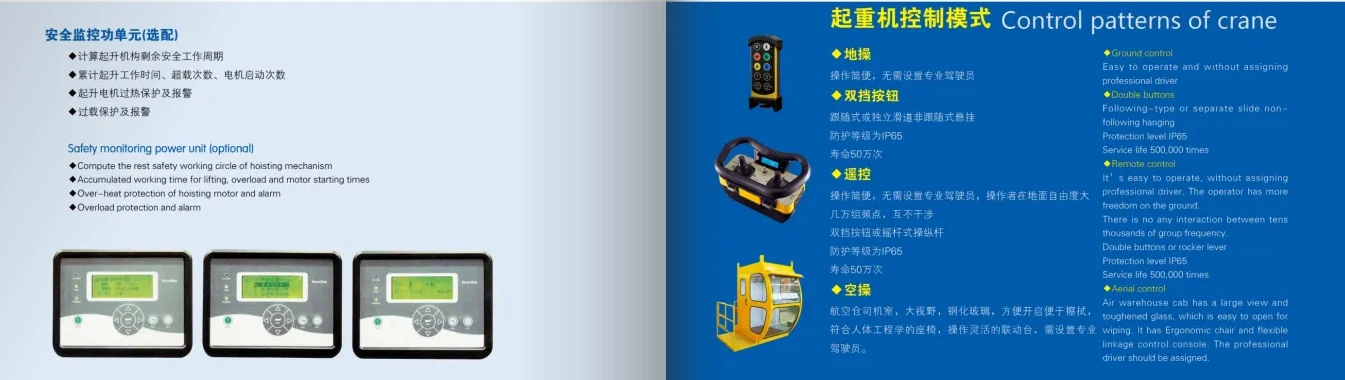
Safety Features – Includes overload protection, limit switches, emergency stop, and anti-collision systems.
Customizable Options – Can be fitted with Cabin Control, Remote Control, or Pendant Control.
Variety of Hoists – Can use wire rope hoists (for heavy loads) or chain hoists (for lighter, frequent lifts).
Comparison: QD Double Girder vs. Single Girder
| Feature | Double Girder | Single Girder |
|---|---|---|
| Capacity | 5–550+ tons | 1–20 tons |
| Span | Up to 35m+ | Up to 15m |
| Hook Height | Higher | Lower |
| Cost | Higher initial cost | More economical |
| Durability | Heavy-duty | Light to medium-duty |
Core Components:Bearing, Gearbox, Motor, Pump
Place of Origin:Henan, China
Warranty:1 Year
Weight (KG):2000 kg
Video outgoing-inspection:Provided
Machinery Test Report:Provided
Design:Double beam
Effectiveness:high efficiency
Operating speed:High speed operation
Stability:Anti-swing function
Color:Optional
Power Source:110V/220V/230V/380V/440V,customized
Span:7.5-31.5m

Pictures & Components
A 50-ton double beam overhead crane is a heavy-duty lifting system designed for industrial applications. It consists of several key components that work together to ensure safe and efficient operation. Here are the main components:
1. Bridge Structure
Main Girders (Double Beams): Two parallel beams that span the width of the workshop, supporting the hoist and trolley.
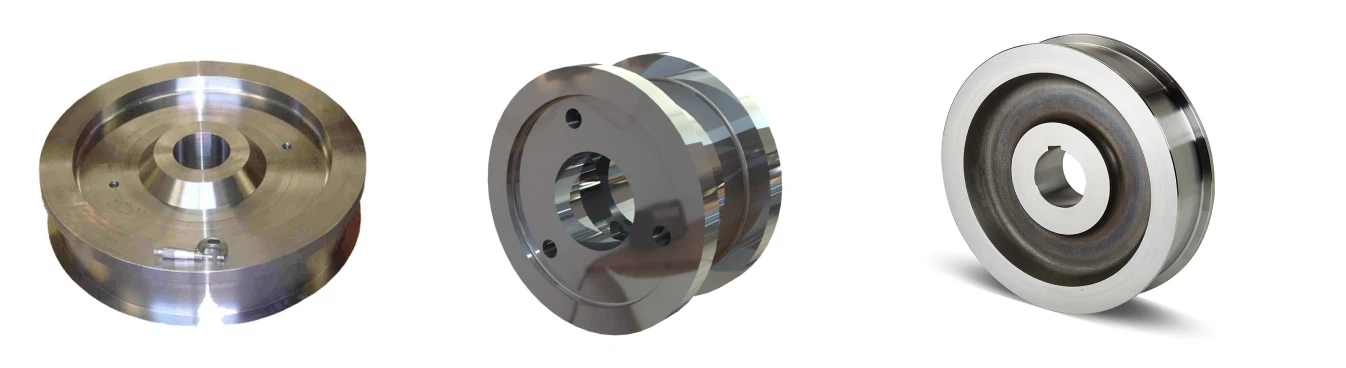
End Trucks (End Carriages): Located at each end of the main girders, equipped with wheels for crane movement along the runway rails.
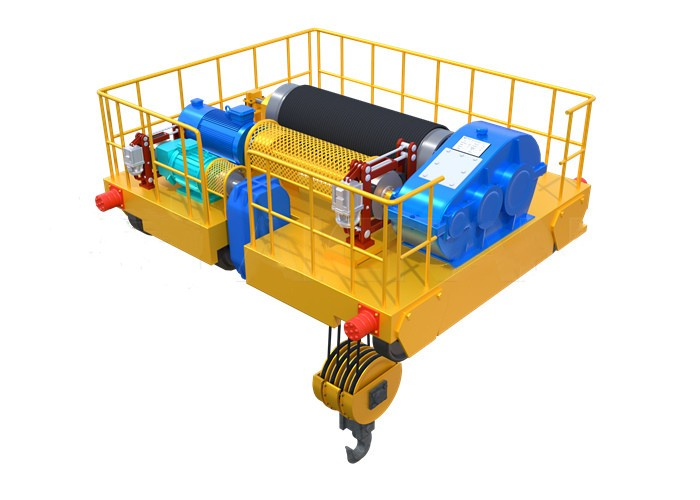
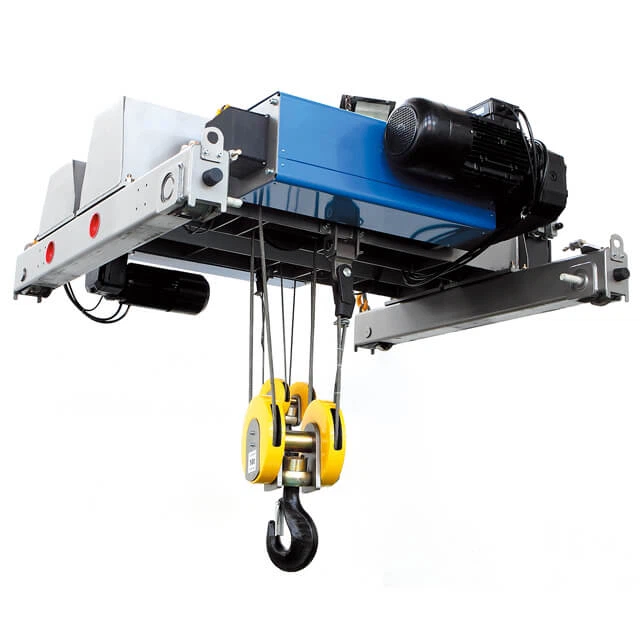
2. Hoist and Trolley Assembly
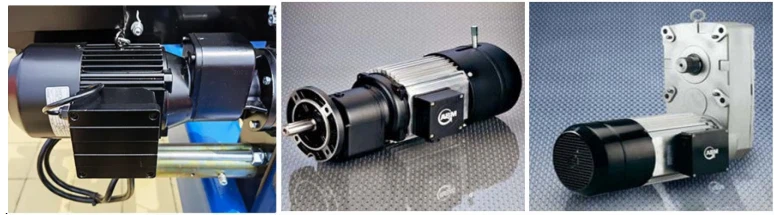
Electric Hoist (50-ton capacity): The lifting mechanism with a motor, gearbox, drum, and wire rope or chain.
Trolley: Moves along the bridge girders, carrying the hoist for horizontal positioning.
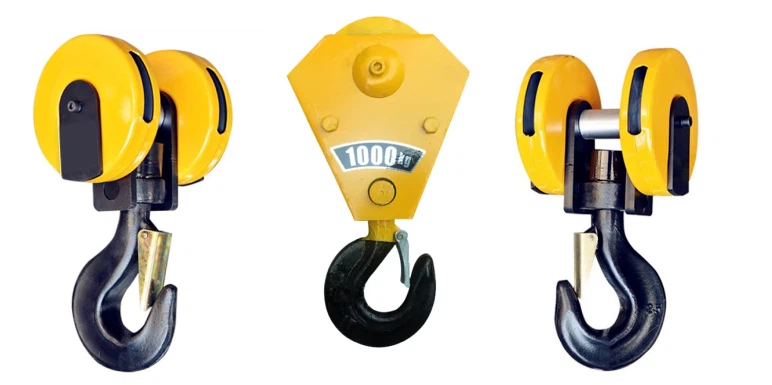
Hook Block: Heavy-duty lifting hook with pulley system for load handling.
 |
 |
3. Longer Span & Higher Lifting Height
Suitable for wide workshops with long spans (up to 30m or more).
Allows for greater hook height due to the elevated girder design, maximizing vertical workspace.
4. Smooth & Precise Movement
Equipped with high-quality motors, brakes, and gearboxes for precise load positioning.
Features variable frequency control (VFD) for smooth acceleration/deceleration, reducing load swing.
5. Customizable Options
Can be fitted with different hoists (wire rope or chain).
Supports additional features like remote control, anti-sway systems, and automated positioning.
 |
 |
6. Reduced Maintenance & Long Service Life
Robust construction with high-grade steel and wear-resistant components minimizes downtime.
Easy access for inspection and maintenance.
7. Improved Safety Features
Includes overload protection, limit switches, emergency stop, and fail-safe brakes.
Can integrate anti-collision systems for multi-crane operations.
8. Versatile Applications
Used in foundries, power plants, logistics hubs, and construction for handling heavy machinery, coils, containers, and more.

.
9. Higher Duty Cycle (FEM/ISO Standards)
Suitable for continuous heavy-duty operations (e.g., Class A6–A7), unlike lighter cranes.
10. Cost-Effective for Heavy Lifting
More efficient than using multiple smaller cranes, reducing long-term operational costs.

A 50-ton double beam overhead crane is a heavy-duty lifting equipment used in industries like steel, construction, and manufacturing. Safety is critical when operating such cranes, and they must be equipped with multiple safety components to prevent accidents. Here are the key safety components for a double beam overhead crane:
1. Overload Protection System
Load Limiter (Load Cell Sensor) – Prevents the crane from lifting beyond its rated capacity (50 tons).
Overload Cutoff – Automatically stops operation if the load exceeds safe limits.
2. Limit Switches
Hoisting Limit Switch – Prevents over-hoisting (prevents the hook from hitting the drum).
Lowering Limit Switch – Prevents the hook block from crashing into the ground or objects.
Travel Limit Switch – Stops the crane or trolley from moving beyond the designated runway.
3. Emergency Stop (E-Stop) Button
Installed on the pendant control or cabin to immediately halt all crane operations in emergencies.
4. Anti-Collision System
Infrared/Laser Sensors – Detects obstacles or another crane to prevent collisions (important in multi-crane environments).
Bumpers/End Stops – Physical buffers at the ends of the runway to absorb impact.
5. Braking System
Fail-Safe Brakes – Spring-applied, electrically released brakes engage if power fails.
Hoist Brake – Prevents uncontrolled lowering of the load.
Trolley & Bridge Brakes – Ensures smooth stopping during travel.
6. Electrical Safety Components
Undervoltage Protection – Prevents operation during power fluctuations.
Phase Sequence Protection – Ensures correct motor rotation direction.
Short-Circuit & Overcurrent Protection – Prevents electrical fires.
7. Warning Devices
Alarm Horn/Buzzer – Sounds before crane movement starts.
Rotating Beacon Light – Visual warning for personnel.
8. Load Stabilization
Anti-Sway System – Reduces load swinging for safer movement (common in radio-controlled cranes).
Hook Safety Latch – Prevents slings or chains from slipping off the hook.
9. Structural Safety Features
Crack Detection Sensors – Monitors critical welds and structural integrity.
Runway Rails with Guards – Prevents derailment.
10. Operator Safety
Cabin with Fire Extinguisher – For operator protection.
Emergency Escape Ladder – If the crane is at height.
Safety Harness Anchorage Points – For maintenance personnel.
11. Redundant Systems (For Critical Applications)
Dual Braking System – Backup brakes in case of primary failure.
Backup Power Supply (UPS) – Ensures safe shutdown during power loss.
SKETCH

Main technical

Advantages:
A 50-ton double beam overhead crane is a heavy-duty lifting solution designed for industrial applications requiring high capacity and reliability. Here are its key advantages:
1. High Load Capacity
Capable of lifting up to 50 tons, making it ideal for heavy industries like steel, mining, shipbuilding, and large-scale manufacturing.
2. Enhanced Stability & Durability
The double girder design provides superior structural strength compared to single girder cranes, reducing deflection and ensuring smooth operation under heavy loads.
3. Longer Span & Higher Lifting Height
Suitable for wide workshops with long spans (up to 30m or more).
Allows for greater hook height due to the elevated girder design, maximizing vertical workspace.
4. Smooth & Precise Movement
Equipped with high-quality motors, brakes, and gearboxes for precise load positioning.
Features variable frequency control (VFD) for smooth acceleration/deceleration, reducing load swing.
5. Customizable Options
Can be fitted with different hoists (wire rope or chain).
Supports additional features like remote control, anti-sway systems, and automated positioning.
6. Reduced Maintenance & Long Service Life
Robust construction with high-grade steel and wear-resistant components minimizes downtime.
Easy access for inspection and maintenance.
7. Improved Safety Features
Includes overload protection, limit switches, emergency stop, and fail-safe brakes.
Can integrate anti-collision systems for multi-crane operations.
8. Versatile Applications
Used in foundries, power plants, logistics hubs, and construction for handling heavy machinery, coils, containers, and more.
9. Higher Duty Cycle (FEM/ISO Standards)
Suitable for continuous heavy-duty operations (e.g., Class A6–A7), unlike lighter cranes.
10. Cost-Effective for Heavy Lifting
More efficient than using multiple smaller cranes, reducing long-term operational costs.
Conclusion
A 50-ton double beam overhead crane offers unmatched strength, precision, and reliability for heavy-load applications, ensuring productivity and safety in demanding environments.
Application:
- Steel & Metal Industry – Handling coils, plates, and heavy machinery.
- Manufacturing Plants – Moving large components in automotive, aerospace, or heavy equipment production.
- Power Plants – Lifting turbines, generators, and transformers.
- Shipbuilding & Ports – Handling heavy ship parts and containers.
- Mining & Cement Industry – Transporting raw materials and heavy equipment.
- Construction – Erecting large structural elements.
- Railway Workshops – Moving locomotives and railcar components.
Crane production procedure
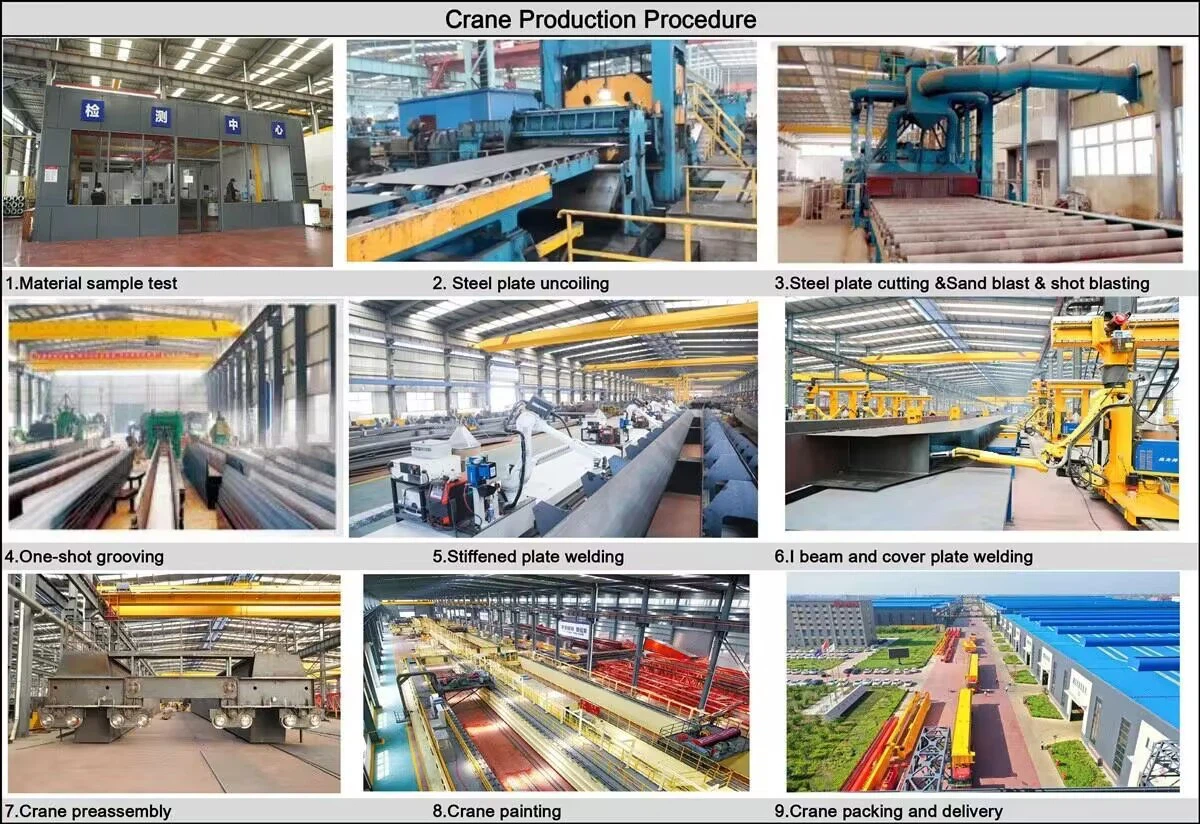
The production procedure for a 50-ton double beam overhead crane involves several key stages, from design to final testing. Below is a step-by-step outline of the typical manufacturing process:
1. Design & Engineering
Requirements Analysis: Determine client specifications (span, lifting height, duty cycle, power supply, etc.).
CAD Modeling: Create 3D models and detailed drawings for structural and mechanical components.
Load Calculations: Verify strength, deflection, and stability under dynamic/static loads.
Regulatory Compliance: Ensure adherence to standards (ISO, FEM, DIN, ANSI, or CMAA).
2. Material Procurement
Main Beams: Steel plates (Q235B/Q345B) for welded box girders or rolled sections.
End Carriages: Fabricated from steel profiles for rigidity.
Hoist & Trolley: Procure or manufacture components (gearbox, motor, wire rope, hooks, brakes).
Electricals: Motors, control panels, festoon/cable reels, limit switches.
3. Fabrication of Main Components
A. Double Girder Fabrication
Cutting & Welding: Steel plates are cut (laser/plasma) and welded into box girders.
Annealing: Stress-relieving to prevent distortion.
Machining: Drilling holes for connections and machining rail surfaces.
B. End Carriages
Assembly: Wheels, buffers, and drive mechanisms are mounted.
Alignment: Ensure parallel tracks for smooth movement.
C. Hoist & Trolley
Assembly: Gearbox, motor, drum, and brake systems are integrated.
Load Testing: Pre-testing of hoisting mechanism.
4. Surface Treatment
Shot Blasting: Clean surfaces for paint adhesion.
Priming & Painting: Anti-corrosion coatings (epoxy/zinc-rich).
5. Electrical System Installation
Wiring: Install power/signal cables along the crane bridge.
Control Panel: Fit VFDs (for variable speed), overload protectors, and PLCs (if automated).
Safety Devices: Limit switches, emergency stop, and overload protection.
6. Assembly & Integration
Erection: Girders are joined to end carriages; trolley and hoist are mounted.
Alignment: Verify wheel track parallelism and rail clearances.
Lubrication: Apply grease to gears, bearings, and moving parts.
7. Testing & Inspection
A. Factory Acceptance Tests (FAT)
No-Load Test: Run trolley/hoist across full span at all speeds.
Load Test:
Static Test: 125% rated load (50 ton → 62.5 ton) for 10 minutes.
Dynamic Test: 110% load (55 ton) with repeated lifts/movements.
Safety Checks: Verify brakes, limit switches, and emergency stops.
B. Final Inspection
Dimensional accuracy, weld quality, and electrical safety.
8. Disassembly & Packaging
Labeling: Mark components for easy onsite reassembly.
Protection: Waterproof wrapping for shipping.
9. Onsite Installation & Commissioning
Rail Alignment: Ensure runway rails are level and parallel.
Reassembly: Erect girders, install electricals, and calibrate.
Final Testing: Repeat load tests under client supervision.
10. Documentation & Handover
Manuals: Operation, maintenance, and parts manuals.
Certificates: Test reports, material certifications, and compliance documents.
Workshop view:
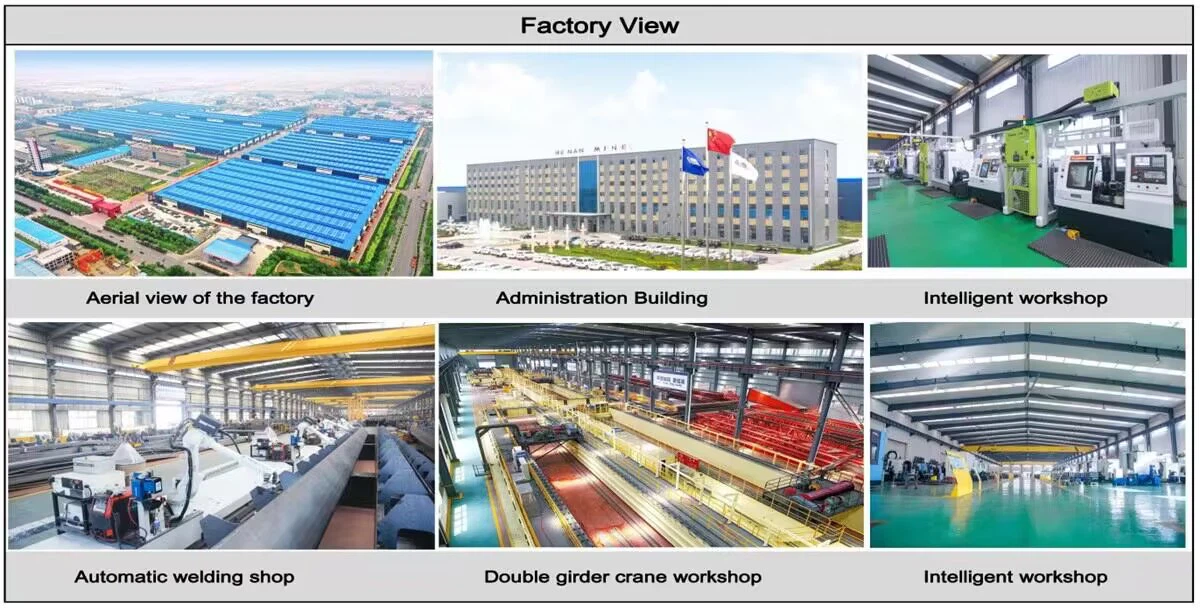
The company has installed an intelligent equipment management platform, and has installed 310 sets (sets) of handling and welding robots. After the completion of the plan, there will be more than 500 sets (sets), and the equipment networking rate will reach 95%. 32 welding lines have been put into use, 50 are planned to be installed, and the automation rate of the entire product line has reached 85%.


Hot Tags: 50 ton double beam overhead crane, China 50 ton double beam overhead crane manufacturers, suppliers, factory, Double Girder Overhead Travelling Crane, Double Girder Overhead Crane
You Might Also Like


Send Inquiry