Overhead Cranes
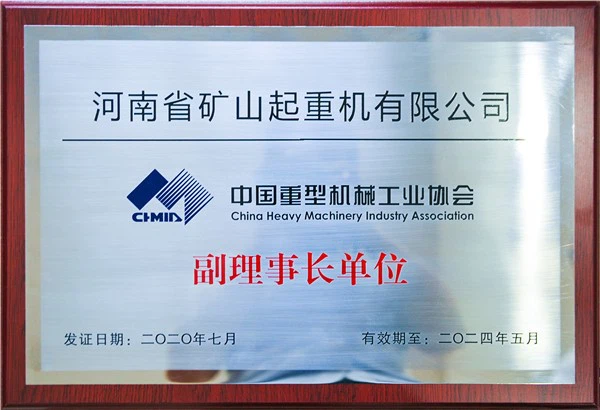
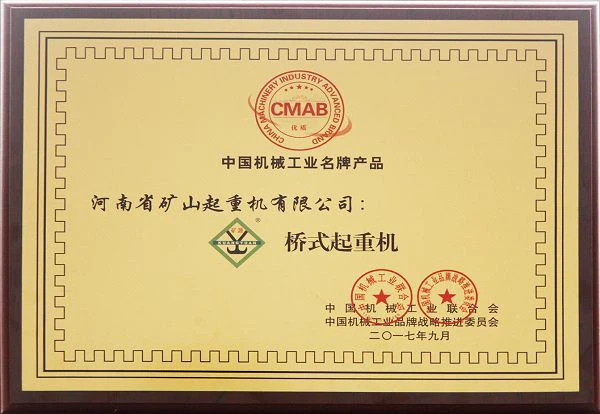
Henan Province Mine Crane Co.,Ltd(hereinafter referred to as "Henan Mine") was established in 2002, specializing in the research and development, design, production, sales and service of overhead bridge cranes, gantry cranes and electric hoists, such as three series of more than 110 kinds of cranes and supporting parts products. As a professional manufacturer and service provider of cranes and material handling products, we are able to provide customers with total solutions and whole-life services, and are committed to the intelligent, green and high-quality development of the crane industry.
The company currently has a total construction area of 1.62 million square meters, more than 3,500 employees, more than 428 sales and service organizations at home and abroad, and more than 2,000 sets of various processing equipment, which can independently complete more than 20 processes such as turning, planing and grinding. With advanced technology research and development institutions and a team of senior experts at home and abroad. The annual output of single and double girder cranes is more than 80,000 units.
Why choose us?
Experienced company
Henan Province Mine Crane Co., Ltd(hereinafter referred to as "Henan Mine") was established in 2002 and is a high-tech crane enterprise. Based on the advanced design concepts and manufacturing technologies of cranes at home and abroad, we have spared no effort to carry out retrofit designs for single and double-beam cranes and electric hoists and try to produce professional, intelligent, and high-quality products.
Professional team & equipment
The company currently has a total construction area of 1.62 million square meters, more than 3,500 employees, With advanced technology research and development institutions, and 200 senior engineers. We have more than 428 sales and service organizations locally and abroad, and more than 2,000 sets of various processing equipment, which can independently complete more than 20 processes such as turning, planning, and grinding.
Productive capacity
The annual output of cranes is over 80,000 units. The company produces and sells more than 11000 double beam and gantry cranes annually, More than 73000 single beam cranes, and More than 100000 sets (sets) of single and double beam electric hoists and accessories.
Customized design services
We understand that choosing the right crane is critical to the success of any lifting operation. That's why we offer customized design services to meet our customers' unique needs. Our team of experienced engineers works closely with customers to design and manufacture cranes that meet their specific requirements.


What is Overhead Cranes
An overhead crane is a machine that moves a load horizontally across the ceiling of a facility rather than down corridors or on the floor. Overhead cranes have significant lifting power for material transport. The operator uses manual controls or a wired pendant station to control the crane’s motion. The most frequent applications are multi-directional movement of materials for industrial storage, and loading or unloading activities within a facility, yard, railway station or port.
Benefits of Overhead Cranes
Increased productivity
Overhead cranes allow for faster and more efficient movement of heavy loads, reducing the time it takes to complete tasks. This leads to increased productivity and faster turnaround times.
Improved safety
Overhead cranes are designed to lift and move heavy loads, reducing the risk of injury to workers. The use of overhead cranes also reduces the need for manual handling of heavy loads, which can be dangerous and lead to workplace injuries.
Versatility
Overhead cranes can be customized to meet the specific needs of your operation, including the weight capacity, speed, and lifting height. This makes them suitable for a wide range of applications, from lifting and moving raw materials to positioning finished products.
Cost savings
Overhead cranes are a cost-effective solution for lifting and moving heavy loads. They require minimal manpower, reducing labor costs, and can also be used to optimize the use of space within your facility.
Types of Overhead Cranes
Gantry crane
A gantry crane is a type of overhead crane specifically designed to operate in outdoor or indoor settings. It uses a hoist and counterweight mounted on either side of an adjustable railway, which is why it is sometimes referred to as an "adjustable railroad". Gantry cranes are used for lifting and positioning heavy objects, including those too large for a regular crane to handle. They are also suitable for very long lifts, as the adjustable rails allow them to span larger distances than traditional overhead cranes.
Jib cranes
Jib cranes are a type of overhead crane which is commonly used in industrial settings. They consist of a horizontal arm (jib) mounted on a vertical mast, and feature an electric hoist that can move along the jib. This allows for precise lifting of items and fast movement between applications.
Bridge cranes
A bridge crane is a type of overhead crane which is composed of parallel runways with a traveling bridge spanning the gap between them. The bridge carries a hoisting mechanism, usually electrically powered, which can be raised and lowered over the gap by means of an electric motor. This allows for precise lifting of items and fast movement between applications. Bridge cranes are commonly used in industrial settings for lifting and moving heavy objects such as engines or large metal components, as well as loading and unloading materials in warehouses.
Workstation cranes
Workstation cranes are designed to make lifting and moving heavy items or materials easier and safer. These cranes can be placed on the floor, mounted on walls, or suspended from ceilings. They can also be used in combination with other equipment such as jibs or hoists. Workstation cranes typically have a capacity up to 500 lbs, though larger models may be available for industrial applications. Typical features of workstation cranes include adjustable arms, variable speed control, adjustable height settings, and anti-collision systems.
Monorail cranes
A monorail crane is a type of overhead crane that consists of a single rail and hoist. It is typically used in warehouses, factories, and other industrial settings to help move heavy loads horizontally, vertically, and in circular motions. The single rail design allows for long distances between supports and helps provide an efficient means of moving bulky items around the floor. Monorail cranes can be operated manually, or motorized controls can be used if greater speed and accuracy are needed.
Top & under-running cranes
Top and under-running cranes are a type of overhead crane that have both a top running rail and an under-running rail. The hoist runs on the top running rail and the trolley typically runs on the under-running rail. The design allows for greater flexibility and maneuverability than single-rail designs, making them ideal for applications where precise movements are needed. Top and under running cranes are generally more expensive than single-rail designs but offer greater versatility and safety features.
Application of Overhead Cranes


1.Auto industry
Overhead cranes in the automotive industry perform multiple roles, from material handling and supply chain management to lifting and transport tasks. In press plants, these cranes are essential for moving and storing dies and tools while ensuring production lines remain well-supplied. In assembly plants, workers depend on overhead cranes to enhance efficiency and eliminate the need for manual lifting.
Every aspect of an automotive production plant benefits from the time-saving and convenience of overhead cranes. Their use enhances production efficiency and helps prevent delays caused by supply chain interruptions.
2.Steel
The primary requirement for cranes in the steel industry is their ability to operate under harsh conditions, including elevated temperatures, high-grade dust, and severe vibrations. Ladle cranes are reinforced and stabilized to handle ladles safely and efficiently. Double girder overhead cranes are commonly used to deliver components like casting molds and to supply casting parts.
The steel industry heavily relies on overhead cranes for both safety and efficiency. In addition to ladle handling cranes, the industry utilizes tundish, slab, scrap, billet or ingot, coil, and foundry cranes, among others.
3.Plastics
The plastic industry employs various molding techniques like extrusion, injection molding, and rotational molding. Regardless of the method, frequent mold changes are essential to maintain production and meet customer demands. The dies used in these processes require precise handling and accurate placement, which is achieved using cranes capable of millimetric precision.
4.Shipbuilding
Similar to the steel industry, shipbuilding heavily relies on overhead cranes due to the size and weight of the materials involved in constructing a ship. The industry primarily uses three types of cranes: jib, gantry, and overhead. The choice between a chain or wire rope hoist depends on the specific material being moved.
The primary role of overhead cranes in shipbuilding is to handle materials throughout the assembly process. Overhead cranes are utilized at every stage of shipbuilding, including processing, assembly, fieldwork, launch, rigging, and delivery. These cranes are specifically designed to meet space requirements and are equipped with steel plate hooks and various types of chain hoists.electric motors.
5.Biomass
Biomass overhead cranes are specialized for handling various types of waste, including refuse, garbage, slag, sludge, and straw bales. Each type of waste requires a specific crane design. Similar to other industries, the biomass sector utilizes jib, gantry, and overhead cranes, equipped with either chain or wire rope hoists, depending on the application.
When purchasing a biomass crane, several factors must be considered, including truck delivery schedules, the tonnage and density of the biomass, and the size and dimensions of the storage area. Biomass hoists are typically equipped with a bucket, orange peel, or clamshell attachment for effectively grabbing and handling the load.
6.Gas and petroleum
Due to the volatile nature of gas and petroleum, overhead cranes used in these industries must be designed to prevent ignition risks. They are constructed from explosion-proof materials that are spark-resistant. One of the significant challenges in the oil and petroleum sector is designing cranes for offshore drilling sites. Initially, land-based designs were adapted to meet the unique conditions of these offshore environments.
Offshore platforms present unique conditions, such as waves that can affect loading and unloading operations. Therefore, cranes on these platforms are engineered to manage loads while considering factors like the distance of the load from the crane. Additionally, the mounting structure and other environmental conditions are crucial factors in the crane's design.
7.Food and drink
In the food and drink industry, the primary qualification for material handling equipment is cleanliness and sanitation. Overhead cranes are employed to move rail-mounted containers for production and storage in food processing. While these cranes significantly enhance efficiency, maintaining their sanitation to meet industry standards presents a key challenge.
Controlled environments are crucial in the food industry. To meet strict requirements and high standards, producers develop custom-designed lifting equipment tailored to these specific conditions.
8.Semiconductor
The semiconductor industry involves handling heavy components that require reliable, hygienic lifting solutions to prevent contamination. Overhead cranes in this sector must be precise, accurate, clean, and efficient to adhere to stringent quality standards.
For an overhead crane to be suitable for the semiconductor industry, it must comply with cleanroom standards. Unlike other material handling solutions, cleanrooms have strict controls on particulate dust levels, presenting a unique challenge in designing overhead cranes for this sector.
9.Mining
The demanding conditions of the mining industry require overhead cranes that can withstand harsh environments. These cranes are essential for repairing and servicing underground mining equipment. Due to the corrosive nature of mining environments, equipment experiences rapid wear and tear, making durable and reliable cranes crucial for maintaining operations.
Mining cranes are heavy-duty machines designed to handle several tons of equipment and materials. Constructed from heat-, dust-, and moisture-resistant metals, these cranes must operate efficiently and reliably despite the harsh conditions.
10.Paper
The paper industry requires robust cranes capable of handling materials with high precision and care, as paper rolls are easily damaged by even minor impacts. These cranes must manage the large, heavy rolls of paper delicately and maintain sanitary conditions during production.
To ensure worker safety, cranes in the paper industry are equipped with automated control systems, essential for both pulp production and paper manufacturing. These systems allow precise regulation of crane speed to handle materials properly and are outfitted with slings for the safe loading and unloading of paper rolls.
Components of Overhead Cranes
Hook
The lifted load is supported using a hook which connects to the hoist.
Hoist
The hoist is what makes the lift and holds, raises, or lowers the load using wire rope or chain. Hoists can be powered manually (by hand), with electricity, or with compressed air (pneumatic).
Trolley
The trolley supports the hoist and moves horizontally along the crane bridge, to position the hoist and hook, prior to picking up or lowering a load. Trolleys can be configured in an Under Running or Top Running design:
●Under running / underhung: Trolley wheels run on the bottom flange of the crane beam
●Top running: Trolley wheels run on rails fitted to the top of the crane beam. Most frequently seen in higher-capacity double girder designs.
Bridge
A load-bearing beam that runs the width of the building. This is the primary structural component that connects the runways and moves the hoist forward and backward using a trolley.
A bridge can be comprised of one or two beams—more often referred to as a single girder or double girder design. Girders can be made of rolled steel or can be fabricated by welding the beams into a steel box design.
Runway
What the bridge crane travels on to move the crane up and down the bays. These are typically part of the building structure, as beams, and there are two (2) per overhead bridge crane system.
Runway rail or tracks
Rail supported by the runway on which the crane travels. Top-running cranes typically run on ASCE/railroad rails. Gantry cranes can also utilize a rail or track system installed in the floor to move the bridge back and forth.
End trucks
Located on either side of the bridge, the end trucks move the bridge up and down the runway utilizing a series of wheels that ride on the rail. Each end truck can have a configuration of 2, 4, or 8 wheels based on the crane’s capacity.
Bumpers
Bumpers are designed to absorb the crane’s energy and reduce impact-bringing the crane to rest in a controlled manner and minimizing forces when the crane or trolley reaches the end of its travel. Bumpers can be attached to the bridge, trolley, or runway stop.
Controls
Controls are typically mounted in a panel on the crane or hoist and the pendant or remote radio console allows the operator to run the crane. The controls operate the drive and hoist motors, and can control Variable Frequency Drives (VFDs) to control hoist speed for precise load positioning.
Electrification
Insulated conductor bars or festoon systems (flat cables) bring power to the crane from the building.
How to Maintain Overhead Cranes
Routine maintenance
This involves the regular inspection and servicing of the crane to ensure it is in good working condition. Routine maintenance may include lubricating moving parts, tightening bolts and connections, and replacing worn or damaged components.
Structural repair
This is necessary when the crane’s structure, such as the bridge, trolley, or end truck, is damaged or worn. Structural repairs may involve welding, bolting, or replacing damaged parts.
Electrical repair
This type of repair is necessary when there are problems with the electrical components of the crane, such as the control panel, motors, or wiring. Electrical repairs may involve replacing faulty parts, rewiring, or adjusting settings.
Hydraulic repair
This type of repair is necessary when there are problems with the crane’s hydraulic system, such as leaks, blockages, or worn seals. Hydraulic repairs may involve replacing faulty components, flushing the system, or adjusting the pressure.
Mechanical repair
This type of repair is necessary when there are problems with the mechanical components of the crane, such as the hoist, trolley, or end trucks. Mechanical repairs may involve replacing worn or damaged parts, adjusting settings, or realigning components.
Emergency repair
This type is necessary when the crane experiences a sudden failure or malfunction that cannot wait for scheduled maintenance or repair. Emergency repairs may involve repairing or replacing critical components, such as the hoist motor or brakes.
The company currently has a total construction area of 1.62 million square meters, more than 3,500 employees, more than 428 sales and service organizations at home and abroad, and more than 2,000 sets of various processing equipment, which can independently complete more than 20 processes such as turning, planing and grinding. With advanced technology research and development institutions and a team of senior experts at home and abroad. The annual output of single and double girder cranes is more than 80,000 units.


Certifications