







QC Magnet Double Girder Overehad Crane
Products Description
Key Features of QC Magnet Double Girder Overhead Cranes
Heavy-Duty Applications: These cranes are designed for heavy-duty use, including handling molten metal, with load capacities ranging from 5 to 100 tons.
Electromagnetic Functionality: The QC-type electromagnetic bridge cranes are primarily used for lifting plates, profiles, scrap steel, etc. The electromagnetic chuck can be attached below the hook or removed as needed.
Technical Specifications:
Lifting height: 3m to 30m
Lifting speed: 0.01 m/s to 0.13 m/s
Work classification: Heavy-duty (A6 work grade)
Operational Flexibility: Available with both ground and cab operation options. Ground operation can be via wired pendant or remote control, while cab operation offers open or enclosed configurations with various installation orientations.
Safety Considerations: These cranes are prohibited from use in flammable, explosive or corrosive environments.
Customization: Available in various configurations including different hook/electromagnet combinations and specialized versions for particular industries.
Standard range: 5–100 tons (including electromagnetic disk weight).
Work Duty Class: Heavy-duty (A6 grade), suitable for continuous and intensive operations.
Lifting Height: 3–30 meters, adjustable based on requirements.
Span Range: 10.5–31.5 meters, with customization available.
End Carriage Design: Features bogie wheels for smoother long-travel movement.
Lifting Speed: 0.01–0.13 m/s (adjustable for precision handling).
Trolley Speed: 41.5–46.2 m/min (varies by model).
Bridge (Gantry) Travel Speed: 115 m/min (standard).
Power Supply: Three-phase AC 380V, 50Hz 4.
Protection Features:Overload limiter, dual braking system, height limiters, and cross-travel limit switches.

Pictures & Components
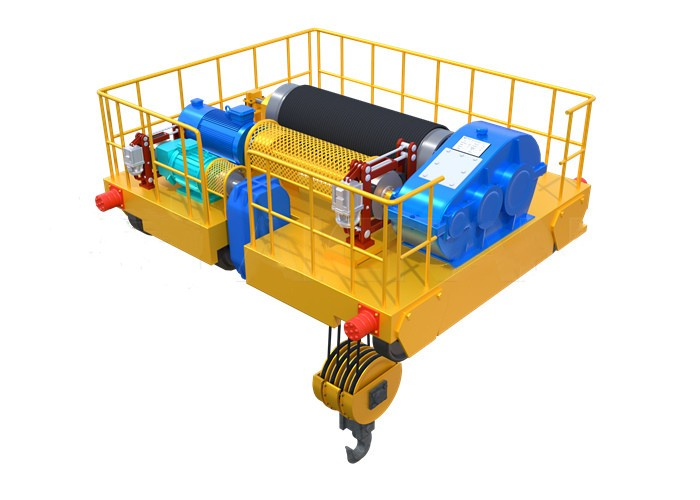
1. Main Structural Components
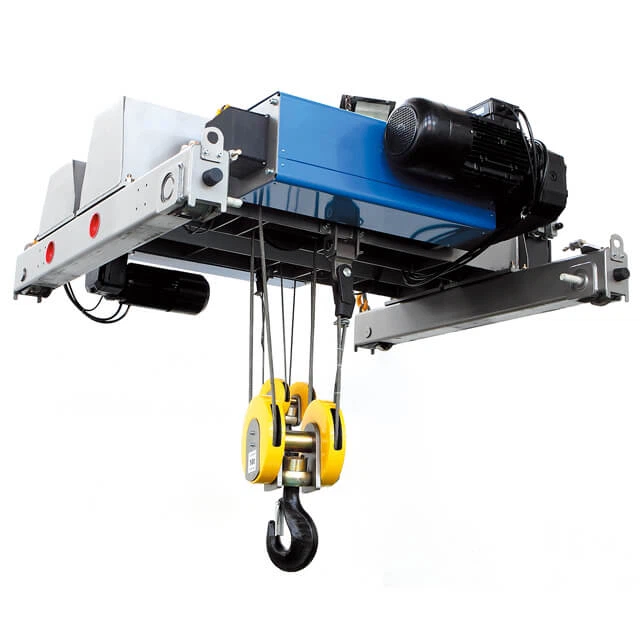
A. Bridge Girders (Double Girder)
Material: Welded steel box sections
Function: Primary load-bearing structure supporting the trolley and hoist.
Features:
Precision-machined rails for smooth trolley movement.
Corrosion-resistant coatings.
 |
 |
B. End Carriages (End Trucks)
Components:
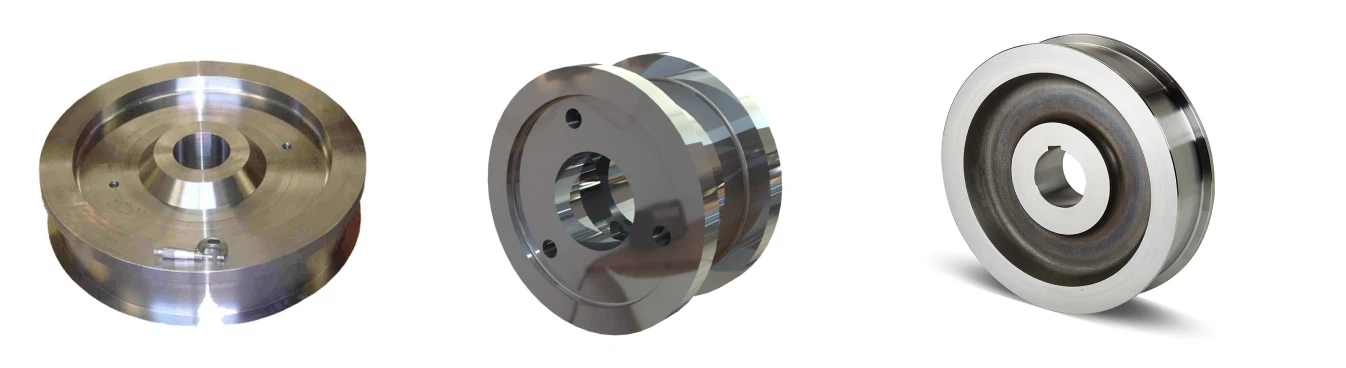
Wheels: Forged steel wheels with bogie-type suspension (4 or 8 wheels per carriage).
Buffers: Rubber or hydraulic shock absorbers at both ends.
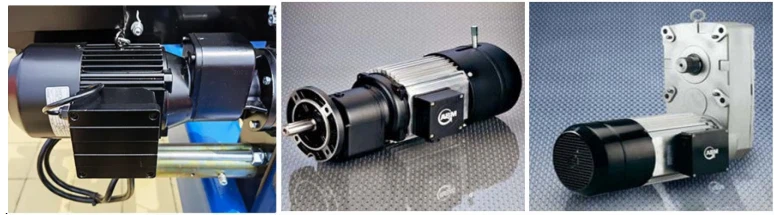
Drive Units: AC motors with brakes and gearboxes for bridge travel.
 |
 |
2. Hoisting & Trolley System
A. Hoist Mechanism
Motor: YZR series (squirrel-cage rotor) or frequency-controlled for precise speed adjustment.
Drum/Rope:
Wire rope drum (DIN 15020/ISO 4308 standards).
Fail-safe disc brakes (dual braking for safety).
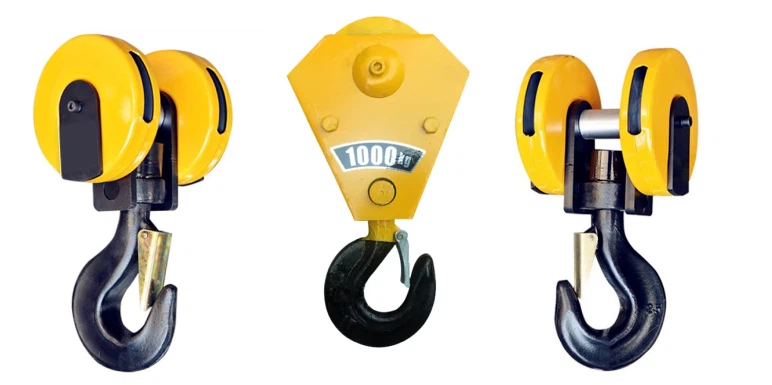
Hook Block: Forged steel hook (SWL up to 100 tons) with safety latch.
B. Trolley Frame
Construction: Welded steel with cross-travel wheels (flanged or double-flanged).
Movement: Powered by geared motors (trolley speed: ~40–46 m/min).
3. Electromagnetic System
A. Electromagnet (Lifting Disk)
Models: MW1-6, MW1-16 (common for 3–16 tons magnetic lift).
Power Supply: DC rectifier (converts 380V AC to DC for the magnet).
Control:
On/Off & Demagnetization via pendant/remote.
Automatic charge retention during power loss (backup systems available).
B. Magnet Suspension
Flexible Cable Reel: Supplies power to the magnet while allowing vertical movement.
Quick-Release Mechanism: For switching between hook and magnet.
4. Electrical & Control Systems
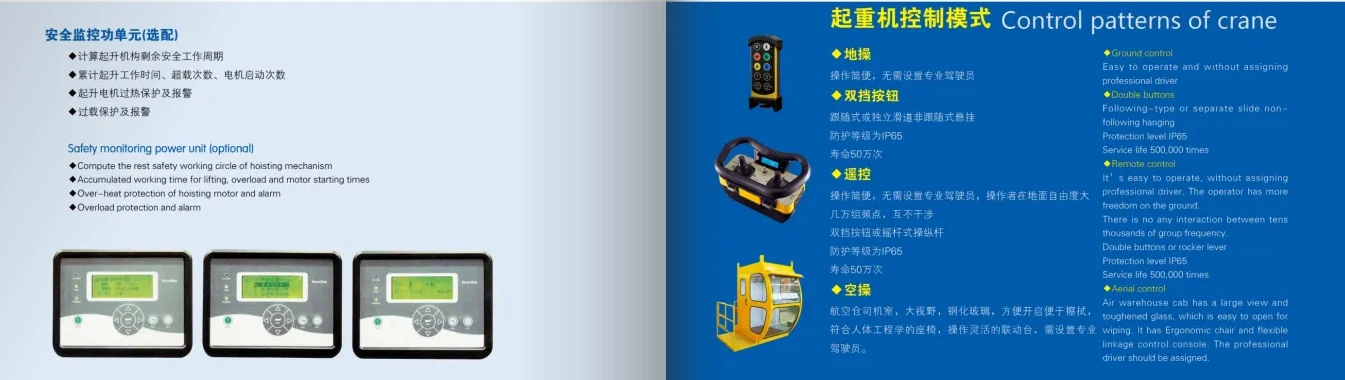
A. Power Supply
Voltage: 3-phase 380V, 50Hz (IP55-rated enclosures).
Festoon/Cable Reels: For power delivery along the bridge.
B. Control Panel
Components:
Programmable Logic Controller (PLC) for automation.
Variable Frequency Drives (VFDs) for smooth acceleration/deceleration.
Operator Interfaces:
Pendant control (IP65-rated buttons).
Radio remote control (optional).
C. Safety Devices
Limit Switches: For hoist height, trolley/bridge travel.
Overload Protection: Load cells or torque limiters.
Emergency Stop: Red mushroom button on all control stations.

5. Auxiliary Components
Walkways & Platforms: For maintenance access (anti-slip grating).
Lighting: LED work lights (mounted on girders).
Lubrication Systems: Centralized auto-lubrication for gears/bearings.
.
6. Optional Add-Ons
Weighing System: Integrated load cells for real-time weight display.
Anti-Sway Technology: For precise magnet positioning.
Explosion-Proof Kits: For hazardous environments.

SKETCH

Main technical

Advantages:
Advantages of QC Magnet Double Girder Overhead Cranes
High Efficiency in Handling Ferrous Materials
Equipped with electromagnetic disks (e.g., MW1-6, MW1-16), these cranes excel in lifting and transporting steel plates, scrap metal, and other ferrous materials without needing manual slinging, significantly improving productivity.
Heavy-Duty Performance
Designed for A6 work grade (heavy-duty), with load capacities ranging from 5 to 100 tons, making them suitable for demanding industrial environments like steel mills and foundries.
Flexible Operation Modes
Supports ground operation (pendant/remote control) and cab operation, allowing adaptability to different workflow requirements.
Precision and Safety
Features variable frequency drives (VFDs) for smooth acceleration/deceleration and dual braking systems for safety. Includes overload limiters and height limit switches to prevent accidents.
Durable Construction
Double-girder welded box structure (Q345B steel) ensures high rigidity and longevity, even under continuous heavy loads.
Customizable Configurations
Options like low-headroom designs, rotating magnets, and explosion-proof kits cater to specialized needs (e.g., confined spaces or hazardous zones).
Application:
Steel and Metal Industries
Steel mills: Handling coils, plates, and ingots.
Scrap yards: Efficiently moving and sorting ferrous scrap 15.
Ports and Logistics
Loading/unloading steel cargo from ships and railcars, leveraging the crane's high lifting height (up to 30m) 16.
Construction and Heavy Machinery
Transporting prefabricated steel components in bridge or building projects 49.
Foundries and Warehousing
Managing molten metal containers (with heat-resistant modifications) or storing heavy steel products 13.
Automotive and Manufacturing
Moving large metal parts in assembly lines, especially where precision placement is critical
Crane production procedure
The production procedure for a 50-ton double beam overhead crane involves several key stages, from design to final testing. Below is a step-by-step outline of the typical manufacturing process:
1. Design & Engineering
Requirements Analysis: Determine client specifications (span, lifting height, duty cycle, power supply, etc.).
CAD Modeling: Create 3D models and detailed drawings for structural and mechanical components.
Load Calculations: Verify strength, deflection, and stability under dynamic/static loads.
Regulatory Compliance: Ensure adherence to standards (ISO, FEM, DIN, ANSI, or CMAA).
2. Material Procurement
Main Beams: Steel plates (Q235B/Q345B) for welded box girders or rolled sections.
End Carriages: Fabricated from steel profiles for rigidity.
Hoist & Trolley: Procure or manufacture components (gearbox, motor, wire rope, hooks, brakes).
Electricals: Motors, control panels, festoon/cable reels, limit switches.
3. Fabrication of Main Components
A. Double Girder Fabrication
Cutting & Welding: Steel plates are cut (laser/plasma) and welded into box girders.
Annealing: Stress-relieving to prevent distortion.
Machining: Drilling holes for connections and machining rail surfaces.
B. End Carriages
Assembly: Wheels, buffers, and drive mechanisms are mounted.
Alignment: Ensure parallel tracks for smooth movement.
C. Hoist & Trolley
Assembly: Gearbox, motor, drum, and brake systems are integrated.
Load Testing: Pre-testing of hoisting mechanism.
4. Surface Treatment
Shot Blasting: Clean surfaces for paint adhesion.
Priming & Painting: Anti-corrosion coatings (epoxy/zinc-rich).
5. Electrical System Installation
Wiring: Install power/signal cables along the crane bridge.
Control Panel: Fit VFDs (for variable speed), overload protectors, and PLCs (if automated).
Safety Devices: Limit switches, emergency stop, and overload protection.
6. Assembly & Integration
Erection: Girders are joined to end carriages; trolley and hoist are mounted.
Alignment: Verify wheel track parallelism and rail clearances.
Lubrication: Apply grease to gears, bearings, and moving parts.
7. Testing & Inspection
A. Factory Acceptance Tests (FAT)
No-Load Test: Run trolley/hoist across full span at all speeds.
Load Test:
Static Test: 125% rated load (50 ton → 62.5 ton) for 10 minutes.
Dynamic Test: 110% load (55 ton) with repeated lifts/movements.
Safety Checks: Verify brakes, limit switches, and emergency stops.
B. Final Inspection
Dimensional accuracy, weld quality, and electrical safety.
8. Disassembly & Packaging
Labeling: Mark components for easy onsite reassembly.
Protection: Waterproof wrapping for shipping.
9. Onsite Installation & Commissioning
Rail Alignment: Ensure runway rails are level and parallel.
Reassembly: Erect girders, install electricals, and calibrate.
Final Testing: Repeat load tests under client supervision.
10. Documentation & Handover
Manuals: Operation, maintenance, and parts manuals.
Certificates: Test reports, material certifications, and compliance documents.
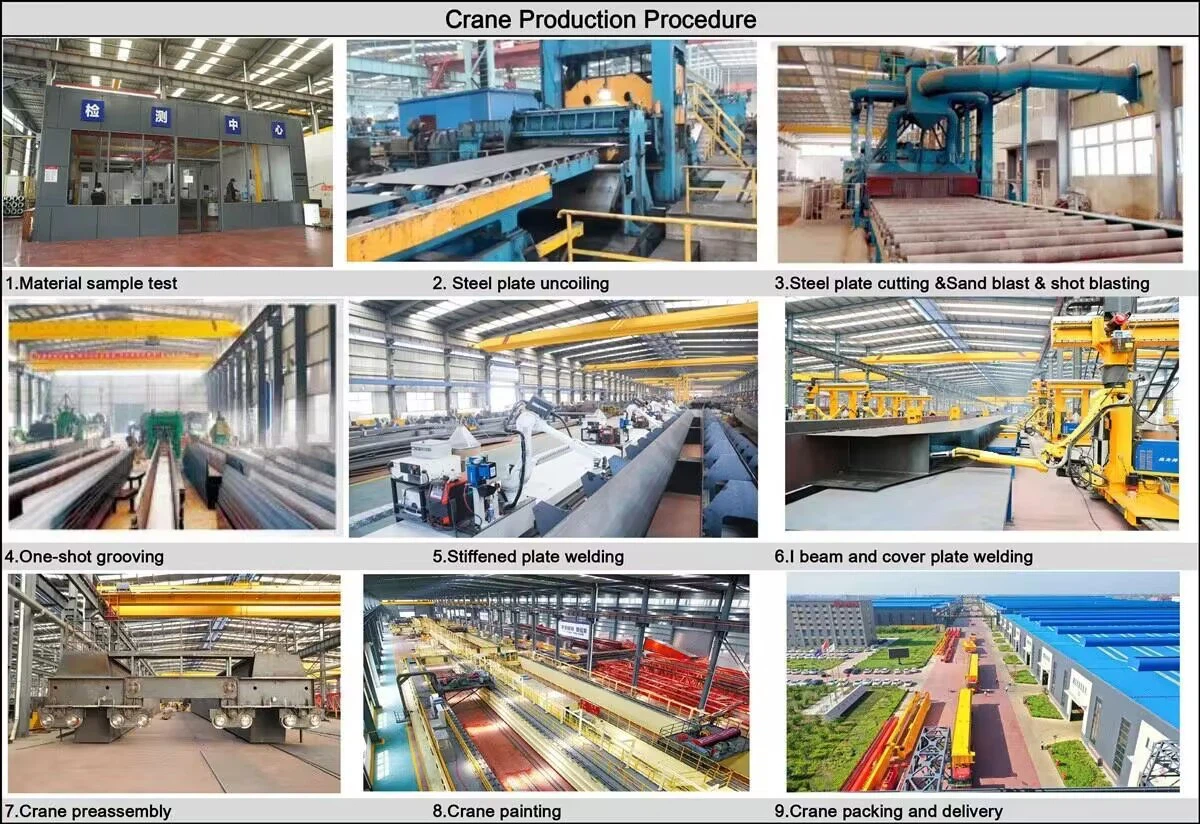
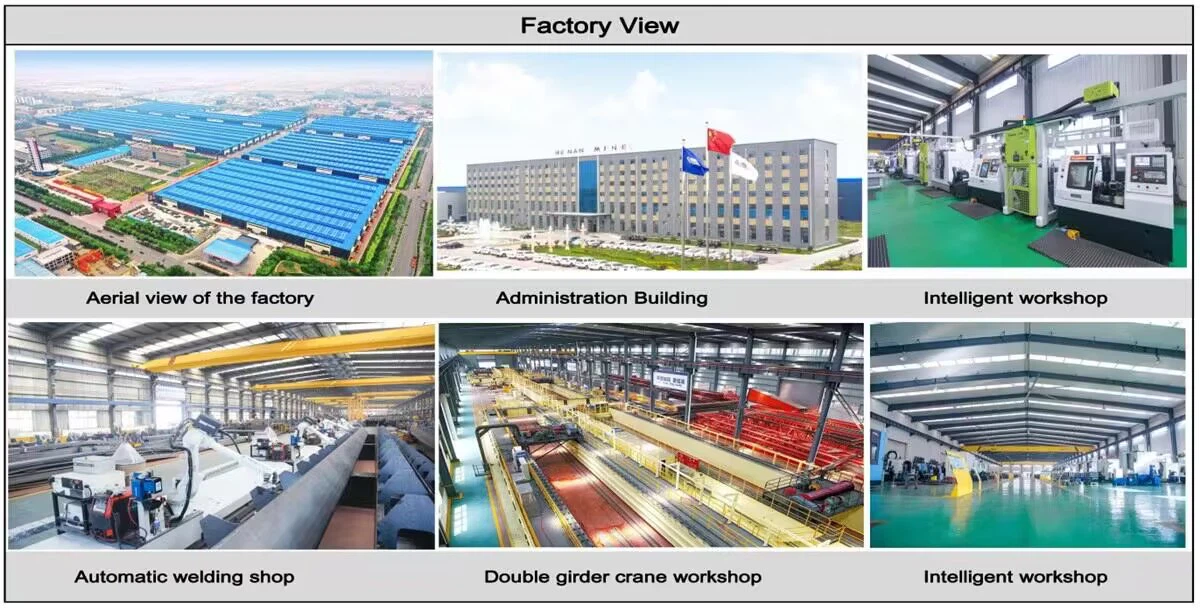
Workshop view:
The company has installed an intelligent equipment management platform, and has installed 310 sets (sets) of handling and welding robots. After the completion of the plan, there will be more than 500 sets (sets), and the equipment networking rate will reach 95%. 32 welding lines have been put into use, 50 are planned to be installed, and the automation rate of the entire product line has reached 85%.


Hot Tags: qc magnet double girder overehad crane, China qc magnet double girder overehad crane manufacturers, suppliers, factory, Double Girder Overhead Crane, Double Girder Overhead Travelling Crane
You Might Also Like



Send Inquiry