Steel Factory Overhead Crane
Henan Province Mine Crane Co.,Ltd(hereinafter referred to as "Henan Mine") was established in 2002, specializing in the research and development, design, production, sales and service of overhead bridge cranes, gantry cranes and electric hoists, such as three series of more than 110 kinds of cranes and supporting parts products. As a professional manufacturer and service provider of cranes and material handling products, we are able to provide customers with total solutions and whole-life services, and are committed to the intelligent, green and high-quality development of the crane industry.
The company currently has a total construction area of 1.62 million square meters, more than 3,500 employees, more than 428 sales and service organizations at home and abroad, and more than 2,000 sets of various processing equipment, which can independently complete more than 20 processes such as turning, planing and grinding. With advanced technology research and development institutions and a team of senior experts at home and abroad. The annual output of single and double girder cranes is more than 80,000 units.
Why choose us?
Experienced company
Henan Province Mine Crane Co., Ltd(hereinafter referred to as "Henan Mine") was established in 2002 and is a high-tech crane enterprise. Based on the advanced design concepts and manufacturing technologies of cranes at home and abroad, we have spared no effort to carry out retrofit designs for single and double-beam cranes and electric hoists and try to produce professional, intelligent, and high-quality products.
Professional team & equipment
The company currently has a total construction area of 1.62 million square meters, more than 3,500 employees, With advanced technology research and development institutions, and 200 senior engineers. We have more than 428 sales and service organizations locally and abroad, and more than 2,000 sets of various processing equipment, which can independently complete more than 20 processes such as turning, planning, and grinding.
Productive capacity
The annual output of cranes is over 80,000 units. The company produces and sells more than 11000 double beam and gantry cranes annually, More than 73000 single beam cranes, and More than 100000 sets (sets) of single and double beam electric hoists and accessories.
Customized design services
We understand that choosing the right crane is critical to the success of any lifting operation. That's why we offer customized design services to meet our customers' unique needs. Our team of experienced engineers works closely with customers to design and manufacture cranes that meet their specific requirements.

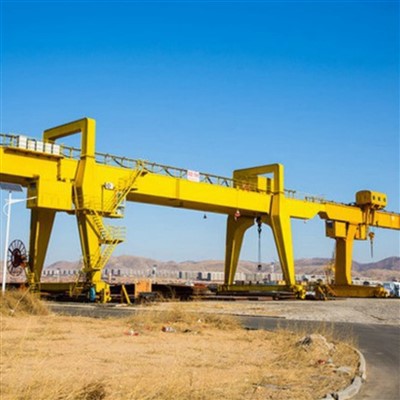


What is Steel Factory Overhead Crane
Steel mill overhead cranes play a crucial role in the steel industry, ensuring the efficient handling and movement of heavy materials and products within the steel production process. These cranes are specially designed to withstand the harsh conditions and demanding tasks found in steel mills, making them indispensable for operations.
Benefits of Steel Factory Overhead Crane
Increased safety :
Forklifts carry the risk of imprecise stacking, dropping goods as well as accidents (due to crashing). Since an overhead crane moves objects through the overhead space of the facility, they don’t carry any of these risks and are capable of moving heavy and bulky loads more quickly than forklifts.
Improved load control :
Overhead cranes, more often than not, come with precision controls that will position objects precisely and without much trouble. This allows the operator to place the load exactly where they want it to be, while minimizing human error.
Avoid floor obstructions :
Since overhead cranes are positioned as high as your facility’s ceiling, they avoid just about everything on your warehouse floor. This, in turn, allows you to install the device just about anywhere you desire. Also, you will be able to carry items safely above any obstacles, thereby reducing product damage.
Improved ergonomics :
Because the overhead cranes do the heavy lifting for you, they remove strain on your operators, which reduces risk of injury, while reducing worker fatigue.
Easy lifting of loads :
As mentioned earlier, overhead cranes come with high lifting capabilities. Once you have your crane, you can depend on it to lift and transport your goods to other parts of your facility. However, every cranes have a specified lift capacity, so make sure you don’t exceed it to avoid the risk of accidents or failure.
Customizable:
Overhead cranes can be easily customized by adding one of many Below-The-Hook accessories including lifting beams, spreader beams, roll & coil lifters, tongs, sheet lifters and pallet lifters.
Inexpensive operating costs :
Operating costs are very inexpensive with a bridge crane. From no energy requirements for a completely manual system, to a very economical three phase system. The bridge crane is always ready to work!
More diverse work force :
With an overhead bridge crane your work force can include both sexes, as well as smaller workers who might not be able to do the job of manually handling the load. As our work force ages, and includes more females this is an even more important consideration.
No need to clear aisles :
Overhead cranes can move places where no other piece of equipment can reach. Have you ever had your fork trucks' path blocked and you had to divert manpower to clear an aisle. Well an overhead bridge crane can make it around the obstruction with ease. If an independent running pushbutton station (a pushbutton station on it's own track so it can be controlled anywhere along the bridge) or radio remote control is provided as the control method, your operator can be in guide himself around the obstructions and still control the crane. You can arrange your plant floor around how you do business and not worry as much about obstructions on your factory floor.
Gantry cranes
Gantry cranes feature legs supporting the crane’s trolley, hoist, and bridge. This design allows the legs to run on rails affixed to the floor instead of overhead. The approach is most common outdoors, where installing columns and beams is impractical. They’re also useful in facilities with limited overhead clearance for suspended runways.
Workstation cranes
These models are ideal for moving up to 2 tons of materials within a compact work area. They can be stand-alone or ceiling-mounted solutions and are suitable for repetitive workflows. These options usually offer expansion capability with a modular design and are highly customizable for increased versatility.
Bridge cranes
Bridge cranes are some of the most common designs in material-handling facilities. They feature two suspended runways connected to a building’s support system. The bridge is one or two steel girders that travel along the runways, while the crane’s trolley and hoist run side-to-side across the bridge. Desired capacity and travel distance determine whether a single- or double-girder is the best choice. The application’s load requirements also help determine whether the hoist and trolley should run along the bridge’s top or bottom.
Jib cranes
Unlike the equipment above, jib cranes have a unique design without tracks or runways. Numerous styles are available, including wall-mounted and stand-alone options. This variety between models provides a wide range of spans, load capacities, and heights.
Monorail cranes
Monorail cranes are common fixtures in production and assembly lines. These machines get their name from their single-path design, where the trolley carries the hoist along one rail. The trolley mounts to the underside of an I-beam, using the beam’s bottom to take materials from one destination to another in a straight line.
Application of Steel Factory Overhead Crane
Material handling
The primary function of overhead cranes in steel mills is to handle raw materials, such as iron ore, coal, and scrap metal, as well as finished products like steel beams, coils, and sheets. These cranes ensure the smooth and efficient transfer of materials between different stages of the production process.
Transporting molten metal
Ladle cranes are specifically designed to transport molten metal from the furnace to the casting area. This function is critical for maintaining the quality and consistency of the molten steel, as well as ensuring the safety of workers.

Loading and unloading
Overhead cranes are used to load and unload materials from trucks, railcars, and ships. This function is vital for maintaining a steady flow of materials into and out of the steel mill, ensuring uninterrupted production.
Supporting maintenance activities
Overhead cranes are also used to support maintenance activities within the steel mill. They can lift and position heavy machinery and equipment, enabling maintenance personnel to perform repairs and inspections safely and efficiently.
Components of Steel Factory Overhead Crane
Tracks
Tracks or rails are the area along which the hoist (and the crane itself) travels to move over the work area. These can be rails on the floor in the case of gantry cranes, or rails on columns in the case of overhead cranes.
Hoist
Hoists are lifting devices using one or more pulley systems that are essential in overhead cranes. These devices are responsible for lifting heavy loads in a precise and controlled manner.
Below-the-hook system
The below-the-hook system, on the other hand, is a complementary element to the hoists that are used to hold and secure loads during the lifting process. A multitude of below-the-hook systems can be installed on an overhead crane, including specific designs for a particular job, as we will see later in this article.
Power systems
The power systems provide the power necessary to operate the overhead crane, including the hoist and rigging and the motors that move the crane along its rails. The power system includes all the cables and electrical installation necessary for the overhead crane to operate smoothly.
Control and safety systems
Control systems are all those impact sensors, limiters, load sensors, etc., designed to avoid exceeding the recommended weight limits, to avoid accidents and to control the crane’s behavior for safe operation.
How to Maintain Steel Factory Overhead Crane
1.Check is there any unusual phenomenon for the temperature of the motor shell and the bearing parts , and the noise and vibration of the motor.
2.When the overhead crane is frequently started, the cooling capacity of the overhead crane is reduced due to the low rotate speed, and the current is large, the temperature of the motor will increase rapidly. It should be noted that the temperature rising of the motor cannot exceed the upper limit specified in the specification,adjust the brakes according to the instruction manual.
3.In the condition that the overhead crane is not used frequently and the sealing condition and the working environment are good, the lubricating oil in the overhead crane gearbox needs to be replaced every six months. When the working environment is bad, it needs to be replaced every quarter. If it is found that there is water in the tank or there is always foam on the oil surface and it is determined that the oil has deteriorated, it is necessary to change the oil immediately. When changing the oil, it should be done according to the oil specified in the instruction manual of the gear box. Be sure to avoid mixing the oil.
4.The daily maintenance of the reducer can be carried out with reference to the manufacturer's instruction manual, and the anchor bolts of the reducer should always be checked and the connection must not be loose.
5.Maintenance techniques for hoist and winch units: always observe the oil tank of the gearbox to check whether the oil level of the lubricating oil is within the specified range. if it is lower than the specified oil level, the lubricating oil must be replenished in time.
6.Grease should be added every two days in the bearing housing at both ends of the drum. The surface of the drum and the wire rope should be greased according to the situation. The rolling bearing of the fixed and movable pulley sets needs to be replenished once a month!
How to Choose the Right Steel Factory Overhead Crane


Load capacity matters:
When determining the workload capacity for a steel mill crane, the choice of capacity typically varies based on the specific tasks and requirements of the steel mill. Steel mill cranes are designed to handle heavy loads associated with the steel production process. Common capacity options range from 10 to 500 tons or more, depending on the size of the steel mill, the type of materials being moved, and the operational demands. It’s essential to assess factors such as the weight of the materials, the frequency of lifts, and the specific processes within the steel mill to determine the appropriate crane workload capacity. This ensures that the crane can operate efficiently and safely, contributing to the seamless operations of the steel mill.
Hook height and span:
Picture a foundry in action-crucibles pouring molten metal, molds being shifted-each task demands specific heights and spans. Choose a crane with a hook height that accommodates your needs and a span that covers the required area efficiently.
Duty class for intensity:
When it comes to the working class of overhead cranes used in steel plants, the appropriate choice typically falls within the range of A5 to A8, depending on the specific operational requirements and environmental conditions of the steel plant. Steel plants often demand cranes to handle substantial loads in challenging conditions, including high temperatures, humidity, and dust. Hence, opting for a higher working class ensures that these cranes maintain stable performance in such demanding environments.
Heat resistance:
In the fiery embrace of a foundry, extreme temperatures are the norm. Your chosen crane should be crafted from heat-resistant materials and equipped with coatings that shield it from the relentless heat, ensuring uninterrupted performance.
Manufacturer’s reputation:
Your foundry’s success hinges on the reliability of your equipment. Choose a crane from a reputable manufacturer known for producing quality machinery and offering exceptional after-sales support.
Precision and control:
Crafting metal into precision components demands, well, precision. The crane you choose should offer accurate control, enabling operators to maneuver loads with finesse and accuracy.
Safety at the core:
Safety is non-negotiable in a foundry. Look for cranes equipped with safety mechanisms such as overload protection, emergency stop buttons, and anti-collision systems. These features not only safeguard your workforce but also prevent costly accidents.
Accessibility for maintenance:
Behind every successful foundry crane is a robust maintenance plan. Opt for a crane design that allows easy access to critical components for maintenance purposes. This reduces downtime and ensures continuous productivity.
The company currently has a total construction area of 1.62 million square meters, more than 3,500 employees, more than 428 sales and service organizations at home and abroad, and more than 2,000 sets of various processing equipment, which can independently complete more than 20 processes such as turning, planing and grinding. With advanced technology research and development institutions and a team of senior experts at home and abroad. The annual output of single and double girder cranes is more than 80,000 units.


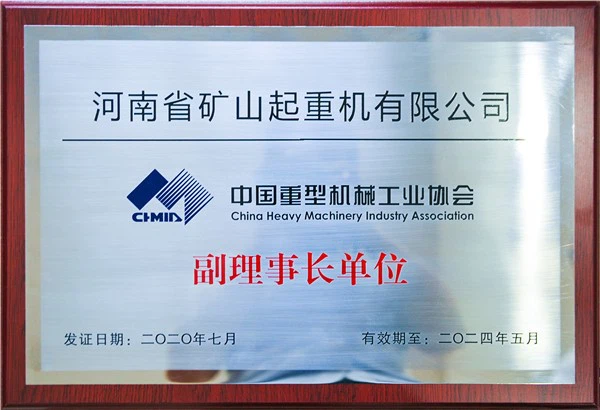
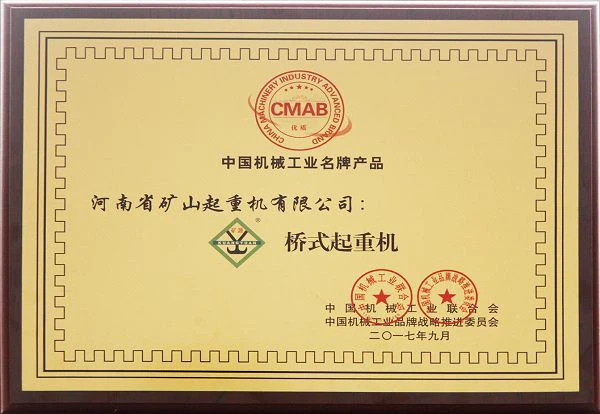
Certifications