










European Double Girder Overhead Crane
Products Description
A European double girder overhead crane is a modern industrial crane system designed for heavy-duty material handling in industrial environments. It consists of two parallel girders, or beams, that span the width of the workspace, supported by end trucks that allow it to move along the length of the facility. Mounted on these girders is a trolley, which carries a hoist capable of lifting and moving heavy loads across the working area.
Core Components: Engine, Bearing, Gearbox, Motor, Pressure vessel
Place of Origin: Henan, China
Warranty: 1 Year
Weight (KG): 2000 kg
Video outgoing-inspection: Provided
Machinery Test Report: Provided
Power supply: 3 Phase AC 380V 50HZ
Control method: remote Control, pendent control,cabin control
Lifting mechanism: Electric Hoist or trolley
Crane type: Double Girder
Travelling speed: 20m/min,30m/min
Lifting speed: 0.8/5m/min 1/6.3m/min
Main electrical parts: Schnider
Work Duty: A4-A7
Crane Feature: Widely

Pictures & Components
1.Double Girder Structure:
Girders: The crane is built with two horizontal steel girders, which provide a strong and stable foundation for lifting heavy loads. The double girder design allows for greater load-bearing capacity and can handle loads ranging from 5 to 500 tons or more, depending on the model.
End Trucks: The girders are supported at both ends by end trucks, which house wheels that allow the crane to move along the runway beams installed on the building

Trolley and Hoist:
Trolley: The trolley is the moving component that travels along the girders. It carries the hoist and moves horizontally across the width of the crane.
Hoist: The hoist is responsible for lifting and lowering the load. European double girder cranes typically use electric wire rope hoists, known for their durability and precision. The hoist is mounted on top of the trolley, maximizing the lifting height and making the system ideal for environments with limited headroom.
 |
 |
3.End carriage
1)The end carriage of a double beam overhead traveling crane is a critical component that supports and allows the movement of the entire crane structure along the runway. Typically made of steel, the end carriage is designed to withstand the weight of the crane's structure, including the bridge beams, hoists, and any load it carries.
2) End carriages are equipped with wheels that run on the crane runway beams. These wheels are often equipped with anti-tilt and anti-skew features to ensure smooth and stable movement.
3) The end carriage has a frame that connects the wheels to the main crane bridge and supports the entire load. This frame is engineered to distribute loads evenly and maintain structural integrity.End carriages play a pivotal role in providing stability, mobility, and safety for the overhead traveling crane, making them essential for its efficient operation.Controls and Safety Systems: Safety measures such as limit switches, brakes, and sensors are often installed on the end carriages to control movement, prevent overspeed, and ensure safe operation.
 |
 |
4.Crane travelling mechanism
1) Working principle
The system receives electrical power from an external source (e.g., a rail or cable system running along the crane's path).The motors drive the wheels through a gear and transmission system. These wheels are fixed on each end of the crane bridge to allow movement along the track.The operator controls the direction and speed of the crane's movement via a control panel, which operates the motor. The crane can move forward or backward along the rails. In the case of double beam cranes, each beam (on either side of the crane) typically has its own set of motors and drive wheels. The coordination between these components ensures stable movement and prevents uneven loading on the crane structure.
2) Functions of the crane operating mechanism
Movement Across the Bridge: The primary function is to move the entire bridge structure, which supports the hoisting mechanism, horizontally along the runway rails or tracks. This allows the crane to cover the entire length of the workspace or facility.
Positioning and Precision: The traveling mechanism enables precise positioning of the crane over the work area. This is essential for accurately placing or retrieving loads at specific locations within the span of the crane.
Load Handling and Transport: The crane's traveling system helps in transporting loads from one end of the facility to the other, ensuring that heavy or bulky items can be moved safely and efficiently across the space.
Synchronization of Movement: For double beam overhead cranes, the traveling mechanism needs to synchronize the movement of both beams to ensure balanced operation and stability. This prevents uneven load distribution and potential damage to the crane structure or the load being lifted.
Safety and Control: The traveling system is equipped with safety features to prevent accidents. These include limit switches, emergency stop buttons, and anti-collision devices that control the movement of the crane and protect operators and other personnel in the workspace.
Variable Speed and Acceleration: The traveling mechanism is designed to provide variable speed control and smooth acceleration/deceleration. This is crucial for delicate operations and ensures that the load is moved without sudden jerks that could lead to damage or accidents.
5.Trolley travelling mechanism
1) Structural composition
Trolley frame: The frame forms the central body of the trolley and is built to support the entire load carried by the hoist. It is made from steel sections that provide the strength needed to handle heavy loads.
Wheel set: Mounted on each end of the trolley frame, these wheels run on the rails or tracks of the overhead beams. They are typically made of high-strength steel and are designed to bear the weight of the trolley and its load.
Drive device: The trolley is powered by an electric motor coupled with a gearbox that controls the rotation and movement of the wheels.
2) Function of the trolley operating mechanism
Horizontal Movement: The primary function is to enable the trolley to travel smoothly along the crane's bridge beams, allowing for precise positioning of the load over the workspace.
Load Handling: It moves the hoist (which is mounted on the trolley) across the span of the crane, facilitating the handling of heavy materials and ensuring they can be lifted, moved, and placed as needed.
Operational Efficiency: The mechanism supports fast and reliable movement of the trolley to maximize operational efficiency and productivity.
6.Crane wheel
1) Function of wheels
Support: Each wheel carries a portion of the crane's load and supports the double-beam structure.
Movement: Wheels rotate on bearings or bushings, allowing smooth and efficient movement along the crane runway or track.
Load Distribution: Wheels are spaced and designed to distribute the load evenly, which helps prevent excessive stress and potential structural issues.
2) Design requirements
Material: Typically made of high-strength steel or forged alloy to withstand heavy loads and long-term wear.
Shape: Often has a flanged design to ensure secure tracking along the rails and prevent derailing.
Size: Varies depending on the size and capacity of the crane. Larger cranes will have bigger wheels to handle the increased load.

7.Crane Hook
A crane hook of a double beam overhead travelling crane is a critical component used for lifting and transporting heavy loads. This hook is typically suspended from a trolley that moves along the two beams of the crane, enabling it to travel horizontally across the span of the structure.
The hook is usually made from high-strength steel or other alloy materials to withstand the high loads it is subjected to.It can be a single-hook or a double-hook configuration, depending on the weight and type of loads it needs to lift. The hook often features a safety latch or locking mechanism to ensure the load remains secure during lifting.It consists of the hook body, a swivel, and sometimes a shank, which is attached to the lifting mechanism (usually a hoist).

Motor
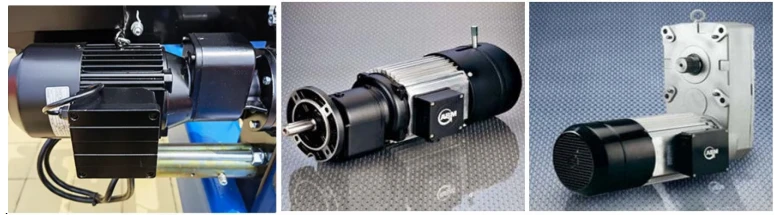
1)A double beam overhead travelling crane typically uses a hoist motor to lift and lower the load and travelling motors to move the crane along its rails. The motor specifications depend on the crane's load capacity, speed requirements, and other operational needs.
2) Type of Motor
Hoist Motor:
This motor controls the vertical movement of the hoist. It is usually a three-phase AC motor with a high torque rating to handle heavy loads.Common types include squirrel cage induction motors for general use or DC motors for better control in applications requiring variable speed.
Travelling Motors:
These motors control the movement of the crane along the overhead beams. They are typically three-phase AC motors that may be geared for added torque.They can use frequency drives or variable speed drives to adjust the speed as needed.

.
Sound and light alarm system & limit switch
1) Sound and light alarm system
A double beam overhead traveling crane equipped with a sound and light alarm system is designed to enhance safety during operation by alerting nearby personnel of potential hazards or movements.
Sound Alarm (Hooter/Buzzer):Function: Emits a loud sound to alert workers in the vicinity when the crane is in operation or when it encounters a warning or emergency situation.Types: Can be a continuous or intermittent tone, depending on the urgency of the alert.Power Source: Can be powered by the crane's main electrical system or an independent power source for reliability.
Light Alarm (Flashing Light/Beacon):Function: Provides a visual signal to indicate the crane's operation status or an alert condition.Types: Flashing or rotating lights (e.g., strobe lights) that make it easy for workers to see the warning from a distance, even in bright daylight.Colors: Often uses different colors like red (danger), yellow (caution), or green (safe status) to indicate different levels of alert.
2) Limit switch
A limit switch on a double beam overhead traveling crane is an essential safety component. It is used to stop or control the movement of the crane's bridge, trolley, or hoist when it reaches a designated limit, preventing damage or accidents.
Upper and lower limits: The limit switch is used to set the upper and lower movement limits of the crane. When the lifting mechanism or trolley reaches the set limit position, the limit switch will cut off the power supply or sound an alarm to prevent it from exceeding the safety range.
Prevent collision: The limit switch can effectively prevent the crane from colliding with other equipment or obstacles, ensuring the safety of equipment and personnel.
Automatic stop: In the event of a malfunction or accident, the limit switch can realize the automatic stop function to prevent accidents.

10.Safety Devices
1) 1. Overload Limit Switch
Function: Prevents lifting beyond the crane's rated capacity, avoiding damage to the crane and potential accidents.
Operation: Automatically stops the crane or hoist when the load exceeds the predetermined weight limit.
2. Limit Switches
Function: Stops the crane at predefined points along its travel path to prevent accidental collisions or damage.
Types: Can include end-of-travel limit switches that stop the crane when it reaches the end of its runway and vertical travel limit switches for the hoist.
3. Anti-Collision Device
Function: Prevents collisions between cranes operating in the same area, enhancing workplace safety.
Operation: Uses sensors or other monitoring systems to alert operators or automatically stop the crane if an obstruction or another crane is detected.
4. Emergency Stop Button
Function: Allows operators to immediately stop the crane's operation in the event of an emergency.
Placement: Typically located in easily accessible positions for quick response.
5. Warning Lights and Alarms
Function: Alerts nearby workers when the crane is in operation or moving to warn them of potential hazards.
Types: Audible alarms, flashing lights, or sirens.
6. Brake Systems
Function: Stops the crane or hoist from moving unintentionally and holds the load securely in place.
Types: Mechanical and electromagnetic brakes for reliable stopping power.
7. Load Sway Prevention System
Function: Reduces the swinging motion of the load while lifting or moving to enhance stability and control.
Technology: Often uses sensors and control systems that adjust the crane's operation to minimize load sway.
8. Safety Hooks
Function: Ensures the hook cannot accidentally open or release the load.
Design: Equipped with safety latches or locks that prevent the load from detaching unintentionally.
9. Temperature Sensors
Function: Monitors the temperature of critical components (like motors and brakes) to avoid overheating and potential failures.
Alerts: Automatically triggers shutdown or alert notifications if a temperature threshold is reached.
10. Emergency Power Off (EPO) System
Function: Cuts off all power supply to the crane in case of a serious fault or emergency.
Safety: Ensures immediate response to a critical issue, preventing further damage or injury.
11. Inspection and Maintenance System
Function: Regular checks and pre-operation safety protocols help identify potential issues before they become dangerous.
Features: May include automated inspection reminders and logging systems.
12. Load Cell and Monitoring Systems
Function: Provides real-time feedback on the weight of the load being lifted and ensures that it does not exceed safe operating limits.
Safety: Integrated with overload limit switches to trigger warnings or cut-offs.
13. Crane Cabin Safety
Function: Ensures the operator's safety by having secure cabins with safety bars, emergency exits, and climate control for optimal operating conditions.
11.Control Mode
1) 1. Cabin Control (Pendant Control)
Operator's Cabin: The crane is operated from an enclosed or open operator's cabin mounted on the crane. The cabin can be located at either end of the crane and provides full control of all movements, including lifting, traveling, and trolley movement.
Joystick/Push-button Panel: Operators use joysticks or push-button panels to control the crane's operations from the cabin.
2. Remote Control
Wireless Remote: The crane can be operated using a wireless remote control, giving operators more flexibility and allowing them to move around the workspace while controlling the crane. This control method is often used for safety and efficiency in large areas or for operations requiring quick movement.
3. Pendant Control (Wired Control)
Hanging Pendant: The operator uses a control pendant connected to the crane with a cable. This allows for precise control while standing on the ground and is commonly used for localized operations or in environments where a cabin may not be practical.
Buttons and Joystick: Similar to cabin control, pendant controls feature buttons and a joystick or switch for the various crane functions.
4. Automated Control
Programmable Logic Controller (PLC): Some modern overhead cranes can be operated in an automated or semi-automated mode using PLCs or computer-based systems. The crane can follow pre-set paths or perform repetitive tasks automatically, which improves precision and efficiency.
Sensors and Safety Features: Automated systems often include sensors that monitor load weight, position, and safety features that stop or adjust the crane's operation in case of malfunctions.
5. Dual Control (Manual and Automated)
Combination of Modes: In many modern double beam overhead cranes, operators can switch between manual control (using cabin, remote, or pendant) and automated control for specific tasks. This dual-control system provides flexibility and is often used in industries that require both precision and human oversight.

12.Sketch

Main technical

Advantages
The European double girder overhead crane offers numerous advantages, making it a popular choice for industries requiring heavy-duty and precise material handling. Below are some of the key advantages:
1. Higher Lifting Capacity
Double Girder Design: The two-girder system provides higher strength and stability, allowing these cranes to lift heavier loads, often exceeding 50 tons. They are ideal for lifting large and heavy items, such as machinery, steel coils, or construction materials.
Efficient Use of Space: The hoist is mounted on the top of the girders, providing additional lifting height (known as "headroom") compared to single girder cranes. This enables maximum utilization of the available workspace, which is particularly useful in facilities with height limitations.
2. Precision and Smooth Operation
Advanced Control Systems: European double girder cranes are equipped with sophisticated control systems, including variable frequency drives (VFDs) for smooth acceleration, deceleration, and load movement. This allows for precise positioning of loads, reducing the risk of damage to materials and ensuring safer operation.
Accurate Load Positioning: With the integration of modern automation and electric hoists, these cranes offer precise and controlled lifting operations, making them ideal for applications requiring accuracy.
3. Compact and Lightweight Design
Optimized Design: European overhead cranes are known for their compact and lightweight design compared to traditional cranes. The use of high-quality, high-strength materials reduces the overall weight of the crane while maintaining high load capacity.
Less Structural Stress: The reduced weight means less stress is applied to the building's structure, which can result in lower installation and infrastructure costs.
4. Energy Efficiency
Efficient Motors and Drives: Equipped with energy-efficient motors and control technologies, European double girder cranes consume less power while maintaining high operational efficiency. This leads to lower energy costs and environmentally friendly operations.
Regenerative Braking: Some models are equipped with regenerative braking systems, which capture and reuse the energy generated during braking, further enhancing energy efficiency.
5. Durability and Low Maintenance
High-Quality Components: European double girder cranes are built with high-quality, durable components, resulting in long-lasting performance and reduced wear and tear. This leads to less frequent maintenance and lower maintenance costs over time.
Easy Maintenance Access: The crane's design ensures that key components, such as the hoist and trolley, are easily accessible for maintenance, reducing downtime during service or repairs.
6. Customizable and Versatile
Modular Design: European double girder overhead cranes can be customized to meet specific operational requirements. Whether it's load capacity, span, speed, or lifting height, the design can be tailored to the customer's needs.
Wide Range of Applications: These cranes can be adapted for use in a variety of industries, such as steel production, manufacturing, logistics, shipbuilding, and power plants.
7. Safety and Reliability
Compliance with European Safety Standards: European cranes are built in compliance with strict safety standards, such as FEM, DIN, and ISO. This ensures maximum safety for both operators and materials being handled.
Enhanced Safety Features: Equipped with safety features like overload protection, anti-collision systems, emergency stop functions, and limit switches, these cranes provide reliable and safe operation, reducing the risk of accidents.
Smooth and Controlled Movements: The advanced control systems ensure smooth load lifting, minimizing load swinging and increasing operator confidence during delicate operations.
8. Cost-Effective in the Long Run
Lower Installation Costs: The lightweight, compact design can reduce installation costs, as less reinforcement may be required for the building structure.
Reduced Operational Costs: The energy-efficient operation, low maintenance needs, and durable design contribute to lower operational costs over the crane's lifespan.
High Return on Investment (ROI): While the initial investment may be higher, European double girder cranes offer a longer service life, energy savings, and reduced downtime, providing a higher ROI.
9. Advanced Automation Capabilities
Integration with Smart Systems: Many European double girder overhead cranes can be integrated with automated control systems for enhanced performance. This includes smart monitoring, predictive maintenance, and remote control capabilities, allowing for real-time data collection and analysis.
Automation and Flexibility: These cranes can be automated for use in repetitive tasks, further increasing productivity in automated or semi-automated production lines.
10. Environmental Friendliness
Reduced Carbon Footprint: The energy efficiency of European cranes helps reduce overall power consumption and contributes to a lower carbon footprint, making them environmentally friendly options for industries seeking sustainability.
Conclusion:
The European double girder overhead crane offers a combination of high lifting capacity, precision, durability, and safety. Its advanced design ensures smooth operation, energy efficiency, and reduced maintenance, making it an excellent choice for industries requiring reliable and efficient material handling systems.
Application
The European double girder overhead crane is widely used in various industries and environments that require efficient and reliable heavy-duty material handling. Due to its high lifting capacity, precision, and versatility, this crane is ideal for applications involving large and heavy loads. Here are some of the common applications:
1. Manufacturing Plants
Machinery Handling: Used in assembly lines for moving heavy machinery, equipment, and parts during the manufacturing process.
Automotive Industry: For lifting car parts, engines, and other automotive components during production and assembly.
Metal Fabrication: Ideal for transporting heavy metal sheets, components, and finished products within fabrication plants.
2. Steel Industry
Handling of Steel Coils and Plates: Often used to lift and transport large steel coils, slabs, billets, and other heavy steel materials in steel mills and processing plants.
Hot and Cold Rolling Mills: The crane moves raw steel materials and products through different stages of the rolling process.
3. Shipbuilding
Construction of Ships: Essential for moving large ship sections, components, and heavy machinery during the shipbuilding process.
Ship Maintenance and Repairs: Used in shipyards to lift heavy equipment or parts for repair and refurbishment of vessels.
4. Power Plants
Handling of Heavy Equipment: Used to lift and transport heavy components such as turbines, transformers, generators, and boilers in power plants, including nuclear, thermal, and hydroelectric power stations.
Maintenance Operations: Assists in maintenance work by moving large parts and machinery in confined and critical areas.
5. Warehousing and Logistics
Material Handling: Commonly used in large warehouses and logistics centers to lift and transport bulk materials, containers, and heavy items with ease.
Storage Facilities: Helps in efficiently organizing and stacking heavy goods in storage spaces, making them easily accessible when needed.
6. Construction Industry
Handling Heavy Materials: Used for lifting and transporting heavy construction materials such as beams, girders, concrete slabs, and pre-fabricated components on construction sites.
Bridge and Tunnel Construction: Utilized for assembling and positioning large structural components during the construction of bridges and tunnels.
7. Railway and Train Workshops
Train and Locomotive Maintenance: In railway workshops, these cranes are used to lift heavy train components such as engines, wheelsets, and bogies during maintenance and repair operations.
Construction of Railway Infrastructure: Helps in the construction and assembly of rail tracks and related infrastructure.
8. Aerospace Industry
Aircraft Assembly: Used in aerospace manufacturing plants to lift and position large aircraft parts, including wings, fuselages, and engines, with high precision.
Maintenance and Repairs: Supports the maintenance and repair of large aircraft by lifting heavy equipment and aircraft components.
9. Mining Industry
Lifting Heavy Machinery: Used to lift large mining equipment, machinery, and components for installation or maintenance.
Ore Handling: Plays a key role in handling large quantities of raw ore and transporting it for processing.
10. Chemical and Petrochemical Plants
Handling Heavy Tanks and Vessels: Essential for moving large chemical tanks, pressure vessels, reactors, and other equipment used in chemical and petrochemical processing.
Refinery Maintenance: Supports the lifting of heavy components during the maintenance and inspection of refineries.
11. Heavy Equipment Manufacturing
Handling of Large Components: Used in the production of heavy equipment like cranes, bulldozers, and excavators, lifting large parts during the assembly process.
Component Testing: Assists in handling equipment during testing and quality control phases.
12. Wind Power Industry
Turbine Assembly: Crucial in the assembly of wind turbines, helping to lift heavy nacelles, blades, and towers.
Installation and Maintenance: Used for installing and maintaining wind power equipment, often requiring precise movement of large components.
13. Paper and Pulp Industry
Handling Heavy Rolls and Machinery: Used to lift and transport heavy rolls of paper and other large components used in paper production.
Machinery Maintenance: Helps in the maintenance of large, complex machines used in the pulp and paper manufacturing process.
14. Metal Foundries
Handling Molds and Castings: Helps in handling large metal molds and heavy castings, moving them through different stages of the foundry process.
Pouring Operations: Assists in transporting and positioning molten metal containers for safe pouring into molds.
15. Marine Industry
Cargo Handling: Supports the loading and unloading of heavy cargo, such as containers and equipment, at ports and shipyards.
Offshore Equipment: Used in the assembly and maintenance of offshore platforms and lifting heavy marine equipment.
Conclusion:
The European double girder overhead crane is versatile and adaptable, making it suitable for a wide range of applications in industries that demand high lifting capacity, precision, and safety. From heavy manufacturing and steel production to shipbuilding and power generation, these cranes play a critical role in efficient and reliable material handling operations.
Crane production procedure
1.1. Design and Engineering
Customer Requirement Analysis: Gather specifications such as capacity, span, lifting height, working environment, and operating conditions.
Conceptual Design: Develop basic structural layouts, operational features, and preliminary load calculations.
Detailed Design: Create detailed engineering drawings and structural calculations using CAD software. Include:
Double-girder structure
Hoist/trolley design
End carriage
Electrical and control systems
Compliance: Ensure designs meet international standards (e.g., ISO, FEM, DIN).
2. Material Procurement
Steel: High-quality structural steel for girders, supports, and other components.
Mechanical Components: Motors, gears, wire ropes, bearings, and trolleys.
Electrical Components: Control panels, sensors, switches, and wiring.
Special Components: Anti-corrosion coatings, explosion-proof systems (if required).
3. Fabrication
3.1 Girder Manufacturing
Cutting: Cut steel plates for top and bottom flanges, web plates, and stiffeners to size.
Welding: Assemble and weld parts to form double girders.
Conduct non-destructive testing (NDT) on welds.
Stress Relief: Perform heat treatment to relieve welding-induced stresses.
Machining: Drill precise holes for end trucks, trolleys, and hoist mountings.
3.2 End Carriages
Weld and machine end carriage structures.
Install wheels and bearings to match the track gauge.
3.3 Trolley and Hoist Assembly
Assemble the hoist mechanism, including the motor, drum, and wire rope.
Fit the trolley frame to ensure smooth movement along the girders.
3.4 Electrical Systems
Manufacture or procure the electrical control panel.
Assemble control systems, wiring, and sensors.
Integrate Variable Frequency Drives (VFDs) if needed for smoother operations.
4. Pre-Assembly
Combine the girders, trolleys, end carriages, and electrical components into a single structure.
Conduct alignment checks and ensure accurate assembly of moving parts.
5. Surface Treatment
Cleaning: Shot-blasting or sandblasting to remove rust and impurities.
Coating: Apply anti-corrosion paint or powder coating.
Special Coatings: Use fireproof or chemical-resistant coatings for specific environments.
6. Quality Control and Testing
6.1 Dimensional Inspection
Verify all dimensions match the design specifications.
6.2 Load Testing
Perform static and dynamic load tests:
Static: Test with 125% of the rated load capacity.
Dynamic: Test with 110% of the rated load capacity during movement.
6.3 Operational Testing
Test hoist and trolley movement, braking systems, and electrical operations.
Calibrate limit switches and overload protection devices.
6.4 Certification
Ensure compliance with industry standards and provide necessary documentation.
7. Packing and Delivery
Dismantling: Disassemble the crane for transportation.
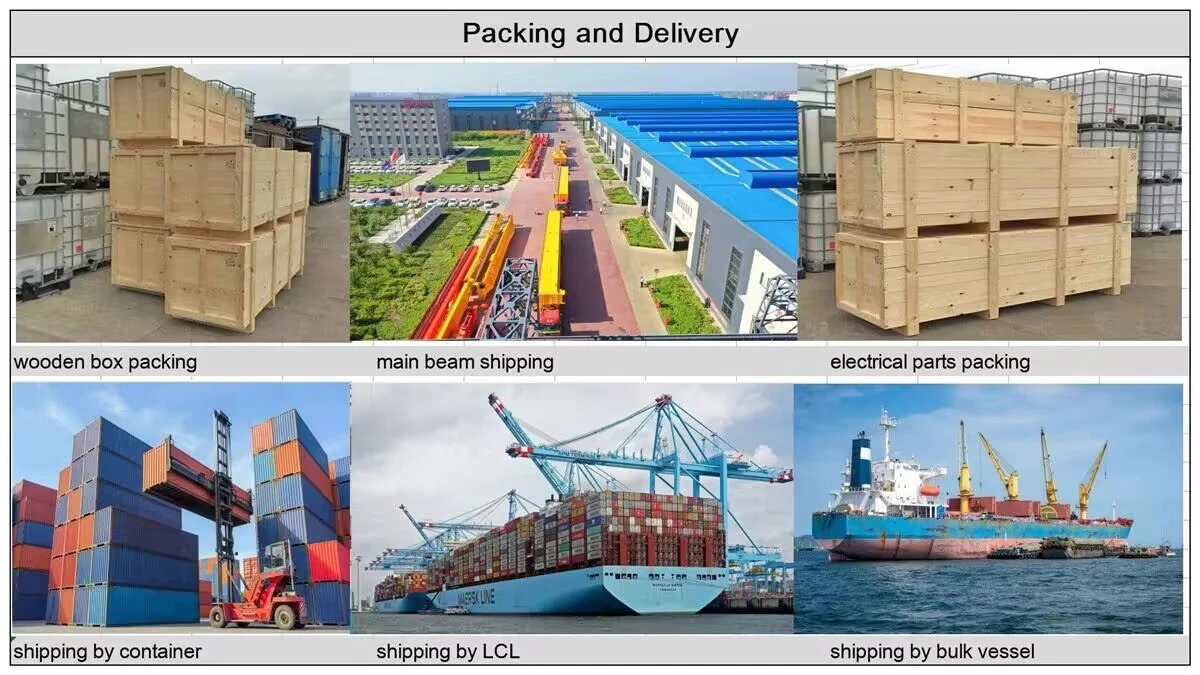
Packaging: Use reinforced packing materials to prevent damage during transit.
Shipping: Arrange logistics for delivery to the installation site.
8. Installation and Commissioning
On-Site Assembly: Reassemble the crane structure and components.
Track Installation: Align and secure the crane's tracks or rails.
Testing: Conduct final on-site tests to ensure full operational readiness.
Handover: Provide operational training and deliver manuals to the client.
9. After-Sales Service
Offer regular maintenance checks and support.
Supply spare parts and technical assistance as needed.

Workshop view:
The company has installed an intelligent equipment management platform, and has installed 310 sets (sets) of handling and welding robots. After the completion of the plan, there will be more than 500 sets (sets), and the equipment networking rate will reach 95%. 32 welding lines have been put into use, 50 are planned to be installed, and the automation rate of the entire product line has reached 85%.


Hot Tags: european double girder overhead crane, China european double girder overhead crane manufacturers, suppliers, factory, Double Girder Overhead Travelling Crane, Double Girder Overhead Crane
You Might Also Like




Send Inquiry