Double Girder Overhead Crane
Henan Province Mine Crane Co.,Ltd(hereinafter referred to as "Henan Mine") was established in 2002, specializing in the research and development, design, production, sales and service of overhead bridge cranes, gantry cranes and electric hoists, such as three series of more than 110 kinds of cranes and supporting parts products. As a professional manufacturer and service provider of cranes and material handling products, we are able to provide customers with total solutions and whole-life services, and are committed to the intelligent, green and high-quality development of the crane industry.
The company currently has a total construction area of 1.62 million square meters, more than 3,500 employees, more than 428 sales and service organizations at home and abroad, and more than 2,000 sets of various processing equipment, which can independently complete more than 20 processes such as turning, planing and grinding. With advanced technology research and development institutions and a team of senior experts at home and abroad. The annual output of single and double girder cranes is more than 80,000 units.
Why choose us?
Experienced company
Henan Province Mine Crane Co., Ltd(hereinafter referred to as "Henan Mine") was established in 2002 and is a high-tech crane enterprise. Based on the advanced design concepts and manufacturing technologies of cranes at home and abroad, we have spared no effort to carry out retrofit designs for single and double-beam cranes and electric hoists and try to produce professional, intelligent, and high-quality products.
Professional team & equipment
The company currently has a total construction area of 1.62 million square meters, more than 3,500 employees, With advanced technology research and development institutions, and 200 senior engineers. We have more than 428 sales and service organizations locally and abroad, and more than 2,000 sets of various processing equipment, which can independently complete more than 20 processes such as turning, planning, and grinding.
Productive capacity
The annual output of cranes is over 80,000 units. The company produces and sells more than 11000 double beam and gantry cranes annually, More than 73000 single beam cranes, and More than 100000 sets (sets) of single and double beam electric hoists and accessories.
Customized design services
We understand that choosing the right crane is critical to the success of any lifting operation. That's why we offer customized design services to meet our customers' unique needs. Our team of experienced engineers works closely with customers to design and manufacture cranes that meet their specific requirements.


What is Double Girder Overhead Crane
A double girder bridge crane is a type of overhead crane. It feature end trucks that operate on fixed rails attached to the top flange of runway girders or beams. Double girder cranes provide higher lift capacity than single girder cranes, because the hoist is placed between the two cross girders rather than under a single girder. Therefore, the depth of the cross girder is gained in switching to double girders. Double girder cranes are designed for heavier capacities and often have a continuous duty cycle. These cranes are motorized and typically feature radio controls.
Benefits of Double Girder Overhead Crane
1.Enhanced lifting capacity:
One of the primary advantages of a double girder overhead travelling crane is its superior lifting capacity. The dual-girder design distributes the load more evenly, allowing the crane to handle heavier weights compared to a single girder crane. This increased lifting capacity is especially crucial in industries dealing with bulky or dense materials, providing a more versatile and powerful solution for material handling needs.
2.Extended span capability:
Double girder overhead cranes are designed to cover larger working areas with their extended span capability. The presence of two girders provides enhanced stability and support, allowing the crane to cover wider spans without compromising on structural integrity. This makes double girder cranes ideal for applications where a single girder crane may not reach or adequately cover the required workspace.
3.Height of lift:
The dual girder configuration allows for a greater height of lift, making double girder overhead cranes suitable for facilities with high storage racks or tall structures. This advantage proves crucial in warehouses or manufacturing plants where vertical space utilization is paramount. The increased height of lift enables efficient stacking and retrieval of materials, optimizing storage capacity.
4.Durability and longevity:
Double girder overhead cranes are inherently more robust and durable than their single girder counterparts. The additional girder provides extra support and stability, reducing the structural stress on individual components. This results in a longer lifespan for the crane, making it a cost-effective investment over the long term. Industries with heavy-duty lifting requirements often prefer double girder cranes for their durability and reliability.
5.Smooth and precise movement:
The dual girder design contributes to smoother and more precise movement of the load. The increased stability reduces sway and minimizes the risk of load swinging during lifting and transportation. This precision is especially critical in industries where delicate or sensitive materials are handled, ensuring safe and accurate positioning without compromising on efficiency.
6.Adaptability to specialized applications:
Double girder overhead cranes can be easily customized to meet the specific needs of various industries and applications. Manufacturers offer a range of options, including specialized lifting attachments, advanced control systems, and additional safety features. This adaptability makes double girder cranes versatile solutions for industries with unique material handling requirements.
7.Improved safety features:
Safety is a top priority in any industrial setting, and double girder overhead cranes are equipped with advanced safety features. These may include overload protection, emergency braking systems, and sophisticated control systems to prevent accidents and ensure the well-being of both operators and the surrounding environment. The robust design of double girder cranes adds an extra layer of safety to their operation.
8.Reduced maintenance requirements:
While regular maintenance is essential for any crane system, double girder overhead cranes typically require less frequent maintenance compared to single girder cranes. The robust design and efficient load distribution contribute to reduced wear and tear on components, leading to lower maintenance costs and less downtime for repairs.
Application of Double Girder Overhead Crane
Manufacturing
In manufacturing plants, double girder overhead cranes are essential for moving raw materials, components, and finished products. They enhance productivity by facilitating the quick and efficient transfer of heavy items within the facility.
Warehousing and logistics
Warehouses and logistics centers use these cranes for loading and unloading goods, especially heavy or bulky items. The ability to lift and move large loads efficiently helps streamline operations and reduce manual labor.
Steel mills
Steel mills and metal fabrication plants rely heavily on double girder overhead cranes for handling heavy metal coils, sheets, and structural components. These cranes for steel mills are vital for the efficient and safe handling of steel products.
Shipyards
In shipbuilding and repair yards, double girder overhead cranes are used for lifting and positioning large sections of ships, engines, and other heavy components. Their high lifting capacities make them ideal for these demanding tasks.
Construction
Construction sites often employ double girder overhead cranes for lifting and placing heavy construction materials, such as steel beams, concrete panels, and large machinery. They are crucial for projects involving significant vertical and horizontal transportation of materials.
Power plants
Power generation facilities use double girder overhead cranes for maintaining and replacing heavy equipment, such as turbines, generators, and transformers. These cranes ensure the smooth operation and maintenance of critical infrastructure.
Mining
In the mining industry, these cranes are used to handle heavy mining equipment and materials, including ore, rock, and machinery parts. Their robust construction and high lifting capacity make them suitable for the harsh conditions found in mining operations.
Aerospace
The aerospace industry employs double girder overhead cranes for the precise handling of aircraft components, engines, and assemblies. These cranes enable the careful and controlled movement of high-value and sensitive items.

Components of Double Girder Overhead Crane
Bridge
The bridge is the primary horizontal beam that holds the trolley and hoist up. It consists of two girders that run parallel to one other.
End carriages
The end carriages are the components that support and carry the bridge along the runway. They are usually built of steel and feature wheels that ride on the runway rails.
Hoist
End The hoist is the component responsible for lifting and lowering the weight. It is made up of a motor, a gearbox, a drum, and a wire rope or chain.
Trolley
The trolley is the component responsible for moving the hoist horizontally across the bridge. It is connected to the hoist and moves along the bridge rails.
Controls
The controls are the components that allow the crane’s movement to be controlled by the operator. They can be mounted on the crane or accessed via a remote control.
How to Install a Double Girder Overhead Crane Properly
Site preparation: Prepare the site where the double girder overhead crane will be installed, including leveling the ground and ensuring there is sufficient space for the crane to operate. It's also important to ensure that the site has sufficient overhead clearance for the crane's height.
Foundation and anchor bolts: Install the foundation and anchor bolts for the crane's legs. The foundation must be strong enough to support the crane and its load capacity. Anchor bolts must be placed accurately according to the crane's specifications and secured in place with concrete.
Assembly of the crane: Assemble the crane's structure, including the main girder, end carriages, and trolley. This process may require specialized tools and equipment, as well as a qualified team to ensure that the crane is assembled safely and correctly.
Electrical installation: Install the electrical wiring and components for the crane, including the control panel, power supply, and motors. This process should be carried out by a qualified electrician, ensuring that all wiring and components are properly installed and grounded.
Testing and commissioning: Test the crane's operation to ensure that it is functioning correctly and safely. This includes testing the load capacity, movement, and control system. Once the crane has passed all tests, it can be commissioned for operation.
How to Maintain Double Girder Overhead Crane
Regular inspection
Implementing a routine inspection schedule is paramount to identify potential issues early. Inspect structural components, such as girders and end trucks, for signs of wear or damage. Check electrical systems, including motors, brakes, and wiring, to ensure proper functioning. Addressing minor issues promptly can prevent costly breakdowns and downtime.
Lubrication
Proper lubrication is vital for the smooth operation of double girder overhead cranes. Regularly lubricate moving parts, such as wheels, bearings, and hoist mechanisms, using the recommended lubricants. Over time, friction can cause components to wear out prematurely, so adequate lubrication helps reduce friction and extend the crane's lifespan.
Tightening loose fasteners
Vibrations from regular crane operation can cause fasteners to loosen over time. Periodically inspect and tighten bolts, nuts, and other fasteners to prevent structural instability or component failure. Utilize torque wrenches to ensure fasteners are tightened to the manufacturer's specifications, avoiding over-tightening or under-tightening.
Electrical system maintenance
Maintain the electrical components of the crane system to prevent malfunctions and safety hazards. Check electrical connections for signs of corrosion or overheating, and replace damaged wires or connectors as needed. Verify the functionality of limit switches, relays, and control panels through regular testing and calibration.
Operator training and awareness
Well-trained operators play a crucial role in the efficient and safe operation of double girder overhead cranes(Мостовой кран 60 тонн). Provide comprehensive training on proper crane operation techniques, safety procedures, and load handling practices. Emphasize the importance of situational awareness and proactive hazard identification to prevent accidents and equipment damage.
Record keeping
Maintain detailed records of maintenance activities, inspections, and repairs performed on the double girder overhead crane. Documenting this information provides valuable insights into the crane's performance history and helps track maintenance schedules. Analyzing maintenance records can also identify recurring issues and areas for improvement.
Component replacement
As components age or wear out, it's crucial to replace them promptly to maintain optimal performance. Keep an inventory of spare parts and regularly assess the condition of critical components such as ropes, hooks, and sheaves. Replace worn or damaged parts according to the manufacturer's recommendations to prevent unexpected failures and ensure safe operation.
Environmental considerations
Environmental factors such as temperature extremes, humidity, and exposure to corrosive substances can affect the performance and longevity of double girder overhead cranes. Take steps to protect the crane from harsh conditions by installing weatherproof enclosures, applying protective coatings, or implementing preventive measures such as regular cleaning and maintenance.
Software and automation
Consider leveraging software and automation technologies to streamline maintenance processes and optimize crane performance. Implement predictive maintenance systems that use sensor data and analytics to detect potential issues before they escalate. Additionally, automation features such as programmable logic controllers (PLCs) and remote monitoring can improve efficiency and reduce manual intervention in crane operation and maintenance tasks.
Continuous improvement
Maintaining efficiency in double girder overhead crane maintenance requires a commitment to continuous improvement. Encourage feedback from operators and maintenance personnel to identify areas for enhancement and implement best practices. Stay informed about industry advancements, technological innovations, and regulatory updates to ensure that maintenance strategies remain effective and compliant with evolving standards.
How to Choose the Right Double Girder Overhead Crane
Weight capacity
The first item on your checklist is the amount of weight you will be lifting and moving. Double-girder overhead cranes are designed and engineered for frequent lifting of heavy loads. This typically means loads of 20 tons or more.
If your application requires you to lift and move loads that are lighter than 20 tons, buying a double-girder overhead crane is overkill. You will save time and money by purchasing a single-girder crane instead.
Span
The next thing to check is the span that your crane will operate in. Cranes over 60′ span typically require double girder cranes or monobox design. Just remember that rolled section girders for cranes over 60′ typically must be spliced and add significantly to the crane weight.
Classification
All overhead cranes are classified according to loads and cycles. The classification governs the intensity of the loads and the number of cycles the crane completes during a given period of time.
Hook height
A top-running, double-girder overhead crane runs on top of each runway beam. An under-running, double-girder overhead crane (commonly known as an underhung crane), runs on the underside of each runway beam.
Top-running cranes have a higher weight capacity than under-running cranes. They also provide more overhead room, and the greatest hook height. If maximum headroom or hook height are important to you, opt for a top-running, double-girder crane.
Hook approach
Also bear in mind that double-girder overhead cranes have a smaller hook approach than single-girder overhead cranes, for both trolley travel and bridge travel, especially on top-running cranes. This has an impact on how you utilize your floorspace beneath the crane. If you are replacing a single-girder overhead crane with a double-girder model, for example, don’t assume that the hook on the double-girder crane will reach as far as the hook on the single-girder crane did—because it won’t.
Installation
Double-girder overhead cranes require more material for the bridge beams and runway systems. They also place a greater strain on your building structure and foundation. Your crane may require extra tie-backs or support columns to handle the added deadweight that comes with two girders instead of just one. Factor these things into your total cost of purchase and installation.
Manufacturer
The final thing you must consider is the company behind the crane. Does the company simply manufacture cranes, or does it also offer a comprehensive range of other services? Your best option is to select a crane that’s designed, engineered and built by a manufacturer that also offers:
Installations
Engineering support
Custom-manufacturing according to your unique specifications
A full line of spare parts
Maintenance services
Inspections conducted by certified professionals
Risk assessments to document the condition of your cranes and components
Operator training
The company currently has a total construction area of 1.62 million square meters, more than 3,500 employees, more than 428 sales and service organizations at home and abroad, and more than 2,000 sets of various processing equipment, which can independently complete more than 20 processes such as turning, planing and grinding. With advanced technology research and development institutions and a team of senior experts at home and abroad. The annual output of single and double girder cranes is more than 80,000 units.


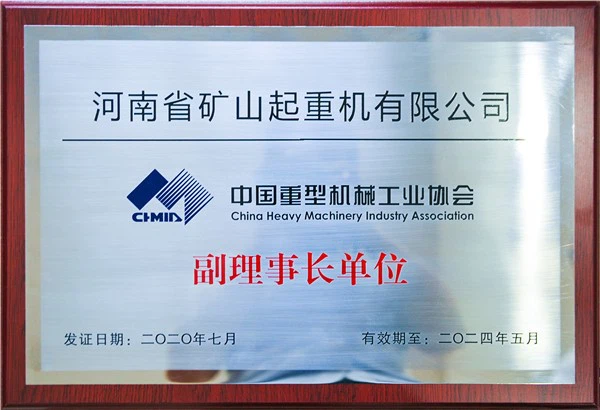
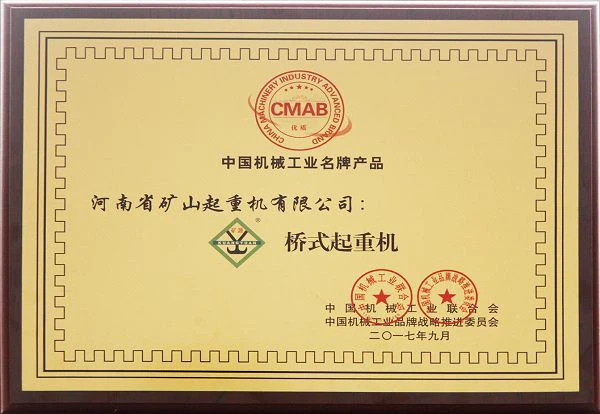
Certifications