Eot Crane
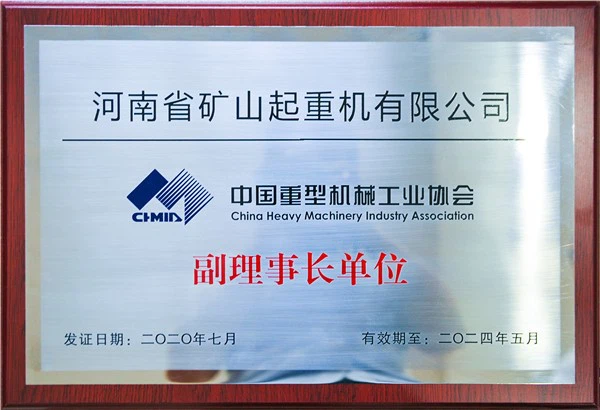
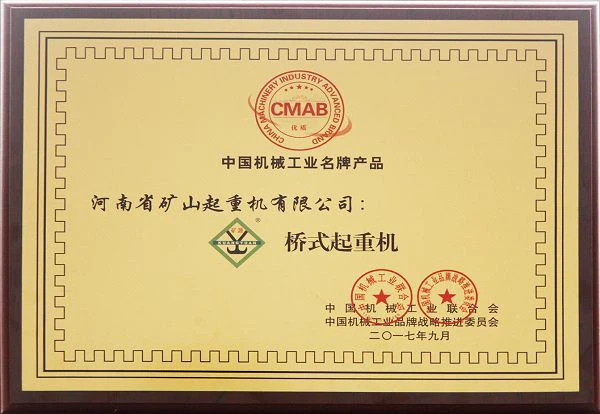
Henan Province Mine Crane Co.,Ltd(hereinafter referred to as "Henan Mine") was established in 2002, specializing in the research and development, design, production, sales and service of overhead bridge cranes, gantry cranes and electric hoists, such as three series of more than 110 kinds of cranes and supporting parts products. As a professional manufacturer and service provider of cranes and material handling products, we are able to provide customers with total solutions and whole-life services, and are committed to the intelligent, green and high-quality development of the crane industry.
The company currently has a total construction area of 1.62 million square meters, more than 3,500 employees, more than 428 sales and service organizations at home and abroad, and more than 2,000 sets of various processing equipment, which can independently complete more than 20 processes such as turning, planing and grinding. With advanced technology research and development institutions and a team of senior experts at home and abroad. The annual output of single and double girder cranes is more than 80,000 units.
Why choose us?
Experienced company
Henan Province Mine Crane Co., Ltd(hereinafter referred to as "Henan Mine") was established in 2002 and is a high-tech crane enterprise. Based on the advanced design concepts and manufacturing technologies of cranes at home and abroad, we have spared no effort to carry out retrofit designs for single and double-beam cranes and electric hoists and try to produce professional, intelligent, and high-quality products.
Professional team & equipment
The company currently has a total construction area of 1.62 million square meters, more than 3,500 employees, With advanced technology research and development institutions, and 200 senior engineers. We have more than 428 sales and service organizations locally and abroad, and more than 2,000 sets of various processing equipment, which can independently complete more than 20 processes such as turning, planning, and grinding.
Productive capacity
The annual output of cranes is over 80,000 units. The company produces and sells more than 11000 double beam and gantry cranes annually, More than 73000 single beam cranes, and More than 100000 sets (sets) of single and double beam electric hoists and accessories.
Customized design services
We understand that choosing the right crane is critical to the success of any lifting operation. That's why we offer customized design services to meet our customers' unique needs. Our team of experienced engineers works closely with customers to design and manufacture cranes that meet their specific requirements.


What is EOT Crane
Electric Overhead Traveling (EOT) Cranes are one of the most commonly used types of overhead cranes and play a crucial role in various industrial applications. EOT cranes have parallel runways, and a traveling bridge crosses the gap. The hoist is mounted over the traveling bridge. These cranes are operated electrically with a control pendant station or an operator’s cabin attached to the crane. In addition to horizontal movement, EOT cranes can also lower or raise heavy loads.
Benefits of EOT Crane
Apt for indoor heavy lifting
EOT cranes offer three dimensional motion- X, Y and Z. X means up and down motion while Y offers forward and reverse motion. Z offers long travel motion. These cranes are considered amazing for indoor heavy lifting purposes. Since they have a self traveling feature, they are amazingly safe. EOT cranes are pretty popular and used for heavy workshops, medium work capacity and warehouses.
They are versatile
Versatility is one of the advantages of EOT cranes. They are profoundly used across many industries such as thermal power plant, steel plant, hydraulic power plant, rolling mill and nuclear power plant to name a few. In other words, machine shops and construction foundry cannot be imagined without an electric overhead traveling crane.
Easy to use
You would always want to have a crane which offers easy operation. That’s one of the biggest advantages of EOT crane according to single girder EOT crane manufacturers. This crane just needs basic training and since it is safe to use, you can rest assured that there will be no work place injuries while using it. It contains a strong hook which can hold the stuff pretty well without any dangers of dropping it accidentally.
Low maintenance
EOT crane manufacturers say that EOT cranes do not demand much maintenance. They are affordable and easy to maintain. It doesn’t emit deadly smoke like other cranes and thus helps reduce damage to the environment. It doesn’t break down often which again reduces your maintenance costs. So long as you carry out basic maintenance and overhauling, you can rest assured that the crane will give you optimum output in terms of performance.
Types of Eot Crane
Single girder EOT cranes:The most common type of EOT crane is the single girder EOT crane. They are made up of a single girder supported by two end trucks that run on parallel rails. These cranes are ideal for lifting and moving lighter loads weighing up to 20 tonnes. Single-girder EOT cranes are commonly used in manufacturing, fabrication, and construction.
Double girder EOT cranes:
Double girder EOT cranes are built to handle heavier loads weighing between 20 and 500 tonnes. Two girders are mounted on two end trucks that run on parallel rails. These cranes have higher lifting heights and speeds, making them ideal for heavy-duty lifting and material moving applications. EOT cranes with two girders are commonly used in steel mills, shipyards, and power plants.
Gantry cranes:
Similar to EOT cranes, gantry cranes are mounted on a gantry system rather than running on rails. They are frequently used in outdoor settings such as shipping yards and construction sites. Gantry cranes are ideal for lifting and transporting heavy loads weighing up to 1000 tonnes.
Semi-gantry cranes:
Semi-gantry cranes are similar to gantry cranes in that one end is supported by a gantry system and the other end by a leg. These cranes are frequently used in manufacturing and fabrication facilities, where they can be tailored to specific needs.
Underslung cranes:
These cranes have the hoist mounted beneath the girder, making them ideal for facilities with limited headroom. These cranes are commonly found in workshops, assembly lines, and maintenance shops.
Jib cranes:
These cranes are designed to handle lighter loads weighing up to 10 tonnes. They are made up of a hoist that is mounted on a jib that rotates around a vertical axis. Jib cranes are popular in workshops, loading docks, and warehouses.
Monorail cranes:
These cranes are used to transport materials along a single rail. These cranes are commonly used in manufacturing lines and material handling systems. They are ideal for applications that require continuous material movement.

Application of EOT Crane
Manufacturing
EOT cranes are used to move raw materials, components, and finished products within manufacturing facilities. They streamline production processes and improve operational efficiency.
Construction
In construction sites, EOT cranes handle materials like steel beams, concrete blocks, and other heavy components. They are crucial for assembling structures and facilitating various construction activities.
Warehousing
EOT cranes are employed in warehouses to manage inventory and facilitate the movement of goods. They enable efficient stacking and retrieval of products, optimizing warehouse operations.
Steel mills
In steel mills, EOT cranes handle molten metal, heavy steel components, and other materials involved in the steel production process. Their high lifting capacities are essential for managing large and heavy loads.
Automotive industry
EOT cranes are used in automotive manufacturing plants to move vehicle parts, engines, and other components. They aid in the assembly process and ensure timely production.
Components of EOT Crane
Bridge girder
At the heart of every EOT crane lies the bridge girder, the backbone upon which the entire system rests. Constructed from robust materials such as steel, the bridge girder provides structural integrity and supports the weight of the hoist and trolley as they traverse along its length.
End carriages
Serving as the extremities of the bridge girder, end carriages house the wheels upon which the crane moves horizontally. These carriages ensure smooth traversal along the runway rails, facilitating efficient material handling within the workspace.
Hoist and trolley assembly
The hoist and trolley assembly embodies the essence of vertical movement within an EOT crane system. Consisting of a hoisting mechanism and a trolley that traverses laterally along the bridge girder, this assembly enables seamless lifting, lowering, and horizontal displacement of loads with utmost precision.
Electrical components
Electricity serves as the lifeblood of EOT cranes, powering motors, controls, and safety systems essential for operation. Electrical components such as motors, brakes, limit switches, and control panels form the neural network of the crane, orchestrating intricate movements with unparalleled accuracy.
Festoon systems
Facilitating the seamless transmission of power and control signals to moving crane components, festoon systems play a crucial role in maintaining operational continuity. These systems comprise cables, trolleys, and festoon tracks meticulously arranged to accommodate dynamic movements without compromising efficiency or safety.
Control systems
Central to the operation of EOT cranes, control systems serve as the brain behind every movement, regulating speed, direction, and load capacity with precision. Advanced control systems equipped with intuitive interfaces empower operators to execute tasks with unparalleled accuracy and efficiency.
How to Maintain EOT Crane
1.Pre-operation crane inspection
Before operating an EOT crane, it is crucial to perform a detailed inspection of the crane and its components. This includes checking the structural integrity, looking for signs of wear and tear, and ensuring all mechanical and electrical systems are functioning correctly. Some of the key aspects you should inspect include:
Hooks and chains: Examine for any deformation, cracks, or excessive wear. Ensure that the hook latch is functioning properly.
Wire ropes: Look for fraying, corrosion, or other damage. Replace any compromised ropes immediately.
Control systems: Test all control buttons and connectors to ensure they respond correctly. Check for any loose connections or damaged wires.
Brakes: Ensure that the brakes engage and release smoothly. Faulty brakes are a serious workplace hazard.
By performing these checks regularly, you can pre-emptively address potential failures and ensure the crane operates smoothly. This practice is not only an important guideline for safe EOT crane operation but also a proactive measure for overhead crane maintenance.
2.Lubrication and greasing
Scheduled lubrication: Establish a regular lubrication schedule based on the manufacturer’s recommendations and the crane’s usage patterns. Consistent lubrication prevents the accumulation of debris and reduces wear.
Quality lubricants: Use high-quality lubricants suitable for the specific components of the crane. Different parts, such as bearings, gears, and wire ropes, may require different types of lubricants.
Application techniques: Ensure the lubricant is applied evenly across all moving parts. Over-lubrication can attract dust and debris, while under-lubrication can cause increased friction and wear, leading to more frequent crane repairs.
Inspections: During lubrication, inspect components for any signs of damage or excessive wear. This dual approach of lubrication and inspection helps in the early detection of potential issues.
Regular lubrication and greasing are essential maintenance practices for EOT cranes. They ensure that all moving parts operate smoothly and reduce the risk of unexpected breakdowns.
3.Proper load handling
Load assessment: Before lifting, assess the weight and size of the load to ensure it is within the crane’s capacity. Overloading an EOT crane can lead to structural damage and safety hazards.
Load securement: Ensure the load is securely fastened and balanced before lifting. Unsecured or unbalanced loads can shift during lifting, leading to dangerous situations.
Smooth movements: Avoid sudden jerks or rapid movements. Smooth, controlled lifting and lowering reduce the strain on the crane and its components.
Operator training: Operators should be trained in EOT crane operation guidelines, including safe load handling techniques and emergency procedures. Regular training updates and assessments help maintain high safety standards.
Proper load handling not only ensures the safety of the operators and other personnel but also protects the crane from undue stress and potential damage.
How to Choose a Suitable EOT Crane
Calculate the weight limitation
Choosing an electric crane begins with figuring out how much weight it will be lifting. Different types of electric overhead cranes by EOT crane Manufacturers In India can lift anywhere from a few tonnes to several hundred tonnes. Think about the heaviest thing that will need to be moved about your building to get an idea of the load capacity you’ll want. If you want everything to go off without a hitch, you need a crane that can lift your largest weight.
Think about the span size
An EOT crane’s span is the horizontal distance between its guide rails. Selecting a crane with an appropriate span length is crucial. The crane may not be able to reach all of the work area if the span is too small, but if it’s too long, it will be too costly and inefficient to use. The crane’s load capacity also depends on the span length, so it’s crucial to get one that meets your requirements.
Find the lifting level
An electric overhead crane’s lift height is the highest point to which it is capable of hoisting a load. Make sure the crane you buy has enough lift height for your building. You will need a crane with a greater lift height if you need to raise heavy loads into the air. Keep in mind that the crane’s load capacity and span length may be impacted by increasing the lift height.
Assess your control and acceleration options
The efficiency of your processes may depend critically on how quickly a crane can move. Consider a faster-moving crane if you frequently need to transfer heavy loads. You should also think about the crane’s possible control choices. Radio remote controls and variable frequency motors are only two examples of the sophisticated control features available on certain cranes.
Find out your duty level
The projected operating time of a crane is reflected in its duty class. The greater the crane’s duty class, the more durable it must be to endure the stresses of constant operation. To make sure the crane can handle the workload at your plant, you should look for one that falls into the appropriate duty class.
Think about the circumstances
The kind of EOT crane you need may also depend on the setting and circumstances of your site. For instance, you’ll need a special kind of crane by EOT crane suppliers In India if your building is subjected to extreme temperatures or chemicals. You should also choose a crane that can function in a confined place if your facility is cramped.
Make sure it comes from a trustworthy maker
Last but not least, while shopping for single girder EOT crane be sure you get it from a reliable company. A reliable producer will provide you with a sturdy crane that will endure for years. To keep your crane operating at peak efficiency, they will also provide support and maintenance services.
EOT cranes are vital in improving efficiency and safety in industrial operations. With their precise ability to handle and move heavy loads, these cranes optimize material handling processes, reduce manual labor, and increase productivity. Moreover, they contribute to a safer working environment by minimizing the risk of accidents and injuries associated with manual lifting. The advanced safety features and automation capabilities of modern EOT cranes further enhance workplace safety. As industrial operations continue to evolve and demand higher levels of efficiency and safety, the future of EOT cranes looks promising. Advancements in technology, such as the integration of artificial intelligence and IoT capabilities, will further enhance the performance and capabilities of EOT cranes. Businesses that invest in EOT cranes can expect significant improvements in their operational efficiency, productivity, and overall safety, making them an indispensable asset in the industrial landscape.
The company currently has a total construction area of 1.62 million square meters, more than 3,500 employees, more than 428 sales and service organizations at home and abroad, and more than 2,000 sets of various processing equipment, which can independently complete more than 20 processes such as turning, planing and grinding. With advanced technology research and development institutions and a team of senior experts at home and abroad. The annual output of single and double girder cranes is more than 80,000 units.


Certifications