










Changing Frequency And Regulaling Speed Crane
Products Description
The Changing Frequency and Regulating Speed Crane is a modern lifting solution that integrates frequency conversion technology to allow precise control over lifting and traveling speeds. This advanced crane type is designed for enhanced flexibility, efficiency, and safety, adapting seamlessly to various industrial applications that demand variable load handling and speed adjustments.
The crane uses variable frequency drives (VFDs) to modulate the motor's speed, allowing for smooth acceleration and deceleration. This technology minimizes the mechanical stress on crane components and provides operators with greater control.By adjusting the lifting, hoisting, and travel speeds, this crane meets diverse operational demands and reduces cycle times. This feature is particularly beneficial for tasks requiring precise positioning, as it allows for a gradual, controlled approach.
The Changing Frequency and Regulating Speed Crane's frequency control reduces the risk of load sway, enhancing safety during load handling. It also allows for emergency stops with minimal load swing, making it ideal for environments that prioritize worker safety.The use of frequency control significantly reduces energy consumption, leading to lower operational costs. Additionally, it reduces wear on mechanical components, extending the crane's service life.With a smooth, continuous change in speed, mechanical shock and wear are reduced. This prolongs the longevity of crane components, minimizes maintenance needs, and optimizes operational costs over time.
4) The Changing Frequency and Regulating Speed Crane, equipped with advanced frequency and speed regulation technology, is an ideal solution for industries looking to improve handling efficiency, energy conservation, and operational safety.
Core Components:Bearing, Gearbox, Motor, Pump
Place of Origin:Henan, China
Warranty:1 Year
Weight (KG):2000 kg
Video outgoing-inspection:Provided
Machinery Test Report:Provided
Design:Double beam
Effectiveness:high efficiency
Operating speed:High speed operation
Stability:Anti-swing function
Color:Optional
Power Source:110V/220V/230V/380V/440V,customized
Span:7.5-31.5m
Pictures & Components
1.Main beam
1) The main beam of a Changing Frequency and Regulating Speed Crane is a crucial structural and functional component of the crane's framework, designed to support and distribute loads during lifting operations. This type of crane typically includes mechanisms that adjust the lifting speed and operation frequency, allowing for smoother and more precise control over the crane's movements.
Key Characteristics of the Main Beam in Frequency and Speed-Regulated Cranes are Constructed from high-strength materials like structural steel or reinforced composites.It is designed to withstand dynamic loads, vibrations, and torque resulting from load lifting and frequency changes.Houses motorized components that allow for frequency adjustments, enabling variable speed control.Supports pulleys, trolleys, and other load-bearing systems that depend on regulated speed for stability and precision.
3) The main beam is equipped with variable frequency drives (VFDs) to control the speed of the motor, allowing operators to adjust the crane's speed to match specific lifting requirements.This regulation is critical for reducing swaying, improving safety, and enhancing load positioning accuracy, especially with heavy or delicate loads.The ability to control speed and frequency minimizes the impact on structural components, extending the service life of the crane.Lowering the frequency and speed during delicate operations reduces stress on the main beam and other crane parts, which helps in maintaining the structural integrity over time.By using frequency control to match the crane's operational speed to its load, these cranes conserve energy, resulting in cost savings and environmentally friendly operation.
Lifting System
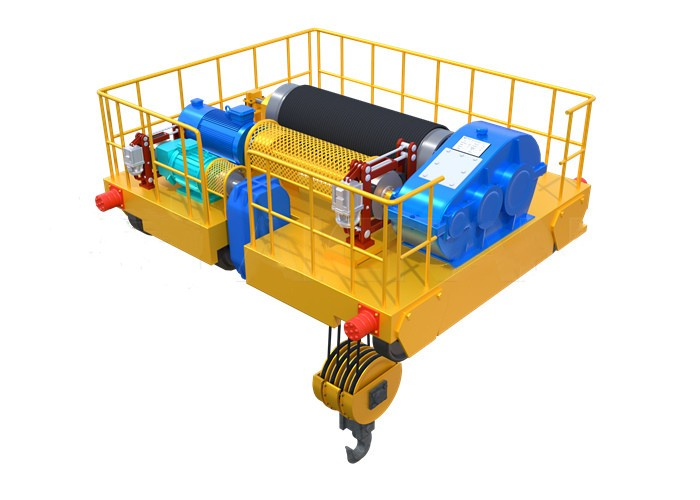
1) Motor: A lifting system motor in a crane with frequency-changing and speed-regulating capabilities is generally a Variable Frequency Drive (VFD) system. This setup allows precise control over the speed and torque of the crane motor, which improves efficiency, safety, and flexibility for lifting and moving heavy loads.
2) Reducer: The reducer (gearbox) in this type of crane acts as a speed control mechanism, translating the rotational power from the motor into the appropriate torque and speed for lifting and lowering loads. When integrated into a variable frequency drive (VFD) crane system, the reducer works with the motor and control systems to provide precise, smooth movement and greater efficiency in handling loads.
Drum: The drum lifting system with frequency-changing and speed-regulating capabilities for a crane generally refers to an advanced mechanism designed to enhance the lifting control and efficiency. A variable frequency drive (VFD) or inverter controls the drum motor's speed by adjusting the frequency of the electricity supplied.This allows the crane to lift and lower loads with variable speed, providing smooth starts and stops, reducing mechanical stress on the crane, and increasing energy efficiency.
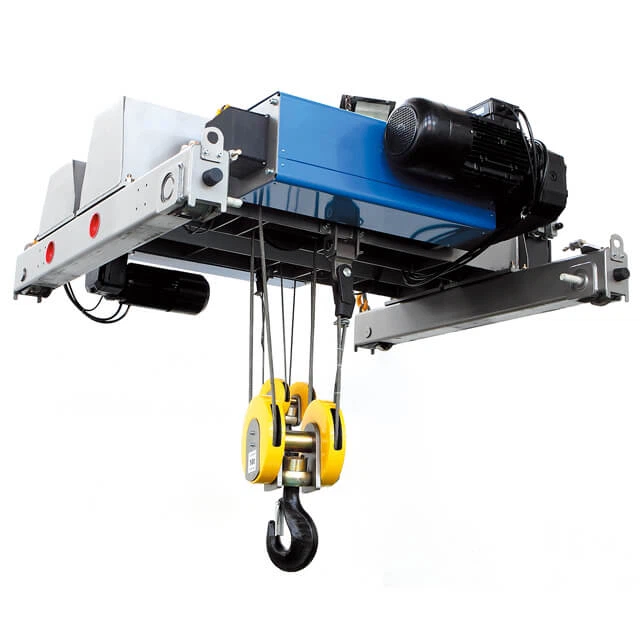
Wire rope: A wire rope in a lifting system of a variable frequency and speed-regulating crane is an essential component that handles the load and facilitates smooth operation of the crane. In such a crane, the wire rope is subjected to varying loads and speeds as the frequency drive modulates the motor speed, which can lead to different stress profiles on the rope. Key aspects include:Wire ropes used in these cranes are often made of high-strength steel or other alloy materials designed to withstand heavy loads and resist wear.The rope's construction (stranding, number of wires, core type) is selected to balance flexibility and strength.
Pulley block: The pulley block in the lifting system of a variable frequency and speed-regulating crane is a critical component designed to manage loads efficiently and with precision. In such cranes, the lifting mechanism incorporates a motor with a variable frequency drive (VFD) to regulate the speed and frequency of lifting, making operations smoother and energy-efficient.
6) Lifting device: The lifting device of a frequency-controlled, variable-speed crane system is an essential part of modern cranes used for precise and efficient lifting operations. The system is typically designed to support heavy loads while allowing control over the speed and positioning of the crane.
 |
 |
3.End carriage
1) The end carriage of a crane with the ability to change frequency and regulate speed is an essential component for the precise control and efficient operation of overhead and gantry cranes.The end carriage is the part of a crane that travels along the crane runway or track. It consists of wheels, a motor, and supporting frame components. It essentially allows the crane bridge to move back and forth along the rails.
2) This type of end carriage is equipped with a frequency inverter, which allows for variable speed control of the motors. By adjusting the motor's frequency, the operator can increase or decrease the speed of the crane travel smoothly and precisely. Changing frequency enables smooth acceleration and deceleration, reducing the risk of jerks or sudden starts and stops that can lead to load sway or cause wear on crane components.A frequency inverter can also enhance energy efficiency by operating the motor at optimal speeds depending on the load, reducing unnecessary power consumption.
3) In summary, an end carriage with changing frequency and speed-regulating capabilities provides smoother, safer, and more efficient crane operations. It optimizes energy usage, minimizes load sway, reduces mechanical wear, and contributes to overall productivity and safety.
 |
 |
4.Crane travelling mechanism
1) Working principle
The traveling mechanism of a frequency-controlled, speed-regulating crane operates based on the principle of variable frequency drive (VFD) technology. This approach allows for precise control of the crane's movement and speed adjustments by regulating the frequency and voltage supplied to the crane's travel motors.By changing the frequency, the VFD can adjust the speed of the AC motor, which powers the crane's traveling mechanism.Lower frequencies reduce the speed of the motor, and higher frequencies increase it.Speed regulation is achieved through the adjustable frequency and voltage output from the VFD. This control allows for smooth acceleration, deceleration, and stable travel speeds.
2) Functions of the crane operating mechanism
Speed Control: The main feature of the frequency-regulated operating mechanism is the ability to control the motor's speed using variable frequency drives (VFD). This allows smooth acceleration and deceleration, offering better control of the load and reducing mechanical stresses on the crane system.
Load Handling: By adjusting the motor speed, the operator can regulate how fast or slow the crane lifts and lowers the load. This is especially useful when handling delicate or heavy loads, as it minimizes the risk of load swings and improves stability.
Energy Efficiency: Using a frequency converter allows for variable speed control, which makes the crane more energy-efficient by consuming power proportionally to the load and operation speed.
Smooth Start/Stop: The system allows for soft start and stop of the crane's lifting mechanism, reducing wear and tear on mechanical parts, and preventing sudden jerks that could be hazardous or damaging.
Safety Features: Frequency control ensures that the crane's movements are smoother and more predictable, which enhances safety. It also allows for specific programmed limits on speed and load capacity, further enhancing operational safety.
5.Trolley travelling mechanism
1) Structural composition
Trolley Frame: The trolley frame is typically made from high-strength steel, designed to withstand heavy loads. It holds all the moving components and ensures rigidity and stability.
Guides or Rails: The trolley frame travels along rails or a gantry, often mounted to the crane's overhead structure. These rails are aligned precisely to ensure smooth motion.
AC/DC Motors: Motors with variable speed control (usually through a variable frequency drive or VFD) are used. The motor's frequency can be adjusted to regulate the speed of the trolley. AC motors are more commonly used, but DC motors may also be employed for specific applications.
Variable Frequency Drive (VFD): This is the key element for regulating speed. By changing the frequency supplied to the motor, the VFD adjusts the motor speed smoothly, allowing for precise control over trolley movement.
Reducers/Gearboxes: Gearboxes are used to step down the motor speed and transfer torque to the wheels or drums that drive the trolley. The gear ratios are selected based on the load and speed requirements.
Wheels: The trolley is equipped with wheels that ride on the overhead rails. These wheels are mounted on axles and are designed to handle both the load and the dynamic forces during travel.
Trucks: The wheelset (also called a truck) is the assembly of wheels, bearings, and supports that allow the trolley to move along its track.
2) Function of the trolley operating mechanism
Precise Speed Control:The primary function of the trolley operating mechanism is to enable precise control of the speed at which the trolley moves along the crane's runway. Using a Variable Frequency Drive (VFD), the speed of the trolley can be adjusted continuously and smoothly, based on the required load or operational conditions. The VFD adjusts the frequency and voltage supplied to the motor, changing its speed efficiently.
Speed Regulation:The crane operates under varying load conditions, and the ability to regulate speed based on the weight or nature of the load being carried is important. With the VFD system, the trolley speed can be easily adjusted in response to these conditions, ensuring smooth operations.
Energy Efficiency:By using a VFD to control the trolley motor, energy consumption can be optimized. The motor consumes only as much energy as needed for the required speed, reducing power loss during lower-speed operations. This leads to better energy efficiency, especially in processes with frequent starts, stops, and speed changes.
Smooth Start and Stop:A VFD-based system allows for soft starting and stopping of the trolley, minimizing the mechanical stress on the crane's components. This prevents jerking motions and sudden forces that could damage the crane or load, ensuring smoother, safer operations.
Load Control:The mechanism provides better control over the load, especially when lifting or lowering it. By adjusting the trolley's speed in real-time, the operator can more effectively manage the load's movement, ensuring precision during critical lifting and positioning tasks.
Safety:The VFD helps to enhance the safety of the crane by preventing sudden movements or excessive speed that could pose a risk to the crane, the operator, or the load. By controlling the speed in real-time, the system reduces the likelihood of accidents or damage.
Improved Precision and Positioning:When the crane needs to position the load with high accuracy, the speed control capabilities of the trolley operating mechanism help position it with greater precision. The system enables the operator to slow down or adjust speed at specific points during operation, ensuring that the load is placed accurately without overshooting or causing slippage.
Remote and Automatic Control:In modern systems, the trolley operating mechanism can be linked to automation or remote control systems, allowing for fully automated operation or operation from a distance.
6.Crane wheel
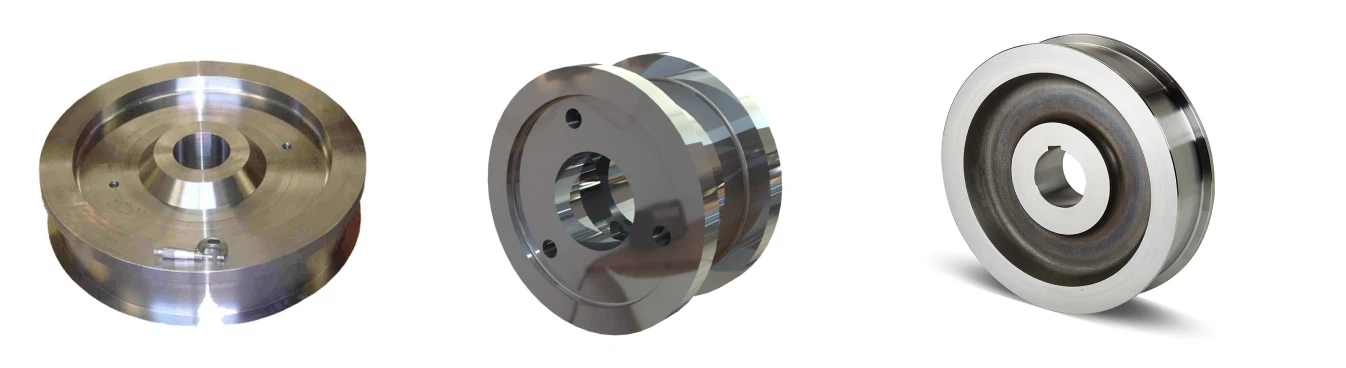
1) Function of wheels:The crane wheel in the context of a Changing Frequency and Regulating Speed Crane typically refers to a component of the crane's mechanical system that is involved in the movement and control of the crane's load. In such cranes, the frequency of operation and the speed of the crane can be adjusted to optimize performance, enhance safety, and provide more precise control. The crane wheel in such systems is typically a part of the mechanism that moves the crane along a track or controls the movement of the hoist.For cranes with adjustable speed, the wheels must be able to handle varying operational loads and speeds without loss of performance.
2) In modern cranes, particularly those with variable-speed drives, the crane wheel's motion (e.g., hoisting, traveling) is controlled by a Variable Frequency Drive (VFD). The VFD adjusts the frequency of the power supply to the crane motor, thereby regulating the speed of the crane's wheels and the load.VFD allows for smooth acceleration and deceleration of the crane, preventing mechanical stress and improving energy efficiency.
3)Cranes equipped with systems to regulate speed can adjust their operation based on the load, location, or task. This is achieved by modifying the voltage and frequency supplied to the motor, which directly affects the crane wheel's rotational speed.The speed control ensures that the crane operates safely, especially when handling heavy loads or working in delicate environments.
7.Crane Hook
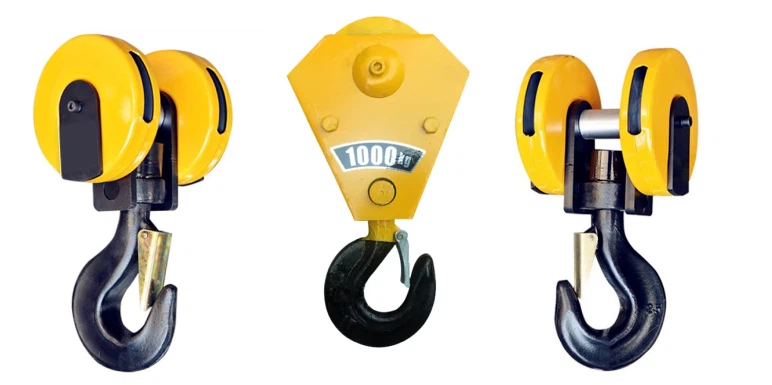
1) A crane hook with changing frequency and regulating speed refers to a crane system designed with advanced control mechanisms for lifting and lowering loads at varying speeds, often using frequency drives or variable frequency drives (VFDs).
2) Variable Frequency Drive (VFD): VFDs are used in cranes to control the speed of motors by adjusting the frequency of the electrical power supplied to them. This allows the crane hook to move at different speeds, improving precision and reducing mechanical stress on the system.The frequency change allows the crane hook to adjust the lifting speed based on the load weight, the load's movement requirement, or the operator's command.The crane hook's speed is regulated through a soft start and stop mechanism, which ensures a gradual increase or decrease in speed rather than an abrupt motion. This reduces the risk of jerking or damaging the load or crane components.
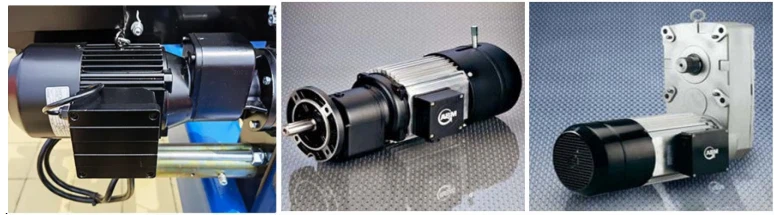
Motor
A motor for a crane that can change frequency and regulate speed typically uses a Variable Frequency Drive (VFD) system. This system allows for precise control over the motor's speed and torque by adjusting the frequency of the power supplied to the motor.
2) The motor's work principle : The VFD alters the supply frequency to the motor, changing the motor's speed. Lower frequencies slow the motor down, while higher frequencies speed it up. This is crucial for cranes, where smooth and controlled lifting and lowering are needed.
3) The motor's benefits:Provides smooth and precise control over crane operations, reducing jerking and vibrations.VFDs can reduce energy consumption by adjusting the motor speed according to demand.By controlling acceleration and deceleration, the VFD reduces mechanical stress, extending the life of both the motor and crane.Soft starts and stops, along with speed regulation, help in reducing accidents, especially in environments with limited space.

.
Sound and light alarm system & limit switch
1) Sound and light alarm system
A sound and light alarm system for a crane with changing frequency and regulating speed is typically used to provide safety alerts and warnings during crane operations. These systems are crucial in alerting operators and nearby personnel to various conditions, such as changing operational modes, speed adjustments, or potential hazards. Danger warning: When the crane is about to start or end work, the system will send out sound and light signals to alert the surrounding personnel.
A sound alarm serves as an audible warning to alert personnel when the crane is operating at different speeds, or when it enters specific phases such as lifting, lowering, or moving loads.
The frequency of the sound can be varied to indicate different states.The alarm sound frequency may change depending on factors like crane speed or load conditions. For example, a higher frequency may be used when the crane is operating at a faster speed, and a lower frequency for slower speeds. This allows workers to recognize the crane's operational mode by sound alone. The sound pattern might adjust in relation to the crane's operational speed. If the crane accelerates or decelerates, the sound may change in intensity or pitch.
2) Limit switch
A light alarm provides a visual warning to complement the sound, ensuring that personnel in the area can see the alarm, even if they cannot hear it clearly. It may be used in conjunction with a sound alarm or independently, depending on the environment (such as noisy industrial areas).The light alarm can change colors and flash at different speeds to indicate various conditions.The speed at which the light flashes may be adjusted based on crane speed or specific operational conditions. 
10.Safety Devices
Overload Protection: Prevents the crane from lifting more than its rated load.An overload sensor or load cell measures the weight being lifted and can trigger an automatic shutoff if the load exceeds a predefined threshold. In some systems, a frequency adjustment or speed reduction occurs when the load is too heavy.
Speed Limiting Devices: Ensures the crane operates within safe speed limits.Using the VFD or speed controller, the crane's speed can be adjusted to remain within specified limits for various operations (lifting, lowering, traversing, etc.). If the speed exceeds the safe limits, the system can automatically reduce or stop the movement.
Frequency Monitoring System: Monitors and controls the frequency of the motor to ensure safe operation.VFD systems control the speed by adjusting the frequency of the power supplied to the motor. An integrated monitoring system can ensure that the motor's frequency does not exceed safe operating limits.
Emergency Stop (E-Stop): Provides a quick way to stop the crane in case of emergency.An emergency stop button is placed at various accessible locations on the crane. When pressed, it immediately cuts power to the crane, halting all movement. This is critical in avoiding accidents during unforeseen conditions.
Limit Switches: Prevents over-travel of crane components. Limit switches are installed at the ends of the crane's travel paths (e.g., hoist, trolley, bridge). These switches will stop the crane from moving past the defined limits to avoid damage to the structure or failure of the drive system.
Braking System: Ensures the crane stops safely and promptly when needed.Braking systems include dynamic, regenerative, or mechanical brakes that engage when the speed needs to be reduced or when an emergency stop is activated. In frequency-regulated cranes, the drive system can also apply regenerative braking to help slow down the crane.
Control System Interlocks: Ensures that the crane operates only under safe conditions.Interlocks prevent certain crane movements if safety conditions are not met. For example, the crane may not move if the hook is not properly loaded, or if a fault is detected in the power or control systems.
Temperature Monitoring: Prevents overheating of crane components.Sensors measure the temperature of critical components, such as the motor or VFD. If the temperature exceeds the safe threshold, the crane may automatically reduce speed or shut down to prevent damage.
Current and Voltage Protection: Protects against electrical faults.Monitoring systems check the voltage and current supplied to the crane. If there is a deviation beyond the safe range (e.g., voltage spikes or drops), the system will either shut down or adjust frequency and speed to protect the electrical system from damage.
Wind Speed Indicator
Purpose: Ensures crane operation is safe in outdoor environments.
How It Works: In outdoor cranes, a wind speed indicator monitors environmental conditions. If the wind speed exceeds a threshold, the crane may be automatically disabled or restricted from moving to prevent accidents caused by wind-induced load sway.
Crane Movement Monitoring System: Provides real-time monitoring of crane movements.A system that monitors the position and speed of various crane components. This system can alert the operator if there is any anomaly in the operation, such as excessive speed or an incorrect path.
Load Sway Control System: Reduces the effects of load sway on crane stability.The system uses sensors and the VFD to adjust the crane's movements, reducing the sway caused by the load. This is particularly useful for large or suspended loads.
Anti-Collision System: Prevents cranes from colliding with objects or other cranes.Anti-collision sensors, such as radar, ultrasonic, or laser sensors, are used to detect obstacles in the crane's path. If an obstacle is detected, the crane will stop or change direction to avoid a collision.
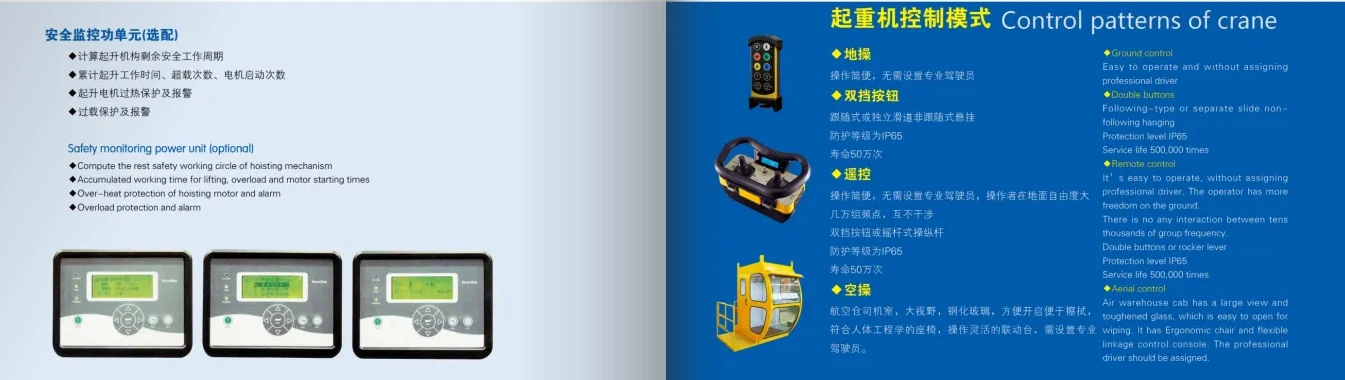
11.Control Mode
Variable Frequency Drive (VFD):A VFD adjusts the frequency of the electrical current supplied to the motor. The VFD converts the incoming AC power into DC and then inverts it back to AC at a variable frequency. The speed of the crane's motor increases or decreases based on the frequency setting.
Control Modes:In this mode, the crane's speed is set based on the frequency input, without feedback. It's simpler but less precise.Closed-loop control uses sensors to monitor the crane's performance (e.g., load weight, speed) and adjust the frequency automatically to maintain the desired speed or torque.
Speed Control in Cranes: The speed of the hoisting motor can be controlled using a VFD, which adjusts the speed based on load conditions. Similar to hoisting, the travel speed of the crane (e.g., movement along the rails) can be controlled by varying the frequency supplied to the travel motor.For the horizontal movement of the crane, frequency control ensures smooth and efficient motion, reducing sudden jerks and improving safety.
Advanced Features in Crane Speed Control:Ramp-up and ramp-down settings allow for gradual increases or decreases in speed, preventing sudden starts and stops which can damage the crane or load.Some systems allow for precise torque control, ensuring the crane operates optimally under different load conditions without overloading the motor.In some advanced systems, when the crane is descending with a load, excess energy can be fed back into the power supply, improving energy efficiency.
Speed Control Using a PLC (Programmable Logic Controller):Cranes are often integrated with a PLC system that interacts with the VFD to provide more sophisticated control strategies like load detection, fault detection, and custom speed profiles for different operations.The PLC can dynamically adjust crane speed depending on real-time data, such as weight or position.
Safety Features: The system can prevent excessive speed or torque that could lead to crane or load damage.A VFD-based system can be quickly halted to stop the crane if an emergency occurs.
12.Sketch

Main technical

Advantages
Improved Precision and Control:By changing the frequency and regulating the speed, crane operations can be more precise, especially for tasks like lifting delicate or heavy loads. The operator can adjust the crane's speed to suit specific requirements, reducing the risk of load swinging or shifting. Using variable frequency drives (VFDs) allows for smoother acceleration and deceleration, reducing mechanical stress and wear on components such as motors, gears, and brakes.
Energy Efficiency: Regulating the crane's speed according to the load and task helps in consuming less energy. For example, running the crane at a lower speed when handling lighter loads reduces power usage compared to running at full speed all the time.Some advanced systems can regenerate energy back into the grid when slowing down or lowering the load, reducing overall electricity usage.
Reduced Wear and Tear: When the crane operates at a variable speed, it reduces the sudden jerks or shocks that occur when starting or stopping. This helps in extending the life of the crane's mechanical components, such as motors, drives, and cables.Smoother operations and less mechanical stress lead to fewer maintenance needs and lower long-term repair costs.
Enhanced Safety: Gradual speed adjustments reduce the chance of sudden jerks that could destabilize the load, lowering the risk of accidents.A crane with regulated speed is easier for operators to handle, which can reduce operator fatigue and improve safety.
Increased Productivity: Regulating the speed allows for faster handling of heavier loads when needed, increasing overall crane productivity. The ability to adjust speed gives more flexibility for different lifting tasks, improving operational efficiency.
Environmental Benefits: Cranes operating at regulated speeds tend to generate less noise, especially in urban or noise-sensitive environments, contributing to a more eco-friendly operation.The energy savings from reduced power consumption, as well as the ability to regenerate power, contribute to lowering the crane's overall carbon footprint.
Improved Load Handling: Regulating the speed can help in more accurate positioning of the load, especially when working in confined spaces or with precise placement requirements. By adjusting the speed and monitoring load weights in real-time, there is less chance of exceeding the crane's capacity, thereby improving safety and preventing damage to the equipment.
Application:
Construction:Building high-rise structures: Cranes are commonly used on construction sites to lift heavy materials like steel beams, concrete blocks, and prefabricated parts for the construction of buildings and bridges.Cranes assist in demolition by lifting large pieces of debris or wreckage from buildings.
Shipping and Ports:Container loading/unloading: Cranes are used to load and unload containers from ships, which is crucial for international trade.Cranes also move bulk goods, such as coal or grain, in ports.
Manufacturing: Cranes are used in factories to transport heavy components or parts along assembly lines.Cranes assist in positioning and installing heavy machinery in factories and warehouses.
Mining: In mines, cranes help to transport extracted minerals or move mining equipment.Cranes are often used to move drilling equipment and materials on offshore rigs.
Oil and Gas Industry: Cranes are used to lift and move large equipment and supplies on oil platforms or offshore rigs. Cranes help in positioning large sections of pipeline during installation.
Power Plants: Cranes are essential for installing heavy turbines and equipment in power plants, including nuclear and hydroelectric plants.Cranes are used for the regular maintenance of plant equipment.
Transportation: Cranes are used to transport heavy and oversized loads, such as vehicles, machinery, or oversized equipment.Cranes assist in the lifting and repositioning of heavy components in railway operations, especially for repairs or construction.
Aerospace: In aerospace manufacturing, cranes are used to assemble and move large aircraft parts.Cranes move massive parts like wings and fuselage sections in manufacturing facilities.
Emergency Services: Cranes can be used in rescue situations to lift victims or debris from disaster areas like collapsed buildings.Cranes are sometimes employed to remove wreckage or assist firefighting teams in hard-to-reach areas.
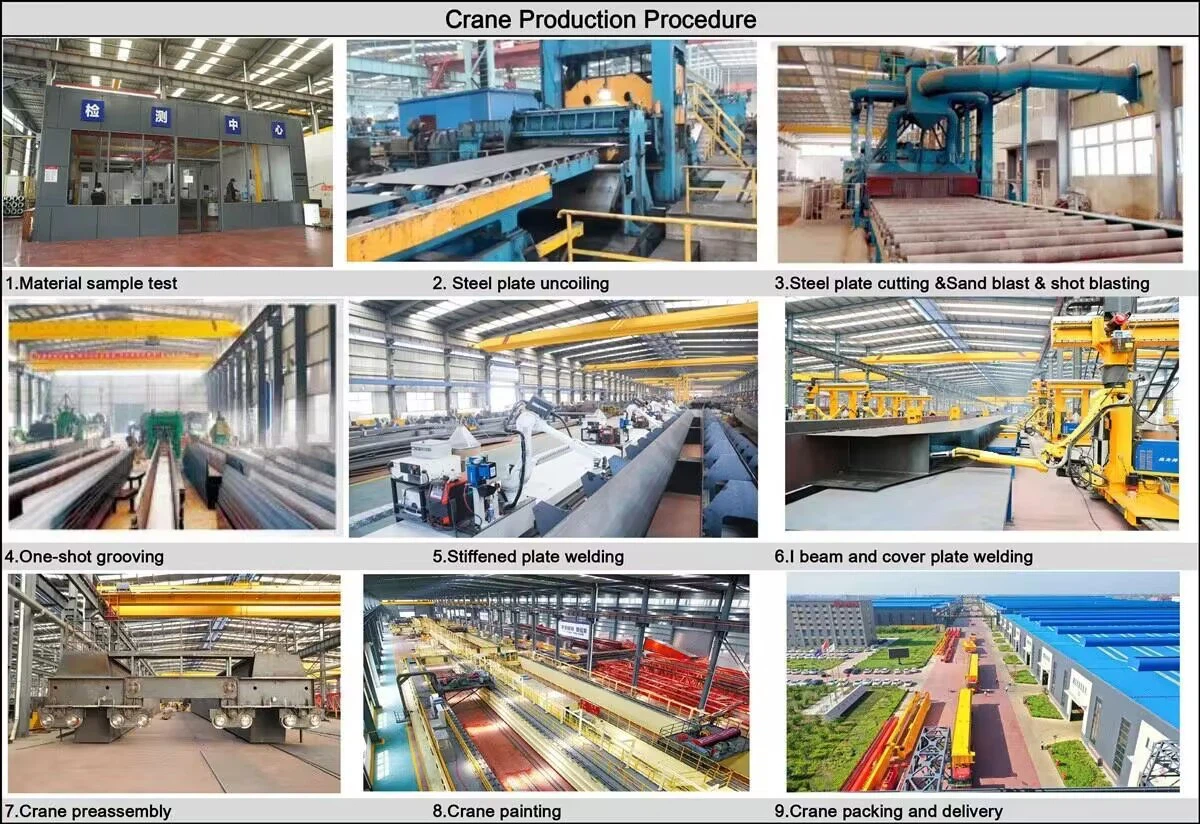
Crane production procedure
Design Phase: Based on customer requirements, define the crane's load capacity, operational speed range, and required functionality (e.g., speed regulation, smooth starts/stops).Choose the electrical and mechanical components needed for the crane.
Structural Design: The crane's structural components, such as the girder, hoist frame, and trolley, are designed and fabricated to support the load and operational stresses.High-strength steel is commonly used to ensure durability and safety.The frame, trolley, hoist, and other parts are welded or bolted together.
Drive and Control System Design: Choose the type of motor, typically an AC motor, that is suitable for variable speed operation.A Variable Frequency Drive is integrated into the system to adjust the motor's speed by changing the frequency of the power supplied to it. This allows smooth acceleration and deceleration, energy savings, and precise speed control. Implement the electrical control system, often PLC (Programmable Logic Controller) based.
Electrical Wiring and Installation: The electrical components (motors, VFDs, sensors, control panels, etc.) are connected according to the wiring diagrams.The control panel is built to house the PLC, VFD, and necessary protection systems.Position and speed sensors are integrated to monitor the crane's operation, ensuring accurate speed control and preventing overloading.
Assembly of the Crane System: Mount the motors (usually AC induction or synchronous motors) to the crane frame. These motors are connected to the hoist and trolley systems.The crane system is connected to the local electrical grid or a dedicated power supply.Install overload protection systems, emergency brakes, and safety interlocks to ensure the crane operates safely.
Testing and Calibration: Conduct an initial power-up of the crane system to check electrical components and control system integrity.Verify that the VFD can adjust the motor speed accurately across the range of required operational speeds.Test the crane with various loads to ensure that the crane can handle them without issues such as excessive strain on components or motor failure.Test safety systems, such as overload protection, limit switches, and emergency stop functions, to ensure they respond properly in case of a malfunction.
Adjustment and Optimization: Adjust the VFD settings to ensure smooth acceleration and deceleration, with minimal jerk or stress on the system. Ensure the crane operates smoothly across all speeds and under load, adjusting the control system parameters as necessary.Make adjustments to optimize energy consumption during normal operation, taking advantage of the variable frequency drives.
Final Inspection: Inspect all welded joints, bolts, and moving parts to ensure proper alignment and secure mounting.Ensure all wiring and connections are safe, properly insulated, and meet code standards. Verify that the PLC and control systems are fully functional, responding correctly to operator inputs.
Training and Handover: Provide training to the crane operators on how to use the frequency-changing and speed-regulating features effectively.Train maintenance personnel on the operation and troubleshooting of the crane's electrical systems, including the VFD, motor, and control panel. Provide all necessary documentation, such as electrical schematics, operation manuals, and maintenance schedules.
Workshop view:
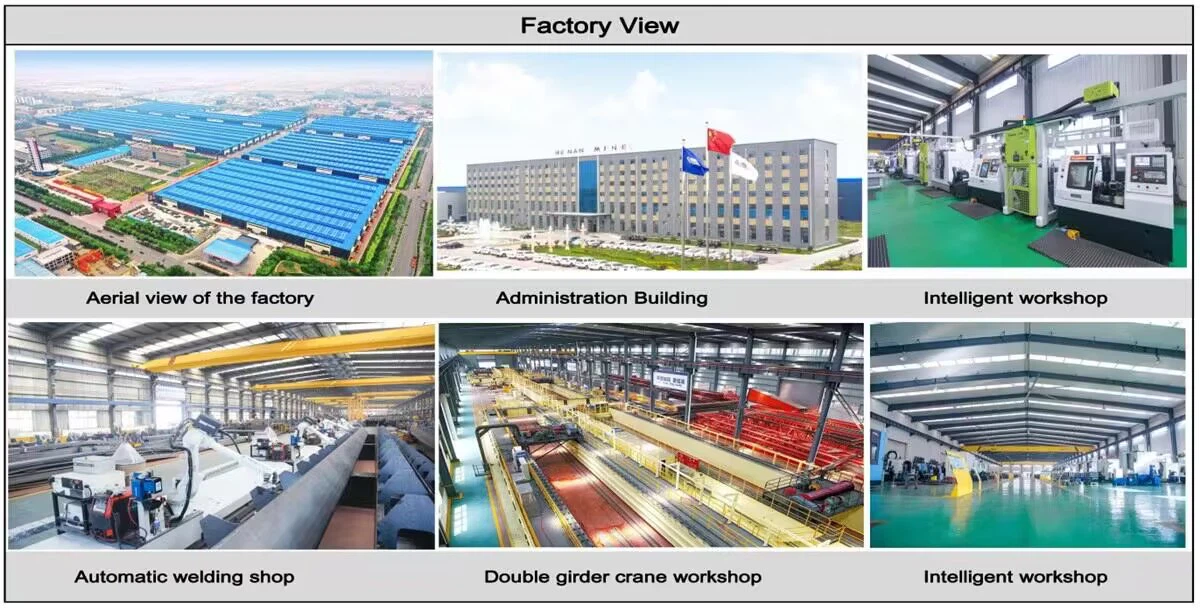
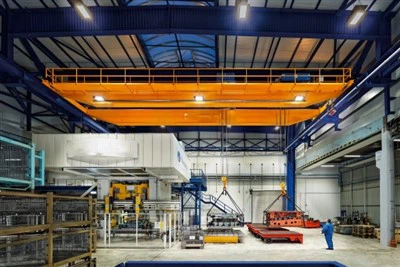
The company has installed an intelligent equipment management platform, and has installed 310 sets (sets) of handling and welding robots. After the completion of the plan, there will be more than 500 sets (sets), and the equipment networking rate will reach 95%. 32 welding lines have been put into use, 50 are planned to be installed, and the automation rate of the entire product line has reached 85%.


Hot Tags: changing frequency and regulaling speed crane, China changing frequency and regulaling speed crane manufacturers, suppliers, factory, Double Girder Overhead Travelling Crane, Double Girder Overhead Crane
You Might Also Like



Send Inquiry