







Double Girder Hoist Overhead Crane
Products Description
A double girder hoist overhead crane is a type of industrial crane designed for heavy-duty material handling. It consists of two parallel girders (beams) that span the width of the workspace, with a hoist mounted on a trolley that moves along the girders. This crane is typically used in factories, warehouses, steel mills, and other industrial environments for lifting and transporting heavy loads with precision and efficiency.
Warranty:1 Year
Weight (KG):2000 kg
Feature:Bridge Crane
Condition:New
Rated Lifting Moment:5-500 tons
Max. Lifting Load:500 tons
Span:4.5-31.5m
Power supply:3 Phase AC 380V 50HZ
Control method:remote Control, pendent control,cabin control
Lifting mechanism:Electric Hoist or trolley
Crane type:Double Girder

Pictures & Components
double girder hoist overhead crane
1.Double Girders
Description: Two parallel steel beams (girders) that span the width of the workspace, forming the main structural framework of the crane.
Function: The girders support the trolley and hoist, providing the strength needed to handle heavy loads. They also distribute the weight evenly across the structure, ensuring stability.
Material: Usually made of high-strength steel to withstand the load and operational stress.

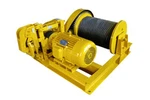
Hoist
Description: The lifting mechanism of the crane, typically electric, mounted on the trolley.
Function: The hoist lifts and lowers the load. It can be equipped with a wire rope or chain, depending on the application and load capacity.
Types: Electric wire rope hoists are common for heavy-duty applications due to their higher lifting capacities.
Components: Includes a motor, drum, wire rope or chain, and a brake system for safe and efficient lifting.
 |
 |
3.End carriage
1. Structural design
The end beam is usually a horizontal beam structure, which is connected to the main beam vertically to form a stable frame. Each end beam is equipped with a wheel group to support the movement of the crane on the track. The design of the end beam should take into account strength and rigidity to ensure stability when loaded.
2. Material selection
The end beam generally uses high-strength steel (such as Q235 or Q345) to ensure its load-bearing capacity and bending resistance. The choice of material directly affects the service life and safety of the end beam.
3. Main functions
Supporting function: The end beam is connected to the ground through the legs to provide overall support for the crane.
Wheel group installation: The wheel group is installed on the end beam to allow the crane to move smoothly on the track and ensure operational flexibility.
Connecting the main beam: The end beam is connected to the main beam to form a complete crane frame and transfer the load of the main beam.
 |
 |
4.Crane travelling mechanism
1. Components
The crane mechanism is usually composed of the following main components:
Motor: Provides power to drive the movement of the crane.
Reducer: Converts the high speed of the motor into a suitable low-speed high-torque output to drive the wheels.
Wheels: Contact the track, carry the weight of the crane and allow it to move smoothly.
Underframe: Supports the entire crane mechanism and is connected to the main beam.
2. Working principle
The crane mechanism drives the reducer through the motor, and the reducer transmits power to the wheels, pushing the crane forward and backward on the track. The control system can adjust the start, stop and running speed of the motor to achieve precise control.
5.Trolley travelling mechanism
1. Working principle
The trolley running mechanism drives the reducer through the motor, and the reducer transmits power to the wheels to push the trolley forward and backward on the main beam. The control system can adjust the start and stop and running speed of the motor to achieve precise control of the hoist.
2. Control method
The control methods of the trolley running mechanism usually include:
Manual control: manual operation through the control panel or handle.
Remote control: using a wireless remote control to increase operational flexibility and safety.
Automatic control: automatic control is achieved through PLC (programmable logic controller), which is suitable for integrated operation of the production line.
3. Safety device
The trolley running mechanism is usually equipped with a variety of safety devices to ensure safe operation:
Overload protection: when the load exceeds the rated value, it automatically stops running to protect the equipment.
Limit switch: prevents the trolley from exceeding both ends of the main beam to avoid equipment damage.
Emergency stop device: in an emergency, the operator can quickly stop the movement of the trolley.
6.Crane wheel
1. Material selection
The wheels are generally made of high-strength alloy steel or cast iron to ensure their strength and wear resistance under high load conditions. The choice of materials directly affects the service life and load-bearing capacity of the wheels.
2. Working principle
The wheels carry the weight of the crane and provide stable support by contacting the track. Driven by the motor, the wheels rotate and push the entire crane along the track. Good contact and friction ensure the safe and stable operation of the crane.
3. Design requirements
The design of the wheels needs to consider multiple factors:
Carrying capacity: According to the maximum load of the crane, the wheels need to have sufficient carrying capacity.
Friction coefficient: Ensure that there is appropriate friction between the wheels and the track to prevent slipping.
Wear resistance: The surface of the wheel needs to have good wear resistance to cope with long-term operation.

7.Crane Hook
1. Structural composition
The hook is usually composed of the following main parts:
Hook body: the main load-bearing part, usually made of high-strength steel, and the shape is designed to ensure the stability of the heavy object.
Hanging ring: used to connect the lifting wire rope or sling, which is convenient for connecting with the heavy object.
Safety lock: prevents the hanging object from accidentally falling off during the lifting process and increases safety.
2. Material selection
The hook generally uses alloy steel or special alloy materials to provide sufficient strength and toughness. The choice of materials directly affects the load-bearing capacity and durability of the hook.
3. Working principle
During the lifting operation, the hook is connected to the lifting wire rope through the hanging ring, and the hook body safely hangs the heavy object. When the lifting system is working, the hook lifts the heavy object through the wire rope to complete the handling task.

Motor
1. Types
Common motor types include:
AC motors: widely used in cranes, with advantages such as smooth start-up and high operating efficiency.
DC motors: suitable for occasions requiring speed regulation, with good control performance.
2. Maintenance and care
Regular maintenance is essential to the performance of the motor, including:
Lubrication: Regularly check and replace lubricating oil to ensure smooth operation of moving parts.
Electrical inspection: Check electrical connections and insulation to ensure safety.
Operation status monitoring: Monitor the working status of the motor to detect and solve problems in a timely manner.

.
Sound and light alarm system & limit switch
1. Sound and light alarm system
Warning function: When the crane is lifting, moving or operating, when it approaches a dangerous area or there is an abnormal situation, the system will send out sound and flash signals through the sound and light alarm device to remind the operator and surrounding personnel to pay attention to safety.
Status prompt: When the crane starts, stops, is overloaded or other important status changes, the sound and light alarm system will issue corresponding prompts to help the operator understand the equipment status in time.
2. Limit switch
Safety protection: The limit switch is used to limit the range of motion of the crane to prevent it from exceeding the safe working range and avoid equipment damage and accidents.
Automatic stop: When the crane reaches the preset limit, the limit switch will automatically cut off the power supply and stop the motor from working.

10.Safety Devices
1. Emergency stop device: In an emergency, the operator can quickly stop all movements of the crane to avoid accidents.
2. Sound and light alarm system: When the crane is working, if there is an abnormal situation (such as approaching the limit or overloading), the sound and light alarm system will emit sound and flash signals to remind the operator and surrounding personnel to pay attention.
3. Safety lock: used to prevent the hook or sling from accidentally falling off during the lifting process, increasing the safety of the lifting operation.
4. Electrical protection device: prevent the electrical system from overloading, short circuit or leakage, and ensure the safety of equipment and operators.
5. Safety cover: Cover vulnerable parts such as motors, transmission mechanisms, etc. to prevent operators from accidentally contacting them during work. The protective cover should have good visibility and durability, and be easy to operate and maintain.
6. Operation monitoring system: monitor the operating status of the crane in real time, record data, and issue an alarm when an abnormality occurs. Including sensors, display screens and control systems.
The safety device of double-beam bridge crane is an important guarantee to ensure the safe operation of the equipment. Reasonable design, regular maintenance and timely inspection can effectively reduce the risk of accidents and improve the safety and reliability of the crane. Operators should strictly follow the safety operating procedures to ensure that the hoisting operation is carried out in a safe environment.
11.Control Mode
1. Manual control: The operator directly controls the various actions of the crane, such as lifting and moving, through the control panel or handle. Simple and intuitive, suitable for small or short-time operations.
2. Remote control: Use a wireless remote control to control the operation of the crane, and the operator can control it from a safe distance. High flexibility, suitable for operations in complex or dangerous environments.
3. Automatic control: Automatic control is achieved through PLC (Programmable Logic Controller), which can automatically perform lifting operations according to preset programs. Improve efficiency and is suitable for high-frequency and repetitive operations.
4. Centralized control: Multiple cranes are centrally managed by a control center, and operators can monitor and control multiple devices at the same time. Suitable for large industrial sites to improve overall operation coordination.
5. Intelligent control: Combine sensors and monitoring systems to achieve intelligent monitoring and adjustment, such as real-time load monitoring and status feedback. Improve safety and efficiency and adapt to modern production needs.
6. Safety control: Equipped with safety protection devices (such as overload protection, limit switches) to ensure automatic shutdown under abnormal conditions. Enhance equipment safety and prevent accidents.

12.Sketch

Main technical

Advantages
The double girder hoist overhead crane offers several key advantages, making it a popular choice for industrial environments that require heavy-duty material handling. Below are the primary advantages of using a double girder hoist overhead crane:
1. Higher Lifting Capacity
Double Girder Strength: The two parallel girders provide enhanced structural support, allowing for higher lifting capacities compared to single girder cranes. These cranes can lift heavy loads ranging from 10 tons to over 100 tons, making them ideal for demanding industrial applications.
Increased Stability: The double girder design distributes the load more evenly across the structure, ensuring stable lifting operations and minimizing deflection, even with heavier loads.
2. Maximized Lifting Height
Top Running Hoist: In double girder cranes, the hoist runs on rails mounted on top of the girders, which provides more vertical lifting height. This design allows the crane to use the full height of the facility, making it suitable for environments with height limitations where maximum lifting height is essential.
Better Utilization of Space: The design enables more efficient use of the workspace, maximizing both horizontal and vertical material handling capacity.
3. Greater Span and Coverage
Longer Spans: Double girder cranes are capable of spanning larger distances compared to single girder models, which is beneficial in large industrial workshops, warehouses, or production facilities.
Full Area Coverage: The crane can move across the entire workspace, providing comprehensive coverage for material handling needs within the facility.
4. Durability and Robustness
Heavy-Duty Construction: These cranes are designed for heavy-duty use in harsh industrial environments, including steel plants, shipyards, and manufacturing facilities. The components are made from high-quality materials that ensure long-term durability and resistance to wear and tear.
Low Maintenance: The robust construction and high-quality components reduce the frequency of repairs and minimize downtime, leading to lower maintenance costs over the crane's lifespan.
5. Precision and Smooth Operation
Accurate Load Handling: Double girder hoist overhead cranes are equipped with advanced control systems, such as variable frequency drives (VFDs), which provide precise load positioning, smooth acceleration, and deceleration, ensuring safe and efficient material handling.
Reduced Load Swing: The design and control features reduce load swing, allowing for safer handling of fragile or precision parts in industries like manufacturing or assembly.
6. Customizability and Flexibility
Tailored Designs: Double girder hoist cranes can be customized according to the specific requirements of the facility, including different load capacities, spans, speeds, lifting heights, and additional features like specialized hoists or load handling devices.
Versatility: These cranes are adaptable to a wide variety of industries, from heavy manufacturing and steel production to warehousing, construction, and shipbuilding.
7. Enhanced Safety Features
Multiple Safety Mechanisms: Double girder cranes are equipped with safety features such as overload protection, emergency stop systems, limit switches, and anti-collision systems, all of which help ensure safe operation and reduce the risk of accidents.
Emergency Braking Systems: The built-in braking systems prevent sudden or uncontrolled movements, providing an extra layer of safety for both operators and materials being handled.
8. Energy Efficiency
Energy-Saving Motors: Many double girder hoist overhead cranes come with energy-efficient motors and control systems, helping to reduce power consumption and operational costs.
Smooth and Efficient Operation: The advanced control systems (like VFDs) ensure smooth operation, which reduces energy waste during start-up, lifting, and stopping processes.
9. Reduced Building Infrastructure Requirements
Lower Stress on Building Structure: The crane's balanced design and reduced deflection mean it exerts less stress on the building's support structures. This can lower installation costs by reducing the need for heavy-duty reinforcement.
Optimized Weight Distribution: The two-girder design spreads the load across a wider area, minimizing concentrated loads on the building's support columns.
10. Cost-Effective in the Long Run
Long Service Life: The robust design and high-quality materials result in a longer operational life, making double girder cranes a cost-effective solution for businesses with long-term lifting needs.
Reduced Downtime: Fewer breakdowns and lower maintenance requirements result in reduced downtime, allowing for more efficient operations and higher productivity.
High ROI: Despite the higher initial cost, double girder cranes provide a higher return on investment (ROI) due to their efficiency, durability, and low operating costs over time.
11. Advanced Automation Capabilities
Integration with Automated Systems: These cranes can be integrated with automation systems for semi-automated or fully automated material handling. This is especially useful in production lines or warehouses that require repetitive handling of loads.
Remote Control Operation: Many modern double girder cranes come with wireless remote control systems, which enhance operational flexibility and reduce the need for manual labor.
12. Suitable for High-Speed Operations
Faster and Efficient Movement: With two girders supporting the hoist and trolley, double girder cranes are capable of faster operation and higher travel speeds, which is crucial for high-output industrial environments.
Conclusion:
The double girder hoist overhead crane offers several advantages, including higher load capacity, maximum lifting height, precision, durability, and customization options. Its robust design and advanced control systems make it a reliable solution for heavy-duty material handling in industries like manufacturing, construction, steel production, shipbuilding, and warehousing. These advantages contribute to improved productivity, safety, and cost-efficiency in the long run.
Application:
The double girder hoist overhead crane is widely used in various industries for heavy-duty material handling and lifting operations. Its high load capacity, versatility, and robust construction make it suitable for a broad range of applications. Below are the main industries and applications where double girder hoist overhead cranes are commonly used:
1. Manufacturing Industry
Application: In manufacturing plants and production lines, double girder hoist overhead cranes are used to handle raw materials, move parts, and lift heavy machinery.
Examples:
Transporting large machine parts or components from one production stage to another.
Lifting heavy molds and dies in automotive manufacturing.
Handling assembly-line tasks where heavy components need to be positioned with precision.
2. Steel Industry
Application: The steel industry frequently uses double girder cranes for lifting and transporting steel materials such as coils, slabs, ingots, and finished steel products.
Examples:
Moving large steel coils, billets, or bars in steel mills.
Lifting and handling steel plates and beams for cutting or processing.
Feeding raw materials into steel furnaces or handling hot, heavy metal loads.
3. Construction Industry
Application: In construction, double girder cranes help in moving building materials and large structural components, contributing to efficient site operations.
Examples:
Lifting and positioning large concrete beams, girders, and prefabricated sections.
Transporting steel reinforcements and building materials.
Handling machinery and equipment for assembly on large construction projects.
4. Shipbuilding Industry
Application: Double girder cranes are used extensively in shipyards for moving large and heavy ship components during assembly and repair.
Examples:
Lifting and positioning ship hull sections, engines, and other heavy parts.
Assisting in the installation of large machinery like turbines and propellers.
Transporting materials and equipment across vast shipyard areas.
5. Power Plants
Application: Power plants utilize double girder hoist overhead cranes for handling heavy machinery, turbines, and generators that are critical to energy production.
Examples:
Lifting and installing massive turbines, transformers, and generators.
Assisting in the maintenance of boilers, turbines, and other heavy power generation equipment.
6. Automotive Industry
Application: In the automotive sector, double girder cranes are used to lift heavy components like engines, transmissions, and car body parts for assembly and maintenance.
Examples:
Lifting and transporting car bodies along the production line.
Handling large automotive parts like engine blocks, chassis, and axles.
Assisting in tool and die changes during vehicle production.
7. Mining and Mineral Processing
Application: Mining operations require the handling of large quantities of materials and equipment, and double girder cranes are essential for lifting and transporting heavy mining machinery and materials.
Examples:
Lifting heavy mining equipment, such as crushers, conveyor belts, and excavators.
Transporting ore or mineral containers in processing plants.
Handling large spare parts and maintenance tools for mining equipment.
8. Aerospace Industry
Application: Aerospace manufacturing facilities use double girder cranes to lift and transport large, precision-engineered components such as aircraft fuselages, wings, and engines.
Examples:
Lifting aircraft engines and heavy components during assembly.
Moving aerospace tooling and machinery with high precision.
Assisting in the installation and maintenance of large aircraft parts.
9. Railway Industry
Application: The railway industry requires heavy lifting capabilities to transport and position train parts such as carriages, bogies, and tracks.
Examples:
Handling railway tracks, train engines, and carriages during assembly and maintenance.
Assisting in the construction of new railway lines and facilities.
Lifting large parts for rail equipment maintenance and repair.
10. Chemical and Petrochemical Industry
Application: In chemical and petrochemical plants, double girder cranes help in handling heavy reactor vessels, columns, and other process equipment.
Examples:
Lifting and installing heavy chemical processing equipment such as reactors, towers, and tanks.
Transporting raw materials, chemicals, and containers within the plant.
Assisting in maintenance operations of large, heavy-duty plant machinery.
11. Heavy Equipment Manufacturing
Application: In facilities that manufacture heavy machinery or equipment, double girder cranes are used for lifting and moving large components during the fabrication and assembly processes.
Examples:
Lifting heavy machine components like hydraulic presses, cranes, and construction equipment.
Handling large welded assemblies during fabrication.
Moving heavy loads during machine maintenance and repairs.
12. Warehousing and Logistics
Application: Double girder cranes are used in large warehouses and distribution centers to move heavy goods, equipment, and storage containers efficiently.
Examples:
Transporting heavy pallets, containers, or bulk materials in logistics centers.
Stacking and storing large, bulky items in warehouses.
Assisting in the loading and unloading of goods in storage or shipping facilities.
13. Paper and Pulp Industry
Application: In the paper and pulp industry, double girder cranes handle large rolls of paper, heavy equipment, and processing machinery.
Examples:
Lifting and moving large paper rolls in production facilities.
Handling processing equipment and machinery for the paper-making process.
Transporting heavy materials used in pulp production and paper processing.
14. Cement and Construction Material Industry
Application: Cement plants and construction material production facilities rely on double girder cranes to handle heavy raw materials like clinker, cement, and construction components.
Examples:
Transporting raw materials such as limestone and cement in bulk.
Lifting and moving large bags of cement or construction materials.
Assisting in the maintenance of cement processing equipment.
Conclusion:
The double girder hoist overhead crane is versatile and widely used in industries that require high-capacity material handling and heavy-duty lifting. Its applications range from manufacturing and steel production to shipbuilding, construction, aerospace, and warehousing. The crane's ability to handle heavy loads, operate in demanding environments, and provide precise positioning makes it an indispensable tool for various industrial operations.
Crane production procedure
50 Or 10ton Hanger Bridge Crane
1. Demand analysis: Communicate with customers to determine the specific parameters and usage requirements of the crane, such as lifting capacity, span, lifting height, etc. Carry out preliminary design and plan formulation according to customer needs.
2. Design stage: Use CAD and other design software for detailed structural design, including main beam, end beam, lifting mechanism, etc. Design control system, motor selection, power distribution system, etc. to ensure the safety and efficiency of the electrical system. Ensure that the design meets relevant safety standards and is equipped with necessary safety devices.
3. Material procurement: Select materials such as high-strength steel to ensure that the load-bearing and durability requirements are met. Purchase motors, reducers, crane rails, hooks and other accessories according to design requirements.
4. Processing and manufacturing: Cut, weld, drill and other processing of raw materials to manufacture various components, such as main beams, end beams, hooks, etc. Assemble the processed parts to form a complete crane structure.
5. Electrical installation: Carry out cable wiring and connection according to the electrical design drawings. Install control panels, remote controls, sensors and other equipment in place to ensure the normal operation of the electrical system.
6. Debugging and testing: Test the various functions of the crane, including lifting, moving, braking, etc., to ensure that it operates normally. Carry out load tests and safety performance tests to ensure the safety and stability of the crane under rated load.
7. Acceptance: Invite customers to conduct on-site acceptance to confirm whether the performance and design of the crane meet the requirements. Provide relevant technical documents, operating instructions and certificates of conformity.
8. After-sales service: Provide customers with installation guidance and technical support to ensure the smooth installation of the crane on site. Train operators to ensure that they have mastered the safe operation and maintenance knowledge of the crane. Provide regular maintenance and inspection services to ensure the long-term stable operation of the crane.


Workshop view
Material Inspection
Quality Inspection: Strict quality inspection is carried out on the purchased raw materials to ensure that they meet the design requirements and national standards.
Material Storage: Qualified materials are stored according to classification to prevent corrosion or damage.
Cutting and Forming
Steel Cutting: Use plasma cutting, laser cutting or flame cutting and other technologies to cut the steel according to the size of the design drawing.
Forming Processing: Form the steel plate through bending, rolling, welding and other processes to manufacture the main beam, end beam and other structural parts.
Welding
Component Welding: The cut and formed steel parts are welded into the main structures such as the main beam, end beam and trolley. The welding process needs to be strictly controlled to ensure the structural strength and welding quality.
Weld Inspection: Use non-destructive testing technology (such as ultrasonic testing, radiographic testing) to inspect the welds to ensure that there are no cracks or other defects.
Machining
Precision Machining: Precision machining is performed on the key components of the crane, such as wheel sets, bearing seats, pulleys, etc., to ensure their dimensional accuracy and surface quality.
Assembly of the whole machine
General assembly: On the basis of pre-assembly, the overall assembly of the crane is carried out, including the final installation of the main beam, end beam, lifting mechanism, walking mechanism, etc.
Commissioning and testing
Under dynamic conditions, the operating performance of the crane is tested, including the testing of lifting, walking, steering and other functions. The overall size of the assembled bridge crane is checked to ensure that all dimensions meet the design requirements.
Spraying and anti-corrosion treatment
Surface treatment Rust removal: Rust removal on the surface of the crane, common methods include sandblasting, pickling, etc. Primer spraying: Spray anti-corrosion primer on the treated surface to prevent metal oxidation and corrosion. Topcoat spraying Color spraying: Spray topcoat according to customer requirements or industry standards to give the crane a protective and decorative effect. Marking: After spraying, mark the crane's identification information in accordance with the specifications, such as model, rated load, etc.
Factory and installation
Packaging and transportation
Packaging protection: Protectively package the key components of the crane to prevent damage during transportation. Transportation arrangement: According to the equipment size and transportation conditions, select a suitable transportation method to transport the crane to the customer's site.
Acceptance and delivery
Customer acceptance
On-site acceptance: The customer conducts on-site acceptance of the crane according to the contract requirements and technical specifications to check the performance and quality of the equipment.
Problem rectification: If any problems are found, the manufacturer needs to rectify them in time to ensure that the equipment fully meets the customer's requirements. Delivery and use Operation training: The manufacturer usually trains the customer's operators to ensure that they can operate the crane correctly and safely.


Hot Tags: double girder hoist overhead crane, China double girder hoist overhead crane manufacturers, suppliers, factory, Double Girder Overhead Travelling Crane, Double Girder Overhead Crane
You Might Also Like




Send Inquiry