

Bridge Crane
Henan Province Mine Crane Co.,Ltd(hereinafter referred to as "Henan Mine") was established in 2002, specializing in the research and development, design, production, sales and service of overhead bridge cranes, gantry cranes and electric hoists, such as three series of more than 110 kinds of cranes and supporting parts products. As a professional manufacturer and service provider of cranes and material handling products, we are able to provide customers with total solutions and whole-life services, and are committed to the intelligent, green and high-quality development of the crane industry.
The company currently has a total construction area of 1.62 million square meters, more than 3,500 employees, more than 428 sales and service organizations at home and abroad, and more than 2,000 sets of various processing equipment, which can independently complete more than 20 processes such as turning, planing and grinding. With advanced technology research and development institutions and a team of senior experts at home and abroad. The annual output of single and double girder cranes is more than 80,000 units.
Why choose us?
Experienced company
Henan Province Mine Crane Co., Ltd(hereinafter referred to as "Henan Mine") was established in 2002 and is a high-tech crane enterprise. Based on the advanced design concepts and manufacturing technologies of cranes at home and abroad, we have spared no effort to carry out retrofit designs for single and double-beam cranes and electric hoists and try to produce professional, intelligent, and high-quality products.
Professional team & equipment
The company currently has a total construction area of 1.62 million square meters, more than 3,500 employees, With advanced technology research and development institutions, and 200 senior engineers. We have more than 428 sales and service organizations locally and abroad, and more than 2,000 sets of various processing equipment, which can independently complete more than 20 processes such as turning, planning, and grinding.
Productive capacity
The annual output of cranes is over 80,000 units. The company produces and sells more than 11000 double beam and gantry cranes annually, More than 73000 single beam cranes, and More than 100000 sets (sets) of single and double beam electric hoists and accessories.
Customized design services
We understand that choosing the right crane is critical to the success of any lifting operation. That's why we offer customized design services to meet our customers' unique needs. Our team of experienced engineers works closely with customers to design and manufacture cranes that meet their specific requirements.


What is Bridge Crane
A Bridge crane also known as overhead crane, overhead travelling crane, or industrial crane is a material handling machine which lifts, lowers, and transport a load horizontally. Typically, an Bridge crane involves a hook-and-line mechanism that moves along a horizontal beam which moves on a runway beam, the supporting structure.
Benefits of Bridge Crane
No need to clear aisles
Overhead cranes can move places where no other piece of equipment can reach. Have you ever had your fork trucks’ path blocked and you had to divert manpower to clear an aisle. Well an overhead bridge crane can make it around the obstruction with ease. If an independent running pushbutton station (a pushbutton station on it’s own track so it can be controlled anywhere along the bridge) or radio remote control is provided as the control method, your operator can be in guide himself around the obstructions and still control the crane. You can arrange your plant floor around how you do business and not worry as much about obstructions on your factory floor.
Clean floor space
Your floor space is cleared up because your supports for the crane are out of the way. Typically your crane provider can come up with a column design that is freestanding and can be aligned with your building columns or along walls. You can choose a ceiling mounted crane (typically on new building designed for the loadings) or you can support the crane from the floor. Sometimes a combination of the two can be used with some supports from the floor and some from the ceiling of your building.
Safety
The crane operator can put himself into the optimum location to safely move the load. The fork lift creates blind spots which are inherent with the structure around the operator. The fork lift can be prone to overturning (which is the leading cause of death with a forklift), Pedestrian can be struck by a forklift, driver or employee can be crushed by a forklift, or the driver can fall from the forklift. Overhead bridge cranes can also be outfitted with anti-collision devices to keep them from colliding with cranes in the same bay or end stops.
Customizable and adaptable
Overhead bridge cranes are very versatile when it comes to below the hook accessories. The types available are limitless. Below the hook accessories include spreader bars, c-hooks, weight scales, custom designed lifting tooling, manipulators, and vacuum lifts to name a few. Many cranes have several different below the hook tools which are changed out for the particular job.
Heavier payloads
Heavier loads can be handled while keeping your plant personnel away from the load. Forklifts require your operator to be within close proximity to the load. With an overhead bridge crane the operator can rig the load and then move away from danger when using the above referenced radio or independent traveling pushbutton station.
Complete coverage
Your entire plant can be covered with no dead spots of coverage. A crane can travel right over the load, even without a clear path or aisle. This allows the most flexibility when setting up your plant design.
Inexpensive operating costs
Operating costs are very inexpensive with a bridge crane. From no energy requirements for a completely manual system, to a very economical three phase system. There is no need to charge batteries or have tanks filled. The bridge crane is always ready to work!
Ergonomically friendly
A recent trend is to help the worker in their work cell. Small ergonomic work cell bridge cranes have replaced the worker moving the product manually and allowing them to pick up the product with a lift assist. A typical 50 pound load can now be picked up with the crane and the operator will only see one half of a pound of push pull force at the hook. When a work station crane is equipped with custom lifting tools the job can be done with higher productivity and less product damage.
Increased productivity
Whether it is handling larger loads or taking the load off of your workers, they will be more productive with an overhead crane. In high cycle applications with lighter loads a work station crane is easily justified with ROI in a very short time.
More diverse work force
With an overhead bridge crane your work force can include both sexes, as well as smaller workers who might not be able to do the job of manually handling the load. As our work force ages, and includes more females this is an even more important consideration.
Types of Bridge Crane
Gantry cranes
Like bridge cranes, gantry cranes also facilitate the hoist’s travel on a bridge, but instead of ceiling mounted runways, it is supported using legs. Because the system for a gantry crane is freestanding it is often used in outdoor applications like shipyards, railyards, or other areas in which supportive top columns can’t be used. That said, gantry cranes can also be used for plenty of indoor applications where lifting needs are infrequent, like an auto body shop. Thanks to their versatility and portability, gantry cranes are a popular choice across industries.
Monorail cranes
As the name suggests, monorail cranes often move in a straight line. The trolley and hoist are mounted on an I-beam and operate along the bottom rail. They are ideal for applications involving production and assembly lines and can be custom configured to meet specific automated assembly line requirements.


Jib cranes
In applications where clearance is required and supportive structural elements are lacking, jib cranes are often the perfect fit. This type of crane can be floor mounted, articulating, or wall mounted. While jib cranes are somewhat limited in their overall movement, they pair well with other cranes and can help to supplement assembly operations. Jib cranes offer versatility at a generally affordable price and can help to save space on your production floor.
Workstation cranes
For lighter duty applications and repetitive jobs, workstation cranes are a common choice. They offer ergonomics and easy-use design elements and are made in countless sizes and strengths. They can be freestanding but also include configurations that are hung overhead. Workstation cranes can go far to improve safety and output in your workplace.
Application of Bridge Crane
1.Automotive and transportation
A popular use of overhead cranes within the automotive industry is on assembly lines. They move automotive materials along different stations until the end product is completely built, making assembly lines much more efficient. In the transportation industry, overhead cranes assist with unloading ships. They greatly increase the speed at which large items can be moved and transported.
2.Aviation
The aviation industry is similar to transportation and shipbuilding in that heavy components are moved along an assembly line and precisely placed within an ongoing construction project. Cranes within the aviation industry are mainly used inside airplane hangars. Within this application, an overhead crane is the best option to move large and heavy machinery accurately and safely. Additionally, the reliability of overhead cranes makes them an excellent choice when dealing with expensive items because an unreliable crane presents costly delays.
3.Concrete manufacturing
Virtually everything in the concrete industry is large and heavy. Due to this fact, overhead cranes make everything easier. They are efficient at handling premix and precast and are much safer than using other types of equipment to move these items. Within the concrete manufacturing industry, bridge cranes are typically used inside the factory and gantry cranes in the yard.
4.Metal manufacturing
Overhead cranes are essential to metal manufacturing, and are used for a variety of tasks. For example, they can be used to handle raw materials and melting buckets, or load finished sheets of metal. In this application, it is not only heavy or oversized materials that require a crane’s strength; cranes are also necessary to handle molten metal so workers can keep a safe distance. Specialized attachments can be added to move different types of metal products, such as spools of wire.
5.Power plants
Power plants need to remain constantly functional, as any downtime can cause a blackout. For this reason, power plants must be capable of fixing any problem that might arise quickly. Overhead cranes are perfect for this application because they remain in place and are ready to be used the moment a problem arises. They also save valuable workspace and deliver a reliable performance that saves time and money on repairs.
6.Shipbuilding
Ships are complicated to build because of their size and shape. Moving large, heavy objects around inside an oddly shaped area can be nearly impossible without the right specialized equipment. An overhead crane makes it possible to freely move tools around a slanted hull. Most shipbuilding companies use wide overhead gantry cranes, which are excellent in heavy fabrication applications.
Bridge Crane Terminology
The following is a list of terms used to describe and differentiate the various types of bridge cranes.
Crane capacity: The maximum weight the bridge crane is permitted to lift.
Crane span: The distance between the rails on the runway that the crane travels.
Lift or hook height: The distance between the floor and the crane hook is what determines how high the runway is from the floor. This distance is also affected by how tall the building is inside.
Bridge, trolley, and lift speeds: The rate at which the bridge or trolley runs can be set to two different speeds.
Crane bridge: The basic traveling element of a bridge crane, which is made up of two end trucks and one or two bridged girders depending on the type of crane.
End trucks: The bridge crane has two trucks on either side of the span. The end trucks have the wheels that the crane runs on.
Bridge girder(s): The bridge girder is the main horizontal beam on the crane bridge. This beam is supported by the end trucks. The bridge girder is also used to support the trolley.
Trolley hoist: The trolley hoist is made up of a hoist and a trolley frame. Depending on what needs to be lifted, one or more hoists can be installed on the trolley frame. The hoists can be supplied on the same trolley or on separate trolleys.
Trolley: The trolley takes the hoist across the bay on a bridge. The bridge has girder(s) that the hoist goes across.
Hoist: The main lifting equipment for a crane is the hoist. The hoist is mounted to the trolley and together they can lift heavy objects.
How to Maintain Bridge Crane
Inspections conducted on a regular basis assist find possible problems before they develop into serious ones. Daily, monthly, and yearly inspections can be planned.
Before the start of each shift, daily inspections involve looking for any loose or damaged parts, wear, or strange noises. Furthermore, the operation of safety tools like limit switches and emergency stop buttons can also be checked.
A more thorough inspection of the crane’s parts is performed during monthly inspections. This entails inspecting electrical connections, checking wire ropes and electric chains for damage, and looking for breaks or abnormalities in structural components. Here, it is important to use thorough inspection checklists and to adhere to the manufacturer’s service and maintenance recommendations.
On the other hand, annual inspections must be performed by a licenced inspector or another qualified individual. All crane components, including load-bearing elements, hoists, brakes, and control systems, are meticulously inspected during these inspections.
Installing an overhead crane in your plant entails significant financial investment, and to assist you in maintaining it effectively, the crane manufacturer always provides a comprehensive handbook or maintenance schedule book. This resource contains service advice tailored to the specific crane’s duty cycle and capabilities.
It is crucial to strictly adhere to the manufacturer’s guidelines when it comes to crane maintenance, including lubrication schedules and inspection intervals. By following these recommendations carefully, you can ensure the optimal performance and longevity of your crane.
To reduce friction and stop premature wear, the working elements of the crane must be lubricated often. Areas like wire ropes, sheaves, gears, and bearings should be lubricated. Additionally, routine crane cleaning helps get rid of corrosive substances, dirt, and other things that can harm its components.
The operating environment plays a vital role in determining the lifespan of overhead cranes and their components. To safeguard the crane against adverse environmental conditions such as excessive heat, chemical exposure, fumes, steam, dust, or high moisture levels, special metal coatings may be necessary.
Failure to consider these factors during the design and quotation phases can lead to corrosion, oxidation, and accumulation of dirt and grime on crane components. Taking proactive measures to address environmental challenges is crucial to ensure the longevity and optimal performance of overhead cranes.
The effectiveness of crane maintenance relies heavily on operators and maintenance staff receiving adequate instruction and training. Operators need to be familiar with the manufacturer’s recommendations, safe operating techniques, and potential risks associated with overhead cranes.
Training programs should cover lubrication methods, and inspection strategies, and emphasize the importance of promptly reporting any abnormalities or issues that arise. By ensuring operators are well-informed and trained, the overall maintenance of overhead cranes can be carried out more effectively and efficiently.
How to Choose the Right Bridge Crane
Consider crane mobility and maneuverability
The mobility and maneuverability of the crane are crucial factors, especially in bridge construction where the crane may need to access different areas of the project site. Gantry cranes with rubber tires are an excellent choice for projects that require frequent relocation, as they can move easily on various terrains.
Assess safety features
Safety should be a top priority when selecting a bridge building crane. Look for features such as overload protection, emergency stop buttons, and collision avoidance systems. Additionally, ensure that the crane complies with industry safety standards and regulations.
Evaluate power source options
Crane power sources vary, with options including electric, hydraulic, and diesel. The choice of power source depends on factors such as the availability of electricity, environmental considerations, and the specific requirements of the project. Electric cranes are environmentally friendly and cost-effective for projects with a stable power supply, while diesel-powered cranes are suitable for remote locations or where electricity is not readily available.
Consider maintenance and serviceability
Regular maintenance is essential to ensure the longevity and reliability of your bridge building crane. Choose a crane model that is easy to maintain, with readily available replacement parts. Consider the manufacturer's reputation for providing prompt and reliable service and support.
The company currently has a total construction area of 1.62 million square meters, more than 3,500 employees, more than 428 sales and service organizations at home and abroad, and more than 2,000 sets of various processing equipment, which can independently complete more than 20 processes such as turning, planing and grinding. With advanced technology research and development institutions and a team of senior experts at home and abroad. The annual output of single and double girder cranes is more than 80,000 units.


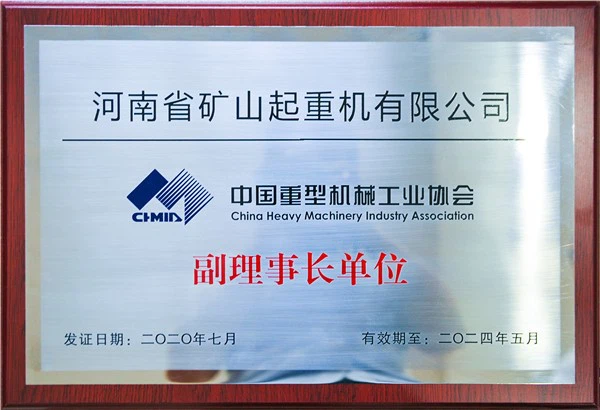
Certifications