










15Ton Mobile Portable Gantry Crane
Products Description
A 15-ton mobile portable gantry crane is a self-supporting, freestanding lifting system designed to hoist and move heavy loads up to 5 tons (10,000 lbs / 4,536 kg). Its key characteristic is mobility; it's typically mounted on casters or wheels, allowing it to be easily moved around a workshop, warehouse, or job site without requiring a fixed installation like an overhead bridge crane.
Key Features & Components
Load Capacity: The primary feature is its 15-ton (30,000 lb / 13,608 kg) capacity. It's crucial to note that this is the maximum capacity, and it often includes the weight of any lifting attachments (like hooks or slings).
Structural Frame:
Beam: Typically an I-beam or a box-style welded beam. A double-girder design (two beams on top) offers higher hook height and is better for very heavy, precise lifts. A single-girder design is more common for portability and cost-effectiveness.
Legs: Constructed from heavy-duty steel (often rectangular tubing) in an A-frame design for maximum stability and strength. Height is a critical specification.
Bracing: Cross bracing on the legs prevents side-to-side sway and ensures structural integrity during lifts.
Mobility System:
Castors/Wheels: Equipped with four heavy-duty, swivel or fixed casters. They are often made of polyurethane or nylon to protect floor surfaces, though steel wheels are an option for rail systems.
Locking Mechanisms: Crucial for safety. Each caster must have a positive locking mechanism to prevent the crane from moving during a lift. This includes both wheel locks (to prevent rolling) and swivel locks (to prevent the caster from turning).
Lifting Mechanism:
Hoist: Not always included. A 15-ton capacity electric chain hoist or wire rope hoist is typically specified. The hoist runs along the length of the beam via a trolley.
Trolley: The device that the hoist is mounted to, allowing it to travel along the beam. Manual push or geared trolleys are common, but motorized trolleys are available for heavier loads and easier operation.
Adjustability (Common Feature):
Width: Many models have adjustable-width beams, allowing the crane to span different sizes of workpieces or fit through doorways when narrowed.
Height: Some models offer adjustable leg heights, either through telescoping sections or removable plug sections, to adapt to various ceiling heights and load sizes.
Safety Features:
Overload Limiters: Many modern hoists have built-in overload protection.
End Stops: On the beam to prevent the trolley from running off the ends.
Certification: Cranes should be designed and manufactured to relevant standards (like ASME B30.2) and come with a proof of test certification.
Core Components: PLC, Bearing, Gearbox, Motor, Gear
Place of Origin: Henan, China
Warranty: 1 Year
Weight (KG): 500 kg
Video outgoing-inspection: Provided
Machinery Test Report: Provided
Color: Customized
Crane feature: Easy Operated
Capacity: 1-20t
Type : Single Girder
Power supply: 110V/220V/230V/380V/440V
Control Method: Ground Control+ Remote Control (customized)
MOQ: 1 Set
Lifting mechanism: Eliectric Hoist
Work Duty: A3-A4

Pictures & Components
1. Main Structural Framework
This is the core skeleton of the crane that bears the entire load.
Legs (Uprights): Two vertical structures that provide the crane's height. They are typically constructed from high-tensile steel box sections or strong I-beams for rigidity and resistance to buckling. On a mobile gantry, these are often adjustable.
Top Beam (Bridge Girder): The primary horizontal beam that spans the width of the crane. It supports the hoist and trolley and must resist significant bending forces. It can be a single, solid I-beam or a box-section design for heavier capacities like 15 tons.
Cross Braces (Bracing): Diagonal or horizontal beams that connect the legs to the top beam and to each other. They are crucial for adding torsional and lateral stability, preventing the frame from racking or collapsing sideways under load.
Adjustable Height Mechanism: A critical feature for portability and versatility. This is often achieved via:
Sliding Inner Legs: An inner section of the leg that slides inside the main outer leg.
Pin & Hole System: A series of holes and heavy-duty steel pins to lock the height at various levels.
Screw Thread Mechanism: A manual or motorized screw system for finer height adjustment (more common on larger models).

2. Mobility System
This is what differentiates a mobile gantry from a fixed one.
Casters & Wheels: A set of four heavy-duty, swiveling casters. For a 15-ton crane (which has a total weight of several tons itself), these are massive, often polyurethane or forged steel wheels with precision bearings.
Swivel Locks & Brakes: Each caster must have a positive locking mechanism to prevent movement during lifting operations. This is a non-negotiable safety feature. Brakes lock the wheel from rotating; swivel locks prevent the caster from turning.
Outriggers (Optional but Common): Some designs feature extendable outriggers or stabilizers that can be deployed to widen the base of the legs for increased stability when lifting a full 15-ton load, especially on uneven ground.
 |
 |
3. Lifting & Translation System
This is the machinery that actually handles the load.
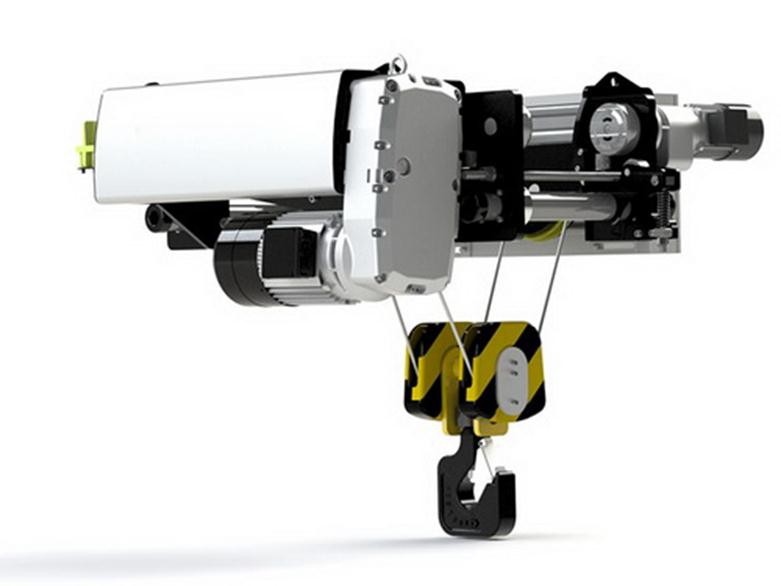
Hoist Unit: The powered device that does the lifting. For a 15-ton capacity, this is almost always an electric chain hoist or a wire rope hoist. It is not typically included with the gantry frame and must be purchased as a separate, rated component.
Trolley: The assembly that runs along the top flange of the bridge girder. The hoist is attached to it.
Manual Trolley: Moved back and forth along the beam by a hand-operated chain.
Geared Trolley: Uses a handwheel and gear system for easier movement of heavy loads.
Motorized Trolley (Power Travel): Electrically powered for precise and effortless positioning of the load along the beam length. Common for frequent or heavy-duty use with 15-ton loads.
Push Handles: Long bars attached to the legs to allow operators to maneuver the entire crane when it is unloaded or lightly loaded.
 |
 |
4. Safety Components
Essential for protecting personnel, the load, and the equipment.
End Stops/Buffers: Rubber or polyurethane buffers on the ends of the top beam to stop the trolley from running off the end.
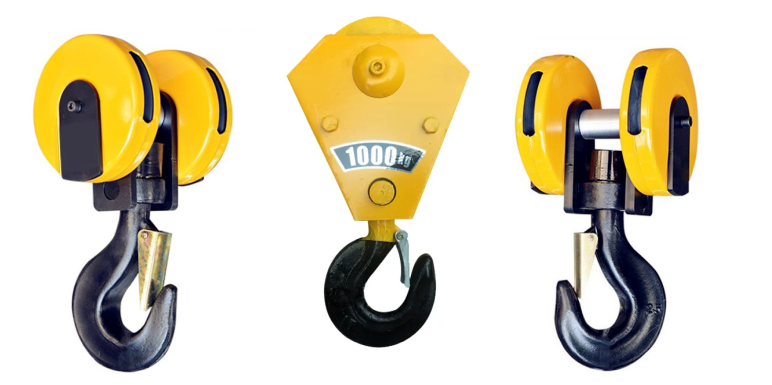
Safety Latches/Hooks: The hook on the hoist should be equipped with a safety latch to prevent slings or chains from accidentally disengaging.
Warning Labels & Capacity Plates: Clearly marked, permanently affixed plates that state the crane's maximum capacity (15 tons), its span, and any other critical operational limits.
Crane Certification: While not a physical component, a new 15-ton gantry should come with a Certificate of Conformance (like OSHA compliance in the US) and may require a professional load test certification before first use, depending on local regulations.
5. Additional Common Features
Dismantling Pins/Bolts: The crane is often designed in sections (e.g., two A-frames and a top beam) that are connected by large, high-tensile pins or bolts for easier transportation and storage.
Spreader Bar (Optional): A removable bar that connects the bottoms of the two legs, increasing the crane's stability. It is usually removed for mobility and attached for lifting.
Electric Control Pendant: The hanging control button station for operating the hoist and, if equipped, the motorized trolley. It is usually rated for low voltage (e.g., 24V or 48V) for operator safety.


.

Safety Devices
1. Primary Load Safety Devices (Preventing Overloading & Failure)
These are the most critical devices that interact directly with the hoist and load.
Overload Limit Switch / Load Limiter: This is arguably the most important safety feature.
Function: It automatically cuts power to the hoist's lifting function if it detects a load exceeding the crane's rated capacity (15 tons) by a small percentage (e.g., 105-110%). It prevents catastrophic structural failure.
Importance: Mandatory for safe operation. Never bypass this device.
Upper Limit Switch / Hoist Limit Switch:
Function: Automatically stops the hoist block from rising once it reaches a pre-set maximum height. This prevents the hook block from "two-blocking" (crashing into the drum or upper sheaves), which can sever the wire rope and drop the load.
Emergency Stop (E-Stop) Buttons:
Function: Large, prominently placed red buttons that immediately cut all power to the crane's movements (hoist and travel) when pressed. They are typically located on the push-button pendant station and sometimes also on the crane structure itself for easy access from the ground.
2. Structural & Mechanical Safety Features
These devices ensure the physical integrity and stability of the crane.
Safety Latches on Hooks:
Function: A spring-loaded latch that closes the throat of the hook to prevent slings, chains, or other rigging from accidentally slipping off.
Note: While crucial, the operator must always ensure the load is seated in the bowl (saddle) of the hook, not on the tip or the latch.
Wire Rage Safety:
Function: The hoist must be equipped with a minimum number of wraps of wire rope remaining on the drum (typically 3) when the hook is at its lowest point. This is a design feature to prevent the rope from pulling out.
Load Rated Wheels & Brakes:
Function: The wheels are rated for the crane's total weight (crane + load). Each wheel assembly is typically fitted with a manual brake or braking system.
Importance: These brakes are essential for locking the crane in position before lifting and for preventing unintended movement ("walking") during operation, especially on sloped or uneven floors.
Robust Frame Design:
Function: While not a "device," the crane's structure must be designed with a proper safety factor (e.g., 4:1 or 3:1 for the beam). This means the beam is designed to withstand 4 or 3 times its rated load before yielding. Look for high-grade steel (e.g., ASTM A36 or better) and quality welds.
3. Operational & Visibility Aids
These devices help the operator control the crane safely and communicate effectively.
Pendant Control Station:
Function: A handheld control unit that allows the operator to control all crane functions (hoist up/down, trolley travel, bridge travel) from a safe distance, away from the load path.
Features: It should be clearly labeled, have a emergency stop button, and be rated for the environment (e.g., weatherproof if used outdoors).
Warning Labels & Plates:
Function: Durable, easy-to-read labels that provide critical information:
Capacity Plate: Clearly states the rated capacity (15 ton) and any restrictions for different configurations (e.g., with extensions).
Warning Labels: Indicate dangers like "Do Not Stand Under Load," "Read Manual Before Use," etc.
Serial Number & ID Plate: For tracking inspections and maintenance.
Crane Bumpers / End Stops:
Function: Rubber or polyurethane buffers on the ends of the bridge beam. They absorb energy if the trolley is accidentally driven too far, protecting the trolley and the crane structure.
Control Mode
1. Pendant Control (Button Station)
This is the standard and most widely used control system for cranes of this size. The operator holds a physical control unit (the pendant) that is connected to the crane by a cable.
How it Works: The pendant has buttons or a joystick for each function: Hoist Up/Down, Trolley Travel (Long Travel), and Gantry Travel (Cross Travel).
Pros:
Simple & Reliable: Mature technology with fewer failure points than wireless systems.
Direct Feedback: The operator is physically connected to the crane, often ensuring they are in a clear line of sight of the load.
No Batteries: No need to worry about charging or replacing batteries for the control unit itself.
Cons:
Limited Range: The operator must walk alongside the crane, which can be hazardous in cluttered environments.
Cable Hassle: The cable can get caught, snagged, or damaged, posing a trip hazard.
Operator Positioning: The operator may not always have the optimal view of the load, especially during long travels.
For a 15-ton crane, the pendant will be a low-voltage (typically 24V or 48V) control system for safety.
2. Radio Remote Control (Wireless)
This is an extremely popular option for mobile gantry cranes because it solves the main limitation of the pendant. The control unit is wireless and communicates with a receiver on the crane via a secure radio signal.
How it Works: The handheld transmitter has joysticks and buttons for all crane functions. It uses an encrypted frequency to send signals to a receiver box mounted on the crane's bridge.
Pros:
Freedom of Movement: The operator can position themselves in the safest and most optimal location to view the load and the path, away from potential danger zones (e.g., pinch points, under the load).
Improved Safety: Especially beneficial when moving the crane itself, as the operator can walk clear of the wheels and guide the crane precisely from the side.
Greater Productivity: Allows for easier spotting and coordination.
Cons:
Cost: Adds significant cost to the crane.
Battery Management: The transmitter requires regular charging or battery replacement.
Potential for Interference: While modern systems are encrypted and frequency-hopping to prevent this, it is a theoretical risk that must be managed.
Maintenance: More complex system than a simple pendant.
For a 15-ton crane, a radio remote is a highly recommended option for its significant safety and ergonomic advantages.
3. Cabin Control
This is uncommon for typical portable gantry cranes. A permanent operator's cabin is usually found on very large, fixed, or semi-permanent gantry and overhead cranes (e.g., in shipyards or steel mills). Adding a cabin would defeat the "portable" and "mobile" nature of the crane, adding significant weight and complexity.

12.Sketch

Main technical

Advantages
1. Superior Mobility and Flexibility
Goes Where the Work Is: Unlike fixed cranes, you move the crane to the load, not the load to the crane. This is its single biggest advantage. It can be used in multiple locations within a workshop, warehouse, or job site.
No Permanent Installation: It requires no foundational work, roofing modifications, or expensive electrical installations. You simply assemble it and it's ready to use.
Easy to Relocate: Most models feature locking swivel casters (often with polyurethane wheels to protect floors). This allows a single operator to easily push the crane into position after the load is lowered.
2. Significant Cost-Effectiveness
Lower Capital Investment: It is significantly cheaper to purchase and operate than a permanent overhead bridge crane system of the same capacity.
Eliminates Facility Modification Costs: There are no costs associated with reinforcing building structures or installing complex runway beams.
Versatility for Multiple Tasks: One mobile gantry crane can serve multiple workstations or bays, eliminating the need to purchase several fixed-point cranes.
3. Enhanced Safety and Control
Stable and Secure Lifting: These cranes are designed with a wide base and a low center of gravity, providing exceptional stability when lifting heavy loads up to their 15-ton capacity.
Precise Load Positioning: The operator has direct control over the crane's movement, allowing for millimeter-precise positioning of the load. This is crucial for aligning machinery, placing heavy components, and working in tight spaces.
Reduced Manual Handling: It drastically minimizes the need for risky manual lifting, pushing, and pulling of heavy objects, thereby reducing workplace injuries and strain on employees.
4. Design and Operational Advantages
Adjustable Features: Many models offer:
Adjustable Height: The beam can be raised or lowered to suit different loads and clearance requirements.
Adjustable Width: The leg spacing can be modified to straddle wide loads like machinery, crates, or vehicles.
Durability: Constructed from high-tensile steel, these cranes are built to withstand rigorous industrial use while resisting deformation.
Easy Assembly: They are typically designed to be assembled and disassembled quickly with basic tools, making storage and transportation between sites straightforward.
Outdoor/Indoor Use: Their mobile nature makes them perfect for loading docks, outdoor construction sites, and temporary work areas where a fixed crane isn't an option.
Application:
Workshops and Fabrication Shops: For moving raw materials, positioning heavy parts for machining, and handling finished products.
Warehouses and Logistics: Loading and unloading heavy items from trucks and repositioning inventory.
Construction Sites: Handling materials like steel beams, concrete pipes, and machinery.
Maintenance and Repair: Ideal for removing and installing large motors, pumps, turbines, and other industrial components.
Shipping and Receiving: A perfect tool for dockyards and freight terminals.
Vehicle Maintenance: Straddling cars, trucks, or industrial vehicles to lift engines or entire bodies.
Crane production procedure
Production Procedure: 15-Ton Mobile Portable Gantry Crane
1.0 Purpose
To define the standardized procedure for the design, fabrication, assembly, inspection, and testing of a 15-ton mobile portable gantry crane to ensure it meets all specified requirements, safety standards, and performance criteria.
2.0 Scope
This procedure applies to all activities involved in the production of the crane, including engineering, procurement, manufacturing, quality control, and dispatch.
3.0 Applicable Standards & References
ASME B30.2: Overhead and Gantry Cranes (Top Running Bridge, Single or Multiple Girder, Top Running Trolley Hoist)
CMAA Specification 70: Specifications for Top Running & Under Running Single Girder Electric Traveling Cranes
AWS D14.1/D14.1M: Specification for Welding of Industrial and Mill Cranes
ISO 4301: Cranes - Classification
Customer Specifications & Drawings
Internal Quality Management System (QMS) Procedures
4.0 Definitions
Main Girder: The primary horizontal beam that forms the bridge of the crane.
End Frames / Legs: The vertical structures that support the main girder.
Trolley & Hoist Unit: The mechanism that travels along the main girder and performs the lifting.
Cross Travel: The movement of the trolley along the main girder.
Long Travel: The movement of the entire gantry crane along the ground.
5.0 Step-by-Step Production Procedure
Phase 1: Engineering & Design
Customer Requirement Analysis: Review customer order specifications (capacity, span, lift height, duty cycle, power supply, environmental conditions).
Conceptual & Detailed Design:
Create 3D models and detailed engineering drawings for all components (structural, mechanical, electrical).
Perform structural calculations (FEA - Finite Element Analysis) on the main girder and end frames to verify strength and deflection limits under full load.
Select standard components (hoist, trolley, wheels, motors, electrical panels, festoon system).
Design the mobility system (wheel type: steel, polyurethane; manual push or motorized travel).
Design Review & Approval: Engineering drawings and calculations are verified and approved by a senior engineer.
Phase 2: Material Procurement & Preparation
Procurement of Raw Materials:
Order structural steel (typically ASTM A36 or similar for beams, channels, and plates).
Order prefabricated components (I-beams for the girder, rectangular hollow sections for legs).
Procurement of Bought-Out Items:
Source and purchase the certified 15-ton capacity hoist unit (electric or manual).
Purchase trolley frame, travel motors, wheels, axles, gearboxes, brakes, electrical control panels, push buttons/pendant, cables, and festoon systems.
Material Verification: All incoming materials and components are inspected against purchase orders and certified for compliance (e.g., mill test certificates for steel).
Phase 3: Fabrication & Manufacturing
Cutting & Profiling:
Cut steel beams and plates to required dimensions using CNC plasma cutters or saws for precision.
Drill holes for bolts, pins, and electrical fittings.
Sub-Assembly Welding:
Main Girder Assembly: Weld top and bottom plates to the main I-beam to form a reinforced box girder structure. Use strongbacks and stiffeners as per design.
End Frame Assembly: Weld vertical legs to the horizontal base frame (which houses the wheels). Reinforce with gusset plates at critical joints.
Trolley Frame Fabrication: Fabricate the frame that will carry the hoist.
Welding Quality: All welding must be performed by certified welders according to AWS D14.1. Procedures must be qualified, and welds must be visually inspected.
Stress Relieving (if required): For critical welds or high-duty cycles, the main girder may undergo stress relieving to prevent distortion.
Machining: Machine mating surfaces, wheel bearing housings, and pivot points to ensure precise fit and alignment.
Phase 4: Surface Treatment & Painting
Surface Preparation: All structural components are shot blasted to SA 2.5 standard to remove rust, mill scale, and create a profile for paint adhesion.
Priming: Immediately apply a high-quality, corrosion-resistant epoxy primer coat.
Painting: Apply the specified topcoat (typically polyurethane enamel). Critical areas and edges receive extra coats for protection.
Curing: Allow paint to fully cure according to the manufacturer's specifications before handling.
Phase 5: Mechanical Assembly
Main Assembly:
Erect the two end frames.
Lift and secure the main girder onto the end frames. Connection is typically via high-strength pins or bolted flanges for disassembly.
Ensure the structure is square and level.
Installation of Mechanical Systems:
Mount the travel wheels and axles onto the end frames.
Install the cross travel rails on the top flange of the main girder.
Assemble and mount the trolley frame onto the main girder rails.
Mount the 15-ton hoist onto the trolley frame.
Installation of Drive Systems (if motorized):
Install long travel motors, gearboxes, and brakes on the end frames.
Install cross travel motor on the trolley.
Connect all drive systems and ensure proper alignment.
Phase 6: Electrical Assembly
Wiring:
Install the main electrical control panel in a protected location (often on the girder).
Run and secure power and control cables along the girder and down to the end frames using cable trays or festoon systems.
Wire all motors (hoist, cross travel, long travel), brakes, and limit switches.
Control System:
Connect the pendant control station (or radio control).
Install and set all safety devices: upper/lower limit switches for hoist, end-stop limit switches for trolley and bridge travel.
Testing of Electrical Systems: Perform insulation resistance tests, continuity checks, and functional tests of all controls without load.
Phase 7: Inspection & Testing (QA/QC)
This is a critical phase conducted throughout the process and as a final validation.
Dimensional Inspection: Verify all critical dimensions (span, height, wheelbase) against drawings.
Visual Inspection: Check for paint quality, proper welding, correct installation of all components, and labeling.
Non-Destructive Testing (NDT): Perform Magnetic Particle Inspection (MPI) or Dye Penetrant Inspection (DPI) on critical welds.
Load Testing (As per ASME B30.2):
Proof Load Test (125% of Rated Capacity): Lift a test load of 18.75 tons (15 tons * 1.25). Hold the load for 10 minutes and inspect the entire structure for any deformation, cracks, or defects. Check brake holding capability.
Rated Load Test (100% of Rated Capacity): Lift 15 tons and perform full functional tests of all movements (hoisting, cross travel, long travel) to ensure proper operation.
Documentation: Generate a test report and certificate of conformity, including all inspection and test results.
Phase 8: Dismantling, Packaging & Dispatch
Dismantling: For portability, the crane is partially dismantled into major modules (Main Girder, Two End Frames, Trolley & Hoist unit, electrical panels).
Packaging: Each module is securely packaged to prevent damage during transit. Wooden crates or heavy-duty wrapping are used.
Documentation Pack: Operation & Maintenance Manual, Test Certificates, Drawings, and Spare Parts List are included.
Dispatch: Ship to the customer site.
Phase 9: Site Installation (Customer Site - often supervised by manufacturer)
Unloading & Site Preparation: Ensure the ground is level and capable of supporting the load.
Re-assembly: Reverse of the dismantling process. Reconnect the main girder to the end frames with pins/bolts.
Alignment Check: Check the alignment of the girder and the track (if on a rail system).
Final Functional Test: Perform a final rated load test and functional check at the customer's facility before handover.
6.0 Records
All records (design calculations, material certs, weld maps, inspection reports, test reports) shall be maintained in the project file for traceability.

Workshop view:
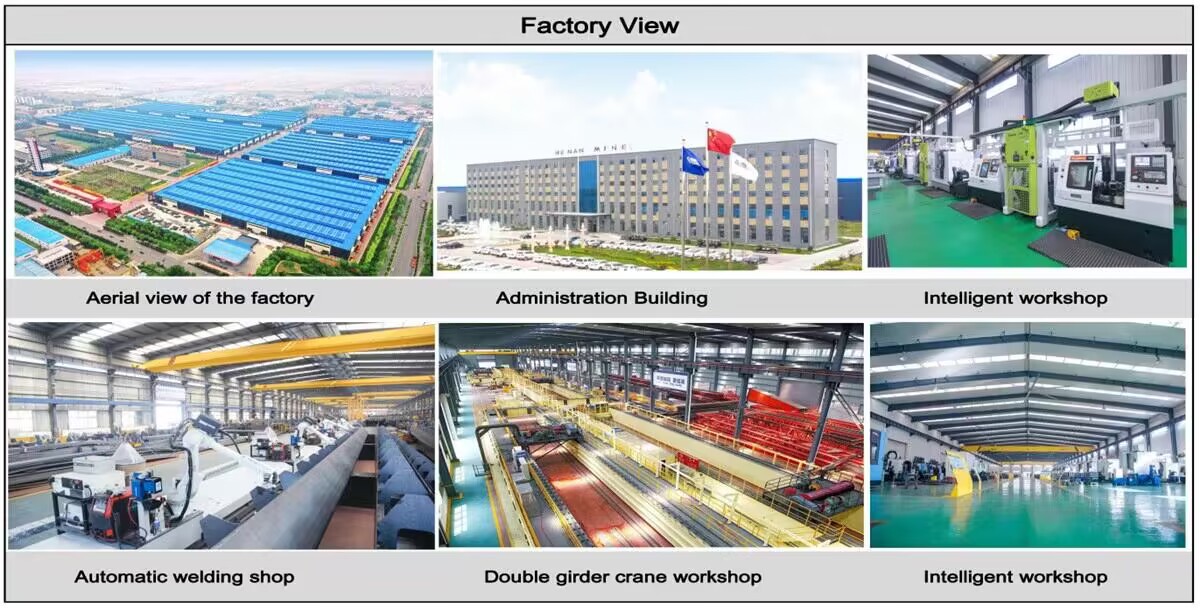
The company has installed an intelligent equipment management platform, and has installed 310 sets (sets) of handling and welding robots. After the completion of the plan, there will be more than 500 sets (sets), and the equipment networking rate will reach 95%. 32 welding lines have been put into use, 50 are planned to be installed, and the automation rate of the entire product line has reached 85%.


Hot Tags: 15ton mobile portable gantry crane, China 15ton mobile portable gantry crane manufacturers, suppliers, factory
You Might Also Like


Send Inquiry