










Overhead Crane Remote Control
Products Description
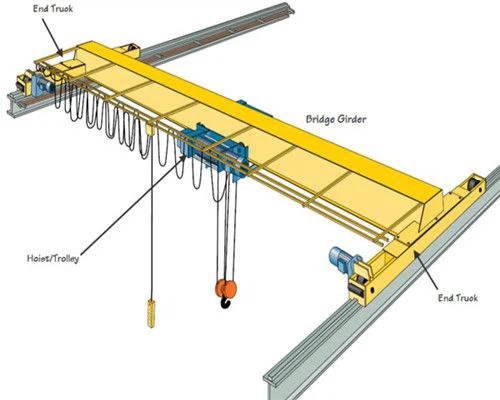
A overhead crane remote control is a type of crane that is commonly used in industrial settings for lifting and moving heavy loads. This type of crane has a single beam or girder that spans the width of the workspace and supports the hoist and trolley. The overhead crane remote control is typically designed to operate on a runway system that is attached to the building's overhead structure. The crane moves back and forth along the runway, allowing it to cover a wide area.
Core Components: Gearbox, Motor
Place of Origin: Henan, China
Warranty: 2 years
Weight (KG): 3000 kg
Video outgoing-inspection: Provided
Machinery Test Report: Provided
Control Method: cabin control/wire rope remote control
Lifting speed: 5-15M/MIN
Trolley running speed: 20-40M/MIN
Power Supply: 380V 50Hz or on request
Crane running speed: 50-100M/MIN
Protection grade: IP54
Insulation grade: F
Working Duty: A3
Color: Requst

Pictures & Components
Products Description
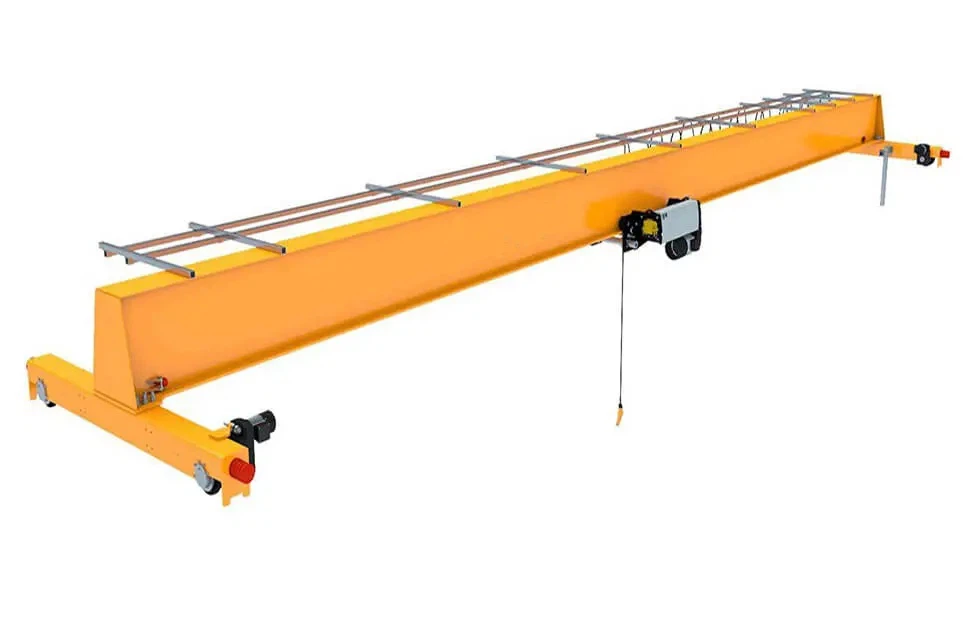
Main Beam
1. The main beam is usuallymade ofsteel or welded boxsections.
2. The main beam carries thetrolley and hoisting system,which moves along its length.3. The main beam is designed tolimit deflection to a safe range toensure smooth operation of thecrane.
2.Hoist
1. It is responsible for lifting andlowering the load along a verticalaxis.
2. The hoist is usually mountedon a trolley that moveshorizontally along the length ofthe crane beam.3. The hoist is the mechanicalcomponent that performs thelifting operation.
 |
 |
3.End carriage
1. The end beam isdesigned to bear theweight of the beam andload while ensuringsmooth movement.
2. The compact designfits into the limited spaceof the crane structure.3.Precise alignmentensures stability andsafety.
 |
 |
4.Crane travelling mechanism
1. The hook is usually made ofhigh-strength steel or alloymaterial.
2. The hook is designed in acurved or C-shaped shape tofix the sling, chain or loadlifting attachment.3. The hook is connected to thehoist drum or wire ropethrough a hook pulley or fixedsuspension device.
5.Trolley
Manual Trolley: More affordable but requires manual pushing or pulling to move the hoist along the girder. This is typically used in low-capacity cranes.
Motorized Trolley: More expensive due to the inclusion of motors for automated horizontal movement. It adds convenience, speed, and efficiency, increasing the overall cost.
6.Crane wheel
1. The wheels are usuallymade of high-strength steelor other durable alloys.
2. The flanges are designedto keep the wheels on thetrack and preventderailment.
3. The wheels have rollerbearings or radial bearings.

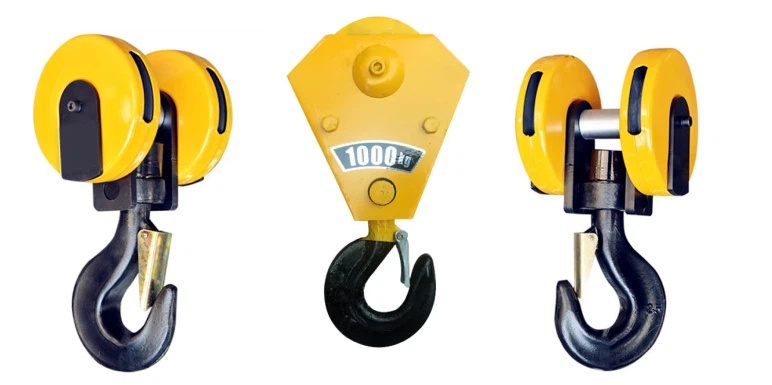
7.Crane Hook
1) The hook and other components of the crane are built to prevent the initiation of sparks or heat that could cause an explosion. This includes using materials that do not easily generate sparks, as well as ensuring that all joints and connections are sealed and protected.The hook is typically made from high-strength, corrosion-resistant materials, like stainless steel or special alloys, to withstand harsh and potentially corrosive environments.
2) The hook is designed to carry heavy loads while maintaining structural integrity under extreme conditions. It usually includes safety features like anti-rotation devices, locking mechanisms, and other safety devices to prevent accidental detachment. Explosion-proof hooks are often custom-designed according to the class and zone of the hazardous area, in compliance with international standards (such as ATEX or IECEx certification)..
8.Motor
Explosion-Proof Motor Design:The motor is housed in an explosion-proof enclosure (often marked as "Ex"). This enclosure is designed to withstand an internal explosion and prevent sparks or flames from escaping, which could ignite the surrounding hazardous atmosphere.These motors are often certified under international standards such as ATEX (Europe) or IECEx (International), indicating that they are safe for use in specific explosive atmospheres.
Features of Explosion-Proof Motors: Explosion-proof motors are equipped with temperature control features to avoid overheating, which can be a source of ignition. These motors are designed to operate at lower temperatures compared to standard motors. Motors used in such cranes are made from high-quality, corrosion-resistant materials to withstand harsh environmental conditions like moisture, dust, and temperature extremes.The motor parts, including the bearings and commutators, are designed to minimize the generation of sparks, which could trigger an explosion.
Power and Speed: Explosion-proof motors for cranes typically range from low power (for lighter cranes) to higher power ratings (for heavy-duty cranes), typically measured in horsepower or kilowatts (kW).Depending on the crane's application, the motor may be coupled with a variable frequency drive (VFD) to control the speed of the crane's movements smoothly.

.
Sound and light alarm system & limit switch
1) Sound and light alarm system
An explosion-proof single beam overhead crane typically operates in environments where there is a risk of explosion, such as in chemical plants, refineries, or other hazardous locations. The crane system is designed to handle explosive atmospheres while ensuring safety and preventing ignition.
Light Alarm: Explosion-Proof Signal Lights:These signal lights are used to indicate various crane operation statuses, such as operational readiness, emergency, or maintenance needs. The system generally includes different colored lights for different signals.Red is Emergency, stop, or danger signal.Yellow is Warning or caution signal (e.g., when the crane is in operation or in a limited state).Green is Safe or normal operation, indicating the crane is working as expected.The lights are housed in explosion-proof enclosures to prevent any internal ignition from escaping to the external environment.
Sound Alarms (Horns or Sirens):These alarms alert operators and nearby personnel to critical situations. The sound is loud enough to be heard over the noise of the machinery or equipment.Continuous Horn is Often used to signal an immediate danger or malfunction.Intermittent Horn can signal warnings or when the crane is approaching a danger zone.Multi-tone Alarm provides different tones for various operational states Like the lights, the sound alarms are housed in explosion-proof casings to ensure they do not pose a risk in an explosive atmosphere.
2) Limit switch
Limit switches on outdoor gantry cranes are crucial for safety and operational efficiency. They are used to prevent the crane from moving beyond its designated limits, which helps avoid collisions and accidents.
Functions: The limit switch is built to meet explosion-proof standards (such as ATEX or IECEx) to ensure that it does not cause sparks or heat that could ignite explosive gases, dust, or vapors in the surrounding environment.It helps to prevent the crane from operating beyond its capacity, thus preventing accidents such as tipping or mechanical failure due to excessive load.The limit switch stops the crane's movement once it reaches the maximum allowed travel in any direction, including the horizontal movement of the bridge and trolley, or vertical travel of the hoist.
Types: The limit switch can be mechanical (using a lever or roller mechanism to activate the switch) or electronic (using sensors such as optical, capacitive, or inductive to detect limits).

10.Safety Devices
Explosion-Proof Motor and Electrical Components:Explosion-proof motors and sealed electrical components prevent sparks and other electrical discharges that could ignite flammable substances.Enclosures for these components are usually rated according to standards such as ATEX or IECEx, which certify their ability to operate safely in explosive environments.
Anti-Collision Devices:Anti-collision systems, including infrared or ultrasonic sensors, help prevent collisions with other cranes, objects, or personnel in the work area, reducing risks in hazardous settings.
This device is especially important in areas with multiple cranes or restricted space.
Overload Protection System:Overload limiters prevent the crane from lifting loads exceeding its rated capacity. This helps prevent structural stress, tipping, and equipment damage.
Sensors can detect overload and trigger an alarm or automatically stop operations.
Emergency Stop Button:Emergency stop buttons are strategically placed on both the crane and remote controls, allowing operators or personnel to stop crane movement instantly if there's any danger.
In explosive environments, these buttons are built to withstand shocks and avoid accidental activation.
Spark-Resistant Components:Spark-resistant materials are used in parts that might otherwise cause sparks from friction. These materials include bronze or brass hooks, wheels, and other components in contact with other metals.
Limit Switches:Limit switches prevent the crane from moving beyond set points, such as the upper and lower limits of the hoist and the end of travel for the bridge and trolley.This helps avoid dangerous situations where the crane might move unexpectedly or reach a position that could damage surrounding structures.
Grounding and Anti-Static Measures:Grounding devices and anti-static systems prevent the build-up of static electricity, which could otherwise ignite flammable materials.Conductive grounding brushes, cables, or wheels can help dissipate static safely.
Enclosed and Protected Cables:Electrical cables and control wiring are typically enclosed in protective conduits or metal casings to prevent accidental damage or exposure to explosive gases.Special cable seals are used to ensure that no sparks can escape through wiring paths.
Temperature Control and Monitoring:Temperature sensors on motors, brakes, and other key components monitor for excessive heat that could ignite nearby substances.Systems may automatically shut down the crane if temperatures exceed safe limits.
Remote Control Operation:Explosion-proof remote controls allow operators to control the crane from a safe distance, minimizing exposure to hazardous areas.Remote controls are designed with special enclosures to avoid accidental discharges or damage in explosive settings.
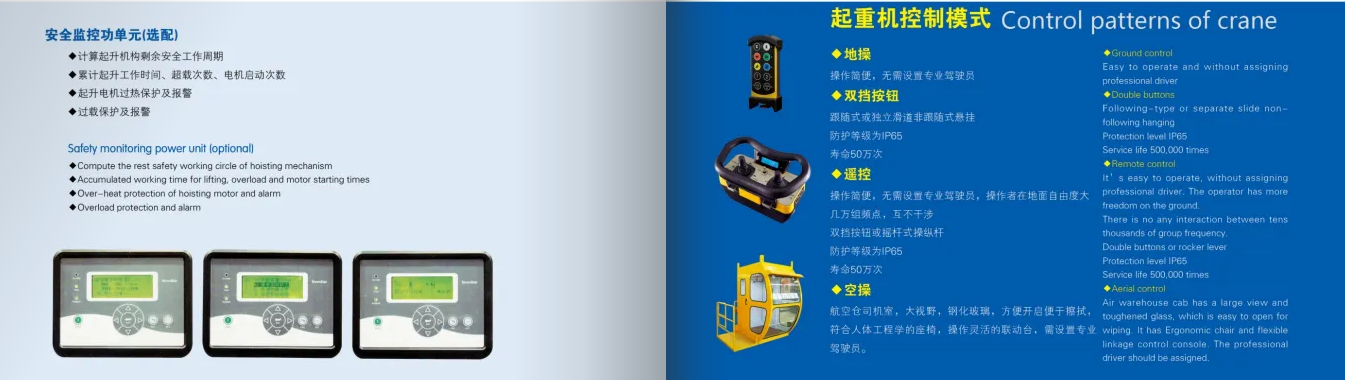
11.Control Mode
Pendant Control:A wired pendant control allows the operator to control the crane from a safe distance. The pendant has buttons for moving the crane in various directions, hoisting and lowering, and emergency stopping.Maintains a safe distance from hazardous materials and crane operations. The pendant is explosion-proof and resistant to sparks, making it suitable for hazardous environments.
Remote Control: Wireless remote controls are often used to allow the operator complete freedom to move around the worksite while controlling the crane from a safe distance.Offers greater flexibility in movement and operation, improves safety by enabling the operator to maintain a greater distance from hazardous areas.
Cabin Control: For larger and more complex cranes, a cabin control setup allows the operator to sit in an enclosed, explosion-proof cabin with controls similar to those in pendant or remote configurations.Provides a clear line of sight over the work area and allows for precise control of the crane. Cabins are explosion-proof and often climate-controlled.
PLC (Programmable Logic Controller) and Automated Control Systems: PLCs can be integrated into the crane for semi-automated or fully automated operation. This is particularly useful in repetitive or hazardous tasks where minimal human intervention is preferred.Reduces the need for operator involvement in dangerous areas, ensuring safer operations. Enhances efficiency and consistency in repetitive operations.
Safety and Emergency Control Systems: In addition to the main control mode, explosion-proof cranes are equipped with various emergency stop controls, overload protection, and emergency braking systems to ensure safe shutdown in case of an emergency. Ensures quick response to emergencies and minimizes the risk of accidents in explosive environments.
12.Sketch
Main technical

Advantages
Advantages of overhead crane remote control:
1. Cost-effective:overhead crane remote control are generally less expensive to manufacture, install and maintain than double
girder cranes.
2. Compact design: overhead crane remote control have a more compact design, making them ideal for factories and warehouses
where space is at a premium.
3. Easy to install: overhead crane remote control are relatively easy to install, which reduces downtime and installation costs.
4. Customization: overhead crane remote control can be easily customized to meet the specific needs of an organization, providing flexibility and versatility.
5. Lower headroom: overhead crane remote control have a lower headroom than double girder cranes, which can be useful if there are height restrictions in the work area.
6. Lower weight capacity: overhead crane remote control are able to lift relatively light loads, making them ideal for small to medium-sized manufacturing and storage operations.
7.Easy to repair/maintain: With fewer components, overhead crane remote control are easier to repair and maintain, which reduces maintenance costs and downtime.
Application:
The price of an overhead travelling crane varies based on its specifications, capacity, and additional features, but it is commonly used across a wide range of industries due to its ability to handle heavy loads efficiently. Here are the primary applications where overhead travelling cranes are used, and how the price is justified in each context:
1. Manufacturing and Assembly Plants
Application: Used to move raw materials, machinery, and components along production lines. They lift heavy parts during the manufacturing and assembly process.
Price Justification: The crane's ability to increase productivity, reduce manual labor, and handle heavy loads makes it a vital investment in manufacturing plants. Depending on the load capacity and automation required, the price can range from $20,000 to $100,000 or more.
2. Warehousing and Logistics
Application: Used for moving and storing heavy or large goods within warehouses, distribution centers, and logistics facilities.
Price Justification: An overhead crane helps optimize space by using vertical storage and reduces the need for forklifts. This can range from $10,000 to $50,000, depending on the size of the warehouse and the load capacity required.
3. Shipbuilding and Ports
Application: Used to lift large ship parts, engines, and heavy materials in shipyards, and for loading/unloading cargo in ports.
Price Justification: Overhead cranes with a large span and heavy load capacity are essential for moving ship components and cargo. Due to the high lifting capacity and durability required, prices can range from $100,000 to $500,000 or more, depending on customization and load capacity.
4. Steel Mills and Metal Fabrication
Application: Used for moving large metal plates, steel beams, and raw materials in steel mills and metal fabrication industries.
Price Justification: The crane's heavy-duty performance is critical for safely and efficiently handling heavy and often high-temperature materials. The price can range from $50,000 to $200,000, depending on the specific operational requirements.
5. Construction and Infrastructure
Application: Overhead cranes are employed for lifting construction materials such as steel girders, concrete panels, and heavy machinery at construction sites.
Price Justification: The crane provides precision in placing heavy materials at the construction site, increasing efficiency and reducing labor costs. Prices typically range from $30,000 to $150,000 depending on the size, load capacity, and site requirements.
6. Automotive Industry
Application: Used to lift vehicle parts, engines, and chassis during the assembly of cars, trucks, and other vehicles.
Price Justification: The ability to handle large and heavy automotive components efficiently improves production line workflow. Costs generally range from $15,000 to $80,000 depending on the type and complexity of the crane.
7. Mining Industry
Application: Used for moving heavy mining equipment, machinery, and minerals, especially in maintenance workshops.
Price Justification: The crane's ability to handle extremely heavy loads in harsh environments justifies its price. Mining operations often require cranes in the range of $100,000 to $500,000 or more, depending on capacity and customization.
8. Power Plants (Thermal, Hydro, Nuclear)
Application: Overhead cranes are used for installing and maintaining large equipment like turbines, generators, and reactors in power plants.
Price Justification: Given the precise and critical nature of the work, along with the need for heavy lifting, the price of cranes used in power plants is usually on the higher end, ranging from $200,000 to $500,000 or more.
9. Aerospace Industry
Application: Used to lift and transport large aircraft components such as wings, fuselages, and engines during manufacturing or assembly processes.
Price Justification: High precision and heavy lifting capabilities are crucial in aerospace, which increases the crane's cost. Prices for cranes in aerospace applications can exceed $300,000 due to the need for custom features and precision controls.
10. Chemical and Petrochemical Plants
Application: Used to move heavy chemical reactors, vessels, and other equipment in chemical and petrochemical production facilities.
Price Justification: These cranes must be designed to operate in hazardous environments, which requires specialized materials and designs. Prices can range from $100,000 to $400,000, depending on the load capacity and safety features.
11. Paper and Pulp Industry
Application: Used to handle large rolls of paper and raw materials in paper mills and processing plants.
Price Justification: The crane provides an efficient way to handle heavy and bulky materials, improving operational efficiency. Prices range from $50,000 to $150,000, depending on the facility's requirements.
12. Wind Turbine and Renewable Energy Sector
Application: Used to lift and position large wind turbine blades, generators, and towers during assembly and installation.
Price Justification: Wind energy projects require high-capacity cranes to handle large and heavy components, especially during installation. Prices can range from $150,000 to $500,000 depending on the size and load capacity.
13. Railway and Locomotive Industry
Application: Used for lifting and handling heavy locomotives, rail components, and machinery in railway workshops.
Price Justification: The crane's ability to lift and position large rail components improves maintenance and assembly efficiency. Costs typically range from $50,000 to $300,000 depending on load capacity and facility requirements.
14. Food and Beverage Industry
Application: Used to lift large equipment and containers in food processing plants, especially in environments where cleanliness and efficiency are critical.
Price Justification: Overhead cranes reduce manual handling and help maintain hygienic conditions by minimizing contact with food products. Prices generally range from $15,000 to $70,000 depending on the facility's needs.
15. Recycling and Waste Management
Application: Used for lifting and moving large waste containers and machinery in recycling and waste processing plants.
Price Justification: Cranes used in waste management must be durable and capable of handling heavy loads in harsh environments, justifying a price range of $30,000 to $150,000.
Summary:
Overhead travelling cranes are versatile and used across a wide range of industries, making them an essential investment. Their price, typically ranging from $10,000 to over $500,000, is justified based on the specific industry requirements, load capacity, customization, and operational efficiency improvements they provide.
Crane production procedure
1. Design and Engineering:Begin with an analysis of the explosion-proof requirements and operational environment where the crane will be used.Create specifications to meet industry standards for explosion-proof equipment, typically adhering to ATEX, NEC, or IEC standards, based on the zone classification.Select appropriate materials and components, such as motors, controls, and cables, that are designed for explosion-proof applications.
2. Material Procurement: Procure certified explosion-proof electrical components and materials (motors, wiring, enclosures) from approved suppliers.Select high-grade metals and alloys resistant to corrosion and spark generation, essential for hazardous environments. Use anti-corrosion and anti-static coatings, especially if the crane will operate in environments prone to moisture, chemicals, or dust.
3. Manufacturing and Fabrication: Manufacture the crane's main structural elements (girder, end beams, trolley) using welding and machining techniques to ensure strength and precision.Assemble the explosion-proof motor and hoisting mechanism with careful alignment to prevent sparking and ensure reliability.Manufacture or install explosion-proof electrical enclosures, ensuring they are sealed to prevent any flammable gases from entering. Install and wire explosion-proof control panels with insulated, spark-resistant wiring. Additional measures may include placing the control systems in safe areas or housing them in explosion-proof boxes.
4. Quality Control and Testing: Test the crane's load-bearing capacity to ensure it meets safety and operational standards. Conduct specific explosion-proof tests, such as checking for sparks and ensuring containment, to verify compliance with explosion-proof standards.Verify all electrical systems operate safely without arcing, sparking, or overheating, and ensure controls and safety systems are fully functional. Test coatings and materials for resistance to corrosion, particularly if the crane will be used in chemical-prone environments.
5. Assembly and Final Checks: Assemble the crane components, including the bridge, hoist, trolley, and electrical systems, in a controlled environment. Final InspectionPerform a thorough inspection to confirm that all explosion-proof standards and specifications have been met.Document all tests, inspections, and certification processes to ensure traceability and compliance with safety regulations.
6. Installation and Commissioning: Prepare the installation site, ensuring that it meets explosion-proof requirements and is clear of potential hazards.Assemble and install the crane on-site, following strict safety protocols to prevent damage or misalignment.Conduct load and functional tests post-installation to verify operational reliability and safety in the intended environment.
7. Certification and Handover: Obtain third-party certification for explosion-proof compliance if required by local regulations.Provide operator and maintenance training focused on explosion-proof equipment handling and safety.Provide the customer with full documentation, including maintenance manuals, certification, and operational guidelines.

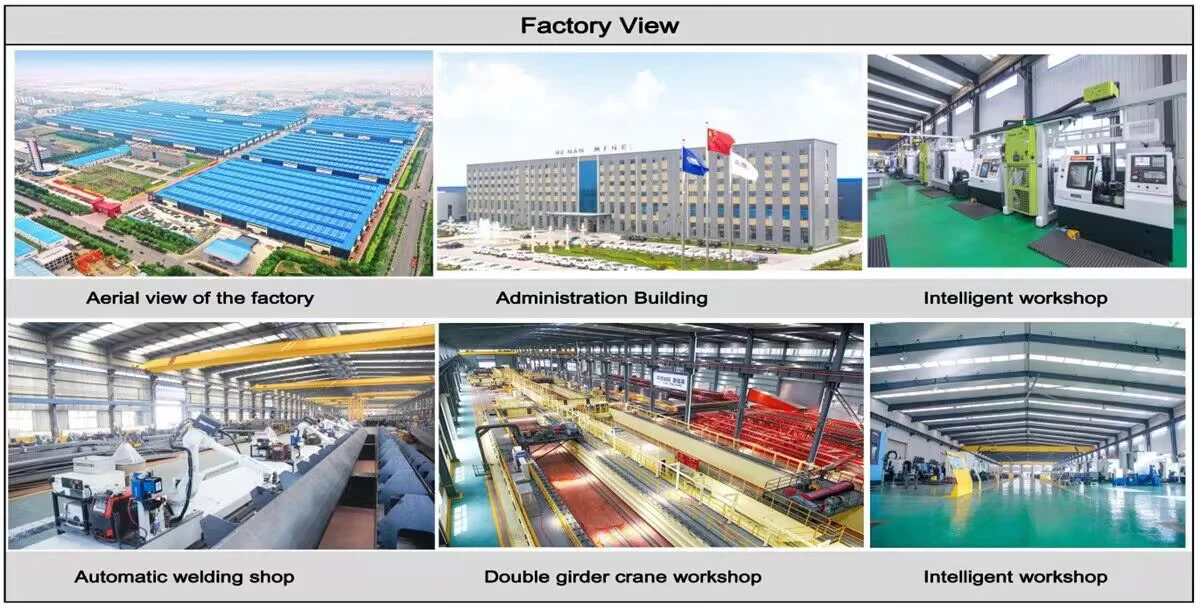
Workshop view:
The company has installed an intelligent equipment management platform, and has installed 310 sets (sets) of handling and welding robots. After the completion of the plan, there will be more than 500 sets (sets), and the equipment networking rate will reach 95%. 32 welding lines have been put into use, 50 are planned to be installed, and the automation rate of the entire product line has reached 85%.

Hot Tags: overhead crane remote control, China overhead crane remote control manufacturers, suppliers, factory, Upper Rotary Electromagnetic Bridge Crane, Casting Overhead Ladle Crane, Metallurgical Overhead Crane, Ladle Foundry Bridge Crane, Double Girder Overhead Travelling Crane, Wheels
You Might Also Like


Send Inquiry