










Qz Type Grab Bucket Overhead Bridge Crane
Products Description
Key Components & Features
Double Girder Bridge Structure:
The crane is built with two robust, fabricated box girders to handle the significant weight and dynamic forces generated by the grab digging into a pile and swinging while traveling.
It provides the necessary rigidity and stability for precise load control.
Motorized Grab Bucket:
This is the defining feature. Unlike rope-operated grabs, a motorized grab has its own built-in electric motor that powers the opening and closing of the jaws.
The grab is connected to the crane's electrical system via a flexible cable.
Dedicated Hoisting Mechanism:
A single, powerful hoist is used solely for lifting and lowering the entire grab assembly.
It does not require a separate auxiliary hoist for opening/closing like a 4-rope grab system does.
Integration and Control System:
The crane's control system is specially designed to operate the grab.
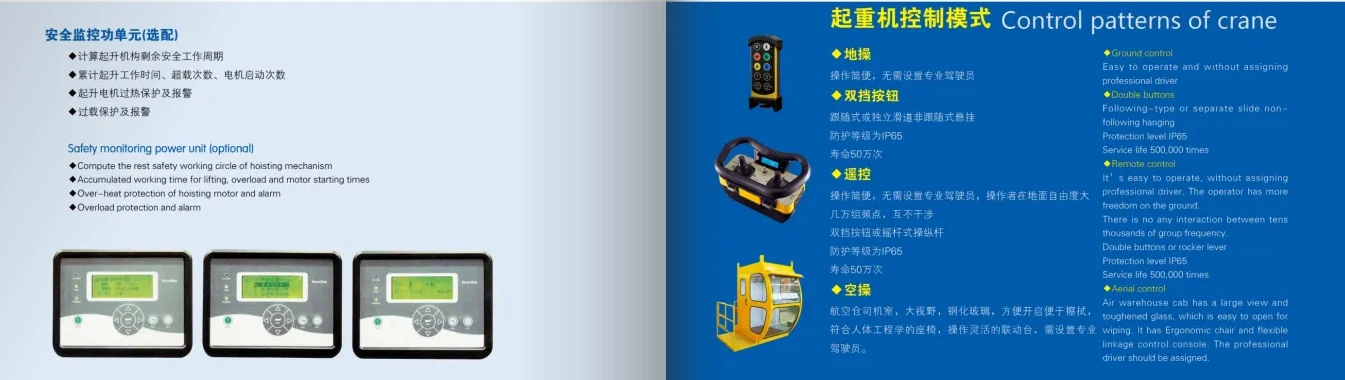
The operator uses a pendant station or radio remote control with dedicated buttons for:
Main Hoist: Up/Down
Bridge Travel: Forward/Backward
Trolley Travel: Left/Right
Grab Open/Close: The most important functions, controlled by the grab's own motor.
A motorized rotator is often included to allow the grab to spin 360 degrees for precise dumping.
Comparison: QZ (Motorized) vs. 4-Rope Grab Crane
| Feature | QZ Type (Motorized Grab) | 4-Rope Grab Crane |
|---|---|---|
| Operation | Single hoist. Grab has its own motor to open/close. | Requires two hoists (main & auxiliary) on one trolley. |
| Control | Precise, proportional control over opening/closing. | Less precise; control depends on rope coordination. |
| Rigging | Simpler (one set of hoist ropes). | More complex (two independent rope systems). |
| Maintenance | Focus on the grab motor and electrical connections. | Focus on wire rope wear and sheave alignment. |
| Best For | Most industrial applications (scrap, coal, grain). | Very deep digging (e.g., unloading deep ship holds). |
Core Components:Bearing, Gearbox, Motor, Pump
Place of Origin:Henan, China
Warranty:1 Year
Weight (KG):2000 kg
Video outgoing-inspection:Provided
Machinery Test Report:Provided
Design:Double beam
Effectiveness:high efficiency
Operating speed:High speed operation
Stability:Anti-swing function
Color:Optional
Power Source:110V/220V/230V/380V/440V,customized
Span:7.5-31.5m

Pictures & Components
This type of crane is designed for bulk material handling (like coal, gravel, grain, scrap metal) and is distinct from standard overhead cranes due to its grabbing mechanism.
Part 1: The Overhead Bridge Crane Structure
These are the standard components that form the bridge and its movement systems.
1. Bridge
Function: The main traveling structure that spans the width of the bay.
Components:
Main Girder(s): The primary horizontal beams that support the hoist and trolley. Can be a single girder or double girder design (double is more common for heavier grab duties).
End Trucks: Assemblies located at each end of the bridge, containing the wheels, bearings, and axles for travel along the runway rails.

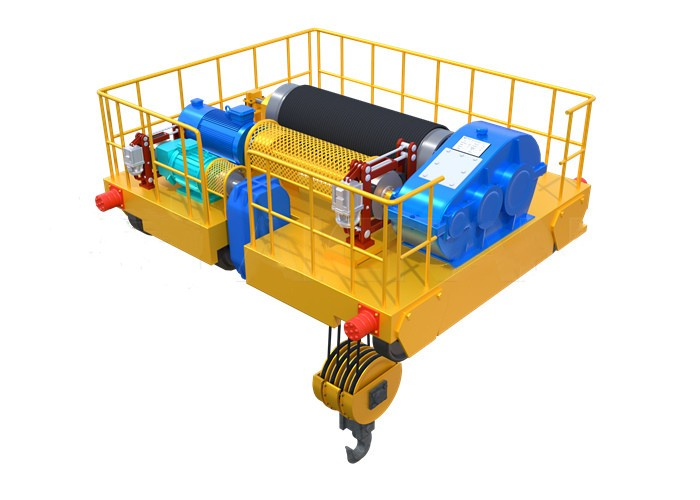
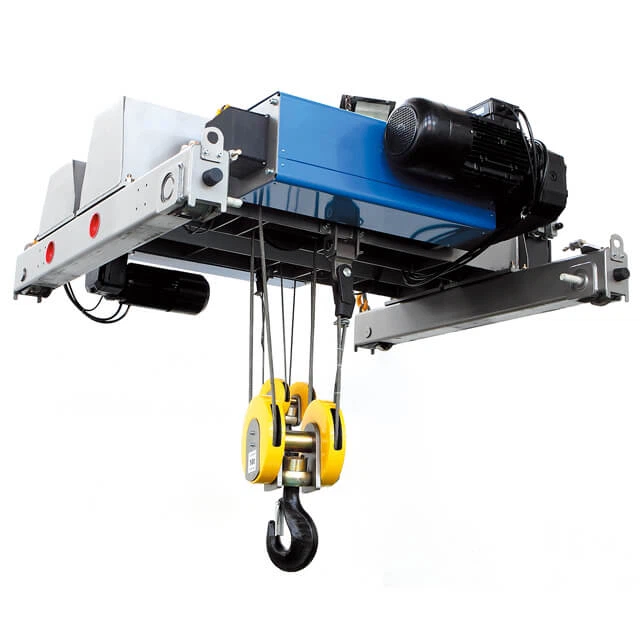
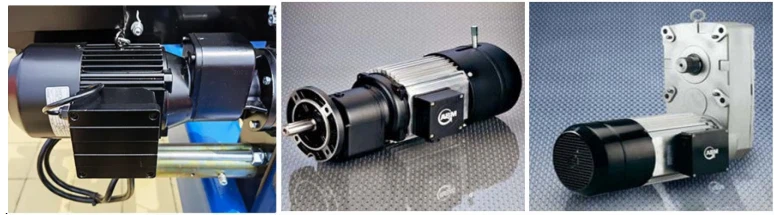
2. Hoist Unit
Function: The primary lifting mechanism that raises and lowers the load.
Components:
Motor: Provides the power for lifting/lowering.
Brake: Automatically holds the load when the motor is not engaged.
Gearbox: Reduces motor speed to increase lifting torque.
Drum or Sheaves: The drum wraps the wire rope, or sheaves guide the chain/rope.
Lifting Medium: Typically heavy-duty wire rope (for higher lifts and heavier loads) or sometimes a load chain.
 |
 |
3. Trolley
Function: The unit that carries the hoist and travels back and forth across the bridge girders.
Components:
Frame: The structure that houses the trolley drive motor, wheels, and the hoist.
Trolley Drive Motor: Provides power for traversing across the bridge.
Trolley Wheels: Run along the top flange of the bridge girder(s).
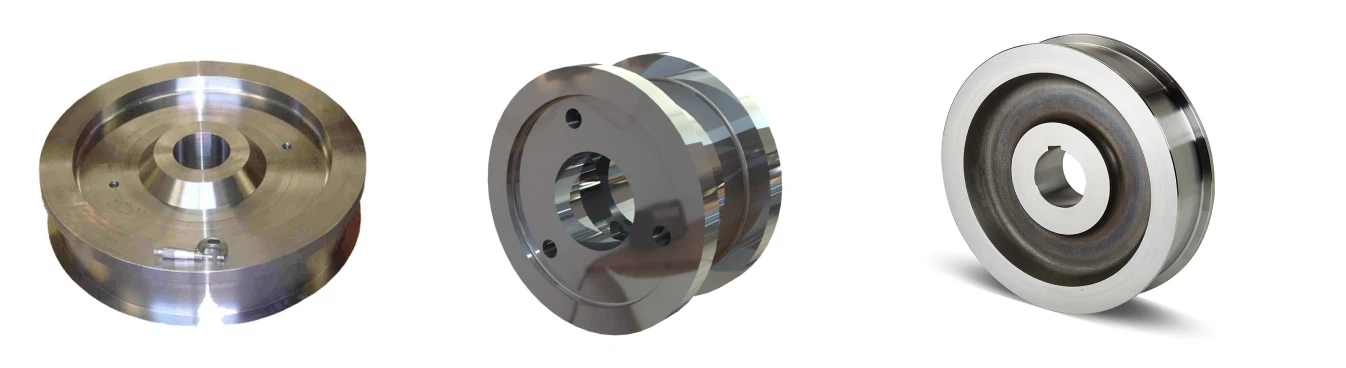
4. Crane Drive / Travel System
Function: Moves the entire bridge along the length of the building or runway.
Components:
Drive Motors: Typically one motor per end truck, synchronized for straight travel.
Travel Wheels: Large wheels mounted on the end trucks that run on the runway rails.
 |
 |
5. Runway
Function: The fixed track system on which the crane operates.
Components:
Runway Rails: Heavy-duty steel rails (often ASCE or DIN standards) mounted to the supporting structure.
Runway Beams: The structural steel beams (often attached to building columns) that support the rails and the crane's weight.
6. Electrical System & Controls
Function: Provides power and control to all crane functions.
Components:
Main Festoon or Conductor Bar System: Carries power from the building's source to the moving bridge.
Trolley Festoon: A smaller system that carries power from the bridge to the moving trolley.
Pendant Station (Push Button) or Radio Remote Control: The interface for the crane operator. Grab cranes are almost exclusively operated by radio remote control for safety and visibility.
Control Panel (Cabinet): Houses contactors, variable frequency drives (VFDs), and PLCs for smooth control of all movements.
Part 2: The Specialized Grab System
This is what differentiates this crane from a standard hook crane.
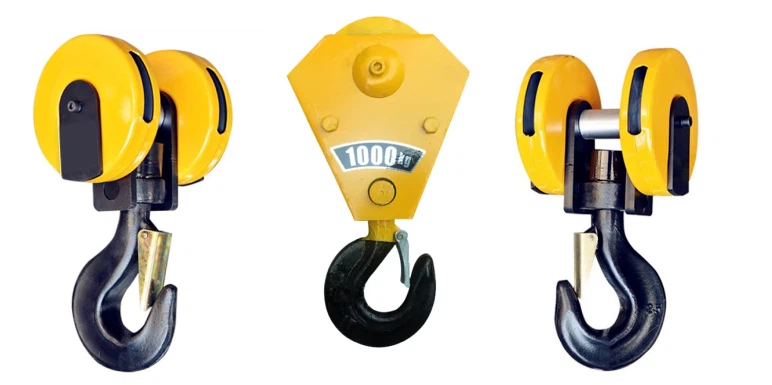
1. Grab Bucket (or Grapple)
Function: The attachment that physically opens, closes, and contains the bulk material. It acts as both the lifting device and the container.
Types:
Clamshell Grab: Most common type. Two or more hinged "shells" that close around the material. Ideal for free-flowing materials like sand, gravel, and grain.
Orange Peel Grab: Multiple hinged "petals" that close to form a ball shape. Excellent for scrap metal, rocks, and demolition debris.
Timber Grab: Two long, flat arms with pointed tips for piercing and lifting logs or timber packs.
Electro-Hydraulic Grab: Has its own independent hydraulic power unit (on the grab or trolley) for extremely high closing force, used for heavy or compacted materials.
2. Grab Lifting Mechanism
Function: To open and close the grab bucket. This is the most critical differentiating component.
Systems:
Single-Rope (Rope-Operated) System:
Uses one main hoist rope that performs both lifting and closing functions through a complex pulley system on the grab itself.
How it works: To close the grab, the rope is lowered onto the pile while the grab is open. Lifting the rope first closes the jaws (via the internal mechanism) and then lifts the full grab.
Advantage: Simpler crane design (only one hoist drum needed).
Disadvantage: Cannot open or close the grab mid-air; requires contact with a surface.
Four-Rope (Multi-Rope) System:
This is the most common and efficient system for industrial applications.
Uses two independent winches (hoists) on the trolley:
Hoist / Holding Rope(s): Two ropes that are fixed to the grab's head and are responsible for lifting and lowering the entire unit.
Closing Rope(s): Two ropes that run through sheaves on the grab head to the jaws. Pulling these ropes closes the grab.
How it works: The operator can control the holding and closing winches independently to open, close, lift, and lower the grab at any point in the air.
Advantage: Full control and much faster cycling times.
Disadvantage: More complex and expensive crane design (requires two winches).

3. Rope Sheaves and Guides
Function: To guide the multiple ropes from the hoist drums on the trolley down to the grab, ensuring they spool correctly and don't tangle.
4. Grab Control System
Function: Integrates with the main crane control to provide independent and synchronized operation of the holding and closing winches. Modern systems use Variable Frequency Drives (VFDs) for precise, smooth, and safe control of the grab's movements.

Summary of Key Components for a Qz-Type Grab Bucket Crane:
| Component Category | Specific Components |
|---|---|
| Bridge Structure | Main Girders, End Trucks, Travel Wheels, Runway Rails |
| Lifting & Travel | Main Hoist Unit (Holding Winch), Closing Winch, Trolley Drive, Bridge Drive |
| Grab System | Grab Bucket (Clamshell, Orange Peel, etc.), Rope Sheaves, Lifting Frame |
| Control & Power | Radio Remote Control, Control Panel with VFDs, Festoon/Conductor Bar System |
The "Qz" designation in Chinese crane nomenclature typically refers to a rope-operated grab bridge crane, often implying the more advanced four-rope system for precise control.
Sketch

Main technical

Advantages
Advantages of Qz Type Grab Bucket Overhead Bridge Crane
This specialized crane is engineered for efficiency and reliability in handling bulk materials, offering distinct benefits over other methods like front-end loaders, excavators, or conveyor systems.
1. High Efficiency and Rapid Cycling
Integrated Process: The crane combines grabbing, lifting, transporting, and unloading into a single, continuous operation performed by one machine and one operator.
Fast Operation: Modern designs with independent holding and closing winches, coupled with Variable Frequency Drives (VFDs), allow for very fast open/close and lift/lower cycles, maximizing material moved per hour.
2. Unmatched Versatility in Handling
Wide Range of Materials: Can handle everything from light grains to heavy, abrasive scrap metal simply by changing the grab type (clamshell, orange peel, etc.).
Various Operations: It can perform multiple tasks: unloading from ships or railcars, transferring between piles, feeding hoppers or processors, and blending materials by grabbing from different piles.
3. Superior Space Utilization
Overhead Operation: Since it operates on a runway high above the work area, it requires zero valuable floor space for its path. This allows for maximum storage density underneath the crane bay.
Full Coverage: The bridge and trolley movements provide complete coverage of a rectangular area, leaving no dead spots. This enables very organized and compact storage piles.
4. Reduced Material Contamination and Loss
Containment: The grab fully encloses the material during transport, minimizing spillage and dust generation compared to open conveyors or bucket loaders.
Weather Protection: When installed indoors, it protects materials from rain, wind, and other elements, preventing spoilage (e.g., for grain) and reducing environmental runoff.
5. Improved Safety
Remote Operation: Operators typically use a radio remote control, allowing them to position themselves in the safest and most optimal location for visibility, away from the load, dust, and potential hazards.
Reduced Congestion: By replacing multiple ground vehicles like loaders and trucks within a storage area, it significantly reduces the risk of vehicle-pedestrian collisions and site congestion.
6. Cost-Effectiveness
Low Operational Cost: One crane and one operator can replace several pieces of mobile equipment and their operators.
Low Maintenance: Overhead cranes have a well-understood design with readily available components. Their fixed-path travel results in less wear and tear compared to mobile equipment that operates on rough surfaces.
Durability: Built for heavy-duty, continuous industrial use, these cranes have a very long service life.
7. Automation and Integration
Ease of Automation: The fixed travel path and precise control make this crane type an excellent candidate for automation. It can be integrated into a fully automated storage and retrieval system (ASRS) programmed for automatic stacking, reclaiming, and inventory management.
Application:
Applications of Qz Type Grab Bucket Overhead Bridge Crane
This crane is the workhorse of industries that need to move large volumes of bulk materials within a defined area.
1. Power Generation
Application: Handling the primary fuel source at coal-fired power plants.
Use Case: Unloading coal from barges or railcars, stacking it in storage yards, reclaiming it from piles, and feeding it into crushers and conveyor systems that feed the boiler.
2. Metallurgy and Steel Mills
Application: Handling raw materials and recycled scrap.
Use Case: Moving iron ore, limestone, and coke to feed blast furnaces. Using a heavy-duty orange peel grab to handle and charge scrap metal into electric arc furnaces.
3. Ports and Terminals (Dry Bulk)
Application: Loading and unloading dry bulk cargo ships.
Use Case: A large, often gantry-style, grab crane is used to unload commodities like grain, coal, fertilizer, or alumina from the hold of a ship and transfer it to shore-based stockpiles or conveyor systems.
4. Mining and Mineral Processing
Application: Handling raw ore and processed minerals.
Use Case: Moving and blending ores, phosphate rock, salt, or aggregates within a processing plant or at a port transfer facility.
5. Agriculture and Grain Storage
Application: Handling grains, soybeans, and other agricultural products.
Use Case: Unloading grains from trucks or railcars, moving them into silos or storage buildings, and reclaiming them for outloading. The enclosed grab helps preserve grain quality.
6. Waste Management and Recycling
Application: Handling municipal solid waste (MSW) and recyclables.
Use Case: Used in waste-to-energy plants to mix and feed waste into incinerators. Also used in scrap yards to sort, pile, and load scrap metal.
7. Cement and Construction Materials
Application: Handling raw materials and finished products.
Use Case: Moving clinker, gypsum, limestone, and other additives for cement production. Also used for handling sand, gravel, and aggregates.
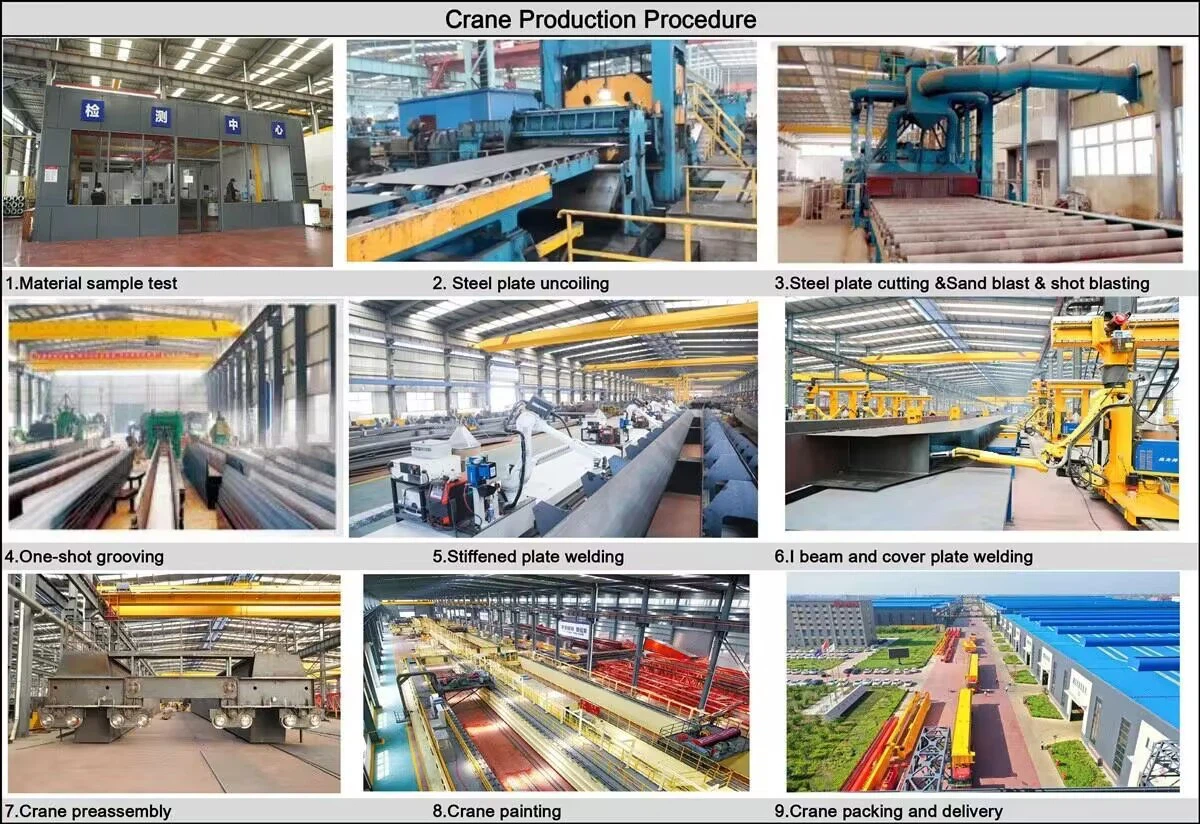
Crane production procedure
The manufacturing process of a QDY metallurgical casting bridge crane involves strict quality control and specialized engineering to ensure durability, heat resistance, and safety. Below is a step-by-step breakdown of the production procedure:
1. Design & Engineering
Load & Environment Analysis – Calculations for lifting capacity (5–500+ tons), span, and heat resistance.
CAD/3D Modeling – Structural design, stress simulations (FEA), and compliance with ISO, FEM, or GB standards.
Customization – Optional features (explosion-proofing, insulated hoists, automation) are integrated.
2. Material Selection & Preparation
Main Girders & End Carriages – High-strength steel (Q345B, Q460C) or heat-resistant alloy steel.
Wire Ropes & Hooks – Special heat-treated alloy steel (for molten metal handling).
Electrical Components – High-temperature-resistant cables, motors, and insulation materials.
3. Fabrication of Key Components
A. Bridge Girder Construction
Cutting & Welding – CNC plasma/laser cutting for precision; submerged arc welding (SAW) for high-strength joints.
Heat Treatment – Stress-relieving annealing to prevent deformation.
Machining – Drilling, milling, and surface grinding for assembly accuracy.
B. Hoist & Trolley Assembly
Hoist Drum & Gearbox – Machined for smooth operation; tested under 1.25x rated load.
Heat-Resistant Brakes – Dual-disc or electromagnetic brakes for fail-safe holding.
Ladle Hook & Safety Latch – Forged and ultrasonically tested for cracks.
C. End Trucks & Runway System
Wheel & Rail Machining – Hardened steel wheels for long wear life.
Drive Motors & Reducers – Equipped with anti-skid mechanisms for heavy loads.
4. Electrical & Control System Integration
Festoon/Conductor Bar System – For power supply along the runway.
Variable Frequency Drives (VFDs) – For smooth speed control and energy efficiency.
Safety Circuits – Overload sensors, limit switches, and emergency stop.
Operator Controls – Pendant, cabin, or remote/automated systems.
5. Surface Treatment & Corrosion Protection
Sandblasting (SA 2.5 Grade) – Removes rust and improves paint adhesion.
High-Temp Paint/Coating – Zinc-rich primer + heat-resistant topcoat (up to 800°C).
Critical Component Insulation – Ceramic fiber or refractory coatings on hooks and ropes.
6. Assembly & Testing
A. Pre-Assembly Checks
Dimensional inspection of girders, trolley, and end carriages.
Alignment of runway rails and crane tracks.
B. Load Testing (Per ISO 4310 / GB Standards)
No-Load Test – Checks motor, brake, and travel functions.
Static Load Test – 1.25x rated capacity for 10+ minutes.
Dynamic Load Test – 1.1x rated capacity with repeated movements.
Emergency Brake Test – Verifies fail-safe mechanisms.
C. Heat Resistance Validation (For Foundry Cranes)
Simulated high-temperature exposure (if required).
7. Packaging & Delivery
Disassembly (if needed) – For large cranes, components are shipped separately.
Anti-Corrosion Packaging – VCI film or desiccant for overseas transport.
Documentation – Manuals, test reports, and certifications (CE, ISO, GOST, etc.).
8. Installation & Commissioning (On-Site)
Runway alignment and crane reassembly.
Final load testing and operator training.
Workshop view:
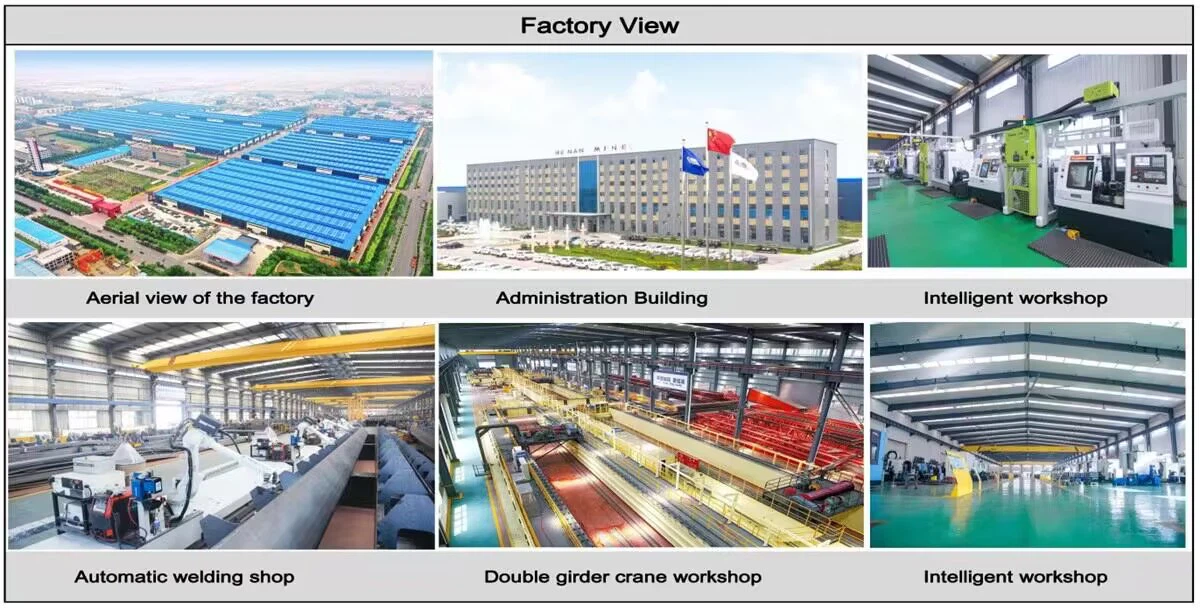
The company has installed an intelligent equipment management platform, and has installed 310 sets (sets) of handling and welding robots. After the completion of the plan, there will be more than 500 sets (sets), and the equipment networking rate will reach 95%. 32 welding lines have been put into use, 50 are planned to be installed, and the automation rate of the entire product line has reached 85%.


Hot Tags: qz type grab bucket overhead bridge crane, China qz type grab bucket overhead bridge crane manufacturers, suppliers, factory, Double Girder Overhead Crane, Double Girder Overhead Travelling Crane
You Might Also Like


Send Inquiry