







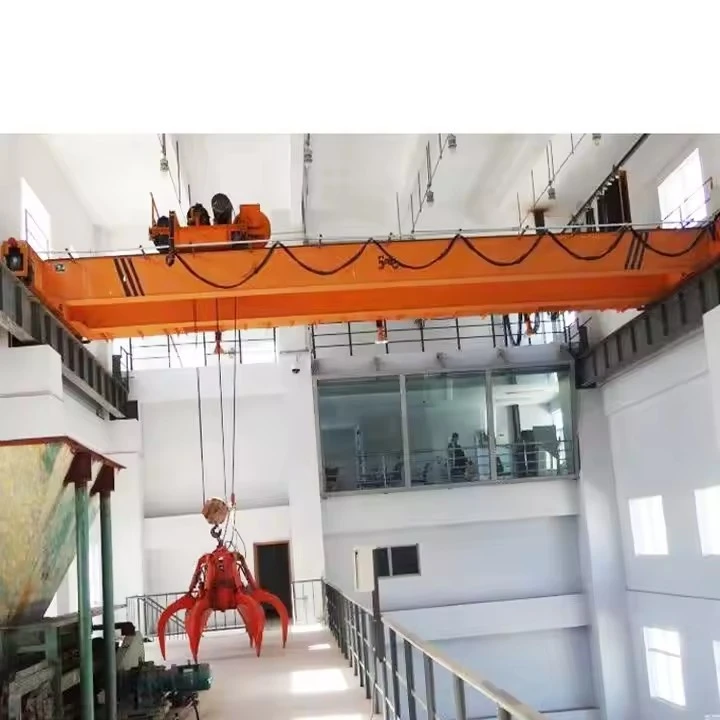

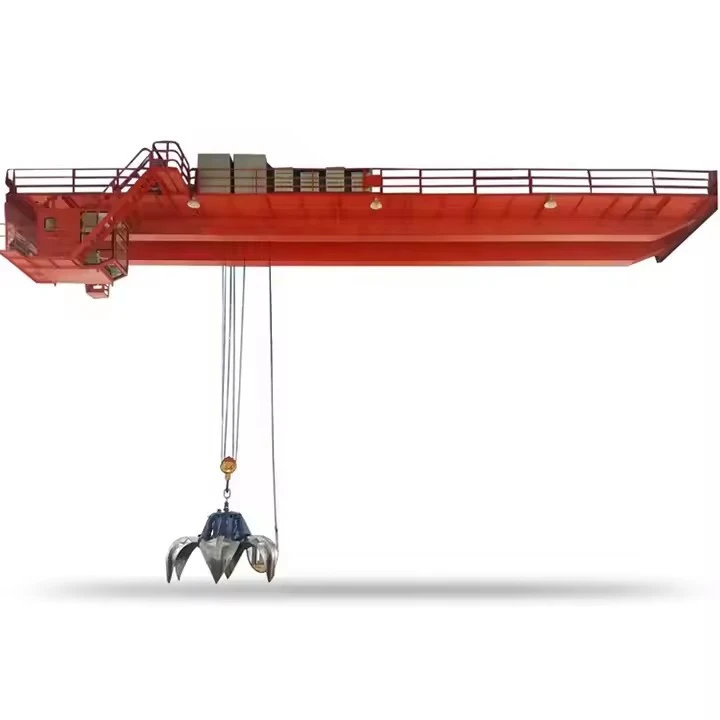
Clamshell Grab Bucket Overhead Crane
Key Features & Specifications
Versatile Grab Bucket Designs
Available in light, medium, and heavy types, with capacities ranging from 0.75 m³ to 5 m³ and material density compatibility up to 2.5 t/m³.
Models include single-rope, double-rope, and remote-controlled variants for different operational needs.
Durability & Safety
Constructed from high-strength steel with ISO/CE certifications.
Safety features like overload protection, emergency brakes, and remote control options to prevent accidents.
Compatibility
Designed to pair with double-lifting cranes (e.g., 3T–10T hoists).
Suitable for overhead cranes, gantry cranes, and port pedestal cranes.
Efficiency
Smooth operation with precise load positioning and minimal maintenance requirements.
Quick opening/closing mechanisms for rapid material handling.
Comparison with Alternatives
| Feature | Clamshell Grab Crane | Excavator | Conveyor Belt |
|---|---|---|---|
| Speed | Fast for batch work | Slower | Continuous but fixed path |
| Mobility | Limited to crane runway | High | None |
| Material Types | Bulk solids, some liquids | Bulk + rocks | Dry bulk only |
| Automation | High (remote control) | Manual/Semi-auto | Fully auto possible |
- Capacity: 5-500ton
- Span length: 4-35m
- Lifting height: 3-50m
- Work duty: A4, A5, A6,A7
- Raged voltage: 220V~690V, 50-60Hz, 3ph AC
- Work environment temperature: -25℃~+50℃, relative humidity ≤85%
- Crane control mode: Floor control / Remote control / Cabin room
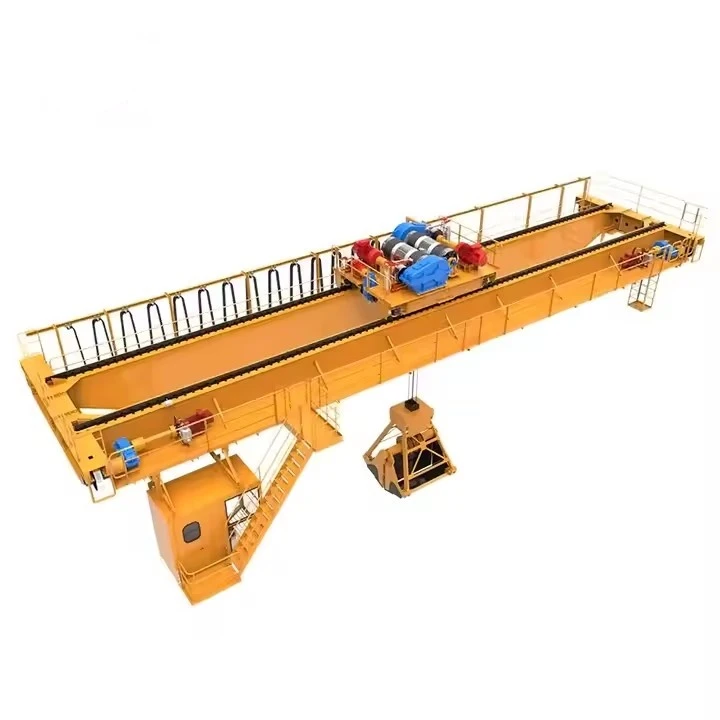
Pictures & Components
1. Clamshell Grab Bucket
The core component, designed to open, scoop, close, and release bulk materials.
Shell (Jaws/Buckets): Made of high-strength steel, shaped like a clamshell for efficient scooping.
Hinges & Pivot Points: Allow smooth opening/closing motion.
Cutting Edges: Reinforced teeth or blades for penetrating dense materials (e.g., gravel, coal).
Rope/Chain Attachments: Connects to the crane's hoisting mechanism (single-rope or double-rope systems).

Types:
Mechanical Grab: Operates via wire ropes (common for standard applications).
Hydraulic Grab: Uses hydraulic cylinders for precise control (ideal for heavy-duty tasks).
Remote-Controlled Grab: Automated operation for hazardous environments.
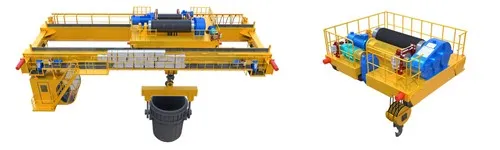

2. Crane Structure
Bridge/Girder: The main horizontal beam that moves along the runway rails.
End Trucks: Wheeled units at each end of the bridge for longitudinal movement.
Runway Rails: Installed on building columns or supports, guiding the crane's travel.
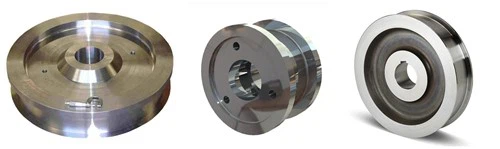
3. Hoisting Mechanism
Hoist Motor: Powers the lifting/lowering of the grab bucket.
Wire Ropes/Chains: Transmit force to the grab (double-rope systems synchronize opening/closing).
Drum or Sheave: Guides and stores the ropes during operation.
Brakes & Limit Switches: Ensure safe load control and prevent over-lifting.
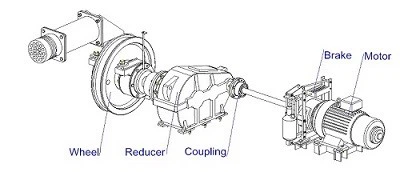
4. Trolley & Traverse System
Trolley Frame: Carries the hoist and grab, moving laterally across the bridge.
Traverse Motor: Drives trolley movement for precise load positioning.

5. Power & Control Systems
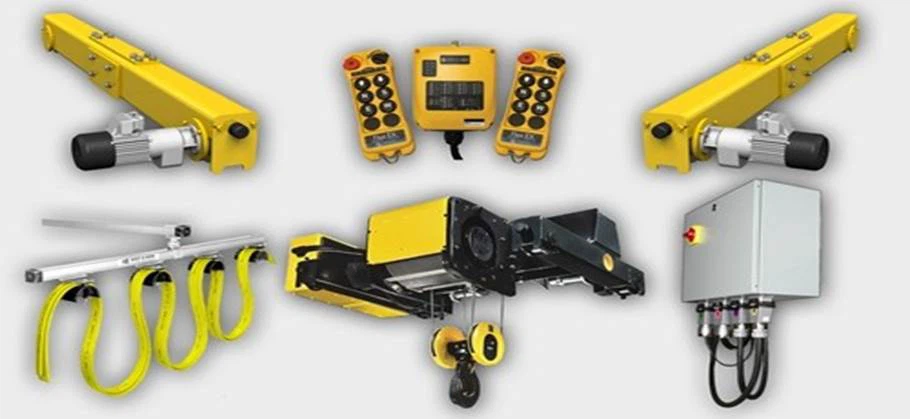
Electric Panel: Houses controls for crane movement (e.g., pendant, radio remote).
Cabin or Remote Control: Operator interface for managing grab/crane functions.
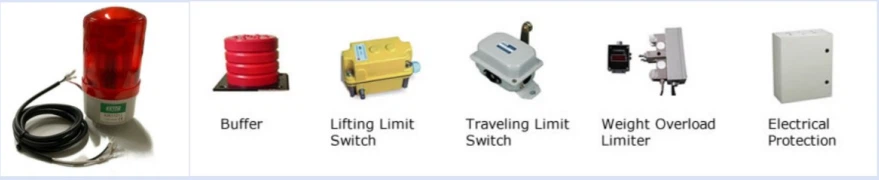
Sensors & Safety Devices: Overload protectors, anti-collision systems, and emergency stops.
6. Support Components
Spreaders (for double-rope grabs): Ensure even force distribution.
Lubrication Systems: Reduce wear on hinges and moving parts.
Counterweights (if applicable): Balance heavy loads for stability.
Material & Certifications
Shell Material: Hardened steel (e.g., Q345B) with abrasion-resistant coatings.
Standards Compliance: ISO, CE, FEM, or DIN regulations for safety.

For maintenance, focus on rope integrity, hinge lubrication, and motor inspections. Let me know if you need details on a specific subsystem!
SKETCH
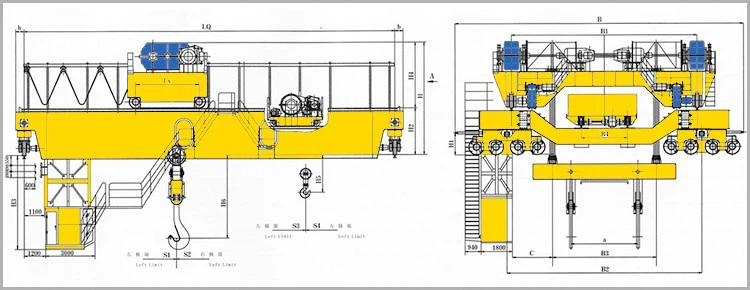
Main Technical Data
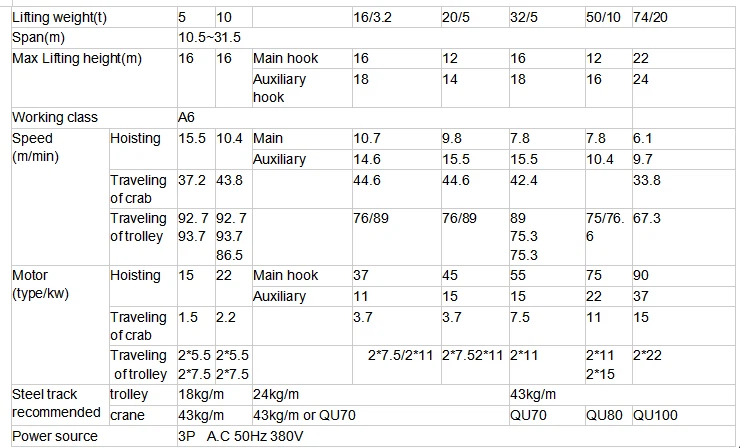
Advantages
Advantages of Clamshell Grab Bucket Overhead Cranes
High Efficiency in Bulk Material Handling
Quickly scoops, lifts, and dumps loose materials (e.g., coal, sand, grain) in a single cycle, reducing manual labor.
Faster than traditional excavators or conveyor systems for certain applications.
Versatility in Operations
Works with various materials (dry, wet, or abrasive) depending on bucket design.
Adjustable jaws allow handling different load sizes and densities.
Precision & Control
Remote-controlled and hydraulic models offer fine-tuned positioning for accurate dumping.
Can operate in confined spaces (e.g., ships, warehouses) where other equipment can't fit.
Durability & Low Maintenance
Robust steel construction resists wear from abrasive materials.
Fewer moving parts compared to complex machinery, reducing breakdowns.
Cost-Effective
Reduces labor costs by automating material transfer.
Lower energy consumption than continuous conveyor systems for intermittent tasks.
Safety Enhancements
Enclosed operation minimizes worker exposure to hazardous materials (e.g., toxic dust, heavy loads).
Overload protection and emergency brakes prevent accidents.
Application
Applications of Clamshell Grab Bucket Overhead Cranes
1. Ports & Shipping Terminals
Loading/unloading bulk cargo (coal, grain, fertilizers) from ships to trucks or storage.
Dredging and clearing silt or debris in dock areas.
2. Construction & Demolition
Excavating soil, gravel, or debris in foundation work.
Handling construction waste (concrete, scrap metal) for recycling.
3. Mining & Quarries
Transporting mined ore, limestone, or aggregates to processing plants.
Stockpiling raw materials in storage yards.
4. Agriculture & Grain Handling
Moving grain, feed, or fertilizer in silos and warehouses.
Efficiently loading/unloading hoppers and trucks.
5. Waste Management & Recycling
Sorting and transferring scrap metal, municipal waste, or recyclables.
Landfill operations for compacting and relocating waste.
6. Power Plants & Steel Mills
Handling coal, slag, or fly ash in energy production.
Transporting raw materials (iron ore, coke) in steel manufacturing.
Crane Production Procedure
1. Design Stage
Load Assessment: The crane design is based on the weight and size of the ladles (which can carry molten metal). Engineers calculate the lifting capacity, span, height, and duty cycle based on the specific requirements.
Safety Considerations: Safety is paramount in foundries. The crane should have features like redundant systems, emergency brakes, and safety sensors to prevent accidents in high-temperature environments.
Structural Design: This includes designing the crane bridge, hoist, trolley, and rail systems. The materials used in the crane must be heat-resistant and durable to withstand the harsh environment of a foundry.
Drive Systems: The crane must have powerful and reliable drive systems for hoisting, traveling, and trolley movement. These may include electric motors, gearboxes, and control systems.
2. Material Selection
High-Temperature Materials: The components that will come into direct contact with the molten metal or extreme heat should be made from heat-resistant materials such as steel with high thermal endurance.
Corrosion Resistance: Parts exposed to heat and metal slag may require corrosion-resistant coatings to prolong the crane's life.
3. Fabrication
Manufacturing the Frame: The crane's frame, including the bridge, trolley, and hoist system, is fabricated. The components are typically welded from steel sections or fabricated in a modular design for ease of installation and maintenance.
Hoist Assembly: The hoist system, including the lifting mechanism, is assembled with components like electric motors, gearboxes, and the lifting drum or pulley system.
Control System Integration: The control systems, including manual or remote operation panels, are integrated into the crane for smooth operation.
4. Assembly
The various components of the crane, such as the bridge, hoist, trolley, and electrical systems, are assembled at the factory or on-site depending on the complexity.
The lifting mechanism (hook or ladle handling attachments) is specifically designed to safely handle ladles and molten metal.
5. Testing and Quality Control
Load Testing: The crane undergoes load tests to ensure it can safely lift the required weight, including dynamic loading tests to simulate real-world conditions.
Functional Testing: The crane's movements (hoist, trolley, bridge) are tested to ensure smooth operation and compliance with safety standards.
Inspection: Final inspection is conducted to ensure all parts and systems are in working order and meet the engineering specifications.
6. Installation and Commissioning
Installation: The crane is installed in the foundry, which involves placing the crane on its designated rails, connecting the power supply, and ensuring proper alignment.
Commissioning: The crane is tested on-site to ensure everything is functioning correctly, and the control systems are calibrated.
7. Training and Handover
Operator Training: Operators are trained on the safe handling of ladles, especially with regard to molten metal handling, crane controls, and emergency procedures.
Safety Protocols: Safety protocols are established, including proper load handling, emergency stops, and maintenance schedules.
8. Ongoing Maintenance
Scheduled Inspections: Regular maintenance is critical in a foundry environment. Inspections for wear, tear, and stress on parts like cables, hooks, and hoists are performed periodically.
Preventive Maintenance: Lubrication, cleaning, and checking the alignment of moving parts are done regularly to avoid downtime and extend the crane's life.
9. Upgrades and Modifications
As technology and safety standards evolve, cranes might require upgrades or modifications to improve their performance or safety features.

Workshop View
The company has installed an intelligent equipment management platform, and has installed 310 sets (sets) of handling and welding robots. After the completion of the plan, there will be more than 500 sets (sets), and the equipment networking rate will reach 95%. 32 welding lines have been put into use, 50 are planned to be installed, and the automation rate of the entire product line has reached 85%.


Hot Tags: clamshell grab bucket overhead crane, China clamshell grab bucket overhead crane manufacturers, suppliers, factory, Steel Factory Overhead Crane, Casting Steel Overhead Crane, Rolling Mill Overhead Crane, Steel Mill Overhead Cranes, Ladle Foundry Bridge Crane, Ladle Foundry and Casting Steel Mill Overhead Crane
You Might Also Like


Send Inquiry