










Foundry Bridge Crane
A Foundry Bridge Crane, also known as a Metallurgical Overhead Crane, is specifically designed for lifting, transporting, and pouring molten metal in steel mills, foundries, and smelting plants. Engineered for extreme working conditions, it ensures high safety, stability, and efficiency in demanding metallurgical environments.
Key Features
✅ High Temperature Resistance – Built with heat-resistant materials and thermal protection systems to withstand harsh foundry conditions.
✅ Heavy Load Capacity – Available in various lifting capacities, typically ranging from 5 to 320 tons, to handle molten metal safely.
✅ Dual Hoisting System – Equipped with main and auxiliary hooks for precise and secure handling of ladles.
✅ Advanced Safety Features – Includes redundant braking systems, load limiters, emergency stop functions, and heat shields to ensure operational safety.
✅ Automated & Remote Control Options – Enhances efficiency with wireless remote control or full automation to reduce manual intervention.
✅ Durable Components – Features high-strength steel, specialized motors, and reinforced structures to endure long-term operation in extreme conditions.
- Capacity: 5-500ton
- Span length: 4-35m
- Lifting height: 3-50m
- Work duty: A4, A5, A6,A7
- Raged voltage: 220V~690V, 50-60Hz, 3ph AC
- Work environment temperature: -25℃~+50℃, relative humidity ≤85%
- Crane control mode: Floor control / Remote control / Cabin room

Pictures & Components
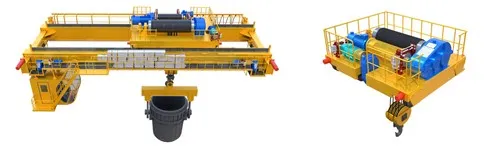
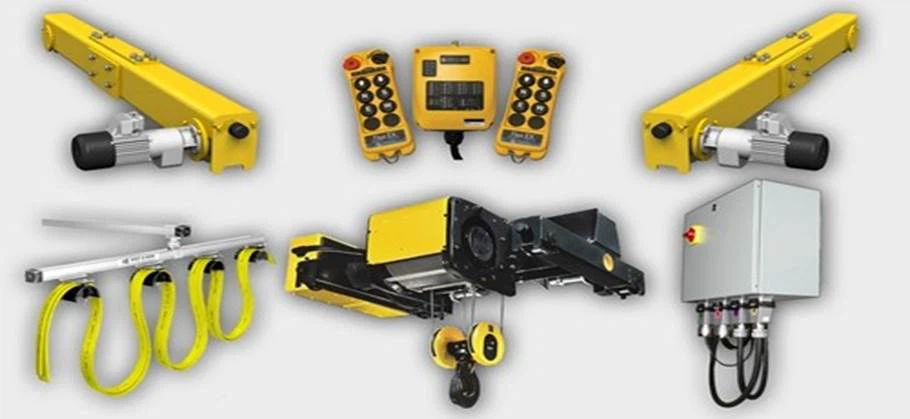
1. Whole set crane
A Foundry Bridge Crane, also known as a Casting Overhead Crane, is a heavy-duty lifting system used in steel mills and foundries for handling molten metal. A whole set of this crane typically includes the following components:
1. Main Structure
Bridge Girder(s): The main horizontal beams that support the trolley and hoist.
End Trucks: The structural components that house the wheels, allowing the crane to move along the runway.
Runway System: The tracks on which the bridge crane moves, usually mounted on supporting structures.
2. Lifting Mechanism
Trolley: Moves along the bridge girder and carries the hoist.
Hoist: The component responsible for lifting and lowering loads.
Hooks or Lifting Devices: Often includes a specialized ladle hook for handling molten metal safely.
3. Power & Control System
Electric Motors & Drives: Provide the necessary power for lifting, lowering, and crane movement.
Control Panel: Houses electrical components, including contactors, relays, and inverters.
Pendant Control / Remote Control / Cabin Control: Different control options depending on operational needs.
4. Safety Features
Heat-Resistant Design: Special coatings and materials to withstand high temperatures.
Limit Switches: Prevent over-travel in hoisting and trolley movements.
Emergency Stop System: Ensures immediate shutdown in case of failure.
Load Sensors: Prevents overloading of the crane.
Protective Shields: Guards against heat, sparks, and molten metal splashes.
5. Auxiliary Equipment
Cooling System: Helps maintain operational efficiency in high-temperature environments.
Brake System: Ensures secure stopping and holding of loads.
Buffer System: Absorbs shocks and prevents sudden impacts.

2. Main girder
The main girder of a foundry bridge crane is a crucial structural component designed to support and carry heavy loads in steel mills and foundries. It plays a vital role in ensuring the crane's stability, strength, and load-bearing capacity.
1. Structure & Design
The main girder is typically a box-type or H-beam (I-beam) structure, reinforced to handle extreme heat and heavy-duty operations.
It is designed for high-strength, high-temperature resistance, as foundry cranes operate in extreme environments.
Welded steel plates and reinforcements are used to enhance rigidity and durability.
2. Load-Bearing Function
It supports the trolley and hoist system, allowing the crane to lift and transport molten metal and heavy loads.
The trolley rail is mounted on top of the main girder for smooth movement.
3. Materials & Construction
Made of high-strength carbon steel or low-alloy steel to withstand heat and mechanical stress.
The structure undergoes heat treatment and surface coating to prevent deformation and corrosion.

3. Lifting System
The lifting system of a foundry bridge crane is a crucial component designed to handle heavy and high-temperature loads in steel mills and foundries. It consists of several key parts that ensure safe, efficient, and precise lifting operations.
Main Components of the Lifting System
Lifting Mechanism (Hoist or Winch)
Uses an electric hoist or winch to raise and lower loads.
Commonly equipped with dual lifting mechanisms for redundancy and safety.
Features variable speed control for smooth and precise movements.
Lifting Motor
Provides the power to drive the hoisting mechanism.
Typically a high-torque, heavy-duty motor designed for continuous operation.
May include forced cooling to prevent overheating in high-temperature environments.
Wire Rope or Chain
Heat-resistant wire rope is commonly used for durability.
Must have high tensile strength and good wear resistance to withstand extreme conditions.
Lifting Drum
A grooved drum around which the wire rope is wound.
Ensures even winding and unwinding to prevent tangling.
Often designed with double drums for synchronized lifting.
Lifting Hook or Spreader Beam
Forged steel hooks with safety latches are used to attach loads.
Some systems use a spreader beam for more balanced lifting of wide or irregular loads.
Rotating hooks may be included for precise positioning.
Braking System
Electromagnetic or hydraulic brakes ensure load holding and emergency stopping.
Helps prevent sudden drops due to mechanical failure.
Control System
Can be operated via cab control, pendant control, or wireless remote control.
Advanced systems feature PLC (Programmable Logic Controller) for automation and monitoring.
Some include load monitoring sensors for safety and efficiency.
Safety Features
Overload limiters to prevent excessive lifting.
Emergency stop buttons for immediate shutdown.
Heat shields and insulation to protect components from extreme temperatures.
Working Principle
The motor drives the lifting drum, winding or unwinding the wire rope to move the load up or down.
The brake system ensures controlled stopping and holding of loads.
The control system allows precise operation, adjusting speed and direction as needed.

4. End Carriages
End carriages of a foundry bridge crane are crucial components that support and move the entire crane structure along the runway beams. They house the wheels, bearings, and drive mechanisms necessary for smooth and efficient crane movement.
Key Features of End Carriages for Foundry Bridge Cranes
Heavy-Duty Construction – Designed to withstand extreme heat and heavy loads typical in foundries.
High-Temperature Resistance – Equipped with special materials and heat shields to endure foundry conditions.
Precision Machining – Ensures smooth and stable movement along the tracks.
High-Performance Wheels – Hardened steel or alloy wheels with high load-bearing capacity.
Durable Bearings & Gears – Reduce wear and extend service life.
Motorized Drive System – Integrated with high-power motors for smooth acceleration and deceleration.
Safety Features – Includes limit switches, buffers, and overload protection.
5.Crane traveling mechanism
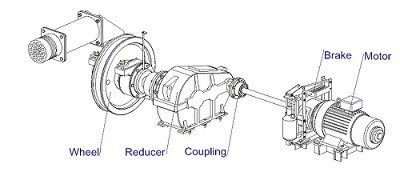
The crane traveling mechanism of a foundry bridge crane is a crucial component that enables the crane to move along the runway rails within the foundry. Since foundry cranes operate in high-temperature and heavy-duty environments, their traveling mechanisms are designed for durability, stability, and precision.
Key Components of the Traveling Mechanism
Crane Wheels
Typically made of high-strength alloy steel to withstand extreme temperatures and heavy loads.
Can be single-flanged, double-flanged, or flat depending on the rail type.
Driving System
Consists of motors, gearboxes, and couplings.
Uses either single-drive or double-drive systems (each end of the crane has a motorized drive).
Gearboxes ensure smooth power transmission and speed control.
Rail System
High-strength steel rails mounted on beams.
Ensures smooth and stable movement along the crane runway.
Braking System
Electromagnetic or hydraulic brakes provide precise stopping and control.
Helps in emergency stopping and prevents load sway.
Anti-Skid & Buffer System
Anti-skid devices prevent slipping in high-heat foundry environments.
Buffers and bumpers absorb shock during movement.
Control System
Can be cab-operated, remote-controlled, or automated.
Advanced systems include variable frequency drives (VFDs) for smooth acceleration and deceleration.
Operational Features
Heat-Resistant Design: Uses heat-insulating materials to protect components from foundry heat.
Heavy Load Capacity: Designed to handle molten metal with high safety standards.
Smooth Motion & Stability: Ensures controlled movement to prevent molten metal spillage.
Safety Features: Overload protection, limit switches, emergency stop functions, etc.
6. Trolley traversing mechanism
The trolley traversing mechanism of a foundry bridge crane is responsible for the horizontal movement of the trolley along the main bridge girders. This mechanism allows the crane's lifting system (hoist and hook) to position loads accurately across the work area.
Key Components:
Trolley Frame – A rigid structure that supports the hoist and motorized components.
Drive System – Includes a motor, gearbox, and coupling, which provide power for movement.
Wheels and Rails – The trolley runs on hardened steel wheels along the bridge rail tracks.
Braking System – Ensures controlled stopping and prevents drift when stationary.
Control System – Usually electric or hydraulic, with control via pendant, wireless remote, or cabin.
Buffers & Limit Switches – Protect against over-travel and impact.
Working Principle:
The electric motor powers the gearbox, which transfers motion to the drive wheels.
The trolley moves along the rails on the bridge structure.
Brakes ensure precision stopping and safety.
The operator controls the motion using a wired pendant, remote control, or cabin control.
Design Considerations:
Heavy-duty materials for high temperatures in foundries.
Heat shields & cooling systems to protect electrical components.
Smooth acceleration & braking for precision in load handling.
Overload protection & safety features to prevent damage and accidents.
7. Crane wheel
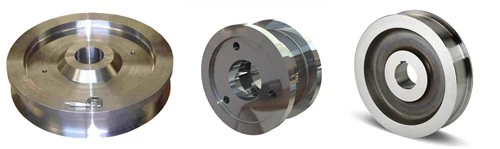
The crane wheel of a foundry bridge crane is a critical component that enables the crane to move along the rails of the runway system. These wheels are designed to handle heavy loads and high temperatures, making them essential for the demanding environment of foundries.
Key Features of Foundry Bridge Crane Wheels:
Material: Typically made from high-strength forged steel (such as 42CrMo or 65Mn) to withstand heavy loads and wear.
Heat Resistance: Designed to endure extreme temperatures in foundry environments.
Wear Resistance: Hardened tread surfaces to extend service life.
Customization: Available in different sizes and hardness levels based on the crane's specifications.
Types of Crane Wheels:
Running Wheels: Used on the main bridge of the crane to move along the runway.
Trolley Wheels: Smaller wheels that support the trolley's movement along the bridge.
Common Issues & Maintenance:
Wear and Tear: Regular inspections and lubrication prevent excessive wear.
Flange Damage: Misalignment can cause flanges to wear or break.
Cracks or Deformation: Heavy loads and high temperatures can lead to cracks, requiring timely replacement.
8. Crane hook
A crane hook on a foundry bridge crane is a critical lifting component specifically designed for handling molten metal and heavy loads in foundries. These hooks are engineered to withstand high temperatures, heavy-duty operations, and harsh working conditions.
Key Features of Foundry Bridge Crane Hooks:
High-Temperature Resistance:
Made from special heat-resistant steel to endure extreme temperatures in steel mills and foundries.
Heavy Load Capacity:
Designed for lifting extremely heavy loads, including molten metal ladles, with high safety factors.
Rotatable and Adjustable:
Often equipped with a swivel mechanism to facilitate safe and precise handling of loads.
Double Hook or Special Designs:
Some foundry cranes use double hooks for increased stability, ensuring balanced lifting of ladles.
Safety Enhancements:
Equipped with latches, safety locks, and reinforced structures to prevent accidental load drops.
Durable Materials:
Manufactured using forged steel, alloy steel, or high-strength materials to resist wear and tear.

9. Motor
A motor for a foundry bridge crane is a critical component designed to withstand high temperatures, heavy loads, and continuous operation in steel mills and foundries. These motors must be durable, reliable, and capable of handling the harsh environment of molten metal handling.
Types of Motors Used in Foundry Bridge Cranes
Hoist Motor
Powers the lifting mechanism.
Typically a high-torque squirrel cage or wound rotor motor for smooth start and stop.
Often equipped with heat-resistant insulation.
Trolley Motor
Drives the movement of the hoist along the bridge.
Usually squirrel cage induction motors with high starting torque.
Bridge Travel Motor
Moves the entire crane along the runway.
Uses heavy-duty AC or DC motors, depending on the control system.
May feature variable frequency drive (VFD) for speed control and energy efficiency.
Key Features of Foundry Crane Motors
High Heat Resistance: Withstands extreme temperatures near furnaces.
High Starting Torque: Ensures smooth lifting of heavy molten metal loads.
Durability & Reliability: Designed for 24/7 operation with minimal downtime.
Vibration & Shock Resistance: Handles the rough conditions of a foundry.
Advanced Cooling Systems: Includes forced ventilation or special heat dissipation designs.

10. Sound and light alarm system & limit switch
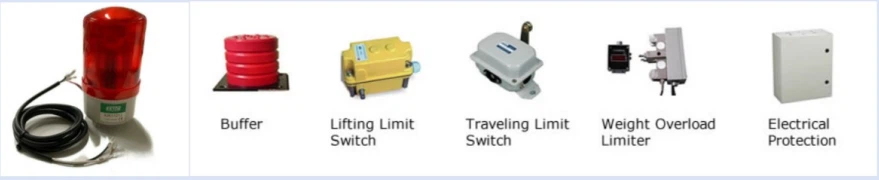
1. Sound and Light Alarm System
A Sound and Light Alarm System is used for safety and operational monitoring. These alarms alert operators, workers, and supervisors to any potential issues or dangerous conditions that may occur during the operation of the crane. The system typically consists of:
Sound Signal: This can include a horn, siren, or buzzer that emits a loud noise to alert individuals nearby of a critical event, such as equipment malfunction, overload, or crane operation outside normal parameters.
Light Signal: A combination of flashing lights, typically in bright colors like red or yellow, to visually indicate a specific alert or malfunction. This is useful in noisy environments where the sound alarm might not be heard.
Activation Conditions: These alarms are activated when a certain threshold is crossed, such as:
Overload situations.
Crane movements beyond preset limits.
Equipment malfunctions (e.g., motor failure, cable damage).
Emergency stop conditions.
2. Limit Switch
A Limit Switch is a mechanical or electrical device used to define the physical boundaries of the crane's movement. It helps in protecting the crane from exceeding its operating range and ensures that the crane doesn't go beyond the safe area. Common uses for limit switches include:
Position Control: Limit switches monitor the positions of the hoist, trolley, and bridge to ensure that they don't exceed predefined limits. This could be the maximum height the hook can travel, the maximum length of the bridge, or the boundaries of the crane's travel.
Safety Interlock: They prevent the crane from moving too far in any direction, which can result in damage to the crane or surrounding structures.
Automatic Shutoff: If a limit switch detects that the crane has reached a predetermined position, it can automatically stop further movement, preventing collisions or damage.
Adjustability: Some limit switches can be adjusted to accommodate varying operational needs, ensuring they work within the specified range for the crane.
11. Safety Devices
Overload Protection:
This device ensures that the crane does not lift loads exceeding its rated capacity. If the load exceeds the safe limit, the crane will stop functioning or give a warning.
Limit Switches:
These switches are used to prevent the crane from traveling beyond its designated operating range. They stop the crane's motion when it reaches its limit (either horizontally or vertically), preventing mechanical damage.
Anti-Sway System:
This system is designed to minimize the swaying of the load, especially when moving large or heavy items. It helps maintain stability and reduces the risk of accidents caused by swinging loads.
Emergency Stop Button:
The emergency stop button is a crucial safety feature. It allows the crane operator to immediately stop all crane movements in case of an emergency or malfunction.
Load Moment Indicator (LMI):
This device monitors the load moment and ensures that the crane is operating within safe limits. It provides real-time data to prevent overloading.
Thermal Protection:
Foundry cranes operate in extremely high-temperature environments, so thermal protection systems are in place to prevent overheating of the crane's electrical components and motors.
Brake Monitoring System:
This system ensures that the crane's brakes are functioning correctly, preventing malfunction or failure during operation. It helps reduce the risk of accidents caused by brake failure.
Anti-Collision Systems:
Foundry cranes are often used in environments with multiple cranes operating in close proximity. Anti-collision sensors or systems help prevent accidents by stopping the crane if it detects another crane or obstacle in its path.
Explosion-Proof Components:
In foundries where flammable materials may be present, explosion-proof electrical components are often used to prevent sparks that could lead to fires or explosions.
Operator Training and Safety Systems:
Proper training for operators on safety protocols is essential. In some cases, cranes are equipped with monitoring systems to ensure that operators follow safety procedures, including speed limits, load handling guidelines, and emergency response actions.
12. Control Mode
Manual Control:
The operator directly controls the crane's movements using a joystick or buttons on a pendant or remote control.
The operator has full control over all movements such as lifting, lowering, and moving the bridge across the rails.
Automatic Control:
In automatic mode, the crane operates based on pre-programmed commands or automated systems.
This can include systems like sensors or computer programs that direct the crane to carry out certain tasks without the need for manual intervention.
Radio Remote Control:
The crane is controlled using a wireless remote control.
This provides more flexibility, allowing the operator to control the crane from a distance and in various parts of the foundry.
Cab Control:
The operator controls the crane from an enclosed cabin on the crane itself.
This can be manual or semi-automatic, depending on the crane design, and is often used for larger cranes or those in high-temperature environments.
Pendant Control:
A pendant control allows the operator to control the crane from the ground, often via a cable attached to the crane.
This is common for cranes in foundries and other industrial settings, providing ease of control in specific areas of the facility.
Programmable Logic Controller (PLC) Control:
A PLC-based control system automates the operation of the crane based on sensor feedback and other inputs.
This system is used to precisely control movements and ensure safety during operation.
Operator Assist Systems:
Some foundry cranes come with assistive technologies, such as load monitoring, collision avoidance, and anti-sway systems, to make operations smoother and safer.

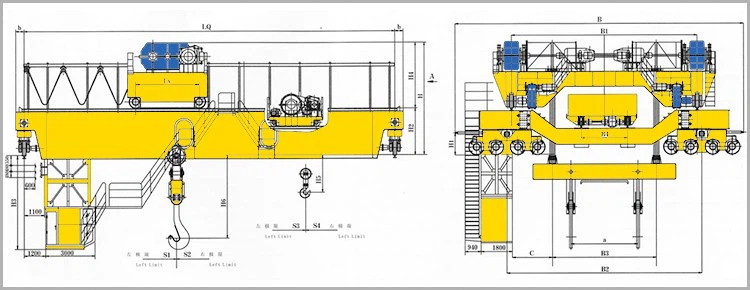
13. Sketch
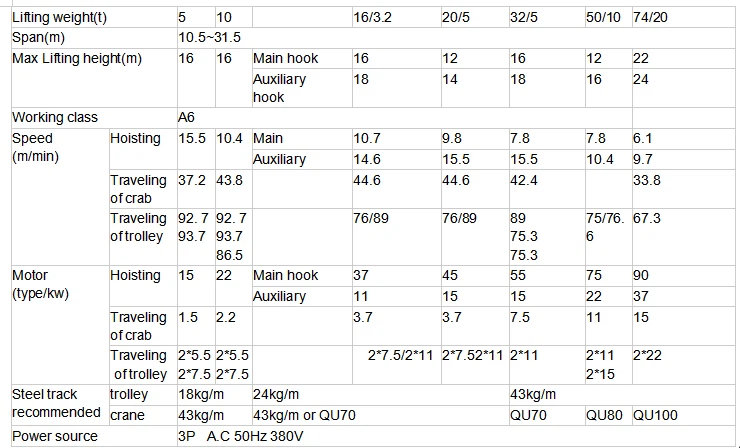
Main Technical Data
Advantages
- Heavy Load Handling: Foundry bridge cranes are designed to handle extremely heavy loads, often weighing several tons, making them ideal for handling molten metal, large molds, and heavy equipment in a foundry.
- Durability in Harsh Environments: These cranes are built to withstand extreme temperatures, including those found in metal casting areas where molten metal is involved. They are made from high-strength materials to ensure durability even in harsh conditions.
- Improved Safety: With advanced safety features, including temperature-resistant materials, overload protection, and precise load control, foundry bridge cranes help reduce the risk of accidents or damage during operations.
- Increased Efficiency: These cranes streamline the movement of heavy materials within a foundry, reducing the need for manual labor and minimizing downtime, which increases overall productivity.
- Precise Load Control: Foundry bridge cranes provide precise control over the positioning of heavy or molten materials, which is crucial for maintaining accuracy and preventing accidents.
- Customizable Features: Many foundry bridge cranes can be tailored to meet specific needs, such as longer spans, specialized lifting hooks, or particular power configurations.
- Reduced Manual Labor: By automating the handling of heavy materials, these cranes help reduce the physical strain on workers, leading to fewer workplace injuries and more efficient workflows.
- Space Optimization: The bridge crane operates on a track system, which frees up space in the foundry floor by keeping the materials above the work area, allowing for better space management.
- Versatility: Foundry bridge cranes can be used for various tasks, such as lifting and transporting molten metal, large castings, or raw materials, making them highly versatile for different types of foundry operations.
Application
1. Molten Metal Handling
Transporting Molten Metal: Foundry bridge cranes are commonly used to move molten metal from furnaces to molds or pouring stations. The cranes are designed with high-temperature-resistant materials and safety features to handle the intense heat and risk associated with molten metal.
Pouring Molten Metal: The crane can also be used to pour molten metal into molds or containers, which is critical in the production of metal castings.
2. Heavy Load Handling
Carrying Heavy Castings: In foundries, bridge cranes are used to move heavy metal castings between various stages of production. They are capable of handling large and heavy components, reducing manual labor and improving efficiency.
Lifting and Positioning: These cranes are ideal for lifting, positioning, and stacking heavy and oversized objects within the foundry, helping improve workflow and reduce risk to workers.
3. Equipment and Material Transport
Transporting Raw Materials: The crane is used to move raw materials such as scrap metal, sand, or alloys to different processing areas within the foundry.
Handling Equipment: It can also move heavy machinery or large tools required for the foundry's daily operations.
4. Automating Processes
Increased Efficiency: By automating the movement of materials and products within the foundry, bridge cranes help improve efficiency, reduce the need for manual labor, and minimize the chances of workplace accidents.
Reducing Downtime: Foundry bridge cranes can quickly respond to changes in production needs and reduce downtime by ensuring smooth and rapid material handling.
5. Safety Features
Explosion-Proof Design: Due to the hazardous environment in a foundry, the crane is equipped with explosion-proof electrical components and heat-resistant features to minimize risks.
Temperature Resistance: The crane is designed to operate in high-temperature environments, often with heat shielding and cooling systems to protect both the crane and the operator.
6. Flexibility and Precision
Versatile Applications: Foundry bridge cranes can be equipped with various lifting attachments, such as grabs, hooks, or clamshell buckets, allowing them to perform multiple tasks within the foundry.
Precision Lifting: These cranes are often used to lift items with high precision, essential when dealing with delicate or valuable metal castings.
Crane Production Procedure
1. Design and Engineering:
Requirement Analysis: Understand the specific needs for the foundry crane, such as load capacity, span, lifting height, and environmental conditions (e.g., high temperatures, molten metal handling).
Detailed Design: The design team creates detailed plans and specifications for the crane, including the main girder, hoist, trolley, control system, and electrical wiring. The design will ensure the crane is sturdy enough to handle extreme conditions.
Structural Analysis: Perform stress analysis and load testing to ensure safety and reliability under the operating conditions typical in a foundry.
2. Material Selection:
High-Quality Steel: Materials like high-strength carbon steel and heat-resistant alloy steels are typically chosen for components that will be exposed to high temperatures.
Corrosion-Resistant Coatings: The components of the crane, especially those exposed to molten metal or corrosive atmospheres, are treated with special coatings to prevent damage.
3. Fabrication of Components:
Girder and Frame Fabrication: The main girder (the bridge part of the crane) is fabricated, often using heavy-duty welding techniques. It is typically fabricated in sections that will be assembled later.
Hoist and Trolley Construction: The hoisting mechanism (electric or hydraulic) is built, along with the trolley (the part that moves along the girder). These systems must be designed to handle the load safely, especially in a foundry environment.
Electrical and Control Systems: The electrical system, including wiring, motors, and control panels, is fabricated and assembled. Advanced safety and control mechanisms, including overload protection, are essential in a foundry crane.
4. Assembly of Components:
Pre-Assembly: The individual components, such as the girder, hoist, trolley, and control systems, are assembled in sections. This is done in a controlled factory environment to ensure all parts fit correctly.
Main Girder Assembly: The main girders are connected and tested for alignment and load-bearing capability.
Hoist and Trolley Mounting: The hoist and trolley systems are mounted onto the girder, and alignment checks are done to ensure smooth operation.
5. Welding and Structural Integrity Check:
Welding: The components are welded together, ensuring structural integrity and robustness. Special attention is paid to the joints, as they must withstand high loads.
Inspection: The welded joints and crane structure are thoroughly inspected for quality, using methods like ultrasonic testing, x-ray, or magnetic particle inspection.
6. Installation of Electrical and Safety Systems:
Electrical Installation: Wiring and the power supply system are installed. This includes motors for the trolley, hoist, and the lifting mechanism, as well as control panels.
Safety Features: Install safety features like emergency stop buttons, overload limiters, and anti-collision systems. Cranes used in foundries may also be equipped with heat shields to protect sensitive components from molten metal splashes.
7. Testing and Quality Control:
Load Testing: The crane is tested under controlled conditions to verify it can handle the specified load without issues. Load testing ensures that both the hoist and the trolley can move freely under full load.
Functional Testing: The crane's hoisting, trolley movement, and electrical systems are tested for functionality and reliability. This also includes testing safety systems.
Thermal Testing: In some cases, especially for foundry cranes, the crane may be tested in high-temperature conditions to ensure all components can withstand extreme heat.
8. Final Inspection:
A final inspection is conducted to ensure that all aspects of the crane meet design specifications, safety standards, and customer requirements.
The crane is checked for operational smoothness, proper functioning of all mechanisms, and safety features.
9. Transportation and Installation at Site:
The crane is carefully disassembled into transportable sections and shipped to the customer's site.
Upon arrival at the foundry, the crane is reassembled and installed, ensuring all systems are connected correctly.
10. Commissioning and Handover:
After installation, the crane is commissioned, meaning it undergoes further testing on-site to confirm that it operates properly in the real-world environment.
The operational manual and maintenance guidelines are provided to the customer, along with training for operating personnel.
11. Maintenance and Support:
Regular inspections, maintenance, and servicing are essential to ensure the longevity and safe operation of the crane, particularly in the extreme conditions of a foundry.
Support may include periodic inspections, lubricating parts, replacing worn-out components, and ensuring that the electrical systems continue to function correctly.

Workshop View
The company has installed an intelligent equipment management platform, and has installed 310 sets (sets) of handling and welding robots. After the completion of the plan, there will be more than 500 sets (sets), and the equipment networking rate will reach 95%. 32 welding lines have been put into use, 50 are planned to be installed, and the automation rate of the entire product line has reached 85%.


Hot Tags: foundry bridge crane, China foundry bridge crane manufacturers, suppliers, factory, Double Girder Overhead Travelling Crane, Metallurgical Crane, Double Girder Bridge Crane with Electric Hoist, Single Girder Overhead Crane Company, Single Girder Gantry Crane, Bridge Crane
Previous
Ladle Overhead CraneYou Might Also Like


Send Inquiry