







Ladle in Foundry Overhead Crane
A ladle in a foundry overhead crane system is an essential piece of equipment used in metal casting operations. It is designed to transport molten metal from the furnace to the pouring area in the foundry. The ladle system typically operates within an overhead crane structure, where it plays a critical role in ensuring the safe and efficient handling of molten metals.
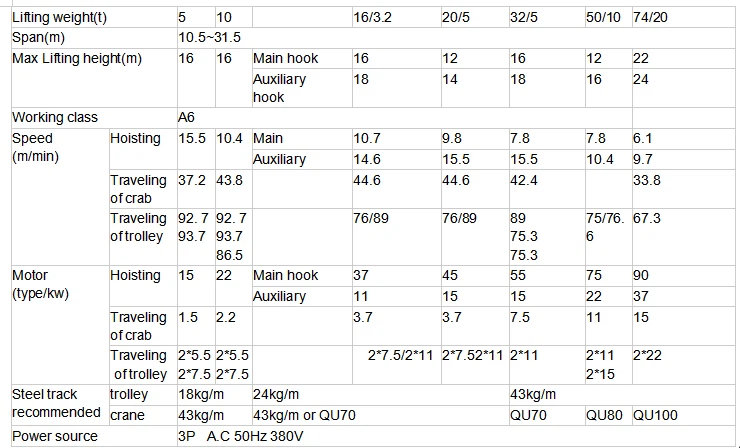
- Capacity: 5-500ton
- Span length: 4-35m
- Lifting height: 3-50m
- Work duty: A4, A5, A6,A7
- Raged voltage: 220V~690V, 50-60Hz, 3ph AC
- Work environment temperature: -25℃~+50℃, relative humidity ≤85%
- Crane control mode: Floor control / Remote control / Cabin room

Pictures & Components
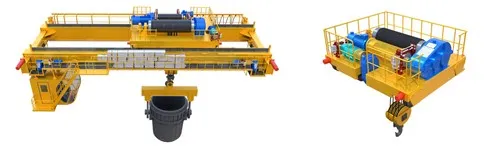
1. Whole set crane
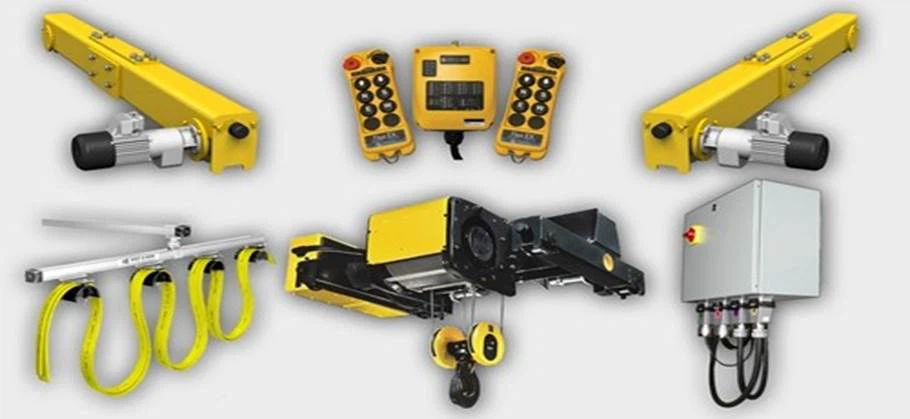
The whole set of a crane for the lifting system of a ladle in a foundry overhead crane typically includes the following components:
Bridge: The bridge is the horizontal structure that spans across the foundry and supports the hoist and trolley. It moves along the runway beams.
Runway Beams: These are the supporting beams that guide the crane's movement. They are typically installed along the length of the foundry, allowing the bridge to travel across.
Trolley: The trolley is mounted on the bridge and moves along it. It carries the hoist mechanism and is responsible for carrying the ladle to the desired location.
Hoist: The hoist is the primary lifting mechanism. It consists of a motorized winch and a drum that holds the lifting cable or chain. The hoist raises and lowers the ladle.
Lifting Hook or Ladle Tongs: The hook or ladle tongs are the attachments that directly hold the ladle. Ladle tongs are specifically designed for handling molten metal ladles safely and securely.
Control System: The crane is operated by a control system that can be manual, semi-automatic, or fully automatic. This system includes the electrical controls, sensors, and safety mechanisms.
Electrification System: This includes the power supply, cables, and transformers necessary to operate the crane's motors and controls.
Motors and Drives: These power the movement of the crane, trolley, and hoist. They are often electric, with specific requirements for high-duty cycles in foundry operations.
Brakes and Safety Features: Safety is crucial in handling heavy molten metal, so these systems include emergency stop buttons, overload protection, and other safety features to prevent accidents.
Operator Cabin or Pendant Control: The operator can control the crane either from a cabin located on the crane or via a pendant control station.
Limit Switches: These ensure the crane doesn't travel beyond the set boundaries to avoid damaging the equipment or causing accidents.
Cooling System: Since foundries deal with high temperatures, a cooling system may be integrated into the crane to prevent overheating of components like the hoist and motors.

2. Main girder
The main girder of a ladle in a foundry overhead crane is a critical structural component responsible for supporting and distributing the load of the ladle, which is used to hold molten metal in a foundry. The overhead crane is designed to move the ladle from one area to another within the foundry, ensuring safe handling of the heavy and often extremely hot material.
Here are the main points about the main girder in this context:
Design and Load Handling: The main girder is designed to withstand the heavy loads of the ladle, which can weigh several tons, and any molten metal or materials inside. It must be engineered to provide the necessary strength and rigidity to prevent any failure during operation.
Materials: Typically, the main girder is made of high-strength steel to ensure durability and to handle the extreme temperatures and weight it supports. The materials used must also be resistant to wear and corrosion, given the harsh environment in a foundry.
Structural Integrity: The main girder is often designed in a box-shaped or I-beam configuration, providing stability and strength. It is usually supported at each end by end trucks, which allow the crane to move along a rail system in the foundry.
Heat Resistance: Given the temperature of the molten metal in the ladle, the girder must be designed to handle thermal expansion and withstand high temperatures without warping or losing strength.
Safety Features: The girder is part of an overall safety system that includes limit switches, sensors, and braking mechanisms to prevent the crane from overloading or malfunctioning.
Maintenance and Inspection: Due to the heavy loads and harsh working conditions, the main girder and the crane system as a whole must undergo regular inspection and maintenance to ensure the safety and longevity of the equipment.

3. Lifting System
The lifting system of a ladle in a foundry overhead crane is a critical part of the crane's operation, particularly for safely handling molten metal in industrial foundries. Here's a breakdown of the key components involved in the lifting system:
1. Crane Structure:
Overhead Crane: The crane itself typically consists of a bridge, trolley, hoist, and a hook or lifting mechanism designed for specific tasks. In the foundry, the crane must withstand extreme temperatures and heavy loads.
Bridge: It moves along parallel tracks on the ceiling, carrying the trolley and hoist system.
Trolley: Moves horizontally along the bridge to position the hoist directly over the ladle.
2. Lifting Mechanism:
Hoist: The hoist is a key component of the crane that actually lifts and lowers the ladle. It typically includes a drum or reel that houses the lifting cable or rope.
Wire Rope/Chain: A strong, heat-resistant wire rope or chain is used to carry the weight of the ladle and molten metal. The wire rope is designed to handle heavy loads and high temperatures.
Hook: The hook or lifting attachment is designed specifically for lifting a ladle. It is typically a custom attachment that fits into the ladle's lifting lugs or handles.
3. Ladle Lifting Lug/Handle:
The ladle is equipped with lifting lugs or handles, which are fixed points designed to accommodate the hook of the crane for lifting. These lugs are carefully positioned to ensure a balanced lift.
4. Safety Features:
Load Limiters: Overhead cranes often have load limiters or overload protection to ensure that the lifting system does not exceed its rated capacity.
Heat-resistant Components: The lifting system components, especially the hoist rope and hook, are typically made of heat-resistant materials to withstand the high temperatures of molten metal.
Anti-Sway Systems: Since molten metal is sensitive to movement, some cranes have anti-sway technology to stabilize the ladle while it is being lifted and moved.
5. Control System:
Operator Control: Operators control the movement of the crane using a pendant or wireless control. Precision control is essential to avoid accidents and spills of molten metal.
Automation: In some advanced systems, automation or semi-automation is used to move the ladle from one location to another with minimal human intervention.
6. Specialized Features:
Ladle Tilter (Optional): In some foundries, ladle tilters are integrated into the crane system to pour molten metal into molds. The tilting mechanism is activated by the crane's hoist system to carefully control the flow of molten material.
Heat Shielding: Given the extreme temperatures in a foundry, heat shielding or insulating materials are sometimes used to protect the crane's mechanical components from the heat radiating from the ladle.
1. Key Components of the Lifting System
The lifting system of a ladle in a foundry overhead crane consists of several key components, each designed to work together to safely and efficiently lift, transport, and lower heavy molten metal ladles. The main components include:
Hoist Mechanism:
This is the primary lifting component, consisting of a motor, gearbox, drum, and wire rope or chain.
It is responsible for lifting and lowering the ladle, typically through vertical movement.
Wire Rope or Chain:
This connects the hoist drum to the lifting hook and is responsible for transferring the lifting force.
Wire ropes are most commonly used due to their strength and flexibility.
Lifting Hook or Ladle Hook:
The hook is designed to securely attach to the ladle, often with special features like a clamping or locking mechanism.
Some ladles use a special hook with a rotating or tilting mechanism for controlled pouring.
Trolley and Bridge:
The trolley moves along the bridge (the horizontal beam of the crane) and is driven by motors and wheels.
The trolley moves the hoist system to the desired position over the ladle.
Bridge Crane:
The bridge crane provides horizontal movement across the foundry, allowing for precise positioning of the ladle for transport, lifting, and pouring operations.
It is typically driven by motors and rails that allow it to move along the length of the foundry.
Control System:
The control system includes the crane operator's console, buttons, or joysticks to control the movement of the crane, hoist, and trolley.
Advanced systems may include load monitoring, safety interlocks, and automatic control features.
Counterweight:
Some ladle lifting systems use counterweights to balance the load, ensuring stability and smooth operation of the crane.
Safety Systems:
Overload protection sensors to ensure the system doesn't lift more than its rated capacity.
Anti-sway systems that reduce swinging of the ladle during movement.
Emergency stop and limit switches for safety.
Ladle Rotation or Tilting Mechanism (optional):
Some ladle cranes are equipped with a tilting or rotating mechanism that allows the ladle to be tipped for pouring molten metal safely.
This may involve hydraulic or electric actuators.
2. Working Principles
1. Hoist Mechanism
The hoist mechanism is the heart of the lifting system. It consists of a motor, gears, drums, and ropes or chains to lift the ladle. The hoist provides vertical motion for the ladle, either lifting it to a higher position or lowering it to a lower one.
Motor: A motor drives the hoisting system, which is typically electric.
Gearbox: The motor's rotational speed is reduced by a gearbox to provide controlled lifting.
Drum and Rope/Chain: The drum winds the rope or chain, which is attached to the ladle, facilitating its movement. This setup ensures precise control of the ladle's height.
2. Trolley and Bridge Mechanism
The ladle is moved horizontally across the foundry using the trolley and bridge system.
Bridge: The bridge runs along two rails mounted on the ceiling of the foundry. It allows the ladle to be moved from one point to another horizontally.
Trolley: The trolley is mounted on the bridge and moves along the bridge rails. The trolley provides horizontal movement in the perpendicular direction to the bridge, allowing the ladle to be positioned exactly where it's needed.
3. Ladle Hooks and Slings
A specialized hook or lifting sling is used to grab the ladle securely. The hook is attached to the ladle through a lifting point, and it usually has a locking mechanism to prevent accidental detachment.

4. End Carriages
In a foundry overhead crane, the end carriages of the ladle are critical components designed to support and move the ladle, which is used to transport molten metal in the foundry. The end carriages are positioned at both ends of the crane bridge and allow for the lifting, lowering, and horizontal movement of the ladle. Here's a breakdown of their function:
Structure and Function:
The end carriages support the main hoisting mechanism, which includes the ladle hook and the lifting system.
These carriages are usually designed to be robust and able to withstand the extreme conditions in a foundry, including high temperatures, heavy loads, and intense mechanical stress.
Movement:
The end carriages are equipped with wheels or rollers that allow them to move along the crane rails. They are designed to move with precision and stability.
They typically have drive motors to facilitate movement and are linked to the crane control system for coordinated operation.
Safety Features:
Safety systems such as overload protection, limit switches, and emergency stop functions are incorporated to ensure safe and reliable operation, especially in such hazardous environments.
Material Selection:
The end carriages and other parts of the crane are often made of high-strength steel or other materials that can handle the extreme temperatures and the weight of molten metal ladles.
Customization:
In some cases, the design of end carriages can be customized to accommodate specific ladle sizes, lifting capacities, and foundry layouts.
5. Crane traveling mechanism
The crane traveling mechanism for a ladle in a foundry overhead crane is an essential part of the crane's design. It is responsible for moving the ladle, which is used to hold molten metal in foundries, from one station to another, such as from the furnace to the casting area. Here's a breakdown of the key components and principles involved:
1. Bridge Mechanism:
Bridge Girder: This is the main horizontal support structure that spans across the tracks in the foundry. It moves horizontally along the rail system.
Traveling Trolley: The trolley is the part of the crane that moves along the bridge girder. It typically has the hoist mechanism attached to it to raise or lower the ladle.
2. Rail System:
The crane travels along a rail system on the ground, which is laid along the length of the foundry floor. The rail system is typically mounted on the foundation of the building to ensure stability and accuracy during travel.
3. Hoisting Mechanism:
The hoist is responsible for lifting and lowering the ladle. It is typically attached to the trolley and is powered by an electric motor. The hoist uses a rope or chain to lift the ladle.
4. Traveling Mechanism:
Drive System: The crane's drive system is powered by motors, which provide the force necessary to move the crane along the rails. There are usually separate motors for horizontal movement (bridge travel) and trolley movement (cross travel).
Movement Control: The crane is controlled by a combination of joysticks, buttons, or remote control systems. The movement is carefully synchronized to avoid instability or accidents, especially given the heavy weight and molten metal involved.
5. Load Handling System:
The ladle is usually equipped with a clamping or lifting system to securely hold the ladle in place while it is being moved. Ladles are often suspended from a hook or specially designed lifting device that can manage the extreme temperature and weight of molten metal.
6. Safety Features:
Limit Switches: To prevent over-travel, limit switches are installed to stop the crane at predetermined positions.
Brake Systems: These are used to control and stop the crane's movement smoothly. They are crucial for controlling the motion, especially when handling such heavy and molten metal.
Emergency Stop System: This system is built to stop the crane's movement immediately in case of an emergency to prevent accidents.
Anti-sway Mechanism: This helps reduce any swinging of the ladle during movement, which can be dangerous in foundries.
7. Speed Control:
The crane's traveling and hoisting speeds can be controlled to allow for precise positioning of the ladle. This is critical for ensuring smooth operations, especially when transferring molten metal.
6. Trolley traversing mechanism
In a foundry overhead crane, the trolley traversing mechanism is an essential part of the crane's system, enabling precise horizontal movement of the ladle, which is typically used to carry molten metal. Here's a breakdown of the mechanism:
1. Trolley Structure:
The trolley is a horizontal platform that runs on a set of rails along the overhead beam of the crane. It is designed to carry the ladle and facilitate its movement across the foundry.
The ladle is attached to the crane hook or lifting mechanism, allowing it to be moved horizontally as well as lifted and lowered vertically.
2. Traversing Mechanism:
The trolley traversing mechanism allows the crane trolley to move along the length of the crane beam. This is achieved by using a motorized drive system, often consisting of an electric motor, gearboxes, and pulleys or chains.
The movement of the trolley is generally controlled by a variable frequency drive (VFD) or a similar control system that allows for fine adjustments in speed and direction.
3. Drive System:
The drive system typically consists of geared motors that drive the wheels or sprockets of the trolley, causing it to move along the rail. The motor is often connected to the trolley via chain drives or geared wheels, ensuring smooth and reliable movement.
The trolley is equipped with wheels that run on the crane's rail tracks. These wheels are designed to handle the load and vibrations created by the ladle's weight.
4. Control System:
The trolley's traversing action is controlled through a joystick or pendant control by the crane operator. The control system is designed to provide precise movements to ensure the ladle is safely positioned at the desired location in the foundry.
A limit switch or encoder is used to detect the position of the trolley, ensuring it stops at the right point and preventing over-travel.
5. Safety Features:
The mechanism incorporates braking systems to hold the trolley in place when it is not in motion, especially when handling heavy molten metal in the ladle.
Additionally, sensors and safety interlocks may be installed to detect any malfunctions or unsafe conditions, ensuring the safe operation of the crane.
6. Load Handling:
The ladle's load affects the traversing mechanism, as the crane needs to handle varying loads while ensuring smooth trolley motion. The traversing speed and control system must be adjusted to ensure the ladle remains stable during the movement.
7. Crane wheel
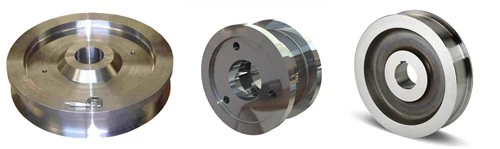
The crane wheel of a ladle in a foundry overhead crane plays a critical role in the operation of the crane. In a foundry, these cranes are used to lift and transport molten metal, such as steel or iron, in ladles. The crane wheel system is an essential part of the crane's hoisting and traveling mechanisms. Here's a breakdown of its importance:
Load-bearing Capacity: The crane wheels must have a high load-bearing capacity because they support the weight of the ladle, which can be extremely heavy due to the molten metal.
Heat Resistance: Due to the high temperatures in foundries, the crane wheels must be made of materials that can withstand heat and thermal expansion. Steel and other heat-resistant alloys are typically used.
Durability: These wheels need to be highly durable because of the continuous operation in harsh environments. They must resist wear and tear, as well as impact from the load.
Smooth Operation: The wheels are mounted on rails, which should be perfectly aligned to ensure smooth travel of the crane. A failure in the wheel system can result in uneven load distribution or even crane malfunction.
Safety: The crane wheel must also be designed to minimize risk factors, such as derailment or malfunction, which could cause accidents in the foundry where molten metal handling is critical.
8. Crane hook
The crane hook of a ladle in a foundry overhead crane is a critical component used for lifting and transporting molten metal ladles, which are heavy and extremely hot. The hook is designed to withstand high temperatures, heavy loads, and the harsh environment of the foundry.
Here are some key details about the crane hook for a ladle in an overhead crane:
Material: The hook is usually made from high-strength alloy steel or heat-resistant steel to withstand the extreme conditions in the foundry, including high temperatures and corrosive elements. Sometimes, hooks are coated with a heat-resistant material to further protect them.
Design: The hook typically has a specialized shape to securely hold the ladle. It may include a safety latch or a locking mechanism to prevent the ladle from slipping off during transport.
Capacity: The capacity of the crane hook must match the weight of the ladle, which can vary depending on the foundry's operations. Ladles can range from several tons to hundreds of tons in weight.
Insulation and Safety: Some ladle hooks are equipped with insulation to prevent heat transfer from the molten metal to the crane and hook. Additionally, safety features such as overload protection and sensors to detect hook position and load are often incorporated.
Maintenance: These hooks require regular inspection and maintenance due to the stresses they endure. Over time, they may suffer from wear and tear or heat damage, which can reduce their strength and functionality.

9. Motor
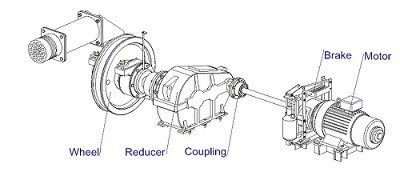
The motor of a ladle in a foundry overhead crane is typically a high-power motor designed to handle the heavy loads associated with lifting molten metal and other heavy materials in the foundry. These motors are critical for the smooth operation of the overhead crane, ensuring it can lift, move, and position the ladle with precision and safety.
Key features of the motor for a ladle in a foundry overhead crane include:
High Torque and Power: The motor needs to generate enough torque to lift and maneuver the ladle, which can be quite heavy, especially when it contains molten metal.
Explosion Proof or Flame Proof: Due to the potentially hazardous environment in a foundry (e.g., molten metal, dust, and extreme temperatures), the motor is often designed to be explosion-proof or flame-proof to prevent sparks and fires.
Cooling Systems: Foundries can be extremely hot, and the motor may require an advanced cooling system to prevent overheating. This might include air or water-cooling systems.
Heavy Duty Design: These motors are built for continuous operation and can withstand harsh conditions, including dust, high temperatures, and heavy loads.
Control and Monitoring: The motor is typically part of an integrated control system that allows operators to precisely control the speed, direction, and position of the ladle.
Safety Features: Since the work involves molten metal, safety mechanisms such as overload protection, emergency stop features, and limit switches are crucial to ensure safe operation.

10. Sound and light alarm system & limit switch
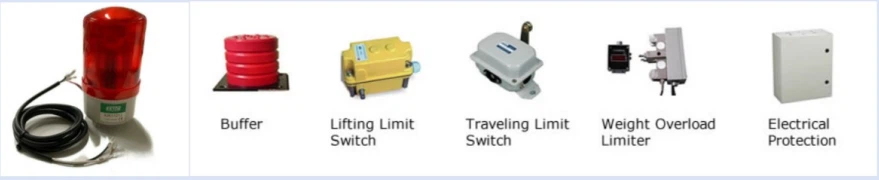
1.Sound and Light Alarm System:
The sound and light alarm system in a foundry overhead crane is used to alert operators and personnel about potential hazards or critical conditions during crane operation.
Sound Alarm: Typically a loud horn or buzzer, it is used to alert workers in the vicinity of potential dangers, such as the crane moving in a hazardous zone or an emergency situation like equipment malfunction or overload.
Light Alarm (Strobe Light): A flashing light, often in bright colors like red or yellow, serves as a visual signal to warn operators and other personnel in the area of the crane's status or when an unsafe condition arises.
Common Use Cases:
When the crane is about to lift or lower heavy loads.
When the crane is moving near hazardous areas or obstacles.
During maintenance or emergency shutdowns.
Indicating an overload condition or mechanical failure.
2. Limit Switches:
A limit switch is used to monitor the position and movement of the crane and its components, ensuring that the crane does not exceed preset limits, thus preventing accidents or damage.
Functions:
End-of-Travel Limit Switches: These prevent the crane from traveling beyond its designated range (e.g., not moving too far left or right, or up/down). This is essential for avoiding collisions with structures, other equipment, or overhead obstructions.
Load Limiting Switches: These sensors monitor the load on the crane, ensuring it does not exceed the rated capacity. If the load is too heavy, the switch will activate an alarm or stop the crane from lifting further.
Overload Detection: If the crane is lifting a load that exceeds the safe limit, the limit switch activates a signal (usually connected to the sound and light alarm system) to alert the operator.
11. Safety Devices
1. Load Limiter
A load limiter ensures that the crane does not exceed its safe lifting capacity. This prevents overload conditions that could cause crane failure or accidents.
2. Overload Protection System
An overload protection system is designed to automatically stop the crane operation if the load exceeds the maximum rated capacity. It helps prevent dangerous conditions from developing, such as overloading or tipping of the crane.
3. Ladle Tilt Limiter
This device controls the tilt angle of the ladle, ensuring it does not tilt too far or too quickly, which could lead to spills or accidents.
4. Anti-Sway Control
Anti-sway systems are used to minimize the swinging motion of the ladle during transportation, preventing the molten metal from spilling or splashing, which could pose serious risks.
5. Temperature Sensors
Temperature sensors are essential in foundries where molten metal is being handled. These sensors monitor the temperature of the ladle to ensure it doesn't exceed safe limits, preventing damage to the crane and ladle or, more critically, preventing overheating accidents.
6. Emergency Stop Button
A large, easily accessible emergency stop button is critical for quickly halting crane operations in case of an emergency, such as equipment malfunction or safety hazard detection.
7. Safety Brakes
The crane and ladle lifting mechanism may be equipped with automatic safety brakes to stop the movement in case of a malfunction or failure of the primary lifting system.
8. Ladle Safety Hooks
Special safety hooks or mechanical lock systems are designed to securely attach the ladle to the crane hook, preventing accidental detachment during lifting or transportation.
9. Wind and Environmental Sensors
In some foundries, environmental conditions like wind can impact crane operation. Wind sensors can detect unsafe wind speeds, and the system may automatically halt crane movements in such conditions to prevent accidents.
10. Warning and Alarm Systems
Audible and visual warning systems are integrated into the crane to alert workers about ongoing movements, high-temperature conditions, or other potential hazards.
11. Operator Training and Safety Devices
Besides the mechanical and electronic safety devices, comprehensive operator training is essential. Operators should be familiar with the proper handling procedures for ladles, and safety protocols should be followed at all times.
12. Control Mode
1. Manual Control
Operator-driven: The crane operator manually controls the ladle's movement using a joystick or control buttons.
Crane Movements: The operator has direct control over the hoisting, traveling, and tilting of the ladle to position it correctly.
Typical Use: Used when the operator needs full control over the ladle's handling, typically in smaller foundries or for special operations.
2. Semi-Automatic Control
Pre-programmed Settings: The crane can be programmed with predefined positions and movements for ladle handling.
Operator Assistance: The operator still has control but can use the system's automated features to assist with positioning the ladle at specific points.
Typical Use: In foundries that need a balance between manual control and automation for more efficient ladle handling.
3. Fully Automatic Control
Automated Ladle Handling: In a fully automated system, the crane is equipped with sensors, actuators, and a control system that allows it to perform tasks such as lifting, tilting, and moving the ladle without manual intervention.
Programmable Logic Controller (PLC): The crane's movements are controlled by a PLC, which can handle complex tasks like synchronizing movements and ensuring precise positioning.
Safety Features: Automated systems typically have multiple safety features such as overload protection, collision detection, and position feedback to ensure safe and accurate handling of the ladle.
Typical Use: Foundries with high production volumes, requiring efficiency and consistency in ladle handling.
4. Remote Control
Operator Safety: The crane can be controlled via a remote control, allowing the operator to move the ladle from a safe distance, especially in areas with high heat or hazardous materials.
Control Flexibility: This mode can offer full manual control but from a safe position, reducing the risk of injury to the operator.
Typical Use: In high-risk foundries or environments where operator safety is a priority.
5. Ladle Positioning Systems
Precise Movement: Some advanced systems use laser or camera-based positioning systems to precisely position the ladle in relation to the furnace or molds.
Integration with Furnace Control: The ladle can be integrated into the furnace control system, ensuring that it is correctly positioned and aligned for metal pouring or other operations.

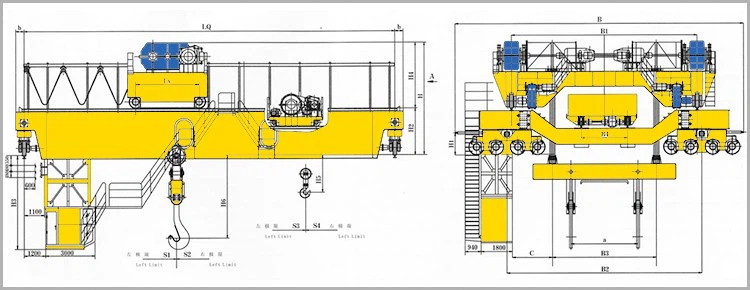
13. Sketch
Main Technical Data
Advantages
- Efficient Material Handling: Ladles are used to transport molten metal from furnaces to casting areas. Overhead cranes with ladles help in safely and efficiently moving large amounts of molten metal without requiring manual labor, reducing the risk of accidents.
- Safety: Handling molten metal is dangerous, but with an overhead crane system, ladles can be operated remotely, minimizing the risk to workers. The ladle is securely lifted and positioned, reducing the chances of spills or exposure to high temperatures.
- Improved Productivity: Overhead cranes with ladles allow continuous, automated material flow in a foundry, which enhances the overall efficiency of production processes. This results in faster processing times and helps meet production targets.
- Customization for Various Capacities: Ladles can be customized in size and capacity to handle different amounts of molten metal, catering to the specific requirements of the foundry.
- Precise Control: Overhead cranes equipped with ladles provide precise control for lifting and pouring molten metal. Operators can adjust the speed and movement of the crane, ensuring accuracy when pouring metal into molds.
- Reduced Wear and Tear: Using ladles in overhead crane systems reduces manual labor, minimizing human error and mechanical wear associated with frequent manual handling.
- Enhanced Flexibility: Overhead cranes with ladles can be integrated into various foundry layouts, enabling them to handle multiple tasks, such as pouring, transferring, and even cleaning.
Application
- Molten Metal Transport: The ladle is used to carry molten metal from the furnace to the mold. This requires the ladle to be strong enough to withstand high temperatures and heavy loads. The overhead crane provides the mobility needed to move the ladle with molten metal safely across the foundry.
- Precision Handling: Overhead cranes equipped with ladles are designed to handle heavy, liquid loads. The crane operator can control the movement precisely, ensuring that the ladle is placed accurately over molds or other required areas in the foundry.
- Safety: Overhead cranes with ladles help ensure the safe transport of molten metal, which is extremely dangerous. The ladle typically has protective features like a heat-resistant lining to prevent accidents and facilitate controlled pouring.
- Efficient Production Process: Using a crane with ladles ensures that molten metal is transferred efficiently, which reduces downtime and increases the overall productivity of the foundry. The crane's ability to move large volumes of metal quickly and safely is crucial for meeting production goals.
- Weight and Load Capacity: Foundry ladles can carry thousands of kilograms of molten metal, and the overhead crane must be capable of handling these heavy loads. Cranes are specially designed to support such weight, with the ability to lift, tilt, and pour the ladle as needed.
- Ladle Rotation and Pouring: Some ladles in overhead crane systems are equipped with mechanisms that allow for rotation, enabling precise pouring into molds. The crane facilitates this by providing the necessary movement and control.
Crane Production Procedure
1. Design Stage
Load Assessment: The crane design is based on the weight and size of the ladles (which can carry molten metal). Engineers calculate the lifting capacity, span, height, and duty cycle based on the specific requirements.
Safety Considerations: Safety is paramount in foundries. The crane should have features like redundant systems, emergency brakes, and safety sensors to prevent accidents in high-temperature environments.
Structural Design: This includes designing the crane bridge, hoist, trolley, and rail systems. The materials used in the crane must be heat-resistant and durable to withstand the harsh environment of a foundry.
Drive Systems: The crane must have powerful and reliable drive systems for hoisting, traveling, and trolley movement. These may include electric motors, gearboxes, and control systems.
2. Material Selection
High-Temperature Materials: The components that will come into direct contact with the molten metal or extreme heat should be made from heat-resistant materials such as steel with high thermal endurance.
Corrosion Resistance: Parts exposed to heat and metal slag may require corrosion-resistant coatings to prolong the crane's life.
3. Fabrication
Manufacturing the Frame: The crane's frame, including the bridge, trolley, and hoist system, is fabricated. The components are typically welded from steel sections or fabricated in a modular design for ease of installation and maintenance.
Hoist Assembly: The hoist system, including the lifting mechanism, is assembled with components like electric motors, gearboxes, and the lifting drum or pulley system.
Control System Integration: The control systems, including manual or remote operation panels, are integrated into the crane for smooth operation.
4. Assembly
The various components of the crane, such as the bridge, hoist, trolley, and electrical systems, are assembled at the factory or on-site depending on the complexity.
The lifting mechanism (hook or ladle handling attachments) is specifically designed to safely handle ladles and molten metal.
5. Testing and Quality Control
Load Testing: The crane undergoes load tests to ensure it can safely lift the required weight, including dynamic loading tests to simulate real-world conditions.
Functional Testing: The crane's movements (hoist, trolley, bridge) are tested to ensure smooth operation and compliance with safety standards.
Inspection: Final inspection is conducted to ensure all parts and systems are in working order and meet the engineering specifications.
6. Installation and Commissioning
Installation: The crane is installed in the foundry, which involves placing the crane on its designated rails, connecting the power supply, and ensuring proper alignment.
Commissioning: The crane is tested on-site to ensure everything is functioning correctly, and the control systems are calibrated.
7. Training and Handover
Operator Training: Operators are trained on the safe handling of ladles, especially with regard to molten metal handling, crane controls, and emergency procedures.
Safety Protocols: Safety protocols are established, including proper load handling, emergency stops, and maintenance schedules.
8. Ongoing Maintenance
Scheduled Inspections: Regular maintenance is critical in a foundry environment. Inspections for wear, tear, and stress on parts like cables, hooks, and hoists are performed periodically.
Preventive Maintenance: Lubrication, cleaning, and checking the alignment of moving parts are done regularly to avoid downtime and extend the crane's life.
9. Upgrades and Modifications
As technology and safety standards evolve, cranes might require upgrades or modifications to improve their performance or safety features.

Workshop View
The company has installed an intelligent equipment management platform, and has installed 310 sets (sets) of handling and welding robots. After the completion of the plan, there will be more than 500 sets (sets), and the equipment networking rate will reach 95%. 32 welding lines have been put into use, 50 are planned to be installed, and the automation rate of the entire product line has reached 85%.


Hot Tags: ladle in foundry overhead crane, China ladle in foundry overhead crane manufacturers, suppliers, factory, Ladle Foundry and Casting Steel Mill Overhead Crane, Steel Mill Overhead Cranes, Steel Factory Overhead Crane, Casting Steel Overhead Crane, Rolling Mill Overhead Crane, Ladle Foundry Bridge Crane
You Might Also Like


Send Inquiry