










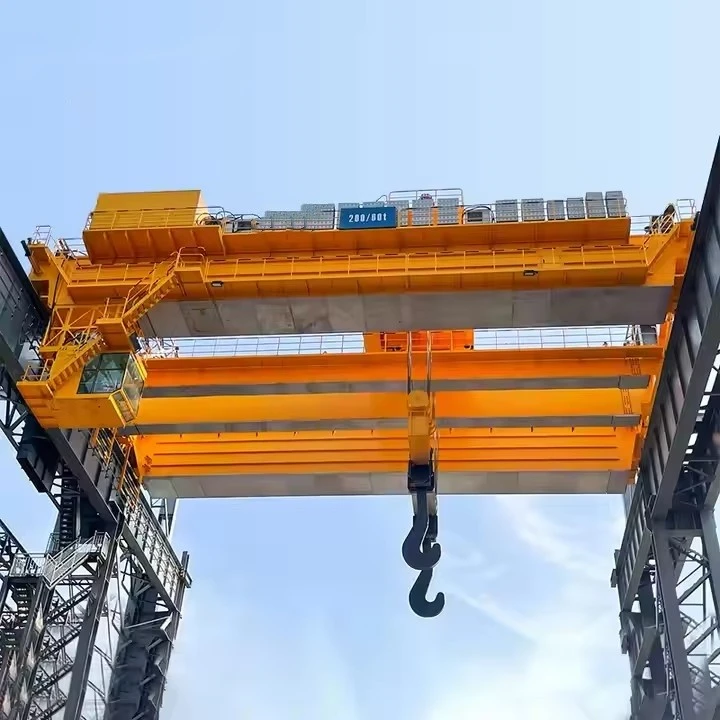


Steel Ladle Overhead Crane
Key Features & Specifications
High-Temperature Resistance
Constructed with heat-resistant steel and insulated components to withstand ambient temperatures up to 60°C (or higher for specific models).
Electrical parts (e.g., motors, controls) are equipped with cooling fans and H-class insulation.
Structural Design
Four main types:
Four-beam, four-track double trolley (for large ladles).
Four-beam, six-track double trolley (extreme heavy-duty).
Double-beam, double-track single trolley (common for capacities <75 tons).
Double-beam, four-track double trolley (intermediate capacity).
Ladle hooks with rotatable or rigid guide posts for stability during pouring.
Safety & Reliability
Working class: A7–A8 (severe duty) for continuous operation in harsh environments.
Overload protection and emergency brakes to prevent accidents.
Anti-sway systems for precise ladle positioning.
Lifting Capacity & Span
Standard capacities: 5–500 tons (e.g., QDY model for <75 tons, YZ model for >75 tons).
Span range: 10.5–31.5 meters, customizable for plant layouts.
Comparison vs. Standard Overhead Cranes
| Feature | Steel Ladle Crane | Standard Overhead Crane |
|---|---|---|
| Temperature | 60°C+ ambient | <40°C |
| Duty Class | A7–A8 (severe duty) | A3–A5 (moderate duty) |
| Safety | Tilt sensors, dual brakes | Basic overload protection |
| Hook Type | Rotating + heat-shielded | Fixed standard hook |
- Capacity: 5-500ton
- Span length: 4-35m
- Lifting height: 3-50m
- Work duty: A4, A5, A6,A7
- Raged voltage: 220V~690V, 50-60Hz, 3ph AC
- Work environment temperature: -25℃~+50℃, relative humidity ≤85%
- Crane control mode: Floor control / Remote control / Cabin room

Pictures & Components
Steel ladle overhead cranes are heavy-duty, high-temperature-resistant lifting systems designed for molten metal handling in steel plants, foundries, and metallurgical industries. Below is a breakdown of their essential components:
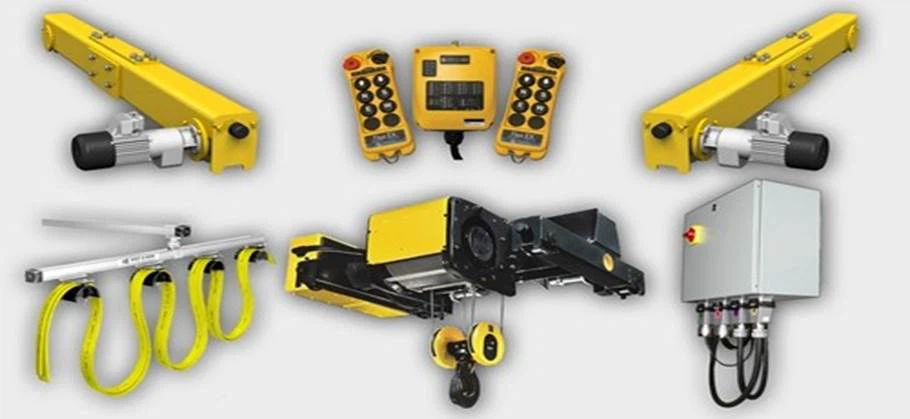
1. Main Girder (Bridge Structure)
Double-Girder (or Quad-Girder) Design for extreme load stability.
Made of heat-resistant steel (Q345B/Q235B with thermal insulation) to withstand high ambient temperatures (up to 60°C+).
Reinforced with stiffeners to prevent deformation under heavy loads (5–500+ tons).

2. End Trucks (End Carriages)
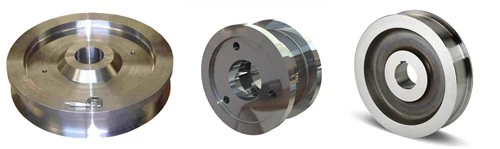
Equipped with heavy-duty wheels for smooth travel along runway rails.
Double-wheel or multi-wheel configurations (4-track or 6-track for ultra-heavy ladles).
Anti-derailment devices to ensure safety during operation.

3. Hoisting Mechanism
Main Hoist (Ladle Lifting):
Wire rope hoist (Grade 80/100 steel ropes) with high-temperature-resistant hooks.
Dual-motor drive (primary + backup) for fail-safe operation.
Overload limiter (≥110% rated capacity cutoff).
Auxiliary Hoist (Optional):
Used for slag pot handling or maintenance tasks.
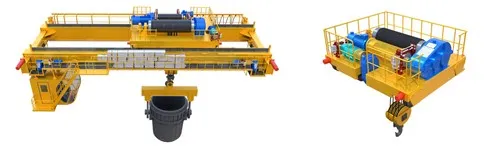
 4. Trolley & Travel System
Double-Trolley Design (common for large ladles):
Main trolley for ladle lifting.
Auxiliary trolley for secondary operations.
Variable Frequency Drive (VFD) for smooth acceleration/deceleration.
Guide rails to prevent swaying during ladle transfer.
5. Ladle Hook & Suspension
Rotating Hook (360° swivel) for precise pouring control.
Rigid Guide Frame (for stability in high-temperature zones).
Heat shields to protect ropes and hooks from molten metal splashes..
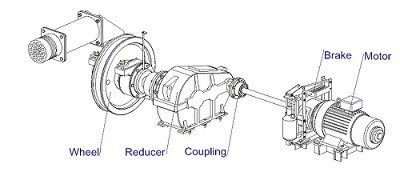
6. Electrical & Control System
Explosion-proof electrical components (motors, limit switches).
H-class insulated motors with forced air cooling.
Control options:
Pendant control (heat-resistant pendant station).
Radio remote control (for operator safety).
Cabin control (for large systems).

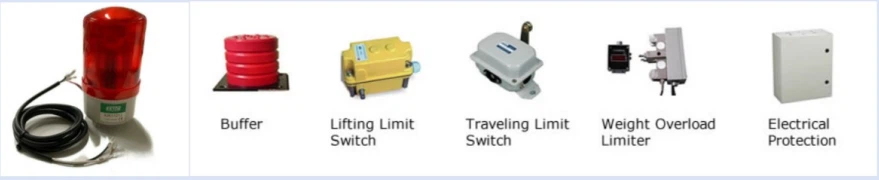
7. Safety & Protection Devices
Redundant braking system (mechanical + electromagnetic brakes).
Emergency power-off (EPO) button.
Ladle tilt detection (prevents accidental spills).
Thermal sensors to monitor critical components.
8. Runway & Rail System
Heavy-duty runway beams (welded or bolted construction).
Crane rails (QU80/QU100) for high load capacity.
Alignment sensors to prevent track misalignment
 Optional Add-Ons
Weighing system (for real-time load monitoring).
Laser positioning (for precise ladle placement).
Automated pouring system (integrated with casting machines).
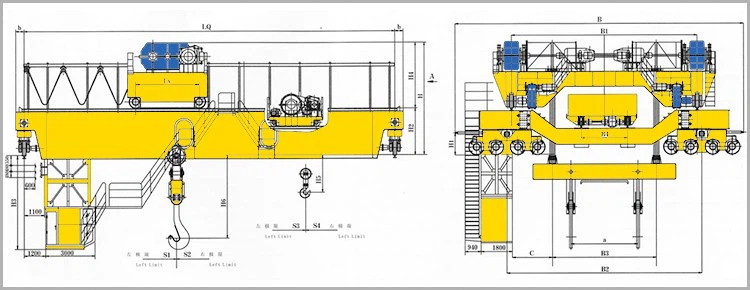
SKETCH
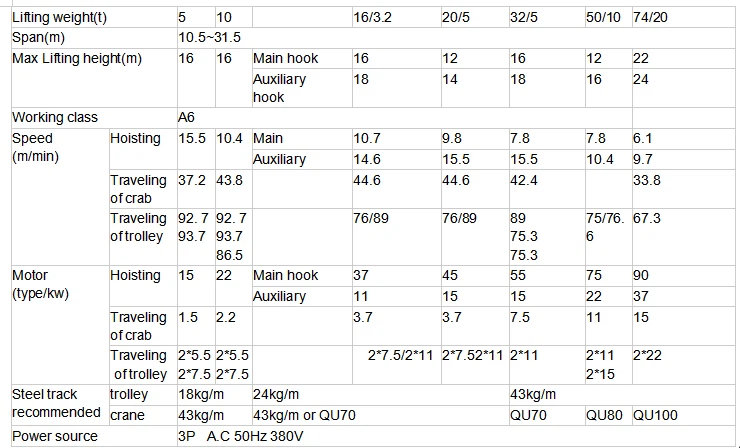
Main Technical Data
Advantages
Steel ladle overhead cranes are mission-critical equipment in metallurgical industries, offering unique benefits for molten metal handling:
1. Extreme Heat Resistance
Designed to operate in 60°C+ ambient temperatures near molten steel (1,500°C+).
Insulated components (hooks, ropes) and H-class heat-resistant motors prevent failure.
2. Heavy-Duty Load Capacity
Handles 5–500+ ton ladles (standard) with quad-girder designs for ultra-heavy loads.
Dual-hoist systems (main + auxiliary) for simultaneous slag pot handling.
3. Precision & Stability
Anti-sway technology and rotating hooks enable millimeter-level pouring accuracy.
Rigid guide frames prevent ladle oscillation during transfer.
4. Fail-Safe Safety Systems
Redundant brakes (mechanical + electromagnetic).
Ladle tilt sensors and overload cutoffs (110% capacity).
Emergency power backup for power failure scenarios.
5. Customization for Harsh Environments
Explosion-proof options for gas-rich areas.
Dust/water-resistant electrical components (IP65 rating).
6. High Duty Cycle (A7–A8 Class)
Built for 24/7 operation in steel mills with minimal downtime.
Application
1. Steel Plants
Molten steel transfer: From furnace → ladle → continuous caster.
Slag handling: Removing waste slag from ladles.
2. Foundries & Smelters
Pouring molten iron/aluminum into molds.
Ladle maintenance (preheating, relining).
3. Rolling Mills
Transporting hot ingots (1,200°C+) to rolling stations.
4. Non-Ferrous Metal Processing
Handling copper, zinc, or nickel molten baths.
5. Scrap Metal Recycling
Charging molten metal into EAF (Electric Arc Furnaces).
Crane Production Procedure
1. Design Stage
Load Assessment: The crane design is based on the weight and size of the ladles (which can carry molten metal). Engineers calculate the lifting capacity, span, height, and duty cycle based on the specific requirements.
Safety Considerations: Safety is paramount in foundries. The crane should have features like redundant systems, emergency brakes, and safety sensors to prevent accidents in high-temperature environments.
Structural Design: This includes designing the crane bridge, hoist, trolley, and rail systems. The materials used in the crane must be heat-resistant and durable to withstand the harsh environment of a foundry.
Drive Systems: The crane must have powerful and reliable drive systems for hoisting, traveling, and trolley movement. These may include electric motors, gearboxes, and control systems.
2. Material Selection
High-Temperature Materials: The components that will come into direct contact with the molten metal or extreme heat should be made from heat-resistant materials such as steel with high thermal endurance.
Corrosion Resistance: Parts exposed to heat and metal slag may require corrosion-resistant coatings to prolong the crane's life.
3. Fabrication
Manufacturing the Frame: The crane's frame, including the bridge, trolley, and hoist system, is fabricated. The components are typically welded from steel sections or fabricated in a modular design for ease of installation and maintenance.
Hoist Assembly: The hoist system, including the lifting mechanism, is assembled with components like electric motors, gearboxes, and the lifting drum or pulley system.
Control System Integration: The control systems, including manual or remote operation panels, are integrated into the crane for smooth operation.
4. Assembly
The various components of the crane, such as the bridge, hoist, trolley, and electrical systems, are assembled at the factory or on-site depending on the complexity.
The lifting mechanism (hook or ladle handling attachments) is specifically designed to safely handle ladles and molten metal.
5. Testing and Quality Control
Load Testing: The crane undergoes load tests to ensure it can safely lift the required weight, including dynamic loading tests to simulate real-world conditions.
Functional Testing: The crane's movements (hoist, trolley, bridge) are tested to ensure smooth operation and compliance with safety standards.
Inspection: Final inspection is conducted to ensure all parts and systems are in working order and meet the engineering specifications.
6. Installation and Commissioning
Installation: The crane is installed in the foundry, which involves placing the crane on its designated rails, connecting the power supply, and ensuring proper alignment.
Commissioning: The crane is tested on-site to ensure everything is functioning correctly, and the control systems are calibrated.
7. Training and Handover
Operator Training: Operators are trained on the safe handling of ladles, especially with regard to molten metal handling, crane controls, and emergency procedures.
Safety Protocols: Safety protocols are established, including proper load handling, emergency stops, and maintenance schedules.
8. Ongoing Maintenance
Scheduled Inspections: Regular maintenance is critical in a foundry environment. Inspections for wear, tear, and stress on parts like cables, hooks, and hoists are performed periodically.
Preventive Maintenance: Lubrication, cleaning, and checking the alignment of moving parts are done regularly to avoid downtime and extend the crane's life.
9. Upgrades and Modifications
As technology and safety standards evolve, cranes might require upgrades or modifications to improve their performance or safety features.

Workshop View
The company has installed an intelligent equipment management platform, and has installed 310 sets (sets) of handling and welding robots. After the completion of the plan, there will be more than 500 sets (sets), and the equipment networking rate will reach 95%. 32 welding lines have been put into use, 50 are planned to be installed, and the automation rate of the entire product line has reached 85%.


Hot Tags: steel ladle overhead crane, China steel ladle overhead crane manufacturers, suppliers, factory, Casting Steel Overhead Crane, Ladle Foundry and Casting Steel Mill Overhead Crane, Rolling Mill Overhead Crane, Ladle Foundry Bridge Crane, Steel Mill Overhead Cranes, Steel Factory Overhead Crane
You Might Also Like


Send Inquiry