










QB Explosion-Proof Overhead Cranes
Products Description
What Are QB Explosion-Proof Overhead Cranes?
QB Explosion-Proof Overhead Cranes are specialized industrial cranes designed for safe operation in hazardous environments where flammable gases, vapors, or combustible dusts may be present. The name combines:
"QB" – A Chinese model designation for overhead bridge cranes
"Explosion-Proof" – The safety certification indicating they won't ignite surrounding explosive atmospheres
Core Purpose: Safety in Hazardous Areas
These cranes are engineered to eliminate all potential ignition sources – electrical sparks, hot surfaces, static electricity, or mechanical friction sparks – that could trigger explosions in volatile environments.
How They Differ From Standard Overhead Cranes
| Feature | Standard Overhead Crane | QB Explosion-Proof Crane |
|---|---|---|
| Electrical Components | Standard enclosures | Sealed, reinforced enclosures |
| Sparks Prevention | Not considered | All components non-sparking |
| Temperature Control | Normal operation | Strict temperature limits |
| Certification | General industrial | ATEX/NEPSI/IECEx certified |
| Materials | Standard steel | Special alloys (copper-based, anti-static) |
| Cost | Standard | 40-100% higher |
Why Choose a QB Explosion-Proof Crane?
Legal Compliance – Required by safety regulations in classified hazardous areas
Insurance Requirements – Often mandated by insurers for risk reduction
Operational Continuity – Allows work to proceed safely in otherwise restricted areas
Accident Prevention – Eliminates risk of catastrophic explosions
Core Components:Bearing, Gearbox, Motor, Pump
Place of Origin:Henan, China
Warranty:1 Year
Weight (KG):2000 kg
Video outgoing-inspection:Provided
Machinery Test Report:Provided
Design:Double beam
Effectiveness:high efficiency
Operating speed:High speed operation
Stability:Anti-swing function
Color:Optional
Power Source:110V/220V/230V/380V/440V,customized
Span:7.5-31.5m

Pictures & Components
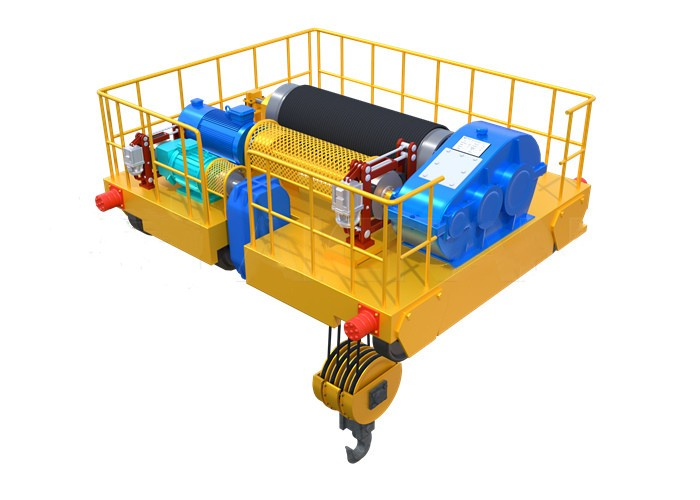
1. EXPLOSION-PROOF HOISTING SYSTEM
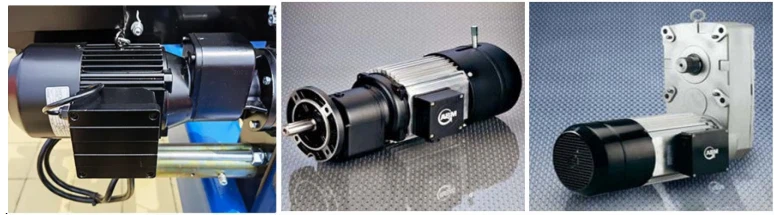
A. Explosion-Proof Hoist Motor
Type: TEFC (Totally Enclosed Fan Cooled) with Ex d or Ex e rating
Features:
Reinforced cast iron or aluminum alloy enclosure
Double-sealed bearings with temperature sensors
Increased insulation class (typically Class H, 180°C)
Non-sparking cooling fan
Embedded RTDs for continuous temperature monitoring
Protection Method: Flameproof (Ex d) or Increased Safety (Ex e)
B. Explosion-Proof Brake System
Disc Brake Assembly:
Stainless steel or copper-alloy friction discs
Explosion-proof brake motor (Ex de)
Manual release mechanism (for emergency lowering)
Adjustable torque settings
Shoe Brake Alternative:
Non-asbestos, spark-resistant lining
Phosphor bronze or aluminum-bronze shoes

C. Gearbox & Drum Assembly
Gearbox:
Helical gears for smoother operation
Sealed housing with magnetic drain plugs
High-temperature synthetic lubricant
Wire Rope Drum:
Machined steel with precision grooves
Conductive coating to prevent static buildup
Anti-friction bearings with Ex-rated seals
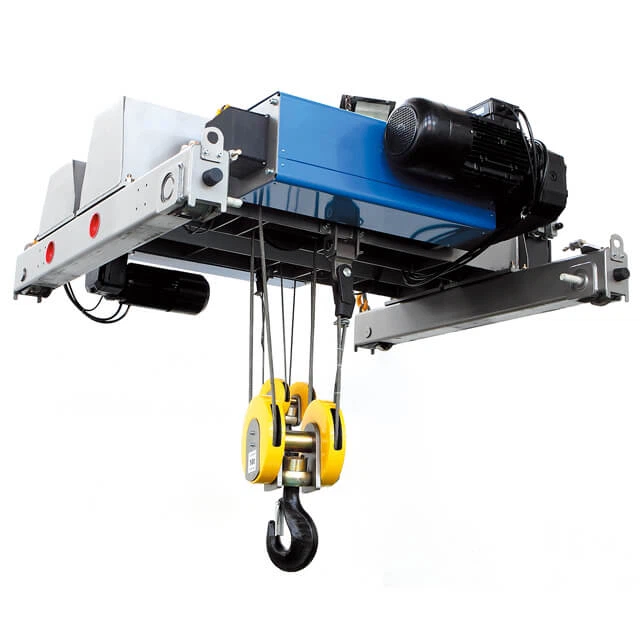
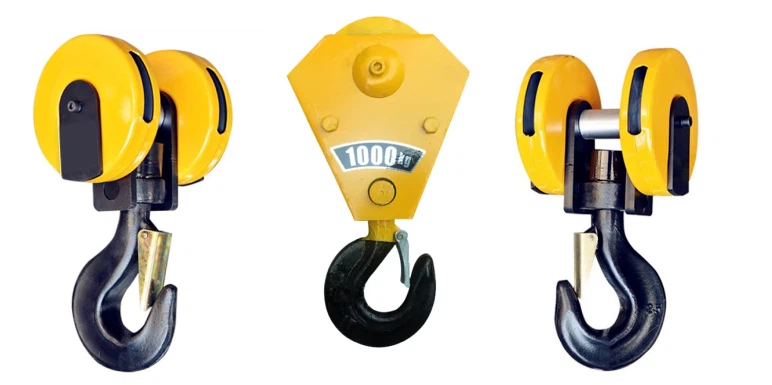
D. Wire Rope & Hook Block
Wire Rope:
Non-rotating, galvanized steel construction
Conductive core for static dissipation
Special lubrication (non-reactive)
Hook Block:
Forged steel hook with safety latch
Sheaves with bronze bushings
Grounding strap for static discharge
 |
 |
2. TRAVEL MOTION COMPONENTS
A. Bridge/Trolley Travel Motors
Specifications:
Brake motors with integrated Ex-rated brakes
Dual-speed or variable frequency control
Thermal overload protection with Ex i barriers
Mounting: Direct coupling to gearboxes via flexible couplings
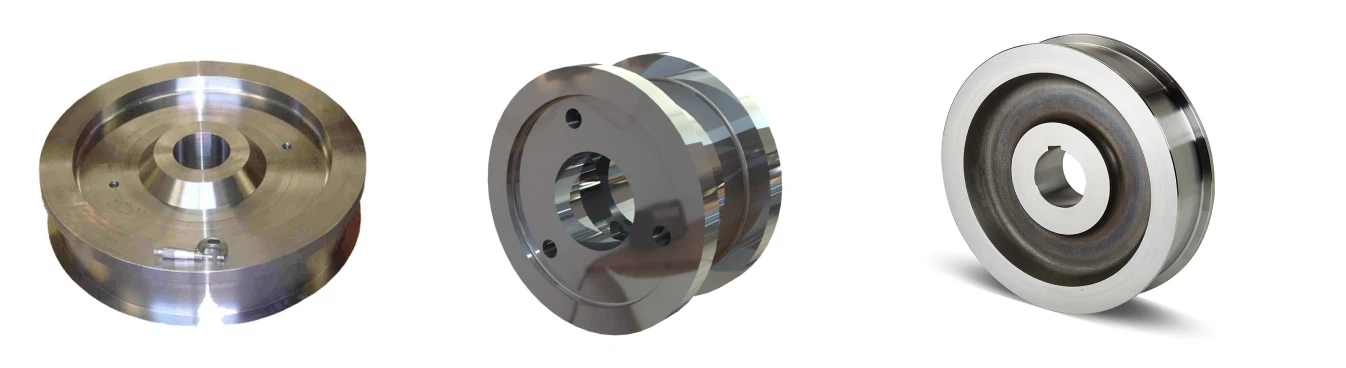
B. Travel Gearboxes & Wheels
Gearboxes:
Horizontal or vertical mounting
Oil-bath lubrication with sight glass
Wheels:
Forged steel with conductive tread
Tapered tread for better tracking
Double-flanged design on bridge wheels
Wheel Bearings: Sealed, pre-lubricated with high-temp grease
 |
 |
3. ELECTRICAL CONTROL SYSTEM
A. Main Power Distribution
B. Control & Safety Devices
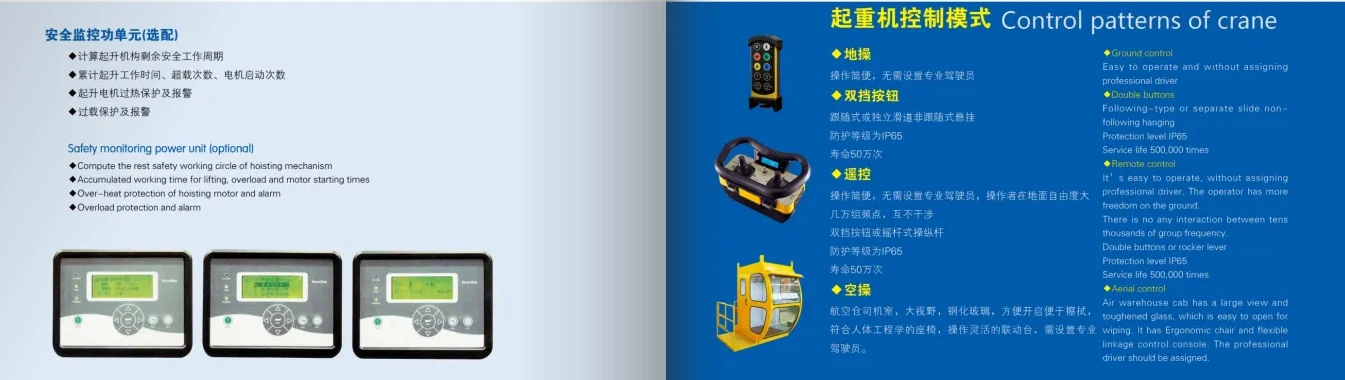
Control Pendant (Ex de):
Cast aluminum or stainless steel housing
Membrane-sealed control buttons
Emergency stop with mechanical latch
Strain relief cable glands
Radio Remote Control (Optional):
Certified for Zone 1/21
Intrinsically safe (Ex ia) transmitter
Redundant communication protocols
Limit Switches:
Explosion-proof mechanical or proximity
Dual contacts for redundancy
Corrosion-resistant enclosures (IP67)
4. STRUCTURAL COMPONENTS WITH EXPLOSION PROTECTION
A. Bridge Structure
Main Girders:
Box girder design with sealed interiors
Conductive paint system with grounding points
Non-sparking trolley bumpers (polyurethane)
End Trucks:
Welded construction with rounded edges
Conductive wheels with grounding brushes
Adjustable wheel alignment system
B. Trolley Frame
Construction: Welded steel with smooth surfaces
Features:
Spark-resistant rail clamps
Conductive trolley wheels
Grounding strips between trolley and bridge
5. SAFETY & MONITORING SYSTEMS
A. Explosion-Proof Safety Devices
Load Limiting Device:
Ex i certified load cell
Digital display in Ex e enclosure
Two-stage warning system
Anti-Collision System:
Laser or ultrasonic sensors (Ex ia)
Wireless communication between cranes
Temperature Monitoring:
RTDs on all motors and bearings
Display in control cabin
Automatic shutdown at preset temperatures
B. Environmental Protection
Anemometer: Ex-rated wind speed indicator
Gas Detection Interface: Inputs for area gas detectors
Emergency Lighting: Ex e certified LED lights

6. CABLE MANAGEMENT & CONNECTIONS
A. Cable Systems
Power Cables: Mineral insulated (MICC) or armored with Ex-rated glands
Control Cables: Shielded cables with intrinsic safety barriers
Cable Carriers:
Explosion-proof festoon systems
Conductive cable trays with covers
B. Connection Systems
Cable Glands: Double-compression type with "Ex d" marking
Junction Boxes: Cast aluminum with threaded entries
Conduit Systems: Sealed, threaded conduit runs
7. AUXILIARY EQUIPMENT
A. Operator Cab (Optional)
Construction: Pressurized (Ex px) or flameproof (Ex d)
Features:
Air conditioning with filtration
Fire suppression system
Emergency escape hatch
Conductive floor mats
B. Lighting System
Work Area Lights: LED fixtures with Ex d or Ex e certification
Warning Lights: Rotating beacons (Ex de)
Indicator Lights: Color-coded for different functions
8. SPECIALIZED MATERIALS USED
| Component | Standard Crane Material | QB Explosion-Proof Material |
|---|---|---|
| Brake Friction Material | Steel/Asbestos | Copper-Alloy/Ceramic |
| Electrical Contacts | Silver/Cadmium | Tungsten/Silver-Nickel |
| Bearing Cages | Steel | Brass/Bronze |
| Fasteners | Steel | Stainless Steel/Bronze |
| Paint | Standard industrial | Conductive epoxy |

9. CERTIFICATION MARKS & LABELING
Every component bears specific markings:
"Ex" symbol with protection type (d, e, i, p, etc.)
Gas Group (I, IIA, IIB, IIC)
Temperature Class (T1-T6)
Certificate Number and issuing body
IP Rating (minimum IP65 for dust, IP54 for gas)
10. MAINTENANCE-SPECIFIC COMPONENTS
Test Points: Grounding verification points
Drain Plugs: For condensation removal from enclosures
Observation Windows: Tempered glass with flame arrestor mesh
Pressure Indicators: For pressurized enclosures
Seal Replacement Kits: For maintaining enclosure integrity
Sketch

Main technical

Advantages
UNIQUE ADVANTAGES OF QB EXPLOSION-POF CRANES
1. Safety-Critical Superiority
Zero-Ignition Guarantee: Engineered to eliminate all potential ignition sources - electrical sparks, hot surfaces, static electricity, and mechanical friction sparks
Multi-Layer Protection: Combines 4+ protection methods (Ex d, Ex e, Ex i, Ex p) for redundant safety
Certified Compliance: Built to international explosion-proof standards (ATEX, IECEx, NEPSI) ensuring regulatory compliance
2. Operational Excellence
Uninterrupted Production: Enables continuous operation in hazardous zones without shutdowns for safety concerns
Precision Control: Advanced VFD control systems provide smooth acceleration/deceleration - critical for handling volatile materials
Environmental Resilience: Rated for extreme conditions including corrosive atmospheres, high humidity, and temperature variations
3. Economic Benefits
Insurance Premium Reduction: Most insurers offer 20-40% premium discounts for certified explosion-proof equipment
Reduced Liability: Minimizes risk of catastrophic losses from explosions (average explosion incident costs exceed $5M in industrial settings)
Lower Downtime Costs: Prevents production stoppages that typically cost $10,000-$50,000 per hour in chemical plants
4. Maintenance & Reliability
Predictive Maintenance: Integrated temperature monitoring and vibration sensors enable condition-based maintenance
Extended Component Life: Special materials and sealed designs provide 2-3x longer service life in corrosive environments
Easier Certification Renewal: Designed with maintenance-friendly features that simplify annual recertification
5. Technological Features
Smart Monitoring: IoT-enabled systems with intrinsically safe data transmission
Adaptive Control: Automatic derating in high-temperature conditions
Remote Diagnostics: Certified technicians can perform diagnostics without entering hazardous areas
Application:
PRIMARY APPLICATIONS BY INDUSTRY
1. Chemical & Petrochemical
Typical Capacity: 5-50 tons
Special Features: Chemical-resistant coatings, vapor-tight enclosures
2. Pharmaceutical & Biotechnology
API Manufacturing: Handling solvents (methanol, acetone, hexane) in production areas
Sterile Areas: Ethylene oxide sterilization rooms
Extraction Facilities: Ethanol and supercritical CO₂ extraction areas
Powder Processing: Combustible dust zones (Zone 22)
3. Oil & Gas
Offshore Platforms: Drilling module service cranes
LNG Facilities: Liquefaction and regasification plants
Pipeline Compressor Stations: Maintenance in classified areas
Fuel Terminals: Gasoline, jet fuel, diesel handling
4. Aerospace & Defense
Paint Hangars: Aircraft painting with flammable paints/thinners
Fuel Cell Maintenance: Hydrogen service areas
Ordnance Facilities: Explosive manufacturing buildings
Rocket Fuel Handling: Hydrazine and other hypergolic fuels
5. Food & Beverage
Ethanol Production: Distillation and handling areas
Flavor Extraction: Solvent-based extraction rooms
Spray Drying Areas: Combustible powder clouds (milk powder, starch)
Brewery/Distillery: Alcohol vapor areas
6. Specialty Manufacturing
Paint & Coatings: Formulation and filling areas
Adhesives Manufacturing: Solvent-based adhesive production
Printing Industry: Ink mixing and storage with flammable solvents
Semiconductor: Wafer fabrication with flammable process gases
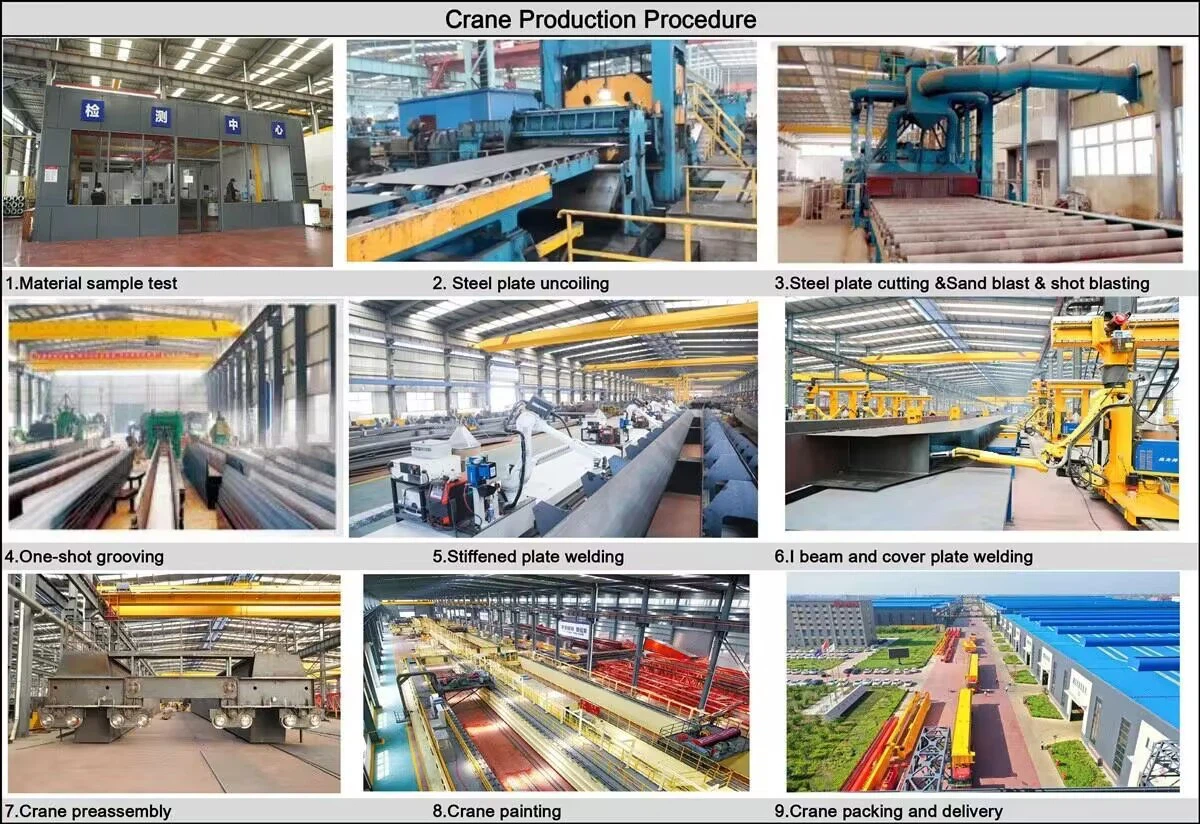
Crane production procedure
Phase 1: Design and Engineering
This is the foundational phase before any physical work begins.
Customer Requirements Analysis: Engineers review the specific requirements: capacity (e.g., 32/5 tons), span, lifting height, duty class (e.g., A5, A6), and any special needs (e.g., explosion-proof, high-temperature environment).
Structural Design: Using CAD (Computer-Aided Design) software, engineers design the main girders, end carriages, and trolley frame. Finite Element Analysis (FEA) is often used to simulate stress, deflection, and dynamic loads to optimize the design for strength and weight.
Mechanical and Electrical Design: This includes selecting and designing the drive systems (motors, gearboxes, wheels), the hoisting mechanism, and the complete electrical control system with panels, variable frequency drives (VFDs), and safety devices.
Bill of Materials (BOM) Creation: A detailed list of all raw materials (steel plates, profiles) and purchased components (hoist, motors, brakes, wire rope, wheels) is generated.
Phase 2: Raw Material and Component Procurement
Steel Plates and Profiles: High-quality steel plates (typically Q235B or Q345B according to Chinese standards, equivalent to S235JR/S355JR) are procured in required dimensions and thicknesses.
Purchased Components: Critical components are sourced from reputable suppliers. These include:
Hoist unit (may be manufactured in-house or purchased)
Electric motors for bridge and trolley travel
Reducer gearboxes
Wheels and axles
Brakes
Electrical components (controllers, contactors, limit switches, VFDs, cabling)
Bearings
Phase 3: Main Steel Fabrication & Machining
This is the core of the manufacturing process.
1. Main Girder Fabrication:
Cutting: Steel plates are cut to the required size and shape using CNC plasma or flame cutting machines for high precision.
Web/Flange Preparation: The vertical web plates and horizontal top/bottom flange plates are prepared. For long spans, the girders are often designed as a tapered "I-beam" profile (wider in the middle) to optimize strength-to-weight ratio.
Assembly and Welding: The girders are assembled on large jigs to ensure straightness and correct camber (a pre-set upward bend to counteract deflection under load). This is a critical step. Submerged Arc Welding (SAW) is commonly used for its deep penetration and high-quality, consistent welds on long seams.
Stress Relieving: After welding, the main girders often undergo stress relieving heat treatment in a large furnace. This process removes internal stresses created during welding, preventing future distortion and ensuring dimensional stability.
Machining: The mating surfaces for the end carriages and trolley rails are machined using a planer or milling machine to ensure a perfectly flat and level surface.
2. End Carriage (End Truck) Fabrication:
The end carriages are fabricated from steel sections and plates.
They house the wheels, drive motors, and gearboxes for the bridge movement.
The wheel bases are drilled and machined to precise tolerances to ensure proper alignment and that all wheels make contact with the runway rails.
Phase 4: Mechanical Assembly
1. Bridge Assembly:
The two main girders are positioned parallel to each other and connected to the end carriages using high-strength bolts or by welding, forming the complete bridge structure.
The trolley rails are precisely aligned and bolted onto the top of the main girders.
2. Trolley Frame Assembly:
The trolley frame is assembled, and its wheels, drives, and the main hoisting unit (including the wire rope drum, motor, gearbox, and hook block) are mounted onto it.
3. Drive System Installation:
The travel drive units (motor, gearbox, coupling) are installed on the end carriages (for bridge motion) and on the trolley frame (for trolley motion).
All mechanical components are aligned to prevent binding and premature wear.
Phase 5: Electrical System Installation
Cable Reeling System: The main power supply system for the crane (e.g., conductor bars or festoon systems) is installed along the bridge girder.
Control Panel Installation: The main control panel, VFDs, and other electrical components are mounted in a protected enclosure, usually on the bridge girder.
Wiring: All motors, brakes, limit switches, and safety devices are wired according to the electrical schematic.
Operator Control Station: The pendant control station (hung from the crane) or a radio remote control system is connected and tested.
Phase 6: Surface Treatment and Painting
Surface Preparation: The entire crane structure is shot-blasted to remove mill scale, rust, and welding slag, creating a clean, rough surface for optimal paint adhesion.
Priming: A rust-inhibitive primer is applied immediately after blasting to prevent oxidation.
Painting: Multiple coats of high-quality industrial enamel paint are applied. Color is often according to customer specification or standard factory practice (e.g., international orange/yellow for visibility). The painting process protects the crane from corrosion in industrial environments.
Phase 7: Factory Acceptance Testing (FAT)
Before disassembly for shipment, the fully assembled crane undergoes rigorous testing.
Visual Inspection: Checking dimensions, weld quality, and assembly.
No-Load Test: Running the crane, trolley, and hoist in all directions to verify smooth operation, correct speed, and functionality of all controls and limit switches.
Static Load Test: The hoist is lifted with a test load 25% greater than the rated capacity (as per FEM/ISO standards). The load is held for 10-15 minutes to check for structural deformation, weld integrity, and brake holding capacity.
Dynamic Load Test: The crane is operated with a test load 10% greater than the rated capacity. All motions are tested to ensure performance under dynamic stress.
Electrical Safety Tests: Insulation resistance, grounding continuity, and proper functioning of all emergency stops and safety circuits are verified.
Phase 8: Dismantling, Packaging, and Shipping
After passing FAT, the crane is carefully dismantled into transportable sections (main girders, end carriages, trolley, electrical panels).
All components are professionally packaged and protected against damage during transit.
They are shipped to the customer's site, where they will be reassembled and installed by technical crews.
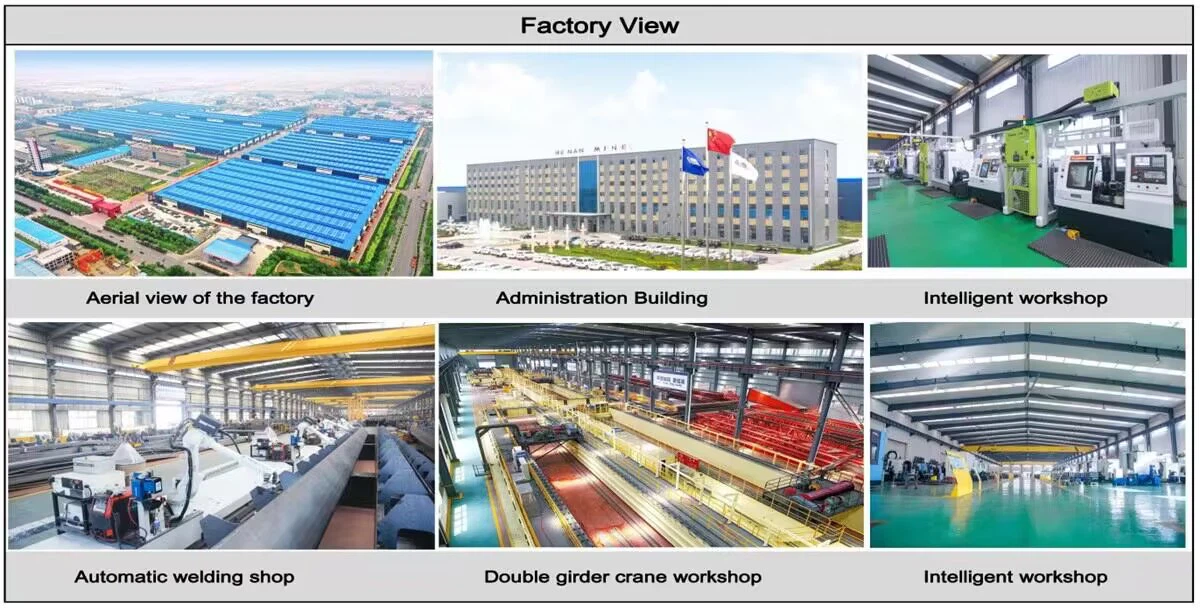
Workshop view:
The company has installed an intelligent equipment management platform, and has installed 310 sets (sets) of handling and welding robots. After the completion of the plan, there will be more than 500 sets (sets), and the equipment networking rate will reach 95%. 32 welding lines have been put into use, 50 are planned to be installed, and the automation rate of the entire product line has reached 85%.


Hot Tags: qb explosion-proof overhead cranes, China qb explosion-proof overhead cranes manufacturers, suppliers, factory, Double Girder Overhead Travelling Crane, Double Girder Overhead Crane
You Might Also Like


Send Inquiry