










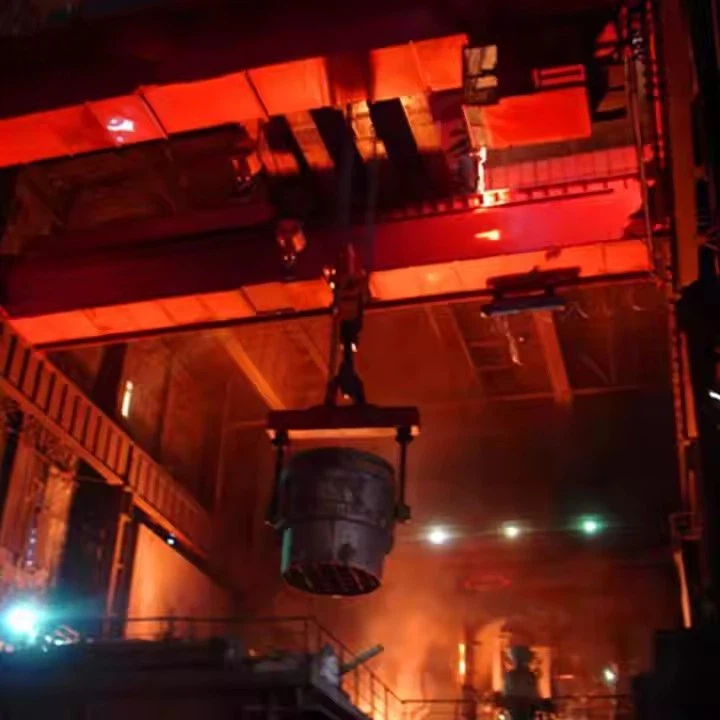

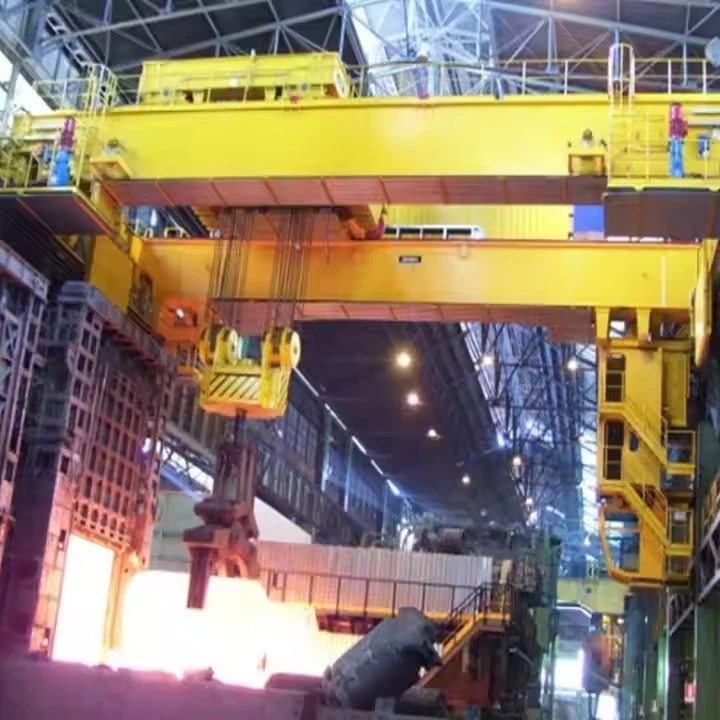
Yz Model Electric Double Beam Crane
Products Description
What is a Yz Model Electric Double Beam Crane?
A Yz Model Electric Double Beam Crane is a standard-duty, double-girder, top-running overhead crane. It is the "workhorse" of the industrial world, designed for general material handling in factories, warehouses, and workshops. The "Yz" label specifically differentiates it from other series, such as the heavier-duty "Qz" or "Mg" models.
Key Distinction: It is electrically powered for all motions (hoisting, trolley travel, bridge travel) and features a double box girder design for strength and stability.
Advantages of the Yz Model
High Reliability and Durability: The double girder box design is robust and built for long-term service.
Excellent Hook Height: The trolley runs between the girders, maximizing the lifting height below the crane-a key advantage over single-girder designs.
Smooth and Precise Operation: Electric drives provide controlled acceleration and deceleration, allowing for precise load positioning.
Wide Capacity and Span Range: Yz cranes are available in capacities from 5 tons to 50 tons (and sometimes higher) with spans that can cover most industrial bays.
Versatility: It is a universal crane suitable for countless applications, from machine shops to assembly lines.
Ease of Maintenance: Standardized components and accessible design simplify upkeep.
Comparison with Other Crane Types
| Feature | Yz Model (Double Girder) | Mz Type (Single Girder) | Mg Type (Heavy Duty) |
|---|---|---|---|
| Girder Design | Double Box Girder | Single Girder | Double Girder (Heavier) |
| Duty Cycle | Moderate (A3-A5) | Light to Moderate | Heavy (A6-A7) |
| Hook Height | High | Lower | Very High |
| Cost | Medium | Lowest | Highest |
| Ideal For | General manufacturing, standard workshops |
Light workshops, low-frequency use |
Steel mills, ports, intensive use |
Conclusion:
The Yz Model Electric Double Beam Crane is a versatile, reliable, and efficient standard-duty overhead crane. It strikes an excellent balance between performance, cost, and durability, making it one of the most popular and widely used overhead cranes in the world for general industrial material handling. If you need a robust crane for daily use that offers high hook height and smooth operation, the Yz model is a proven choice.
Core Components:Bearing, Gearbox, Motor, Pump
Place of Origin:Henan, China
Warranty:1 Year
Weight (KG):2000 kg
Video outgoing-inspection:Provided
Machinery Test Report:Provided
Design:Double beam
Effectiveness:high efficiency
Operating speed:High speed operation
Stability:Anti-swing function
Color:Optional
Power Source:110V/220V/230V/380V/440V,customized
Span:7.5-31.5m

Pictures & Components
1. Primary Structural System (The Framework)
This is the crane's skeleton, built for stability and strength.
Double Main Girders: The two primary, full-length, horizontal box girders. They are fabricated from steel plates, welded into a box section. This design provides excellent resistance to bending and torsion, which is crucial for the crane's stability and smooth operation.
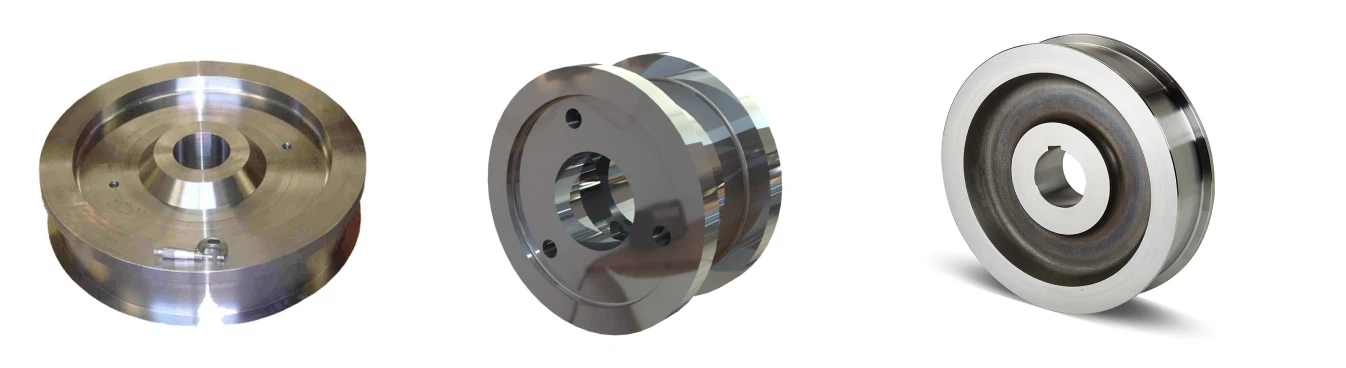
End Trucks (Legs): The rigid vertical structures at each end of the girders. They house the long travel wheels, bearings, shafts, and drive motors. The end trucks are bolted or welded to the main girders to form a single rigid bridge.
Runway System: The fixed track the crane runs on.
Running Rails: Typically steel rails (like P38 or QU70/80/100 profile) fixed onto the runway beams.
Runway Beams: Usually I-beams or built-up sections, often supported by the building columns.
 |
 |
2. Lifting & Travel System (The Muscles)
These components perform the core work of moving the load.
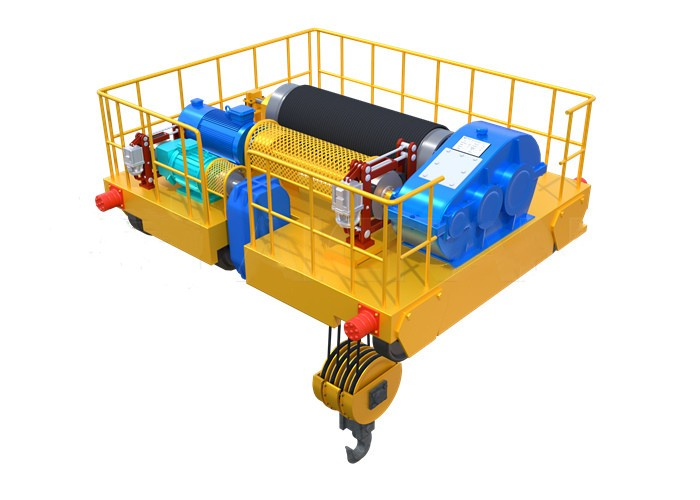
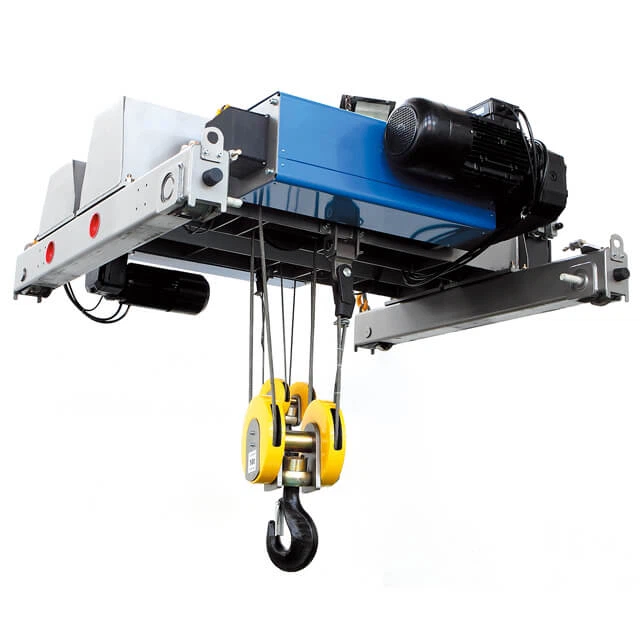
Main Hoist Unit: A standardized, electric wire rope hoist.
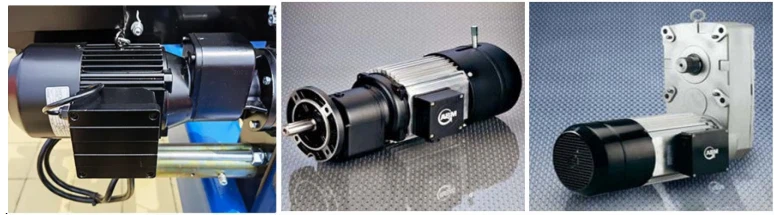
Hoist Motor: A crane-duty, triple-speed or variable frequency drive (VFD) motor for precise control.
Wire Rope Drum: A machined drum with precise grooving to spool the wire rope evenly.
Reduction Gearbox: A high-efficiency gearbox that reduces the motor's high speed to the slow, powerful speed needed for lifting.
Brakes: An automatic motor brake and an optional secondary emergency mechanical brake.
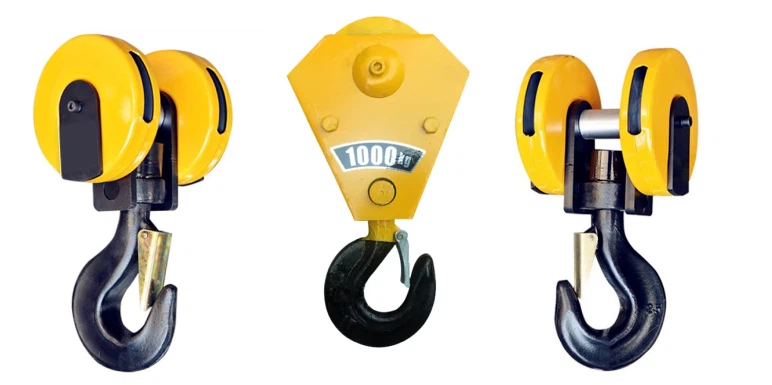
Wire Rope & Hook Block: High-strength steel wire rope running through a sheaved hook block to provide a mechanical advantage.
 |
 |
Trolley Assembly: The unit that carries the hoist across the width of the crane.
Trolley Frame: A sturdy steel frame that runs on rails positioned on the top of the main girders.
Trolley Wheels: Four or more flanged wheels that engage with the trolley rails.
Trolley Drive Motor: The motor, coupled with a gearbox, that drives the trolley wheels for precise transverse positioning.
Bridge Long Travel Drives: The system that moves the entire crane along the runway.
Travel Motors: One motor per drive wheel (typically two or four driven wheels total). The motors are synchronized for straight travel.
Gearboxes & Wheels: Large-diameter, forged or cast steel wheels with hardened treads, driven through heavy-duty gear reducers.
3. Power & Control System (The Nerves)
This system provides energy and command to the crane.
Power Supply System:
Festoon System: The most common method for Yz cranes. It consists of a track and sliding trolleys that carry the power and control cables, keeping them organized and preventing damage.
Conductor Bar System: An alternative using insulated copper bars and a collector shoe to deliver power. More durable but also more expensive.
Operator Control:
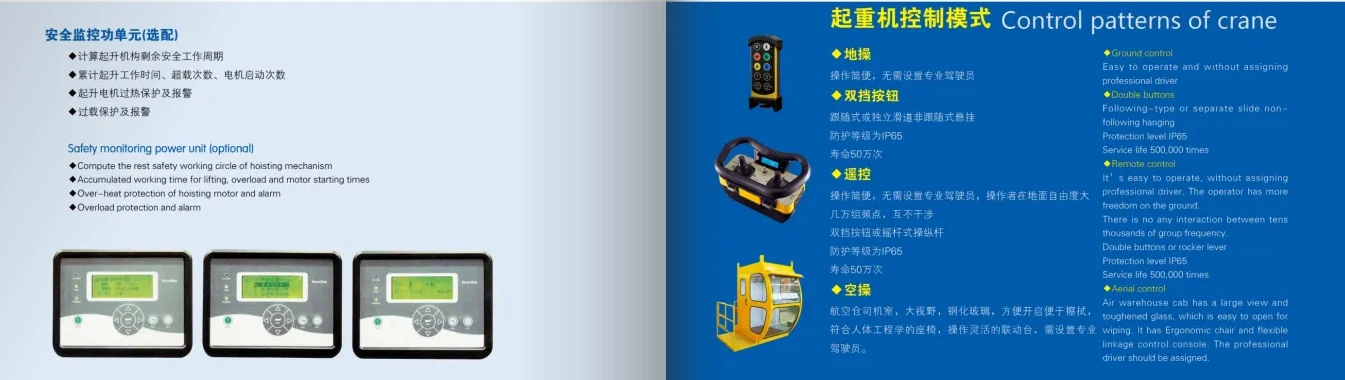
Pendant Control Station: A hanging push-button box connected to the crane by a flexible cable. The operator walks alongside the crane, controlling all functions (Hoist Up/Down, Trolley Left/Right, Bridge Forward/Reverse).
Radio Remote Control: A wireless transmitter that allows the operator to control the crane from the floor, providing better visibility and safety.
Operator's Cab: A cabin mounted on the crane bridge for applications requiring constant operation.
Control Panel:
Located on the crane bridge, it houses the main circuit breaker, contactors, overload relays, and programmable logic controller (PLC) or relays. It distributes power and executes the operator's commands.

4. Safety Systems (The Reflexes)
Critical components to protect personnel, the crane, and the load.
Mechanical Safety Devices:
Hook Upper/Lower Limit Switches: Automatically cut power to the hoist motor to prevent over-winding or excessive rope slack.
Buffer & End Stops: Rubber or spring buffers on the crane and trolley to absorb impact at the end of the travel range.
Rail Sweepers: Angled plates attached to the end trucks to clear debris from the runway rails.

Electrical Safety Devices:
Overload Limiter: A critical device (usually a load cell) that measures the load and prevents the crane from lifting beyond its rated capacity.
Emergency Stop Buttons: Located on the pendant and at key locations on the crane to cut all power in an emergency.
Voltage & Phase Protection: Monitors the incoming power to prevent damage from faults.
Sketch

Main technical

Advantages
Advantages of Yz Model Electric Double Beam Crane
The Yz model offers a compelling mix of performance, durability, and value, making it an excellent choice for a wide range of general industrial applications.
1. Superior Strength and High Hook Height
Double Girder Design: The two main box girders provide immense rigidity and resistance to bending, allowing for longer spans and higher capacities than single-girder cranes.
Top-Running Trolley: The trolley runs on top of the girders, not underneath them. This design maximizes the available lifting height beneath the crane, a critical advantage in facilities with limited headroom.
2. Proven Reliability and Durability
Robust Construction: Built with standardized, high-quality components (motors, gearboxes, brakes) designed for industrial duty cycles.
Box Girder Design: Welded box girders offer excellent torsional stability, leading to smoother operation and longer service life under daily use.
3. Operational Precision and Smoothness
Controlled Electric Drives: All motions are electrically powered, allowing for smooth acceleration and deceleration.
VFD Options: Variable Frequency Drives (VFDs) can be easily integrated for precise speed control of hoisting and travel, enabling spot-on load positioning.
4. Excellent Versatility
Wide Capacity and Span Range: Yz cranes are commonly available in capacities from 5 to 50 tons (and beyond) with spans capable of covering most industrial bays.
Adaptable Design: They can be outfitted with various hook configurations, magnet systems, grabs, or other below-the-hook devices to handle diverse loads.
5. Cost-Effectiveness and Ease of Maintenance
Optimal Total Cost of Ownership: While the initial investment is higher than a single-girder crane, the Yz model offers the best balance of capability, durability, and price for moderate-duty applications.
Standardized Components: Uses common, off-the-shelf parts, making maintenance straightforward and reducing downtime and spare parts costs.
Application:
Applications of Yz Model Electric Double Beam Crane
The Yz crane is the "go-to" solution for general material handling across countless industries. Its reliability and versatility make it suitable for any application that requires moving heavy loads efficiently within a defined area.
1. Manufacturing and Assembly
Automotive Plants: Moving engines, transmissions, and vehicle chassis down assembly lines.
Heavy Equipment Manufacturing: Handling large frames, booms, and other components for agricultural, mining, and construction machinery.
General Fabrication Shops: Transporting steel plates, I-beams, and finished structures between cutting, welding, and painting stations.
2. Warehousing and Logistics
Heavy-Duty Warehouses: Handling large, palletized goods, industrial equipment, and oversized items that exceed the capacity of forklifts.
Loading Bays: Unloading heavy materials from trucks and railcars and placing them into storage.
3. Metals and Paper Industry
Steel Service Centers: Moving steel coils, sheets, and plates. Often used in conjunction with C-hooks or sheet lifters.
Paper Mills: Lifting and transporting large rolls of paper.
4. Power and Energy Sector
Power Plants: For maintenance tasks such as lifting turbines, transformers, and large pumps.
Hydroelectric and Wind Turbine Facilities: Handling large components during assembly and maintenance.
5. Maintenance and Repair Facilities
Machine Shops: Installing and removing large lathes, mills, and presses.
Repair Depots: Lifting heavy machinery and equipment for repair and overhaul.
Crane production procedure
The production procedure for a Traveling Foundry Overhead Crane is a complex, multi-stage process that involves rigorous engineering, fabrication, and testing to ensure it can withstand the extreme demands of a foundry environment.
Here is a detailed breakdown of the production procedure, from concept to installation.
Phase 1: Project Initiation & Engineering Design
This phase transforms operational requirements into detailed, manufacturable plans.
1. Requirement Analysis & Quotation:
Client Consultation: Engineers work with the client to determine specific needs: capacity (main and auxiliary hoists), span, lift height, duty cycle (e.g., FEM 2m / ISO M8), and special features (ladle hook type, heat protection level).
Site Survey: Assessment of the facility's runway, power supply, and environmental conditions.
Technical Proposal & Quotation: A detailed specification and price are submitted for client approval.
2. Detailed Engineering Design:
Structural Design:
Girder Design: Calculation of loads and stresses to design the double girder box structure, including dynamic load factors for ladle handling.
End Truck & Frame Design: Designing the leg structures and connections for maximum stability.
Runway Analysis: Verification that the existing runway can support the crane or design of a new runway system.
Mechanical Design:
Hoist Mechanism Design: Sizing the motors, gearboxes, brakes, wire ropes, and drums for both main and auxiliary hoists.
Trolley Design: Designing the trolley frame and travel mechanisms.
Long Travel Design: Sizing the drive wheels, motors, and gearboxes for the crane's bridge movement.
Electrical & Control System Design:
Power Distribution: Designing the conductor bar system or cable reels.
Control Schematics: Creating wiring diagrams for the control panel, operator's cab, and remote control.
Safety System Integration: Designing the circuits for the Load Moment Indicator (LMI), limit switches, brakes, and emergency stops.
Special Foundry Features Design:
Heat Protection: Designing heat shields, specifying high-temp wire ropes and paints, and planning for electrical component insulation.
Ladle Hook Design: Engineering the specific hook mechanism for secure ladle engagement.
Phase 2: Procurement & Fabrication Preparation
1. Material & Component Procurement:
Structural Steel: Ordering high-quality steel plate and sections for the girders and end trucks.
Mechanical Components: Purchasing motors, gearboxes, brakes, wheels, bearings, and wire ropes from certified suppliers.
Electrical Components: Sourcing VFDs, PLCs, contactors, safety switches, and the conductor bar system.
Specialty Items: Ordering the LMI system, insulated cab, and high-temperature paint.
2. Fabrication & Manufacturing:
This is where the physical crane is built, typically following a flow like this:
Girder Fabrication:
Cutting: Steel plates are cut to size using CNC plasma or laser cutters.
Welding: Plates are welded into the box girder structure by certified welders. This is a critical step, requiring strict procedure control.
Stress Relieving: The welded girders may be heat-treated in an oven to relieve internal stresses and prevent distortion.
Machining: The girder ends and trolley rails are machined to ensure a flat, level surface and precise dimensions.
Sub-Assembly:
End Truck Assembly: Wheels, axles, and drives are assembled onto the end truck frames.
Trolley Frame Assembly: The trolley frame is built, and the hoist units are mounted onto it.
Hoist Assembly: Motors, gearboxes, drums, and brakes are assembled into a complete hoist unit.
Surface Treatment & Painting:
Shot Blasting: All structural components are blasted with steel shot to clean and profile the surface for paint adhesion.
Priming & Painting: Multiple coats of high-temperature, corrosion-resistant paint are applied. The paint system is often specified to withstand high ambient heat.
Phase 3: Assembly, Testing & Installation
1. Factory Assembly & Testing (FAT - Factory Acceptance Test):
The crane is partially or fully assembled at the manufacturer's facility.
The client is often present to witness the tests, which include:
Visual Inspection: Checking dimensions, welding quality, and painting.
No-Load Test: Running all motions (hoist, trolley, bridge) to check for smooth operation, noise, and alignment.
Load Test: Testing with 125% of the rated capacity (Standard Load Test) to verify structural integrity and performance. The load is held to check brake performance.
Functionality Test: Testing all safety devices-limit switches, brakes, emergency stops, and the LMI system.
2. Dismantling, Shipping & Site Installation:
After passing FAT, the crane is carefully disassembled, labeled, and shipped to the client's site.
Erection: A specialized team assembles the crane on the client's runway. This involves:
Placing the end trucks on the rails.
Lifting and connecting the bridge girders.
Mounting the trolley and hoists.
Installing the conductor bar system and electrical panels.
3. On-Site Testing & Commissioning:
Final Inspection & Alignment: Verifying the crane's alignment on the runway.
On-Site Load Test: Conducting a final load test at the client's facility, often in the presence of a certified inspector, to ensure everything functions correctly after installation.
Client Training: Training the client's operators and maintenance personnel on the safe and proper use of the crane.
Handover: Final documentation (manuals, certificates, as-built drawings) is provided, and the crane is officially handed over to the client.
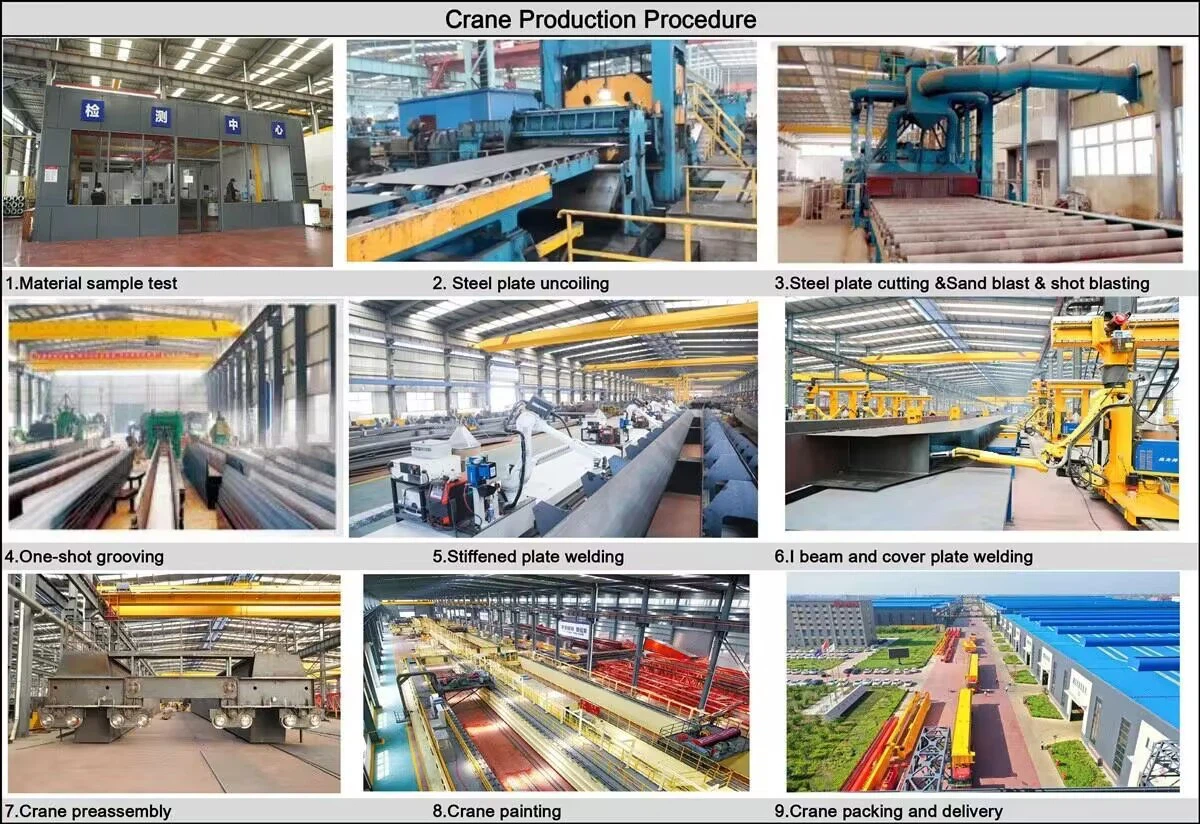
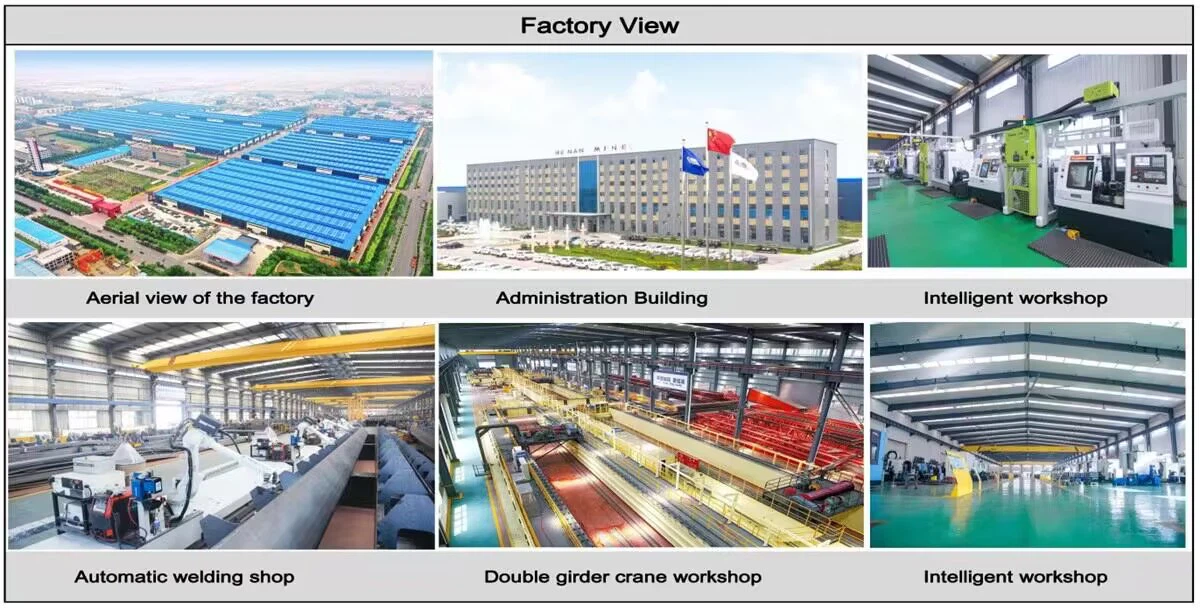
Workshop view:
The company has installed an intelligent equipment management platform, and has installed 310 sets (sets) of handling and welding robots. After the completion of the plan, there will be more than 500 sets (sets), and the equipment networking rate will reach 95%. 32 welding lines have been put into use, 50 are planned to be installed, and the automation rate of the entire product line has reached 85%.


Hot Tags: yz model electric double beam crane, China yz model electric double beam crane manufacturers, suppliers, factory, Double Girder Overhead Crane, Double Girder Overhead Travelling Crane
You Might Also Like




Send Inquiry