










20T Overhead Crane Two Beams
Products Description
Structure
Two Main Beams (Girders):
Two parallel steel girders span the crane runway rails.
The hoist trolley runs on rails mounted on top of these girders.
End Carriages:
Mounted at each end of the girders, rolling on the runway rails to move the crane longitudinally.
Runway Rails:
Fixed rails along the building or crane runway on which the crane travels.
Core Components:Bearing, Gearbox, Motor, Pump
Place of Origin:Henan, China
Warranty:1 Year
Weight (KG):2000 kg
Video outgoing-inspection:Provided
Machinery Test Report:Provided
Design:Double beam
Effectiveness:high efficiency
Operating speed:High speed operation
Stability:Anti-swing function
Color:Optional
Power Source:110V/220V/230V/380V/440V,customized
Span:7.5-31.5m
Pictures & Components
1.Main beam
1)Function
The main beams (also called girders) are the primary horizontal structural components.
They support the trolley and hoist mechanisms.
Carry the load from the hoist to the end carriages and transfer it safely to the runway rails.
2)Structure & Design
Material: High-quality structural steel (typically Q345B or equivalent).
Type: Usually fabricated box girders or I-beams designed for high strength and rigidity.
Length: Span the width of the runway rails; customized based on building size.
Cross-section:
Box girder: Welded steel plates forming a hollow rectangular shape - offers excellent stiffness and resistance to bending.
I-beam: Traditional I-shaped cross-section, sometimes used for lighter loads or specific designs.
2.Lifting System
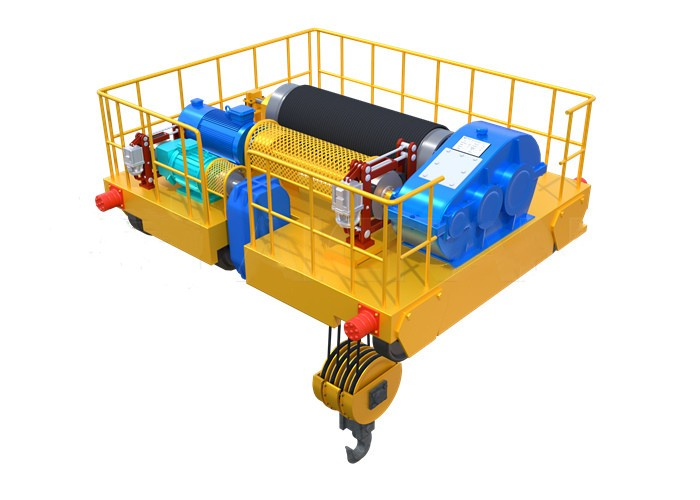
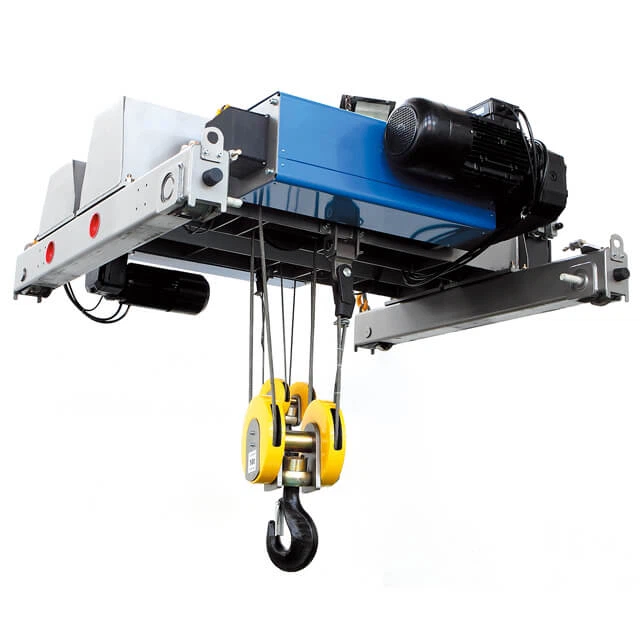
1)Hoist
Type: Typically an electric wire rope hoist or chain hoist (wire rope is more common for heavy loads like 20 tons).
Capacity: Designed to safely lift up to 20 tons.
Power: Usually powered by three-phase electric motors.
Construction:
Heavy-duty drum to wind/unwind the wire rope.
Multiple rope reeving systems to increase lifting capacity and reduce motor load.
Gearbox with high precision and durability.
2)Wire Rope
Made of high-strength steel wires twisted into strands.
Selected with a safety factor per industry standards (usually 5:1 or higher).
Runs over sheaves and pulleys to the hook block.
3)Hook Block
Equipped with a heavy-duty forged steel hook.
Includes safety latch to prevent load slipping.
Designed to distribute load evenly and reduce wear on the wire rope.
4)Brake System
Electromagnetic or spring-applied brakes that automatically engage when power is off.
Ensures the load is held securely when stationary.
Allows smooth starting and stopping of lifting.
 |
 |
3.End carriage
Structure & Components
Frame:
Robust steel welded frame designed to withstand heavy loads and dynamic forces.
Usually fabricated from thick steel plates and profiles.
Wheels:
Typically 4 or 8 wheels per end carriage, depending on design and load distribution.
Made of forged or cast steel, heat-treated for durability.
Wheels run on runway rails.
Axles & Bearings:
High-quality axles with sealed bearings for smooth, low-friction rotation.
Bearings designed to handle heavy radial and axial loads.
Buffers and Shock Absorbers (optional):
Installed to absorb impact during travel or stops.
Brakes:
Some designs include braking mechanisms to prevent unwanted movement on inclines or during power failure.
Lubrication Points:
Easily accessible grease fittings to maintain wheel and bearing health.
 |
 |
4.Crane travelling mechanism
Purpose
Enables the entire crane (main girders, trolley, hoist, and load) to move longitudinally along the runway rails.
Provides smooth, controlled movement to position the crane anywhere along the working span.
5.Trolley travelling mechanism
Purpose
Enables the trolley (which carries the hoist) to move horizontally across the two main girders.
Allows precise positioning of the hoist and load along the width of the crane.
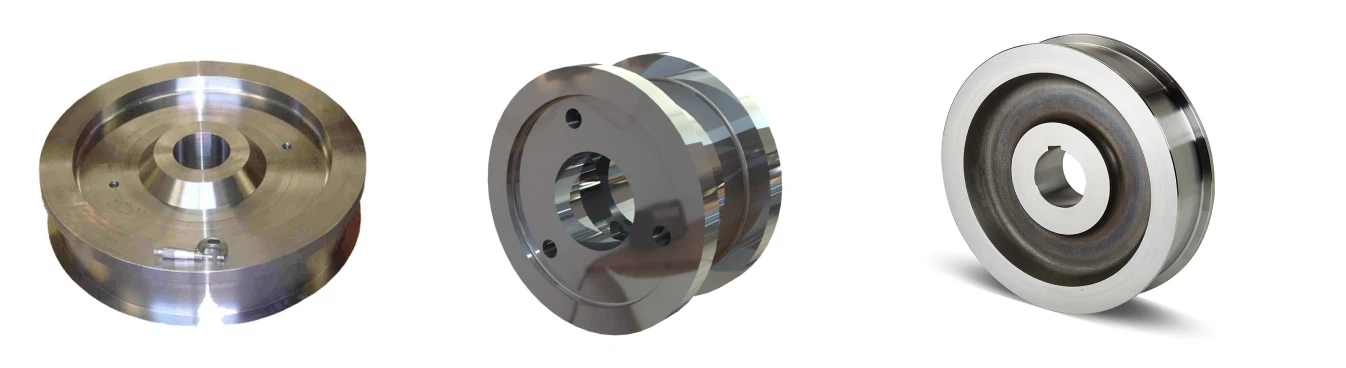
6.Crane wheel
Types of Wheels
a. Crane Traveling Wheels (End Carriage Wheels)
Wheels that support and enable the entire crane to move along the runway rails.
Usually 8 wheels total (4 per end carriage), but can vary based on design.
b. Trolley Traveling Wheels
Wheels on the trolley that move the hoist across the main girders.
Typically 4 to 8 wheels depending on trolley design.
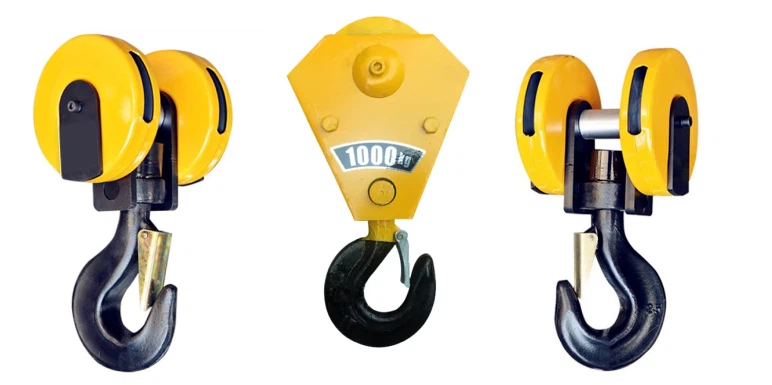
7.Crane Hook
Function
The hook is the critical component that directly holds and lifts the load.
It connects the hoist wire rope (or chain) to the load via slings, chains, or other lifting accessories.
Material
Made from forged high-strength alloy steel for excellent toughness and load-bearing capacity.
Heat-treated (quenched and tempered) to resist wear, fatigue, and deformation.
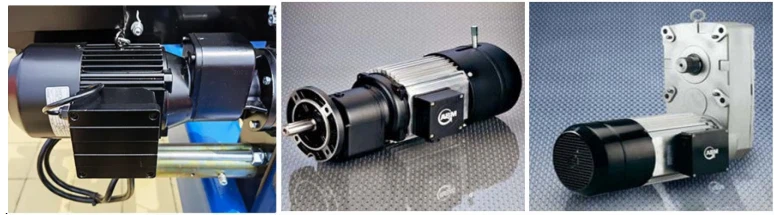
8.Motor
Types of Motors
a. Hoist Motor
Powers the hoisting mechanism to lift and lower loads.
Usually a three-phase AC motor, often with variable frequency drive (VFD) for smooth speed control.
Designed for heavy-duty intermittent duty (Class H insulation).
Sized to handle the full 20-ton load with torque margin.
b. Crane Traveling Motors
Drive the crane's longitudinal movement along the runway rails.
Typically two motors (one on each end carriage).
Three-phase AC motors with VFDs for smooth acceleration and deceleration.
Rated for heavy-duty continuous or intermittent duty, depending on crane usage.
c. Trolley Traveling Motor
Powers the trolley movement across the main girders.
Usually one motor mounted on the trolley.
Three-phase AC motor with VFD for variable speed control.

.
9.Sound and light alarm system & limit switch
Sound and Light Alarm System
Purpose:
To alert workers nearby that the crane is in operation, enhancing workplace safety.
Limit Switches
Purpose:
To prevent the crane or trolley from moving beyond safe travel limits, protecting the crane, structure, and load.

10.Safety Devices
1)Overload Protection Device
Detects if the load exceeds the crane's rated capacity (20 tons).
Automatically stops lifting operation to prevent damage or accidents.
Typically uses load cells or electronic sensors integrated into the hoist control.
2)Limit Switches
Upper and Lower Limit Switches: Prevent over-hoisting or over-lowering of the hook.
Crane End Limit Switches: Prevent the crane from traveling beyond runway rails.
Trolley End Limit Switches: Prevent the trolley from running off the main girders.
3)Emergency Stop Button
Located on all control devices (pendant, remote, cabin).
Instantly cuts power to all crane functions when pressed.
4)Anti-Collision System (Optional)
Sensors that detect nearby cranes or obstacles.
Automatically slows or stops the crane to avoid collisions.
5)Speed Limiting Devices
Limit crane and trolley traveling speeds for safety and precision.
6)Brakes
Electromagnetic or spring-applied brakes on hoist and traveling motors.
Automatically engage during power loss to prevent unintended movement.
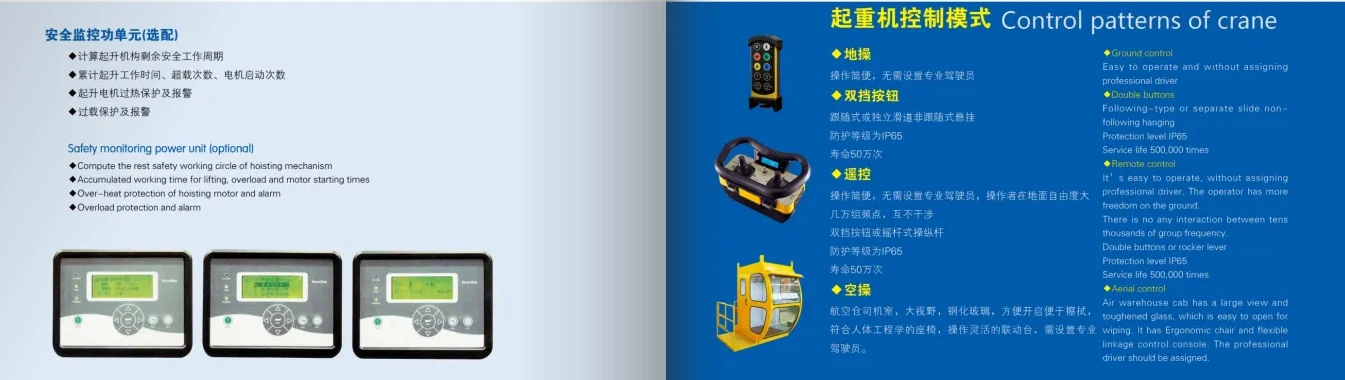
11.Control Mode
1)Pendant Control (Wired Control)
A handheld control device connected to the crane by a cable.
Operators use buttons or joysticks to control hoisting, trolley travel, and crane travel.
Reliable, with minimal interference.
Typically used in controlled environments where operator is near the crane.
2)Radio Remote Control (Wireless Control)
Allows the operator to control the crane wirelessly from a safe distance.
Offers freedom of movement and better visibility of the load.
Equipped with safety features such as emergency stop and signal loss protection.
Common in outdoor or large workspace settings.
3)Cabin Control
Operator sits in a cabin mounted on the crane.
Provides the best visibility and control for heavy or precise operations.
Controls via joysticks and buttons.
Used in factories or ports where long operation hours and precision are required.
4)Automatic or Semi-Automatic Control (Advanced Option)
Some modern cranes integrate PLCs and automation for repetitive or precise tasks.
Can include preset paths and speeds.
Useful for production lines or highly repetitive lifting operations.
12.Sketch

Main technical

Advantages
1. High Load Capacity and Strength
Double girder design provides excellent structural strength, allowing for heavier loads (20 tons and above) with better stability.
Suitable for heavy-duty lifting applications.
2. Greater Span and Coverage
Can cover wider spans and larger working areas than single girder cranes.
Ideal for large factories, warehouses, and outdoor yards.
3. Higher Hook Lift Height
The trolley runs on the top flange of the main girders, allowing more space underneath.
Provides greater lifting height compared to single girder cranes.
4. Durability and Stability
More robust construction reduces vibrations and deflections during operation.
Enhances safety and prolongs equipment life.
5. Flexibility in Lifting Systems
Compatible with heavier and more advanced hoisting mechanisms.
Can use heavier-duty wire ropes, motors, and accessories.
6. Better Load Distribution
The load is shared across two girders, reducing stress on each beam and on runway rails.
Improves overall safety and structural integrity.
7. Advanced Features and Automation
Easier integration of advanced control systems, safety devices, and automation.
Supports heavy industrial processes with higher precision and safety.
Application:
1. Heavy Manufacturing Plants
Handling heavy raw materials, machinery parts, and finished products.
Used in steel mills, automotive factories, and heavy equipment manufacturing.
2. Warehouses and Logistics Centers
Loading and unloading heavy goods.
Organizing and moving bulky items efficiently.
3. Shipyards and Ports
Lifting and moving large containers, ship parts, and heavy cargo.
Essential for loading/unloading ships and assembling ship components.
4. Construction Sites
Moving heavy construction materials like steel beams, concrete blocks, and machinery.
Facilitates efficient material handling and placement.
5. Power Plants and Energy Sector
Handling heavy turbines, generators, and other large components.
Maintenance and installation of heavy equipment.
6. Mining and Material Processing
Transporting large mining equipment and materials.
Handling bulk materials like ores and minerals.
7. Railway Yards and Maintenance Facilities
Lifting train components and heavy parts during assembly and repair.
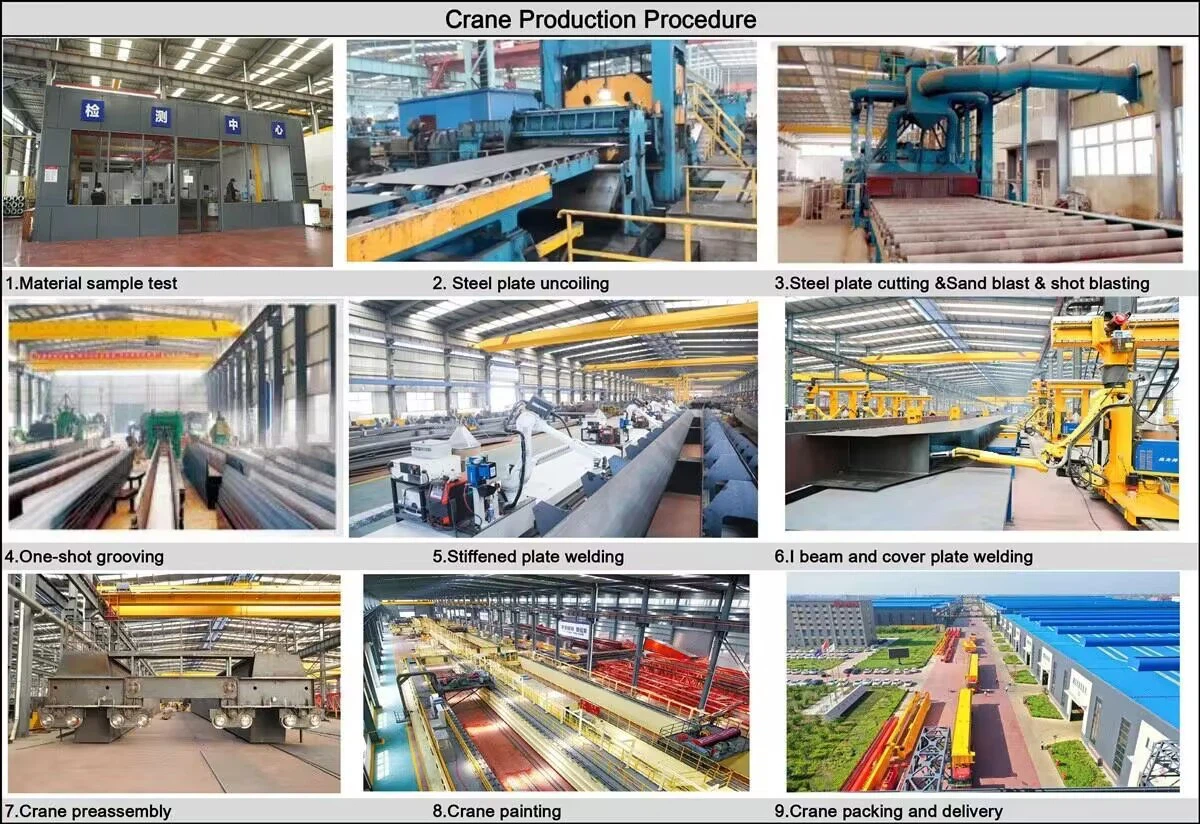
Crane production procedure
1. Design & Engineering
Confirm customer requirements (capacity, span, height, working environment).
Create detailed structural and mechanical design using CAD and FEM analysis.
Select appropriate materials, components, and safety devices.
2. Material Procurement
Purchase high-quality steel plates, sections, motors, electrical parts, and control systems.
Verify materials comply with standards and specifications.
3. Cutting & Preparation
Steel plates and profiles are cut using CNC plasma or laser cutting machines.
Prepare steel parts for welding (edge cleaning, beveling).
4. Welding & Assembly of Main Components
Weld main girders, end carriages, and trolley frames using certified welding procedures.
Perform initial assembly of components to check fit and alignment.
5. Heat Treatment & Stress Relieving (if required)
Apply heat treatment to reduce welding stress and improve mechanical properties.
6. Machining
Machine key parts such as wheel seats, bearing housings, and motor mounting surfaces.
Ensure precision for smooth operation.
7. Surface Treatment
Clean steel surfaces (sandblasting).
Apply primer and high-quality paint for corrosion protection.
8. Assembly of Mechanical & Electrical Systems
Install motors, brakes, hoists, wheels, limit switches, and safety devices.
Assemble electrical panels and wiring harnesses.
9. Testing & Quality Inspection
Perform load testing (usually 125% to 150% of rated capacity).
Check operational functions: hoisting, traveling, limit switches, emergency stops.
Inspect welds, paint, and mechanical clearances.
10. Final Adjustments & Packaging
Make necessary adjustments based on testing results.
Pack crane components carefully for transport.
11. Delivery & Installation
Ship crane to customer site.
Install and commission crane on-site.
Provide operator training and maintenance guidance.
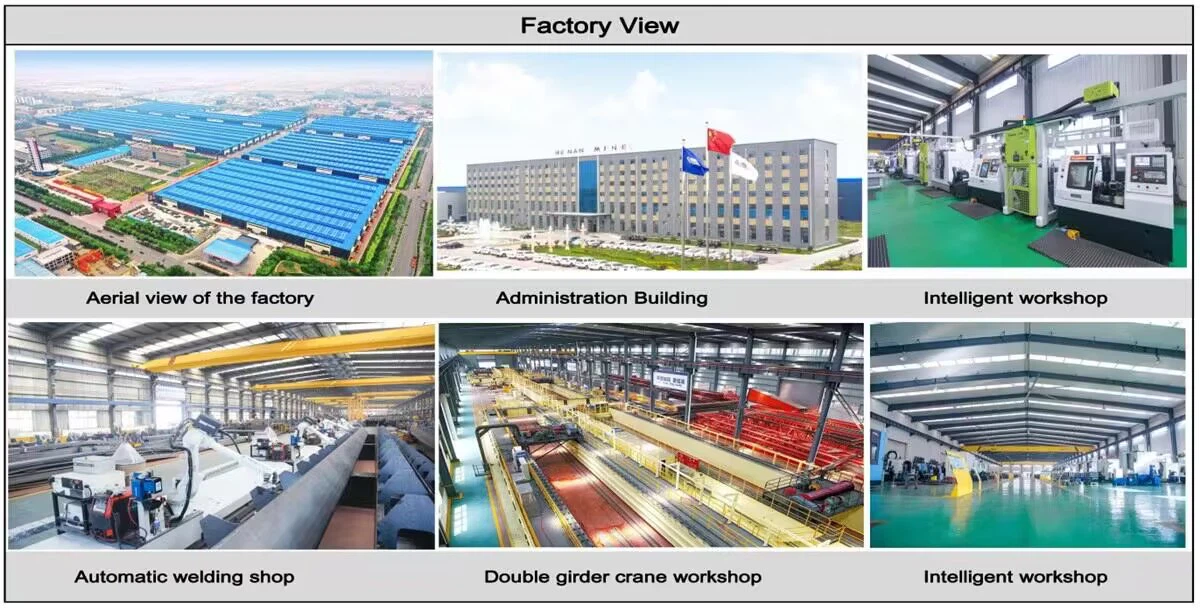
Workshop view:
The company has installed an intelligent equipment management platform, and has installed 310 sets (sets) of handling and welding robots. After the completion of the plan, there will be more than 500 sets (sets), and the equipment networking rate will reach 95%. 32 welding lines have been put into use, 50 are planned to be installed, and the automation rate of the entire product line has reached 85%.


Hot Tags: 20t overhead crane two beams, China 20t overhead crane two beams manufacturers, suppliers, factory, Double Girder Overhead Travelling Crane, Double Girder Overhead Crane
You Might Also Like





Send Inquiry