







20T Double Girder Overhead Crane
Products Description
A double girder overhead crane has two parallel bridge girders that run the length of the crane bay, mounted on top of the end trucks (trolley rails are on top). A 20T model is rated for a maximum lifting capacity of 20 metric tonnes (22 US tons).
A 20T Double Girder Overhead Crane is a capital investment for heavy industry. Its design prioritizes strength, reliability, maximum hook height, and the ability to perform in demanding, high-cycle environments. Proper specification, installation by professionals, and regular maintenance are essential for safe and productive operation over its decades-long lifespan.
Comparison: QE vs. Other Overhead Cranes
| Feature | QE Type (Standard Electric) | QL Type (Light Duty) | QC Type (Severe Duty) |
|---|---|---|---|
| Duty Cycle | M3/M4 (Medium/Heavy) | M2/M3 (Light/Medium) | M6/M7 (Severe/Very Severe) |
| Typical Use | General Manufacturing, Warehouses | Workshops, Light Assembly | Steel Mills, Foundries |
| Operation | Electric | Electric or Manual | Electric |
| Robustness | Standard Industrial | Light-Duty | Heavy-Duty |
Conclusion: The QE Overhead Crane is the backbone of countless industrial facilities. Its electric operation, standard-duty design, and versatile configuration options make it a practical, efficient, and reliable choice for the vast majority of material handling tasks that require more than just occasional light lifting. It is the go-to solution for businesses seeking to improve productivity with a dependable and cost-effective overhead lifting system.
Core Components:Bearing, Gearbox, Motor, Pump
Place of Origin:Henan, China
Warranty:1 Year
Weight (KG):2000 kg
Video outgoing-inspection:Provided
Machinery Test Report:Provided
Design:Double beam
Effectiveness:high efficiency
Operating speed:High speed operation
Stability:Anti-swing function
Color:Optional
Power Source:110V/220V/230V/380V/440V,customized
Span:7.5-31.5m

Pictures & Components
I. Bridge Structure (The Main Framework)
This is the primary moving structure that travels along the runway.
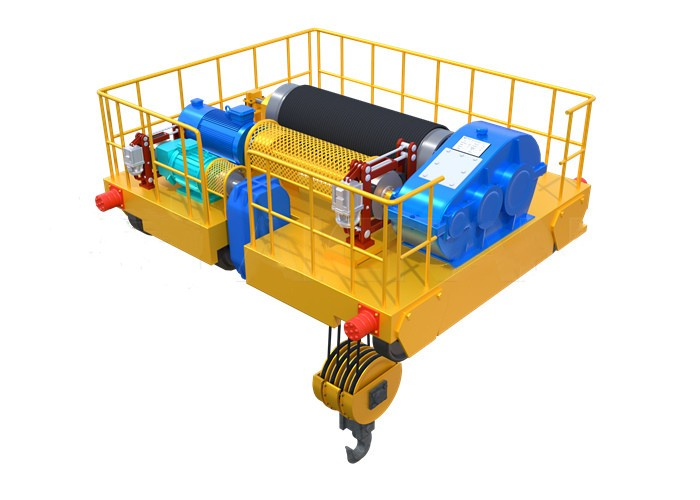
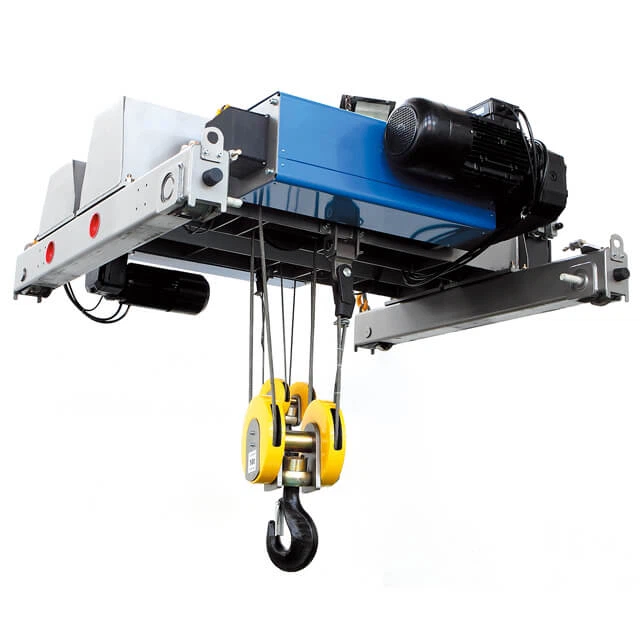
End Trucks (or End Carriages): Located at each end of the bridge. They house the wheels, drive motors, and gearboxes for bridge travel.
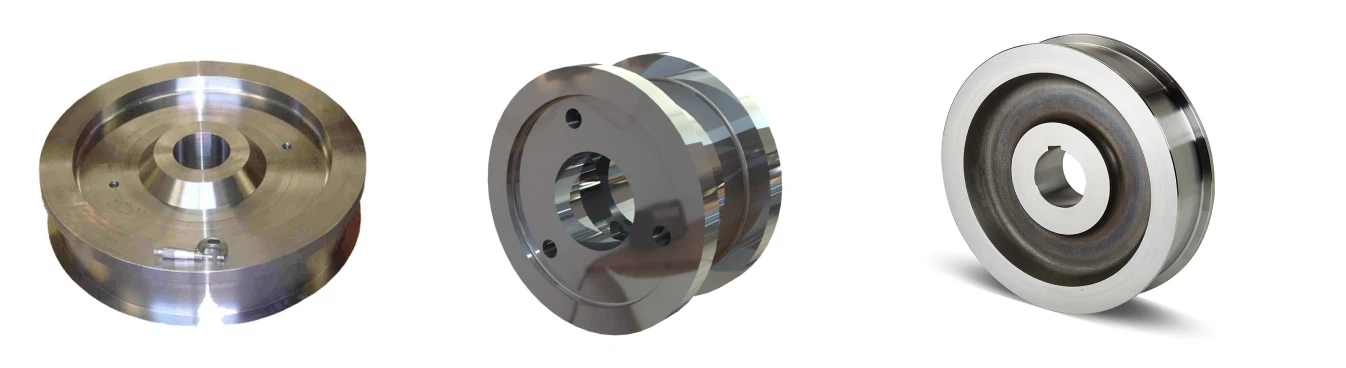
Wheels & Axles: Four or more wheels (often 2 per end truck) that ride on the runway rails. For 20T, wheels are typically forged steel or alloy with high hardness.
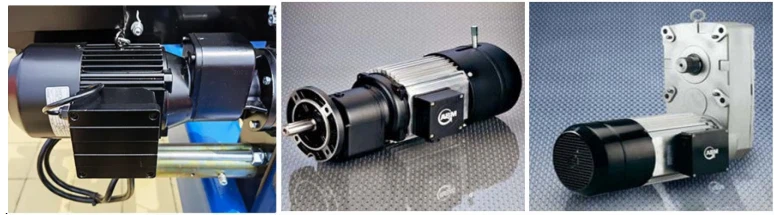
Drive Motors (for Bridge Travel): Electric motors that power the bridge's movement along the runway.
 |
 |
Gearboxes (for Bridge Travel): Reduce motor speed to provide powerful and controlled bridge movement.
Double Girders: The two main horizontal beams (usually box-shaped/welded box girders or, less commonly, I-beams for this capacity) that span the bay's width. They support the trolley, hoist, and the load.
 |
 |
Walkway & Service Platform: A running platform along one side of the bridge for safe inspection and maintenance access to components like conductors and trolley.
Cabin or Pulpit: An operator's cabin mounted to the bridge (for cab-operated cranes) or a stationary platform for remote control stations.
II. Hoist and Trolley System (The Lifting & Transverse Unit)
This unit moves side-to-side across the bridge and performs the actual lifting.
Trolley Frame: The rigid frame that rolls on rails mounted on top of the double girders.
Trolley Drive: Includes motor, gearbox, wheels, and brakes to move the trolley laterally across the bridge girders.
Hoist Unit: The core lifting mechanism.
Hoist Motor: High-torque electric motor designed for heavy-duty lifting.
Hoist Gearbox: Reduces motor speed to create immense lifting force.
Drum or Sheave Assembly: For wire rope hoists, a steel drum spools the cable. For chain hoists, a sprocket is used. 20T cranes typically use wire rope.
Wire Rope: High-strength, multi-strand steel cable. Size and construction are critical for 20T capacity.
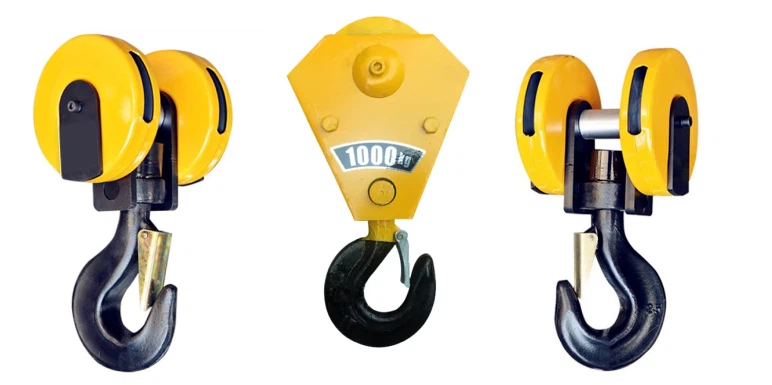
Hook Block: The assembly that holds the load. Includes a heavy-duty swivel hook, sheaves (pulleys), and block frame. May have multiple sheaves for reeving to increase capacity and reduce rope load.
Brake System: A fail-safe mechanical brake (typically a disc or drum brake) that automatically engages to hold the load if power is lost.
Rope Guide/Reeving System: Guides and arranges the wire rope between the drum and hook block.
III. Runway System (The Crane's "Tracks")
The fixed structure on which the entire crane bridge travels.
Runway Beams: Usually heavy steel I-beams or fabricated box beams mounted to the building columns or support structure.
Runway Rails: Precision steel rails (like A120 or similar crane rail) fixed atop the runway beams for the crane wheels to travel on.
Rail Clips & Fasteners: Secure the rails to the runway beams.
End Stops/Bumpers: Physical barriers at both ends of the runway to prevent the crane from over-traveling.

IV. Electrical System & Controls
Provides power, control, and safety.
Main Power Supply:
Conductor System: Can be Festoon Systems (cable trays with sliding carriers), Enclosed Conductor Bars (rigid, insulated bars with collector shoes), or Cable Reels.
Collector Shoes: Pick up electrical current from the conductor bars.
Control System:
Operator Interface: A pendant control station (hanging from the crane or trolley) suspended by a pendant cable, a radio remote control, or a cab console.
Variable Frequency Drives (VFDs): Crucial for a 20T crane. They provide smooth, controlled acceleration and deceleration for hoist, trolley, and bridge motions, minimizing load swing and mechanical stress.
Control Panel/Enclosure: Houses contactors, relays, PLC (Programmable Logic Controller), overload protection, and power supplies.
Limit Switches:
Hoist Limit Switches: Upper and lower limits to prevent over-hoisting or over-lowering.
Trolley & Bridge Travel Limit Switches: Prevent the trolley or bridge from crashing into the end stops.

V. Safety Components (Mandatory & Critical)
Main Disconnect Switch/Circuit Breaker: Isolates power to the entire crane for lockout/tagout during maintenance.
Overload Limit Device: A load cell or torque-sensing system that prevents the crane from lifting more than 110% of its rated capacity (20T).
Emergency Stop Buttons: Located at all operator stations and often at key locations on the crane.
Anti-Collision Systems: Sensors or lasers for cranes operating on the same runway to prevent collisions.
Audible Warning Device: Horn or siren activated before crane movement.
Safety Latches on Hook: Spring-loaded latch to prevent slings from slipping off the hook.
Wheel Flanges & Rail Sweepers: Keep the runway rails clear of debris and guide the wheels.
Fire Resistant Curtains/Barriers: In the electrical panel to contain potential electrical fires.
VI. Additional/Optional Components
Magnet or Vacuum Lifter System: For handling steel, plates, or non-ferrous materials.
Includes a generator/reel for the magnet cable.
Crane Scale/Weighing System: Integrated digital readout of load weight.
Automation & Positioning Systems: For precise, repeatable load placement (e.g., in automated storage/retrieval).
Lighting: Work area lights mounted on the bridge.
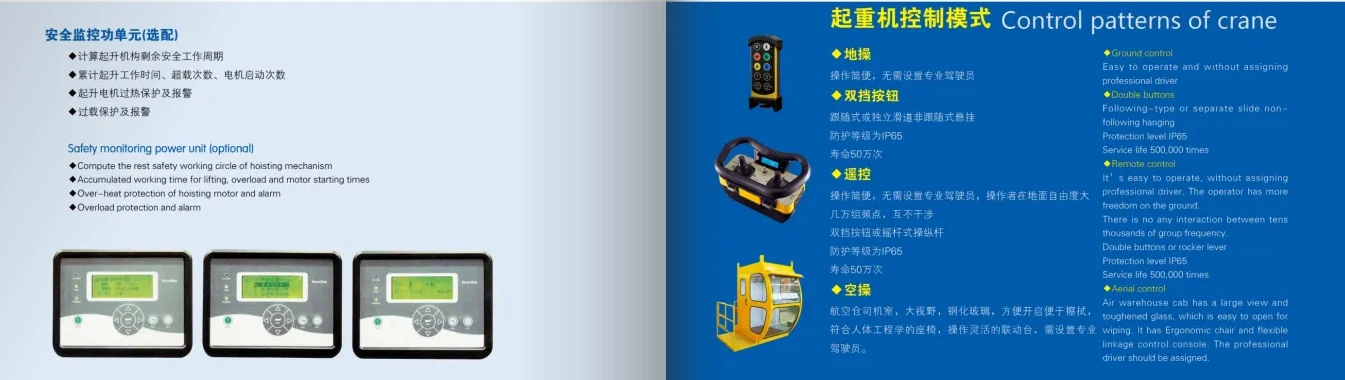
Sketch

Main technical

Advantages
A 20-ton double girder overhead crane is a robust industrial workhorse designed for heavy-duty, high-cycle applications. Its advantages over single girder cranes or other lifting solutions are significant in the right context.
Primary Advantages & Core Strengths
Higher Lifting Capacity & Better Structural Integrity
The dual bridge girders distribute the load's weight and the crane's own weight more evenly, allowing it to handle the 20-ton capacity with a much higher factor of safety. It's inherently more rigid and less prone to deflection (sagging).
Superior Hook Height/Lift Height
The hoist and trolley are mounted between the two girders, not underneath them. This design maximizes the vertical lift space within your building, allowing you to lift loads higher-critical for taller workshops, multilayered manufacturing, or stacking.
Longer Span Capability
The double girder design provides greater resistance to bending. This makes it the only viable choice for spans typically over 25-30 meters while maintaining a 20-ton capacity, where a single girder would be excessively deep or unstable.
Enhanced Duty Cycle & Durability
Built for more frequent use (FEM/CMAA Class M4-M7 / Duty Class HD4 to HD7). Components like the gearboxes, motors, and brakes are heavier-duty, leading to longer service life in demanding environments like steel service centers, foundries, or heavy fabrication shops.
Smoother and More Precise Operation
The wider trolley wheels on the double rails provide smoother travel with less skewing. This, combined with the option for more advanced control systems (like variable frequency drives - VFDs), allows for exceptional precision in load positioning, crucial for delicate placements or assembly work.
Space for Auxiliary Equipment
The platform on top of the bridge girders provides a safe and convenient place to mount cable reels, festoon systems, and maintenance walkways. This keeps power cables organized and protected, improving reliability and safety.
Versatility in Lifting Attachments
The robust structure and between-the-girders mounting easily accommodate special lifting devices like magnets, grabs, vacuum lifters, or specialized hooks, making it ideal for handling non-standard materials (coils, sheets, scrap).
Improved Safety & Redundancy
The inherent structural stability and the ability to incorporate dual brakes, overload protection, and redundant safety systems make it a safer choice for critical heavy lifting operations.
Application:
Primary Industrial Applications
1. Heavy Manufacturing & Fabrication
Automotive Plants: Handling engine blocks, chassis, stamping dies, and large vehicle sub-assemblies.
Heavy Machinery Manufacturing: Moving and positioning large weldments, castings, and assembled machines like excavators or presses.
Shipbuilding & Offshore: Lifting large steel plate sections, prefabricated modules, and engine components.
Railway Workshops: Handling locomotives, rail cars, and bogies for assembly and maintenance.
2. Steel & Metal Processing
Steel Mills & Service Centers: Moving coils of steel, slabs, and bundles of rebar. Often used with C-hooks or coil grabs.
Foundries & Forging: Handling molten metal ladles (with special safety features), large castings, and dies for forging presses.
Metal Fabrication Shops: Lifting large metal sheets, beams, and fabricated structures for machining or welding.
3. Power Generation & Heavy Engineering
Hydroelectric & Thermal Power Plants: Installing and maintaining turbines, generators, rotors, and transformers.
Wind Turbine Manufacturing: Handling large nacelles, towers, and blades during assembly.
Heavy Engineering Workshops: For general heavy lifting of complex, outsized components.
4. Pulp, Paper, & Recycling
Paper Mills: Handling large paper rolls (with paper roll clamps) and更换 heavy machinery like dryer drums.
Scrap Yards & Recycling: Often paired with electro-hydraulic grabs or lifting magnets to move and sort bulk scrap metal.
5. Aerospace & Defense
Aircraft Assembly: Positioning large fuselage sections, wings, and engines with high precision.
Maintenance, Repair, and Overhaul (MRO): Lifting entire aircraft for undercarriage work or engine removal.
6. Warehousing & Logistics (Heavy-Duty)
Heavy Goods Warehouses: Storing and retrieving large industrial equipment, transformers, or heavy machinery.
Port & Intermodal Facilities: (As gantry cranes) For container handling or moving heavy cargo within a terminal shed.
Crane production procedure
20T Double Girder Overhead Crane Production Procedure
1. Project Definition & Design Engineering
Customer Requirements Analysis: Confirm specifications: span, lifting height, duty class (FEM/ISO), voltage, control mode (pendant/cabin/radio), and special environmental conditions.
Engineering Design:
Structural Design: CAD modeling and FEA (Finite Element Analysis) of main girders, end carriages, and trolley frame to ensure strength, rigidity (deflection ≤ Span/750), and stability.
Mechanical Design: Selection and calculation of hoisting mechanism (wire rope, hook, drum, gearbox), traveling mechanisms (wheels, axles, brakes), and trolley assembly.
Electrical Design: Creation of schematic diagrams; specification of motors, inverters (if variable frequency drive), control panels, festoon/cable reel systems, and safety devices.
Bill of Materials (BOM) Generation: Complete list of raw materials (steel plates, beams) and purchased components (wheels, bearings, motors, electrical items).
2. Procurement & Material Preparation
Raw Material Procurement: Order quality-controlled steel plates (typically Q235B/Q345B) and profiles per BOM.
Purchased Components: Source certified critical components: wire rope, hooks, motors, gearboxes, brakes, electrical panels, and limit switches from qualified suppliers.
Material Inspection: Verify material certificates (mill sheets) and conduct incoming dimensional/visual checks.
3. Fabrication of Main Structural Components
Main Girder Fabrication (Two Girders):
Cutting: CNC plasma/oxy-fuel cutting of web and flange plates to precise dimensions. Beveling of edges for welding.
Sub-assembly: Assembly of web and flange plates into I-beam or box-section using jigs and fixtures to ensure proper camber (pre-set upward curvature to compensate for deflection under load).
Welding: Automatic submerged arc welding (SAW) for long main seams. Qualified welders perform manual welding for attachments. Follow WPS (Welding Procedure Specification).
Stress Relieving: (For critical/heavy-duty cranes) Heat treatment to relieve internal welding stresses.
Machining: Milling of rail seat surfaces on the top flange to ensure flatness for rail mounting.
End Carriage (End Truck) Fabrication:
Fabrication of two rigid welded frames housing wheel assemblies, buffers, and connection points to girders.
Trolley Frame Fabrication:
Welded frame to support the hoist unit, trolley travel wheels, and motor drives.
4. Mechanical Assembly & Machining
Wheel & Axle Assembly: Press-fitting of wheels onto axles, mounting bearings, and housing into end carriage and trolley frames. Alignment is critical.
Hoist Mechanism Assembly: Mounting of gearbox, motor, brake, drum, and wire rope reeving system onto the trolley frame. Installation of the hook block.
Rail Mounting: Drilling of mounting holes and securing of the crane rail (e.g., QU70 or A120) onto the top flange of both main girders with clamps or welded pads.
Final Structural Joining: Bolt connection of the two main girders to the end carriages using high-strength bolts, forming the complete bridge. Alignment check of diagonal dimensions.
5. Electrical System Installation
Panel Wiring: Assembly of main power panel, control panel, and pendant station according to electrical diagrams.
On-Crane Wiring: Installation of bridge and trolley traveling motors, cable festoon system or cable reels, and all sensors (limit switches, overload sensor, encoder).
Lighting & Safety Circuits: Installation of crane lights, emergency stop buttons, and audible alarm.
6. Surface Preparation & Painting
Surface Cleaning: Shot blasting (Sa 2.5) of all structural components to remove rust and mill scale.
Priming: Application of epoxy zinc-rich primer immediately after blasting.
Intermediate & Top Coats: Application of build coats and final polyurethane top coat in specified color. Paint thickness measurement (DFT).
Masking: Protection of machined surfaces, bearing areas, and electrical labels.
7. Final Assembly & Works Testing (FAT - Factory Acceptance Test)
Pre-test Inspection: Visual check of all components, bolts torque, electrical connections, and safety devices.
No-Load Test:
Run hoisting, trolley travel, and bridge travel mechanisms in both directions.
Verify smooth operation, check for unusual noise, and ensure all limit switches function correctly.
Static Load Test:
Load test to 125% of SWL (25 Tons). Lift test load clear of the ground, hold for 10 minutes, inspect for permanent deflection or abnormalities.
Dynamic Load Test:
Load test to 110% of SWL (22 Tons). Perform repeated lifts, travels, and test all functions under load to verify performance.
Measurement: Check key parameters: bridge wheel alignment, end carriage track gauge, girder camber/deflection under load.
Documentation: Prepare test reports, certification dossier (including material certificates, weld logs, NDT reports if applicable), and operation manuals.
8. Dismantling, Packing & Shipment
Logical Dismantling: The crane is partially disassembled for transport (typically girders separated from end carriages, trolley detached, electrical panels crated).
Protective Packing: Components are wrapped, crated, and protected against corrosion and physical damage during transit.
Shipping Marking: Clear labeling with assembly numbers and lifting points for easy reassembly on site.
9. Site Erection & Commissioning (by Trained Technicians)
Site Verification: Check runway (alignment, level, gauge, rail joint gaps) before erection.
Reassembly: Erect end carriages on runway, lift and connect main girders, install trolley, and reconnect electrical systems.
Final Commissioning & Site Testing: Repeat functional and load tests on the customer's runway to ensure proper operation in the final environment. Handover to client.
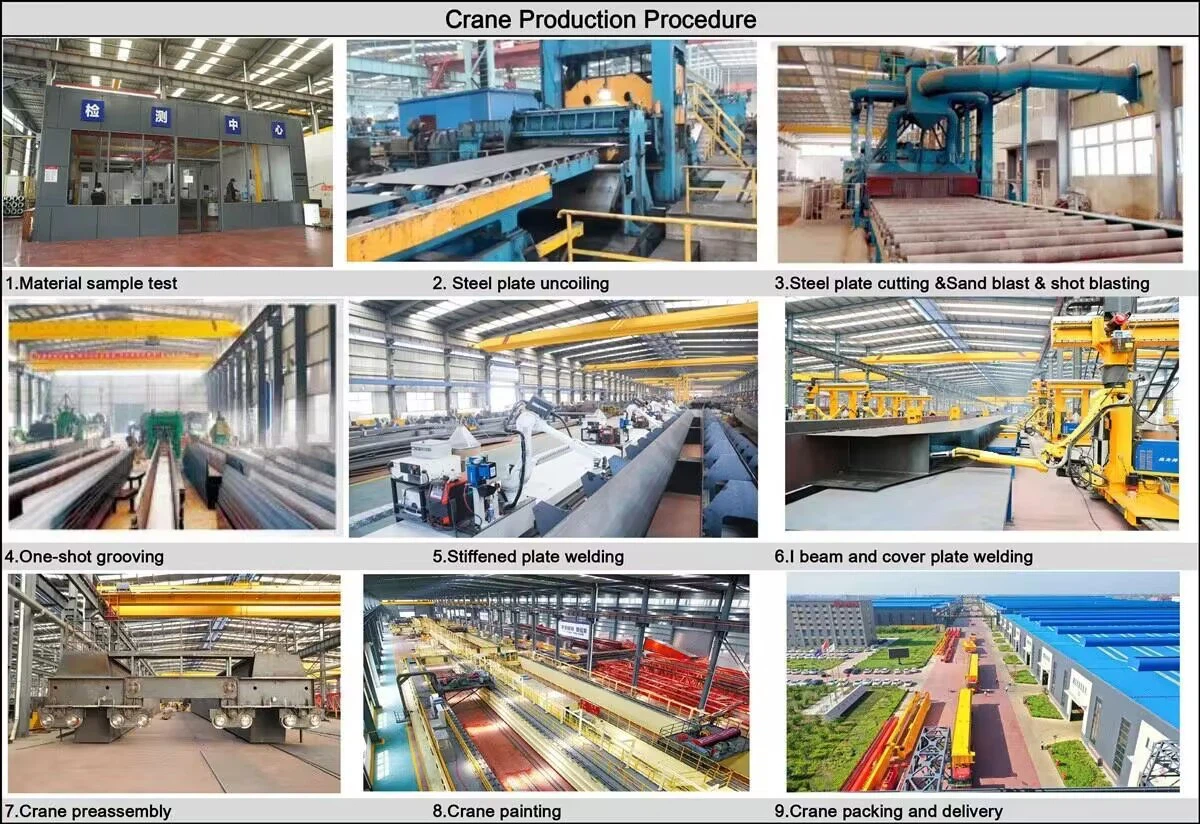
Workshop view:
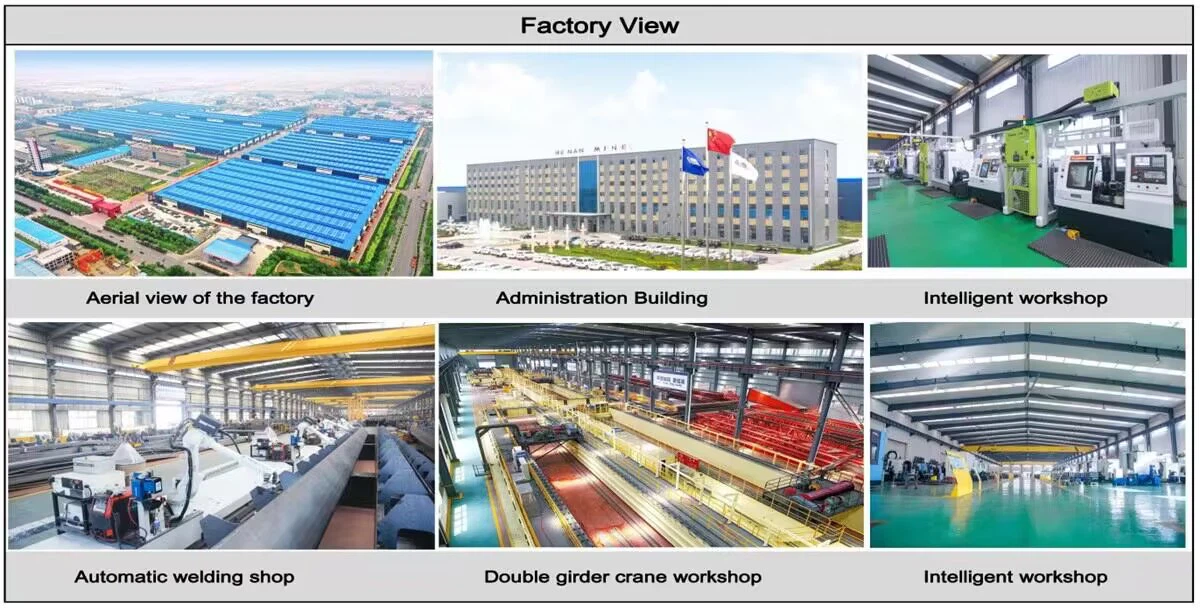
The company has installed an intelligent equipment management platform, and has installed 310 sets (sets) of handling and welding robots. After the completion of the plan, there will be more than 500 sets (sets), and the equipment networking rate will reach 95%. 32 welding lines have been put into use, 50 are planned to be installed, and the automation rate of the entire product line has reached 85%.


Hot Tags: 20t double girder overhead crane, China 20t double girder overhead crane manufacturers, suppliers, factory, Double Girder Overhead Travelling Crane, Double Girder Overhead Crane
You Might Also Like


Send Inquiry