









Double Beam Overhead Bridge Cranes
Products Description
Key Features:
High Load Capacity – Typically ranges from 5 tons to 550+ tons, suitable for heavy industrial applications.
Long Span Coverage – Can span up to 35 meters or more, ideal for large workshops, warehouses, and manufacturing plants.
Dual-Girder Design – Provides greater strength, stability, and precision compared to single-girder cranes.
Customizable Options – Available with various hoists (wire rope or chain), controls (pendant, radio remote, or cabin-operated), and automation features.
Durability – Made from high-grade steel with corrosion-resistant coatings for long service life.
Advantages:
✔ Higher lifting capacity than single-girder cranes.
✔ Reduced deflection for better precision.
✔ Longer service life with robust construction.
✔ Customizable for specialized needs (explosion-proof, high-speed, etc.).
Selection Considerations:
Load Capacity & Span – Ensure the crane meets your weight and distance requirements.
Lifting Height – Determines hoist wire rope/chain length.
Duty Cycle – Choose between light, medium, or heavy-duty (FEM or CMAA classifications).
Power Supply – Typically 3-phase AC, but options vary.
Environmental Conditions – Consider heat, dust, or explosive atmospheres.
Core Components:Bearing, Gearbox, Motor, Pump
Place of Origin:Henan, China
Warranty:1 Year
Weight (KG):2000 kg
Video outgoing-inspection:Provided
Machinery Test Report:Provided
Design:Double beam
Effectiveness:high efficiency
Operating speed:High speed operation
Stability:Anti-swing function
Color:Optional
Power Source:110V/220V/230V/380V/440V,customized
Span:7.5-31.5m

Pictures & Components
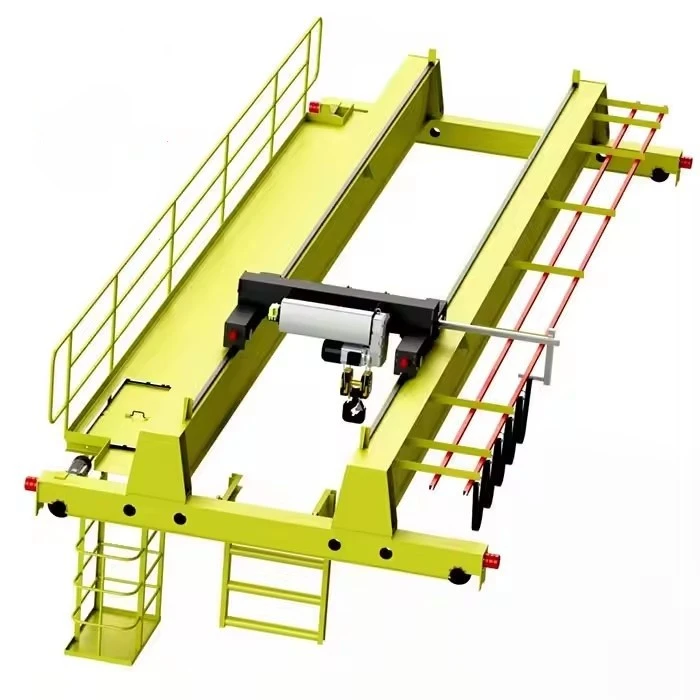
A double girder overhead crane consists of several critical components that work together to ensure safe and efficient material handling. Below is a detailed breakdown of each part:
1. Bridge Girders (Main Beams)
The primary load-bearing structure, consisting of two parallel steel beams that span the width of the workspace.
Designed to resist bending and torsional forces.
Typically made from box-section or I-beam steel for high strength.
Can be welded or bolted depending on design requirements.

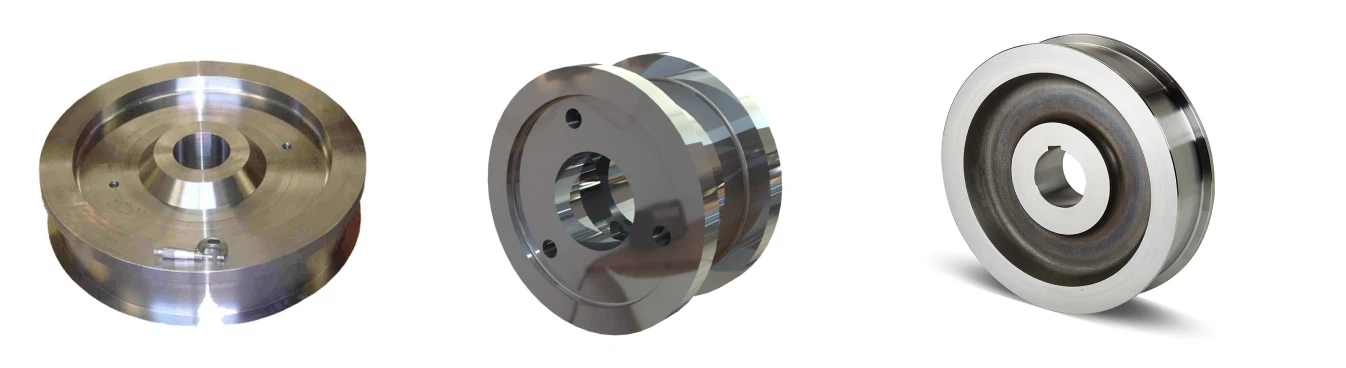
2. End Trucks (End Carriages)
Located at each end of the bridge girders.
Equipped with wheels that run along the runway rails.
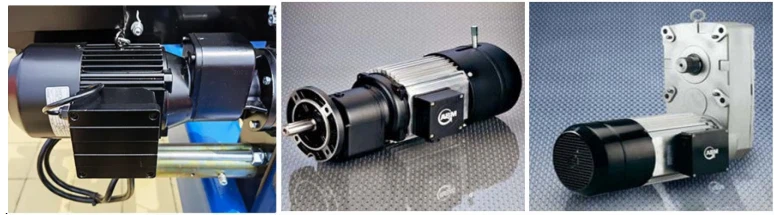
Include drive motors (for powered movement) and braking systems.
Can be single or double girder-supported, depending on crane type.
 |
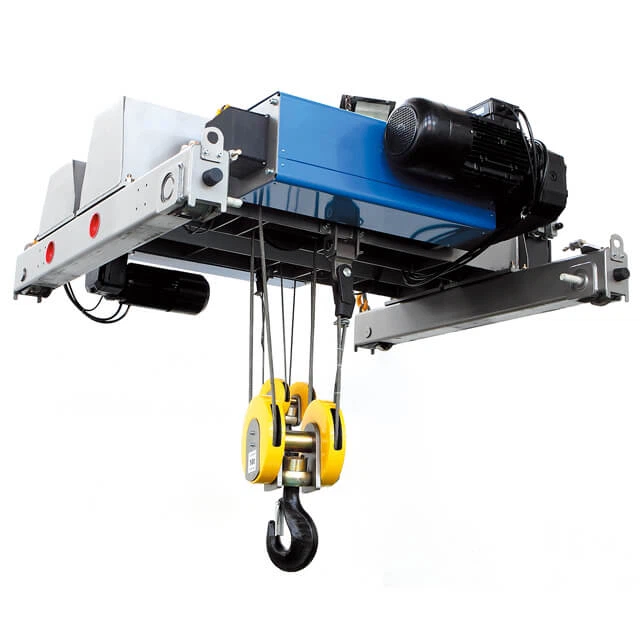 |
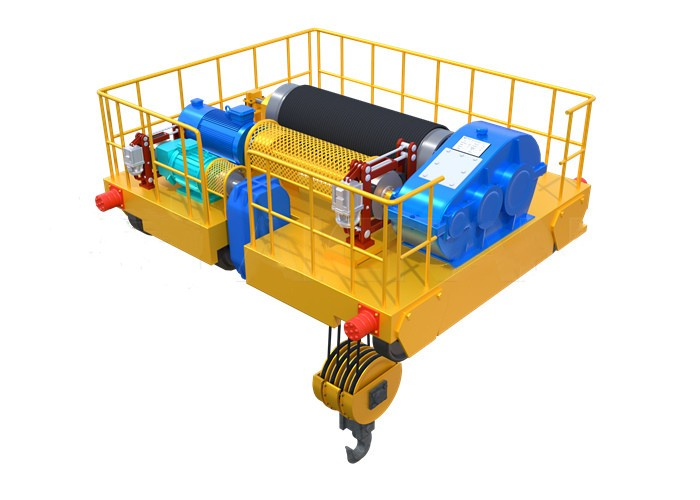
3. Hoist & Trolley Assembly
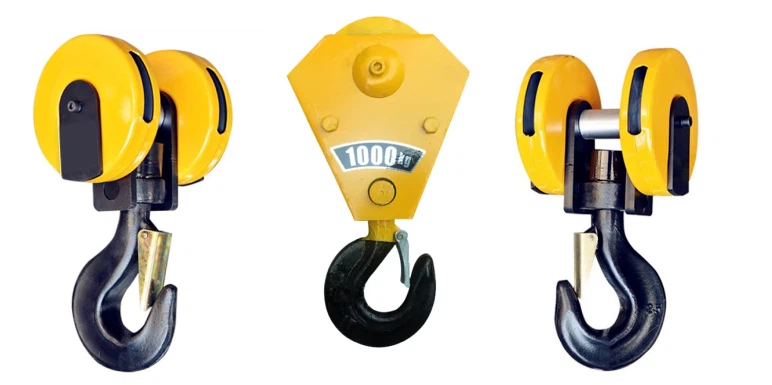
a) Hoist
The lifting mechanism (electric or manual).
Types:
Wire Rope Hoist (for heavy loads, high speeds).
Chain Hoist (for lighter loads, compact spaces).
Includes a hook, drum, motor, gearbox, and brake.
 |
 |
b) Trolley
The moving unit that carries the hoist along the bridge girders.
Can be motorized (powered) or manual push-type.
Equipped with wheels, drive motor, and limit switches for safe travel.
4. Runway System
The track structure on which the crane moves.
Includes:
Runway Rails (usually ASCE, DIN, or I-beam rails).
Runway Beams (supporting structure, often steel columns or building framework).
Crane Buffers & Stops (to prevent over-travel).
5. Electrical System & Controls
Power Supply: Typically 3-phase AC (380V, 415V, 480V, etc.).
Control Methods:
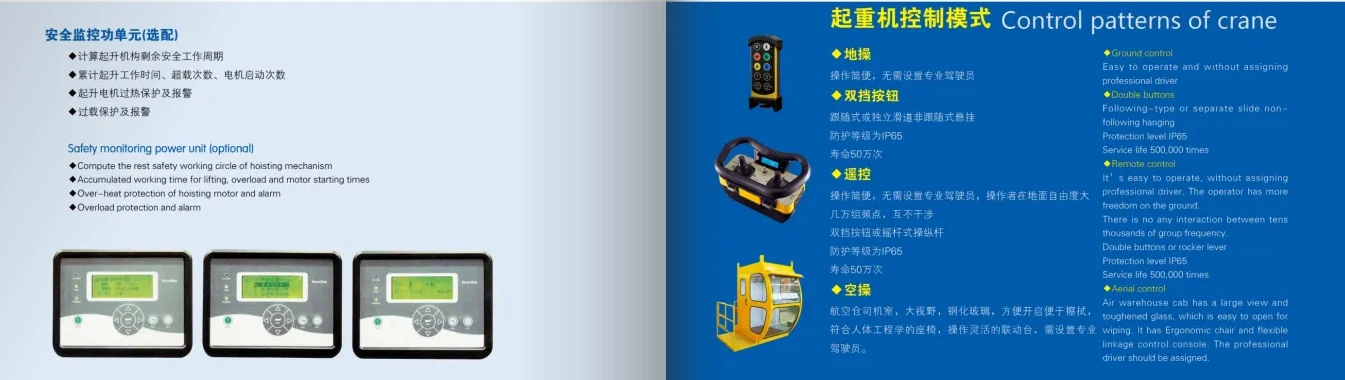
Pendant Control (handheld wired controller).
Radio Remote Control (wireless operation).
Cabin Control (operator cabin for heavy-duty cranes).
Safety Devices:
Limit switches (for hoist and trolley travel).
Overload protection (prevents lifting beyond capacity).
Emergency stop buttons.

.
6. Additional Optional Components
Festoon / Cable Reel System – Manages power and control cables.
Anti-Sway System – Reduces load swing for precision lifting.
Crane Scales – Weighs loads during operation.
Explosion-Proof Features – For hazardous environments.
Automation & Smart Controls – For integration with factory systems.

Key Considerations When Selecting Components:
✔ Load Capacity – Must match operational requirements.
✔ Span & Lifting Height – Determines girder size and hoist rope length.
✔ Duty Cycle – Influences motor and gearbox selection.
✔ Environment – Corrosion-resistant coatings for harsh conditions.
SKETCH

Main technical

Advantages
Double girder overhead cranes are widely used in heavy industries due to their strength, durability, and precision. Key advantages include:
1. Higher Load Capacity
Can handle 5 to 550+ tons, making them ideal for heavy-duty applications.
More stable than single-girder cranes, reducing deflection under heavy loads.
2. Longer Span Coverage
Suitable for wide workshops (up to 35m+ span) without intermediate supports.
Ideal for large factories, warehouses, and shipyards.
3. Greater Hook Height & Lifting Range
The trolley runs on top of the girders, allowing for higher lift heights compared to single-girder cranes.
Useful in facilities with tall ceilings or deep pits.
4. Enhanced Durability & Stability
Double-beam construction provides better resistance to bending and twisting.
Heavy-duty steel fabrication ensures long service life even in harsh environments.
5. Customizable & Versatile
Can be equipped with different hoists (wire rope, chain, or magnetic).
Options for explosion-proof, high-speed, or automated operation.
6. Improved Safety Features
Overload protection, limit switches, and emergency brakes prevent accidents.
Reduced sway for precise load positioning.
7. Lower Long-Term Maintenance Costs
Robust design reduces wear and tear, lowering downtime and repair expenses.
Application:
These cranes are essential in industries requiring heavy lifting, precision handling, and long-span coverage. Common applications include:
1. Steel & Metal Industry
Handling steel coils, plates, and castings.
Loading/unloading in foundries and rolling mills.
2. Power Plants & Heavy Machinery
Moving turbines, generators, and transformers.
Maintenance of boilers and large mechanical parts.
3. Shipbuilding & Ports
Assembling ship hulls, engines, and large components.
Loading/unloading heavy cargo in dry docks.
4. Automotive & Aerospace
Transporting vehicle chassis, engines, and aircraft parts.
Used in assembly lines and production plants.
5. Mining & Cement Industry
Handling raw materials, crushers, and kiln parts.
Lifting heavy mining equipment.
6. Warehousing & Logistics
Stacking heavy containers and large pallets.
Used in large distribution centers.
7. Paper & Chemical Industries
Moving heavy rolls of paper, reactors, and storage tanks.
Often customized with corrosion-resistant coatings.
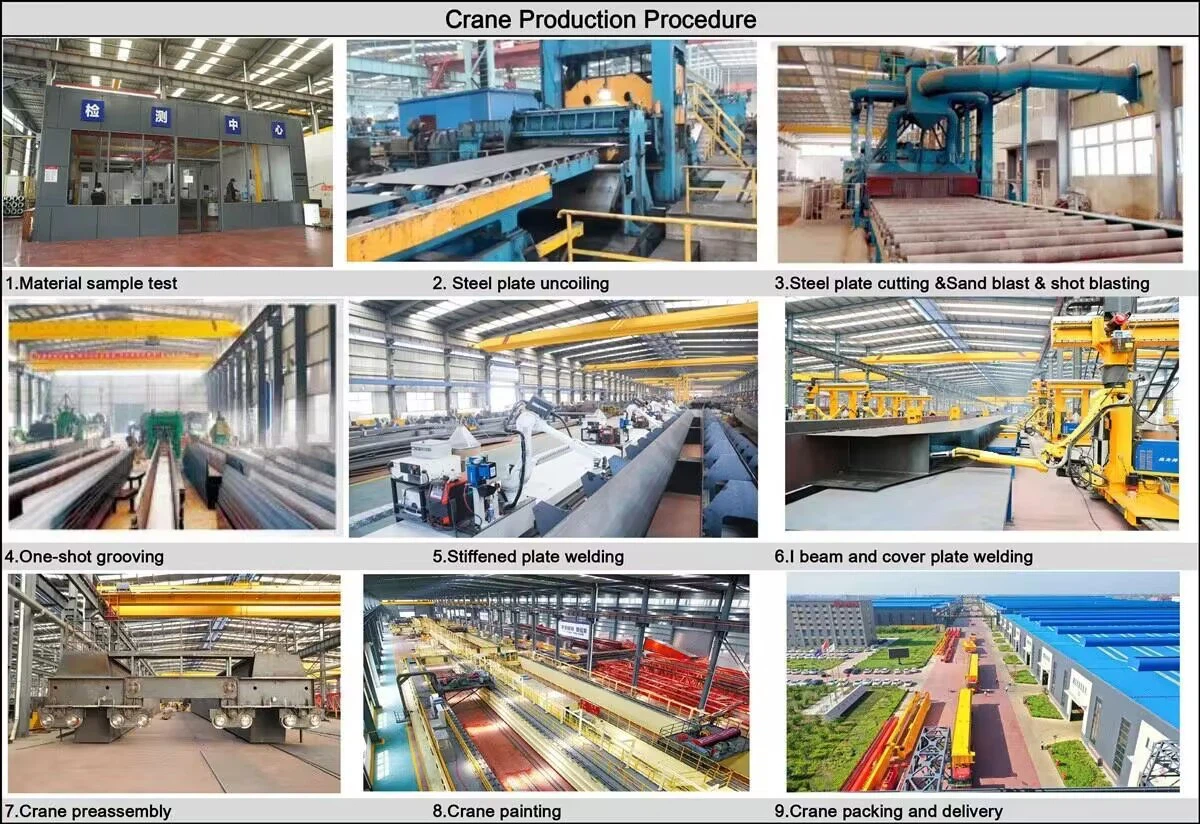
Crane production procedure
1. Design and Engineering
Confirm technical specifications (load capacity, span, lifting height).
Structural design of main beams, end carriages, trolley, and hoisting system using CAD and FEA software.
Electrical and control system layout design.
Compliance checks with relevant standards (ISO, FEM, OSHA).
2. Material Procurement
Source high-quality steel plates, structural steel sections, motors, electrical components, limit switches, and safety devices.
Verify material certifications and quality standards.
3. Fabrication of Main Components
Cutting & Shaping: Use CNC plasma cutting or laser cutting for steel plates.
Welding: Assemble main beams, end carriages, trolley frames using precise welding techniques.
Heat Treatment: Stress relief welding distortion by heat treatment if required.
Machining: Machine wheel seats, bearing seats, shaft holes, and motor mounting points.
Surface Treatment: Sandblasting and applying primer, then coating with anti-corrosion paint.
4. Assembly of Mechanical Parts
Assemble main beams with end carriages.
Install wheelsets and axle assemblies.
Mount trolley frame and hoisting mechanism (drum, wire rope, hook block).
Install brakes and gearbox on motors.
5. Electrical System Installation
Install motors (hoist, trolley, bridge travel).
Mount electrical panels, control cabinets.
Wire all sensors, limit switches, alarms, and control devices.
Connect power cables and control cables.
6. Quality Control & Testing
Non-destructive testing (NDT): Weld inspections by ultrasonic or magnetic particle methods.
Dimensional inspection: Check critical dimensions and tolerances.
Electrical tests: Insulation resistance, continuity, and control circuit tests.
Load testing: Perform static and dynamic load tests at 100% and 125% rated load.
Functional testing: Test all crane movements, alarms, safety devices, and control systems.
7. Painting and Finishing
Final painting for corrosion resistance and aesthetics.
Apply safety markings and labels.
8. Packaging and Delivery
Disassemble components if needed for transport.
Secure packaging to avoid damage during shipment.
Prepare manuals, certificates, and test reports.
9. Installation and Commissioning (On-site)
Assemble crane components on-site.
Align rails and fix end stops.
Connect power supply and control system.
Conduct on-site testing and operator training.
Final acceptance and handover.
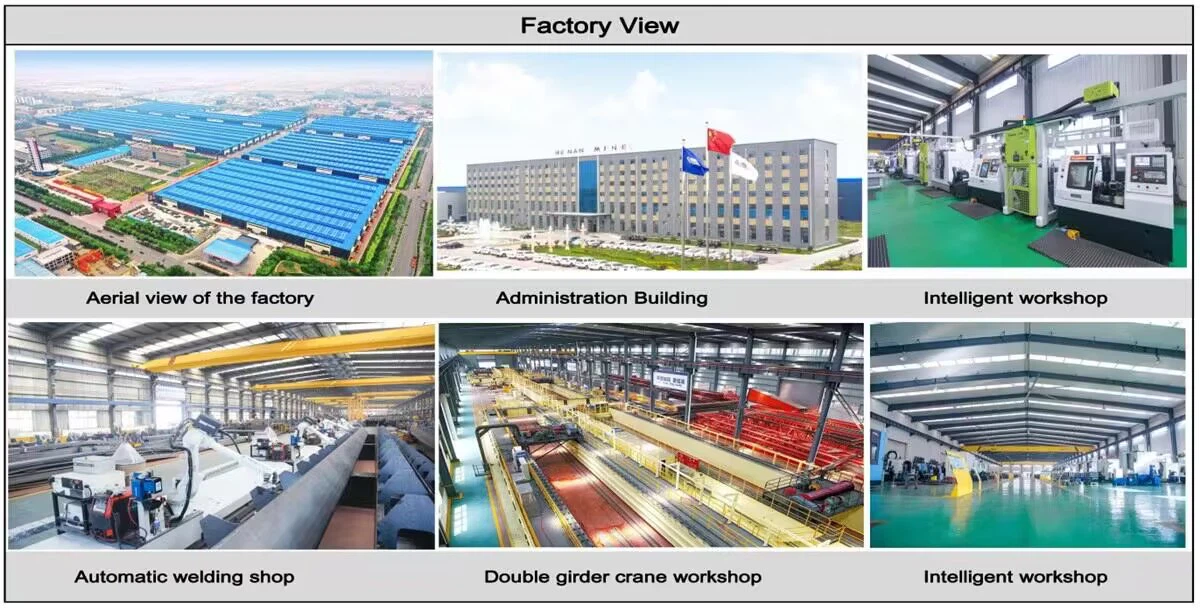
Workshop view:
The company has installed an intelligent equipment management platform, and has installed 310 sets (sets) of handling and welding robots. After the completion of the plan, there will be more than 500 sets (sets), and the equipment networking rate will reach 95%. 32 welding lines have been put into use, 50 are planned to be installed, and the automation rate of the entire product line has reached 85%.


Hot Tags: double beam overhead bridge cranes, China double beam overhead bridge cranes manufacturers, suppliers, factory, Double Girder Overhead Crane, Double Girder Overhead Travelling Crane
Previous
Overhead Grab CraneYou Might Also Like


Send Inquiry