










Crab Overhead Crane
Products Description
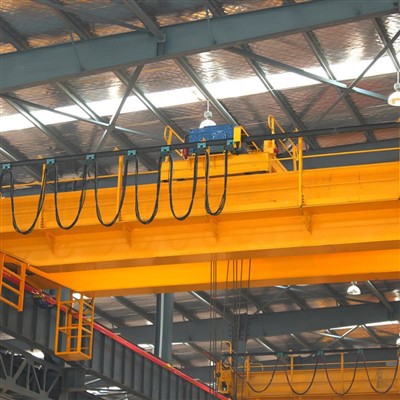
Types of Crab Overhead Cranes
1. Single Girder Crab Crane
Light to medium-duty (1–20 tons).
Cost-effective for workshops, warehouses, and small factories.
2. Double Girder Crab Crane
Heavy-duty (20–500+ tons).
More stable for steel mills, foundries, and heavy industries.
3. Explosion-Proof Crab Crane
Used in hazardous environments (chemical plants, oil refineries).
Flameproof motors and electrical components.
4. Foundry Crab Crane
Heat-resistant design for handling molten metal.
Reinforced hooks and thermal protection.
5. Magnetic/Electric Crab Crane
Equipped with electromagnetic lifters for handling steel plates, scrap metal.
Crab Crane vs. Standard Overhead Crane
| Feature | Crab Overhead Crane | Standard Overhead Crane |
|---|---|---|
| Movement | Hoist + trolley moves along girder | Fixed hoist, trolley moves |
| Flexibility | More precise positioning | Less maneuverable |
| Load Capacity | Up to 500+ tons | Typically up to 100 tons |
| Cost | Higher initial cost | More economical |
| Maintenance | Easier access to parts | More complex maintenance |

Pictures & Components
A crab overhead crane consists of several key components that work together to enable precise and efficient load handling. Below is a detailed breakdown of its main parts:
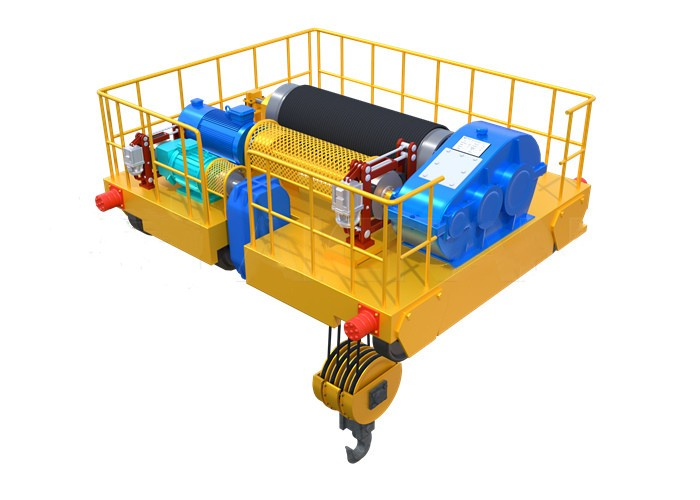
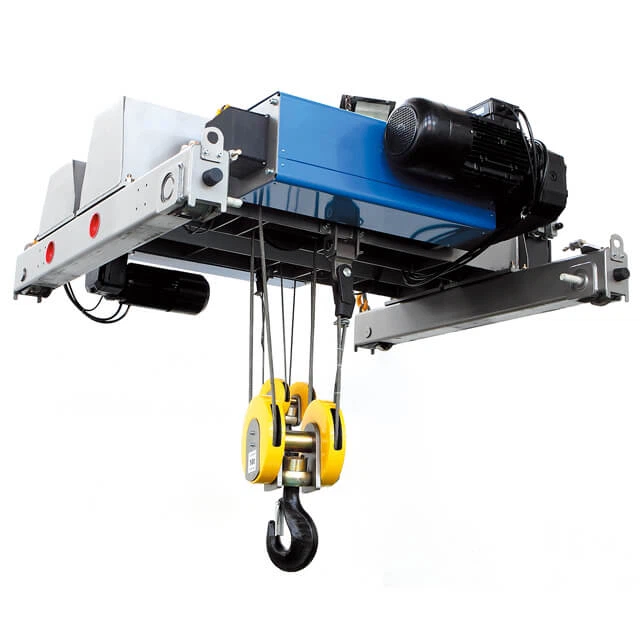
1. Crab Unit (Hoist + Trolley Assembly)
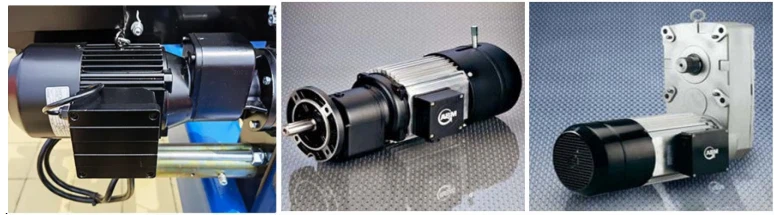
Electric Hoist
Uses a wire rope hoist (for heavy loads) or chain hoist (for lighter loads).
Includes a motor, gearbox, drum, and brake system.
Trolley Frame
Supports the hoist and allows it to move horizontally along the bridge girder.
Equipped with wheels, motors, and gears for smooth travel.
 |
 |
2. Bridge Girder (Main Load-Bearing Structure)
Single Girder (for light to medium-duty cranes, up to 20 tons).
Double Girder (for heavy-duty applications, 20–500+ tons).
Made of high-strength steel with welded/bolted construction.
 |
 |
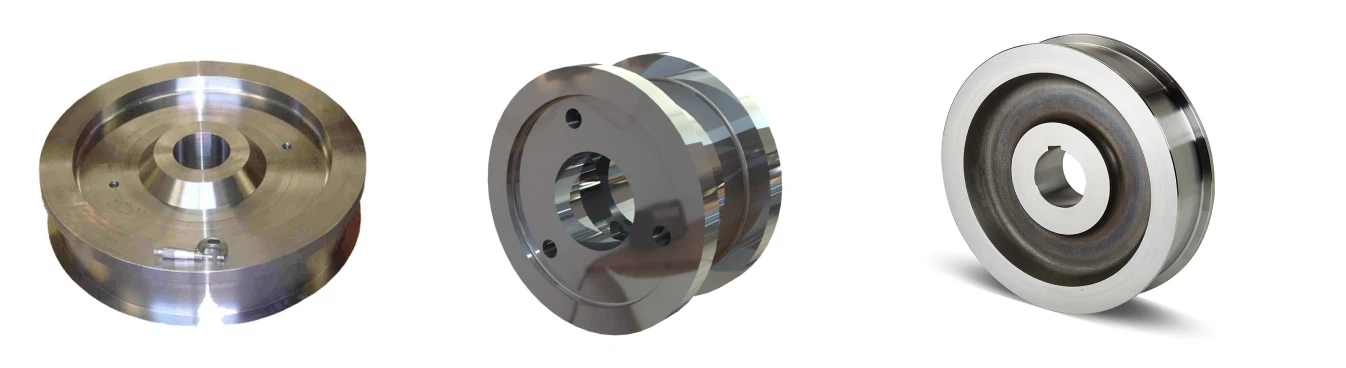
3. End Carriages (End Trucks)
Located at both ends of the bridge girder.
Contain wheels, motors, and buffers for crane movement along the runway.
Drive mechanisms (single or dual-motor) for smooth travel.
4. Runway System
Runway Beams – Support the crane's movement.
Crane Rails – Guide the wheels of the end carriages.
Rail Clamps – Secure the crane when not in use.
5. Electrical & Control System
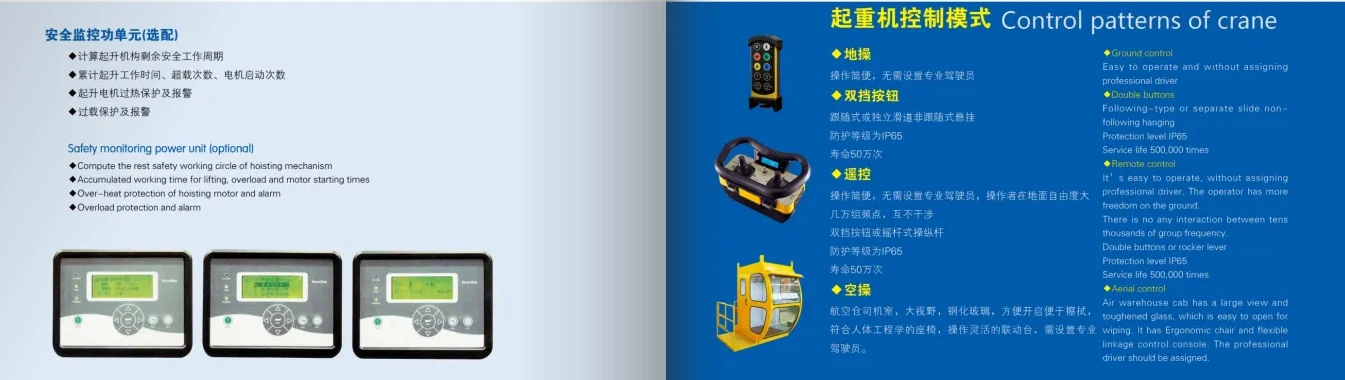
Control Panel – Houses contactors, relays, and overload protection.
Operator Controls –
Pendant control (wired handheld).
Radio remote control (wireless, for safer operation).
Limit Switches – Prevent over-travel of the hoist and trolley.
Variable Frequency Drive (VFD) – Ensures smooth acceleration/deceleration.

6. Safety Components
Overload Limiter – Prevents lifting beyond rated capacity.
Emergency Stop Button – Instantly cuts power in emergencies.
Anti-Collision System – Used when multiple cranes operate in the same area.
Heat-Resistant Brakes – Essential for foundry or high-temperature environments.
.
7. Optional Attachments
Magnetic Lifter – For handling steel plates or scrap.
C-Hook/Grab Hook – For specialized lifting (e.g., coils, drums).
Rotating Device – Allows 360° load rotation.

Comparison: Standard Overhead Crane vs. Crab Overhead Crane Components
| Component | Standard Overhead Crane | Crab Overhead Crane |
|---|---|---|
| Hoist Movement | Fixed on trolley | Moves along trolley (crab unit) |
| Trolley Design | Simple, integrated hoist | Separate crab mechanism |
| Precision | Moderate | Higher (better positioning) |
| Maintenance | More complex | Easier (modular design) |
| Cost | Lower | Higher (more features) |

SKETCH

Main technical

Advantages
Crab overhead cranes offer unique benefits due to their specialized design, making them ideal for precise and heavy-duty material handling. Here are the key advantages:
1. Enhanced Precision & Control
The independent crab unit (hoist + trolley) allows for smoother horizontal movement and better load positioning compared to standard cranes.
Variable Frequency Drives (VFDs) enable gradual acceleration/deceleration, reducing load swing.
2. Higher Load Capacity & Stability
Designed for heavy-duty applications (up to 500+ tons in double-girder models).
Double-girder crab cranes provide greater stability for lifting large, unbalanced loads.
3. Space Efficiency
Compact design allows operation in narrow workspaces where traditional cranes may not fit.
Underhung crab cranes (ceiling-mounted) maximize floor space.
4. Customizable for Specialized Tasks
Can be equipped with:
Electromagnetic lifters (for steel plates, scrap).
Ladle hooks (for molten metal in foundries).
Rotating attachments (for precise load orientation).
5. Improved Safety Features
Overload protection prevents crane damage.
Anti-sway technology minimizes load swing.
Explosion-proof options for hazardous environments.
6. Lower Maintenance & Longer Lifespan
Modular design simplifies component replacement.
Heat-resistant coatings and sealed electrical systems reduce wear in harsh conditions.
Application:
Applications of Crab Overhead Cranes
Crab cranes are widely used in industries requiring precision lifting, heavy loads, and harsh environments:
1. Steel & Metal Processing
Handling steel coils, plates, and beams.
Transporting molten metal in foundries (with heat-resistant modifications).
2. Foundries & Casting Facilities
Moving sand molds, ladles, and castings.
Pouring molten metal into molds with controlled precision.
3. Warehousing & Logistics
Loading/unloading heavy pallets, machinery, and containers.
Ideal for workshops with limited space.
4. Power Plants & Heavy Machinery
Lifting turbines, generators, and large equipment.
Maintenance of boilers and pressure vessels.
5. Shipbuilding & Aerospace
Assembling ship hulls and aircraft components.
Handling large metal sheets and structural parts.
6. Automotive Manufacturing
Moving stamped car parts, engines, and dies.
Assembly line material handling.
7. Scrap & Recycling Plants
Sorting and transporting scrap metal with magnetic attachments.
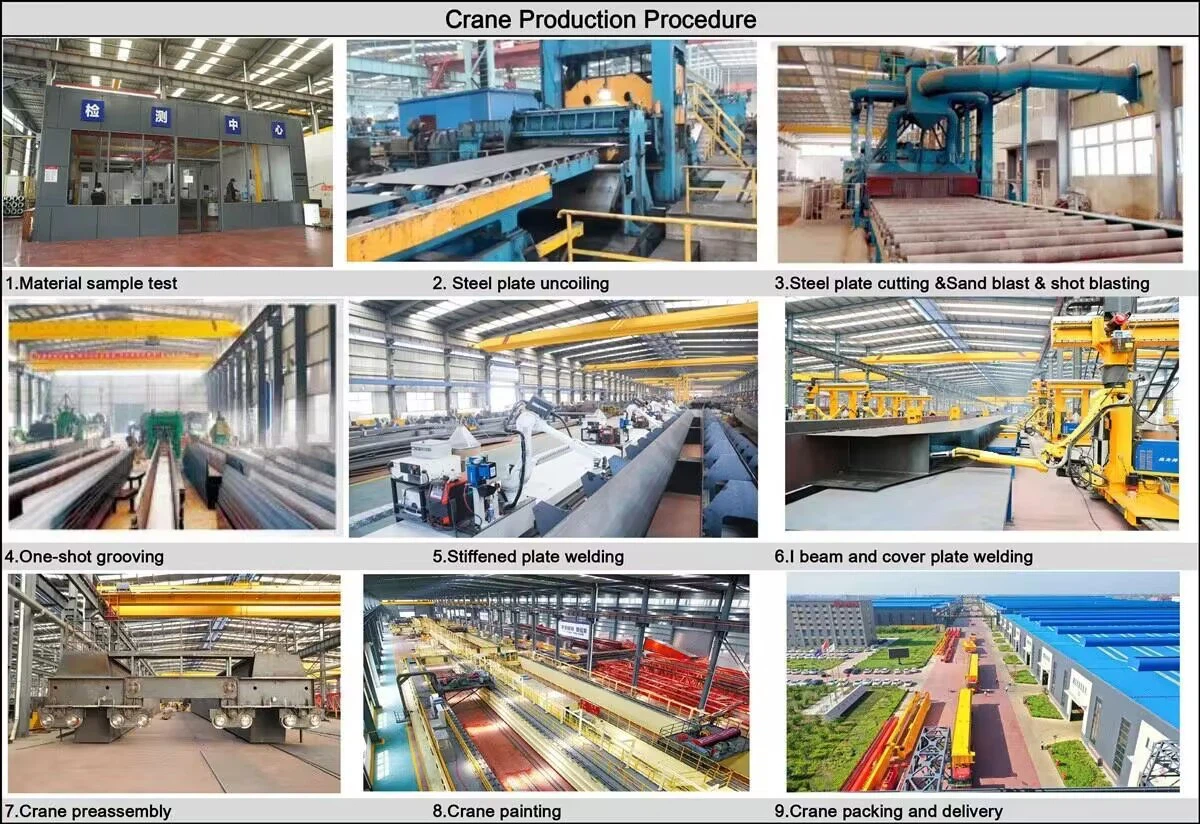
Crane production procedure
1.Design and Engineering
Requirements Gathering:
Load capacity (e.g., 10T, 50T, 100T, etc.), span, lifting height, and operational environment are defined.
Customization needs are assessed, such as control modes (pendant, wireless, cabin) and special features (e.g., anti-collision, overload protection).
Preliminary Design:
Structural engineers and crane designers create the crane's initial design, including the main beam, end carriage, lifting system, trolley system, travel mechanism, and other components.
Calculation and Simulation:
Load calculations are performed to ensure the crane can handle the specified capacity.
Finite element analysis (FEA) may be used to simulate stresses and deflections in the structure to ensure safety and stability.
Detailed Design:
After approval, detailed drawings for each part are made, including the main girder, end carriage, hoist system, motors, control systems, and safety features.
2. Material Procurement
Raw Material Selection:
High-quality materials like steel, alloyed steel, forged steel, and electrical components are sourced according to specifications.
Materials are inspected for quality certification and compliance with industry standards (e.g., ISO, CE).
Component Sourcing:
Standard components such as motors, hoists, control panels, limit switches, and safety devices are sourced from reliable suppliers.
3. Fabrication of Components
Main Girder:
Cutting and welding of steel plates to form the bridge girder.
The girder is assembled by welding or bolting sections, ensuring it meets the required strength and precision.
End Carriage Assembly:
The end carriage is fabricated and assembled to hold the crane on the runway rails.
Wheel assemblies are installed to ensure smooth travel along the rails.
Hoist and Trolley System:
The hoist unit (electric or manual) is assembled, including the drum, wire rope, hook, and motor.
The trolley system is built to transport the hoist across the bridge, including trolley wheels and drive mechanisms.
Crane Traveling Mechanism:
The crane wheels are mounted on the end carriages, ensuring smooth horizontal movement.
The drive system is installed to control travel speed.
4. Assembly of Crane
Main Beam Installation:
The assembled main girder is lifted and positioned onto the end carriages.
The girder is aligned to ensure structural integrity.
Trolley and Hoist Installation:
The trolley system is mounted onto the main girder, and the hoist is mounted to the trolley.
The load chain or wire rope is installed and tested for smooth operation.
Travel Mechanism Setup:
The crane wheels are fitted, and the drive mechanism is connected to the control system for horizontal movement.
5. Electrical and Control System Installation
Wiring and Control Panel:
The control panel is installed and wired to manage all crane movements (hoisting, trolley, crane travel).
Limit switches, emergency stop buttons, and safety alarms are integrated into the control system.
Motor and Gear Installation:
Motors for hoisting, traveling, and the trolley are installed and connected to their respective gear systems.
Testing of Control Systems:
Control systems are checked to ensure proper integration of pendant control, wireless remote, or cabin control options.
6. Testing and Quality Control
Load Testing:
The crane undergoes static load testing (to check stability) and dynamic load testing (to check operational performance under actual working conditions).
Overload protection and limit switches are tested to ensure they function correctly.
Safety System Testing:
The sound and light alarms, limit switches, emergency stop buttons, and safety devices are all tested for functionality.
Movement Testing:
All movements-hoisting, trolley movement, bridge travel, and sway control-are tested for smooth operation and precision.
Electrical Testing:
All electrical components are tested for proper wiring, grounding, and communication between systems.
Documentation and Certification:
The crane is inspected according to international safety standards and undergoes certification by relevant authorities (e.g., CE, ISO).
Test certificates for motors, cranes, and load testing are prepared.
7. Final Inspection and Painting
Visual Inspection:
A thorough inspection is carried out to ensure that the crane meets design specifications and safety requirements.
Painting:
The crane is painted with high-quality anti-corrosion coatings to protect it from environmental conditions.
Marking and Labeling:
Safety labels, warnings, and capacity markings are applied to the crane for proper identification.
8. Delivery and Installation
Shipping:
The crane is carefully disassembled into transportable parts (if needed) and shipped to the customer's location.
Installation:
The crane is installed on-site, and all connections (power, mechanical, control) are made.
Final Commissioning:
The crane is commissioned by running it through a series of operational tests to ensure it works properly.
Operator training is conducted, if necessary, for safe and efficient use.
9. Post-Installation Support
Customer Training:
Operator training on how to use the crane safely and effectively.
Maintenance Schedule:
Providing a maintenance plan for the crane's continued operation, including regular inspections, lubrication, and testing.
After-Sales Support:
Offering spare parts, troubleshooting, and repair services.
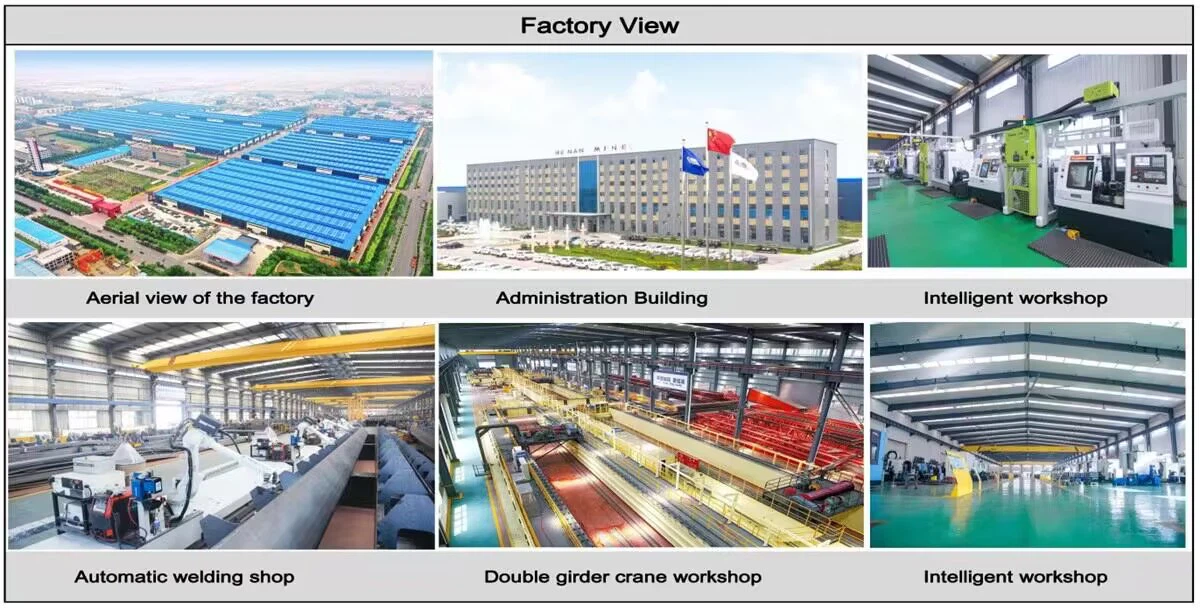
Workshop view:
The company has installed an intelligent equipment management platform, and has installed 310 sets (sets) of handling and welding robots. After the completion of the plan, there will be more than 500 sets (sets), and the equipment networking rate will reach 95%. 32 welding lines have been put into use, 50 are planned to be installed, and the automation rate of the entire product line has reached 85%.


Hot Tags: crab overhead crane, China crab overhead crane manufacturers, suppliers, factory, Double Girder Overhead Travelling Crane, Double Girder Overhead Crane
Previous
Overhead Crane With WinchYou Might Also Like


Send Inquiry