







Overhead Traveling Bridge Crane
Products Description
Types of Overhead Bridge Cranes:
Top-Running:
Runs on rails mounted on top of runway beams (higher lifting height).
Handles heavier loads (up to 500+ tons).
Under-Running (Underhung):
The bridge hangs from the bottom flange of runway beams.
Used for lighter loads (up to 20 tons) and lower headroom.
Gantry Crane (similar but ground-supported):
Uses legs or supports on the floor instead of building structure.
Safety Features:
Limit switches (prevents overtravel).
Overload protection (prevents exceeding capacity).
Brakes & emergency stops.
Anti-collision systems (for multiple cranes).
Considerations When Choosing:
Load capacity & span requirements.
Lifting height & building structure.
Duty cycle (frequency of use).
Power supply (electric vs. manual).
Comparison with Other Crane Types
| Feature | Overhead Bridge Crane | Gantry Crane | Jib Crane |
|---|---|---|---|
| Load Capacity | Up to 500+ tons | Up to 500+ tons | Up to 20 tons |
| Mobility | Fixed runway system | Can be mobile (rail-mounted) | Fixed or wall-mounted |
| Coverage | Large span | Large span | Limited to a small radius |
| Floor Space | No floor obstruction | Requires ground space | Takes up floor space |
| Best For | Factories, warehouses | Outdoor yards, shipyards | Workshops, loading bays |

Pictures & Components
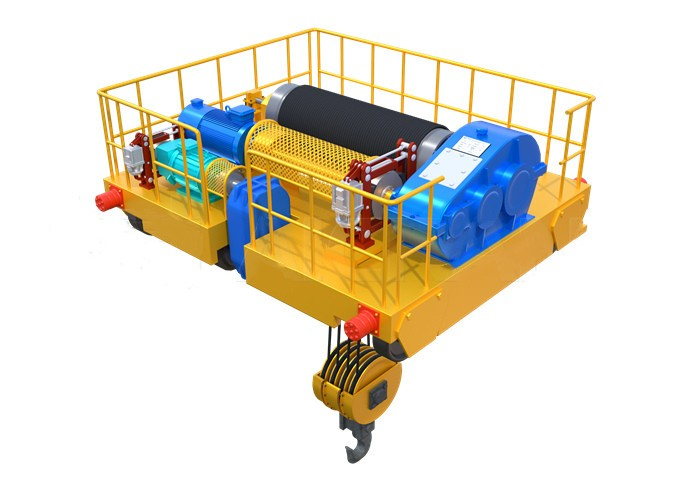
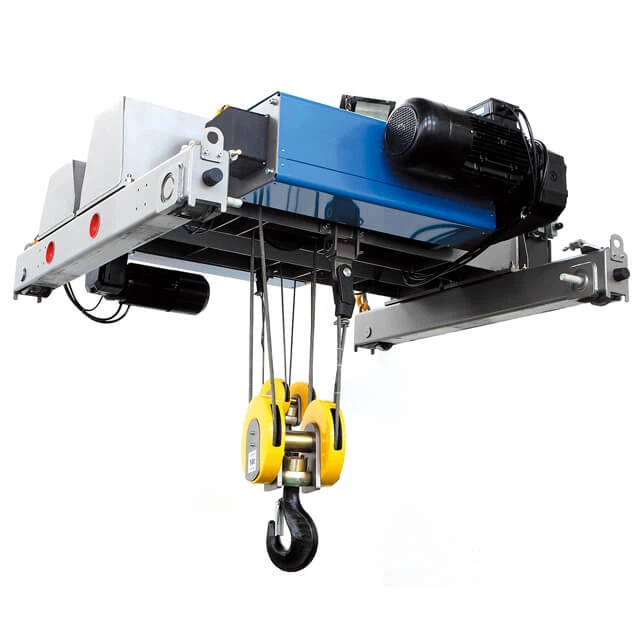
An overhead traveling bridge crane consists of several key components that work together to lift, move, and position heavy loads efficiently. Below is a detailed breakdown of the main components:
1. Bridge (Main Girder)
The primary horizontal beam that spans the width of the work area.
Can be:
Single-girder: Lighter loads (up to ~20 tons), cost-effective.
Double-girder: Heavier loads (up to 500+ tons), more rigid and stable.
Made of steel box girders or I-beams for strength.
 |
 |
2. End Trucks (End Carriages)
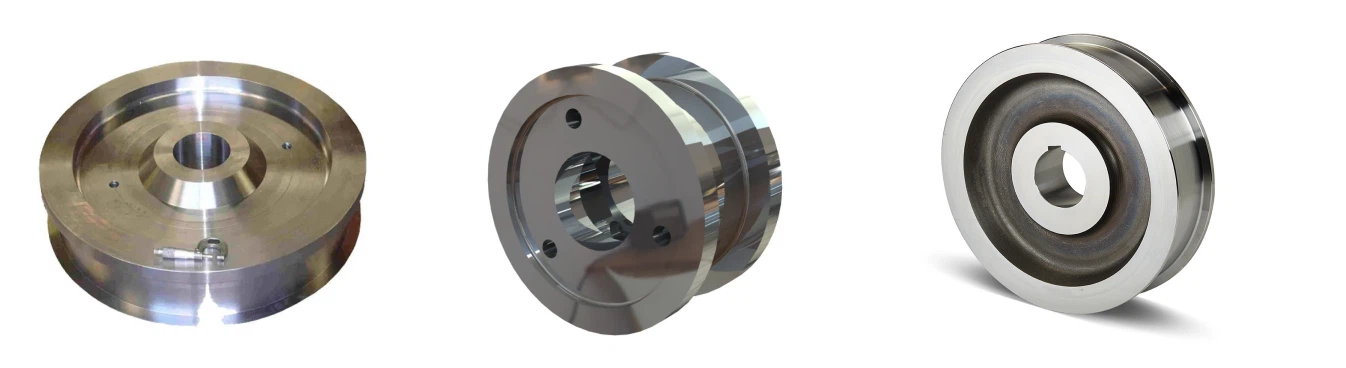
Located at each end of the bridge, equipped with wheels for movement.
Contain drive motors (for powered cranes) or manual push mechanisms.
Run along the runway rails to move the crane lengthwise.
 |
 |
3. Runway System
Supports the crane and allows it to travel.
Consists of:
Runway beams (mounted to the building structure or columns).
Runway rails (steel tracks for smooth movement).
Types:
Top-running: Rails mounted on top of beams (higher capacity).
Underhung (under-running): Crane hangs from bottom-flange rails (saves headroom).
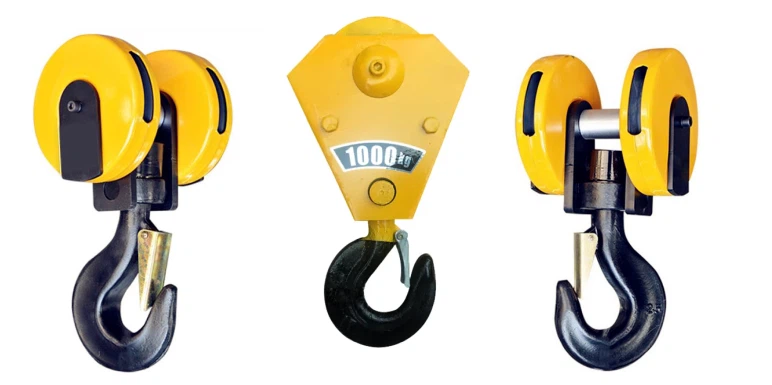
4. Hoist
The lifting mechanism that raises/lowers the load.
Types:
Electric hoist (common, powered by motor).
Wire rope hoist (for heavy loads).
Chain hoist (manual or electric, for lighter loads).
Includes:
Hook block (attaches to the load).
Drum or pulley system (for rope/chain winding).
Brake (safety lock).
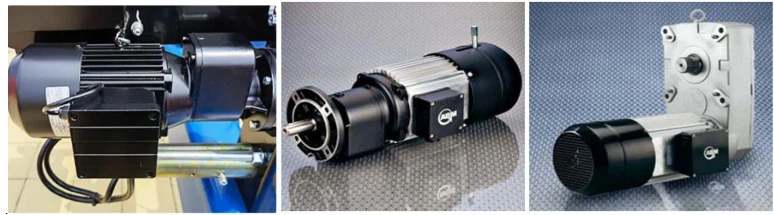
5. Trolley
Moves the hoist horizontally along the bridge.
Can be:
Motorized trolley (electric drive for precision).
Manual trolley (pushed by hand).
Mounted on the bridge girder via wheels or gears.

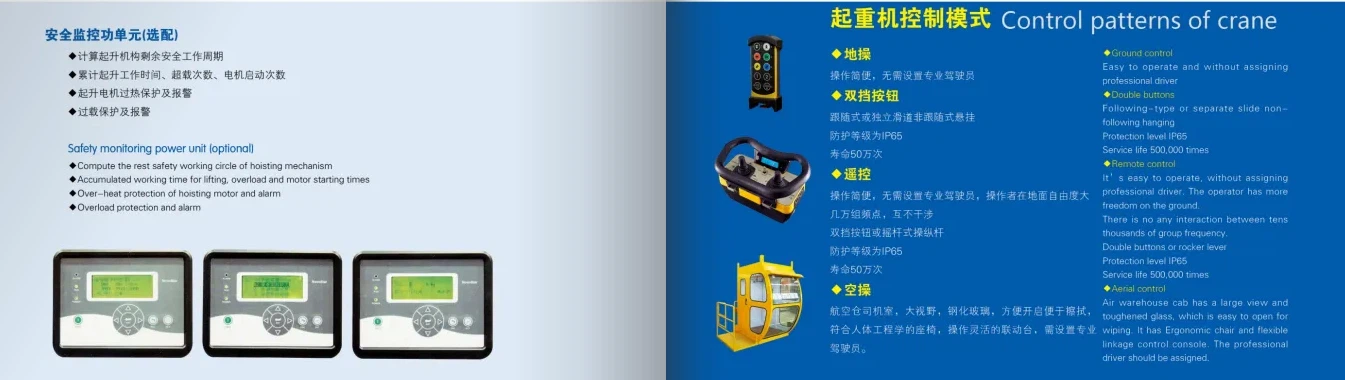
6. Controls
Allows the operator to maneuver the crane.
Types:
Pendant control (handheld, wired controller).
Radio remote control (wireless operation).
Cab-operated (for large cranes, operator sits in a cabin).
.
7. Electrical System
Powers the crane's movement and hoist.
Includes:
Festoon system (cable management for power/data).
Conductor bars (for power delivery in large cranes).
Variable Frequency Drives (VFDs) (for smooth acceleration).

8. Safety Devices
Limit switches (prevents over-travel).
Overload protection (cuts power if capacity is exceeded).
Emergency stop button (immediate shutdown).
Anti-collision sensors (for multiple cranes).
Warning alarms (audible/visual signals).
9. Bumpers & Buffers
Absorbs impact at the end of travel to prevent damage.
Can be rubber, hydraulic, or spring-based.
10. Festoon / Cable Reel
Manages power and control cables as the crane moves.
Prevents tangling and damage.

SKETCH

Main technical

Advantages
Advantages of Overhead Traveling Bridge Cranes
Overhead traveling bridge cranes are widely used in industrial and commercial settings due to their efficiency, versatility, and safety. Here are their key advantages:
1. High Load Capacity
Can handle loads ranging from 1 ton to over 500 tons, depending on design.
Double-girder cranes are ideal for extremely heavy loads.
2. Efficient Use of Space
Operates above floor level, freeing up valuable workspace.
No obstructions for ground vehicles or workers.
3. Precise Load Handling
Smooth movement with variable speed control (VFDs for electric cranes).
Accurate positioning for assembly, machining, or storage tasks.
4. Wide Coverage Area
Can span large work areas (e.g., warehouses, production lines).
Long travel distances along runway rails.
5. Durability & Long Service Life
Built with heavy-duty steel for long-term reliability.
Low maintenance compared to mobile cranes.
6. Safety Features
Overload protection, limit switches, and emergency brakes.
Reduced manual lifting, minimizing worker injuries.
7. Customizable Configurations
Available in single-girder, double-girder, top-running, or underhung designs.
Can be automated with smart controls for Industry 4.0 applications.
8. Cost-Effective Material Handling
Reduces labor costs and speeds up workflows.
Lower operational costs compared to forklifts or mobile cranes.
Application:
Applications of Overhead Traveling Bridge Cranes
These cranes are used across various industries for lifting, moving, and positioning heavy materials. Common applications include:
1. Manufacturing & Assembly Plants
Moving raw materials, machinery, and finished products.
Automotive industry: Handling engines, chassis, and heavy components.
Steel mills: Transporting molten metal, coils, and structural beams.
2. Warehousing & Logistics
Loading/unloading heavy pallets and containers.
Distribution centers: Stacking and retrieving goods in high-bay warehouses.
3. Construction & Heavy Engineering
Prefabricated structure assembly.
Handling concrete panels, steel beams, and construction materials.
4. Power Plants & Energy Sector
Maintenance of turbines, generators, and transformers.
Fuel handling in nuclear or coal-fired plants.
5. Shipbuilding & Ports
Moving ship parts, engines, and large metal sections.
Dockyards for loading/unloading cargo.
6. Aerospace Industry
Handling aircraft wings, fuselage, and engine components.
Precision positioning in assembly lines.
7. Mining & Material Processing
Transporting ore, minerals, and heavy machinery.
Foundries for handling molds and castings.
8. Automotive & Heavy Machinery
Assembly line operations for vehicles and industrial equipment.
Stamping presses, dies, and robotic integration.
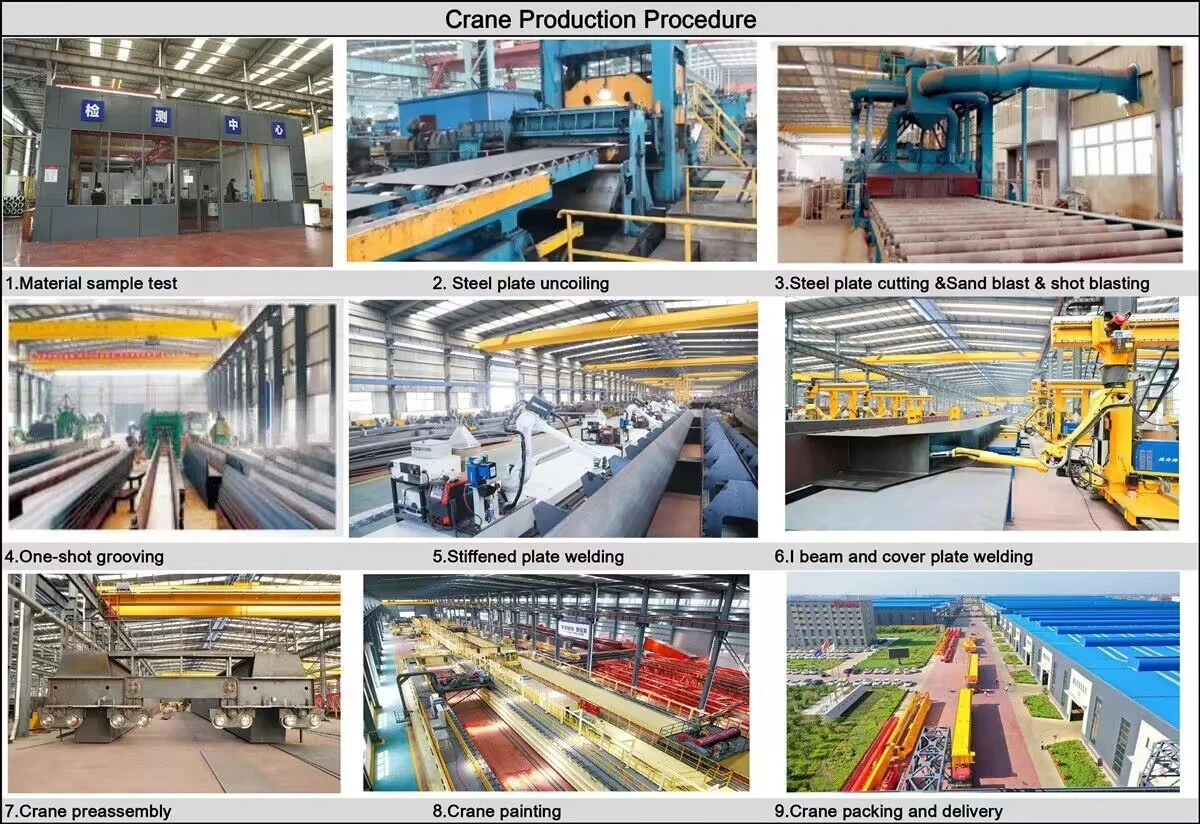
Crane production procedure
1.Design and Engineering
Requirements Gathering:
Load capacity (e.g., 10T, 50T, 100T, etc.), span, lifting height, and operational environment are defined.
Customization needs are assessed, such as control modes (pendant, wireless, cabin) and special features (e.g., anti-collision, overload protection).
Preliminary Design:
Structural engineers and crane designers create the crane's initial design, including the main beam, end carriage, lifting system, trolley system, travel mechanism, and other components.
Calculation and Simulation:
Load calculations are performed to ensure the crane can handle the specified capacity.
Finite element analysis (FEA) may be used to simulate stresses and deflections in the structure to ensure safety and stability.
Detailed Design:
After approval, detailed drawings for each part are made, including the main girder, end carriage, hoist system, motors, control systems, and safety features.
2. Material Procurement
Raw Material Selection:
High-quality materials like steel, alloyed steel, forged steel, and electrical components are sourced according to specifications.
Materials are inspected for quality certification and compliance with industry standards (e.g., ISO, CE).
Component Sourcing:
Standard components such as motors, hoists, control panels, limit switches, and safety devices are sourced from reliable suppliers.
3. Fabrication of Components
Main Girder:
Cutting and welding of steel plates to form the bridge girder.
The girder is assembled by welding or bolting sections, ensuring it meets the required strength and precision.
End Carriage Assembly:
The end carriage is fabricated and assembled to hold the crane on the runway rails.
Wheel assemblies are installed to ensure smooth travel along the rails.
Hoist and Trolley System:
The hoist unit (electric or manual) is assembled, including the drum, wire rope, hook, and motor.
The trolley system is built to transport the hoist across the bridge, including trolley wheels and drive mechanisms.
Crane Traveling Mechanism:
The crane wheels are mounted on the end carriages, ensuring smooth horizontal movement.
The drive system is installed to control travel speed.
4. Assembly of Crane
Main Beam Installation:
The assembled main girder is lifted and positioned onto the end carriages.
The girder is aligned to ensure structural integrity.
Trolley and Hoist Installation:
The trolley system is mounted onto the main girder, and the hoist is mounted to the trolley.
The load chain or wire rope is installed and tested for smooth operation.
Travel Mechanism Setup:
The crane wheels are fitted, and the drive mechanism is connected to the control system for horizontal movement.
5. Electrical and Control System Installation
Wiring and Control Panel:
The control panel is installed and wired to manage all crane movements (hoisting, trolley, crane travel).
Limit switches, emergency stop buttons, and safety alarms are integrated into the control system.
Motor and Gear Installation:
Motors for hoisting, traveling, and the trolley are installed and connected to their respective gear systems.
Testing of Control Systems:
Control systems are checked to ensure proper integration of pendant control, wireless remote, or cabin control options.
6. Testing and Quality Control
Load Testing:
The crane undergoes static load testing (to check stability) and dynamic load testing (to check operational performance under actual working conditions).
Overload protection and limit switches are tested to ensure they function correctly.
Safety System Testing:
The sound and light alarms, limit switches, emergency stop buttons, and safety devices are all tested for functionality.
Movement Testing:
All movements-hoisting, trolley movement, bridge travel, and sway control-are tested for smooth operation and precision.
Electrical Testing:
All electrical components are tested for proper wiring, grounding, and communication between systems.
Documentation and Certification:
The crane is inspected according to international safety standards and undergoes certification by relevant authorities (e.g., CE, ISO).
Test certificates for motors, cranes, and load testing are prepared.
7. Final Inspection and Painting
Visual Inspection:
A thorough inspection is carried out to ensure that the crane meets design specifications and safety requirements.
Painting:
The crane is painted with high-quality anti-corrosion coatings to protect it from environmental conditions.
Marking and Labeling:
Safety labels, warnings, and capacity markings are applied to the crane for proper identification.
8. Delivery and Installation
Shipping:
The crane is carefully disassembled into transportable parts (if needed) and shipped to the customer's location.
Installation:
The crane is installed on-site, and all connections (power, mechanical, control) are made.
Final Commissioning:
The crane is commissioned by running it through a series of operational tests to ensure it works properly.
Operator training is conducted, if necessary, for safe and efficient use.
9. Post-Installation Support
Customer Training:
Operator training on how to use the crane safely and effectively.
Maintenance Schedule:
Providing a maintenance plan for the crane's continued operation, including regular inspections, lubrication, and testing.
After-Sales Support:
Offering spare parts, troubleshooting, and repair services.
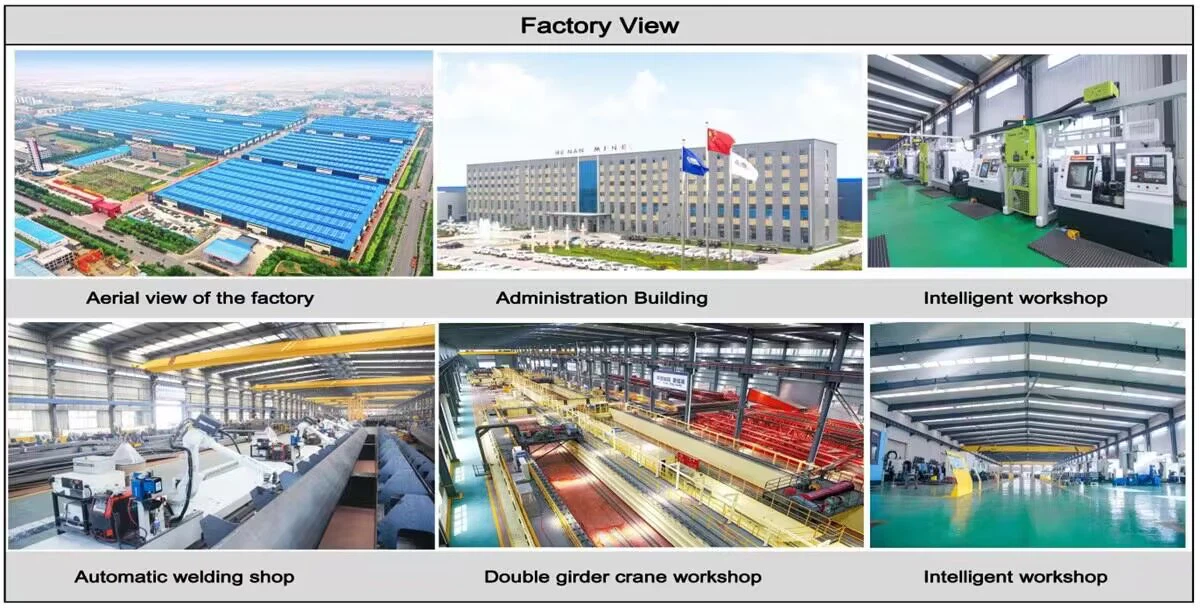
Workshop view:
The company has installed an intelligent equipment management platform, and has installed 310 sets (sets) of handling and welding robots. After the completion of the plan, there will be more than 500 sets (sets), and the equipment networking rate will reach 95%. 32 welding lines have been put into use, 50 are planned to be installed, and the automation rate of the entire product line has reached 85%.


Hot Tags: overhead traveling bridge crane, China overhead traveling bridge crane manufacturers, suppliers, factory, Double Girder Overhead Travelling Crane, Double Girder Overhead Crane
You Might Also Like


Send Inquiry