







5t Double Girder Bridge Crane
Products Description
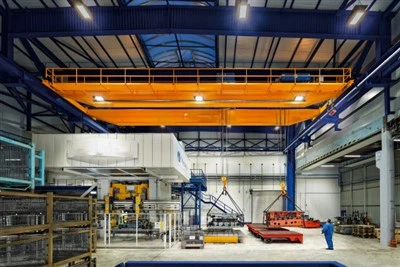
A 5t Double Girder Bridge Crane is an overhead crane designed for lifting and moving heavy loads up to 5 metric tons in industrial settings. It consists of two parallel girders (beams) supported by end trucks that run along runway rails, enabling movement along the length of a building (bridge movement). A trolley and hoist travel across the girders for transverse movement.
Key Features:
Lifting Capacity: 5 metric tons (can be customized for higher capacities).
Double Girder Design: Provides greater stability, higher hook height, and better load distribution than single-girder cranes.
Span: Adjustable based on workshop requirements (typically 10m–35m).
Lifting Height: Customizable (usually 6m–30m).
Control Options:
Pendant control (wired handheld)
Radio remote control
Cabin-operated (for frequent heavy-duty use)
Hoist Type: Electric wire rope hoist or chain hoist (depending on application).
Duty Class: Ranges from light (A3) to heavy-duty (A6/A7) based on usage frequency.
Comparison: Standard vs. Explosion-Proof Cranes
| Feature | Standard Crane | Explosion-Proof Crane |
|---|---|---|
| Certification | CE, ISO | ATEX, IECEx, EN 60079 |
| Electrical Safety | Standard enclosures | Flameproof (Ex d) or Intrinsic Safety (Ex i) |
| Materials | Carbon steel | Stainless steel, non-sparking alloys |
| Cost | Lower upfront cost | Higher (20–40% premium for Ex-rated parts) |
| Maintenance | Routine checks | Strict inspections for Ex compliance |
Comparison: Standard vs. Explosion-Proof Overhead Crane
| Feature | Standard Overhead Crane | Explosion-Proof Overhead Crane |
|---|---|---|
| Motor & Electricals | Standard, no special protection | Spark-proof, flameproof enclosures |
| Certification | CE, FEM, ISO | ATEX, IECEx, EN 60079 |
| Usage Environment | Normal industrial settings | Hazardous (Zone 1, Zone 2, Zone 21, Zone 22) |
| Cost | Lower | Higher (due to specialized components) |

Pictures & Components
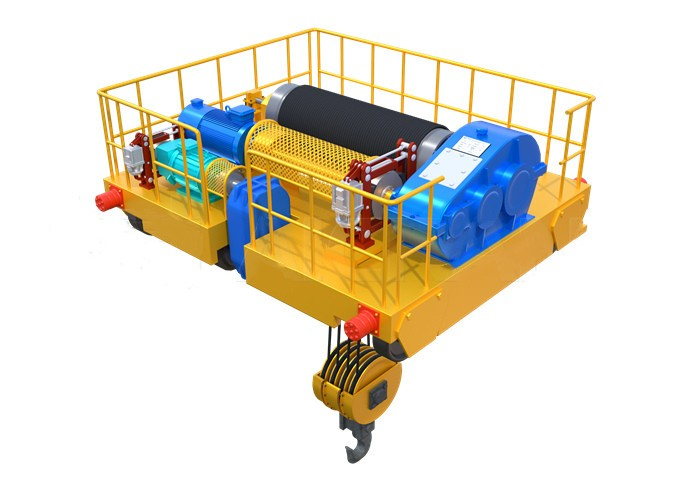
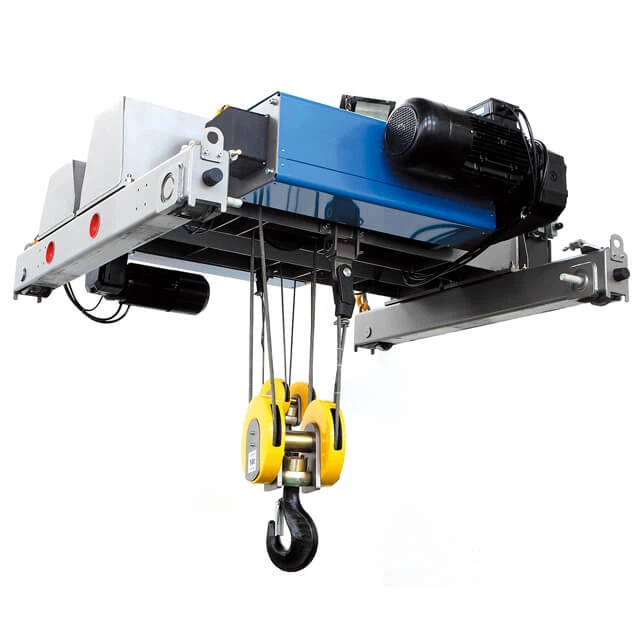
5t Double Girder Bridge Crane is a robust lifting system used in industrial settings for heavy-duty applications. Here are its key components:
1. Bridge Girder (Main Load-Bearing Structure)
Double girders: Two parallel beams that span the crane runway, providing high load capacity and stability.
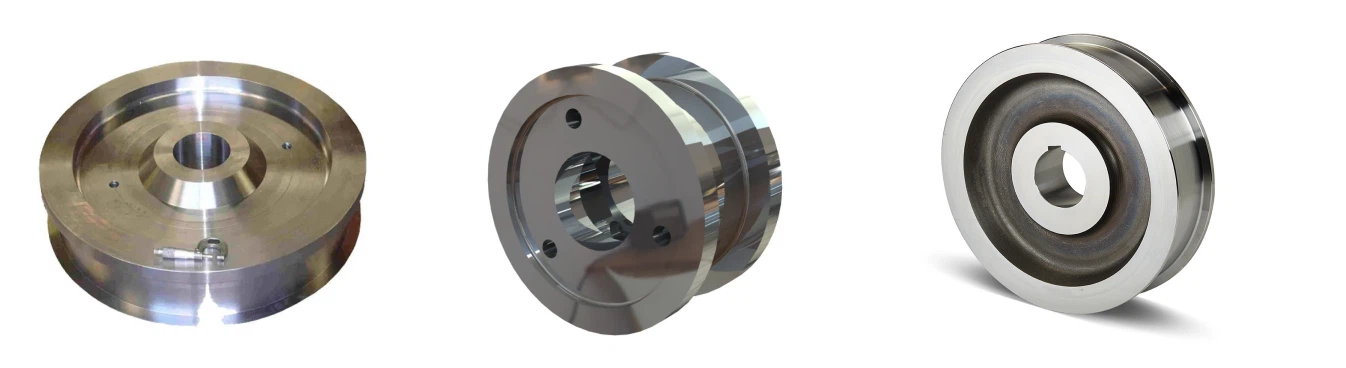
End trucks (End carriages): Wheeled structures at each end of the girders that allow the crane to move along the runway rails.
2. Hoist & Trolley
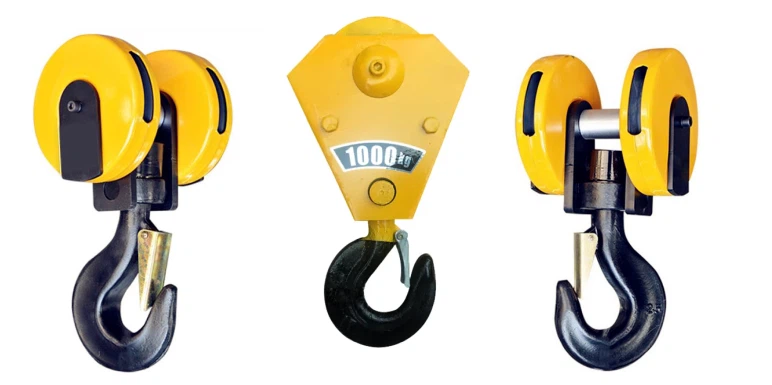
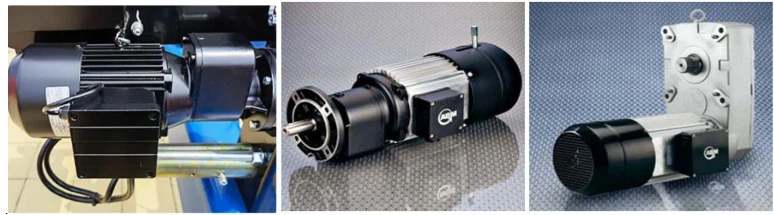
Electric hoist (5-ton capacity): The lifting mechanism with a motor, gearbox, wire rope/chain, and hook.
Trolley: Moves horizontally along the bridge girders, carrying the hoist.

3. Runway System
Runway rails: Installed on building columns or freestanding supports.
Crane wheels: Guide the crane along the runway.
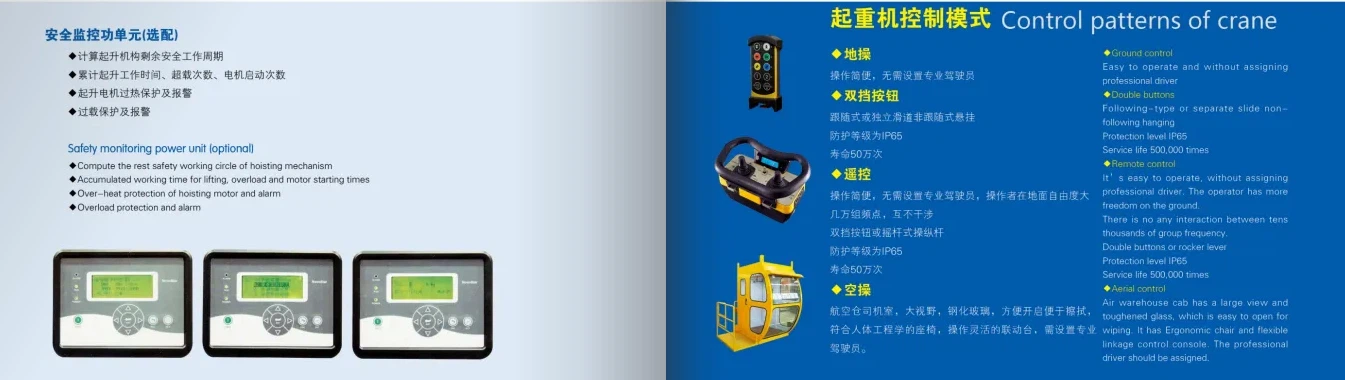
4. Electrical System
Crane control panel: Manages lifting, traversing, and long-travel movements.
Power supply: Festoon system (cable reels or conductor bars).
Limit switches: Prevent over-travel of the hoist and trolley.
 |
 |
5. Safety Components
Overload limiter: Prevents lifting beyond 5t capacity.
Emergency stop button: For immediate shutdown.
Bumpers & buffers: Absorb impact at runway ends.
 |
 |
6. Cab or Pendant Control
Operator's cab (for cab-operated cranes) or pendant control (handheld remote).
7. Additional Features (Optional)
Variable frequency drives (VFDs) for smooth acceleration/deceleration.
Anti-sway system for precise load positioning.
Radio remote control for wireless operation.

A 5-ton double girder bridge crane is a heavy-duty lifting equipment used in industrial settings. Its safety components are critical to ensuring safe operation and preventing accidents. Below are the key safety components and their functions:
1. Overload Limiter (Load Limiter)
Prevents the crane from lifting loads exceeding its rated capacity (5 tons).
Automatically cuts off power if an overload is detected.
2. Limit Switches
Hoisting Limit Switch: Stops the hoist mechanism when the hook reaches the upper or lower limit.
Travel Limit Switch: Prevents the crane or trolley from over-traveling beyond the runway ends.
3. Emergency Stop Button (E-Stop)
Allows immediate shutdown of crane operations in case of an emergency.
4. Anti-Collision System
Used when multiple cranes operate on the same runway to prevent collisions (common in double girder setups).
5. Braking System
Hoist Brake: Prevents uncontrolled lowering of the load.
Trolley & Bridge Brakes: Ensures smooth stopping of trolley and bridge movements.
6. Safety Hook & Latch
Prevents slings or chains from slipping off the hook during operation.
7. Warning Devices (Alarm/Buzzer)
Audible and visual alarms alert workers before crane movement.
8. Insulated Power Supply (for Hazardous Areas)
Prevents electrical sparks in explosive or flammable environments.
9. Rail Clamps/Anchors
Secures the crane to the runway rails to prevent unintended movement.
10. Voltage Protection & Phase Sequence Relay
Protects against power fluctuations and incorrect phase connections.
11. Windproof Device (for Outdoor Cranes)
Prevents crane movement due to strong winds (if installed outdoors).
12. Control Pendant Safety Features
Emergency stop, key lock, and waterproofing (for outdoor use).
13. Load Weighing Indicator
Displays real-time load weight to prevent overloading.
14. Redundant Safety Mechanisms (Optional)
Backup brakes, dual limit switches, or redundant motor drives for critical applications.
.

Comparison: Standard vs. Explosion-Proof Components
| Component | Standard Crane | Explosion-Proof Crane |
|---|---|---|
| Motor | Standard IP55 | ATEX Ex d/Ex e Certified |
| Control Panel | Standard enclosure | Flameproof (Ex d) |
| Wiring | Normal insulation | Armored, sealed conduits |
| Brakes | Standard friction | Spark-resistant materials |
| Remote Control | Standard RF | Intrinsically Safe (Ex i) |

SKETCH

Main technical

Advantages
A 5-ton double girder bridge crane is a robust and versatile lifting solution widely used in industrial settings. Here are its key advantages:
1. Higher Lifting Capacity & Stability
Double girders distribute weight more evenly than single-girder cranes, allowing for higher load capacities (up to 5 tons or more) with better stability and reduced deflection.
Ideal for heavy-duty applications like steel plants, warehouses, and manufacturing.
2. Longer Span & Durability
Designed for wider bay spans (up to 35m or more), making them suitable for large workshops or outdoor use.
Robust construction with high-strength steel ensures longevity even in harsh environments.
3. Precision & Smooth Operation
Equipped with dual hoists for balanced lifting, reducing sway and improving load positioning.
Features variable speed control for precise handling of delicate or heavy loads.
4. Enhanced Safety Features
Includes redundant braking systems, overload protection, limit switches, and emergency stop functions.
Enclosed trolley and end carriage design minimizes risks of mechanical failures.
5. Customizable & Versatile
Can be adapted with explosion-proof, heat-resistant, or automated controls (for smart factories).
Supports multiple lifting attachments (hooks, magnets, grabs) for diverse applications.
6. Lower Long-Term Costs
Reduced maintenance due to sturdy build and high-quality components.
Energy-efficient options (e.g., regenerative drives) available for cost savings.
7. Space Optimization
Compact hook approach (closer to runway beams) maximizes vertical lifting space compared to single-girder cranes.
Application:
A 5t Double Girder Bridge Crane is a robust overhead lifting solution designed for medium-duty industrial applications. It consists of two parallel girders supported by end trucks, offering higher lifting capacity, better stability, and longer span capabilities compared to single-girder cranes. Below are its key applications, features, and benefits:
Applications
Manufacturing Plants – Used in automotive, steel, and machinery production for handling heavy materials.
Warehouses & Logistics – Efficiently moves pallets, containers, and heavy goods.
Construction Sites – Lifts steel beams, precast concrete, and construction materials.
Power Plants – Handles turbines, generators, and heavy maintenance parts.
Shipbuilding & Ports – Loads/unloads ship components and cargo.
Mining & Metallurgy – Transports raw materials like ores, molds, and castings.
Crane production procedure
The production procedure for a 5t Double Girder Bridge Crane involves several key stages, from design to final testing. Below is a step-by-step outline of the typical manufacturing process:
1. Design & Engineering
Requirements Analysis: Determine load capacity (5t), span, lifting height, duty class (e.g., FEM/ISO standard), and operational environment (indoor/outdoor).
CAD Modeling: Create detailed drawings for the bridge girders, end carriages, hoist, trolley, and electrical systems.
Structural Calculations: Verify girder strength, deflection limits, and fatigue resistance using FEM/ANSYS or manual calculations.
2. Material Procurement
Main Beams: Steel plates (typically Q235B or Q345B for Chinese standards; ASTM A36/A572 for international).
End Carriages: Box-section or fabricated steel.
Electrical Components: Motors, gearboxes, wire ropes, brakes, and control panels (brands like Siemens, ABB, or local equivalents).
3. Fabrication of Main Components
A. Double Girder Fabrication
Cutting: Steel plates are cut via CNC plasma/oxy-fuel cutting to required dimensions.
Welding:
Sub-assemblies (web/flange plates) are welded into I-beam or box-girder sections.
Automated submerged arc welding (SAW) ensures high-quality, distortion-free seams.
Annealing: Stress-relieving heat treatment to prevent warping.
Machining: Drilling holes for connections and machining rail-running surfaces.
B. End Carriages (End Trucks)
Fabricate wheel blocks, buffers, and connecting frames.
Install wheels (forged or cast steel) and anti-derailment devices.
C. Hoist & Trolley
Assemble the 5t electric hoist (wire rope/chain) with motor, gearbox, drum, and hooks.
Build the trolley frame to traverse along the girders.
4. Surface Treatment & Painting
Shot Blasting: Clean surfaces to Sa2.5 standard (ISO 8501).
Priming/Painting: Apply anti-rust primer (e.g., epoxy zinc-rich) and topcoat (polyurethane) for corrosion protection.
5. Assembly
Girder-End Carriage Integration: Bolt or weld girders to end carriages; ensure squareness and alignment.
Rail Installation: Mount crane rails (e.g., QU70/AISC) on girders for trolley movement.
Hoist & Trolley Mounting: Install the hoist onto the trolley and position it on the girders.
Electrical Wiring: Connect power supply, limit switches, sensors, and pendant/radio controls.
6. Testing & Inspection
No-Load Test: Run trolley/hoist across full span; check smooth movement and alignment.
Load Test:
Static Test: 125% rated load (6.25t) held for 10 mins; check deflection (<L/700–L/1000)).
Dynamic Test: 110% load (5.5t) lifted/moved to verify braking and stability.
Electrical Safety Checks: Insulation resistance, emergency stops, overload protection.
7. Documentation & Delivery
Prepare manuals (operation, maintenance), test reports, and certifications (CE, ISO, GOST, etc.).
Dismantle (if modular) for shipping or deliver as whole for onsite installation.
8. Onsite Installation (Optional)
Erect runway beams/rails (if not pre-installed).
Reassemble crane components; align and calibrate.
Conduct final load test at customer's facility.
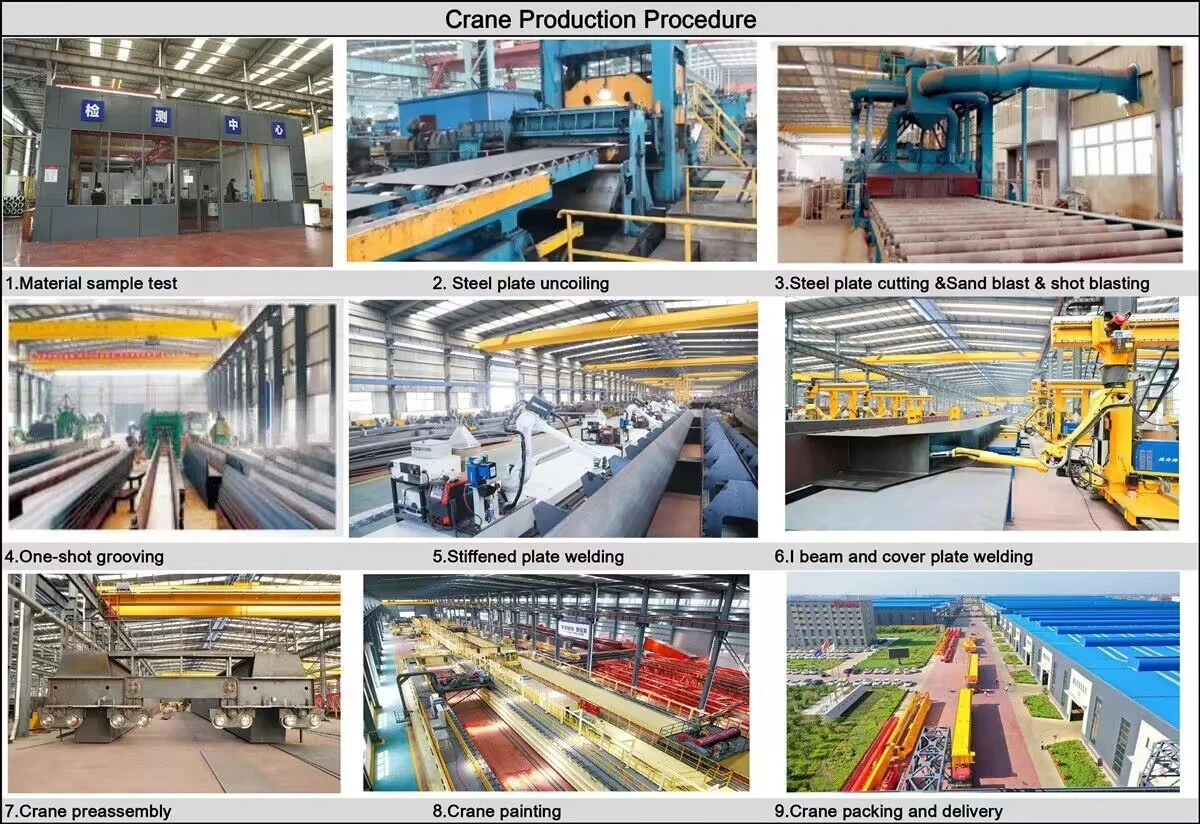
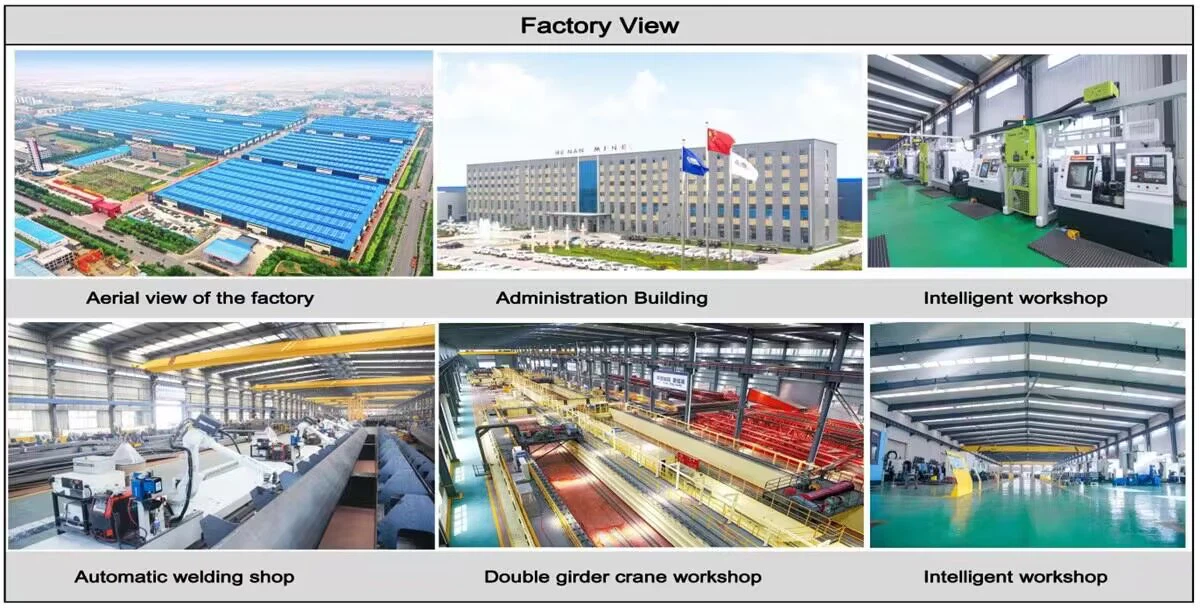
Workshop view:
The company has installed an intelligent equipment management platform, and has installed 310 sets (sets) of handling and welding robots. After the completion of the plan, there will be more than 500 sets (sets), and the equipment networking rate will reach 95%. 32 welding lines have been put into use, 50 are planned to be installed, and the automation rate of the entire product line has reached 85%.


Hot Tags: 5t double girder bridge crane, China 5t double girder bridge crane manufacturers, suppliers, factory, Double Girder Overhead Crane, Double Girder Overhead Travelling Crane
You Might Also Like


Send Inquiry