







Overhead Grab Crane
Products Description
Types of Overhead Grab Cranes
A. Based on Grab Bucket Design
| Type | Description | Best For |
|---|---|---|
| Clamshell Grab | Two hinged buckets that open & close like a shell | Grain, sand, coal, fertilizers |
| Orange Peel Grab | Multiple (4-6) hinged jaws for gripping scrap | Scrap metal, demolition waste, rocks |
| Electro-Hydraulic Grab | Powered by hydraulic cylinders for heavy-duty use | Mining, large-scale bulk handling |
| Rope-Operated Grab | Uses wire ropes to open/close the bucket | Cement, fly ash, dry bulk materials |
B. Based on Crane Structure
Single Girder Grab Crane – Light to medium-duty (up to 20 tons).
Double Girder Grab Crane – Heavy-duty (up to 50+ tons), longer spans.
Gantry Grab Crane – Mobile version for outdoor use (ports, stockyards).
Grab Crane vs. Standard Hook Crane
| Feature | Grab Crane | Standard Hook Crane |
|---|---|---|
| Load Type | Bulk materials (loose, granular) | Solid loads (machinery, crates) |
| Handling Method | Scooping & dumping | Lifting & placing |
| Control Complexity | Requires extra ropes/hydraulics | Simpler hook operation |
| Common Industries | Mining, ports, steel mills | Manufacturing, warehouses |
Core Components:Bearing, Gearbox, Motor, Pump
Place of Origin:Henan, China
Warranty:1 Year
Weight (KG):2000 kg
Video outgoing-inspection:Provided
Machinery Test Report:Provided
Design:Double beam
Effectiveness:high efficiency
Operating speed:High speed operation
Stability:Anti-swing function
Color:Optional
Power Source:110V/220V/230V/380V/440V,customized
Span:7.5-31.5m

Pictures & Components
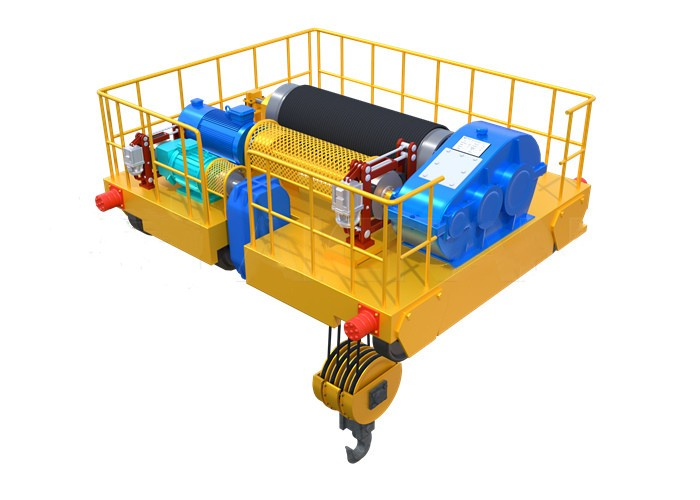
An overhead grab crane consists of specialized parts designed for efficient bulk material handling. Below is a detailed breakdown of its components:
1. Main Structural Components
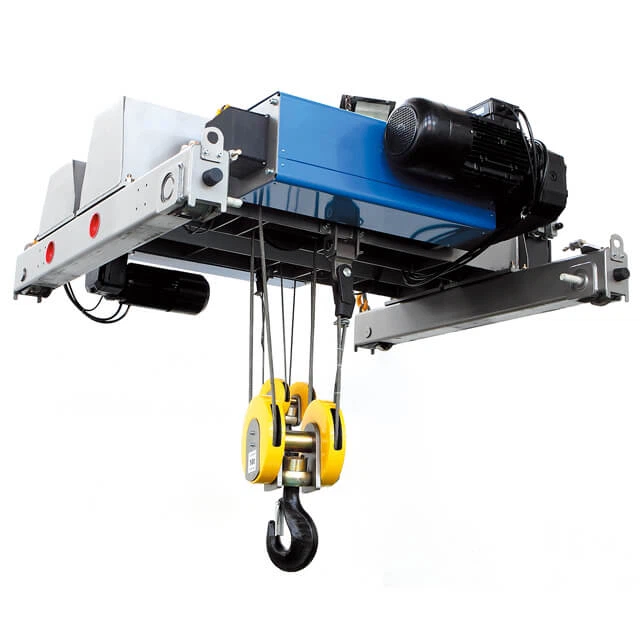
A. Bridge Girders
Single or double girder construction (double girder for heavy-duty use).
Made of welded steel box sections for high strength and minimal deflection.
Supports the trolley, hoist, and grab mechanism.
 |
 |
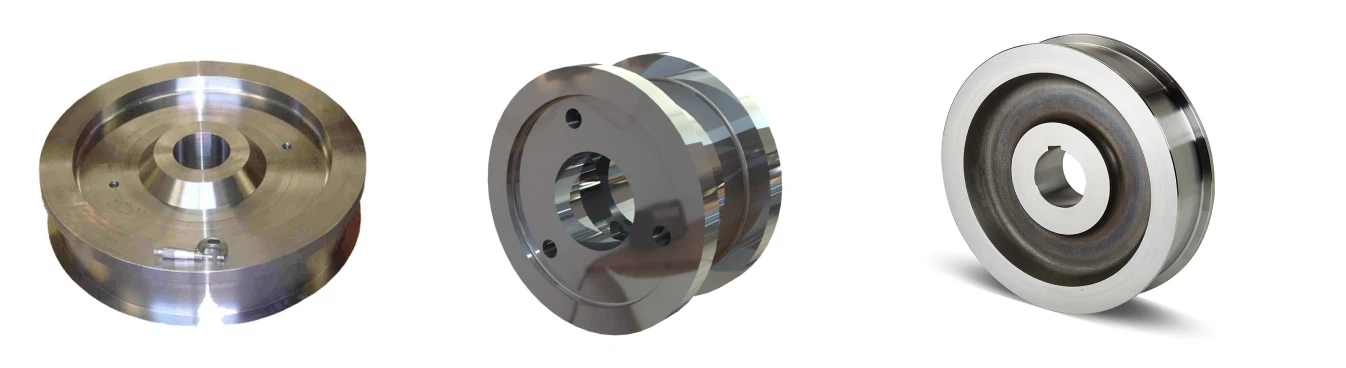
B. End Trucks (End Carriages)
Wheeled frames that move along the runway rails.
Equipped with drive motors, brakes, and buffers for smooth travel.
C. Runway System
Includes rails, support beams, and columns.
Designed to withstand dynamic loads during grab operation.
 |
 |
2. Grab Bucket & Lifting Mechanism
A. Grab Bucket Types
| Type | Description | Best For |
|---|---|---|
| Clamshell Grab | Two hinged buckets (rope or motor-operated) | Coal, grain, sand |
| Orange Peel Grab | 4-6 jaws for uneven/scrap materials | Scrap metal, rocks |
| Electro-Hydraulic Grab | Hydraulic-powered, high precision | Heavy-duty mining |
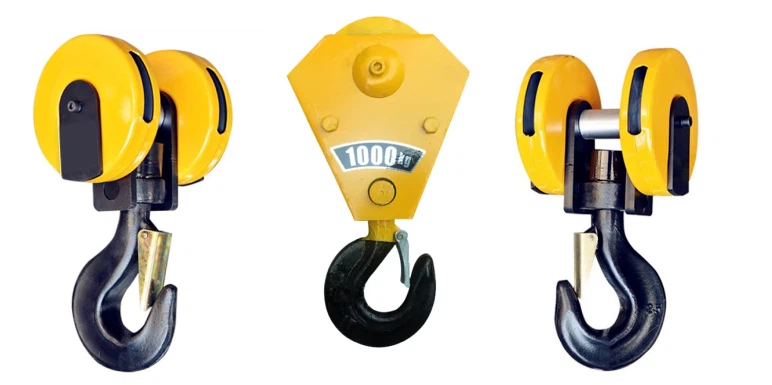
B. Hoist & Trolley
Main Hoist – Lifts/lowers the grab bucket.
Auxiliary Hoist – Controls grab opening/closing (for rope-operated grabs).
Trolley Frame – Moves horizontally along the bridge girders.
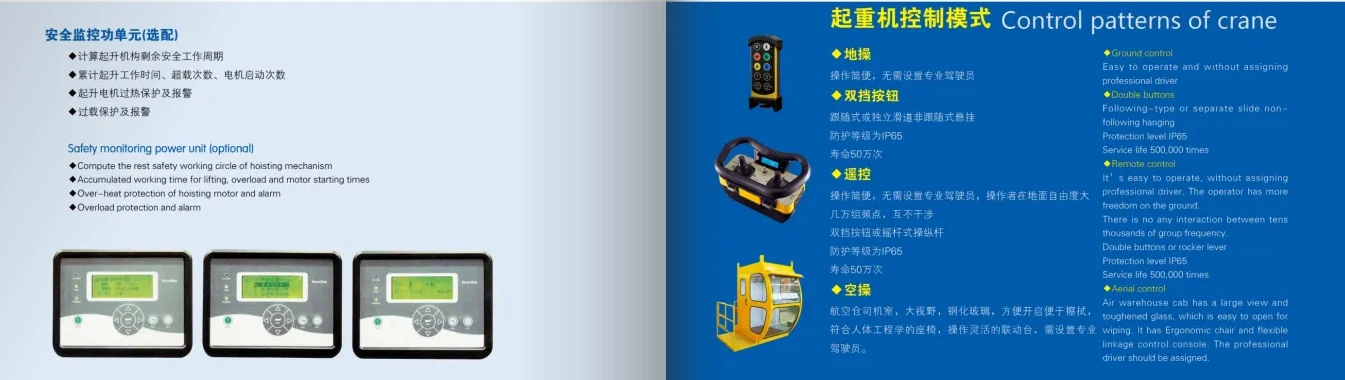
3. Power & Control System
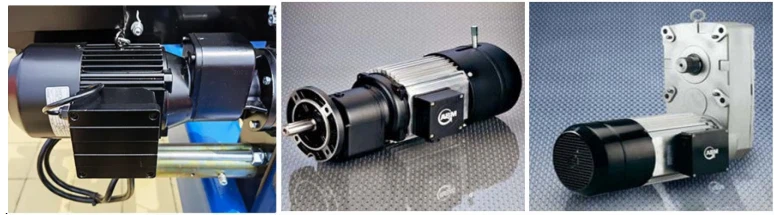
A. Electrical Components
Motors (hoist, trolley, bridge travel).
Festoon or cable reel system – Manages power supply to moving parts.
Control Panel – Houses relays, contactors, and overload protection.
B. Operator Controls
Pendant Control (wired handheld).
Radio Remote Control (wireless operation).
Cabin Control (for large, heavy-duty cranes).
C. Safety Features
Overload limiter – Prevents exceeding safe capacity.
Limit switches – Stops trolley/bridge at preset positions.
Emergency stop – Instantly cuts power.

.
4. Support & Auxiliary Components
A. Dust & Weather Protection
Enclosed motors/gearboxes (for harsh environments).
Dust-proof electrical components (in cement/coal handling).

B. Anti-Sway System
Reduces load swing for precise dumping.
Uses automated algorithms or mechanical dampers.
C. Weighing System (Optional)
Load cells integrated into the hoist for real-time weighing.
SKETCH

Main technical

Advantages
Efficient Bulk Handling
Designed specifically for loose materials like coal, grain, sand, and scrap
Faster loading/unloading compared to manual methods or excavators
Typical cycle time of 30-60 seconds for full operation (grab, lift, move, dump)
Versatile Material Handling
Multiple grab types available:
Clamshell for free-flowing materials (capacity 3-50m³)
Orange peel for scrap metal (jaw opening up to 3m)
Electro-hydraulic for precision operations
Space Optimization
Works in confined areas where front-end loaders cannot operate
Can serve multiple stockpiles or storage areas from single runway
Reduced Material Loss
Enclosed grabbing minimizes spillage (critical for expensive materials)
Typical material loss <1% compared to 3-5% with front-end loaders
Automation Potential
Easily integrated with PLC systems for automated stockyard management
Can be equipped with weighing systems (accuracy ±0.5% of rated capacity)
Cost Efficiency
Lower operating cost than wheel loaders (approx. 30-40% savings)
Longer service life (20+ years with proper maintenance)
Application:
1. Ports and Terminals
Ship loading/unloading (rates up to 800-1,200 tons/hour)
Coal, iron ore, grain, and fertilizer handling
Stockyard management (stacking/reclaiming)
2. Steel Industry
Scrap metal handling (20-50 ton grabs common)
Blast furnace charging
Slag handling (special heat-resistant grabs available)
3. Power Generation
Coal handling for power plants
Ash removal systems
Biomass fuel handling
4. Cement Production
Raw material handling (limestone, clay)
Clinker transport
Fly ash management
5. Waste Management
Municipal solid waste handling
Recycling center operations
Incinerator feeding
6. Agriculture
Grain silo operations (3-10 ton capacity typical)
Fertilizer handling
Feed stock management
7. Mining
Ore handling at processing plants
Stockpile management
Tailings handling
Technical Specifications Comparison:
| Application | Typical Capacity | Grab Type | Special Features |
|---|---|---|---|
| Coal Terminal | 10-50 tons | Clamshell | Dust suppression |
| Scrap Yard | 5-30 tons | Orange Peel | Heavy-duty jaws |
| Grain Silo | 3-10 tons | Clamshell | Food-grade materials |
| Power Plant | 5-20 tons | Clamshell | Explosion-proof |
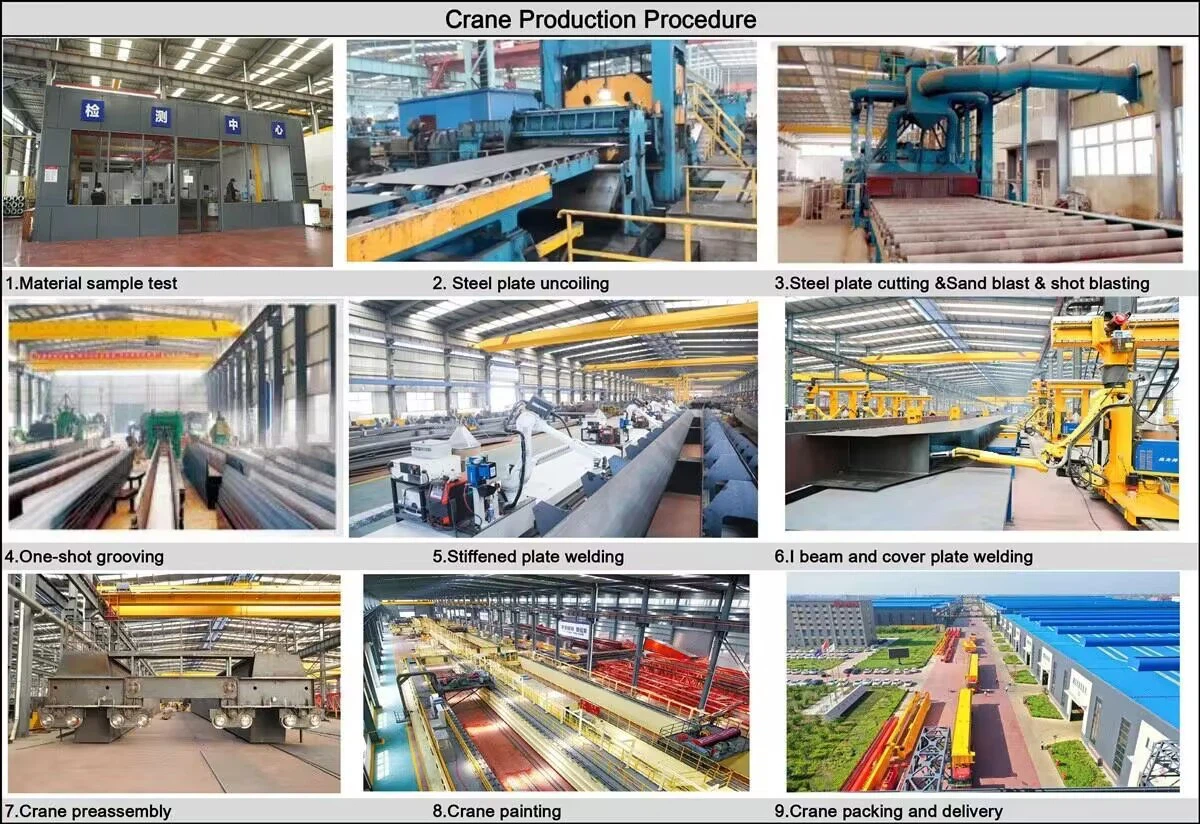
Crane production procedure
1. Design and Engineering
Confirm technical specifications (load capacity, span, lifting height).
Structural design of main beams, end carriages, trolley, and hoisting system using CAD and FEA software.
Electrical and control system layout design.
Compliance checks with relevant standards (ISO, FEM, OSHA).
2. Material Procurement
Source high-quality steel plates, structural steel sections, motors, electrical components, limit switches, and safety devices.
Verify material certifications and quality standards.
3. Fabrication of Main Components
Cutting & Shaping: Use CNC plasma cutting or laser cutting for steel plates.
Welding: Assemble main beams, end carriages, trolley frames using precise welding techniques.
Heat Treatment: Stress relief welding distortion by heat treatment if required.
Machining: Machine wheel seats, bearing seats, shaft holes, and motor mounting points.
Surface Treatment: Sandblasting and applying primer, then coating with anti-corrosion paint.
4. Assembly of Mechanical Parts
Assemble main beams with end carriages.
Install wheelsets and axle assemblies.
Mount trolley frame and hoisting mechanism (drum, wire rope, hook block).
Install brakes and gearbox on motors.
5. Electrical System Installation
Install motors (hoist, trolley, bridge travel).
Mount electrical panels, control cabinets.
Wire all sensors, limit switches, alarms, and control devices.
Connect power cables and control cables.
6. Quality Control & Testing
Non-destructive testing (NDT): Weld inspections by ultrasonic or magnetic particle methods.
Dimensional inspection: Check critical dimensions and tolerances.
Electrical tests: Insulation resistance, continuity, and control circuit tests.
Load testing: Perform static and dynamic load tests at 100% and 125% rated load.
Functional testing: Test all crane movements, alarms, safety devices, and control systems.
7. Painting and Finishing
Final painting for corrosion resistance and aesthetics.
Apply safety markings and labels.
8. Packaging and Delivery
Disassemble components if needed for transport.
Secure packaging to avoid damage during shipment.
Prepare manuals, certificates, and test reports.
9. Installation and Commissioning (On-site)
Assemble crane components on-site.
Align rails and fix end stops.
Connect power supply and control system.
Conduct on-site testing and operator training.
Final acceptance and handover.
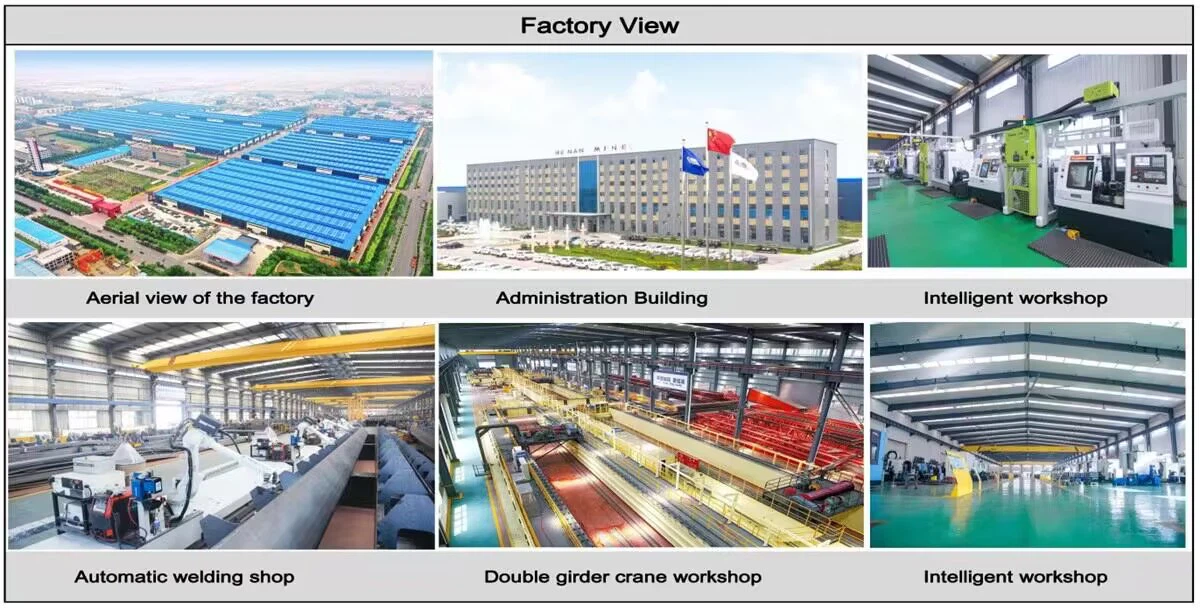
Workshop view:
The company has installed an intelligent equipment management platform, and has installed 310 sets (sets) of handling and welding robots. After the completion of the plan, there will be more than 500 sets (sets), and the equipment networking rate will reach 95%. 32 welding lines have been put into use, 50 are planned to be installed, and the automation rate of the entire product line has reached 85%.


Hot Tags: overhead grab crane, China overhead grab crane manufacturers, suppliers, factory, Double Girder Overhead Travelling Crane, Double Girder Overhead Crane
You Might Also Like


Send Inquiry