










Double Girder Grab Overhead Bridge Crane
Products Description
Selection Guide: Choosing the Right Grab Crane
A. Load Requirements
Determine maximum weight (including grab weight).
Consider material type (loose, abrasive, hot).
B. Span & Lifting Height
Measure workshop width and required hook height.
C. Power & Control
Electric vs. hydraulic grab (depends on precision needs).
Remote vs. cabin control (operator preference).
D. Environmental Conditions
Explosion-proof (for hazardous areas).
Corrosion-resistant coatings (for ports, chemical plants).
Comparison: Single vs. Double Girder Grab Cranes
| Feature | Single Girder Grab Crane | Double Girder Grab Crane |
|---|---|---|
| Load Capacity | Up to 20 tons | 5 to 550+ tons |
| Span Length | Short to medium (up to 30m) | Long spans (30m+) |
| Hook Height | Limited (under-mounted hoist) | Higher (top-mounted hoist) |
| Stability | Moderate | Superior (less deflection) |
| Cost | Lower initial cost | Higher, but better ROI for heavy-duty use |

Pictures & Components
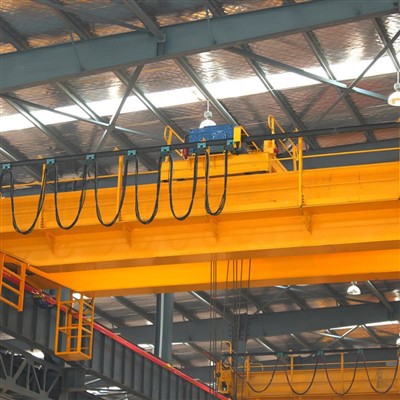
A double girder grab overhead bridge crane consists of multiple heavy-duty components designed for bulk material handling. Below is a detailed breakdown of its structural and mechanical parts:
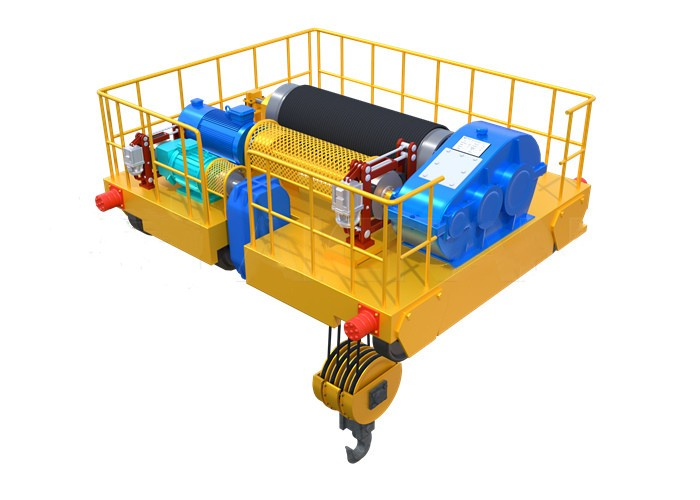
1. Main Structural Components
A. Bridge Girders (2x Main Beams)
Box girders (welded steel construction for heavy loads).
Truss girders (lighter but strong, used for very long spans).
Support the entire crane structure and distribute load weight.
 |
 |
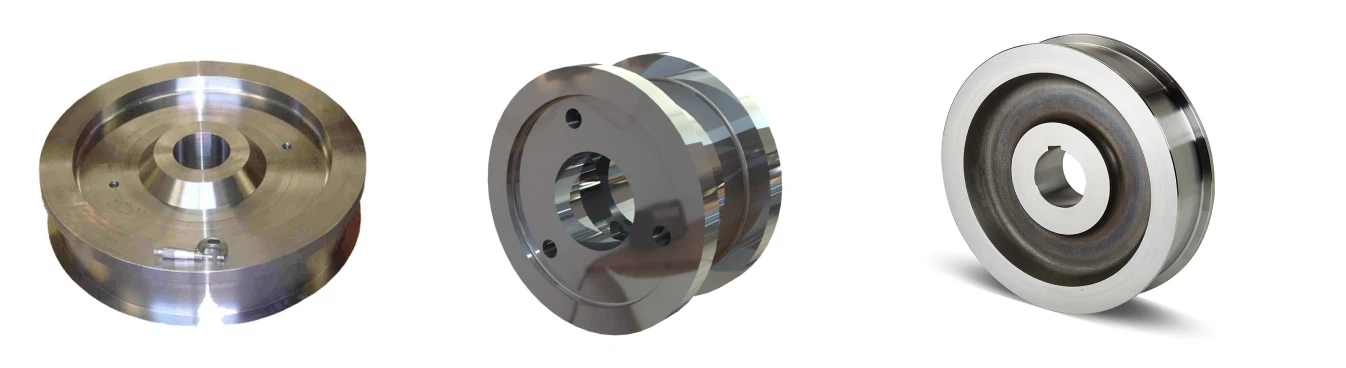
B. End Trucks (2x)
Located at each end of the bridge girders.
Contain wheels, motors, and brakes for longitudinal (bridge) travel.
Designed to run on runway rails mounted on building columns or freestanding supports.
C. Runway System
Runway beams (supporting rails for crane movement).
Rail tracks (usually PFC, ASCE, or DIN536 standards).
Buffers & end stops (to prevent over-travel).
 |
 |
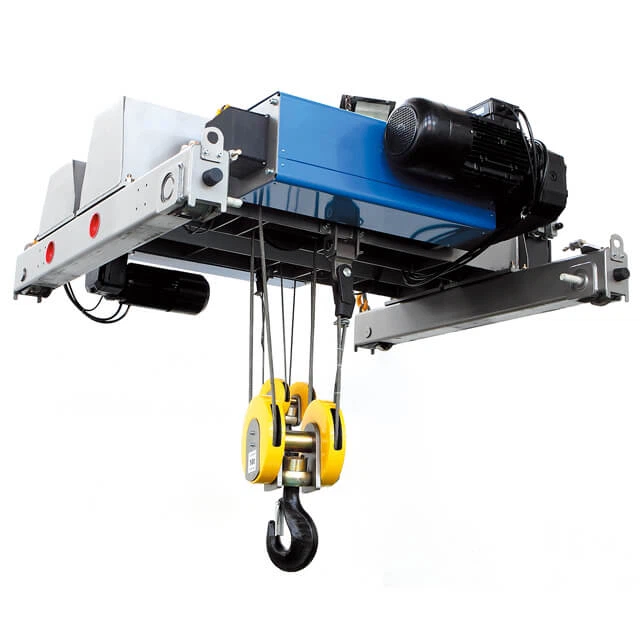
2. Hoisting & Grabbing System
A. Hoist Unit
Electric wire rope hoist (common for heavy-duty applications).
Chain hoist (for lighter loads).
Includes:
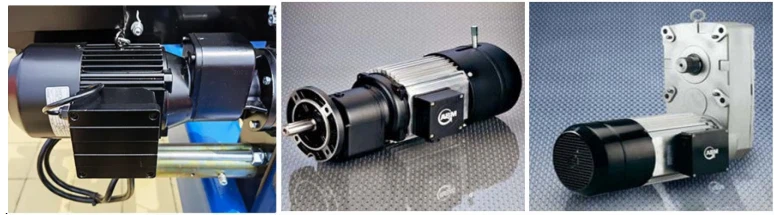
Hoist motor (with brake).
Drum or sprocket (for rope/chain winding).
Reducer (gearbox) for torque control.
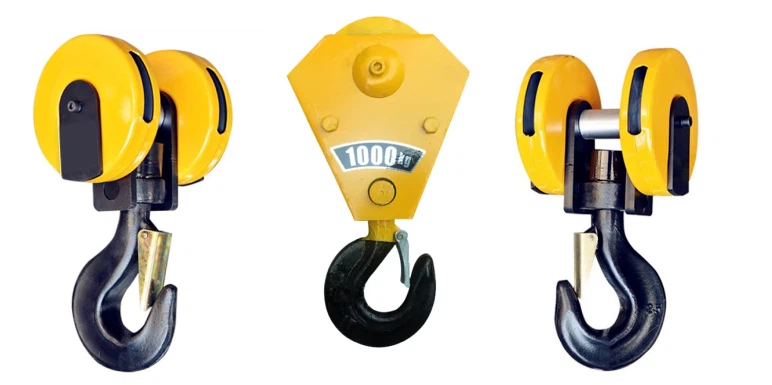
B. Grab Bucket (Clamshell, Orange Peel, or Electro-Hydraulic)
Clamshell Grab (for bulk materials like coal, grain, sand).
Orange Peel Grab (for scrap metal, rocks, debris).
Motorized Grab (self-opening/closing for automation).
C. Trolley Assembly
Moves the hoist and grab along the bridge girders.
Includes:
Trolley frame (supports hoist and grab).
Trolley drive motor (for cross-travel).
Wheels & guide rollers (for smooth movement).
3. Drive & Motion Systems
A. Bridge Travel Drive (Long Travel)
Motors (mounted on end trucks).
Wheel assemblies (usually 4 or 8 wheels per crane).
Brakes (for controlled stopping).

B. Trolley Travel Drive (Cross Travel)
Motorized trolley (for precise positioning).
VFD (Variable Frequency Drive) for smooth acceleration.
C. Power Supply System
Festoon system (cable reels for power along the runway).
Conductor bars (busbars) for cleaner power transmission.
.
4. Control & Safety Systems
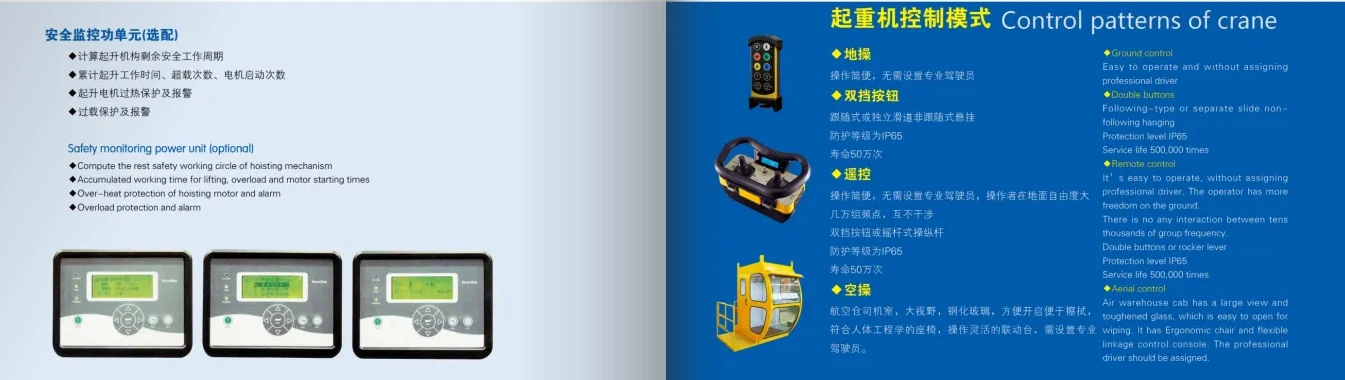
A. Control Panel / Electrical Cabinet
Houses contactors, relays, and PLC (if automated).
Manages power distribution and signals from the remote.
B. Operator Controls
Radio remote control (most common).
Pendant control (wired, less common for grab cranes).
Cabin control (for high-precision or heavy-duty use).
C. Safety Components
Limit switches (hoist upper/lower, trolley, bridge travel).
Overload limiter (prevents lifting beyond capacity).
Anti-sway system (for precise load positioning).
Emergency stop (on remote and control panel).
Anti-collision sensors (for multiple cranes in same area).

5. Optional & Advanced Features
Weighing system (load measurement).
Automation & smart controls (PLC, IoT integration).
Explosion-proof motors & electricals (for hazardous areas).
CCTV & laser guidance (for blind-spot monitoring).

SKETCH

Main technical

Advantages
Key Advantages of Double Girder Grab Cranes
✔ Higher Load Capacity (5–550+ Tons)
Stronger than single girder cranes, ideal for heavy bulk materials (coal, ore, scrap metal).
Dual-hoist systems available for extreme loads.
✔ Longer Spans (Up to 40m+)
Suitable for wide workshops, ports, and storage yards.
Minimal deflection due to double girder reinforcement.
✔ Superior Hook Height & Lifting Range
Top-mounted hoist maximizes vertical space under the crane.
Critical for deep bins, ship holds, and high storage silos.
✔ High Efficiency in Bulk Material Handling
Motorized grabs (clamshell, orange peel, electro-hydraulic) enable quick loading/unloading.
Automated operation possible with PLC control.
✔ Enhanced Stability & Durability
Box girder or truss girder construction reduces sway.
Heavy-duty end trucks & wheels for smooth long-distance travel.
✔ Advanced Control & Safety Features
Radio remote control for safe, flexible operation.
Overload protection, limit switches, anti-collision systems.
VFD control for smooth acceleration/deceleration.
✔ Customizable for Harsh Environments
Explosion-proof options for chemical plants.
Corrosion-resistant coatings for ports and marine use.
Application:
Ports & Shipyards
Loading/unloading bulk cargo (coal, grain, minerals).
Ship loading with clamshell grabs.
Steel Mills & Foundries
Handling scrap metal, molten slag, raw materials.
Feeding furnaces, casting machines, and rolling mills.
Power Plants
Coal handling for boilers.
Ash & slag removal from combustion processes.
Mining & Quarries
Transporting ore, gravel, crushed stone.
Loading trucks and railcars in bulk.
Waste Management & Recycling
Sorting and moving scrap metal, construction debris.
Handling municipal solid waste (MSW).
Grain & Fertilizer Storage
Loading/unloading silos and bulk carriers.
Handling fertilizers, animal feed, and agricultural products.
Cement & Construction Industry
Moving clinker, cement, and aggregates.
Feeding mixers and production lines.
Crane production procedure
1.Design and Engineering
Requirements Gathering:
Load capacity (e.g., 10T, 50T, 100T, etc.), span, lifting height, and operational environment are defined.
Customization needs are assessed, such as control modes (pendant, wireless, cabin) and special features (e.g., anti-collision, overload protection).
Preliminary Design:
Structural engineers and crane designers create the crane's initial design, including the main beam, end carriage, lifting system, trolley system, travel mechanism, and other components.
Calculation and Simulation:
Load calculations are performed to ensure the crane can handle the specified capacity.
Finite element analysis (FEA) may be used to simulate stresses and deflections in the structure to ensure safety and stability.
Detailed Design:
After approval, detailed drawings for each part are made, including the main girder, end carriage, hoist system, motors, control systems, and safety features.
2. Material Procurement
Raw Material Selection:
High-quality materials like steel, alloyed steel, forged steel, and electrical components are sourced according to specifications.
Materials are inspected for quality certification and compliance with industry standards (e.g., ISO, CE).
Component Sourcing:
Standard components such as motors, hoists, control panels, limit switches, and safety devices are sourced from reliable suppliers.
3. Fabrication of Components
Main Girder:
Cutting and welding of steel plates to form the bridge girder.
The girder is assembled by welding or bolting sections, ensuring it meets the required strength and precision.
End Carriage Assembly:
The end carriage is fabricated and assembled to hold the crane on the runway rails.
Wheel assemblies are installed to ensure smooth travel along the rails.
Hoist and Trolley System:
The hoist unit (electric or manual) is assembled, including the drum, wire rope, hook, and motor.
The trolley system is built to transport the hoist across the bridge, including trolley wheels and drive mechanisms.
Crane Traveling Mechanism:
The crane wheels are mounted on the end carriages, ensuring smooth horizontal movement.
The drive system is installed to control travel speed.
4. Assembly of Crane
Main Beam Installation:
The assembled main girder is lifted and positioned onto the end carriages.
The girder is aligned to ensure structural integrity.
Trolley and Hoist Installation:
The trolley system is mounted onto the main girder, and the hoist is mounted to the trolley.
The load chain or wire rope is installed and tested for smooth operation.
Travel Mechanism Setup:
The crane wheels are fitted, and the drive mechanism is connected to the control system for horizontal movement.
5. Electrical and Control System Installation
Wiring and Control Panel:
The control panel is installed and wired to manage all crane movements (hoisting, trolley, crane travel).
Limit switches, emergency stop buttons, and safety alarms are integrated into the control system.
Motor and Gear Installation:
Motors for hoisting, traveling, and the trolley are installed and connected to their respective gear systems.
Testing of Control Systems:
Control systems are checked to ensure proper integration of pendant control, wireless remote, or cabin control options.
6. Testing and Quality Control
Load Testing:
The crane undergoes static load testing (to check stability) and dynamic load testing (to check operational performance under actual working conditions).
Overload protection and limit switches are tested to ensure they function correctly.
Safety System Testing:
The sound and light alarms, limit switches, emergency stop buttons, and safety devices are all tested for functionality.
Movement Testing:
All movements-hoisting, trolley movement, bridge travel, and sway control-are tested for smooth operation and precision.
Electrical Testing:
All electrical components are tested for proper wiring, grounding, and communication between systems.
Documentation and Certification:
The crane is inspected according to international safety standards and undergoes certification by relevant authorities (e.g., CE, ISO).
Test certificates for motors, cranes, and load testing are prepared.
7. Final Inspection and Painting
Visual Inspection:
A thorough inspection is carried out to ensure that the crane meets design specifications and safety requirements.
Painting:
The crane is painted with high-quality anti-corrosion coatings to protect it from environmental conditions.
Marking and Labeling:
Safety labels, warnings, and capacity markings are applied to the crane for proper identification.
8. Delivery and Installation
Shipping:
The crane is carefully disassembled into transportable parts (if needed) and shipped to the customer's location.
Installation:
The crane is installed on-site, and all connections (power, mechanical, control) are made.
Final Commissioning:
The crane is commissioned by running it through a series of operational tests to ensure it works properly.
Operator training is conducted, if necessary, for safe and efficient use.
9. Post-Installation Support
Customer Training:
Operator training on how to use the crane safely and effectively.
Maintenance Schedule:
Providing a maintenance plan for the crane's continued operation, including regular inspections, lubrication, and testing.
After-Sales Support:
Offering spare parts, troubleshooting, and repair services.
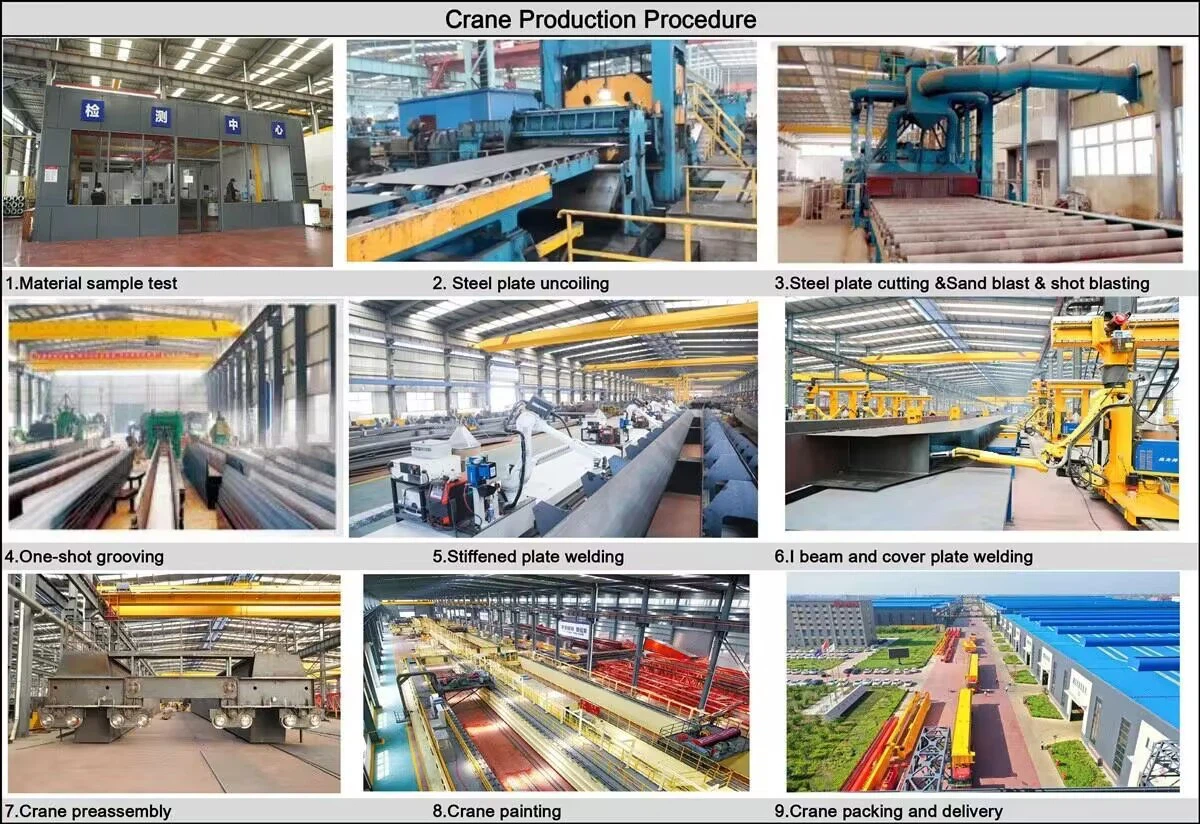
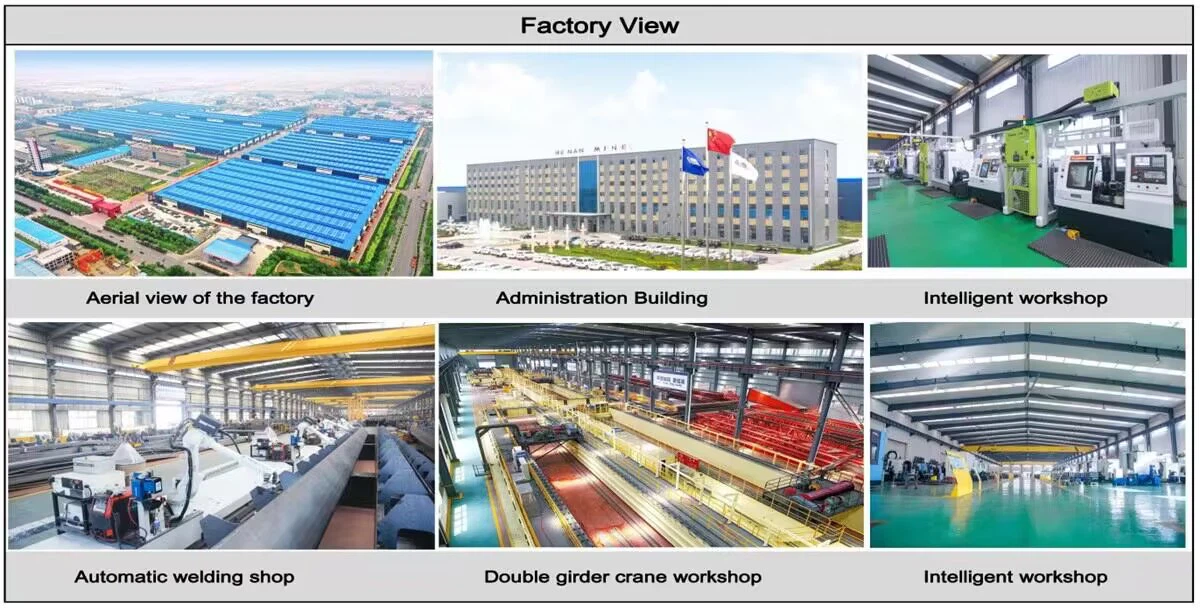
Workshop view:
The company has installed an intelligent equipment management platform, and has installed 310 sets (sets) of handling and welding robots. After the completion of the plan, there will be more than 500 sets (sets), and the equipment networking rate will reach 95%. 32 welding lines have been put into use, 50 are planned to be installed, and the automation rate of the entire product line has reached 85%.


Hot Tags: double girder grab overhead bridge crane, China double girder grab overhead bridge crane manufacturers, suppliers, factory, Double Girder Overhead Crane, Double Girder Overhead Travelling Crane
You Might Also Like




Send Inquiry