










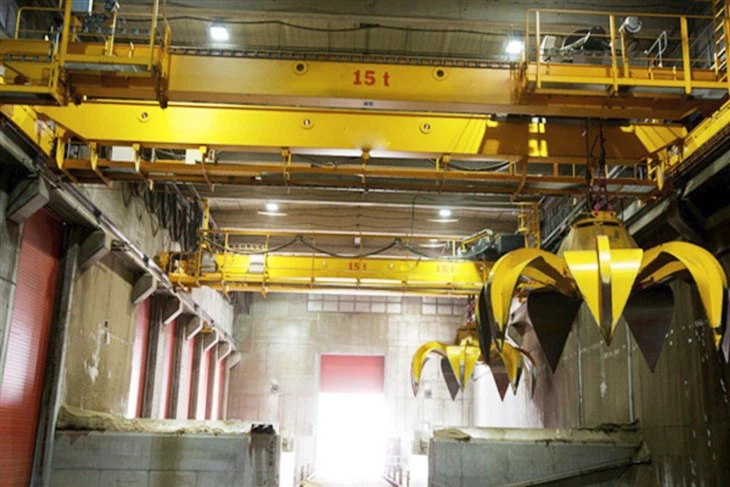

Double Beam Grab Overhead Crane
Products Description
A Double Beam Grab Overhead Crane is a heavy-duty lifting system designed for handling bulk materials such as coal, ore, grain, sand, or scrap metal. It features two parallel bridge beams supported by end trucks, providing enhanced stability and load capacity compared to single-beam cranes. The grab bucket (clamshell or mechanical grab) is used to efficiently scoop, lift, and transport loose materials.
Key Features:
Double Girder Design
Two robust bridge beams distribute load evenly, allowing higher lifting capacities (typically 5 to 550 tons or more).
Better hook height and span flexibility than single-girder cranes.
Grab Bucket Mechanism
Clamshell grabs (rope-operated or hydraulic) open/close to grab bulk materials.
Options: Motorized grabs for precision or mechanical grabs for simplicity.
Hoisting and Closing Systems
Dual-Rope System: Separate hoist and closing ropes control grab operation.
Four-Rope System: Two hoisting ropes and two closing ropes for heavier loads.
Applications
Bulk material handling in ports, steel mills, power plants, cement factories, and scrap yards.
Ideal for stockpiling, loading/unloading ships/trucks, or feeding raw materials.
Control Options
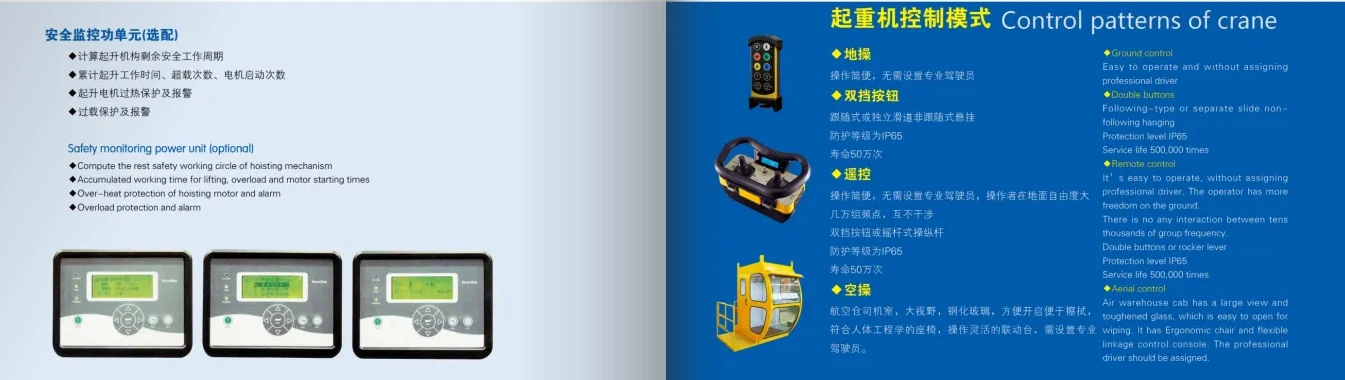
Pendant control (wired remote) or radio remote for safe operation.
Cabin-operated for intensive use.
Customization
Span, lifting height, and speed tailored to workspace needs.
Weatherproof or explosion-proof variants for harsh environments.

Pictures & Components
A Double Beam Grab Overhead Crane is a heavy-duty crane designed for handling bulk materials like coal, ore, grain, or scrap metal using a grab bucket. Here are its key components:
1. Bridge Structure
Main Girders (Double Beams) – Two parallel beams that span the crane's width, providing strength and stability.
End Trucks – Located at each end of the girders, housing wheels for crane movement along the runway rails.
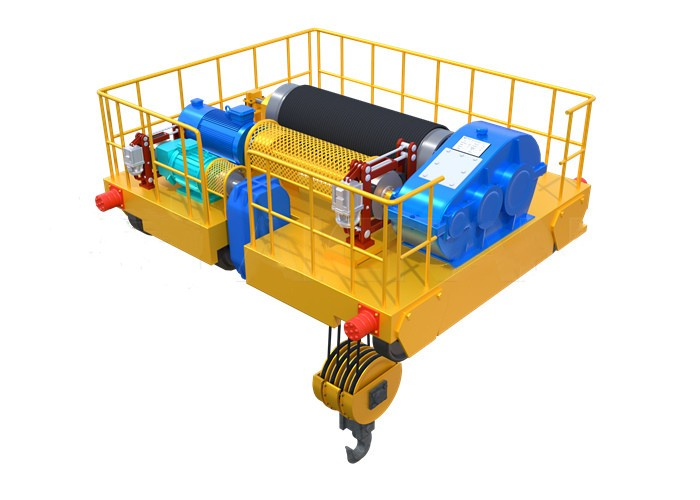
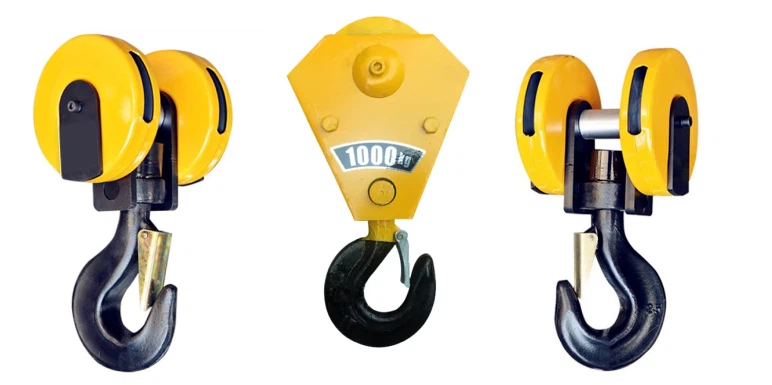
2. Hoisting Mechanism
Hoist Motor – Powers the lifting and lowering of the grab bucket.
Wire Rope or Chain – Connects the hoist to the grab bucket.
Drum or Sheave – Guides the wire rope for smooth operation.
 |
 |
3. Grab Bucket (Clamshell or Orange Peel Grab)
Used to scoop, lift, and release bulk materials.
Operates via hydraulic or mechanical (rope-operated) systems.
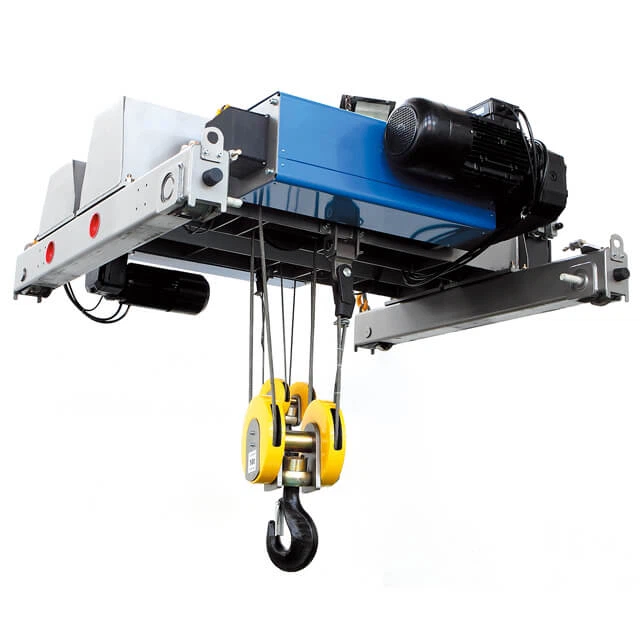
4. Trolley & Travel Mechanism
Trolley Frame – Moves horizontally along the bridge girders.
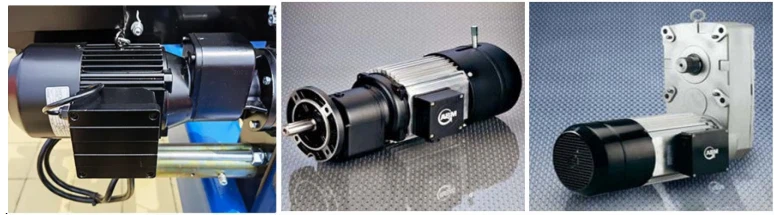
Trolley Motor & Drive – Powers trolley movement for precise load positioning.
 |
 |
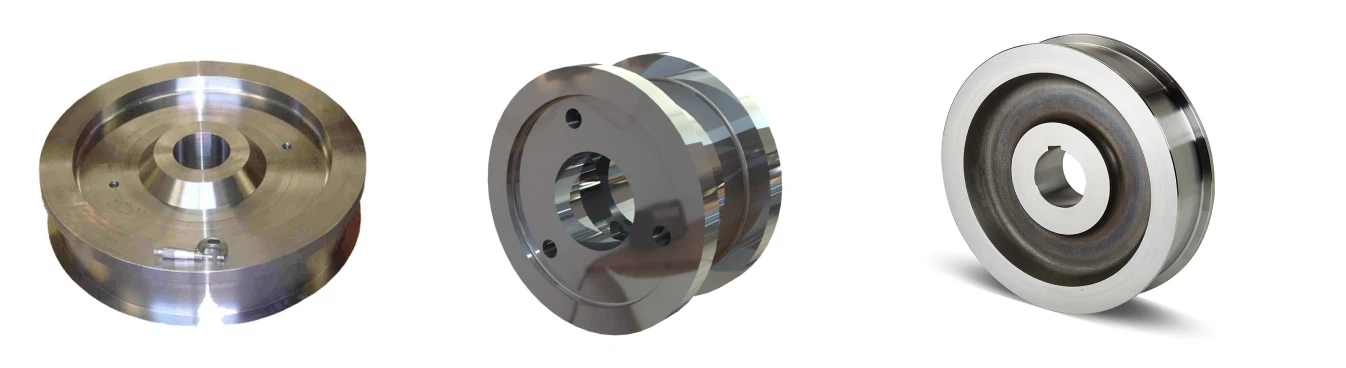
5. Crane Travel Mechanism (Long Travel)
Travel Motors & Wheels – Allow the entire crane to move along the runway rails.
6. Electrical System
Control Panel & Cabin (or Pendant/Remote Control) – For operator control.
Festoon System or Cable Reel – Supplies power to the crane.
Limit Switches & Safety Devices – Prevent overtravel and overload.
7. Runway System
Runway Rails – Installed on supporting columns for crane movement.
Buffers & End Stops – Absorb impact at travel limits.
8. Braking System
Hoist, Trolley, and Bridge Brakes – Ensure safe stopping.
9. Additional Features (Optional)
Weighing System – Measures load weight.
Anti-Sway System – Stabilizes the grab bucket.
Automation & Remote Control – For unmanned operation.
This crane is ideal for industries like mining, ports, steel plants, and bulk material handling due to its high efficiency and durability.

11. Steel Structure Base
Heavy-duty steel frames to ensure strength and stability under full load conditions.
12. Safety Devices
Limit switches, overload protectors, anti-collision systems, emergency stop systems, anti-sway control (optional).
.
A Double Beam Grab Overhead Crane is a heavy-duty lifting system designed for handling bulk materials like coal, ore, sand, or scrap metal using a grab bucket. To ensure safe operation, various safety devices are integrated into the crane system. Below are the key safety devices typically installed:
1. Overload Limiter (Load Limit Device)
Prevents the crane from lifting loads beyond its rated capacity.
Automatically cuts off power if an overload is detected.
2. Limit Switches (Travel Limits)
Hoisting Limit Switch – Prevents over-hoisting (upper and lower limits).
Trolley Travel Limit Switch – Restricts trolley movement within safe bounds.
Bridge Travel Limit Switch – Prevents crane over-travel along the runway.
3. Emergency Stop (E-Stop) Button
Allows immediate shutdown in case of an emergency.
Installed at multiple accessible locations (cabin, pendant, remote).
4. Anti-Collision System
Used when multiple cranes operate on the same runway.
Infrared or ultrasonic sensors prevent collisions.
5. Grab Bucket Safety Lock
Ensures the grab bucket remains securely closed during operation.
Prevents accidental spillage of materials.
6. Braking System
Hoist Brake – Holds the load securely when stopping.
Trolley & Bridge Brakes – Ensures smooth deceleration.
7. Voltage Protection & Phase Sequence Relay
Protects against power fluctuations.
Ensures correct phase sequence to prevent motor damage.
8. Insulated & Emergency Power Supply
Backup power for critical functions in case of power failure.
9. Warning Alarms & Lights
Audible/visual alerts before crane movement.
10. Windproof Device (for Outdoor Cranes)
Rail clamps or anemometers to secure the crane during high winds.
11. Safety Guards & Covers
Protects moving parts (gears, chains, pulleys) from accidental contact.
12. Remote Control & Monitoring (Optional)
Allows safe operation from a distance.
Real-time monitoring of load weight, speed, and position.

SKETCH

Main technical

Advantages:
A Double Beam Grab Overhead Crane is a heavy-duty lifting solution designed for handling bulk materials like sand, gravel, coal, ore, and scrap metal. It features two parallel bridge beams for enhanced stability and strength, along with a grab bucket for efficient material handling.
1. Higher Load Capacity & Stability
The double-beam design provides better load distribution, allowing for higher lifting capacities (typically 5 to 100+ tons).
More stable than single-beam cranes, reducing sway and improving precision in material handling.
2. Efficient Bulk Material Handling
The grab bucket (mechanical or hydraulic) can efficiently scoop, lift, and dump loose materials, making it ideal for industries like:
Ports & Shipping (coal, grain)
Steel Mills (scrap metal, ore)
Construction (sand, gravel)
Power Plants (biomass, ash)
3. Wider Span & Coverage
Can cover larger working areas (up to 30-35 meters or more) compared to single-beam cranes.
Suitable for big workshops, stockyards, and open storage areas.
4. Durability & Long Service Life
Robust construction with high-quality steel, resistant to heavy-duty and harsh environments (dust, moisture, high temperatures).
Reinforced trolley and hoist mechanisms ensure longevity.
5. Improved Safety Features
Equipped with overload protection, limit switches, emergency stop, and anti-collision systems.
Double beams reduce the risk of structural deformation under heavy loads.
6. Flexible Operation Modes
Can be operated via pendant control, remote control, or cabin control depending on the application.
Some models support automated grabbing & unloading for increased efficiency.
7. Reduced Maintenance Costs
High-quality components (motors, gearboxes, brakes) ensure smooth operation with minimal downtime.
Easy access for inspections and repairs.
8. Energy Efficiency
Modern designs use variable frequency drives (VFDs) for smoother acceleration/deceleration, reducing power consumption.
Conclusion
Double beam grab overhead cranes are ideal for industries requiring high-capacity, stable, and efficient bulk material handling. Their strength, durability, and safety make them superior to single-beam cranes for heavy-duty applications.
Application:
A double beam grab overhead crane is a heavy-duty lifting solution designed for handling bulk materials efficiently. It consists of two parallel beams (girders) with a grab bucket suspended between them, allowing for quick and precise loading, unloading, and material transfer. Here are its key applications:
1. Bulk Material Handling
Ports & Terminals: Loading/unloading coal, grain, cement, and minerals from ships or trucks.
Steel Plants: Transporting scrap metal, iron ore, and other raw materials.
Power Plants: Moving coal, biomass, or ash for fuel processing.
2. Waste & Recycling Facilities
Handling scrap metal, waste paper, and recyclable materials with clamshell or electromagnetic grabs.
3. Mining & Quarrying
Moving gravel, sand, limestone, and other mined materials in processing plants.
4. Cement & Construction Industry
Transferring clinker, gypsum, and aggregates in cement production.
Handling ready-mix concrete components.
5. Agriculture & Grain Storage
Loading/unloading grains, seeds, and fertilizers in silos or warehouses.
6. Chemical & Fertilizer Industry
Transporting powdered or granular chemicals safely.
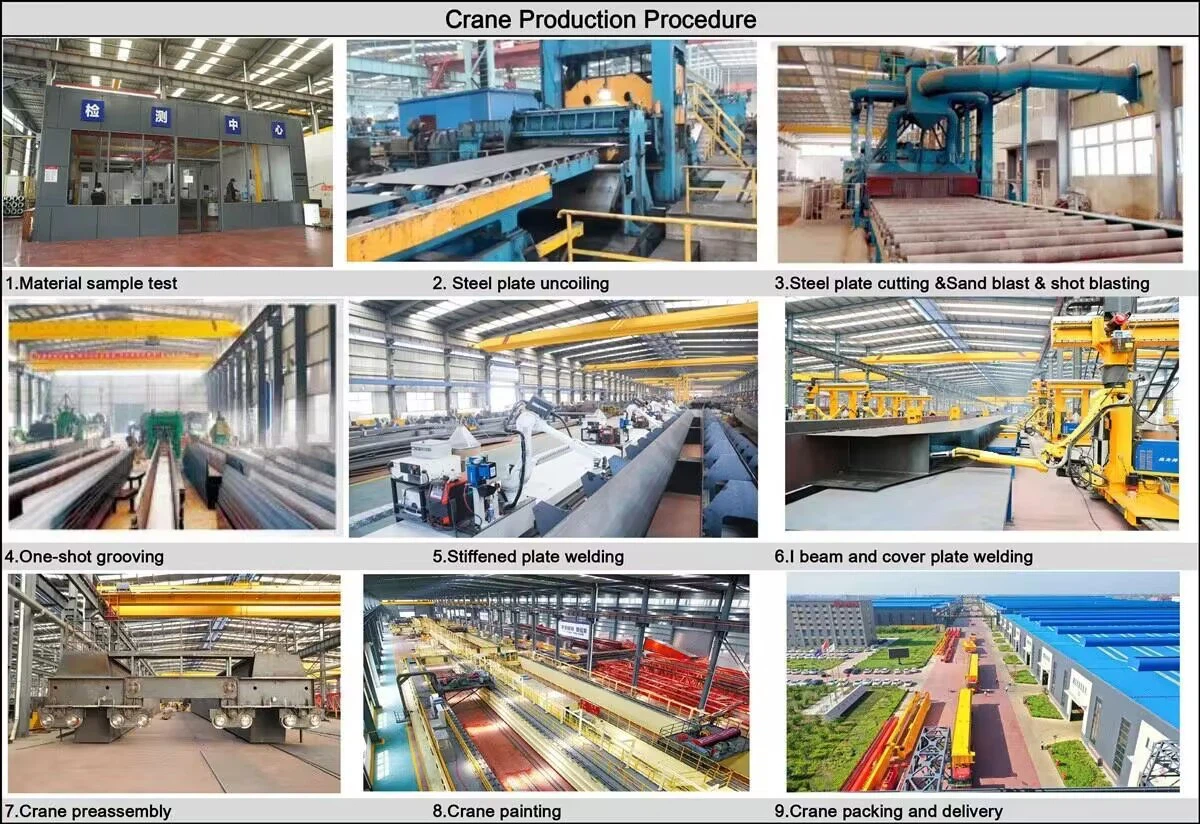
Crane production procedure
The production procedure for a Double Beam Grab Overhead Crane involves several stages, from design and material procurement to assembly, testing, and delivery. Below is a detailed step-by-step outline of the manufacturing process:
1. Design & Engineering
Requirements Analysis: Determine load capacity, span, lifting height, duty cycle, and environmental conditions.
Structural Design:
Design the double girders (main beams) using CAD software (e.g., SolidWorks, AutoCAD).
Calculate stresses, deflection, and fatigue life.
Mechanical & Electrical Design:
Hoist and grab mechanism selection.
Motor, gearbox, brake, and wire rope specifications.
Electrical system (control panel, sensors, wiring).
Regulatory Compliance: Ensure adherence to standards (ISO, FEM, DIN, CMAA, or ASME).
2. Material Procurement
Main Beams: Steel plates (Q235B/Q345B) for fabrication.
End Carriages: Steel sections for rigidity.
Hoist & Grab Unit: Purchased or fabricated in-house.
Electrical Components: Motors, PLCs, limit switches, cables.
Other Components: Wheels, rails, buffers, and fasteners.
3. Fabrication of Double Girders
Cutting: CNC plasma/oxy-fuel cutting of steel plates.
Welding:
Sub-assembly welding of web and flange plates.
Full penetration welding for main seams (UT/RT testing if required).
Machining: Drilling holes for connections and machining rail surfaces.
Shot Blasting & Painting: Surface cleaning, primer, and corrosion-resistant paint.
4. End Carriage Fabrication
Frame Assembly: Welded steel construction with wheel mounts.
Wheel Installation: Mounted on axles with bearings.
Buffers & Stoppers: Attached for collision prevention.
5. Hoist & Grab Mechanism Assembly
Hoist Unit:
Gearbox, motor, drum, and brake assembly.
Wire rope reeving and hook block installation.
Grab Bucket:
Fabrication of clamshell or multi-jaw grab (for bulk materials).
Hydraulic/electrical drive integration.
6. Electrical System Integration
Control Panel: PLC, variable frequency drives (VFDs), and safety relays.
Cabling: Power and control wiring along the crane bridge.
Sensors: Limit switches, load cells, and anti-collision systems.
7. Final Assembly
Bridge Assembly: Mount double girders onto end carriages.
Track Alignment: Ensure proper alignment with runway rails.
Hoist Installation: Mount the hoist and grab between the girders.
Electrical Connections: Connect motors, controls, and safety devices.
8. Testing & Quality Control
Load Testing:
No-load Test: Check movement, brakes, and controls.
Static Load Test: 125% of rated capacity.
Dynamic Load Test: 110% of rated capacity.
Functional Tests:
Grab opening/closing, lifting, and traversing.
Emergency stop and safety device checks.
Inspection: Dimensional checks, weld integrity, and electrical safety.
9. Painting & Corrosion Protection
Final touch-up painting.
Apply labels (capacity, warnings, serial numbers).
10. Disassembly & Packaging
Dismantle for shipping (if required).
Protect components with anti-rust coatings and packaging.
11. Delivery & Installation
On-site reassembly (if shipped disassembled).
Alignment with runway rails.
Final commissioning and operator training.
12. Documentation & Certification
Provide manuals (operation, maintenance).
Certificates (test reports, material certifications, compliance documents).
Workshop view:
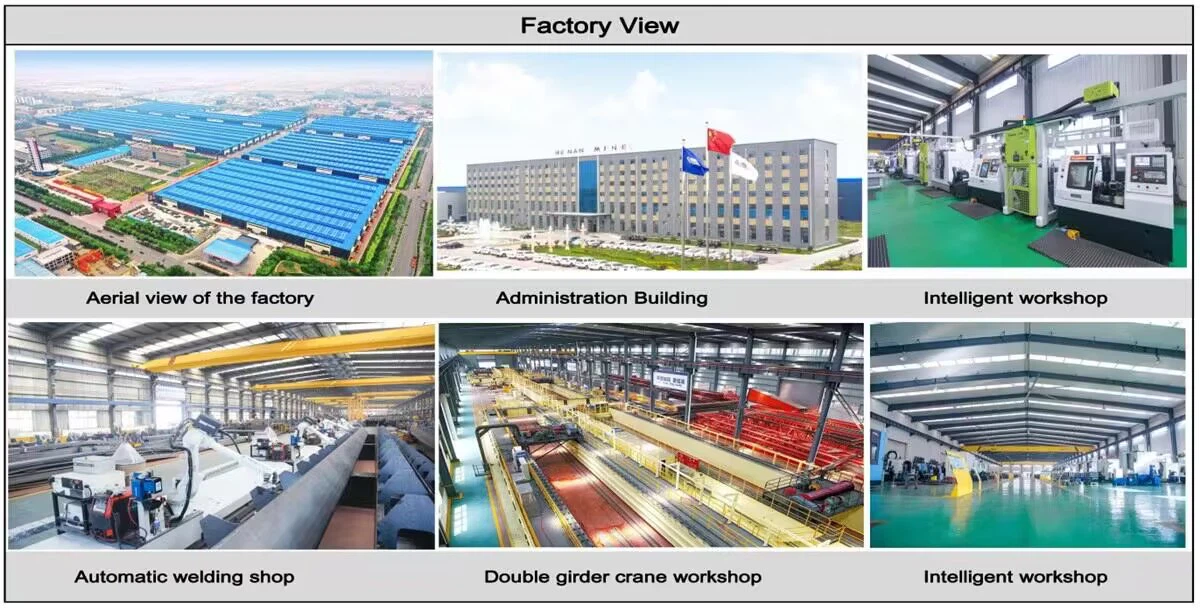
The company has installed an intelligent equipment management platform, and has installed 310 sets (sets) of handling and welding robots. After the completion of the plan, there will be more than 500 sets (sets), and the equipment networking rate will reach 95%. 32 welding lines have been put into use, 50 are planned to be installed, and the automation rate of the entire product line has reached 85%.


Hot Tags: double beam grab overhead crane, China double beam grab overhead crane manufacturers, suppliers, factory, Double Girder Overhead Crane, Double Girder Overhead Travelling Crane
You Might Also Like




Send Inquiry