







Foundry Overhead Crane
A foundry overhead crane is a specialized lifting solution designed for the harsh and high-temperature environments of steel mills, foundries, and metal casting industries. These cranes are engineered to handle molten metal, heavy castings, and other high-temperature materials with exceptional safety, efficiency, and durability.
A foundry overhead crane is an essential machine in the steel manufacturing process, helping to ensure the safe and efficient handling of molten metal and other heavy materials.
- Capacity: 5-500ton
- Span length: 4-35m
- Lifting height: 3-50m
- Work duty: A4, A5, A6,A7
- Raged voltage: 220V~690V, 50-60Hz, 3ph AC
- Work environment temperature: -25℃~+50℃, relative humidity ≤85%
- Crane control mode: Floor control / Remote control / Cabin room

Pictures & Components
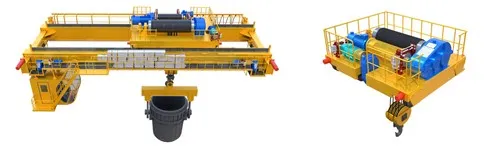
1. Whole set crane
Bridge Structure
The main framework of the crane, usually made of high-strength steel.
Can be single girder or double girder, depending on the load capacity.
Trolley & Hoist System
Main hoist: Lifts and transports molten metal ladles.
Auxiliary hoist: Assists in maintenance or backup lifting operations.
The hoist is often equipped with heat-resistant materials.
Lifting Mechanism
Heavy-duty wire rope hoist or chain hoist.
Special hook or ladle clamp to handle molten metal safely.
High-temperature-resistant motor and gearbox.
End Trucks & Wheels
Supports the bridge and allows movement along the runway beams.
Heat-resistant and durable wheels for smooth operation.
Runway System
Steel rails installed on the supporting structure of the workshop.
Carries the movement of the crane along the entire working area.

2. Main girder
Key Features of the Main Girder in a Foundry Overhead Crane
Robust Structure – Typically made of high-strength steel to handle molten metal and extreme heat conditions.
Double or Single Girder Design – Foundry cranes usually feature a double-girder design for higher capacity and better stability.
Heat-Resistant Materials – Special coatings or heat shields may be applied to protect against thermal damage.
Box or Truss Type – Often constructed as a box girder for enhanced rigidity and load distribution.
Integrated Runway and Rail Systems – Supports the trolley and hoist movement along the span.
High Load Capacity – Designed to carry ladles of molten metal, often exceeding 50 to 500+ tons.

3. Lifting System
1. Main Lifting Mechanism
Lifting Trolley: Moves along the bridge to position the hook or ladle.
Hoist or Winch: Provides the lifting power, typically driven by an electric motor.
Wire Rope or Chain: Connects the hoist drum to the hook or ladle.
Hooks or Ladle Mechanism: Specially designed hooks or ladles for holding and pouring molten metal.
2. Auxiliary Lifting Mechanism
Many foundry cranes have an auxiliary hoist for lighter loads or precise positioning.
This system helps with secondary lifting operations, such as adding raw materials to the furnace.
3. Lifting Drive System
Motor and Gearbox: Electric motors drive the hoisting mechanism via a gearbox to control lifting speed.
Brakes: High-performance brakes ensure safety by preventing unintended load movement.
Variable Frequency Drive (VFD): Some cranes use VFDs for smooth and precise lifting operations.

4. End Carriages
End carriages are crucial components of a foundry overhead crane, responsible for supporting and guiding the bridge along the runway beams. They consist of a steel frame with wheels, motors, and gearboxes that enable smooth movement.
Key Features of End Carriages for Foundry Overhead Cranes
Heavy-Duty Construction – Made from high-strength steel to withstand the extreme conditions of foundries.
High-Temperature Resistance – Equipped with heat-resistant materials to function effectively in high-temperature environments.
Precision-Machined Wheels – Typically made of forged steel with heat treatment for durability.
Motorized Drive System – Includes motors and gearboxes for controlled movement.
Shock & Vibration Absorption – Designed to handle intense vibrations and sudden movements in foundry operations.
Customization Options – Available in various sizes and load capacities to match specific crane requirements.
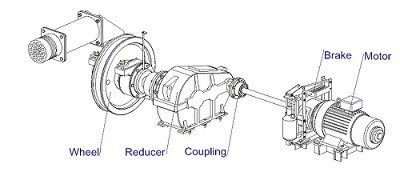
5.Crane traveling mechanism
The crane traveling mechanism of a foundry overhead crane is responsible for moving the entire crane along the runway beams in a straight line. It consists of several key components designed to handle high-temperature environments and heavy loads. Here's an overview of its main elements:
1. Components of the Traveling Mechanism
Crane Wheels – The crane moves on hardened steel wheels that run along the runway rails. These wheels are often heat-resistant due to the extreme conditions in foundries.
Drive Units (Motors & Gearboxes) – The movement is powered by heavy-duty motors with gear reduction systems to provide smooth and controlled motion.
Braking System – Includes electromagnetic or hydraulic brakes to ensure the crane stops safely when needed.
End Carriages – These are the structures at both ends of the crane bridge that house the wheels and support the entire system.
Couplings & Shafts – Connects the motor to the wheel axles, ensuring efficient power transmission.
Buffers & Limit Switches – Prevent the crane from overrunning or colliding with obstacles.
6. Trolley traversing mechanism
The trolley traversing mechanism of a foundry overhead crane is responsible for moving the trolley (which carries the hoist and lifting hook) along the bridge girder. This mechanism is crucial for positioning heavy loads precisely over the required work areas in the foundry.
Key Components of the Trolley Traversing Mechanism:
Trolley Frame – A rigid structure that supports the hoisting mechanism and moves along the crane bridge.
Travel Motors – Typically electric motors that drive the wheels of the trolley.
Gearbox & Transmission System – Transfers power from the motor to the trolley wheels.
Wheels & Rails – The trolley moves along rails mounted on the bridge.
Braking System – Ensures controlled stopping and prevents unwanted movement.
Control System – Operated manually or via automation for precise movement.
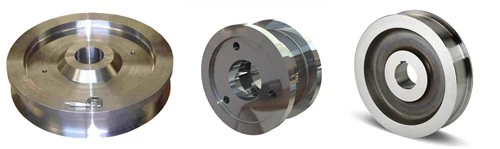
7. Crane wheel
The crane wheel of a foundry overhead crane is a crucial component that supports and guides the movement of the crane along the runway rails. These wheels are designed to withstand high temperatures, heavy loads, and continuous operation in harsh industrial environments.
Key Features of Crane Wheels for Foundry Overhead Cranes
Material: Typically made of forged steel (e.g., 42CrMo, 65Mn, or ZG55) to ensure high strength, wear resistance, and durability.
Heat Resistance: Foundry cranes operate in extreme heat conditions, so the wheels are often heat-treated or made of special alloys to resist thermal expansion and deformation.
Load Capacity: Designed to handle heavy loads, as foundry cranes transport molten metal, casting molds, and other high-weight materials.
Surface Hardness: Induction-hardened tread surfaces (HRC ≥ 50) enhance wear resistance and extend service life.
Flange Design: Wheels can be single-flanged, double-flanged, or flat tread, depending on the rail type and application.
Lubrication & Bearings: Equipped with self-lubricating or grease-lubricated bearings to reduce friction and enhance efficiency.
8. Crane hook
The crane hook of a foundry overhead crane is a critical lifting component designed to handle molten metal and heavy loads in foundries and steel mills. Here are the key aspects of a foundry crane hook:
1. Design and Structure
Heavy-Duty Hook: Made of high-strength forged steel to withstand extreme heat and heavy loads.
Heat-Resistant Coating: Special coatings or insulation to protect against high temperatures.
Double Hook Design: Some foundry cranes use a main hook for lifting ladles of molten metal and an auxiliary hook for tilting or precise positioning.
2. Load Capacity
Foundry crane hooks are designed for extremely heavy loads, often ranging from 5 tons to over 500 tons, depending on the crane's capacity.

9. Motor
A foundry overhead crane is designed to handle molten metal in steel mills and foundries. The motor of such a crane plays a crucial role in ensuring safe and efficient operation. Here are the key aspects of the motor used in a foundry overhead crane:
1. Types of Motors Used
Hoisting Motor: Provides the power to lift and lower heavy loads. Typically, it is a squirrel-cage or wound rotor motor with high torque and thermal resistance.
Traveling Motor: Moves the crane along the runway beams. Usually, squirrel-cage induction motors are used.
Trolley Motor: Drives the trolley back and forth on the bridge, ensuring horizontal movement of the load.
2. Key Features of Foundry Crane Motors
High Heat Resistance: Since foundry cranes operate in extreme heat conditions, the motors must have insulation class H (180°C) or F (155°C).
Heavy-Duty Performance: Designed for continuous operation with high starting torque.
Dust and Moisture Protection: Often IP54 or IP55-rated enclosures to prevent dust and water ingress.
Brake System: Electromagnetic or hydraulic brakes ensure safe and precise stopping.
Variable Frequency Drive (VFD) Compatibility: Some motors use VFDs for smooth speed control, reducing mechanical stress.

10. Sound and light alarm system & limit switch
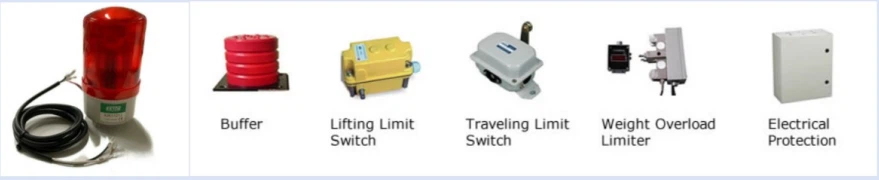
Sound and Light Alarm System:
Purpose: The sound and light alarm system alerts operators and nearby personnel about critical situations or changes in crane operation, such as moving loads, emergency conditions, or when the crane is in an unsafe state.
Components:
Audible Alarm (Sound): A horn, siren, or buzzer that produces a loud noise to grab attention in noisy environments, signaling a specific danger or alert condition.
Visual Alarm (Light): A flashing light, usually a strobe light or beacon, is used to provide a visual warning of the crane's operational status or an emergency. It is often used in conjunction with the audible alarm for better visibility, especially in a large and noisy foundry environment.
Application: These alarms are typically activated when:
The crane is operating outside its normal range (such as lifting a load beyond the capacity).
The crane is nearing a limit switch or an obstacle.
Emergency conditions arise, like equipment malfunctions or electrical failures.
Limit Switch:
Purpose: Limit switches are mechanical devices used to restrict the movement of the crane and prevent it from overextending or operating beyond safe limits. They ensure the crane moves within predefined boundaries.
Components: The limit switch consists of a switch that is activated by a physical movement (usually a mechanical arm or lever) when the crane reaches a specific position, such as at the end of its travel on a track or near an obstacle.
Applications:
Travel Limit Switch: Prevents the crane trolley or hoist from moving beyond the track.
Hoist Limit Switch: Prevents the hoist from raising or lowering a load too far, protecting against damage to the crane or load.
Overload Limit Switch: May be integrated with the crane's load monitoring system to stop operations if the crane exceeds its safe lifting capacity.
Emergency Stop Limit Switch: An emergency switch that halts crane operations if a dangerous condition is detected.
11. Safety Devices
- Limit Switches:
- Height Limit Switches: Prevent the crane from lifting loads too high or outside of the safe operational limits.
- Travel Limit Switches: Stop the crane from moving beyond the safe travel range of the crane track.
- Overload Protection:
- Load Cell or Overload Sensors: Ensure the crane doesn't lift loads that exceed its capacity by automatically triggering an alarm or stopping the lift.
- Overload Indicators: Visual or audible signals to alert operators when the load exceeds safe limits.
- Anti-Collision Devices:
- Proximity Sensors: Help prevent collisions between the crane and other objects or cranes in the area.
- Crane-to-Crane Anti-Collision Systems: Prevent accidents if multiple cranes are operating in the same area.
- Emergency Stop Buttons:
- Located at multiple points on the crane and control station, emergency stop buttons can immediately halt crane movement in case of an emergency.
- Warning Signals:
- Audible Alarms and Horns: Warn nearby personnel of the crane's movement.
- Flashing Lights: Indicate active crane operations, especially in high-traffic areas.
- Brake System:
- Fail-Safe Brakes: Ensure that the crane can stop safely in case of failure of the primary braking system.
- Automatic Brake Testing: Periodic automatic checks of the brake system functionality.
- Temperature Sensors:
- Foundries involve high temperatures, so cranes must be equipped with temperature sensors to detect unsafe operating temperatures in components such as the hoist and trolley.
- Flame and Smoke Detectors:
- Installed in areas where molten metals or extreme heat are present to detect fire or hazardous smoke and trigger alarms or automatic shutdown.
- Electrical Safety Systems:
- Ground Fault Circuit Interrupters (GFCIs): Protect against electrical hazards, ensuring the crane doesn't pose a shock hazard to operators.
- Insulation Monitoring Devices: Ensure the electrical insulation is intact to prevent short circuits and electrical fires.
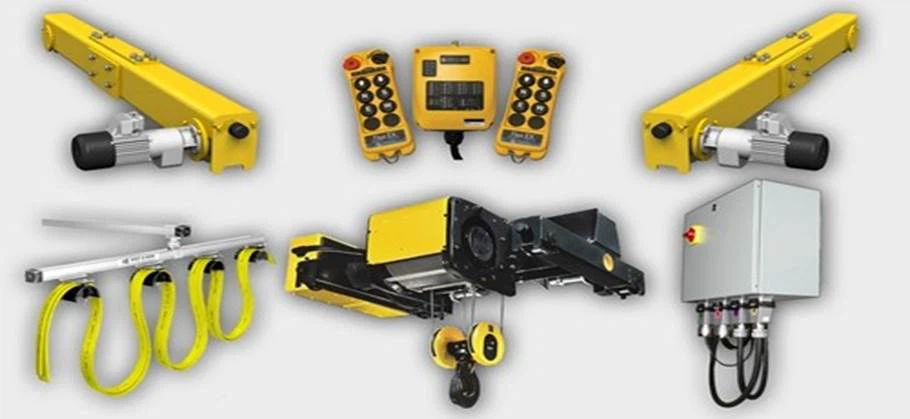
12. Control Mode
Manual Control Mode:
In this mode, the crane operator manually controls the crane's movements using joysticks or buttons on a control panel.
The operator can control the speed, direction, and movement of the crane's hoist, trolley, and bridge.
2. Pendant Control Mode:
This is a variation of manual control, where the operator uses a pendant control station connected to the crane by a cable.
Pendant control allows for more mobility as the operator can walk around and stay close to the load.
3. Radio Remote Control Mode:
This mode uses a wireless radio system to control the crane, allowing the operator to move freely around the crane and load.
It enhances safety by enabling operators to stay clear of hazardous zones.
4. Automatic Control Mode:
This mode is often used in more advanced systems where the crane can operate autonomously or semi-autonomously, based on preset commands or conditions.
Sensors, load detection, and pre-programmed sequences enable the crane to perform tasks like lifting, moving, and positioning loads automatically.
5. Distributed Control System (DCS):
A DCS provides centralized control, where several cranes or systems are operated from a central location.
It's common in large foundries or industrial plants where multiple cranes are coordinated for efficiency.
6. Touch Screen or PLC Control:
Modern foundry cranes may have programmable logic controllers (PLCs) or touch-screen interfaces that allow for more precise and customizable control.
These control systems can be integrated with other automation tools for seamless operation.

13. Sketch
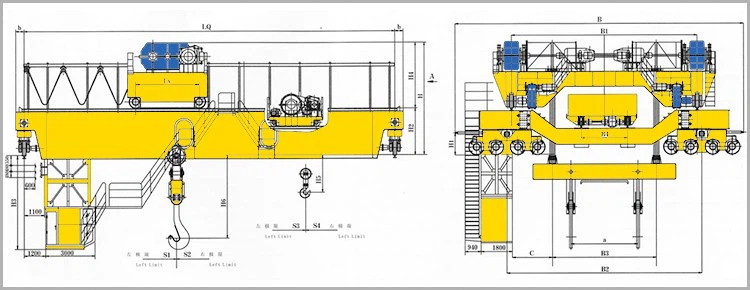
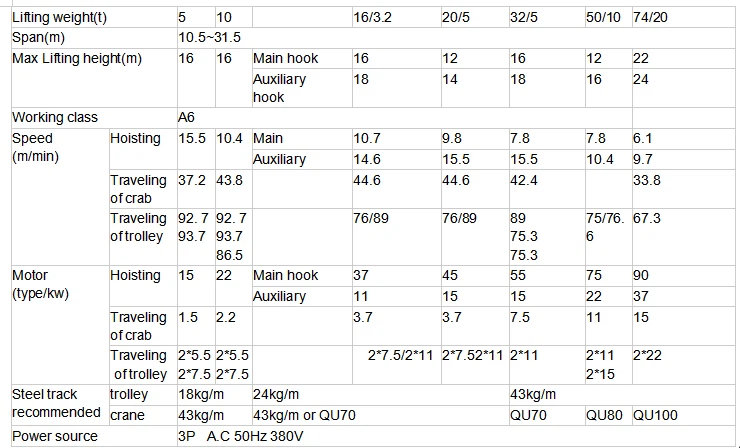
Main Technical Data
Advantages
- Increased Efficiency: It streamlines material handling in heavy-duty environments, allowing for smooth and fast transportation of materials like molten metal, castings, or heavy components.
- Safety: By automating the lifting and movement of heavy loads, it reduces the risk of worker injury compared to manual handling, especially in high-risk foundry settings.
- Space Utilization: The crane moves along tracks overhead, freeing up floor space for other operations, which is essential in often congested foundry environments.
- Durability: Built to withstand harsh conditions such as extreme temperatures, dust, and heavy wear, it can handle the demanding environments typical of foundries.
- Precision and Control: These cranes offer precise load positioning, crucial for delicate or high-stakes operations like handling molten metals or moving large castings.
Application
- Handling Molten Metal: Foundry overhead cranes are commonly used to transport molten metal from furnaces to molds or casting machines. These cranes must be equipped with special features, such as high-temperature-resistant materials and safety mechanisms, to handle molten metal safely.
- Lifting and Moving Heavy Castings: After the metal is cast and solidified, large and heavy castings need to be moved to different stages of production, such as cooling, cleaning, or machining. Overhead cranes are used to transport these heavy parts through the foundry.
- Material Handling: Cranes are also used to move raw materials like scrap metal, sand, and additives to and from different areas of the foundry. This helps ensure a smooth flow of materials in the production process.
- Maintenance and Equipment Installation: Overhead cranes are used for maintenance tasks, such as removing and installing heavy machinery and equipment, including furnaces and mold-making machines.
- Casting Mold Handling: In foundries, molds often need to be moved between various areas, such as the mold-making station, the pouring area, and the cooling zone. Overhead cranes are used for the handling of these molds.
- Cooling and Cleaning Areas: Once the castings have cooled, they may need to be transferred to cleaning stations where they are removed of excess sand and scale. Cranes are used to carry these castings to and from these areas.
Crane Production Procedure
1. Design and Engineering
Preliminary Design: The crane's specifications are defined based on the weight capacity, span, lift height, and intended use (e.g., foundry operation).
Structural Design: Engineers design the crane's structure, considering the harsh operating conditions in foundries (e.g., high temperatures, heavy loads).
Safety Considerations: Design also includes various safety features such as overload protection, limit switches, and emergency stop systems.
2. Material Selection
Materials used must withstand the extreme environments in foundries, including high temperatures, abrasive dust, and molten metal splashes. Common materials include:
High-strength steel for the crane structure.
Heat-resistant components for parts exposed to high temperatures.
Corrosion-resistant coatings to prevent rust.
3. Fabrication of Components
Structural Frame: Cutting, welding, and assembling the steel to create the frame and beams of the crane.
Hoist System: Fabrication of the hoist, which includes motors, gearboxes, pulleys, ropes, and drums.
Bridge and Trolley: Construction of the bridge (main horizontal beam) and the trolley (which carries the hoist).
Rotating Mechanism: Fabrication of any rotating parts, such as the turntable for the crane's rotating movement (if applicable).
4. Heat Treatment and Surface Coating
For parts exposed to high temperatures, a heat treatment process may be done to enhance their durability and resistance to wear.
Components may also undergo surface treatment (such as galvanizing or coating) to prevent corrosion, especially in exposed environments.
5. Assembly
Structural Assembly: The components are assembled into the final structure, including mounting the hoist on the trolley and connecting the trolley to the bridge.
Electrical and Control Systems: The electrical system, including wiring, controls, and safety sensors, is installed.
Final Adjustments: All parts are aligned and adjusted for smooth operation.
6. Testing and Inspection
Load Testing: The crane is tested under load conditions to ensure it meets capacity and safety standards.
Functionality Testing: All movements, including lifting, lowering, and horizontal movement, are tested for proper operation.
Safety Checks: Ensure that limit switches, emergency stops, and overload protection systems are working correctly.
Visual Inspection: Inspect all parts for any welding defects, cracks, or improper assembly.
7. Delivery and Installation
The crane is transported to the foundry site and installed by professional engineers.
Final On-Site Testing: Once installed, the crane undergoes a final round of testing to ensure it operates properly in the specific foundry environment.
8. Training and Handover
Operators are trained on how to use the crane safely and efficiently.
The crane is officially handed over to the customer once it passes all tests and inspections.
9. Post-Installation Support
Ongoing maintenance and support to ensure long-term performance in the foundry environment.

Workshop View
The company has installed an intelligent equipment management platform, and has installed 310 sets (sets) of handling and welding robots. After the completion of the plan, there will be more than 500 sets (sets), and the equipment networking rate will reach 95%. 32 welding lines have been put into use, 50 are planned to be installed, and the automation rate of the entire product line has reached 85%.


Hot Tags: foundry overhead crane, China foundry overhead crane manufacturers, suppliers, factory, Bridge Crane, Metallurgical Crane, Single Girder Overhead Crane, Gantry Crane, Forged Crane Wheels, Steel Factory Overhead Crane
You Might Also Like


Send Inquiry