










Single Beam Grad Crane
Single beam grab crane
Product Introduction
Single beam grab crane -The Single Beam Grab Crane is a highly efficient and versatile material handling solution designed to streamline the process of lifting and transporting bulk materials. It is widely used in industries such as waste management, mining, ports, construction, and power plants. The crane is equipped with a specialized grab bucket, enabling precise handling of loose materials like coal, sand, waste, grain, or other granular and bulk items.
1)Single beam grab crane is Product Features;Durable and Lightweight Design;The single beam structure combines strength and flexibility, ensuring reliability even in demanding operations.
Fabricated from high-quality steel for enhanced durability and reduced wear and tear.
Single beam grab crane is Efficient Grab Mechanism;Fitted with customizable grab buckets, including clamshell grabs, orange-peel grabs, or specialized electro-hydraulic grabs for various material types.Enables quick loading and unloading, significantly increasing operational efficiency.
3)Single beam grab crane is Advanced Control Options;Equipped with user-friendly controls such as cabin operation, pendant controls, and remote control systems.Options for automated operation through PLC (Programmable Logic Controller) integration.
4)Single beam grab crane is Safety and Precision;Designed with safety systems like overload protection, limit switches, emergency brakes, and anti-sway technology.Ensures precise material handling, reducing spillage and wastage.
5)Single beam grab crane is Customizable Specifications;Available in a wide range of spans, lifting heights, and lifting capacities to suit specific project requirements.Adaptable to indoor or outdoor environments, with corrosion-resistant coatings for harsh conditions.

Pictures & Components
1.Main beam
1) Key Features of the Main Beam;High-Strength Construction;The main beam is typically made from high-quality steel, such as Q235 or Q345, ensuring excellent strength and durability under heavy loads.The material is resistant to bending, deformation, and fatigue, even under continuous operation.
2) Optimized Design;Designed as a single girder with a lightweight yet robust structure to reduce the crane's overall weight and enhance energy efficiency.Precision-engineered for stability and minimal deflection, ensuring safe and efficient operations.
3) Welding and Fabrication;The main beam is manufactured using advanced welding techniques, such as submerged arc welding (SAW), to ensure strong and seamless joints.Ultrasonic testing is conducted on welds to ensure the structural integrity of the beam.
4) Integration with Grab Mechanism;The main beam is equipped with trolley tracks to support the grab trolley, allowing it to move smoothly across the length of the crane.Integrated with electrical and mechanical systems to support the operation of the grab bucket.
5) Corrosion Resistance;The surface of the main beam is treated with rust-proof paint or epoxy coatings, making it suitable for harsh environments like ports or waste treatment plants.Optional galvanized finishes for enhanced durability in extreme climates.
6) Customizable Design;The dimensions of the main beam (length, height, and thickness) are customizable to match the specific requirements of the project.Designed to accommodate various spans, lifting capacities, and operational conditions.

Lifting System
1)Grab Bucket;The grab bucket is the primary tool for handling loose materials such as sand, coal, grain, or waste.Available in different types:
Clamshell Grab: Ideal for granular materials.Orange-Peel Grab: Suitable for irregularly shaped or heavy materials.Electro-Hydraulic Grab: Offers high efficiency for continuous operations.Features a high-strength steel construction with anti-wear plates for durability.
2)Lifting Mechanism;The mechanism typically consists of an electric hoist or a winch with a motor, gearboxes, and wire ropes or chains.Designed for smooth, vibration-free lifting and lowering operations.Features precision-engineered gears to ensure stable load handling.
3)Trolley System;the grab bucket is mounted on a trolley that moves along the main beam.Equipped with wheels and guide rails to ensure smooth horizontal movement.Includes limit switches to prevent over-travel and ensure safe operation.
4)Motors and Drives;High-efficiency motors power the lifting and trolley mechanisms.Variable frequency drives (VFDs) are often integrated to provide smooth speed control, reduce energy consumption, and enhance precision.Motorized control ensures seamless lifting, traveling, and stopping.
5)Wire Ropes or Chains;Used to connect the grab bucket to the hoisting drum.Constructed from high-tensile steel for durability and strength.Designed with anti-twist properties to maintain balance during operations.

3.End carriage
1)High-Strength Structure;Fabricated using robust, high-quality steel, typically box-type or welded profiles, ensuring durability and resistance to deformation under load.Lightweight design reduces overall crane weight, optimizing energy consumption.
2)Wheel Mechanism;The end carriage is equipped with precisely machined wheels made from wear-resistant materials like forged steel or ductile cast iron.
Wheels are mounted on high-grade bearings to reduce friction and ensure smooth travel.Optional flanged wheels prevent derailment, enhancing safety during operation.
3)Drive System;Powered by motorized gearboxes, the end carriage drive system ensures controlled and synchronized crane movement.Typically equipped with variable frequency drives (VFD) to enable smooth acceleration and deceleration, reducing mechanical stress.Dual-drive systems are available for larger spans to ensure balanced movement.
4)Alignment Mechanism;Designed to maintain proper alignment with the runway beams to avoid skewing or jamming during operation.Equipped with anti-skew correction technology to ensure precise and reliable travel.
5)Shock Absorption and Noise Reduction;Integrated buffers (usually made of rubber or polyurethane) at the ends of the carriage absorb shocks during travel.Low-noise designs with high-precision machining reduce operational noise.

4.Crane travelling mechanism
1)Key Components of the Crane Travelling Mechanism End Carriages;Located at both ends of the main beam, the end carriages house the wheels and drive systems that facilitate crane travel.Precision-machined to ensure stability and alignment during movement.
2)Driving Wheels and Idle Wheels;Driving Wheels: Powered by motors and gearboxes, they transfer torque to move the crane along the rails.Idle Wheels: Non-powered wheels that balance and guide the crane during travel.Made from high-strength, wear-resistant materials like forged steel to ensure durability.
3)Motors and Gearboxes;High-performance motors drive the mechanism, with the option of variable frequency drives (VFDs) for smooth acceleration and deceleration.Gearboxes with precision-engineered gears transmit power from the motors to the driving wheels, ensuring efficient motion.Dual-drive systems are often used for larger spans to maintain balance and synchronized movement.
4)Rail Tracks;The crane travels on rails laid along the runway beams. These rails are made of heavy-duty steel to withstand wear and heavy loads.Rail alignment is crucial to ensure smooth and safe travel.
5.Trolley travelling mechanism
1)Trolley Frame;The trolley frame supports the grab bucket and hoisting mechanism.Constructed from high-strength steel to withstand heavy loads while maintaining a lightweight design for smooth movement.
2)Trolley Wheels;The wheels are made of high-strength forged steel or cast iron, designed to roll along the tracks laid on the main beam.Flanged wheels help maintain alignment and prevent derailment.Wheels are mounted on high-precision bearings for reduced friction and smooth travel.
3)Driving Motor;A compact and energy-efficient motor powers the trolley's movement.Equipped with a variable frequency drive (VFD) to provide speed control, smooth acceleration, and deceleration.Ensures vibration-free operation and extends the lifespan of the mechanism.
4)Reducer/Gearbox;A gearbox connects the motor to the wheels, converting motor speed into the torque needed to move the trolley.Precision-engineered gears ensure efficient power transmission and stable movement.
5)Guide Rails;The trolley travels on guide rails mounted on the main beam.These rails are machined to ensure alignment and smooth movement.
6.Crane wheel
1)Key Features of Crane Wheels;High-Strength Material Typically made from forged steel or ductile iron with high tensile strength.The material ensures resistance to wear, fatigue, and deformation under heavy loads.
2)Precision Machining;The wheels are machined to high precision to ensure proper alignment and smooth rolling on the rails.Flanged designs help prevent derailment by keeping the wheels securely on the track.
3)Types of Wheels;Driving Wheels: Connected to the motor and gearbox, these wheels provide the traction needed for crane movement.Idle Wheels: Non-powered wheels that guide and balance the crane during travel.
4)Surface Hardening;Heat treatment or surface hardening (e.g., induction hardening) is applied to improve durability and resistance to wear.Typically achieves a hardness level of HRC 40–50 for extended lifespan.
5)Load-Bearing Capacity;Designed to handle high static and dynamic loads, accommodating the full weight of the crane, grab bucket, and materials.
6)Bearing System;Equipped with high-quality anti-friction bearings to reduce rolling resistance and enhance operational efficiency.Sealed bearings protect against dust, debris, and moisture, ensuring longer service life.

Crane Hook
1)Key Features of a Crane Hook High-Strength Material Constructed from forged carbon steel, alloy steel, or other high-strength materials to ensure durability and resistance to wear, fatigue, and deformation.Heat-treated to enhance toughness and load-bearing capacity.
2)Load-Bearing Design;Designed with optimal load distribution to minimize stress concentrations and prevent failure during lifting operations.Capacities range from a few tons to hundreds of tons, depending on the crane's specifications.
3)Safety Latch;Equipped with a safety latch to securely hold the grab bucket or load, preventing accidental disconnection during operation.
4)Rotational Capability;crane hooks are equipped with a 360-degree swivel mechanism, allowing easier load alignment and positioning.Bearings in the swivel mechanism ensure smooth rotation without compromising safety.
5)Anti-Twisting Mechanism;Prevents the wire rope or load from twisting during lifting, ensuring operational stability and reducing wear on the hoisting components.
6)Corrosion Resistance;Hooks are often coated with anti-corrosion treatments, such as galvanizing or painting, to withstand harsh working environments like coastal areas or industrial sites.

8.Motor
1)Motor of Single Beam Grab Crane The motor is the powerhouse of a single beam grab crane, providing the necessary mechanical energy for lifting, lowering, and moving loads. It drives various mechanisms, such as the hoisting system, trolley travelling mechanism, and crane travelling mechanism, ensuring smooth and efficient operations.
2)Key Features of a Crane Motor;High Efficiency;Designed for heavy-duty performance with minimal energy consumption.High torque output for lifting and moving heavy loads.
3) Durability;Constructed to withstand harsh industrial environments, including dust, moisture, and high temperatures.
4) Precision Control;Equipped with variable frequency drives (VFDs) for adjustable speed control, smooth acceleration, and deceleration.Allows precise positioning of the grab bucket or other lifting attachments.
5) Compact Design;Motors are compact and lightweight to minimize space requirements and enhance installation flexibility.Overload Protection;Integrated safety features, such as thermal protection and overload sensors, prevent damage to the motor during heavy operations.

.
9.Sound and light alarm system & limit switch
1)Sound and Light Alarm System;Purpose;The sound and light alarm system provides audible and visual warnings during crane operations, alerting operators, workers, and nearby personnel to potential hazards or specific crane activities.
2)Key Features;Audible Alerts;Loud sirens or buzzers that activate during critical operations, such as crane movement, hoisting, or emergencies.Adjustable sound levels to suit various industrial environments.
3)Visual Alerts;Flashing LED or strobe lights to signal the crane's operation, especially in noisy environments where audible warnings might not be enough.Available in multiple colors (e.g., red, yellow) to indicate different operational statuses.
4)Automatic Activation;The alarm system is automatically triggered by specific crane actions, such as:Starting crane travel.Approaching a limit switch.Detecting an overload or malfunction.
5)Durable Construction;Designed to withstand harsh industrial conditions, including dust, moisture, and vibrations.Typically rated IP54 to IP65 for protection against environmental factors.

10.Safety Devices
1)Overload Protection Device Purpose: Prevents the crane from lifting loads that exceed its rated capacity, protecting the crane structure and lifting mechanisms.How It Works:Detects overload conditions through load cells or pressure sensors.Triggers an alarm and stops lifting operations until the overload is resolved.
2)Limit Switches;Purpose: Controls the movement of the crane, hoist, and trolley to prevent excessive travel or over-hoisting.Types:Hoist Limit Switch: Stops the hoist at its maximum and minimum lifting positions.Travel Limit Switch: Stops the trolley or crane at the end of its travel path.Rotational Limit Switch (if applicable): Restricts excessive rotation in cranes with a rotating mechanism.
3)Anti-Collision Device;Purpose: Prevents collisions between cranes or with obstacles in the working area, especially in facilities with multiple cranes on the same runway.How It Works:Utilizes infrared sensors or proximity detectors to monitor distances.Automatically slows down or stops the crane when approaching another crane or object.
4)Emergency Stop Button;Purpose: Provides a manual override to halt all crane operations immediately in case of an emergency.How It Works:Located in accessible positions on the crane and operator control panel.Cuts power to the crane's systems instantly when activated.
11.Control Mode
1)Pendant Control;Description:A wired handheld control device, typically suspended from the crane, allowing the operator to control the crane from a safe distance.Features:Push-button interface with straightforward controls for lifting, lowering, and traveling.Ergonomic design for operator comfort during extended use.Suitable for basic operations in low-risk environments.
2) Remote Control;Description:A wireless control system that uses radio frequency (RF) or infrared (IR) signals to operate the crane from a distance.Features:
Compact, portable, and battery-powered handheld device.Buttons or joysticks for multi-directional control.Long-range operation for greater flexibility.
3)Cabin Control;Description:A control system where the operator sits inside an enclosed cabin mounted on the crane.Features:Cabin equipped with joysticks, levers, and a dashboard for comprehensive control.Offers a full view of the operational area.Often equipped with air-conditioning, ergonomic seating, and safety features for operator comfort.
4)Automatic/Programmable Control Description:A fully automated system where crane movements are pre-programmed, reducing or eliminating the need for manual operation.Features:Integrated with PLC (Programmable Logic Controller) and sensors for automated operations.Suitable for repetitive tasks and bulk material handling.Often paired with advanced systems like anti-sway technology and collision detection.

Sketch

Main technical

Advantages
1)Advantages of Single Beam Grab Crane A single beam grab crane is a versatile, efficient, and economical lifting solution widely used in industrial settings for handling bulk materials, such as coal, sand, gravel, or agricultural products. Below are the primary advantages of using a single beam grab crane:
2)Cost-Effective Design;Lower Initial Investment:The single beam design requires fewer materials and components, making it more affordable compared to double-beam cranes.Ideal for businesses with budget constraints.Reduced Maintenance Costs:Simpler structure and fewer moving parts reduce wear and tear, leading to lower maintenance expenses.
3) Lightweight and Compact Structure Advantages:Lighter than double-beam cranes, resulting in less stress on the supporting structure (e.g., crane runway or building).Compact design saves space and allows for efficient use of available workspace.Applications:Perfect for workshops, warehouses, and small to medium industrial plants with limited space.
4)Versatile Applications Material Handling:Equipped with a grab bucket, it efficiently handles bulk materials in industries like construction, mining, and ports.Flexible Use:Can be customized with different grab types (e.g., clamshell grabs, orange peel grabs) to suit various materials and tasks.
5)Energy Efficiency;Advantages:The lightweight structure reduces energy consumption during operation.Modern single beam grab cranes are often equipped with energy-efficient motors and variable frequency drives (VFDs) to optimize power usage.
6)Ease of Installation;Simplified Assembly:A single girder design is easier to assemble and install compared to double-girder systems.Reduced Downtime:Quick installation means minimal disruption to ongoing operations.
Application:
1)Applications of Single Beam Grab Crane;A single beam grab crane is designed to handle bulk materials efficiently and safely, making it an essential tool across various industries. Its versatility, energy efficiency, and ability to handle different material types make it a popular choice for industrial operations.
2)Ports and Harbors;Purpose: Loading and unloading bulk cargo from ships or barges.Materials Handled:Coal.Sand.Gravel.Grains.Fertilizers.Advantages:Increases productivity in material handling.Suitable for continuous loading and unloading operations.Reduces labor-intensive manual processes.Construction Industry;Purpose: Handling construction materials on-site or in storage areas.Materials Handled:Cement.Sand.Concrete aggregate.Steel or other construction waste.Advantages:Efficiently moves heavy and bulky materials.Reduces the time and effort required for material transport.Mining Industry;Purpose: Lifting and transferring bulk materials from extraction sites or stockpiles.Materials Handled.OreCoal.Minerals.Slag.Advantages:Rugged design to handle harsh environments.Adaptable grab mechanisms for different material types.
3)Power Plants;Purpose: Feeding raw materials (e.g., coal) into processing systems or transporting waste.Materials Handled:Coal for thermal power plants.Biomass or waste materials for waste-to-energy plants.Advantages:Precise material handling improves plant efficiency.Reduces downtime by automating material transfer.
4)Waste Management and Recycling;Purpose: Sorting, transferring, or loading recyclable and waste materials.Materials Handled:Scrap metal.Construction debris.Solid.waste Biomass materials.Advantages:Speeds up recycling and waste disposal processes.Can be paired with specialized grab types (e.g., orange peel grab).
5)Agriculture Purpose: Transporting and storing agricultural products in silos or warehouses.Materials Handled:Grains (wheat, rice, corn, etc.)Fertilizers.Animal feed.Advantages:Reduces spillage and wastage during transfer.Handles large volumes efficiently.
Crane production procedure
1. Design stage: Determine the parameters of the crane, such as rated load, span and lifting height, according to the customer's needs and working environment. Carry out detailed structural design, including main beam, end beam, crane, lifting mechanism, etc., to ensure that the design meets safety standards and usage requirements. Select appropriate materials according to the design, usually high-strength steel to ensure the stability and durability of the structure.
2. Manufacturing stage: Prepare the required raw materials and parts according to the design drawings. Cut, bend and shape the steel to prepare structural components such as main beams and end beams. Weld the various components and assemble them into an overall structure. This step requires guaranteed welding quality to ensure strength and stability.
3. Machining: Machining key components such as motors, gears, bearings, etc. to ensure that their size and accuracy meet the requirements. Anti-corrosion treatment of components, such as painting and galvanizing, increases the durability and aesthetics of the equipment.
4. Electrical system installation: Install electrical components such as motors, controllers, switches, sensors and alarm systems. Connect and wire cables to ensure the normal operation of the electrical system.
5. Assembly phase: Assemble all components and systems as a whole, connect the lifting mechanism, trolley running mechanism and control system. Perform a comprehensive inspection of the assembled crane to ensure that all components and systems are working properly, and perform preliminary debugging.
6. Testing phase: Perform static load test on the crane to check the structural strength and stability. Perform dynamic test on the crane, including tests on lifting, moving, braking and other functions, to ensure that its performance meets the design requirements. Check the functions of safety devices, such as limit switches, overload protection, etc., to ensure the safety of the equipment during operation.
7. Quality control: Perform quality control on each link in the production process to ensure compliance with industry standards and customer requirements. Record various data and inspection results in the production process for subsequent traceability and analysis.
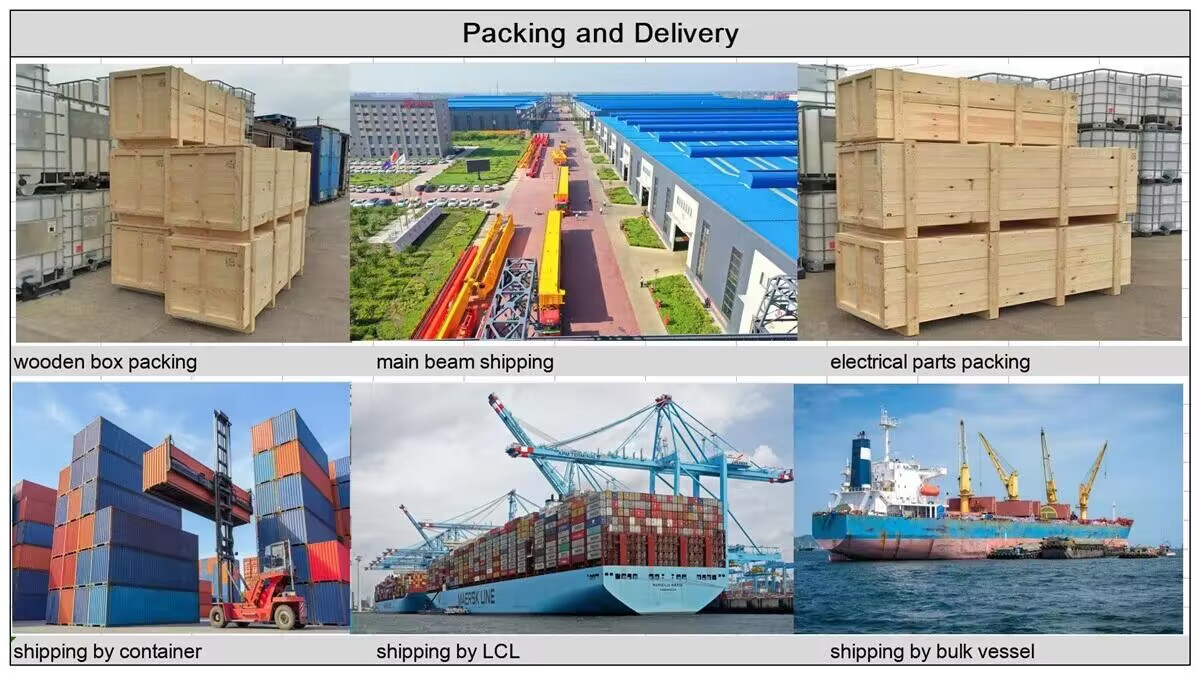
8. Delivery and installation: Pack and prepare the completed crane for transportation to ensure that it is not damaged during transportation. Deliver the crane to the customer's site for installation, and perform on-site debugging and acceptance. Provide operation training to customers to ensure that they are proficient in the use and maintenance of the crane.

Workshop view:
The company has installed an intelligent equipment management platform, and has installed 310 sets (sets) of handling and welding robots. After the completion of the plan, there will be more than 500 sets (sets), and the equipment networking rate will reach 95%. 32 welding lines have been put into use, 50 are planned to be installed, and the automation rate of the entire product line has reached 85%.


Hot Tags: single beam grad crane, China single beam grad crane manufacturers, suppliers, factory, Single Girder Overhead Crane, Single Girder Overhead Travelling Crane
Previous
Motor Powered Overhead CraneYou Might Also Like


Send Inquiry