








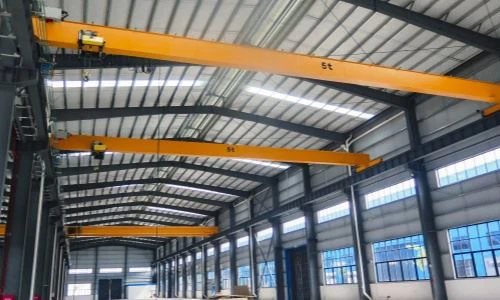


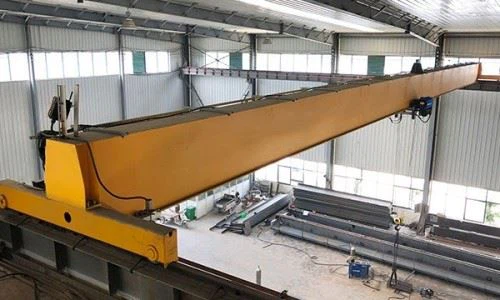

Motor Powered Overhead Crane
Products Description
A Motor Powered Overhead Crane is an industrial lifting solution designed to move heavy loads horizontally and vertically within a facility. It utilizes a motor-driven mechanism to power both the trolley and the hoisting system, offering efficient and reliable lifting and transport capabilities. These cranes are commonly used in factories, warehouses, manufacturing plants, and construction sites where heavy lifting and material handling are required.
Motor-powered overhead cranes offer efficient, safe, and precise material handling solutions for various industries. Their ability to lift and move heavy loads with ease, coupled with advanced control systems and robust safety features, makes them invaluable tools in the modern industrial landscape. Whether used in manufacturing, warehousing, construction, or other heavy industries, these cranes provide the reliability and performance needed to enhance productivity and ensure smooth operations.
Core Components: Gearbox, Motor, Gear
Place of Origin: Henan, China
Warranty: 1 Year
Weight (KG): 10000 kg
Video outgoing-inspection: Provided
Machinery Test Report: Provided
Selling Units: Single item
Single package size: 600X300X300 cm
Single gross weight: 200.000 kg
Pictures & Components
1.Main beam
1)Support for Load Handling: The main beam acts as the primary support for the crane's hoisting system, including the hoist and trolley. It is responsible for distributing the weight of the load across the structure and ensuring stability during operation.
2)Movement Platform: It provides a stable platform for the trolley and hoist to travel horizontally across the workspace. The trolley, which carries the hoisting mechanism, moves along the main beam, allowing the crane to lift and position loads.
3)Structural Integrity: As the central part of the crane, the main beam must be engineered to handle dynamic loads, including both the weight of the materials being lifted and the forces from crane movement. It must maintain its structural integrity during continuous use and heavy lifting.
2.Lifting System
1)Hoist:
The hoist is the primary lifting mechanism and is mounted on the crane's trolley. It consists of a motor, gearbox, drum, wire rope, and hook.It is responsible for raising and lowering the load, as well as controlling the speed and precision of the lift.
2)Motor:
The motor provides the power needed to lift the load. It is typically an electric motor that drives the hoist's gearbox, which in turn rotates the drum and raises or lowers the load.These motors are often high-efficiency units, designed to operate reliably under heavy-duty conditions.
3)Gearbox:
The gearbox reduces the speed of the motor and transmits the appropriate torque to the hoist drum. This ensures that the lifting operation is smooth and precise.The gearbox also allows for controlled acceleration and deceleration of the hoisting mechanism, contributing to smooth load handling and preventing abrupt movements.
4)Drum:
The drum is a cylindrical component on which the wire rope or chain is wound. It is connected to the gearbox and rotates when the motor is engaged.As the drum turns, it either winds or unwinds the rope, which in turn raises or lowers the load.
5)Wire Rope or Chain:
The wire rope or chain is used to connect the hoist to the load. It is wound around the drum and is responsible for lifting or lowering the load as the drum turns.
6)Hook:
The hook is the component that attaches to the load. It is usually made of high-strength steel to support heavy loads without bending or breaking.The hook is suspended from the end of the wire rope or chain and is designed to securely hold the load while the crane lifts it.
Hooks often come with safety latches to prevent the load from accidentally disengaging during the lift.
7)Limit Switches:
Limit switches are safety devices that are installed on the hoist system to prevent the load from being raised or lowered beyond a safe limit.
These switches automatically stop the motor when the crane reaches its maximum lifting height or when the load reaches the ground, preventing damage to the hoist system and ensuring the safety of operations.
 |
 |
3.End carriage
Design Features of the End Carriage:
1)Load Distribution and Balance:
The design of the end carriage ensures that the load is evenly distributed between both end carriages. This balance is essential to prevent excessive stress on any part of the crane structure and ensure stable, safe operation.
The end carriages are engineered to handle both dynamic and static loads, making them suitable for various lifting applications.
2)Customization:
The size and design of the end carriages can be customized based on the specific requirements of the crane, including the load capacity, span, and operational environment.
For example, cranes with high lifting capacities or large spans may have larger and stronger end carriages to handle the increased load.
3)Wheel Configuration:
The wheel configuration can vary depending on the crane design and operational requirements. In some systems, each end carriage may have four wheels (two on each side), while others may use a combination of wheels and rollers.
The wheels may be arranged symmetrically or may be staggered, depending on the desired stability and movement precision.
4)Corrosion Resistance:
In environments exposed to high humidity, corrosive materials, or outdoor conditions, the end carriages are designed with corrosion-resistant coatings or may be made from stainless steel to prevent rust and deterioration.
This ensures the longevity of the end carriage and the crane's smooth operation, even in harsh conditions.
 |
 |
4.Crane travelling mechanism
How the Crane Traveling System Works:
1)Powering Movement:
The traveling motors mounted on the end carriages provide the driving force necessary to move the crane along the rails. When the operator initiates a movement command, the motor activates, turning the wheels and propelling the crane forward or backward.
2)Speed Control:
The crane traveling system uses a variable-frequency drive (VFD) or speed controller to regulate the motor's speed. This ensures the crane can move at both low speeds for precise positioning and higher speeds for efficient movement over long distances.
3)Directional Control:
By reversing the direction of the motor, the crane can be made to move in either direction along the rails. The control system ensures that the crane moves smoothly and without jerking in both directions.
4)Deceleration and Braking:
When the operator wants to stop the crane, the motor is disengaged, and the braking system is activated. The braking system slows down the crane in a controlled manner and prevents any uncontrolled movement, ensuring safety during operation.
5.Trolley travelling mechanism
Key Functions of the Trolley Traveling System:
1)Horizontal Movement of the Hoist:
The primary function of the trolley traveling system is to move the hoist horizontally along the crane's main beam. This motion enables the hoist to pick up and drop loads at different points along the beam, ensuring flexibility in load placement.
2)Load Positioning:
The trolley system allows for precise positioning of the load over the desired location. It enables the operator to move the load smoothly and accurately, whether it's transferring materials or positioning loads for assembly or stacking.
3)Smooth and Controlled Travel:
The trolley traveling system ensures that the hoist moves smoothly across the beam without jerking or stalling, even under heavy load conditions. This is essential for maintaining operational safety and efficiency.
6.Crane wheel
Types of Crane Wheels:
1)Single Wheels:
Some cranes use a single wheel per side of the crane's main body or frame. This is typically found in lighter-duty cranes or cranes with smaller spans.
2)Dual Wheels:
Larger, heavier cranes often use dual wheels on each side of the main frame for better load distribution. These dual wheels help spread the load evenly, providing greater stability and reducing the likelihood of wheel deformation.
3)Tandem Wheels:
In very heavy-duty applications, cranes may use tandem wheels, which are multiple sets of wheels aligned in parallel to distribute weight even further and reduce the impact on individual wheels.
4)Swivel Wheels:
Swivel wheels can be used in some crane designs to allow more flexibility in movement and positioning. These wheels can rotate around a central point, enabling the crane to change direction or adjust its movement in tighter spaces.

7.Crane Hook
Safety Features of the Crane Hook:
1)afety Latch Mechanism
Prevents accidental load disengagement, reducing the risk of dropped loads.
2)Load Limit Indicator
Some modern hooks are equipped with load sensors or overload indicators that provide real-time weight monitoring, preventing overload conditions.
3)Hook Deformation Detection
High-quality hooks often have wear indicators or markings that allow operators to check for bending or deformation over time.
4)Crack Detection and Regular Inspection
Hooks are visually and magnetically tested for cracks or internal defects that may compromise their integrity.

Motor
Types of Motors Used in Overhead Cranes:
1)Asynchronous (Induction) Motors
The most common type, offering high efficiency, durability, and low maintenance.Operates with AC power, making it ideal for industrial environments.
2)Squirrel Cage Motors
A type of induction motor known for ruggedness, simplicity, and reliability.Widely used for hoisting, trolley movement, and crane travel.
3)Slip Ring Motors
Provides high starting torque, making it suitable for heavy-duty lifting applications.Used in cranes that require frequent starts and stops under heavy loads.
4)Servo Motors
Used in precision lifting applications requiring exact positioning.
Common in automated and robotic crane systems.
5)Hydraulic Motors (Less Common)
Used in special applications where hydraulic power is preferred over electric power.

.
Sound and light alarm system & limit switch
1. Sound and Light Alarm System
Purpose and Function:
The sound and light alarm system is a warning mechanism that alerts operators and nearby workers about the crane's movement. It improves workplace safety by preventing collisions, unauthorized access, and accidents.
2. Limit Switch
Purpose and Function:
A limit switch is a safety device that restricts crane movement within safe boundaries. It automatically stops the crane, hoist, or trolley when it reaches preset limits, preventing over-travel, collisions, and damage.

10.Safety Devices
1)Overload Protection Device
Function:Prevents the crane from lifting loads beyond its rated capacity.Protects the motor, hoist, and structure from excessive stress and potential failure.
2)Limit Switches
Function:Restricts the movement of the hoist, trolley, and crane to prevent over-travel.
3)Emergency Stop System
Function:Allows operators to immediately stop all crane movements in case of an emergency.
4)Sound and Light Alarm System
Function:Warns workers of crane operation to prevent accidents.
5)Anti-Collision System
Function:Prevents collisions between multiple cranes or obstacles in the work area.
6)Brake System
Function:Ensures controlled stopping and load holding to prevent accidents.
11.Control Mode
1)Pendant Control (Wired Control)
Overview:
A wired pendant control is a hand-held device connected to the crane via a cable. The operator manually controls the crane by pressing buttons on the pendant.
2)Wireless Remote Control
Overview:
A wireless remote control allows the operator to control the crane from a safe distance using radio signals. The remote transmitter communicates with the crane's receiver to perform lifting, lowering, and movement functions.
3)Cabin Control (Driver's Cab Control)
Overview:
In cabin control, the crane is operated from a driver's cabin attached to the crane bridge. The operator sits inside the cabin and controls the crane using joysticks, levers, or a control panel.
4)Automated Control (PLC & AI-based Control Systems)
Overview:
Automated control uses Programmable Logic Controllers (PLC) and AI-based systems to automatically operate the crane without human intervention. It is used in high-tech industries for precision material handling.

Sketch

Main technical

Advantages
1.Heavy Load Handling
Motor-powered overhead cranes are designed to handle a wide range of heavy loads, from small components to large industrial equipment, ensuring efficient material handling in various industries.
2.Smooth and Precise Movement
With motorized control, these cranes offer smooth and precise horizontal and vertical movement, which increases operational efficiency and reduces the risk of accidents caused by sudden movements.
3.Energy Efficiency
Modern motor-powered cranes are designed with energy-efficient motors that minimize power consumption, reducing operating costs over time.
4.Customization
These cranes can be customized to meet specific operational needs, including load capacity, span, lifting height, and control options. Custom solutions ensure optimal performance in various working environments.
5.Safety Features
Motor-powered cranes come with built-in safety mechanisms, such as overload protection, limit switches, and emergency stops, to protect both the operator and the equipment from potential damage or hazards.
6.Ease of Operation
The use of modern control systems makes the crane easy to operate. Operators can control the crane's movement using a pendant, wireless remote, or even a joystick control system, providing flexibility and convenience.
7.Durability and Low Maintenance
These cranes are built to last, using high-quality materials and components designed for heavy-duty work. The system is designed for low-maintenance operation, ensuring long-term reliability with minimal downtime.
Application:
1.Manufacturing Plants
In manufacturing, motor-powered overhead cranes are used to move heavy machinery, components, and raw materials across the factory floor. They support efficient assembly line operations, reducing labor costs and improving productivity.
2.Warehouses and Distribution Centers
These cranes are used in warehouses for lifting and transferring heavy goods from storage racks, loading docks, and transport vehicles. Their precise control makes them ideal for organizing and managing goods efficiently.
3.Construction Sites
Motor-powered overhead cranes are often used in construction to lift heavy building materials, such as steel beams, concrete panels, and machinery, across the site.
4.Steel Plants and Heavy Industry
In steel production and other heavy industries, these cranes move large and heavy metal parts, steel billets, and scrap metal. They provide safe handling of molten metal, requiring cranes with robust and heat-resistant features.
5.Shipyards
In shipyards, motor-powered overhead cranes are used to move large ship components and heavy equipment, facilitating assembly, repair, and maintenance of vessels.
6.Automotive Industry
Used in automotive assembly plants for lifting and positioning large vehicle parts such as engines, chassis, and car bodies during the production and assembly process.
Crane production procedure
1. Design & Engineering
Objective:Develop technical drawings and specifications based on customer requirements and industry standards.
2. Material Procurement & Inspection
Objective:Source high-quality raw materials for crane fabrication.
3.Main Beam & End Carriage Fabrication
Objective:Manufacture the main load-bearing structures of the crane.
4.Trolley & Hoist Manufacturing
Objective:Assemble the lifting mechanism that moves along the main beam.
5.Electrical System Assembly
Objective:Install and configure the power supply, control systems, and safety features.
6.Final Assembly
Objective:Combine all major components into a fully functional crane.
7.Testing & Quality Inspection
Objective:Ensure the crane meets operational and safety standards.
8.Surface Coating & Final Finishing
Objective:Apply corrosion-resistant coating to extend the crane's lifespan.
9.Packaging & Delivery
Objective:Prepare the crane for safe transportation to the installation site.

Workshop view:
The company has installed an intelligent equipment management platform, and has installed 310 sets (sets) of handling and welding robots. After the completion of the plan, there will be more than 500 sets (sets), and the equipment networking rate will reach 95%. 32 welding lines have been put into use, 50 are planned to be installed, and the automation rate of the entire product line has reached 85%.


Hot Tags: motor powered overhead crane, China motor powered overhead crane manufacturers, suppliers, factory, Single Girder Overhead Travelling Crane, Single Girder Overhead Crane
Previous
Engine Equipped Bridge CraneYou Might Also Like


Send Inquiry