







20t Overhead Crane
Products Description
A 20t Overhead Crane,also known as a bridge crane, is a type of overhead traveling crane that consists of a 20t Overhead Crane supporting the hoisting mechanism and the bridge. This design is simpler than that of a double girder overhead traveling crane and is suitable for applications with lighter loads and shorter spans.

Place of Origin:Henan, China
Warranty:1 Year:
Weight (KG):3000 kg
Feature:Bridge Crane
Condition:New
Rated Lifting Moment:30kn
Max. Lifting Load:10t
Span:20m

Pictures & Components
Bridge:The bridge of a 20t Overhead Crane is an element that spans the work area and supports the lifting mechanism, which includes the lifting devices and the cart that travels on the crane. In the case of a 20t Overhead Crane, the crane is made up of a single beam or girder that supports the loads lifted by the crane.

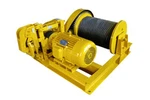
2.Lifting Mechanism:The lifting mechanism of a 20t Overhead Crane is responsible for raising and lowering the loads. It typically consists of several key components:Hoist Drum(s) or Winch(es),Wire Rope,Trolley and so on.

3.Remote control:Remote control of a single tower overhead travelling crane involves using a wireless device to remotely control the crane's functions. This allows the operator to control the crane without being physically present on or near the crane.

Hoist:The hoist of a 20t Overhead Crane is the component that lifts and lowers the load. It typically consists of several key parts working together.Such as Hook or Grab.

5.Brake system:he braking system of 20t Overhead Crane is an important safety feature that prevents the crane from moving or the load from falling in an uncontrolled manner. There are several types of brakes that can be used in different parts of the crane: Hoist brakes, dynamic brakes, etc.

6.Sketch:

Main technical data


Advantages
Compact Size: 20t Overhead Cranes have a smaller footprint and can be installed in spaces with limited headroom or where overhead obstructions are a concern.
Energy Efficiency: Smaller cranes may use less energy, depending on the specific application and duty cycle.
Installation: With a lighter and simpler structure, these cranes can be installed more quickly and with less complexity than their double-girder counterparts.
Suitability for Light Loads: 20t Overhead Cranes are well-suited for operations that do not require the heavy-lifting capacity of double-girder cranes.
Maintenance: Due to their simpler design, maintenance and troubleshooting are often easier and faster compared to more complex crane systems.
Operational Efficiency: For applications that do not require heavy loads or wide spans, 20t Overhead Cranes can operate efficiently, providing adequate lifting capabilities for their intended uses.

Application:
Foundries: In foundries, where molten metal needs to be moved carefully and accurately.
Power Plants: To handle equipment and materials during maintenance and operation of the plant.
Mining Operations: For loading and unloading mining carts and moving materials around processing areas.
Mills and Distilleries: In industries where grains, sugar, oil seeds, or other materials need to be moved for processing.
Textile Industry: For lifting rolls of fabric, textiles, and other materials during manufacturing processes.
Food Processing: To move bulk materials like grains, powders, or packaged food products.
Paper Mills: To handle large rolls of paper or other materials during the manufacturing process.
Automated Systems: Integrated into automated material handling systems for precision placement and movement of goods.
Maintenance Work: For lifting engines, gearboxes, and other heavy components during maintenance work on machines and vehicles.

Global market

Crane production procedure

Workshop view
Material Inspection
Quality Inspection: Strict quality inspection is carried out on the purchased raw materials to ensure that they meet the design requirements and national standards.
Material Storage: Qualified materials are stored according to classification to prevent corrosion or damage.
Cutting and Forming
Steel Cutting: Use plasma cutting, laser cutting or flame cutting and other technologies to cut the steel according to the size of the design drawing.
Forming Processing: Form the steel plate through bending, rolling, welding and other processes to manufacture the main beam, end beam and other structural parts.
Welding
Component Welding: The cut and formed steel parts are welded into the main structures such as the main beam, end beam and trolley. The welding process needs to be strictly controlled to ensure the structural strength and welding quality.
Weld Inspection: Use non-destructive testing technology (such as ultrasonic testing, radiographic testing) to inspect the welds to ensure that there are no cracks or other defects.
Machining
Precision Machining: Precision machining is performed on the key components of the crane, such as wheel sets, bearing seats, pulleys, etc., to ensure their dimensional accuracy and surface quality.
Assembly of the whole machine
General assembly: On the basis of pre-assembly, the overall assembly of the crane is carried out, including the final installation of the main beam, end beam, lifting mechanism, walking mechanism, etc.
Commissioning and testing
Under dynamic conditions, the operating performance of the crane is tested, including the testing of lifting, walking, steering and other functions. The overall size of the assembled bridge crane is checked to ensure that all dimensions meet the design requirements.
Spraying and anti-corrosion treatment
Surface treatment Rust removal: Rust removal on the surface of the crane, common methods include sandblasting, pickling, etc. Primer spraying: Spray anti-corrosion primer on the treated surface to prevent metal oxidation and corrosion. Topcoat spraying Color spraying: Spray topcoat according to customer requirements or industry standards to give the crane a protective and decorative effect. Marking: After spraying, mark the crane's identification information in accordance with the specifications, such as model, rated load, etc.
Factory and installation
Packaging and transportation
Packaging protection: Protectively package the key components of the crane to prevent damage during transportation. Transportation arrangement: According to the equipment size and transportation conditions, select a suitable transportation method to transport the crane to the customer's site.
Acceptance and delivery
Customer acceptance
On-site acceptance: The customer conducts on-site acceptance of the crane according to the contract requirements and technical specifications to check the performance and quality of the equipment.
Problem rectification: If any problems are found, the manufacturer needs to rectify them in time to ensure that the equipment fully meets the customer's requirements. Delivery and use Operation training: The manufacturer usually trains the customer's operators to ensure that they can operate the crane correctly and safely.


Hot Tags: 20t overhead crane, China 20t overhead crane manufacturers, suppliers, factory, Single Girder Overhead Crane, Single Girder Overhead Travelling Crane
Previous
Factory CraneYou Might Also Like


Send Inquiry