










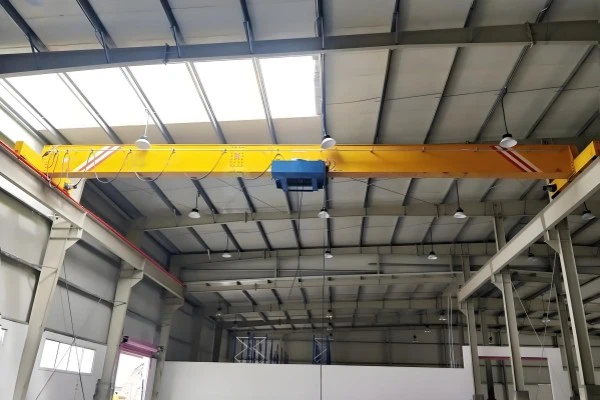
Explosion-proof Single Beam Suspension Overhead Crane
Products Description
The Explosion-Proof Single Beam Suspension Overhead Crane is a specialized lifting solution designed for operations in hazardous environments where explosive gases, vapors, or dust are present. This crane is engineered to meet stringent safety and reliability standards, ensuring secure and efficient material handling in industries like petrochemical, mining, chemical processing, and other high-risk sectors.
Key Features of the explosion-proof single beam suspension overhead crane: Certified explosion-proof components conforming to ATEX, IECEx, or similar international standards.Spark-resistant materials and advanced protective measures to prevent ignition in hazardous zones. Compact and lightweight design suitable for facilities with limited space.Flexible installation on building structures, making it ideal for workshops without heavy-duty overhead beams.
Reduced downtime and maintenance costs due to robust construction.The Explosion-Proof Single Beam Suspension Overhead Crane provides peace of mind with its unparalleled safety and precision, making it an essential tool for demanding industrial environments.
The Explosion-Proof Single Beam Suspension Overhead Crane is enhanced safety and compliance with industrial standards and improved operational efficiency in hazardous zones.The Explosion-Proof Single Beam Suspension Overhead Crane is coated with corrosion-resistant materials that can withstand challenging environments.
Core Components: Gearbox, Motor, Gear
Place of Origin: Henan, China
Warranty: 1 Year
Weight (KG): 10000 kg
Video outgoing-inspection: Provided
Machinery Test Report: Provided
Selling Units: Single item
Single package size: 600X300X300 cm
Single gross weight: 200.000 kg
Pictures & Components
1.Main beam
1) The main beam of the explosion-proof single beam suspension overhead crane is the primary structural component that supports the load and enables the crane to move materials safely in hazardous environments.
The main beam is made of high-strength steel or other durable materials to withstand heavy loads.Often reinforced to meet explosion-proof standards required for hazardous environments (e.g., chemical plants, oil refineries, or mines).The beam and other crane components are designed to prevent sparks or overheating that could ignite flammable gases, vapors, or dust.Compliance with safety standards such as ATEX (in Europe) or NEC (in the United States).
3) The trolley runs along the main beam and carries the explosion-proof hoist.The hoist is typically designed with spark-proof materials and sealed components to ensure safe operation.Corrosion-resistant coatings are often applied to the main beam to protect against chemical exposure and environmental factors.The beam's rigidity ensures minimal deflection under load, maintaining stability and precision during operation.
2.Lifting System
Motor: The motor casing is robust and sealed to contain sparks, heat, or explosions that might occur inside the motor, preventing them from interacting with the hazardous external environment.These motors are engineered to prevent the ignition of flammable gases, vapors, or dust present in the atmosphere, ensuring both operational efficiency and safety.
Reducer: The reducer of a lifting system in an explosion-proof single-beam suspension overhead crane is a critical mechanical component designed to manage the torque and speed transmission between the crane motor and the hoist mechanism. It plays an essential role in ensuring the precise lifting and lowering of loads while meeting the stringent safety and performance requirements for use in hazardous environments, such as chemical plants, oil refineries, or mining facilities.
Drum: The cylindrical drum is grooved to guide the wire rope uniformly during operation.Designed to handle the load without excessive wear or deformation.Made of high-strength materials like forged steel or cast iron to ensure durability under heavy loads and explosive conditions.
Wire rope: Material of wire ropes is high-strength carbon steel or alloy steel, often galvanized or coated for corrosion resistance.Typically a multi-strand configuration with a flexible core (fiber or steel) to ensure both strength and flexibility.
Pulley block: A pulley block in the context of an explosion-proof single beam suspension overhead crane is an essential component of the crane's lifting mechanism. It comprises a system of sheaves (grooved wheels), wire ropes, and a housing designed to facilitate lifting heavy loads while maintaining safety and compliance with explosion-proof standards.
Lifting device: The lifting device in the lifting system of an explosion-proof single-beam suspension overhead crane is a critical component designed for safe and efficient material handling in hazardous environments where explosive gases or dust may be present.All electrical and mechanical components are enclosed or treated to prevent sparking or heat generation.Materials used are non-sparking, anti-static, and corrosion-resistant.
 |
 |
3.End carriage
1) An "end carriage" of an explosion-proof single beam suspension overhead crane is a crucial component of the crane's structure, designed to support the movement of the crane along its track while ensuring safety in hazardous environments, such as areas with explosive gases or dust.
2)The end carriage, along with other parts of the crane, is engineered to prevent sparks or heat that could ignite flammable materials in environments such as chemical plants or oil refineries. This design typically follows strict standards, such as ATEX or IECEx, for explosive atmospheres.The end carriage is responsible for supporting the load-bearing beam, which is usually a single beam (monorail) in a single girder configuration. This suspension system allows the crane to move smoothly along the track.
3) The end carriage is made from high-quality materials that can withstand both the mechanical stresses of operation and the potential risks of explosion-prone areas. It is typically constructed from heavy-duty steel and may feature specialized coatings or finishes to prevent corrosion and improve durability.The explosion-proof end carriage is equipped with safety systems like emergency stop buttons, overload protection, and monitoring systems to ensure the crane's safe operation in hazardous areas.
 |
 |
4.Crane travelling mechanism
1) Working principle
Movement Along Rails or Beams
The crane is suspended from the main I-beam or runway using trolleys or end carriages equipped with wheels.The travelling mechanism operates by driving the powered wheels via the explosion-proof motor and gearbox. The motor converts electrical energy into mechanical energy, which is transferred to the wheels.
2) Functions of the crane operating mechanism
Movement of the Crane Along the Runway: The crane traveling mechanism allows the crane to move horizontally along the runway beams. It typically consists of a motorized drive system (including a motor, gearbox, and wheel assemblies) that propels the crane along its designated track.
The traveling mechanism enables precise movement of the crane to position the load exactly where it's needed.This ensures the efficient handling of materials within the workspace while maintaining safety and control over the load.
The traveling mechanism helps transport the load from one position to another within the crane's operating area. It is responsible for smoothly transferring loads across the entire span of the crane, ensuring minimal jerking or sudden movements that could jeopardize the safety of the materials being transported.
5.Trolley travelling mechanism
1) Structural composition
1. Trolley Frame (or Main Frame): It provides the basic structure that holds the rest of the trolley components.
2. Trolley Wheels: These wheels facilitate smooth movement of the trolley along the crane's bridge rails.
3. Drive Mechanism: The drive motor powers the trolley's movement along the bridge. In explosion-proof versions, these motors are enclosed in explosion-proof casings to prevent sparks or flames from escaping into the surrounding environment. The reducer or gearbox reduces the motor's high-speed output to a lower, usable speed for the trolley's movement.All electrical components, including the motor, control panels, and connections, are designed with explosion-proof enclosures to ensure safe operation in hazardous areas.
4. Trolley Rail Guide: Ensures the trolley stays aligned along the bridge rail, preventing derailment.
5. Trolley Hoist (or Lifting Mechanism): Lifts and lowers the load via the hoist and hook mechanism attached to the trolley.The hoist motor, along with the lifting components like chains or wire ropes, are also designed with explosion-proof features for protection in hazardous zones.
6. Control System: Provides the operator with control over the trolley's movement. This can include both manual and automatic controls.The control panels, including switches, relays, and wiring, are enclosed in explosion-proof casings, ensuring no electrical sparks can ignite the surrounding atmosphere.Often, explosion-proof overhead cranes are equipped with remote-control systems, enabling safe operation from a distance, especially in hazardous environments.
7. Braking Mechanism: Ensures the trolley can be safely stopped and held in position. This includes a fail-safe system to prevent the trolley from moving in the event of a power failure.The brake components are built to operate safely in explosive environments, typically with non-sparking materials and protected against environmental conditions.
8. Suspension System: This is the mechanism that supports the trolley and allows it to move along the crane's bridge. It typically involves a set of rolling bearings and guides that keep the trolley securely attached to the suspension.These systems are designed to avoid friction or heat generation that could cause a spark.
9. Explosion-Proof Features: The entire assembly, including the motor, control system, and electrical components, are sealed to prevent any leakage of explosive gases or dust.Many components are constructed with materials that do not generate sparks, such as non-ferrous metals, and are designed to avoid static electricity build-up.Explosion-proof cranes typically have ventilation systems that allow heat dissipation without allowing flammable substances to enter the motor or control compartments.
10. Safety Features:Limit Switches prevent overtravel of the trolley and ensure that it stops at the designated positions.Emergency Stop Button ensures a rapid shutdown in case of emergency.Overload Protection prevents the crane from lifting loads beyond its rated capacity, which could cause damage or malfunction.
2) Function of the trolley operating mechanism
The primary function of the trolley operating mechanism is to move the trolley along the crane bridge, typically in a lateral direction (perpendicular to the runway beams). This mechanism ensures that the hoisting unit can be positioned over a specific area for load lifting and lowering.
6.Crane wheel
A crane wheel in the context of an explosion-proof single beam suspension overhead crane plays a crucial role in the crane's ability to move along its track while also ensuring safety in hazardous environments.
The crane wheel supports the load of the crane and enables it to move smoothly along the overhead track. These wheels are typically made from strong materials, like steel, to bear the weight of the crane and the load it is transporting.
The design of the crane wheel is critical for reducing friction, ensuring stability, and minimizing wear and tear on the rails. Wheels typically have a flange to help them stay on the track and prevent derailment.

7.Crane Hook
1) The crane hook plays a critical role in the overall safety and functionality of the crane system, especially in such sensitive environments.
2) The hook is manufactured using materials and coatings that reduce the risk of sparking when it comes into contact with other surfaces.Typically conforms to explosion-proof standards like ATEX or IECEx.Made from forged carbon steel or alloy steel to ensure high load-bearing capacity and resistance to stress under heavy loads.The hook often includes a safety latch to prevent accidental disengagement of the load.Some hooks are designed with a swivel mechanism to allow rotation without twisting the lifting rope or chain.

Motor
Explosion-Proof Design:The motor casing is constructed to prevent any sparks, heat, or flames generated internally from escaping and igniting the surrounding atmosphere.Certified to specific standards such as ATEX (Europe) or NEC/IECEx (International) for hazardous zones.
Material Construction:Made from robust materials like cast aluminum or steel to withstand harsh industrial environments.Sealed against ingress of dust, gas, and moisture, with an appropriate IP rating (typically IP65 or higher).
Temperature Class:Designed to operate without exceeding the temperature limits of the classified hazardous zone.Suitable for environments where substances with specific ignition temperatures are present.

.
Sound and light alarm system & limit switch
1) Sound and light alarm system
To enhance safety, such cranes often include sound and light alarm systems to alert workers to crane movements, potential hazards, or emergencies.
Audible Alarm (Buzzer or Siren):Emits loud sounds to warn workers of crane movement, overloads, or emergency situations.Sound intensity typically ranges between 85-120 dB, depending on the application and environment.
Visual Alarm (Warning Lights):Bright flashing or rotating lights (often red, yellow, or blue) to signal crane activity or alerts.Explosion-proof lights designed to withstand hazardous conditions.LEDs are preferred due to durability and low energy consumption.
2) Limit switch
A limit switch in an explosion-proof single-beam suspension overhead crane serves as a critical safety device. It prevents the crane or its components (such as the hoist or trolley) from moving beyond pre-set boundaries, reducing the risk of mechanical failures, accidents, or damage to the crane.
Functions: Travel Limits prevents the crane or trolley from traveling beyond its designated operating range.
Types: Rotary Limit Switches: Activated by the rotational movement of the drum or motor.Lever/Push Limit Switches: Activated by physical contact with end stops or other structural features.Proximity Sensors: Detect position without physical contact, ideal for explosion-proof environments.Electromechanical Limit Switches: Combine traditional mechanical operation with electrical signaling.

10.Safety Devices
Explosion-Proof Components: Use explosion-proof motors and electrical enclosures to prevent sparks or heat from igniting flammable substances.Control Panels: Sealed to prevent the ingress of explosive atmospheres. Wiring and Junction Boxes: Protected with explosion-proof covers and conduits.Limit Switches Function: Protects the crane from moving beyond its safe operating limits.
Overload Protection: Prevents the crane from lifting loads beyond its safe working load limit to avoid mechanical failure or accidents.
Anti-Collision System: Sensors or limit switches to prevent collisions with other cranes or structures in the vicinity.
Emergency Stop System: An easily accessible emergency stop button to immediately shut down operations in case of an emergency.
11.Control Mode
Pendant Control:Operated via a wired or wireless pendant connected to the crane.Offers direct manual control with buttons for hoisting, lowering, trolley travel, and crane movement.Explosion-proof pendant units ensure safety in hazardous areas.Suitable for smaller cranes or simpler operations.Used in hazardous zones where direct, close monitoring of load movements is required.
Wireless Remote Control:Handheld remote provides wireless operation.Operators can control the crane from a safe distance, improving visibility and safety.The transmitter and receiver are explosion-proof.Ideal for applications requiring operator mobility or enhanced safety by maintaining distance from hazardous zones.
Control Cabin Operation:Operator sits in an enclosed, explosion-proof cabin mounted on the crane or nearby.All crane functions are managed using joysticks, buttons, or a console.Used for heavy-duty cranes in hazardous environments.Suitable for applications requiring high precision or repetitive, complex tasks.
Automatic or Semi-Automatic Control:Pre-programmed operation using PLCs (Programmable Logic Controllers).Can include automated lifting, movement, and positioning of loads.Explosion-proof sensors, controllers, and actuators ensure safety.Suitable for repetitive operations in hazardous areas.Reduces human intervention and potential exposure to dangerous conditions.

Sketch

Main technical

Advantages
Enhanced Safety in Hazardous Environments: Designed to prevent sparks or ignition sources, making it safe for use in areas with flammable substances.Compliance with safety standards such as ATEX or IECEx ensures reliability in explosive environments.
Compact and Space-Saving Design: Suspension design allows the crane to be installed directly on the roof or ceiling, saving floor space.Ideal for facilities with limited space or where ground-level equipment might obstruct workflows.
Efficient Material Handling: Capable of handling heavy loads with precision and reliability, improving productivity in hazardous industries like petrochemical, mining, or pharmaceuticals.Smooth operation ensures minimal risk of accidents or material damage.
Customizable for Specific Needs: Can be tailored to suit the layout and requirements of the workspace, including beam length, lifting height, and load capacity.Adaptable to various explosion-proof classifications and zones.
Durability and Low Maintenance: Built with robust materials resistant to harsh industrial conditions, reducing wear and tear.Explosion-proof components are designed for long-term reliability, minimizing downtime and maintenance costs.
Improved Accessibility: Allows for efficient operation over large areas, providing excellent coverage for material handling tasks.Suspension design enables smooth movement along the entire length of the working area.
Compliance with Industry Standards: Ensures adherence to international safety and explosion-proof regulations, reducing liability and enhancing workplace safety.
Energy-Efficient Operation: Advanced motor and control systems offer energy-efficient performance, lowering operational costs.
Versatility Across Industries:Suitable for a variety of applications, including chemical plants, refineries, paint shops, and grain processing facilities, where safety and precision are critical.
Application:
1. Chemical and Petrochemical Industries
Applications: Handling raw materials, intermediates, and finished products.Environment: Flammable gases and vapors, such as in chemical plants or refineries.
2. Oil and Gas Industry
Applications: Maintenance and material handling in offshore rigs, onshore refineries, and storage facilities.Environment: Presence of explosive hydrocarbons in the form of gases or vapors.
3. Pharmaceutical Industry
Applications: Precise handling of raw materials and machinery in controlled environments.Environment: Use of volatile solvents in production processes.
4. Mining Industry
Applications: Transportation of materials and machinery in underground operations.Environment: Combustible gases like methane or coal dust.
5. Grain and Agricultural Processing
Applications: Moving grain, feedstock, or equipment in storage silos or processing facilities.Environment: Combustible dust from grain and agricultural products.
6. Paint and Coating Industries
Applications: Handling large containers of paint, solvents, or coating materials.Environment: Flammable fumes from solvents and chemicals.
7. Explosives Manufacturing
Applications: Safe handling of explosives, detonators, and related components.Environment: High risk of sparks igniting explosive materials.
8. Waste Treatment Facilities
Applications: Managing hazardous waste materials, especially those containing flammable or volatile compounds.Environment: Potentially explosive atmospheres from waste decomposition.
Crane production procedure
1. Design and Engineering: Assess operational needs, load capacity, span, working environment, and explosion-proof classification (e.g., Zone 1, Zone 2; Gas Group IIA, IIB, or IIC).Design according to international and local standards like ATEX, IECEx, or NEC for explosion-proof equipment. Use materials with anti-spark properties for components exposed to the hazardous environment.Motors, electrical enclosures, and control systems must be certified explosion-proof.Anti-sparking wheels and hooks.Perform FEM or similar analyses for strength and stability.
2. Procurement of Materials and Components:Source high-quality steel, explosion-proof motors, electrical components, and accessories.
Ensure all materials and parts are certified for use in hazardous areas.
3. Fabrication: Weld the beam structure using precision techniques to ensure uniformity and strength. Fabricate suspension structures to attach to the main beam. Install the explosion-proof hoist, ensuring proper alignment and assembly of its motor, gears, and brake systems.Build or assemble explosion-proof electrical enclosures for control panels and limit switches.Sandblasting to remove impurities.
Anti-corrosion coating and painting suitable for the hazardous environment.
4. Assembly:Assemble the crane, integrating the main girder, hoist, end carriages, and electrical systems.Ensure alignment and secure connections.
Install the control system (manual or remote) with explosion-proof certifications.
5. Quality Control and Testing: Verify dimensions against the design specifications.Conduct static (1.25 times the rated load) and dynamic (1.1 times the rated load) tests.Verify compliance with explosion-proof standards through testing and certifications.Smooth operation of hoist and trolley.Proper functioning of brakes, limit switches, and controls.Verify insulation resistance, grounding, and compliance with explosion-proof electrical standards.
6. Documentation and Certification:Provide detailed technical manuals, test reports, and explosion-proof certificates.Include user training documentation for safe operation and maintenance.
7. Packaging and Delivery:Pack all components securely to prevent damage during transportation.Ensure documentation for installation and operation accompanies the delivery.
8. Installation and Commissioning: Assemble and install the crane on-site under expert supervision.Reconfirm all functional tests in the actual environment to ensure safety and reliability.
9. Maintenance Training and Support:Provide maintenance training for the user.Offer periodic inspection services to ensure long-term safety and performance.
Workshop view:
The company has installed an intelligent equipment management platform, and has installed 310 sets (sets) of handling and welding robots. After the completion of the plan, there will be more than 500 sets (sets), and the equipment networking rate will reach 95%. 32 welding lines have been put into use, 50 are planned to be installed, and the automation rate of the entire product line has reached 85%.


Hot Tags: explosion-proof single beam suspension overhead crane, China explosion-proof single beam suspension overhead crane manufacturers, suppliers, factory, Double Girder Overhead Crane, Forged Crane Wheels, Double Girder Bridge Crane with Electric Hoist, Train Wheels, Wheels, Ladle Foundry Bridge Crane
You Might Also Like


Send Inquiry