










Single Girder Eot
Single girder eot
Product Introduction
1)Single girder eot (Electric Overhead Traveling) Crane: Product Introduction A Single Girder EOT Crane is a type of overhead crane commonly used in industrial applications for lifting and transporting heavy materials or loads. This crane features a single horizontal girder (beam) supported by end trucks that move along rails mounted on a supporting structure. It is driven by an electric hoist mechanism, allowing precise and controlled lifting operations.,
2)Single girder eot is Key Features and Advantages:Simple and Efficient Design:The single girder design ensures a compact structure, making it an ideal solution for facilities with space constraints.It provides cost-effective lifting solutions for light to medium-duty operations.Cost-Effective:Single girder cranes are more affordable compared to double girder cranes, as they require less material and are simpler to manufacture.
3)Single girder eot is Lightweight and Easy to Install:The crane's lightweight nature makes it easier to install and requires less structural support, reducing installation costs and time.High Lifting Capacity:These cranes are designed to lift loads ranging from a few hundred kilograms to several tons, depending on the model and hoist capacity.
4)Single girder eot is Versatility:Ideal for various applications such as in warehouses, workshops, assembly lines, and manufacturing facilities.Suitable for lifting non-abrasive and non-corrosive materials.Safety Features:Equipped with safety mechanisms like limit switches, overload protection, and emergency stop buttons.Smooth and stable operation reduces the risk of accidents.

Pictures & Components
1.Main beam
1) Single Girder EOT Crane Main Beam The Main Beam (also known as the Girder) is the most crucial structural component of a Single Girder Electric Overhead Traveling (EOT) crane. It is the primary load-bearing element that supports the hoisting mechanism (hoist and trolley) and facilitates the lifting and movement of heavy loads within the crane system. The main beam runs horizontally and is supported by two end trucks, which allow it to travel along the overhead rails.
2) Key Characteristics of the Main Beam:Design:The main beam is typically designed in a I-beam or box girder shape, depending on the specific requirements of the crane.I-beam: More common for lighter-duty applications, where the main beam resembles a capital "I" in cross-section.Box girder: Used for heavier-duty cranes as it provides greater strength, rigidity, and stability.
3) Material:The main beam is usually made from high-quality steel (such as carbon steel or alloy steel) for its high strength-to-weight ratio, durability, and resistance to wear and fatigue under heavy loads.The steel is typically treated or coated to enhance its resistance to environmental factors like corrosion.
4) Load Distribution:The main beam is responsible for evenly distributing the load between the end trucks, hoist, and trolley.It ensures that the load is lifted and transported safely and efficiently without straining any part of the crane structure.Dimensions and Span:The size and dimensions of the main beam depend on the crane's lifting capacity, span (distance between the rails), and the type of application.Span: The distance between the two end trucks.Lifting Capacity: The main beam must be strong enough to support the weight of the hoist and the maximum load to be lifted.
5) Strength and Durability:The main beam must have high structural integrity to withstand dynamic loads during operation, including impact, shock loading, and vibrations.It needs to resist bending, deflection, and deformation under maximum load conditions.

Lifting System
1)Single Girder EOT Crane Lifting System The Lifting System is one of the most critical components of a Single Girder Electric Overhead Traveling (EOT) Crane. It is responsible for the vertical movement (lifting and lowering) of loads and enables smooth, efficient, and safe material handling in various industrial applications. The lifting system typically includes an Electric Hoist, Motor, Gearbox, Wire Rope or Chain, and Hook Assembly.
2)Key Components of the Lifting System Electric Hoist The electric hoist is the central part of the lifting system that powers the vertical movement of loads.
3)It consists of:Hoisting Motor: Provides the power to lift and lower loads.Gearbox: Reduces the motor speed and provides the torque required for heavy lifting.Wire Rope or Chain: Transfers the lifting force to the hook.Brake System: Ensures load safety by preventing unintended lowering of the load.
4)Wire Rope Hoist: Designed for higher lifting capacities and larger spans.Provides smooth and precise operation, ideal for heavy-duty applications.Chain Hoist:Best suited for lighter loads and shorter lifting heights.Compact, cost-effective, and easy to maintain.Wire Rope or Chain Wire Rope:Made of high-strength steel strands wound together.Offers durability, flexibility, and resistance to abrasion.Chain:Heavy-duty alloy chains are used in chain hoists for smaller lifting capacities.Known for robustness and ease of maintenance.Hook Assembly The hook is the part of the lifting system that holds the load.It is typically made of forged steel to ensure maximum strength and durability.

3.End carriage
1) Single Girder EOT Crane End Carriage The End Carriage is a crucial component of a Single Girder Electric Overhead Traveling (EOT) Crane. It is the part of the crane that supports the main girder (beam) and allows the crane to move horizontally along the rails mounted on the supporting structure. The end carriage consists of the frame, wheels, and drive system (motor), and is responsible for transferring the load from the girder to the rails and enabling the crane to travel smoothly within its defined workspace.
2) Key Components of the End Carriage Frame (Structure);The end carriage frame is made of high-strength steel, designed to bear the load from the main girder and support the wheels and motor.It includes the cross beams and end plates, which help connect and support the wheels, motors, and other essential components.
3) Motor and Drive Mechanism;The motor provides the power to move the end carriage along the rails.Drive Mechanism: The motor is connected to a gearbox that drives the wheels, enabling the movement of the crane.In some designs, the motor may be located on one of the end carriages, and the drive is transmitted through the gearbox and wheel assembly. In other cases, two motors are used, one for each end carriage.The drive system is usually AC or DC, with AC motors being more common in modern cranes for their efficiency and reliability.

4.Crane travelling mechanism
1) Single Girder EOT Crane Traveling Mechanism The Traveling Mechanism of a Single Girder Electric Overhead Traveling (EOT) Crane is responsible for enabling the crane to move horizontally along the rails that are mounted on the crane structure or building. This mechanism consists of several key components that work together to facilitate smooth, controlled, and efficient movement of the crane along the longitudinal axis of the crane's span. It ensures that the crane can position the load accurately across the entire span of the building or workshop.
2) Key Components of the Traveling Mechanism End Carriages;The end carriages are the most critical components of the traveling mechanism. They support the main girder (bridge) of the crane and house the wheels and motors that move the crane along the rails.The end carriages are mounted on both ends of the crane's main girder, and each end carriage is equipped with wheels that run along the rails.
3) Drive System;The drive system provides the power for the crane to move horizontally along the rails. This system typically consists of the motor, gearbox, and brakes.Motor: The electric motor generates the force required to move the end carriages and, consequently, the entire crane along the rails. Motors can be either AC or DC, with AC motors being the most common due to their energy efficiency and ease of control.
4) Gearbox: The gearbox reduces the speed of the motor and increases torque, which is then transmitted to the wheels via the drive shaft.Braking System: A braking system, often electromagnetic or hydraulic, is used to stop the crane or hold it in position after movement. It is crucial for safety to ensure the crane stops smoothly and does not continue traveling unintentionally
5.Trolley travelling mechanism
1) Single Girder EOT Crane Trolley Traveling Mechanism The Trolley Traveling Mechanism is a key component in a Single Girder Electric Overhead Traveling (EOT) Crane. It is responsible for moving the hoisting unit (hoist and hook) horizontally along the main girder (bridge). The trolley allows the crane to move loads within the span of the main girder and is an essential part of the crane's ability to transport materials accurately and efficiently.
2) Key Components of the Trolley Traveling Mechanism Trolley Frame;The trolley frame is the main structure that holds the hoisting mechanism (hoist and hook assembly) and the traveling components. It is typically made of high-strength steel to ensure durability and strength under load.The frame is designed to support the weight of the hoist and load, while also providing a base for the trolley's wheels and drive system.
3) Electric Motor: The electric motor provides the power needed to move the trolley. It can be an AC motor or DC motor, with AC motors being more common due to their efficiency, durability, and ease of control.Gearbox: The gearbox reduces the speed of the motor and increases the torque, which is then transmitted to the wheels to propel the trolley.Drive Shaft: The drive shaft connects the gearbox to the wheels, transmitting the motor's power to the trolley wheels.Drive Wheels: These are the wheels that are powered by the motor and gearbox. They are responsible for propelling the trolley along the girder.The trolley drive system is often a single motor or dual motor setup,
6.Crane wheel
1) Single Girder EOT Crane Wheel The wheel is a critical component of a Single Girder Electric Overhead Traveling (EOT) Crane. It plays a crucial role in allowing the crane to travel along the rails, supporting the entire weight of the crane, including the main girder, hoist, and load. The crane's end carriages or trolley are equipped with wheels, which are responsible for the smooth and efficient movement of the crane along the tracks.
2) Key Features of EOT Crane Wheels Material and Construction;High-Strength Steel: Most EOT crane wheels are made from high-strength steel or forged steel, which ensures the wheel's durability and ability to withstand high loads and dynamic forces during operation.Cast Iron: Some wheels may be made from cast iron, depending on the application. However, steel is preferred for its superior strength and resistance to wear.Heat Treatment: To improve durability, crane wheels are often heat-treated to increase hardness, especially on the tread surface (the part that makes contact with the rails).
3) Wheel Design Types;Solid Wheels: Most commonly used for EOT cranes, these wheels are made from a solid piece of metal. Solid wheels offer durability and high load-bearing capacity.Hollow Wheels: Less common but used in some applications, hollow wheels reduce the weight of the wheel assembly, which may be beneficial in low-load scenarios. Wheels: wheels have a raised rim (flange) along the edge, which helps keep the wheel aligned on the rail and prevents derailment. These are standard in most EOT cranes as they ensure stability and safety while the crane moves. Wheels: These wheels are used in special applications where precise alignment isn't necessary, but they are less common for EOT cranes.

Crane Hook
1) Single Girder EOT Crane Hook The hook in a Single Girder Electric Overhead Traveling (EOT) Crane is a crucial component used to lift, carry, and position loads. It serves as the connection point between the hoisting mechanism and the load being lifted. The hook is designed for high load-bearing capacity, durability, and safety. It is one of the most essential parts of the crane and is vital for efficient and safe material handling operations.
2) Forging: Many EOT crane hooks are forged to give them the strength and durability needed for heavy-duty lifting. Forging improves the structural integrity of the hook, making it more resistant to deformation under load.Heat Treatment: The hook is often heat-treated to improve hardness, toughness, and wear resistance. The process ensures that the hook can endure heavy stress and resist cracking or failure over time.
3) Load Capacity;The crane hook is designed to handle specific load capacities based on the crane's specifications. Load capacity is an important factor in the hook's design, ensuring it can safely carry the weight of the load being lifted.Hooks are often rated with safe working load (SWL) or maximum lifting capacity, which must always be adhered to in operational settings.
4) Hook Opening Size;The size of the hook opening is designed to accommodate various types of lifting slings, chains, and ropes. The opening size must be sufficient to allow easy attachment and detachment of the lifting material while ensuring that the connection remains secure during lifting operations.

8.Motor
1)Single Girder EOT Crane Motor The motor is a fundamental component in a Single Girder Electric Overhead Traveling (EOT) Crane, driving the crane's movement and operation. It powers the hoisting mechanism, traveling system (both horizontal and vertical), and other related parts of the crane, providing the necessary torque and speed to carry out lifting and movement tasks efficiently.
2)Key Features of the EOT Crane Motor;Type of Motor;Squirrel Cage Induction Motor: The most common motor used in EOT cranes is the squirrel cage induction motor. These motors are robust, reliable, and cost-effective. They offer high efficiency and can operate continuously under heavy load conditions.Wound Rotor Motor: Sometimes used for applications requiring variable speed control or higher starting torque. These motors are generally more expensive and complex but provide more control over the crane's operation.DC Motors: Although less common in modern EOT cranes, DC motors were historically used due to their ability to provide variable speed control. They are typically replaced by AC motors in modern cranes for better efficiency, lower maintenance, and simpler control systems.
3)Torque and Load Handling;High Torque: The motor must provide high starting torque to lift heavy loads, especially when the crane is starting from a standstill. The crane motor's ability to handle peak torque loads is essential for smooth crane operation and to avoid sudden jerks or stresses that could damage the crane or the load.Load Handling: The motor should be sized to handle the specific lifting capacity and load demands of the crane. It needs to offer sufficient power to move the load at the required speed without overloading or overheating.

.
9.Sound and light alarm system & limit switch
1)Single Girder EOT Crane Sound and Light Alarm System & Limit Switch In a Single Girder Electric Overhead Traveling (EOT) Crane, the Sound and Light Alarm System and Limit Switch are important safety features designed to prevent accidents, alert operators of potential issues, and ensure the safe operation of the crane.
2) Sound and Light Alarm System Purpose;The Sound and Light Alarm System is designed to alert both the crane operator and surrounding personnel about specific crane activities or potential hazards. It typically involves the use of audible alarms (such as horns or sirens) and visual indicators (such as flashing lights)
3)End-of-Travel Warnings: As the crane approaches the end of its travel limit, the alarm system signals to prevent over-travel and potential damage to the crane or surrounding equipment.Safety Precautions: The alarm is triggered if there is any abnormal condition, such as a malfunction or misalignment of crane components, alerting personnel to take preventive actions.Benefits of Sound and Light Alarm
4)System Improved Safety: By providing clear and immediate warnings, the system prevents collisions, crane overloading, and accidents in high-risk areas.Increased Visibility: The alarm system enhances the visibility of the crane's operational status, ensuring that both the operator and nearby workers are aware of potential hazards.

10.Safety Devices
1) Single Girder EOT Crane Safety Devices Safety is a critical consideration in the design and operation of Single Girder Electric Overhead Traveling (EOT) Cranes. These cranes are used for lifting and moving heavy loads, often in industrial environments, which can pose significant risks to operators and workers nearby. To mitigate these risks and enhance safety, a variety of safety devices are integrated into Single Girder EOT Cranes. These devices are designed to prevent accidents, protect equipment, and ensure smooth crane operation.
2) Overload Protection Device;Purpose:To prevent the crane from lifting loads that exceed its rated capacity, thereby avoiding structural damage to the crane or a potential failure during operation.Key Components:Load Cells or Load Weighing Systems: These sensors measure the weight of the load being lifted and transmit the data to the crane's control system.Overload Alarm: If the load exceeds the crane's capacity, an alarm system activates to alert the operator.Cutoff Mechanism: In some systems, if the crane is overloaded, the lifting mechanism may automatically stop, and the crane may be prevented from moving further until the load is reduced.
3) Limit Switch;Purpose:To prevent over-travel or excessive movement of crane components, such as the hoist, trolley, or bridge, ensuring that the crane stops before it exceeds its operational limits.Key Components:Actuator: This mechanical part responds to the movement of crane components, signaling the limit switch when the end of the travel range is reached.Switch Mechanism: Activates when the actuator reaches the limit, sending a signal to stop the crane.
11.Control Mode
1) Single Girder EOT Crane Control Modes The control mode of a Single Girder Electric Overhead Traveling (EOT) Crane refers to the method used to operate and control the movements of the crane, including the hoisting, traveling, and trolley functions. The control mode determines how the operator interacts with the crane and can vary based on the operational requirements, safety features, and efficiency needs of the crane.
2) Pendant Control (Wired Control) Description:In pendant control, the crane operator uses a handheld device, usually a pendant controller (a wired remote), to operate the crane. This controller is connected to the crane via a cable and allows the operator to move the crane's hoist, trolley, and bridge, as well as activate alarms or emergency stops.
3) Radio Remote Control (Wireless Control)Description:Radio remote control allows the crane operator to control the crane from a distance using a wireless device. The operator can move freely within the work area, improving their visibility and situational awareness.
4) Cabin Control (Operator's Cabin)Description:In cabin control, the crane operator is situated in an enclosed or open cabin on the crane itself, where they have direct access to controls such as levers, joysticks, and buttons. This mode is typically used in more complex crane operations or for cranes with high lifting capacities.

Sketch

Main technical

Advantages
1)Advantages of Single Girder EOT Crane A Single Girder Electric Overhead Traveling (EOT) Crane is a versatile and cost-effective solution for lifting and moving loads in industrial and manufacturing environments. Its design, which includes a single bridge girder supported by end carriages and a trolley hoist, provides numerous advantages, especially for applications with moderate lifting requirements.
2)Cost-Effective Solution;Lower Initial Investment: Single girder EOT cranes require fewer materials, such as steel, for their construction, which makes them more affordable than double girder cranes.Reduced Installation Costs: Due to their lighter weight and simpler structure, the installation process is quicker and less labor-intensive.Lower Maintenance Costs: The simpler design requires less frequent and less expensive maintenance compared to heavier cranes.
3)Lightweight Design;Reduced Dead Weight: Single girders are lightweight, which reduces the load on the supporting structure and the building framework.Lighter Wheel Loads: The lighter crane reduces stress on the crane runway and supports, resulting in lower construction costs for the building or factory infrastructure.Energy Efficiency: The lightweight structure requires less power for operation, lowering energy consumption and operating costs.
4)Space-Saving Structure;Compact Design: Single girder cranes have a low headroom and compact design, allowing them to fit into areas with limited vertical space.Optimized Hook Approach: The hook can travel closer to the end of the crane, maximizing the working area and improving load handling efficiency.Ideal for Small to Medium Facilities: Single girder cranes are perfect for facilities with space constraints or low ceiling heights.
5)Lower Building and Runway Costs Reduced Structural Requirements: Single girder cranes require lighter support structures, saving costs on building design and construction.Simplified Runway Systems: The lighter wheel load means the runway beams and columns experience less stress, reducing the cost of runway systems.
Application:
1)Applications of Single Girder EOT Crane Single Girder Electric Overhead Traveling (EOT) Cranes are widely used in various industries and facilities due to their versatility, cost-effectiveness, and ability to handle light to medium loads. Their compact design, easy operation, and reliable performance make them ideal for material handling tasks across different sectors
2)Manufacturing and Assembly Lines Purpose: Single girder cranes are extensively used in manufacturing plants and assembly lines to lift and move raw materials, semi-finished goods, and finished products.Industries: Automotive, electronics, machinery production, and small to medium-scale manufacturing.
3)Warehouses and Storage Facilities Purpose: These cranes are used for stacking, organizing, and transferring heavy loads in warehouses and logistics centers.Industries: Retail, logistics, e-commerce, and bulk storage.
4)Steel and Metal Processing Plants Purpose: In steel and metal industries, these cranes handle raw materials, finished metal sheets, pipes, bars, and other products.
Industries: Steel mills, foundries, and fabrication units.
5). Power Plants;Purpose: Single girder cranes are used in power plants for maintenance, repairs, and lifting heavy machinery like turbines and transformers.InChemical and Petrochemical Plants
6)Purpose: These cranes are used for material handling and maintenance of equipment in chemical processing and petrochemical plants.Industries: Refineries, chemical plants, and gas processing facilities.dustries: Thermal, hydroelectric, solar, and nuclear power plants.
Crane production procedure
1. Design stage: Determine the parameters of the crane, such as rated load, span and lifting height, according to the customer's needs and working environment. Carry out detailed structural design, including main beam, end beam, crane, lifting mechanism, etc., to ensure that the design meets safety standards and usage requirements. Select appropriate materials according to the design, usually high-strength steel to ensure the stability and durability of the structure.
2. Manufacturing stage: Prepare the required raw materials and parts according to the design drawings. Cut, bend and shape the steel to prepare structural components such as main beams and end beams. Weld the various components and assemble them into an overall structure. This step requires guaranteed welding quality to ensure strength and stability.
3. Machining: Machining key components such as motors, gears, bearings, etc. to ensure that their size and accuracy meet the requirements. Anti-corrosion treatment of components, such as painting and galvanizing, increases the durability and aesthetics of the equipment.
4. Electrical system installation: Install electrical components such as motors, controllers, switches, sensors and alarm systems. Connect and wire cables to ensure the normal operation of the electrical system.
5. Assembly phase: Assemble all components and systems as a whole, connect the lifting mechanism, trolley running mechanism and control system. Perform a comprehensive inspection of the assembled crane to ensure that all components and systems are working properly, and perform preliminary debugging.
6. Testing phase: Perform static load test on the crane to check the structural strength and stability. Perform dynamic test on the crane, including tests on lifting, moving, braking and other functions, to ensure that its performance meets the design requirements. Check the functions of safety devices, such as limit switches, overload protection, etc., to ensure the safety of the equipment during operation.
7. Quality control: Perform quality control on each link in the production process to ensure compliance with industry standards and customer requirements. Record various data and inspection results in the production process for subsequent traceability and analysis.
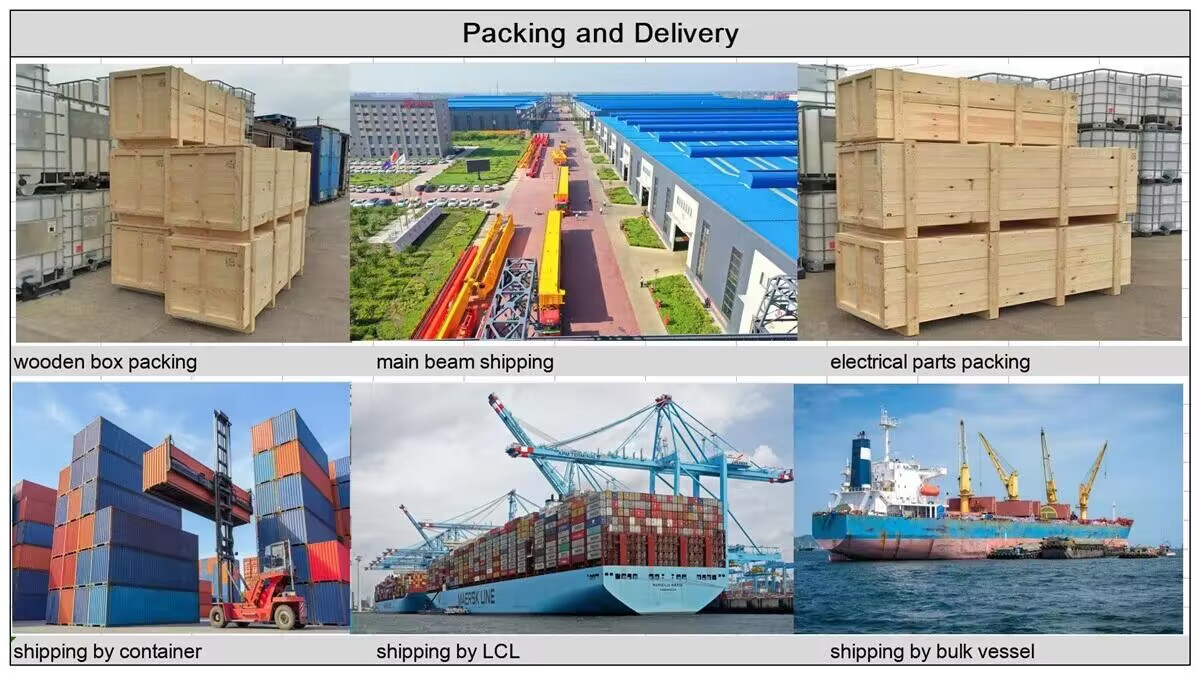
8. Delivery and installation: Pack and prepare the completed crane for transportation to ensure that it is not damaged during transportation. Deliver the crane to the customer's site for installation, and perform on-site debugging and acceptance. Provide operation training to customers to ensure that they are proficient in the use and maintenance of the crane.

Workshop view:
The company has installed an intelligent equipment management platform, and has installed 310 sets (sets) of handling and welding robots. After the completion of the plan, there will be more than 500 sets (sets), and the equipment networking rate will reach 95%. 32 welding lines have been put into use, 50 are planned to be installed, and the automation rate of the entire product line has reached 85%.


Hot Tags: single girder eot, China single girder eot manufacturers, suppliers, factory, Single Girder Overhead Travelling Crane, Single Girder Overhead Crane
Previous
Single Beam Grad CraneNext
5T EOT CraneYou Might Also Like


Send Inquiry