










Motor-driven Single Beam Overhead Crane
A motor-driven single beam overhead crane is a type of lifting equipment used in industrial and warehouse settings to move heavy loads horizontally and vertically. It consists of a single bridge girder (beam) supported by end trucks that run on elevated runways, typically mounted on building columns or support structures.
Overall, the top running single girder crane is a reliable and cost-effective solution for handling heavy loads in industrial settings.
- Capacity: 1-20ton
- Capacity: 3.2-80ton
- Span length: 4-31.5m
- Lifting height:customized according to clients' site conditions
- Work duty: FEM Standard A5
- Raged voltage: 220V~690V, 50-60Hz, 3ph AC
- Protection class: IP54 IP55
- Crane control mode: Pendantcontrol / Remote control / Cabin control

Pictures & Components
A motor-driven single beam overhead crane is a type of lifting equipment used in industrial settings for material handling. Its key components include:
1. Main Components:
Single Girder (Main Beam) – The primary load-bearing structure, usually made of rolled or welded steel.
End Trucks (End Carriages) – Located at both ends of the girder, they house the wheels and support the crane's movement along the runway rails.
Hoist Unit – The lifting mechanism, which can be electric chain hoist or wire rope hoist.
Trolley – Moves along the girder to position the hoist horizontally (manual or motor-driven).

2. Drive Mechanism:
Bridge Drive (Travel Motors) – Electric motors powering the crane's movement along the runway.
Trolley Drive (if motorized) – Allows the trolley to traverse the length of the beam.
Hoist Motor – Powers the lifting and lowering of the load.

3. Electrical System:
Control Panel – Houses electrical components like contactors, relays, and variable frequency drives (VFDs).
Push Button Pendant / Radio Remote Control – Used by the operator to control crane movements.
Festoon System / Cable Reel – Manages power and control cable movement.
Limit Switches – Prevent over-travel of the hoist, trolley, or bridge.

4. Safety Components:
Brakes – Ensure smooth stopping (mechanical, electromagnetic, or hydraulic).
Bumpers / Buffers – Absorb shock at the end of travel.
Overload Limiter – Prevents lifting beyond rated capacity.
Emergency Stop (E-Stop) – Immediately cuts power in case of danger.

5. Supporting Structure:
Runway Beams – Support the crane's movement (mounted on building columns or freestanding).
Rail Tracks – Guide the crane's wheels for smooth travel.
6. Optional Accessories:
Crane Scale – Weighs loads during lifting.
Anti-Sway System – Minimizes load swing.
LED Lighting – Improves visibility in the work area.
Cabin (for cab-operated cranes) – Enclosed operator station.
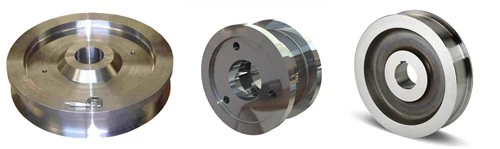
11. Crane hook
A motor-driven single beam overhead crane with a crane hook is a common type of material handling equipment used in factories, warehouses, and industrial settings. Here's a detailed breakdown of its components and functionality:
Key Components:
Single Girder (Beam)
The main horizontal beam that spans the width of the working area.
Typically made of rolled steel (I-beam) or fabricated box sections for strength.
End Trucks (End Carriages)
Located at both ends of the girder, equipped with wheels for movement along the runway rails.
Driven by electric motors for longitudinal travel (along the crane runway).
Hoist & Hook Mechanism
An electric hoist is mounted on the single girder, providing vertical lifting.
The crane hook is attached to the hoist's wire rope or chain, used to lift and carry loads.
Can be operated via pendant control, radio remote, or cabin.
Runway System
Consists of parallel rails installed on building columns or support structures.
The crane moves along these rails for horizontal transportation.
Drive Motors & Controls
Travel motors for bridge movement (along the runway).
Hoist motor for lifting/lowering.
Control options: pendant station, remote control, or cabin operation.
Working Principle:
The crane moves along the runway rails (longitudinal movement).
The hoist traverses along the single girder (cross travel).
The hook lifts, lowers, and positions loads precisely.

12.Motor
A motor-driven single beam overhead crane is a type of lifting equipment used in industrial and manufacturing settings to move heavy loads horizontally and vertically. It consists of a single bridge beam supported by end trucks that run along elevated runways, powered by electric motors.
Key Components:
Single Bridge Girder (Beam) – The main horizontal load-bearing structure, typically made of rolled steel or a welded box section.
End Trucks – Wheeled assemblies on both ends of the beam that allow movement along the runway rails.
Hoist & Trolley – The lifting mechanism (chain hoist or wire rope hoist) moves along the beam to position loads.
Runway System – Rails mounted on building columns or support structures for crane movement.
Drive Motors – Electric motors power the bridge (longitudinal motion) and hoist/trolley (lifting and cross-beam movement).
Control System – Pendant push-button, radio remote, or cabin-operated controls.
Types of Motor-Driven Single Beam Cranes:
Top-Running – The crane moves on rails mounted on top of runway beams (higher lifting height).
Under-Running (Underhung) – The crane hangs from the bottom flange of runway beams (suitable for lighter loads).

8. Sound and light alarm system and limit switch safety device
A motor-driven single beam overhead crane typically incorporates several safety features, including a sound and light alarm system and limit switch safety devices to ensure safe operation. Below is an overview of these components:
1. Sound and Light Alarm System
Purpose: Alerts personnel when the crane is in operation or when an emergency occurs.
Components:
Buzzer/Horn: Emits an audible warning before crane movement starts.
Strobe Light/Beacon: Provides a visual warning (flashing light) to indicate crane activity.
Activation:
Automatically triggered when the crane starts moving.
May also activate in case of overload, power failure, or emergency stop.
Standards Compliance: Meets OSHA, ANSI, and ISO safety requirements.
2. Limit Switch Safety Devices
Purpose: Prevents the crane and hoist from exceeding safe travel limits, protecting against collisions and overtravel.
Types of Limit Switches:
Hoist Upper/Lower Limit Switch: Stops the hoist when the hook reaches the maximum/minimum safe height.
Trolley Travel Limit Switch: Prevents the trolley from moving beyond the bridge beam ends.
Bridge (Long Travel) Limit Switch: Stops the crane from overtraveling along the runway rails.
Operation:
Mechanical or proximity-based switches cut power when triggered.
Some cranes use magnetic or encoder-based limit switches for precise control.
Fail-Safe Design: Requires manual reset after activation to ensure safety checks.

10. Control Mode
A motor-driven single beam overhead crane typically operates using one of several control modes, depending on the application requirements, safety considerations, and user convenience. Here are the common control modes:
1. Pendant Control (Push Button Pendant)
Description: The crane is operated via a handheld pendant (wired or wireless) with push buttons for hoisting, traversing, and trolley movement.
Applications: Ideal for workshops, warehouses, and small to medium-duty lifting operations.
Advantages:
Simple and cost-effective.
Direct operator control with clear visibility.
Disadvantages: Limited range (for wired pendants); operator must be near the crane.
2. Radio Remote Control (Wireless)
Description: Uses a wireless remote control to operate the crane from a distance.
Applications: Suitable for hazardous environments, large workshops, or where mobility is needed.
Advantages:
Greater flexibility and safety (operator can move freely).
Reduces fatigue compared to pendant control.
Disadvantages: Requires battery management and signal reliability checks.
3. Cabin Control (Operator Cab)
Description: The crane is operated from an enclosed or open cab mounted on the crane or at a fixed control station.
Applications: Heavy-duty or high-frequency lifting operations (e.g., steel mills, foundries).
Advantages:
Better visibility and comfort for long shifts.
Suitable for precise and repetitive tasks.
Disadvantages: Higher cost; requires proper access and safety measures.
4. Automated/Semi-Automated Control (PLC/Computerized)
Description: Uses programmable logic controllers (PLCs) or automation systems for pre-programmed movements.
Applications: Repetitive tasks in manufacturing, automated warehouses, or high-precision lifting.
Advantages:
Improves efficiency and reduces human error.
Can integrate with factory automation systems.
Disadvantages: Higher initial cost; requires programming and maintenance expertise.
5. Dual Control (Pendant + Remote or Other Combinations)
Description: Allows switching between different control modes (e.g., pendant and radio remote) for flexibility.
Applications: Facilities needing multiple operators or varying operational needs.
Advantages: Versatile; improves operational efficiency.
Disadvantages: More complex wiring/configuration.

11. Sketch

Main Technical Data


Advantages
A motor-driven single beam overhead crane offers several advantages, making it a popular choice for material handling in various industries. Here are its key benefits:
1. Cost-Effective
Lower initial cost compared to double beam cranes.
Reduced installation and maintenance expenses.
2. Space-Saving Design
Compact structure, ideal for facilities with limited headroom.
Requires less workshop space compared to larger crane systems.
3. Easy Installation & Operation
Simple assembly and setup due to its lightweight design.
User-friendly controls (pendant or remote-operated).
4. Versatility
Suitable for light to medium-duty lifting (typically up to 20 tons).
Used in workshops, warehouses, assembly lines, and loading areas.
5. Energy Efficient
Electric motor-driven operation consumes less power compared to hydraulic systems.
Smooth and precise load handling reduces energy waste.
6. Reliable & Low Maintenance
Fewer moving parts than double girder cranes, reducing wear and tear.
Durable construction with minimal maintenance requirements.
7. Improved Safety
Equipped with overload protection, limit switches, and emergency stop features.
Stable and controlled lifting reduces accident risks.
8. Flexible Configurations
Can be customized with different hoists (chain hoist or wire rope hoist).
Available in various spans and lifting heights to suit specific needs.
9. Increased Productivity
Faster load transportation speeds up workflow.
Reduces manual labor and fatigue, improving efficiency.
Application
A motor-driven single beam overhead crane is a versatile lifting solution widely used in various industrial and commercial applications. It consists of a single bridge beam supported by end trucks that run on elevated runways, with a hoist and trolley for lifting and moving loads horizontally. Here are its key applications:
1. Manufacturing Facilities
Assembly Lines: Transporting components between workstations.
Machine Loading/Unloading: Handling heavy parts in machining, stamping, or forging operations.
Warehouse Integration: Moving raw materials or finished goods within the facility.
2. Warehousing & Logistics
Loading/Unloading Trucks: Efficiently moving goods in and out of storage.
Order Picking: Assisting in stacking and retrieving pallets or heavy items.
Cross-Docking: Transferring loads between transport vehicles.
3. Workshops & Repair Shops
Automotive Repair: Lifting engines, transmissions, or vehicle bodies.
Metal Fabrication: Handling steel plates, beams, or welded structures.
Maintenance Tasks: Servicing heavy machinery or equipment.
4. Construction & Material Handling
Precast Concrete Handling: Moving slabs, columns, or beams.
Steel Erection: Assisting in positioning structural steel elements.
Supply Yards: Organizing and transporting construction materials.
5. Power Plants & Heavy Industries
Maintenance of Turbines & Generators: Lifting heavy components for servicing.
Boiler Maintenance: Handling large parts in thermal or nuclear plants.
Mining & Mineral Processing: Moving ores, crushers, or heavy machinery.
6. Paper & Printing Industries
Roll Handling: Transporting large paper rolls safely.
Press Maintenance: Installing or servicing heavy printing machinery.
7. Aviation & Aerospace
Aircraft Assembly: Moving wings, fuselage sections, or engines.
Component Handling: Transporting heavy aerospace parts.
8. Automotive & Heavy Equipment
Production Lines: Moving car bodies, engines, or assemblies.
Tire Handling: Lifting and positioning large tires in manufacturing plants.
Types Of Cranes For Different Working Conditions

Crane Production Procedure
The production procedure for a motor-driven single beam overhead crane involves several key stages, from design to final testing. Below is a step-by-step outline of the typical manufacturing process:
1. Design & Engineering
Requirements Analysis: Determine load capacity, span, lifting height, duty cycle, and operating environment (e.g., indoor/outdoor).
CAD Modeling: Create 3D designs for the main beam, end carriages, hoist, and electrical systems.
Structural Calculations: Verify beam deflection, stress analysis, and compliance with standards (e.g., ISO, FEM, DIN, or CMAA).
Material Selection: Choose steel grades (e.g., Q235B or Q345B for the beam) and components (motors, gears, brakes).
2. Material Procurement
Purchase raw materials (steel plates, profiles) and purchased parts:
Electric hoist or trolley (pre-made or custom).
Motors, gearboxes, wheels, and brakes.
Electrical components (control panel, pendant/remote, limit switches).
Rails (if not included in the customer's facility).
3. Fabrication of Main Components
A. Main Beam Production
Cutting: Steel plates are cut via CNC plasma/laser cutting.
Welding:
Weld the web and flanges to form the I-beam (box girder for heavier loads).
Stress-relieving (heat treatment) to reduce welding distortions.
Machining: Drill holes for connections and surface finishing.
Shot Blasting & Painting: Anti-rust treatment (primer + topcoat).
B. End Carriages (End Trucks)
Fabricate frames with wheels, buffers, and drive mechanisms.
Install drive motors, gearboxes, and brakes.
4. Assembly
Beam-End Carriage Integration: Bolt or weld the main beam to end carriages.
Hoist/Trolley Installation: Mount the electric hoist or trolley onto the beam.
Electrical Wiring: Connect power supply, control systems, and safety devices (e.g., limit switches, overload protection).
5. Testing & Quality Control
Dimensional Inspection: Verify span, lifting height, and alignment.
Load Testing:
Static Load Test: 125% of rated capacity (10 minutes).
Dynamic Load Test: 110% of rated capacity with operational checks.
Functional Tests:
Hoist lifting/lowering, trolley travel, bridge movement.
Emergency stop, limit switches, and electrical safety.
Certification: Issue test reports (per ISO 9001 or local regulations).
6. Disassembly & Packaging
Dismantle for shipping (if required) and protect components with waterproof packaging.
Label parts for easy reassembly.
7. Delivery & Installation
On-site assembly (by manufacturer or customer's team).
Final commissioning and operator training.

Workshop View
The company has installed an intelligent equipment management platform, and has installed 310 sets (sets) of handling and welding robots. After the completion of the plan, there will be more than 500 sets (sets), and the equipment networking rate will reach 95%. 32 welding lines have been put into use, 50 are planned to be installed, and the automation rate of the entire product line has reached.


Hot Tags: motor-driven single beam overhead crane, China motor-driven single beam overhead crane manufacturers, suppliers, factory, Single Girder Overhead Travelling Crane, Single Girder Overhead Crane
You Might Also Like


Send Inquiry