





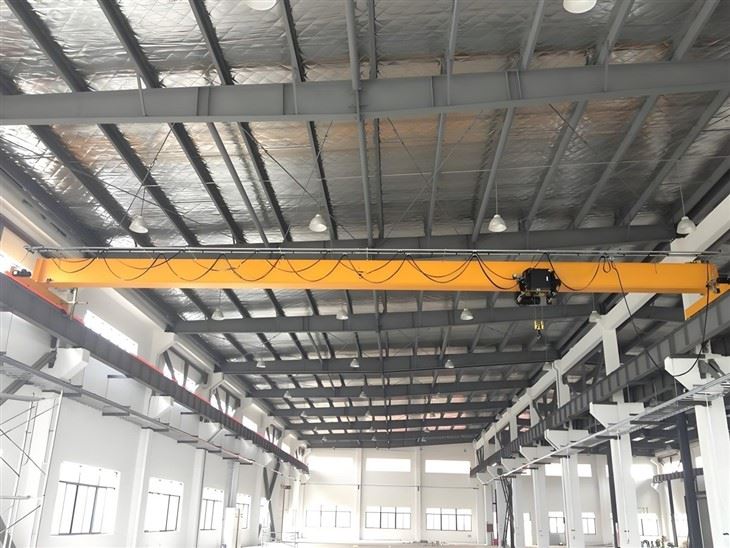

Single Girder 5 Ton Overhead Crane
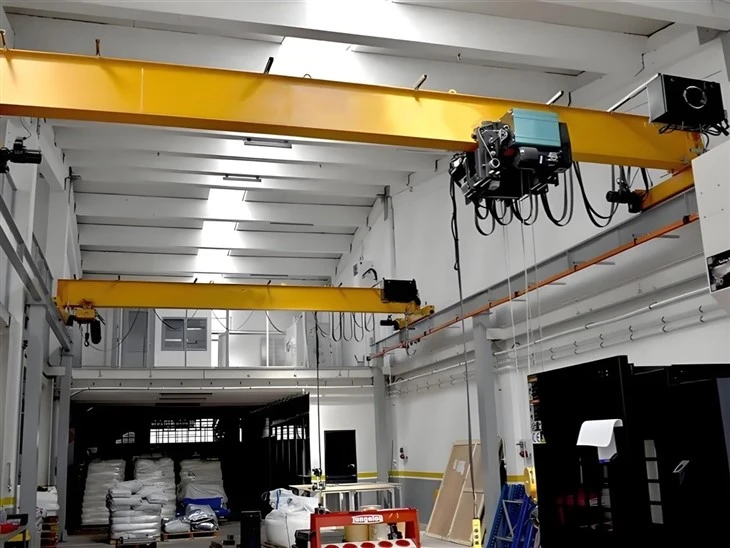
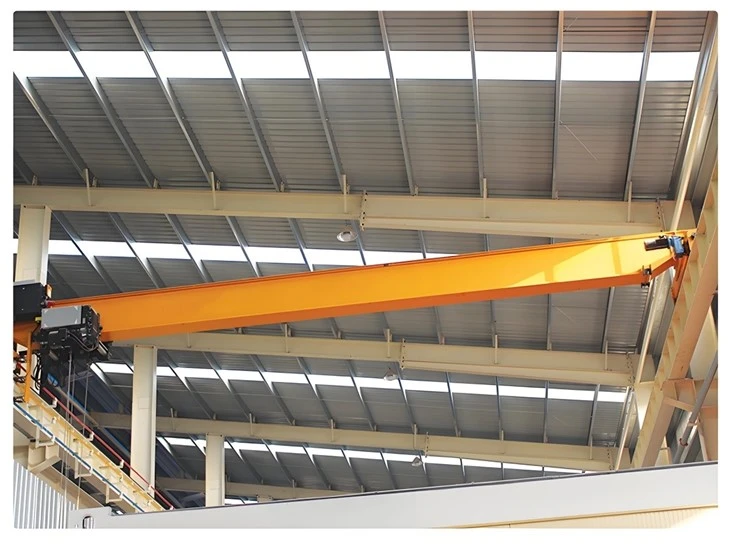
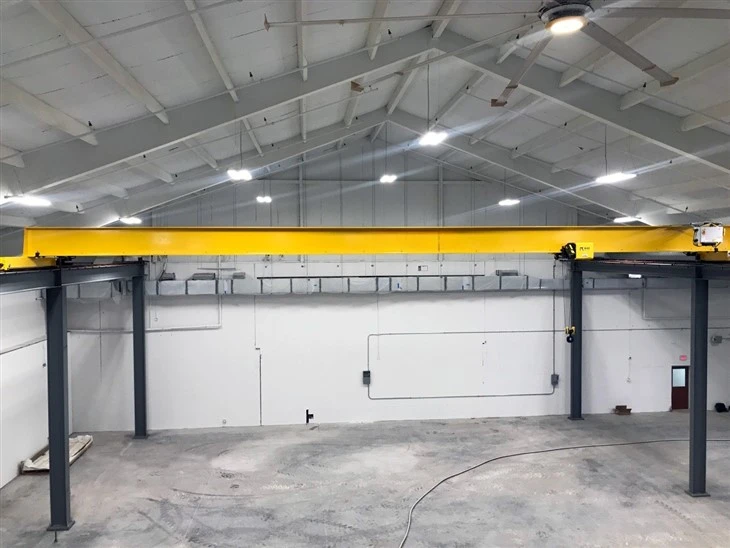
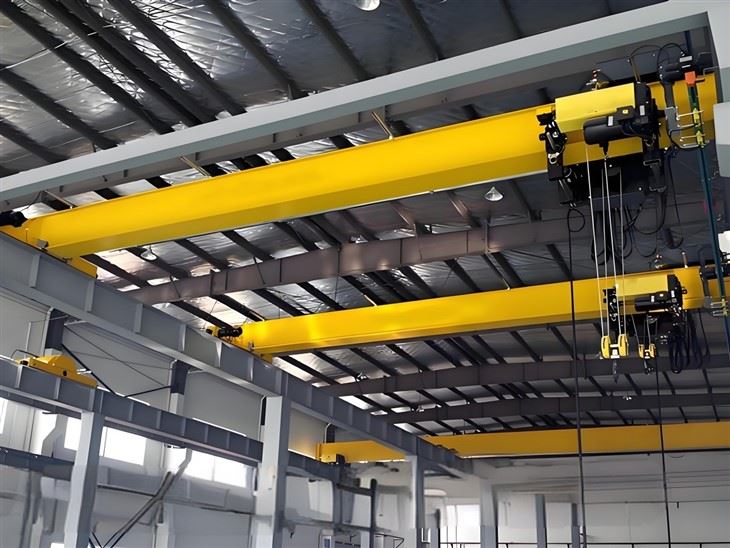
A single girder overhead crane is a popular choice for material handling due to its cost-effectiveness, simplicity, and versatility.
Key Features of Top-Running Single Girder Cranes:
Capacity: Typically 1 ton to 20 tons (some go up to 32 tons).
Span: Up to 30 meters (depends on design & reinforcement).
Lifting Height: Customizable (up to 30m or more with special designs).
Hoist Type: Electric wire rope hoist or chain hoist (e.g., Demag DC-Pro, ABUS EHB).
Control: Pendant, radio remote, or cabin-operated.
Speed Options: Variable frequency drive (VFD) for smooth operation.
End Trucks: Double-girder style for better load distribution.
Runway Beam: Steel structure (I-beam or box girder) mounted on columns.
Overall, the top running single girder crane is a reliable and cost-effective solution for handling heavy loads in industrial settings.
- Capacity: 1-20ton
- Capacity: 3.2-80ton
- Span length: 4-31.5m
- Lifting height:customized according to clients' site conditions
- Work duty: FEM Standard A5
- Raged voltage: 220V~690V, 50-60Hz, 3ph AC
- Protection class: IP54 IP55
- Crane control mode: Pendantcontrol / Remote control / Cabin control

Pictures & Components
A single girder 5-ton overhead crane consists of several key components that work together to lift, move, and position heavy loads efficiently. Here are the main components:
1. Bridge Girder (Main Beam)
The primary horizontal beam that spans the width of the workspace.
Typically made of rolled steel or welded box sections for strength.
Supports the hoist and trolley.

2. End Trucks (End Carriages)
Located at both ends of the bridge girder.
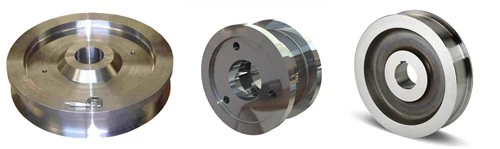
Equipped with wheels that run on the runway rails.
Houses the drive mechanism for bridge movement (longitudinal travel).

3. Hoist Unit
The lifting mechanism (electric or manual) that raises and lowers the load.
Common types include electric chain hoists or wire rope hoists (for 5-ton capacity).
Mounted on a trolley for horizontal movement.
4. Trolley
A wheeled unit that carries the hoist along the length of the girder (cross travel).
Can be powered (motorized) or manual, depending on the crane type.

5. Runway Rails
Installed on top of building columns or support structures.
Provides the track for the crane's end trucks to move along the length of the bay.
6. Electrical System & Controls
Includes pendant control (push-button pendant) or radio remote control for operation.
Motors for bridge travel, trolley travel, and hoisting.
Limit switches for safe movement.

7. Brakes & Safety Devices
Brakes ensure smooth stopping and load holding.
Overload protection prevents lifting beyond 5-ton capacity.
Bumpers at the end of the bridge to absorb impacts.
8. Cabin (Optional for Operator)
Some cranes may have an operator cabin instead of pendant control.
9. Festoon System or Cable Reel
Manages power and control cables for the crane's movement.
10. Buffers & End Stops
Prevent over-travel and collisions at the ends of the runway.
11. Crane hook
A Single Girder 5 Ton Overhead Crane with Crane Hook is a common industrial lifting solution designed for medium-duty material handling. Here's a breakdown of its key features and specifications:
Key Components:
Single Girder Bridge – The main horizontal beam that spans the width of the workspace, supporting the hoist and trolley.
Hoist & Trolley – A 5-ton capacity electric or manual hoist moves along the girder via a trolley mechanism.
Crane Hook – Attached to the hoist, used to lift and transport loads (typically forged steel, swivel-type for flexibility).
End Trucks – Wheeled units at each end of the girder that allow the crane to move along runway beams.
Runway Beams – Installed on building columns or freestanding supports to guide crane movement.
Control System – Pendant control (wired or wireless) or cabin-operated for precise load handling.

12.Motor
A single girder 5-ton overhead crane typically uses electric motors for hoisting and traveling operations. The motor specifications depend on the crane's design, duty class, and operational requirements. Below are the key motor types and their general specifications for a 5-ton single girder overhead crane:
1. Hoist Motor (Main Lifting)
Power: ~7.5 kW to 13 kW (10 HP to 17.5 HP)
Type:
Geared Motor (with brake): AC induction motor (3-phase) or variable frequency drive (VFD) motor for smoother control.
Duty Class: Typically S3 (40%) for intermittent operation.
Speed: ~1400–1500 RPM (4-pole motor).
Brake: Electromagnetic fail-safe brake for safety.
Voltage: 380V/415V (standard industrial), 220V/240V (smaller setups), or 460V (US standard).
2. Trolley Travel Motor (Cross Movement)
Power: ~0.5 kW to 2.2 kW
Type:
Geared AC motor with brake (if required).
Duty Class: S3 (25-40%).
Speed: ~1400 RPM (adjustable with VFD).
3. Bridge Travel Motor (Longitudinal Movement)
Power: ~0.75 kW to 3 kW (x2 motors for dual-drive cranes).
Type:
AC induction motor with optional frequency control.
Duty Class: S3 (25%).
Speed: ~1400 RPM.

8. Sound and light alarm system and limit switch safety device
A Single Girder 5 Ton Overhead Crane typically includes several safety devices, such as a sound and light alarm system and limit switches, to ensure safe operation. Below are the key details about these safety features:
1. Sound and Light Alarm System
Purpose: Alerts personnel when the crane is in operation or approaching a hazardous condition.
Components:
Buzzer/Horn: Emits a loud audible warning before the crane starts moving or during emergency situations.
Strobe Light/Beacon: Flashing LED or rotating beacon to provide a visual warning.
Activation:
Automatically triggers when the crane is powered on or begins movement.
May also activate when approaching limit switch zones or in case of overload.
2. Limit Switch Safety Device
Purpose: Prevents the crane and hoist from exceeding safe travel limits (end-of-travel) or overload conditions.
Types of Limit Switches:
Hoist Upper/Lower Limit Switch: Stops the hoist when the hook reaches the maximum or minimum safe height.
Trolley Travel Limit Switch: Prevents the trolley from moving beyond the girder's ends.
Bridge (Long Travel) Limit Switch: Stops the crane from moving beyond the runway rails.
Operation:
Mechanical or proximity-based switches cut off power when triggered.
Some cranes use magnetic or encoder-based limit switches for precise control.
Additional Safety Features (Common in 5-Ton Cranes)
Overload Protection: Cuts power if the load exceeds 5 tons.
Emergency Stop Button: Allows immediate shutdown in case of danger.
Undervoltage Protection: Prevents unexpected restarts after power failure.
Anti-Collision System (if multiple cranes operate on the same runway).

10. Control Mode
A single girder 5-ton overhead crane typically offers multiple control modes to suit different operational needs. Here are the common control options:
1. Pendant Control (Push Button Pendant)
Description: A handheld pendant with buttons for crane movement (hoist up/down, trolley left/right, bridge forward/backward).
Best for: Standard workshop operations where the operator is near the crane.
Voltage: Usually 24V or 36V (low voltage for safety).
Range: Limited by cable length (typically 5-10 meters).
2. Radio Remote Control (Wireless)
Description: A wireless remote control allows operation from a distance (up to 100m or more).
Best for: Large workshops, hazardous environments, or when the operator needs mobility.
Features:
Frequency hopping (anti-interference).
Emergency stop function.
IP-rated for dust/water resistance.
3. Cabin Control (Operator Cab)
Description: An enclosed or open cabin where the operator sits to control the crane.
Best for: Heavy-duty, frequent, or long-duration lifting tasks.
Features:
Joystick or lever controls.
Better visibility for precise handling.
4. Automatic/Semi-Automatic Control (PLC)
Description: Programmable Logic Controller (PLC) for automated movement.
Best for: Repetitive tasks (e.g., loading/unloading in production lines).
Features:
Pre-set lifting paths.
Sensors for positioning.
5. Dual Control (Pendant + Remote or Pendant + Cabin)
Description: Combines two control modes (e.g., pendant for normal use, remote for emergencies).
Best for: Flexible operations requiring backup control.

11. Sketch

Main Technical Data


Advantages
A Single Girder 5 Ton Overhead Crane is a popular choice for material handling in various industries due to its cost-effectiveness, efficiency, and versatility. Here are its key advantages:
1. Cost-Effective Solution
Lower initial cost compared to double girder cranes.
Reduced installation and maintenance expenses.
Ideal for light to medium-duty applications (up to 5 tons).
2. Space-Saving Design
Compact structure requires less headroom, making it suitable for facilities with height restrictions.
Optimal for workshops, warehouses, and production lines with limited space.
3. Easy Installation & Maintenance
Simple structure with fewer components, leading to quicker installation.
Lower maintenance costs due to minimal moving parts.
4. Energy Efficiency
Uses a single motor for hoisting and trolley movement, reducing power consumption.
Suitable for frequent but light-duty operations.
5. Versatile Applications
Used in manufacturing, assembly lines, warehouses, and construction sites.
Compatible with various lifting attachments (hooks, grabs, magnets, etc.).
6. Smooth & Precise Operation
Electric hoist ensures smooth lifting and positioning of loads.
Can be operated via pendant control or radio remote for better safety and convenience.
7. Customizable Options
Adjustable span, lifting height, and speed to match specific needs.
Can be integrated with automation systems for advanced material handling.
8. Reliable & Durable
Made from high-quality steel for long-term durability.
Designed to meet international safety standards (ISO, FEM, DIN, etc.).
Conclusion
A 5-ton single girder overhead crane is an excellent choice for businesses looking for an economical, space-efficient, and reliable lifting solution for medium-duty applications.
Application
A Single Girder 5 Ton Overhead Crane is a versatile and cost-effective lifting solution widely used in various industrial and commercial applications. Here's an overview of its key features and typical applications:
Key Features:
Capacity: 5-ton lifting capacity, suitable for medium-duty operations.
Single Girder Design: Consists of one main beam (girder) with a hoist and trolley, making it lighter and more economical than a double girder crane.
Span & Height: Adjustable span (typically 5-25m) and lifting height to suit different workspace requirements.
Hoist Type: Equipped with an electric wire rope or chain hoist for smooth lifting.
Control Options: Pendant control (wired or wireless) or cabin-operated for precision handling.
Duty Class: Usually classified as Light to Medium Duty (A3-A4) under FEM/ISO standards.
Common Applications:
Manufacturing Plants
Moving raw materials, machinery parts, and finished products.
Assembly line operations in automotive, steel, and machinery industries.
Warehouses & Logistics
Loading/unloading goods, stacking pallets, and transporting heavy items.
Construction & Material Handling
Lifting construction materials (steel beams, concrete blocks, pipes).
Workshops & Repair Shops
Handling heavy equipment, engines, and metal fabrication.
Power Plants & Substations
Maintenance and installation of transformers, turbines, and generators.
Paper & Printing Industries
Moving paper rolls and heavy printing machinery.
Mining & Cement Plants
Transporting bulk materials and heavy machinery components.
Types Of Cranes For Different Working Conditions

Crane Production Procedure
The production of a single girder 5-ton overhead crane involves several key steps, from design and material procurement to fabrication, assembly, testing, and delivery. Below is a detailed production procedure:
1. Design & Engineering
Customer Requirements Analysis: Determine span, lifting height, duty class (FEM/ISO standard), power supply, and control method.
CAD Modeling: Design the girder, end carriages, hoist, and runway system using structural and mechanical engineering principles.
Load Calculations: Ensure the girder, trolley, and end trucks can handle 5-ton capacity with safety factors (typically 1.5x working load).
Regulatory Compliance: Confirm adherence to standards (ISO, FEM, CMAA, OSHA, or local regulations).
2. Material Procurement
Girder: Rolled or welded steel sections (typically European I-beam or box girder for 5-ton capacity).
End Carriages: Fabricated from steel plates/channels with wheels, bearings, and drive mechanisms.
Hoist & Trolley: Sourced as pre-built units (electric wire rope or chain hoist) or fabricated in-house.
Electrical Components: Motors, control panels, limit switches, and pendant/radio remote systems.
3. Fabrication Process
A. Main Girder Fabrication
Cutting: Steel plates/sections are cut to size (plasma/oxy-fuel/laser cutting).
Welding:
Box girder: Welded from steel plates with internal stiffeners for rigidity.
I-beam girder: Reinforced with plates if needed.
Straightening & Machining: Girder is leveled and machined for trolley runway flatness.
B. End Carriage Fabrication
Wheel brackets, drive units (gearbox + motor), and buffers are assembled.
Wheels are mounted with anti-derailment guards (if required).
C. Trolley & Hoist Integration
Trolley frame is welded and fitted with wheels to match the girder.
Hoist is mounted onto the trolley with electrical connections.
4. Assembly & Fit-Up
Main girder is bolted/welded to end carriages.
Trolley and hoist are installed on the girder runway.
Runway beams (if supplied) are assembled with rails and alignment checks.
5. Electrical Installation
Wiring of motors, control panel, pendant/remote, and safety devices (limit switches, overload protection).
Insulation and grounding tests are performed.
6. Testing & Quality Control
Load Testing:
No-load test: Check travel, lifting, and braking functions.
Static load test: 125% of capacity (6.25 tons) held for 10 minutes.
Dynamic load test: 110% of capacity (5.5 tons) with repeated movements.
Dimensional Inspection: Verify span, lifting height, and alignment.
Safety Checks: Emergency stop, limit switches, and electrical safety.
7. Surface Treatment & Painting
Sandblasting (SA2.5 grade) to remove rust.
Primer + topcoat (epoxy/polyurethane) for corrosion resistance.
8. Packaging & Delivery
Crane is disassembled (if needed) and packed for shipping.
Manuals, test reports, and certifications (CE, ISO, etc.) are included.
9. Installation & Commissioning (On-Site)
Runway erection (customer's responsibility unless turnkey).
Crane assembly, electrical connections, and final testing.
Operator training and handover.

Workshop View
The company has installed an intelligent equipment management platform, and has installed 310 sets (sets) of handling and welding robots. After the completion of the plan, there will be more than 500 sets (sets), and the equipment networking rate will reach 95%. 32 welding lines have been put into use, 50 are planned to be installed, and the automation rate of the entire product line has reached.


Hot Tags: single girder 5 ton overhead crane, China single girder 5 ton overhead crane manufacturers, suppliers, factory, Single Girder Overhead Travelling Crane, Single Girder Overhead Crane
You Might Also Like



Send Inquiry