










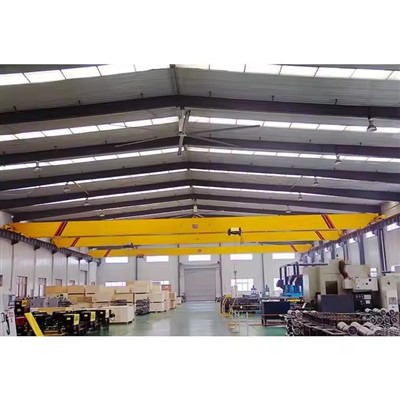
Easy To Use Single Girder Bridge Crane
Products Description
The Easy to use single girder bridge crane is a next-generation material handling solution engineered for high performance, efficiency, and safety in modern industrial environments. Designed with precision and manufactured using state-of-the-art technology, this crane is ideal for a wide range of applications across manufacturing plants, workshops, warehouses, and assembly lines.
Built on a compact and robust single girder structure, the crane combines intelligent control systems with advanced mechanical components to ensure smooth operation, reduced maintenance, and maximum productivity. Its modular design allows for quick installation and customization to meet specific plant layout and process needs.
This bridge crane is equipped with a high-quality electric hoist, smart control options (such as wireless remote or cabin operation), and a full suite of safety devices including overload protection, limit switches, and emergency stop functions. Optional features like frequency inverters, anti-sway systems, and automated diagnostics elevate it beyond standard lifting solutions.
Core Components: Gearbox, Motor, Gear
Place of Origin: Henan, China
Warranty: 1 Year
Weight (KG): 10000 kg
Video outgoing-inspection: Provided
Machinery Test Report: Provided
Selling Units: Single item
Single package size: 600X300X300 cm
Single gross weight: 200.000 kg
Pictures & Components
1.Main beam
Key Features of the Main Beam:
1)High-Strength Construction
Fabricated from Q235B/Q345B high-tensile steel or equivalent materials.
Designed using finite element analysis (FEA) for structural integrity and load optimization.
Available in I-beam or box girder format depending on capacity and span requirements.
2)Welded or Rolled Profile
Box-type girder or rolled steel section with full-penetration welding for enhanced strength and stiffness.
Weld seams are ultrasonically tested and inspected for durability and safety.
3)Precision Cambering
The beam is designed with an upward camber (slight arch) to counteract deflection under load, ensuring straight operation and extended beam life.
4)Compact & Lightweight Design
Reduces self-weight of the crane for increased energy efficiency and easier handling during installation.
Optimized for low headroom applications to maximize available lifting height.
2.Lifting System
1)Electric Hoist Unit
Mounted on the lower flange of the main beam (under-running or top-running configuration).
Compact, modular design for easy maintenance and replacement.
Options:
Wire rope hoist for heavier loads and high-lift applications
Chain hoist for lighter, compact operations
2)High-Performance Lifting Motor
Fully enclosed 3-phase asynchronous motor or brake-integrated motor
Options for single speed, dual speed, or frequency inverter control (VFD) for smooth and precise lifting
Thermally protected to prevent overheating
3)Gearbox / Reduction Mechanism
Hardened, helical or spur gears enclosed in a sealed oil bath gearbox
Delivers high torque and minimal energy loss
Low noise and long lifespan
4)Wire Rope or Chain Mechanism
Anti-twist, high-strength wire ropes with safety factor >5:1
Guide rollers and pressure springs ensure accurate winding and unwinding
Chain hoists use hardened alloy chains with anti-rust coating
5)Drum and Pulley System
Grooved steel drum ensures even winding of wire rope
Ball bearing mounted, precision-machined to reduce vibration
Pulley blocks with high-strength sheaves and protective covers
 |
 |
3.End carriage
The end carriage is a critical structural and motion component of a Single Beam Bridge Crane, enabling smooth and stable longitudinal (bridge) movement along the crane runway. Engineered for durability, precision, and efficiency, the end carriages are designed to support the main beam and facilitate seamless travel, even under heavy loads.
 |
 |
4.Crane travelling mechanism
1)Drive Motor (Crane End Drive)
High-efficiency 3-phase motors, often from renowned brands like SEW, Nord, or local heavy-duty motor suppliers.
Options include:
Pole-changing motors for dual-speed control.
Frequency inverter-controlled motors (VFD) for soft start/stop and precise speed adjustment.
Integrated electromagnetic brake system for quick and secure stopping.
2)Gearbox
Coupled directly to the motor or wheel axle.
Helical or spur gear reducers enclosed in an oil-filled housing for quiet and smooth operation.
Provides high torque output with minimal backlash.
3)Traveling Wheels
Solid forged steel or cast ductile iron wheels, heat-treated for wear resistance.
Mounted on self-aligning bearings for smooth, low-resistance travel.
Wheel surfaces are hardened to reduce deformation and increase service life.
4)End Carriages (Wheel Blocks)
Travel motors drive wheels via the end carriages.
Anti-derailment and lateral guide rollers ensure the crane runs straight on the rails.
5)Track Interface
Crane moves along rails mounted on runway beams.
Rail types typically include square bar, P-type rail, or custom flat bar based on design.
5.Trolley travelling mechanism
1)Trolley Frame
Constructed from high-strength steel plates or box-type welded structure.
Compact design minimizes dead weight and ensures smooth mobility on the beam.
2)Traveling Wheels
Forged or cast steel wheels, machined for precise alignment with the main beam rail (bottom flange or top rail, depending on design).
Wheels mounted on lubricated ball or roller bearings for long-lasting, quiet operation.
3)Drive Motor
Equipped with a compact electric motor, typically three-phase squirrel cage motor.
Available in single-speed, dual-speed, or VFD-controlled variants for smooth acceleration and deceleration.
4)Gear Reducer
Helical gear reducer, mounted directly to the motor or wheel axle.
Enclosed design ensures quiet and efficient power transmission with minimal maintenance.
5)Brake System
Electromagnetic brake integrated with the motor provides instant stopping power.
Engages automatically in case of power loss, ensuring load safety.
6.Crane wheel
1)Material & Manufacturing
Made from high-quality forged or cast steel, such as 42CrMo or 65Mn.
Heat-treated and quenched for surface hardness (typically > HB300), ensuring excellent wear resistance.
Precision-machined wheel tread and flanges to ensure smooth rolling and accurate rail alignment.
2)Wheel Types
Double-flanged wheels for guided operation on I-beams or box girders.
Flat tread wheels with guide rollers or rail sweepers for specialty designs.
Available in solid or split-type depending on crane size and service requirements.

7.Crane Hook
1)Material & Construction
Made from high-strength forged alloy steel (e.g., 34CrMo4, 20MnSi, or DIN-certified alloys).
Heat-treated and tempered to achieve excellent toughness and resistance to fatigue and deformation.
Surface hardness typically between HB 250–320 for wear resistance.
2)Hook Types
Single hook: Simple, cost-effective design for general loads.
Double hook: For heavier or wider loads that require balanced lifting.
Available in C-type, Ramshorn, and swiveling configurations depending on hoist type and usage.
3)Swivel Mechanism
Many hooks are mounted on a 360° swiveling block, allowing the operator to align the hook with the load without rotating the hoist.
Thrust bearings ensure smooth rotation under full load.

8.Motor
1)Motor Types
Three-phase asynchronous squirrel cage motors – widely used for hoisting and traveling functions.
Pole-changing motors – for two-speed control (fast/slow).
Frequency Inverter (VFD) motors – allow variable speed control and smooth operation.
For hoists, motors often come integrated with a brake and gearbox as a compact unit.
2)Power & Performance
Power range: 0.75 kW to 15 kW+ (depending on capacity and span)
Voltage: 380V / 400V / 415V / 440V, 3-phase, 50/60Hz
Duty class: S3–S5, with higher duty options available (FEM class 2m–4m)
High starting torque and low noise operation with high efficiency (IE2 or IE3 rated)

.
9.Sound and light alarm system & limit switch
1)Motor Types
Three-phase asynchronous squirrel cage motors – widely used for hoisting and traveling functions.
Pole-changing motors – for two-speed control (fast/slow).
Frequency Inverter (VFD) motors – allow variable speed control and smooth operation.
For hoists, motors often come integrated with a brake and gearbox as a compact unit.
2)Power & Performance
Power range: 0.75 kW to 15 kW+ (depending on capacity and span)
Voltage: 380V / 400V / 415V / 440V, 3-phase, 50/60Hz
Duty class: S3–S5, with higher duty options available (FEM class 2m–4m)
High starting torque and low noise operation with high efficiency (IE2 or IE3 rated)
2)Limit Switch – Advanced Design Single Beam Bridge Crane
Limit switches are integral to ensuring the crane's movement is accurately controlled and safely restricted. The limit switch prevents over-traveling of the crane or trolley, which can cause mechanical damage or unsafe conditions.

10.Safety Devices
1)Overload Protection System
Load limiters (safety devices) are integrated into the hoisting system to prevent lifting beyond the crane's rated capacity.
Load sensors monitor the weight and automatically stop further movement if the load exceeds safe limits.
The system is typically linked to the control panel and will trigger a warning signal (sound and light alarm) and stop the crane from lifting.
2)Emergency Stop Button
Located on the operator's control pendant and crane cabin (if applicable), the emergency stop button provides an instant shut-off in case of an emergency.
Stops all crane movements (hoisting, trolley, and bridge movement) when pressed, to mitigate accidents.
3)Limit Switches
End-of-travel limit switches prevent the crane or trolley from over-traveling by automatically halting movement at predefined end positions.
Limit switches are typically installed at both ends of the crane's travel path to prevent mechanical damage and ensure safe operation.
Proximity sensors can also be used for more advanced, non-contact limit detection.
4)Safety Brake System
Electromagnetic brakes or spring-loaded brakes are integrated into the motor and hoist system to hold the load securely.
These brakes are designed to activate automatically in the event of power failure, overload conditions, or emergency stop to prevent the load from falling.
In addition, the brakes ensure that the crane or trolley does not move unintentionally when not in use.
5)Anti-Collision Device
Anti-collision devices are designed to prevent crane collisions with other cranes or structures in the same work area.
Laser sensors or ultrasonic sensors detect the presence of obstacles and alert the operator, or the system automatically reduces the crane's speed or stops it.
Useful in environments where multiple cranes operate in close proximity (e.g., warehouses, factories).
6)Lifting Limit Switch (Hoist Limit)
This limit switch ensures that the hoist stops once the hook or load reaches the maximum lifting height.
Prevents the load from being lifted too high, which could damage the crane or load, and reduces wear on the hoist mechanism.
7)Safety Overrun Protection
Crane travel limiters prevent overrun beyond the track's designated endpoints. These are mechanical or electronic devices that halt movement when the crane reaches its physical limit.
Used to protect both the crane structure and other equipment within the work environment.
11.Control Mode
1)Manual Control Mode
Traditional control through a pendant control or joystick.
The operator directly controls the crane's movements, including hoisting, trolley travel, and bridge travel using buttons or joysticks.
Often used for basic operations and for small to medium loads.
Pendant control is typically connected via cables (wired control) or through wireless technology (radio control).
2)Radio Remote Control Mode
The crane is operated remotely through a wireless radio control unit.
Ergonomic handsets with joysticks, buttons, and emergency stop features are used to control crane functions from a distance.
Offers greater mobility for operators, allowing them to control the crane from any position around the load.
Often used in tight or hazardous environments where the operator needs to maintain a safe distance.
3)Cabin Control Mode
The crane is operated from a control cabin mounted on the crane bridge (for larger cranes).
Joystick controls, buttons, and touch screens are used to manipulate the crane's functions.
Operators have a high vantage point, allowing them to see the load clearly and avoid potential hazards.
Suitable for large-scale operations where precision and visibility are essential.
4)Automatic Control Mode (Optional for Advanced Applications)
The crane is programmed to follow a predefined path or routine based on sensor inputs and control algorithms.
Automatic load positioning, synchronized lifting, and pre-programmed travel paths are used to optimize the crane's operation in specific applications.
This mode is often found in automated warehouses, assembly lines, or production facilities where repetitive movements are common.
Can include smart sensors for collision avoidance, load monitoring, and real-time adjustments.
5)Dual Control Mode
A combination of manual and automatic control systems where the crane can be operated either manually by the operator or switched to automatic mode when needed.
This hybrid system allows for flexibility and precision, depending on the nature of the task at hand.
Ideal for environments with varying load types and operational conditions.

Sketch

Main technical

Advantages
1. High Efficiency and Productivity
Faster Load Handling: The crane's optimized design ensures smooth and rapid lifting, traveling, and positioning of loads, minimizing downtime.
High-Speed Operation: Designed for efficient material handling, reducing cycle times and improving overall workflow in factories, warehouses, and other industrial environments.
Precision Control: Advanced control systems (manual, remote, automatic) provide fine-tuned control over crane movements, improving accuracy when handling delicate or heavy loads.
2. Space-Saving Design
Compact Structure: With its single beam configuration, this crane occupies less space compared to double beam or overhead gantry cranes, making it ideal for smaller facilities or tight workspaces.
Maximized Headroom: Its design maximizes vertical clearance, allowing more headroom for lifting taller items without requiring additional height in the building.
3. Versatility
Adaptable to Various Loads: The crane is suitable for handling a wide variety of materials, including heavy, bulky, or delicate loads, thanks to customizable lifting systems, hooks, and slings.
Multiple Control Options: The ability to choose between manual, remote, and automatic control modes gives operators flexibility depending on operational needs or environmental factors.
Multiple Applications: Ideal for use in various industries, such as manufacturing, automotive, logistics, construction, and warehouse operations.
4. Enhanced Safety
Overload Protection: Integrated overload sensors and limit switches prevent lifting beyond the crane's rated capacity, reducing the risk of accidents and mechanical damage.
Anti-Collision Systems: Built-in sensors can detect obstacles in the crane's path, helping to avoid collisions with other cranes, structures, or workers.
Emergency Stop System: Emergency stop buttons and automatic shutdown features ensure that the crane can be halted immediately in case of an emergency.
Operator Protection: Features such as ergonomic control systems and protective barriers in the operator cabin (where applicable) help prevent accidents.
5. Durability and Long Lifespan
Robust Materials: Constructed with high-quality steel and components, the crane is built to withstand heavy-duty use and harsh working environments.
Low Maintenance: With properly designed mechanical and electrical systems, the crane requires minimal maintenance, reducing downtime and repair costs.
Weather-Resistant Features: Cranes can be designed for outdoor use with corrosion-resistant coatings, IP65-rated motors, and weatherproof controls, ensuring long-term reliability.
Application:
1. Manufacturing and Assembly Lines
Material Handling: Used for moving raw materials, components, and finished goods along the assembly line.
Precision Handling: Ideal for delicate or precision parts, as the crane provides fine control over lifting and positioning.
Efficiency: Helps increase throughput by quickly moving materials between different stages of the production process.
2. Warehouses and Distribution Centers
Load Unloading and Loading: Often used to unload goods from trucks and load them into storage systems or conveyor belts.
Stacking and Retrieval: The crane helps with stacking pallets and retrieving items from high racking systems, improving storage capacity and space utilization.
Sorting Systems: Used in automated or semi-automated sorting systems for efficiently handling and transferring products within the warehouse.
3. Automotive Industry
Vehicle Assembly: In automotive plants, single beam cranes are used to move parts such as engines, body panels, and tires to assembly stations.
Material Handling: The crane is used to transfer heavy components like car frames, engines, and other parts from one section of the plant to another.
Light-to-Medium Lifting: Ideal for handling parts that need careful handling but do not exceed the crane's lifting capacity.
4. Construction Sites
Construction Material Transport: Single beam cranes can be used for lifting and moving heavy construction materials such as steel beams, pipes, concrete panels, and bricks on construction sites.
Elevating Equipment: These cranes can be used to move construction equipment between different floors or locations at the construction site.
Flexible Layouts: With a compact design, these cranes are suitable for use in tight spaces often found in construction environments.
5. Steel Mills and Foundries
Hot Material Handling: Single beam cranes can handle materials such as molten metal, steel plates, and heavy castings in hot environments like foundries and steel mills.
Heavy Lifting: The crane is capable of lifting heavy loads such as steel beams, ingots, and large machinery, essential for production in the steel industry.
Durability: Designed to withstand extreme temperatures and harsh conditions, making it ideal for these environments.
Crane production procedure
1. Design & Engineering Phase
Requirements Gathering: Initial discussions with the client to understand the operational needs, environment, and specific requirements (e.g., load capacity, lifting height, span width, control modes).
Detailed Design: Engineers create detailed 3D CAD models and technical drawings for the crane, specifying all components such as the main beam, hoisting mechanism, trolley, end carriages, wheels, motor, and safety systems.
Structural Analysis: Advanced simulations ensure the crane can handle the expected loads and stresses.
Component Selection: The best materials and components (e.g., steel grades, motors, electrical systems) are chosen for durability, performance, and cost-efficiency.
2. Procurement of Materials
Raw Material Sourcing: High-quality raw materials such as steel plates, beams, and high-strength alloys are sourced from trusted suppliers.
Materials undergo quality control checks to ensure compliance with industry standards.
Component Procurement: Specialized components, such as motors, control systems, wheels, limit switches, and hook assemblies, are purchased from reputable manufacturers.
3. Fabrication & Manufacturing
Cutting & Shaping: The raw materials are cut, shaped, and welded into the individual crane components.
Laser Cutting & CNC Machines: These advanced machines are used for precise cutting and shaping of beams, plates, and other components.
Welding: The main crane frame, beams, and other metal parts are welded together. Skilled welders ensure strong and secure joints that can handle heavy loads.
Heat Treatment: Some components are subjected to heat treatment to improve strength and reduce stress in critical parts.
Assembly of Main Beam: The single beam, which is the heart of the crane, is fabricated, ensuring it can support the load capacity. This involves precise welding and alignment to ensure structural integrity.
4. Assembly of Crane Components
Trolley Assembly: The lifting mechanism (trolley), hoist, and hook are assembled and mounted on the main beam.
The hoisting system is integrated, including the motor, drum, ropes, and hooks.
Inspection: Every component is carefully inspected for alignment, proper fitting, and load-bearing capacity.
End Carriage Assembly: The end carriages, which support the crane's movement along the rail tracks, are constructed and fitted with wheels, motors, and brakes.
These are designed for smooth traveling and to support the crane's load capacity.
5. Electrical & Control System Installation
Electrical Wiring: The crane's electrical systems, including wiring for lights, motors, safety devices, and control panels, are installed.
Electrical components are carefully mounted and connected, ensuring compliance with safety standards.
Control System Setup: Depending on the crane's configuration (manual, remote, automatic), the control system is set up and integrated.
This includes wiring for joysticks, buttons, emergency stop functions, limit switches, and any optional remote control systems.
Software Integration: If the crane has an automated control system, the software is programmed and tested to ensure smooth operations.
6. Testing & Calibration
Load Testing: The crane is subjected to rigorous load testing to ensure that it can handle the required lifting capacities.
Overload testing is conducted to verify safety features such as overload protection.
Travel Testing: The crane's movement along the tracks is thoroughly tested for smooth operation, checking for alignment, speed, and functionality of the crane traveling mechanism.
Precision Calibration: The crane is calibrated to ensure precise movements and positioning for accurate load handling.
Safety systems like limit switches and sound/light alarms are tested to ensure they activate correctly during operation.
7. Finishing and Painting
Surface Treatment: The crane's metal parts undergo surface treatment, such as sandblasting or shot blasting, to remove any contaminants and prepare the surface for painting.
Painting: A high-quality, weather-resistant paint is applied to all exposed metal parts to prevent corrosion and ensure the crane's durability.
Special coatings may be used for cranes intended for outdoor or harsh environments.
8. Quality Assurance & Final Inspection
Comprehensive Inspection: A final inspection ensures that all components meet the design specifications, including structural integrity, electrical systems, and safety features.
The crane is inspected for compliance with industry standards and safety regulations.
Documentation: All quality control records, design documents, and test results are compiled for customer review.
9. Packaging and Delivery
Disassembly (if required): For ease of transport, certain parts of the crane (e.g., wheels, trolley, electrical components) may be disassembled and packaged.
Shipping: The crane is carefully packed for shipment. Large cranes may be shipped in parts for easier assembly on-site, while smaller cranes may be shipped fully assembled.
Transport logistics are coordinated to ensure timely and safe delivery to the client's site.
10. Installation and Commissioning
Site Preparation: Before installation, the customer's site is prepared, ensuring the necessary structural foundations (e.g., rail tracks, hoist beams) are in place.
On-Site Assembly: The crane is assembled and installed at the customer's facility.
Mechanical Assembly: The end carriages, trolley, and beam are installed on-site and aligned to the crane rails.
Final Testing & Commissioning: Once the crane is assembled, it undergoes a final round of testing, including load tests, control system checks, and calibration to ensure it operates as expected.
The customer is trained on the crane's operation and maintenance.

Workshop view:
The company has installed an intelligent equipment management platform, and has installed 310 sets (sets) of handling and welding robots. After the completion of the plan, there will be more than 500 sets (sets), and the equipment networking rate will reach 95%. 32 welding lines have been put into use, 50 are planned to be installed, and the automation rate of the entire product line has reached 85%.


Hot Tags: easy to use single girder bridge crane, China easy to use single girder bridge crane manufacturers, suppliers, factory, Single Girder Overhead Crane, Single Girder Overhead Travelling Crane
You Might Also Like


Send Inquiry