







Winch Trolley Bridge Crane
Products Description
Double Girder: The crane has two parallel beams (girders) running across the span, which makes it stronger and allows it to lift heavier loads than a single girder crane.
Winch Trolley: Instead of a standard hoist, it uses a winch mechanism mounted on a trolley that moves along the girders. Winches are typically used for very heavy lifting (sometimes 50 tons, 100 tons, or even more).
Bridge Crane: This means the crane travels on tracks (rails) along the building structure, usually on runway beams, allowing it to cover a large rectangular work area.
Core Components:Bearing, Gearbox, Motor, Pump
Place of Origin:Henan, China
Warranty:1 Year
Weight (KG):2000 kg
Video outgoing-inspection:Provided
Machinery Test Report:Provided
Design:Double beam
Effectiveness:high efficiency
Operating speed:High speed operation
Stability:Anti-swing function
Color:Optional
Power Source:110V/220V/230V/380V/440V,customized
Span:7.5-31.5m
Pictures & Components
1.Main beam
1)Function
The main beam carries the trolley and winch along its length.
It bears the vertical load (lifting weight + weight of the trolley).
It transfers loads to the end trucks and runway beams.
It also resists bending and minimizes deflection (bending under heavy loads).
2)Structure and Design
Shape: Usually fabricated box girders (rectangular hollow section) or sometimes welded I-beam structures.
Material: High-strength structural steel, such as Q355B, Q345B, or ASTM A572.
Construction: Welded with stiffeners inside the girder to increase strength and prevent deformation.
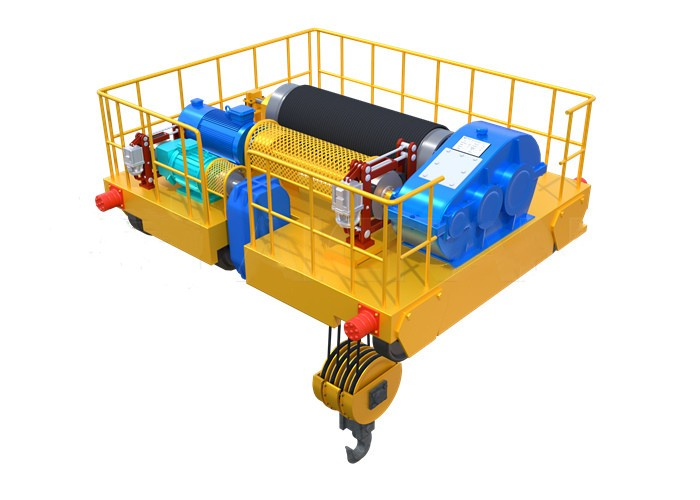
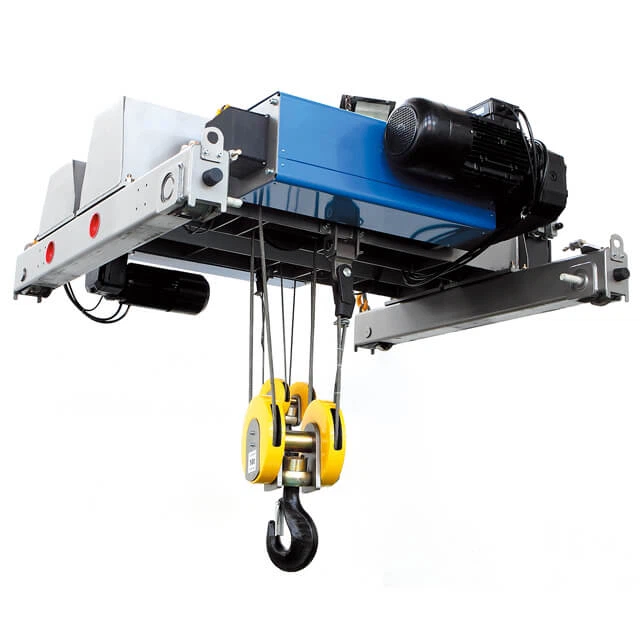
2.Lifting System
How the Lifting System Works (Simple Steps)
Operator activates lift command (via remote, pendant, or cabin control).
Motor drives the gearbox, turning the drum.
Wire rope winds onto or off the drum.
The hook block moves up or down depending on the drum's rotation.
Brakes ensure controlled, safe lifting and holding at any height.
Limit switches stop motion automatically at safe upper/lower limits.
 |
 |
3.End carriage
The end carriage (also called end truck) is the structure at both ends of the bridge.
It carries the bridge girders and travels along the runway rails.
It transfers the load (including the weight of the crane itself, the trolley, and the lifted load) to the building structure through wheels running on rails.
 |
 |
4.Crane travelling mechanism
End Carriages (End Trucks):Structure carrying wheels and motors, attached to the bridge girders.
Traveling Wheels:Forged steel wheels that run along runway rails.
Drive Motor(s):Provide the power to move the crane.
Reducer (Gearbox):Reduces motor speed and increases torque for powerful movement.
Brake:Stops and holds the crane in position safely.
Couplings:Connect motor, gearbox, and wheel axle, allowing slight flexibility.
Buffers:Rubber or hydraulic bumpers at the end of travel to absorb collision energy.
Electric Control Box:Controls start, stop, speed, and emergency stop functions.
5.Trolley travelling mechanism
Trolley frame: heavy structure that supports the winch and travel mechanism.
Trolley wheels: forged steel wheels that run on tracks mounted on top of the bridge beam.
Drive motor: drives the trolley.
Gearbox (reducer): reduces speed and increases torque for smooth operation.
Brake: ensures that the trolley stops precisely and holds its position.
Coupling: connects the motor to the wheel or drive shaft, absorbing shock and misalignment.
Travel track: track mounted on top of the beam for the trolley wheels to run on.
Limit switch: stops the trolley at the end position to prevent collision.
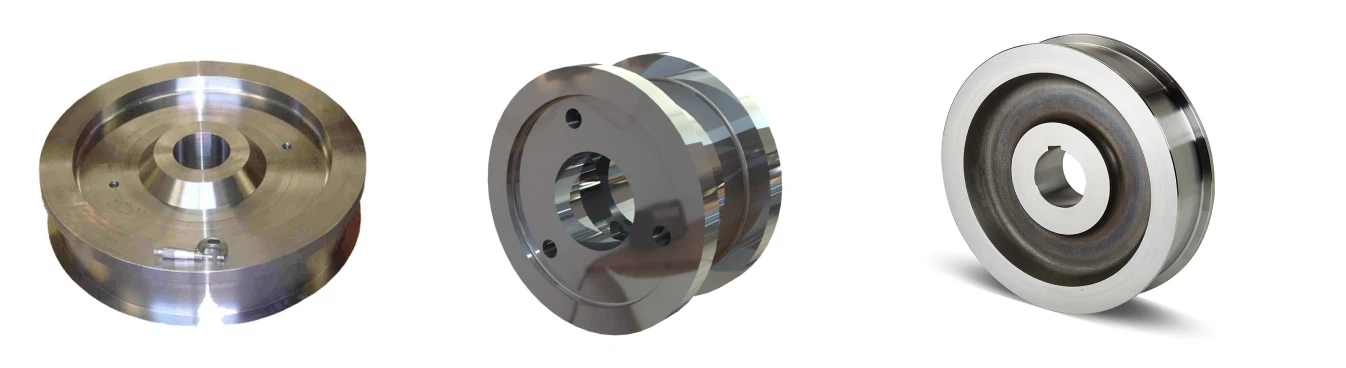
6.Crane wheel
Component Function
Wheel Body: The main rolling surface that contacts the track.
Flange: The vertical edge that keeps the wheel aligned on the track to prevent derailment.
Tread: The actual part that rolls on top of the track.
Axle Hole: The center hole used to mount the wheel to the axle.
Keyway: The slot used to lock the wheel to the axle to prevent rotational slippage.
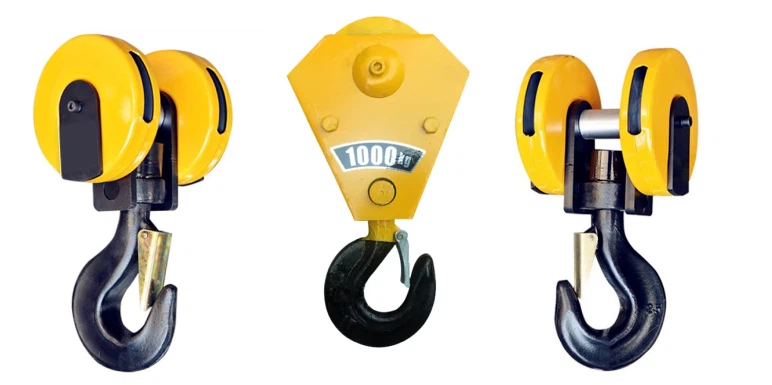
7.Crane Hook
Materials and Manufacturing
Product Details
Material: Forged high-strength steel (e.g. 34CrMo4, 42CrMo, 20Mn5)
Manufacturing method: Die forging (for stronger hooks) or laminated manufacturing (for extra-heavy cranes)
Surface treatment: Shot peening + anti-corrosion coating
Swivel mechanism: Manual or automatic swivel (with bearings)
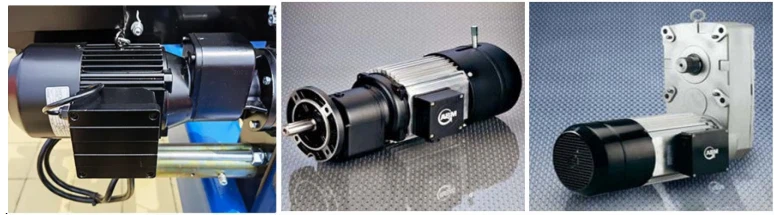
8.Motor
The motor drives various crane movements:
Lifting motor: Powers the hoisting of the load (main motor).
Trolley traveling motor: Moves the winch trolley along the bridge.
Crane traveling motor: Moves the entire crane across the runway.

.
9.Sound and light alarm system & limit switch
1)Sound and Light Alarm System
Purpose
Warns nearby workers during crane movements (lifting, traveling, lowering).
Ensures people hear and see crane operations to prevent accidents.
Mandatory in many industrial safety standards.
2)Limit Switches
Purpose
Automatically stop crane motions at the end of safe travel limits.
Prevents over-traveling or over-hoisting, which can damage equipment or cause accidents. 
10.Safety Devices
1)Overload Protection
Purpose: Prevents the crane from lifting loads that exceed the rated capacity, preventing damage to the crane and ensuring operator safety.
2)Emergency Stop System
Purpose: Allows operators to stop all crane motions in case of an emergency, ensuring immediate halting of dangerous actions.
3)Safety Latch on Hook
Purpose: Prevents the load from accidentally slipping off the hook.
4)Anti-collision System
Purpose: Protects the crane from colliding with obstacles (including other cranes, overhead structures, etc.), especially in multi-crane environments.
5)Crane Motion Limiters (Limit Switches)
Purpose: Prevents the crane from exceeding its designed travel limits, ensuring safe positioning of the load and crane components.
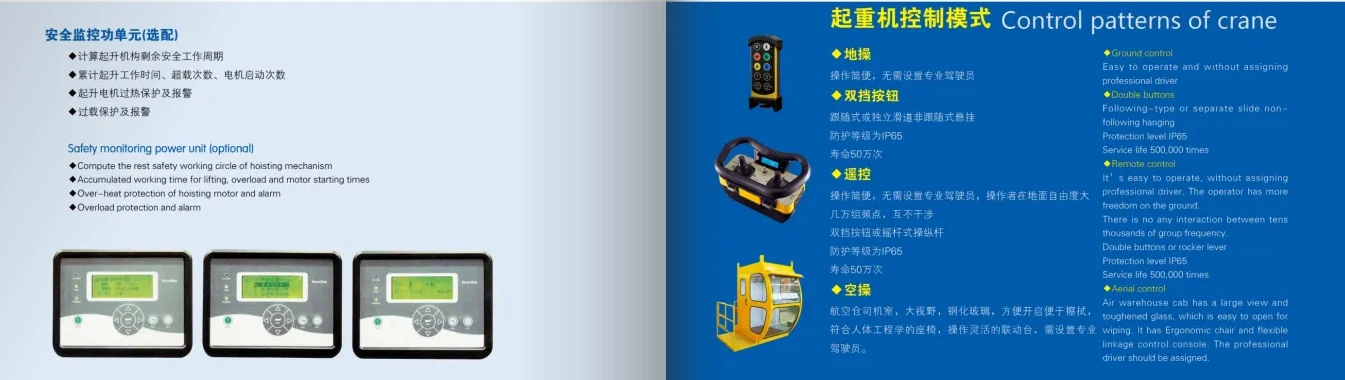
11.Control Mode
1)Manual Control
Description: The simplest form of crane operation, controlled directly by an operator using physical controls.
2)Remote Control
Description: The operator can control the crane from a distance, typically within the crane's working radius. This offers flexibility and safety, especially in hazardous environments.
3)Cabin Control
Description: The operator controls the crane from a cabin, offering better visibility and comfort, especially for long hours of operation.
4)Automatic Control / PLC Control
Description: The crane's control system is automated, using a PLC (Programmable Logic Controller) or computerized system to perform certain tasks without continuous operator intervention.
5)Integrated Control Systems (Hybrid)
Description: A combination of manual, remote, and automatic controls, offering maximum flexibility. The crane can be operated in different modes based on the task and environment.
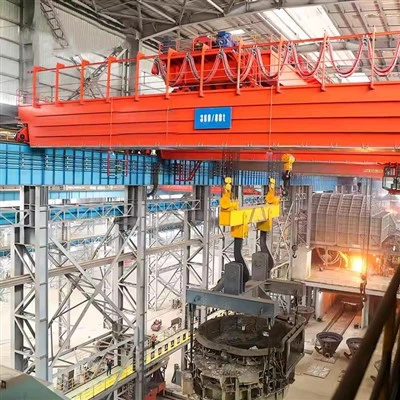
12.Sketch

Main technical

Advantages
1. High Lifting Capacity
Heavy Load Handling: The double girder design provides superior strength and stability, allowing the crane to handle higher lifting capacities compared to single girder cranes.
Lifting Capacities can range from 5 tons to 300 tons or more.
Perfect for Large and Heavy Loads: Suitable for industries like steel production, shipbuilding, construction, and manufacturing where heavy lifting is required.
2. Increased Lifting Height
Extended Hook Height: The double girder design allows for a greater hook height (distance from the floor to the hook), which is ideal for lifting and stacking large or tall materials.
This feature maximizes working space and lifting height, helping to improve storage or handling in confined spaces.
3. Improved Stability and Safety
Sturdier Construction: The dual girder design adds to the structural integrity, minimizing the risk of instability or deformation during heavy lifting.
Anti-sway Technology: Advanced models can come equipped with anti-sway systems to reduce swinging motions during hoisting, improving load stability and preventing damage or accidents.
4. Efficient Use of Space
Compact Design: While providing high lifting capacity, the double girder bridge crane is designed to maximize use of space, especially in areas with limited headroom or floor space.
The trolley can travel across the entire length of the bridge, utilizing the entire overhead space effectively.
Longer Span: It can cover long distances across the workshop or warehouse, making it useful for large factory floors.
5. Flexible Operation
Multiple Control Options: Offers flexibility in control modes - you can operate the crane through:
pendant control
Wireless remote control
Cabin control
Automatic/PLC-based control
Precise Load Handling: With advanced control systems like Variable Frequency Drive (VFD) and anti-sway mechanisms, it offers smooth and precise load positioning, which is critical for delicate operations.
Application:
1. Manufacturing and Production Plants
Heavy Load Handling: Ideal for factories where large or heavy components need to be moved across the production floor. These cranes can lift machinery, materials, and parts of all sizes.
Assembly Line Support: In industries like automotive manufacturing, cranes are used to lift and move parts along assembly lines.
Precision Handling: Used for tasks requiring precise positioning and smooth load handling, especially for metal fabrication or plastic molding.
Example Applications:
Automotive manufacturing: Lifting car parts, engines, and frames during assembly.
Steel plants: Transporting steel coils, billets, or beams.
2.Construction and Infrastructure Development
Heavy Lifting at Construction Sites: These cranes are used for lifting steel beams, concrete panels, and other heavy construction materials at construction sites.
Bridge and Tunnel Construction: For lifting large concrete segments, tunnel boring machines, or steel structures for bridges and tunnels.
Tower Crane Support: Assisting in the movement of large materials or structural elements that need to be placed at height or in hard-to-reach areas.
Example Applications:
Bridge construction: Transporting heavy concrete or steel beams.
Building construction: Lifting large materials like concrete slabs or steel frames.
3. Shipbuilding and Maritime Industry
Lifting Heavy Ship Parts: Used for lifting heavy ship components such as engine blocks, hull sections, and propellers during shipbuilding.
Dockyard Handling: Often employed in shipyards to move large ship sections along the production lines and into dry docks.
Boat and Yacht Manufacturing: For transporting large hulls and other structures in the shipbuilding industry.
Example Applications:
Shipbuilding yards: Lifting large hull segments or machinery components for assembly.
Boat manufacturing: Handling large fiberglass or steel hulls.
4. Mining Industry
Lifting Heavy Mining Equipment: These cranes are essential for handling heavy mining equipment such as drills, mining rigs, and mining tools.
Material Handling: Used in coal or ore mining operations for lifting and moving extracted material, machinery, and other heavy objects.
Mine Shaft and Surface Operations: For hoisting large loads in and out of mine shafts or moving them across large open-pit mining operations.
Example Applications:
Coal mining: Moving heavy equipment and lifting materials for processing.
Ore mining: Lifting and transporting ore processing machines.
5. Steel and Metal Industry
Handling Steel Materials: In steel mills, metal processing plants, and factories, these cranes are crucial for handling hot steel, metal coils, bars, and plates.
Welding and Fabrication Support: Used for lifting large metal parts to specific positions during welding or assembly processes.
Roller and Coil Handling: Commonly used for lifting and transporting steel rolls or coils that are either hot or cold.
Example Applications:
Steel plants: Lifting and transporting molten steel or heavy metal sheets.
Metal fabrication shops: Handling metal sheets and beams during the fabrication process.
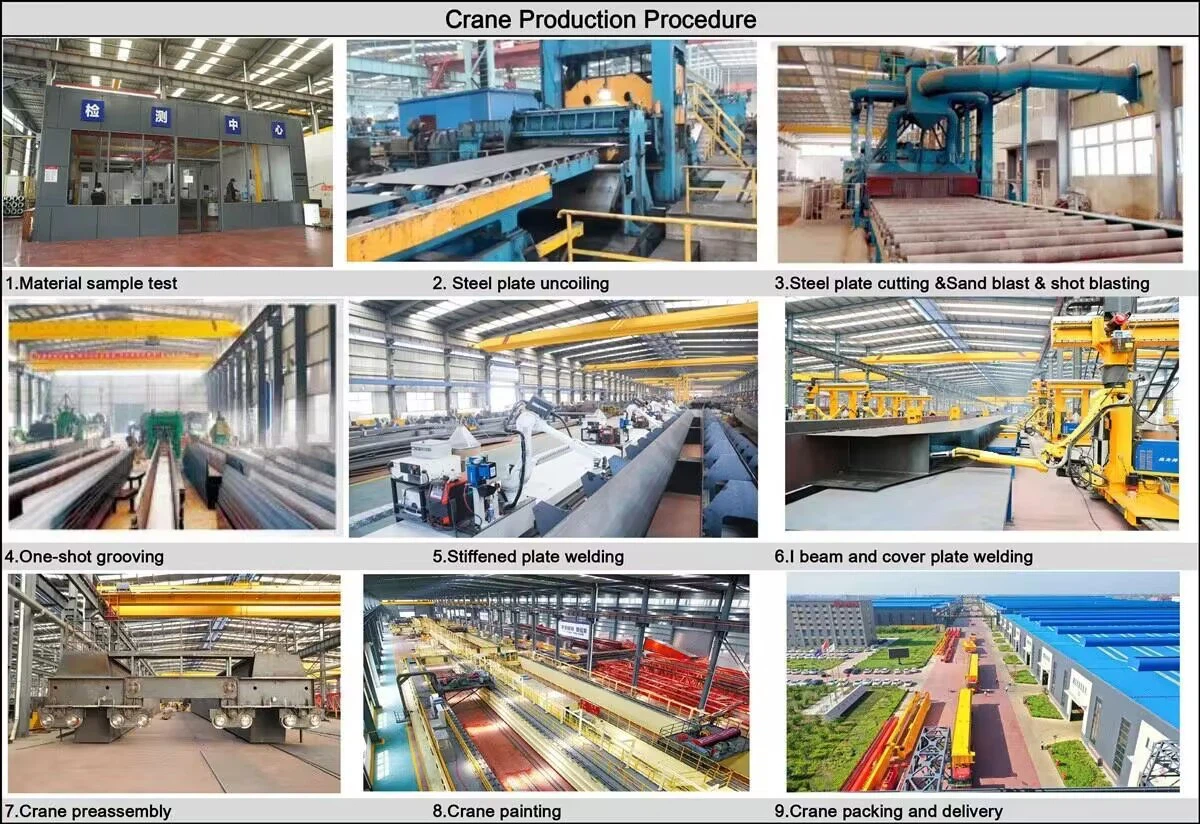
Crane production procedure
1.Design and Engineering
Customer Requirements: The production process begins with understanding the customer's requirements, including lifting capacity, span, height of lift, speed, and environmental conditions (e.g., indoor vs. outdoor use, extreme temperatures).
Crane Design: Engineers create a customized design based on the specifications. This includes:
Structural design: Including the girders, beams, and hoisting system.
Mechanical components: For the trolley, hoist, wheels, and travel mechanisms.
Electrical components: For the control system, wiring, and safety features.
Finite Element Analysis (FEA): Structural simulations to ensure the crane can handle the loads and stresses without failure.
Approval: The design is reviewed and approved by the customer or quality control team before moving to the manufacturing phase.
2.Material Procurement
Material Selection: Based on the design specifications, high-strength steel is usually selected for the crane's structural components, such as the girders, beams, and frame. Other materials like alloy steel for the hoist and copper or aluminum wiring for the electrical system are chosen for performance and durability.
Procurement: Materials are sourced from trusted suppliers. Steel plates, beams, motors, wheels, and other essential components are ordered.
Quality Check: Materials undergo quality inspection to ensure they meet the required standards for strength, corrosion resistance, and durability.
3.Fabrication of Structural Components
Cutting and Shaping: Steel plates and beams are cut to size using methods such as plasma cutting, laser cutting, or oxy-fuel cutting based on the design.
Welding: The various components of the crane structure, including the main girder, end beams, and trolley frames, are welded together by skilled welders. Welding jigs are used to ensure precision during the assembly.
Machining and Drilling: The welded components may require additional machining to achieve the correct dimensions and smooth finishes. Holes are drilled for bolts, bolts, and other fasteners.
Pre-Assembly: Components like the main girder, trolley, and hoist system are pre-assembled and undergo initial checks for alignment and fitment.
4.Fabrication of Electrical and Mechanical Systems
Hoisting System Assembly: The hoist unit, including drum, motor, gearbox, hoist rope, and brake system, is assembled. The motor is connected to the gearbox to ensure proper torque output for lifting operations.
Traveling Mechanism: The trolley travel mechanism, crane travel mechanism, and end carriages are assembled. This includes installing the motors, gears, and travel wheels that will allow the crane to move along the runway.
Control System Assembly: The electrical control system, including the control panel, limit switches, safety devices, cabling, and remote control systems, is assembled and tested for functionality.
Safety Features: Safety components, such as overload sensors, limit switches, and emergency stop systems, are integrated into the crane's design.
5.Surface Treatment
Cleaning and Surface Preparation: Before painting, the crane components are thoroughly cleaned to remove oil, rust, and dirt using sandblasting or chemical cleaning methods.
Surface Coating: The crane's structural components are coated with anti-corrosion paint to protect against wear and environmental factors. Powder coating is often used to ensure a long-lasting, durable finish.
6.Assembly of Crane Components
Main Girder Assembly: The two girders are assembled and secured together. The hoist system is then mounted on the girders.
Trolley and Hoist Installation: The trolley is positioned onto the girder rails, and the hoist unit is mounted onto the trolley. The system is checked for proper alignment and clearance.
End Carriage Installation: The end carriages are installed at each end of the crane and are connected to the main girder structure. They are fitted with travel wheels to allow smooth movement along the runway.
Mechanical Systems Installation: The mechanical components, such as the traveling motors, gearboxes, and crane wheels, are installed and aligned.
7.Electrical and Control System Installation
Wiring: The electrical wiring is installed to connect the motors, control panel, sensors, and other electrical components. Cable conduits are routed to avoid interference or damage.
Control Panel Installation: The control panel is installed, which houses all the electrical controls, limit switches, and safety features. The operator interface (pendant or cabin) is also connected to the crane.
Programming and Configuration: The crane's control system is programmed and configured to ensure all movements (hoist, trolley, bridge) work according to the design specifications.
8.Testing and Quality Control
Pre-Assembly Checks: A series of pre-assembly inspections are conducted to verify all components meet design specifications. This includes checking dimensions, alignment, and fitment.
Load Testing: The crane is load tested to ensure it can safely handle the required lifting capacity (e.g., 10 tons, 20 tons). The test involves gradually increasing the load to the crane's rated capacity while monitoring system performance.
Functional Testing: All crane functions, including lifting/lowering, trolley travel, bridge travel, and speed control, are tested to ensure they operate smoothly and reliably.
Safety System Check: Safety features such as limit switches, overload protection, emergency stops, and braking systems are tested to ensure they function as expected.
9.Final Assembly and Inspection
Final Adjustments: Any necessary adjustments to the crane's movement, alignment, or operation are made. This includes checking and fine-tuning the speed control, brake systems, and travel systems.
Detailed Inspection: The crane undergoes a final inspection by the quality control team to verify that it meets all safety, design, and operational standards.
Documenting Test Results: Documentation of the test results, including load test certificates, safety compliance, and operational data, is prepared for the customer.
10.Delivery and Installation
Disassembly and Packing: The crane may be disassembled into transportable parts for shipment to the installation site. Protection packaging is used to prevent damage during transit.
Site Installation: Once the crane arrives at the installation site, the crane components are reassembled. Rail tracks or runway beams are set up for the crane's movement.
Final Setup: After installation, the crane is tested again on-site, and final safety checks and commissioning are performed before handover to the customer.
6. Testing and Quality Control
Key Activities:
Initial Testing: Before being shipped out, the crane undergoes a series of functional tests to ensure all components are operating as intended:
Load Testing: The crane is tested to ensure it can safely lift the specified load without issues.
Operational Testing: The crane is tested for smooth travel, hoisting, and lifting functions.
Electrical Testing: Ensuring the control systems function properly, including limit switches, safety alarms, and motor speed controls.
Safety Features Testing: Testing for overload protection, emergency stop buttons, and other critical safety systems.
Inspection: A detailed inspection process is conducted to check:
Structural integrity: Ensuring all welds and joints are strong.
Component quality: Ensuring no defects in components like motors, cables, and hooks.
Alignment: Verifying the alignment of tracks, hoists, and the crane's overall structure.
Certification: After passing all the tests, the crane is certified to meet industry standards (e.g., CE certification, ISO 9001).
7. Painting and Surface Treatment
Key Activities:
Anti-Corrosion Coating: The crane structure is coated with high-quality paint or powder coating to protect it from environmental factors like moisture, corrosion, and UV rays.
Color Customization: Depending on the customer's specifications, the crane can be painted in a variety of colors.
Final Inspection: Once the crane is painted and surface-treated, it undergoes a final inspection to ensure that all surfaces are free from defects and that the paint job is consistent.
8. Packaging and Delivery
Key Activities:
Disassembly (if needed): For transportation, some parts of the crane (such as the trolley or bridge) may be disassembled.
Packaging: The crane components are packaged carefully, ensuring that they are protected during transit.
Delivery: The crane is delivered to the customer's site for final assembly and installation.
9. Installation and Commissioning
Key Activities:
On-Site Assembly: The crane is assembled at the customer's facility, ensuring that all parts are correctly aligned and integrated.
Final Testing: Once installed, the crane undergoes final testing at the installation site to verify that everything works according to specifications.
Operator Training: Operators are trained on how to use the crane safely and efficiently.
Customer Handover: After successful installation and testing, the crane is handed over to the customer, and all relevant documentation (e.g., maintenance guides, warranty information) is provided.
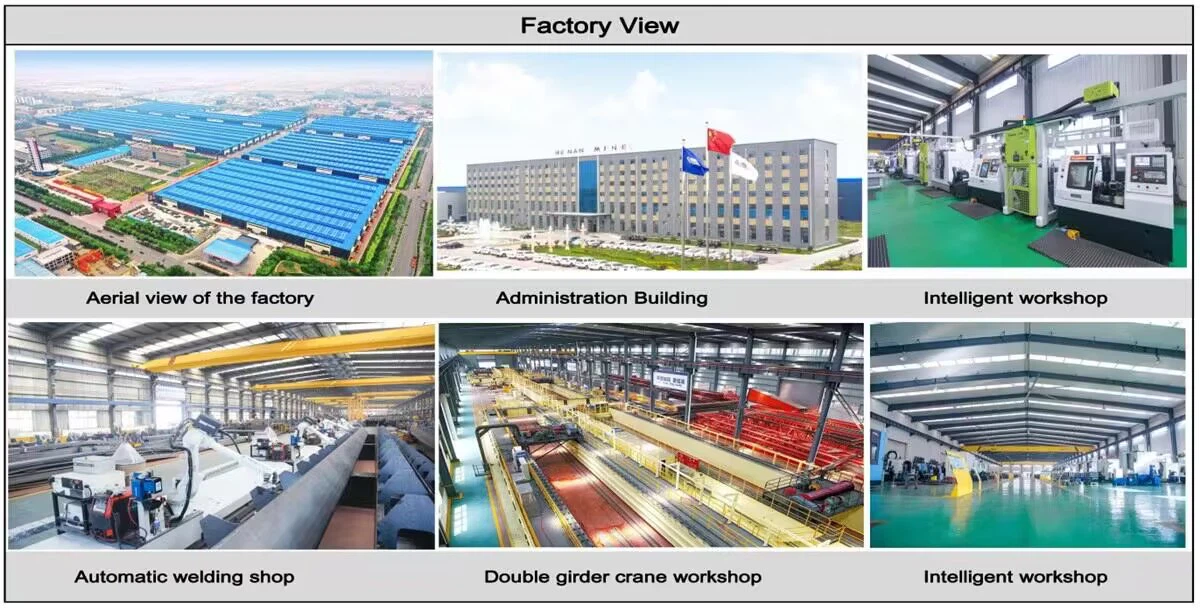
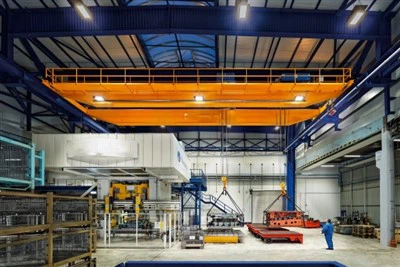
Workshop view:
The company has installed an intelligent equipment management platform, and has installed 310 sets (sets) of handling and welding robots. After the completion of the plan, there will be more than 500 sets (sets), and the equipment networking rate will reach 95%. 32 welding lines have been put into use, 50 are planned to be installed, and the automation rate of the entire product line has reached 85%.


Hot Tags: winch trolley bridge crane, China winch trolley bridge crane manufacturers, suppliers, factory, Double Girder Overhead Crane, Double Girder Overhead Travelling Crane
You Might Also Like



Send Inquiry