







High Performance Double Girder Bridge Crane
Products Description
A High Performance Double Girder Bridge Crane is an advanced industrial lifting solution engineered for heavy-duty applications requiring exceptional lifting capacity, precision control, and reliable performance over long service life. It is designed to handle the most challenging tasks in industries such as steel manufacturing, shipbuilding, energy, and heavy machinery production.
Core Components:Bearing, Gearbox, Motor, Pump
Place of Origin:Henan, China
Warranty:1 Year
Weight (KG):2000 kg
Video outgoing-inspection:Provided
Machinery Test Report:Provided
Design:Double beam
Effectiveness:high efficiency
Operating speed:High speed operation
Stability:Anti-swing function
Color:Optional
Power Source:110V/220V/230V/380V/440V,customized
Span:7.5-31.5m
Pictures & Components
1.Main beam
The main beam is the core structural component of a double girder bridge crane. It provides the primary support for the trolley, hoisting mechanism, and lifted load. In high-performance cranes, the main beam is designed for maximum strength, rigidity, and longevity, ensuring stable operation under heavy-duty conditions.
2.Lifting System
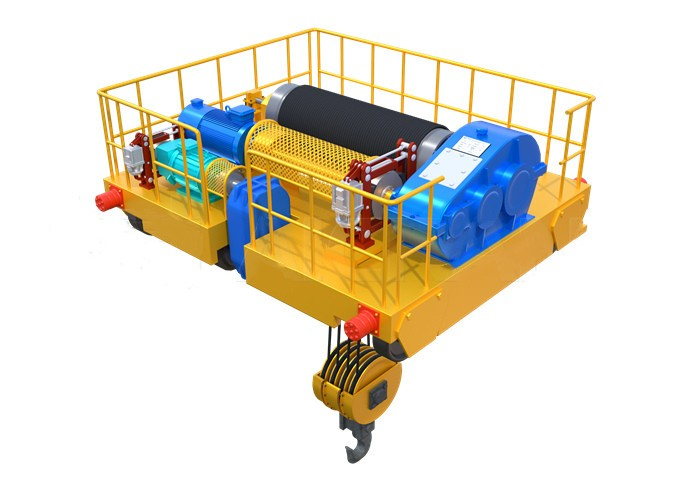
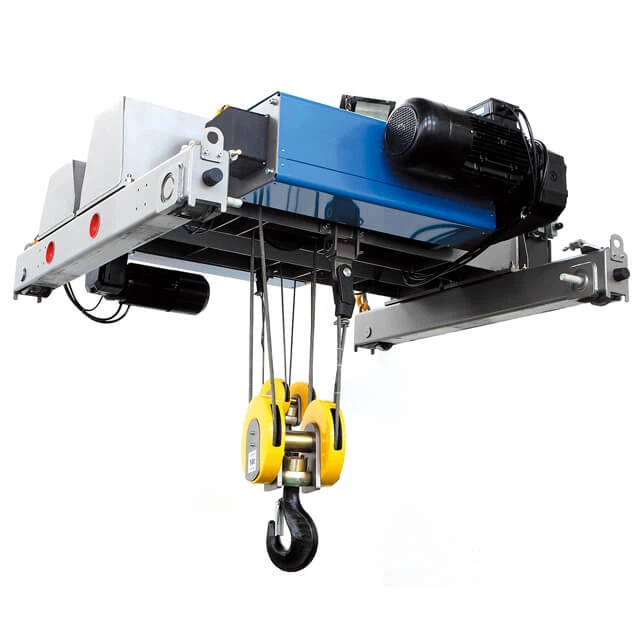
The lifting system is the heart of a double girder bridge crane. It performs the vertical lifting and lowering of loads and is engineered for maximum reliability, smooth operation, and precise control, especially in high-performance applications.
 |
 |
3.End carriage
The end carriage is a vital structural and mechanical component of a double girder bridge crane. It supports the main girders and enables the entire crane structure to travel along the runway beams. In high-performance cranes, the end carriages are designed for high strength, precise alignment, smooth motion, and low maintenance.
 |
 |
4.Crane travelling mechanism
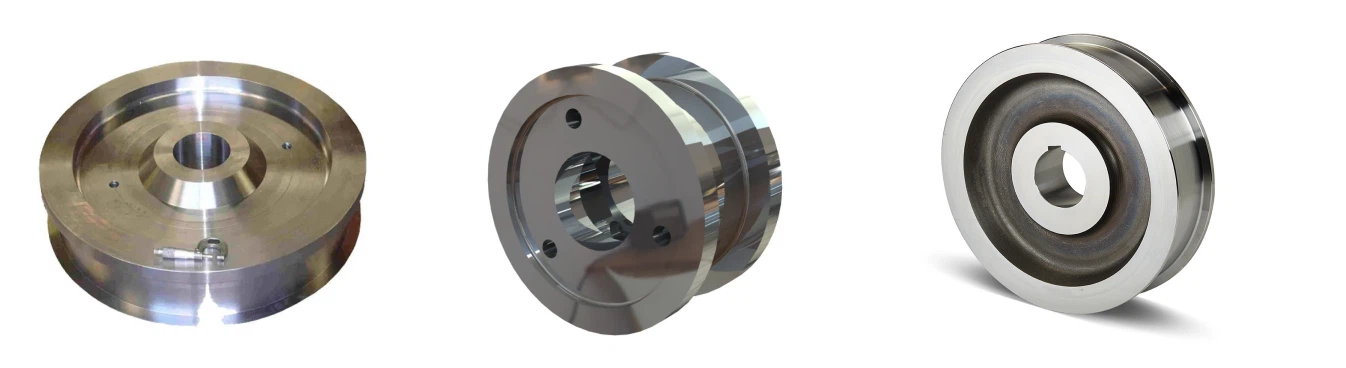
The crane traveling system is responsible for moving the entire bridge crane structure horizontally along the runway rails in the workshop or yard. In high-performance cranes, this system is designed for smooth, accurate, and reliable motion, even under full-load, long-span, or high-speed conditions.
5.Trolley travelling mechanism
The trolley traveling system is responsible for the horizontal movement of the trolley (which houses the hoisting mechanism) along the top of the two bridge girders. In high-performance cranes, this system is engineered for smooth, precise, and reliable motion-even during high-speed operation under heavy loads.
7.Crane Hook
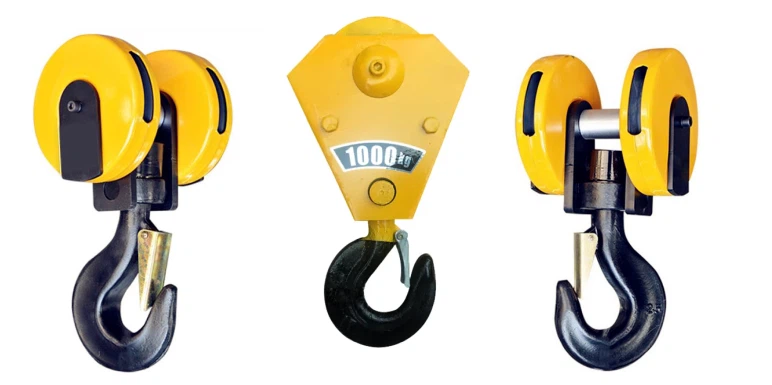
The hook is one of the most critical components of the lifting system in a double girder bridge crane. It directly bears the weight of the load and transfers it to the hoisting mechanism. In high-performance cranes, the hook assembly is designed for maximum safety, load stability, and long service life, especially under heavy-duty and high-frequency operations.
8.Motor
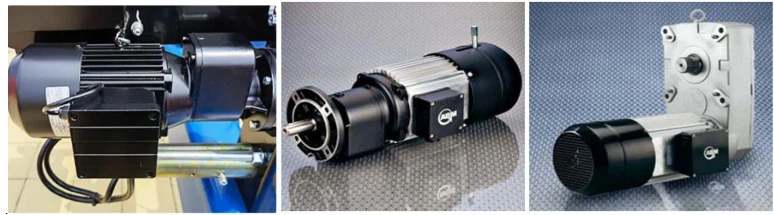
The motor is the power core of the crane's motion and lifting systems. In a high-performance double girder bridge crane, motors are specifically selected or customized for high efficiency, heavy-duty cycles, smooth control, and long service life, capable of working in demanding industrial environments.

.
9.Sound and light alarm system & limit switch
1)Sound and Light Alarm System
The sound and light alarm system is a key safety feature in high-performance double girder bridge cranes. It alerts nearby personnel to crane movements, abnormal conditions, or emergency stops-ensuring safer operations, especially in noisy or high-traffic industrial environments.
2)Limit Switches
Limit switches are mechanical or proximity devices that prevent over-travel of crane mechanisms. In high-performance cranes, these switches ensure precision stopping, load safety, and protection of structural components.

10.Safety Devices
Benefits of Safety Devices
Personnel Protection: Reduces risk of accidents and injuries.
Equipment Safety: Prevents mechanical and electrical failures.
Operational Reliability: Minimizes downtime caused by faults or accidents.
Regulatory Compliance: Meets international standards such as FEM, OSHA, ISO, CMAA.
Enhanced Control: Provides operators with critical information and automatic safeguards.
11.Control Mode
Control System Components
PLC (Programmable Logic Controller): Core controller for automated functions and safety interlocks.
VFD (Variable Frequency Drive): Controls speed and acceleration of motors for smooth operation.
HMI (Human-Machine Interface): Touchscreen or display panel for monitoring crane status and parameters.
Safety Relays & Interlocks: Ensure safe operation and emergency shutdown capability.
Feedback Sensors: Encoders, load cells, and position sensors for precision control.
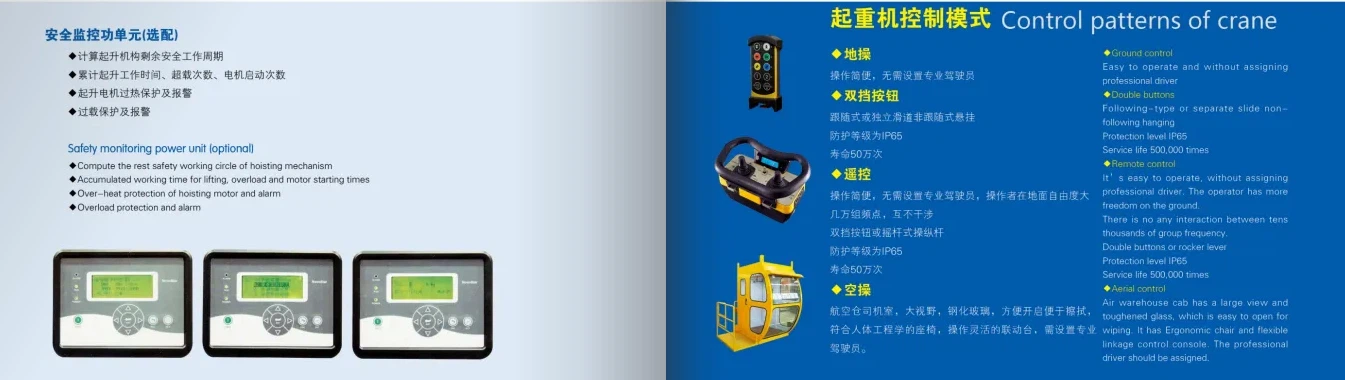
12.Sketch

Main technical

Advantages
1.High Load Capacity
Double girder design supports heavier loads-typically ranging from 5 tons up to 500 tons or more.
Suitable for heavy-duty industrial applications and oversized equipment handling.
2.Increased Span and Height
Can cover wider working areas with longer spans (up to 50 meters or more).
Allows higher lifting heights due to two girders supporting the hoist and trolley.
3.Enhanced Structural Rigidity and Stability
Box-type or European-standard girders provide superior rigidity, reducing deflection and sway.
Stable operation ensures safety and precision when handling heavy loads.
4.Improved Safety Features
Equipped with advanced safety devices such as overload protection, limit switches, anti-collision, and emergency stop systems.
Sound and light alarms improve operational awareness and reduce workplace accidents.
5.Smooth and Precise Operation
Variable Frequency Drive (VFD) systems enable smooth starting, stopping, and speed control for lifting, trolley, and crane travel.
Anti-sway control systems enhance load positioning accuracy.
6.Energy Efficiency
Modern motors and VFD drives reduce power consumption and operational costs.
Lightweight girder design reduces overall crane weight, saving energy during travel.
7.Versatile Control Options
Multiple control modes including pendant, wireless remote, cabin control, semi-automatic, and fully automatic.
Suitable for various operational preferences and environments.
Application:
1.Steel & Metal Industry :Handling heavy steel coils, plates, billets, slabs, and structural components in mills and fabrication shops.
2.Shipbuilding:Lifting and assembling large ship sections, heavy machinery, and materials in shipyards.
3.Power Generation:Maintenance and installation of turbines, generators, transformers, and heavy electrical components.
4.Automotive Manufacturing:Moving heavy dies, molds, engines, and large assemblies on production lines.
5.Heavy Machinery & Equipment Manufacturing:Handling large machine parts, castings, and assemblies.
6.Construction & Infrastructure:Transporting precast concrete, steel beams, and construction materials on site or in factories.
7.Aerospace Industry:Precise handling of aircraft components, engines, and assemblies in manufacturing and maintenance.
Crane production procedure
1. Design & Engineering
Requirement Analysis: Understand customer needs-capacity, span, working environment.
Structural Design: Use CAD and FEM software to design main girder, end carriages, trolley, and hoist systems.
Component Selection: Choose motors, gearboxes, electrical parts, safety devices.
Approval: Finalize design drawings and get customer approval.
2. Material Procurement
Source high-quality steel (Q235B, Q345B, or equivalent).
Purchase electrical components from certified suppliers.
Inspect all materials for compliance with standards.
3. Fabrication
Cutting & Profiling: Steel plates and sections cut by CNC plasma or laser cutting machines.
Welding: Full-penetration submerged arc welding (SAW) for main girders and frame assemblies.
Machining: Precision machining of connection points, wheel hubs, shafts, and hoist parts.
Assembly: Pre-assembly of components such as end carriages, trolley frames.
4. Surface Treatment
Cleaning: Sandblasting (Sa2.5) to remove rust and scale.
Coating: Application of primer, epoxy paint, and topcoat for corrosion resistance.
Inspection: Coating thickness and adhesion checked per standards.
5. Electrical System Installation
Wiring of control panels, motors, limit switches, alarms.
Integration of PLC, VFD, and control devices.
Testing of electrical continuity and safety.
6. Final Assembly
Installation of main girders on end carriages.
Mounting trolley, hoist, and control systems.
Hook and wire rope installation.
7. Testing & Quality Inspection
No-load Testing: Run crane mechanisms without load to check travel, lifting, and control functions.
Load Testing: Perform rated load and overload tests to verify lifting capacity and safety devices.
Function Tests: Check limit switches, alarms, brakes, and emergency stops.
Alignment and Calibration: Ensure smooth travel and precise load positioning.
8. Packing & Delivery
Dismantle parts as needed for shipping.
Protect components with anti-corrosion coatings and packing materials.
Arrange logistics for safe delivery to customer site.
9. Installation & Commissioning (On-site)
Assemble crane on runway beams.
Connect power supply and control systems.
Conduct final commissioning and operator training.
10. After-Sales Support
Provide maintenance manuals and spare parts lists.
Offer technical support and periodic maintenance services.
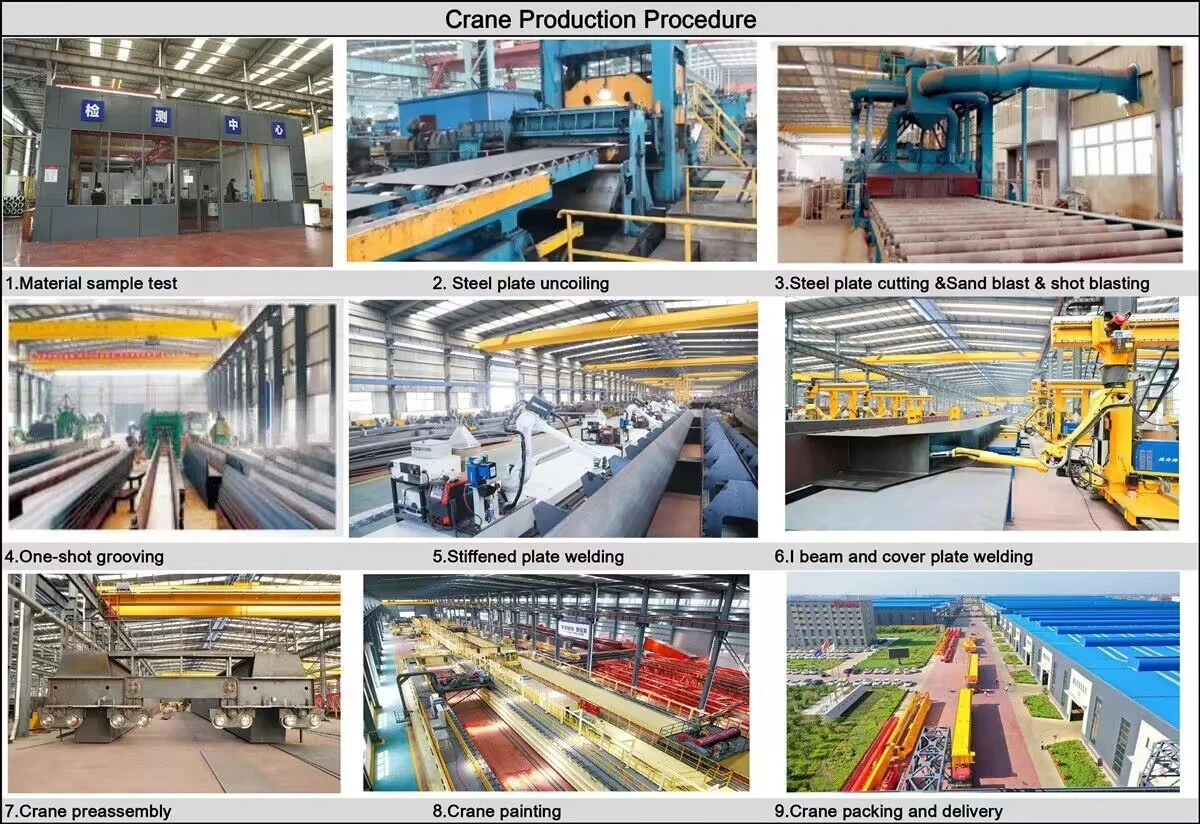
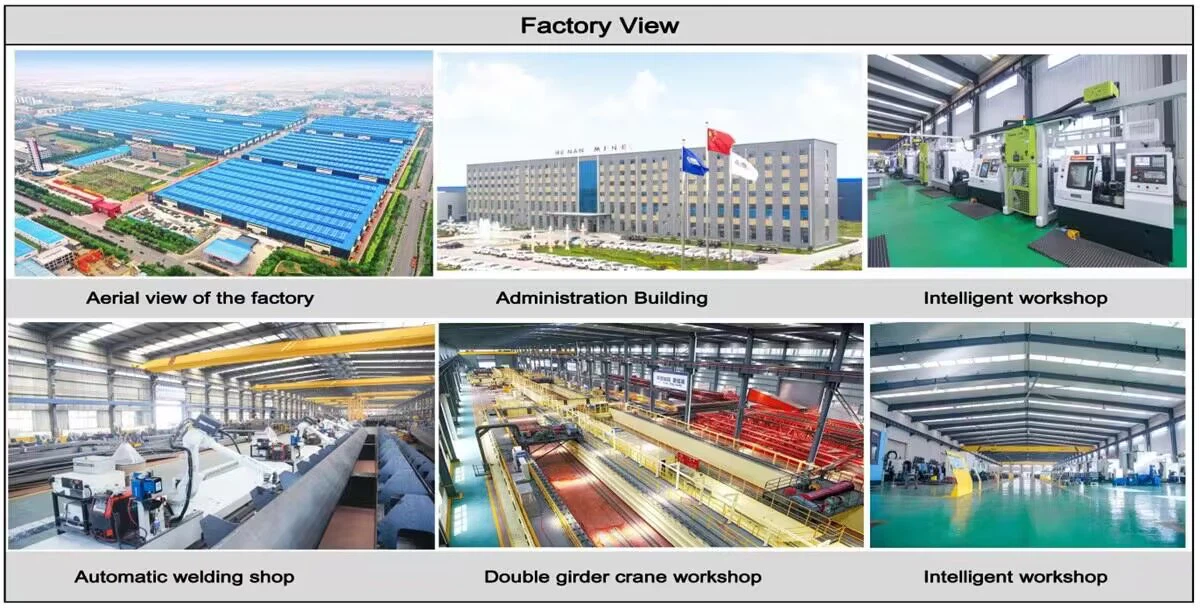
Workshop view:
The company has installed an intelligent equipment management platform, and has installed 310 sets (sets) of handling and welding robots. After the completion of the plan, there will be more than 500 sets (sets), and the equipment networking rate will reach 95%. 32 welding lines have been put into use, 50 are planned to be installed, and the automation rate of the entire product line has reached 85%.


Hot Tags: high performance double girder bridge crane, China high performance double girder bridge crane manufacturers, suppliers, factory, Double Girder Overhead Travelling Crane, Double Girder Overhead Crane
You Might Also Like



Send Inquiry