










Double Girder Crane With Two Trolleys
Products Description
1. Dual Trolley System for Enhanced Efficiency
Independent or synchronized operation – Each trolley can work separately or together for tandem lifts.
Dual lifting capacity – Can handle two loads simultaneously, doubling productivity.
Anti-collision system – Prevents interference between trolleys during operation.
2. Robust Double Girder Structure
Higher load capacity (typically 5–500+ tons) than single girder cranes.
Increased hook height – More vertical space for lifting beneath the crane.
Box girder or truss design – Optimized for stiffness and durability.
3. Advanced Hoisting Mechanisms
Main + auxiliary hoist – For handling different load sizes efficiently.
Variable-speed control – Smooth lifting/lowering with VFD (Variable Frequency Drive).
Overload protection – Sensors prevent exceeding safe working load limits.
Comparison with Single Trolley Cranes
| Feature | Double Girder + 2 Trolleys | Single Trolley Crane |
|---|---|---|
| Load Capacity | Up to 500+ tons | Typically up to 100 tons |
| Productivity | Dual-load handling | Single-load only |
| Hook Height | Higher (no lower girder) | Lower (girder below) |
| Control Flexibility | Independent trolley movement | Limited to one hoist |
| Cost | Higher initial investment | More economical |
Capacity (Each Trolley) 5 - 500+ tons
Span 10 - 40 meters
Lifting Height 6 - 50 meters
Work Duty A5 - A8 (FEM/ISO Standard)
Ambient Temperature -20°C to +50°C
Girder Type Box girder (welded) or truss
Wheel Load Up to 1,000 kN per wheel
Rail Type QU80/QU100/QU120 (or custom)
Approach Dimensions Custom end approaches
Power Supply 3-phase, 380V/415V/480V, 50/60Hz
Control Voltage 24V/36V (safety extra-low voltage)
Protection Class IP54/IP65 (dust/water resistant)
Insulation Class F or H (for high-temperature)

Pictures & Components
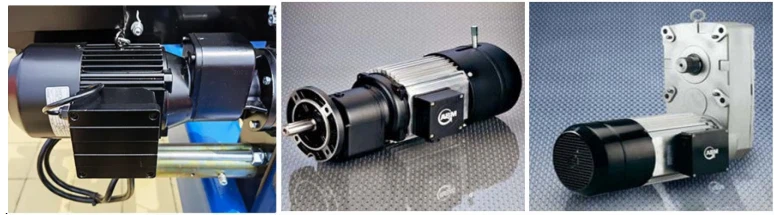
A double girder crane with two trolleys consists of several key components that work together to enable heavy-duty lifting with enhanced flexibility. Below is a detailed breakdown of the main components:
1. Bridge Structure (Double Girder)
Main Girders (2) – Heavy-duty box or lattice girders that span the crane's width, providing structural support.
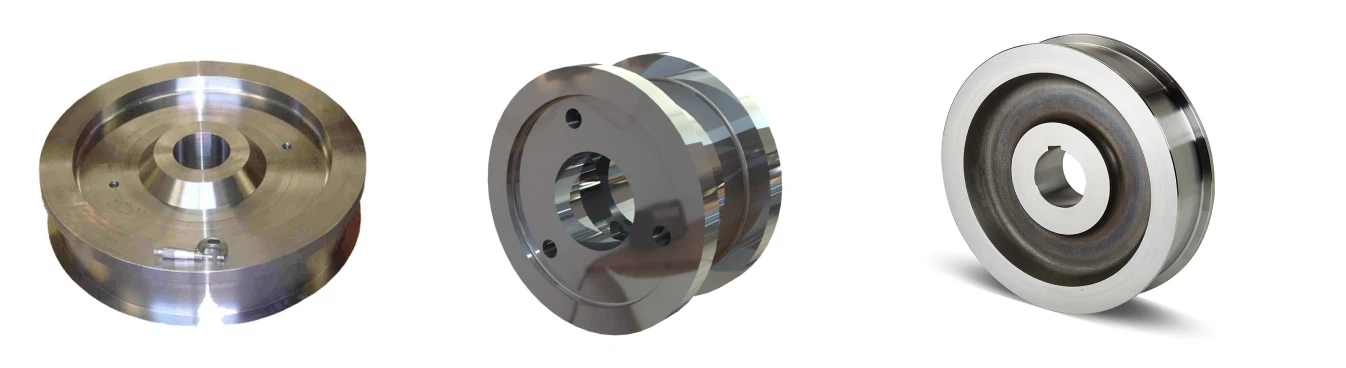
End Trucks (2) – Located at each end of the girders, equipped with wheels for longitudinal movement along the runway rails.
Drive Motors & Brakes – Electric motors with gearboxes for bridge movement, often with variable frequency drives (VFDs) for smooth operation.
Runway Rails – Heavy-duty rails mounted on building columns or support structures for crane travel.
 |
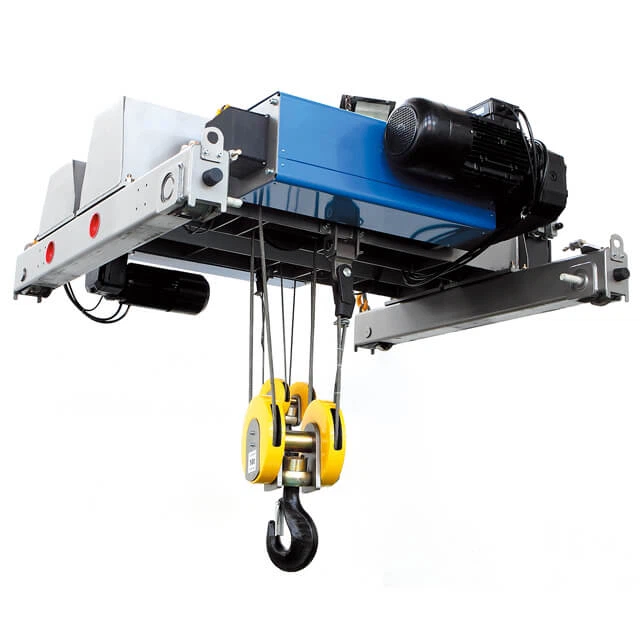 |
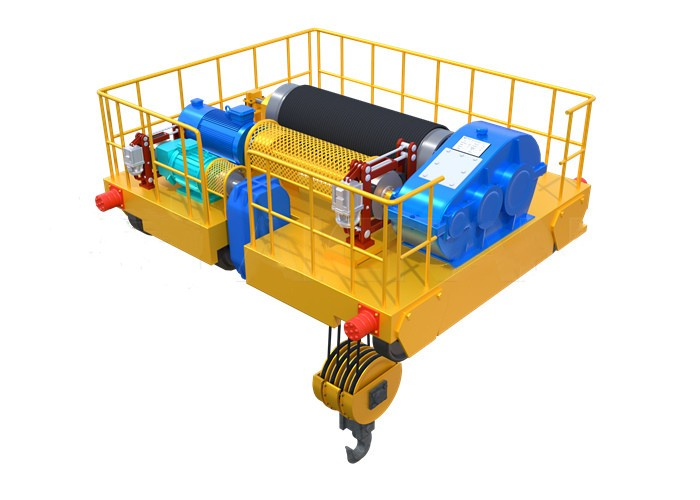
2. Trolleys (2 Independent Units)
Each trolley typically includes:
Trolley Frame – Supports the hoist and moves along the crane girders.
Travel Wheels & Motors – Allows horizontal movement across the bridge span.
Hoisting Mechanism – Can be:
Electric Wire Rope Hoist – For heavy loads (common in industrial applications).
Chain Hoist – For lighter loads or compact designs.
Dual Hoist System – Main + auxiliary hoist for varying load sizes.
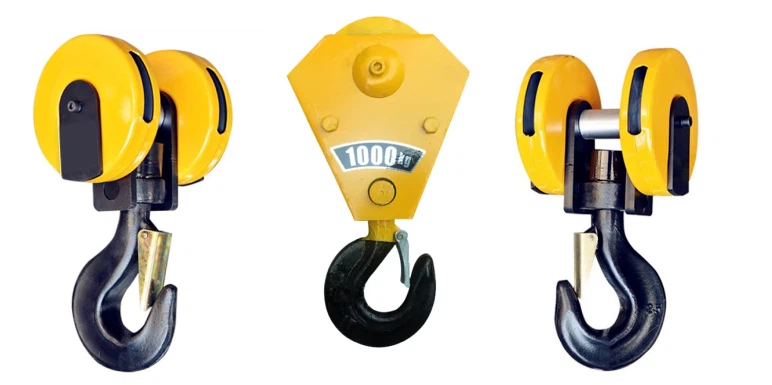
Hook Block & Sheaves – For lifting and lowering loads.
Load Limiter / Overload Protection – Safety device to prevent overloading.
 |
 |
3. Hoist & Lifting Components
Wire Rope / Chain – Lifting medium (depends on hoist type).
Drum or Chain Wheel – Wraps the rope/chain for lifting.
Hook (Single or Double) – Attaches to the load (may include a swivel hook for rotation).
Brake System – Mechanical or electromagnetic brakes for load holding.
4. Electrical & Control Systems
Power Supply – Festoon system, cable reels, or conductor bars for electricity.
Control Panel – Houses contactors, relays, and PLCs (if automated).
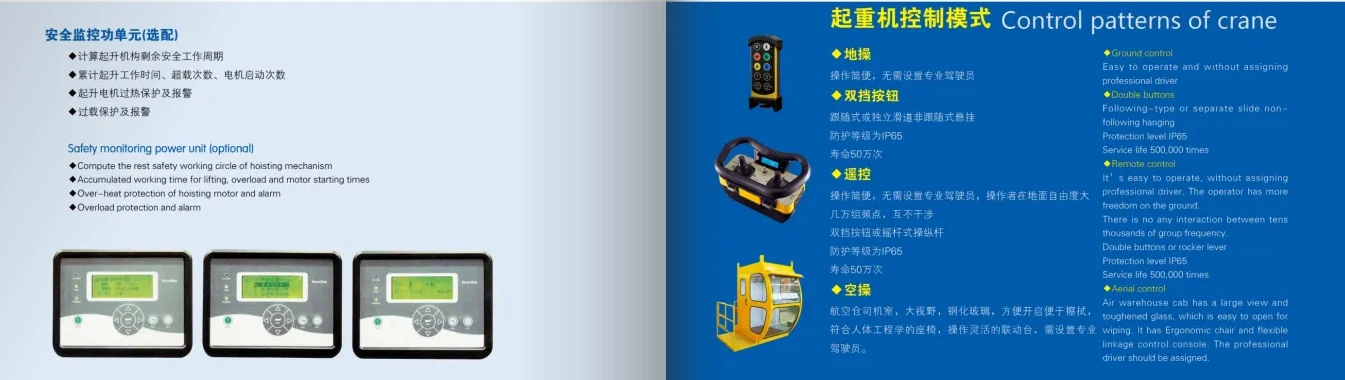
Operator Interface – Options include:
Pendant Control (wired handheld remote).
Radio Remote Control (wireless operation).
Cabin Control (for cabs mounted on the crane).
Limit Switches – For trolley and bridge travel limits.
Anti-Collision System – Prevents trolleys from crashing into each other.
Variable Frequency Drives (VFDs) – For smooth acceleration/deceleration.
5. Safety & Auxiliary Components
Bumpers / Buffers – Absorb impact at travel limits.
Anemometer (for outdoor cranes) – Wind speed monitoring.
Lights & Alarms – Warning signals during operation.
Ladder & Maintenance Platform – For servicing access.
Lubrication System – Automated or manual for moving parts.

6. Optional Features
Automation & Smart Controls – For Industry 4.0 integration.
Weighing System – Built-in load measurement.
Tandem Lift Synchronization – For coordinated lifting between trolleys.
Explosion-Proof Components – For hazardous environments.
Magnetic or Vacuum Lifters – For specialized loads (e.g., steel plates).
.


How the Components Work Together
Bridge Movement – The end trucks move the entire crane along the runway rails.
Trolley Movement – Each trolley travels independently along the girders.
Hoisting – The hoist lifts/lowers the load via the hook block.
Control – The operator manages movement via pendant, remote, or cabin controls.
SKETCH

Main technical

Advantages
Increased Productivity
Two trolleys can operate simultaneously, allowing multiple lifts without waiting for a single trolley to complete its task.
Ideal for assembly lines, steel mills, and large warehouses where efficiency is critical.
Higher Load Capacity & Flexibility
Double girder design supports heavier loads (up to 500+ tons) compared to single girder cranes.
Independent trolleys can handle different loads at once (e.g., one for heavy lifting, another for positioning).
Optimized Workspace Utilization
Wider span coverage for large facilities (e.g., shipyards, power plants).
Tandem lifting capability allows balanced handling of oversized loads.
Redundancy & Reliability
If one trolley fails, the other can continue operating, reducing downtime.
Dual-hoist configurations (main + auxiliary) provide backup lifting options.
Precision & Control
Variable Frequency Drives (VFDs) ensure smooth acceleration/deceleration.
Anti-collision systems prevent trolleys from interfering with each other.
Customization for Specialized Needs
Can be equipped with magnets, grabs, or vacuum lifters for specific materials.
Automation-ready for integration with smart factory systems.
Application:
Applications of Double Girder Cranes with Two Trolleys
1. Steel & Metal Industry
Handling steel coils, slabs, and molds.
Moving large casting parts in foundries.
Tandem lifting for long beams or plates.
2. Power Plants & Heavy Machinery
Installing turbines, generators, and transformers.
Maintenance of boilers and large mechanical components.
3. Shipbuilding & Offshore
Assembling ship hulls and large structural sections.
Handling propellers, engines, and heavy ship parts.
4. Aerospace & Automotive Manufacturing
Moving aircraft fuselages or wing assemblies.
Positioning large vehicle frames or machinery.
5. Warehousing & Logistics
Handling heavy containers or bulk materials.
Multi-load handling in large storage facilities.
6. Mining & Cement Industry
Transporting heavy raw materials (ores, crushers).
Maintenance of large kilns and processing equipment.
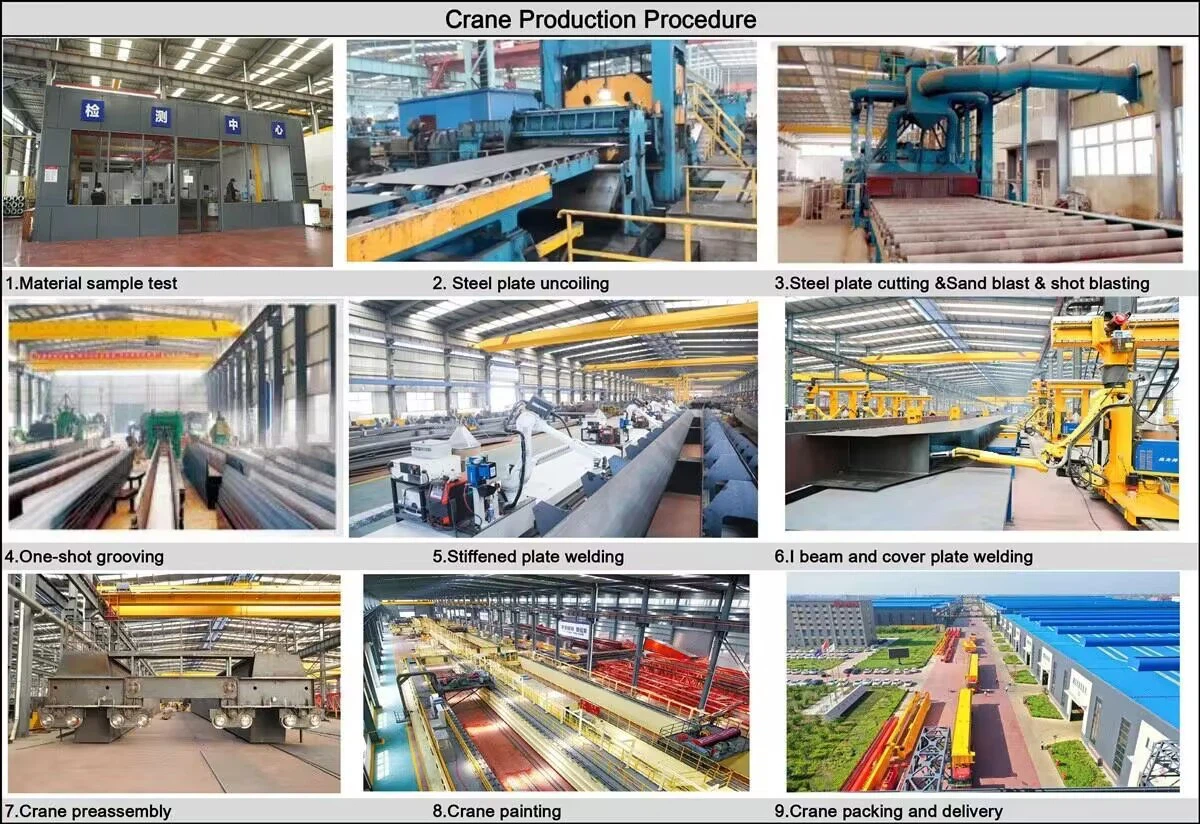
Crane production procedure
1.Design and Engineering
Requirements Gathering:
Load capacity (e.g., 10T, 50T, 100T, etc.), span, lifting height, and operational environment are defined.
Customization needs are assessed, such as control modes (pendant, wireless, cabin) and special features (e.g., anti-collision, overload protection).
Preliminary Design:
Structural engineers and crane designers create the crane's initial design, including the main beam, end carriage, lifting system, trolley system, travel mechanism, and other components.
Calculation and Simulation:
Load calculations are performed to ensure the crane can handle the specified capacity.
Finite element analysis (FEA) may be used to simulate stresses and deflections in the structure to ensure safety and stability.
Detailed Design:
After approval, detailed drawings for each part are made, including the main girder, end carriage, hoist system, motors, control systems, and safety features.
2. Material Procurement
Raw Material Selection:
High-quality materials like steel, alloyed steel, forged steel, and electrical components are sourced according to specifications.
Materials are inspected for quality certification and compliance with industry standards (e.g., ISO, CE).
Component Sourcing:
Standard components such as motors, hoists, control panels, limit switches, and safety devices are sourced from reliable suppliers.
3. Fabrication of Components
Main Girder:
Cutting and welding of steel plates to form the bridge girder.
The girder is assembled by welding or bolting sections, ensuring it meets the required strength and precision.
End Carriage Assembly:
The end carriage is fabricated and assembled to hold the crane on the runway rails.
Wheel assemblies are installed to ensure smooth travel along the rails.
Hoist and Trolley System:
The hoist unit (electric or manual) is assembled, including the drum, wire rope, hook, and motor.
The trolley system is built to transport the hoist across the bridge, including trolley wheels and drive mechanisms.
Crane Traveling Mechanism:
The crane wheels are mounted on the end carriages, ensuring smooth horizontal movement.
The drive system is installed to control travel speed.
4. Assembly of Crane
Main Beam Installation:
The assembled main girder is lifted and positioned onto the end carriages.
The girder is aligned to ensure structural integrity.
Trolley and Hoist Installation:
The trolley system is mounted onto the main girder, and the hoist is mounted to the trolley.
The load chain or wire rope is installed and tested for smooth operation.
Travel Mechanism Setup:
The crane wheels are fitted, and the drive mechanism is connected to the control system for horizontal movement.
5. Electrical and Control System Installation
Wiring and Control Panel:
The control panel is installed and wired to manage all crane movements (hoisting, trolley, crane travel).
Limit switches, emergency stop buttons, and safety alarms are integrated into the control system.
Motor and Gear Installation:
Motors for hoisting, traveling, and the trolley are installed and connected to their respective gear systems.
Testing of Control Systems:
Control systems are checked to ensure proper integration of pendant control, wireless remote, or cabin control options.
6. Testing and Quality Control
Load Testing:
The crane undergoes static load testing (to check stability) and dynamic load testing (to check operational performance under actual working conditions).
Overload protection and limit switches are tested to ensure they function correctly.
Safety System Testing:
The sound and light alarms, limit switches, emergency stop buttons, and safety devices are all tested for functionality.
Movement Testing:
All movements-hoisting, trolley movement, bridge travel, and sway control-are tested for smooth operation and precision.
Electrical Testing:
All electrical components are tested for proper wiring, grounding, and communication between systems.
Documentation and Certification:
The crane is inspected according to international safety standards and undergoes certification by relevant authorities (e.g., CE, ISO).
Test certificates for motors, cranes, and load testing are prepared.
7. Final Inspection and Painting
Visual Inspection:
A thorough inspection is carried out to ensure that the crane meets design specifications and safety requirements.
Painting:
The crane is painted with high-quality anti-corrosion coatings to protect it from environmental conditions.
Marking and Labeling:
Safety labels, warnings, and capacity markings are applied to the crane for proper identification.
8. Delivery and Installation
Shipping:
The crane is carefully disassembled into transportable parts (if needed) and shipped to the customer's location.
Installation:
The crane is installed on-site, and all connections (power, mechanical, control) are made.
Final Commissioning:
The crane is commissioned by running it through a series of operational tests to ensure it works properly.
Operator training is conducted, if necessary, for safe and efficient use.
9. Post-Installation Support
Customer Training:
Operator training on how to use the crane safely and effectively.
Maintenance Schedule:
Providing a maintenance plan for the crane's continued operation, including regular inspections, lubrication, and testing.
After-Sales Support:
Offering spare parts, troubleshooting, and repair services.
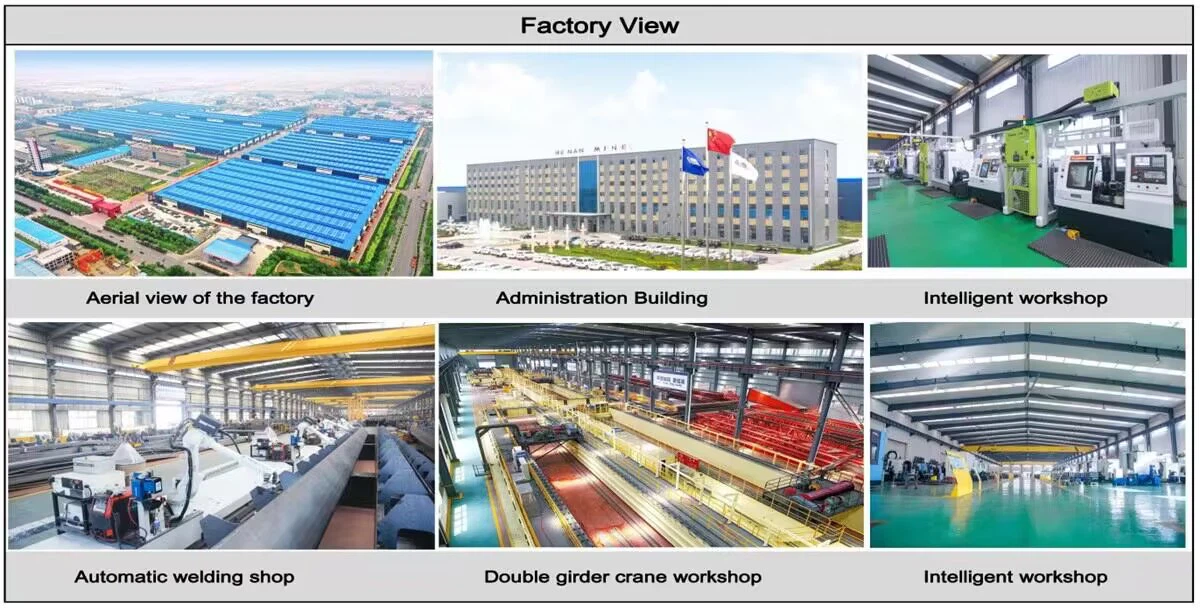
Workshop view:
The company has installed an intelligent equipment management platform, and has installed 310 sets (sets) of handling and welding robots. After the completion of the plan, there will be more than 500 sets (sets), and the equipment networking rate will reach 95%. 32 welding lines have been put into use, 50 are planned to be installed, and the automation rate of the entire product line has reached 85%.


Hot Tags: double girder crane with two trolleys, China double girder crane with two trolleys manufacturers, suppliers, factory, Double Girder Overhead Travelling Crane, Double Girder Overhead Crane
You Might Also Like


Send Inquiry