










Ohc Overhead Crane
Products Description
Types of Overhead Cranes (OHC)
Single Girder Overhead Crane
Uses one main beam (I-beam or box girder).
Lower cost, suitable for light to medium loads (1–20 tons).
Ideal for workshops and warehouses.
Double Girder Overhead Crane
Uses two parallel girders for higher capacity (20–500+ tons).
Higher lifting height, better for heavy industries.
Gantry Crane
Similar to OHC but runs on ground-mounted rails (no building support needed).
Used in shipyards, outdoor storage, and construction.
Monorail Crane
Moves along a single fixed track (linear movement only).
Common in assembly lines and production units.
Jib Crane
Has a rotating arm for localized lifting.
Used in workshops for precise material handling.
Comparison: Where to Use OHC vs. Other Cranes?
| Scenario | Overhead Crane (OHC) | Gantry Crane | Jib Crane |
|---|---|---|---|
| Best For | Indoor heavy lifting | Outdoor/mobile lifting | Localized, small-scale lifting |
| Load Capacity | 1–500+ tons | 5–1000+ tons | 0.5–20 tons |
| Mobility | Fixed runway | Moves on ground rails | Fixed or rotating |
| Space Needed | Requires runway beams | Needs ground space | Minimal space |
| Cost | Moderate to high | High | Low |
Core Components:Bearing, Gearbox, Motor, Pump
Place of Origin:Henan, China
Warranty:1 Year
Weight (KG):2000 kg
Video outgoing-inspection:Provided
Machinery Test Report:Provided
Design:Double beam
Effectiveness:high efficiency
Operating speed:High speed operation
Stability:Anti-swing function
Color:Optional
Power Source:110V/220V/230V/380V/440V,customized
Span:7.5-31.5m
Pictures & Components
An Overhead Crane (OHC) consists of mechanical, electrical, and structural components working together for safe and efficient lifting. Below is a detailed breakdown of all major parts:
1. Structural Components
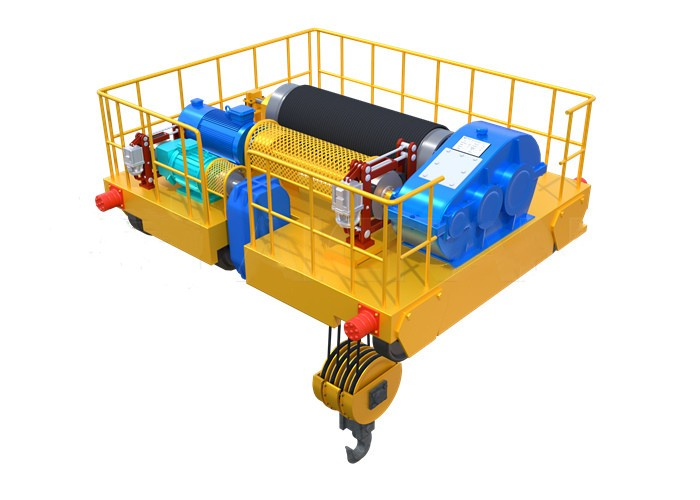
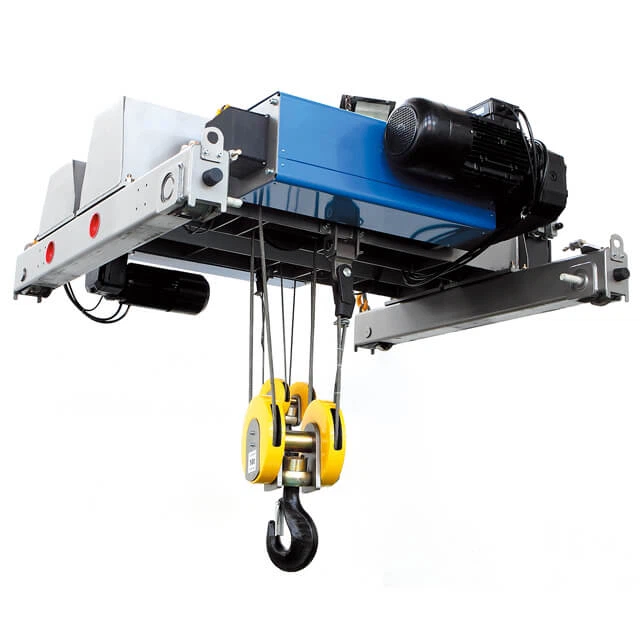
A. Bridge Girder (Main Load-Bearing Structure)
Single Girder – One main beam (I-beam or box-section) for lighter loads (1–20 tons).
Double Girder – Two parallel beams for heavy-duty lifting (20–500+ tons).
 |
 |
B. End Trucks (End Carriages)
Wheeled frames at each end of the girder.
Include wheels, bearings, motors (for powered cranes), and brakes.
Allow the crane to move along the runway rails.
C. Runway System
Runway Beams – Steel beams (top-running or underhung) supporting the crane.
Runway Rails – Steel tracks where the crane moves (usually ASCE, DIN, or I-beam rails).
Brackets & Supports – Fix rails to the building structure or freestanding columns.
 |
 |
2. Lifting & Movement Components
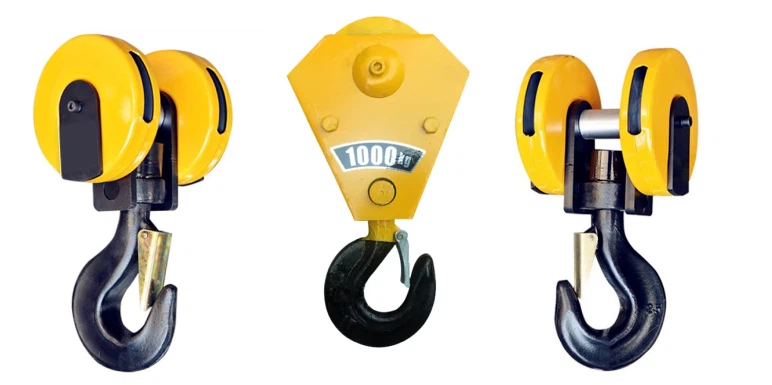
A. Hoist (Lifting Mechanism)
Electric Chain Hoist – For light to medium loads (1–10 tons).
Wire Rope Hoist – For heavy-duty lifting (5–100+ tons).
Includes:
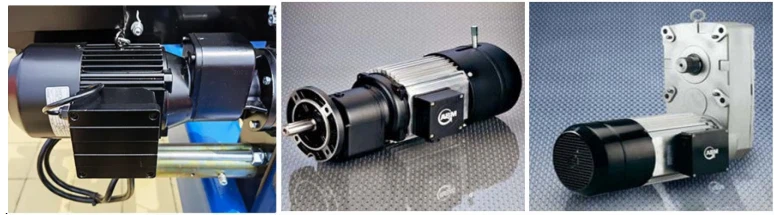
Motor (for lifting/lowering).
Gearbox (speed reduction).
Drum or Sprocket (for rope/chain winding).
Brake (safety lock).
B. Trolley (Hoist Carrier)
Moves the hoist horizontally along the girder.
Can be:
Manual push trolley (for light loads).
Motorized trolley (electric drive for precision).
C. Drive Mechanism (For Crane Movement)
Bridge Drives – Motors & gearboxes for moving the entire crane along the runway.
Trolley Drives – Motors for moving the trolley along the girder.
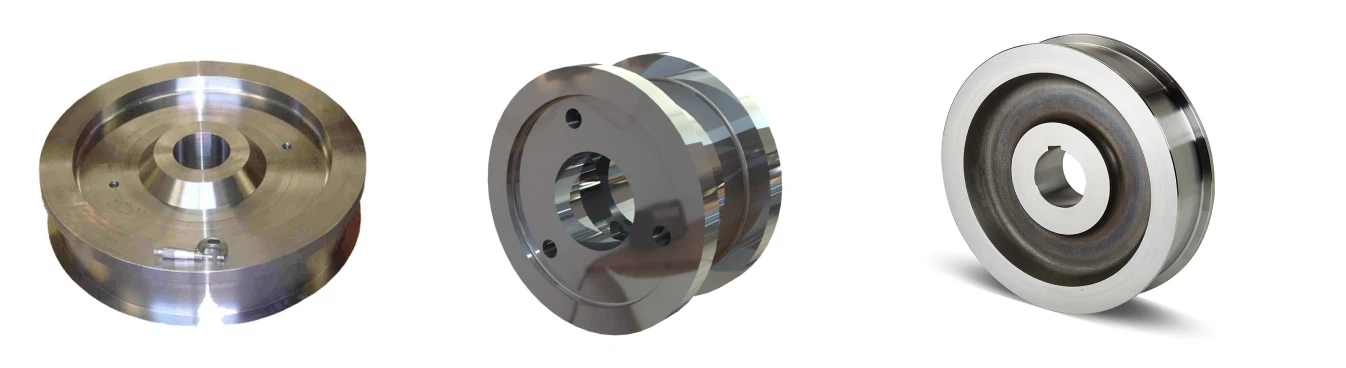
Wheels & Axles – Steel wheels (often with flanges) for smooth travel.
3. Electrical & Control Components
A. Power Supply System
Festoon System – Cable management for power & signals (sliding or trolley-based).
Conductor Bars – Alternative to festoon for cleaner power transmission.

B. Control System
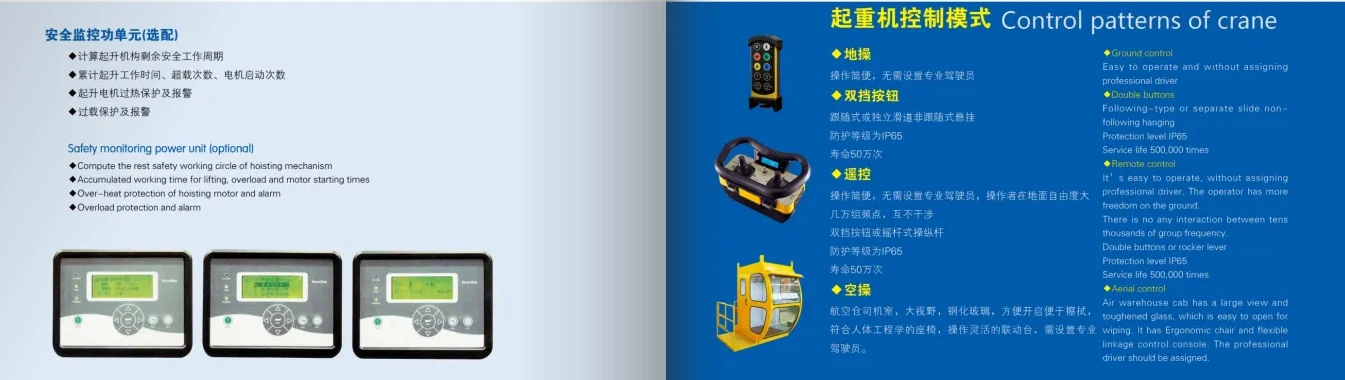
Pendant Control – Hanging push-button station (wired).
Radio Remote Control – Wireless operation (up to 100m range).
Cabin Control – Operator cab for large cranes.
C. Safety Devices
Limit Switches – Prevent over-travel (bridge, trolley, hoist).
Overload Protector – Blocks lifting beyond safe capacity.
Emergency Stop (E-Stop) – Instantly cuts power.
Anti-Collision Sensors – For multi-crane setups.
.
4. Optional & Accessory Components
Crane Cabin – Enclosed operator station for heavy-duty cranes.
Weighing System – Load cell for weight measurement.
Variable Frequency Drive (VFD) – Smooth acceleration/deceleration.
Magnetic or Vacuum Lifters – For handling steel, glass, etc.
Explosion-Proof Components – For hazardous environments.

5. Maintenance & Inspection Checklist
✔ Daily Checks – Wire ropes, hooks, brakes, limit switches.
✔ Weekly/Monthly – Lubrication, wheel alignment, electrical connections.
✔ Annual Inspection – Structural integrity, load testing.
SKETCH

Main technical

Advantages
Overhead cranes offer numerous benefits for industrial material handling, making them a preferred choice in many sectors:
1. High Load Capacity & Efficiency
Can lift from 1 ton to 500+ tons (double girder models).
Faster and more efficient than forklifts for heavy loads.
2. Space Optimization
Operates above floor level, freeing up workspace.
No ground obstructions (unlike gantry or jib cranes).
3. Precise & Smooth Handling
Variable Frequency Drives (VFDs) enable controlled acceleration/deceleration.
Ideal for assembly lines, precision manufacturing, and tight spaces.
4. Durability & Long Service Life
Built with high-grade steel for heavy-duty operations.
Requires less maintenance compared to mobile cranes.
5. Safety & Reduced Labor Risks
Minimizes manual lifting injuries.
Equipped with overload protection, limit switches, and emergency stops.
6. Customizable for Various Needs
Can be fitted with magnets, grabs, or vacuum lifters.
Available in explosion-proof, high-temperature, and corrosion-resistant variants.
7. Cost-Effective in the Long Run
Lower operational costs than forklifts for heavy loads.
Energy-efficient electric models available.
Application:
Overhead cranes are used across industries for lifting, moving, and positioning heavy materials. Key sectors include:
1. Manufacturing & Automotive
Moving engine blocks, presses, and assembly line components.
Used in automotive plants, steel fabrication, and machinery production.
2. Warehousing & Logistics
Loading/unloading containers, pallets, and bulk goods.
Common in distribution centers, ports, and freight terminals.
3. Construction & Heavy Engineering
Handling steel beams, concrete panels, and pre-cast structures.
Used in bridge construction and large-scale infrastructure projects.
4. Power Plants & Energy Sector
Lifting turbines, generators, and transformers during maintenance.
Critical in nuclear, hydro, and thermal power plants.
5. Mining & Metal Processing
Transporting raw ores, molten metal, and heavy machinery.
Used in foundries, smelters, and mining operations.
6. Shipbuilding & Aerospace
Moving ship hulls, aircraft wings, and large structural parts.
Essential in dry docks and aerospace manufacturing.
7. Paper, Cement & Chemical Industries
Handling heavy rolls of paper, cement bags, and chemical containers.
Often customized with corrosion-resistant coatings.
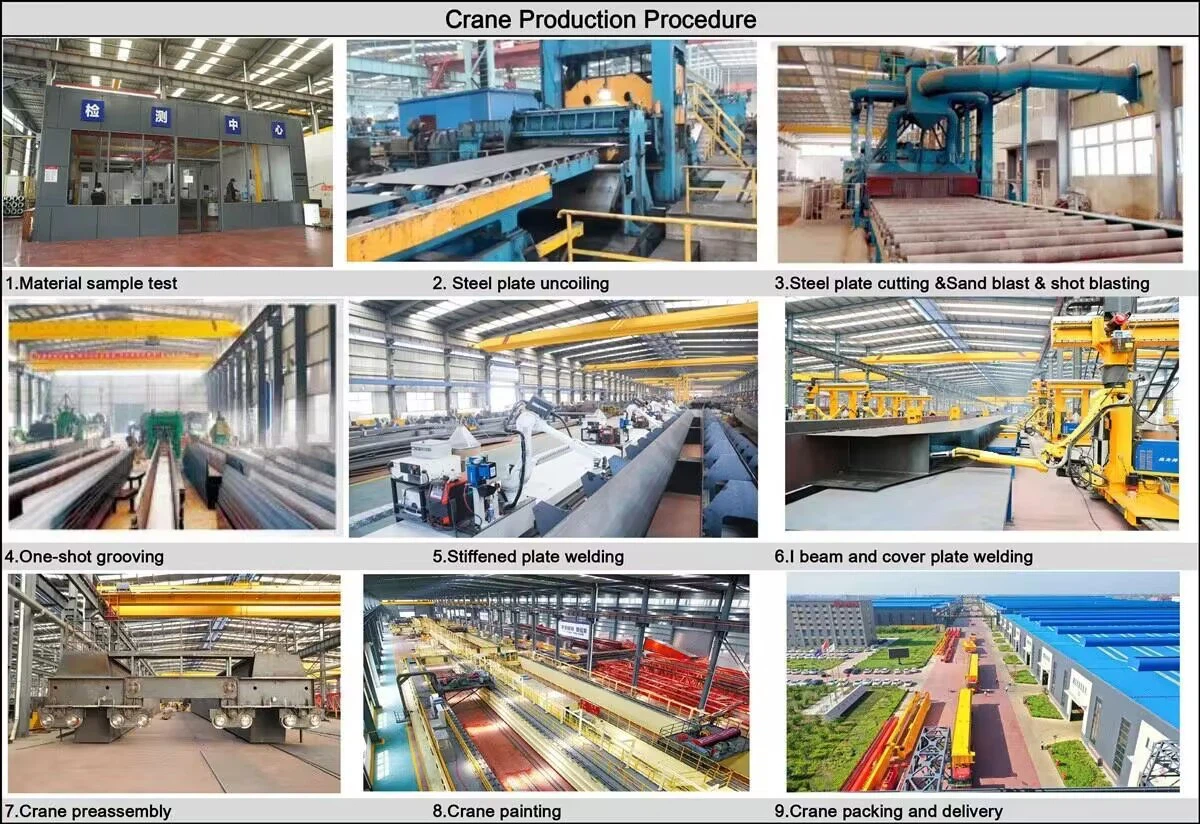
Crane production procedure
1. Order Confirmation & Design
Review customer requirements (capacity, span, lifting height, environment).
Engineering team develops detailed design drawings and 3D models based on FEM/DIN standards.
Confirm technical specs, materials, and delivery schedule with the client.
Obtain client approval on final design.
2. Material Procurement
Source high-quality steel plates, profiles, motors, electrical components, and accessories.
Verify material certifications (e.g., steel grade, motor specs).
Inspect and store raw materials properly to prevent damage.
3. Steel Fabrication
Cut, shape, and machine steel plates and profiles for main girders, end carriages, and trolley frames using CNC machines.
Weld components following strict welding procedures (e.g., MIG/MAG welding) with certified welders.
Perform non-destructive testing (NDT) such as ultrasonic or magnetic particle inspection on welds to ensure quality.
4. Main Beam Assembly
Assemble double girders with cross beams and stiffeners.
Align and weld main beam sections precisely.
Conduct dimensional checks to meet design tolerances.
Apply surface treatment (sandblasting and primer coating).
5. Component Assembly
Assemble end carriages, trolley frame, hoisting mechanism (hook block, drum, wire rope), motors, brakes, and gearboxes.
Fit mechanical components and test moving parts for smooth operation.
6. Surface Treatment & Painting
Clean all steel surfaces (blast cleaning).
Apply high-quality industrial coatings or paint systems, typically anti-corrosion primer plus finish paint (usually RAL colors).
Allow proper drying and curing to ensure durability.
7. Electrical Wiring & Control System Installation
Install motors, control panels, and electrical wiring according to electrical schematics.
Mount control devices such as pendant controls, limit switches, alarms, and sensors.
Integrate PLC or VFD drives as required.
Conduct insulation resistance and continuity tests.
8. Initial Testing & Quality Inspection
Perform no-load test runs for lifting, trolley travel, and bridge travel.
Verify all safety devices (limit switches, overload protection, emergency stop).
Inspect welds, alignments, and surface finish.
Document test results and corrections.
9. Load Testing
Perform load test according to FEM/ISO standards with a test load (usually 125% of rated capacity).
Observe crane behavior under load: lifting, lowering, travel motions, brakes.
Record results and certify load test completion.
10. Final Inspection & Packing
Conduct a final comprehensive inspection.
Package crane components securely for transport (especially if shipped in parts).
Prepare all documentation: manuals, certifications, test reports.
11. Delivery & Installation
Transport crane to customer site.
Assist or supervise installation and commissioning.
Provide operator training and maintenance guidance.
12. After-Sales Support
Offer maintenance, spare parts supply, and technical support.
Follow up on customer satisfaction and crane performance.
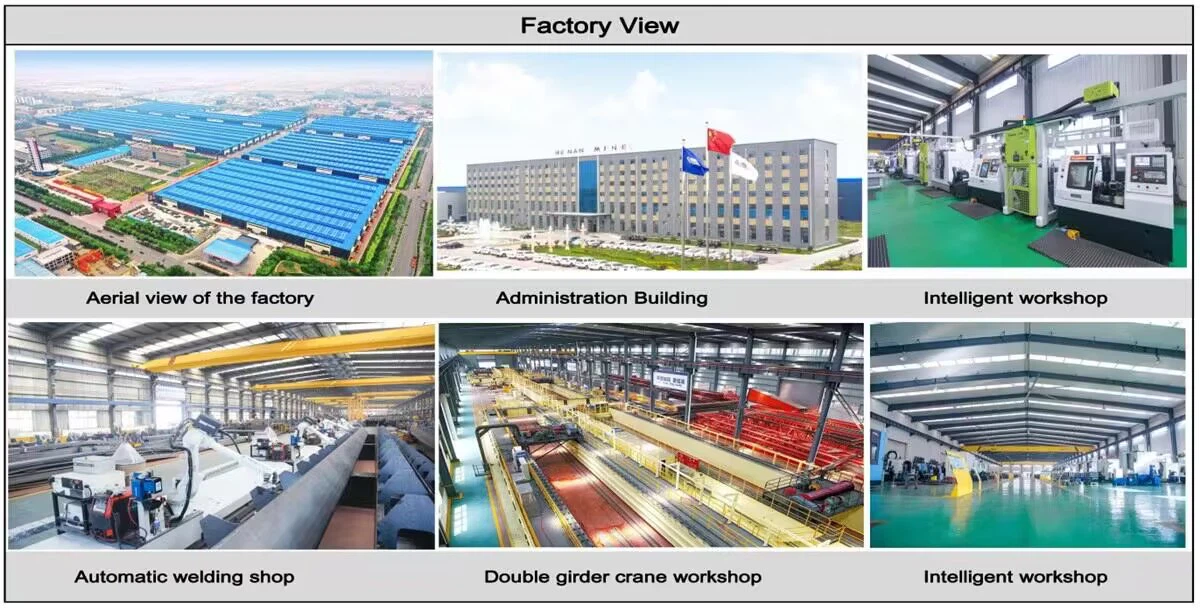
Workshop view:
The company has installed an intelligent equipment management platform, and has installed 310 sets (sets) of handling and welding robots. After the completion of the plan, there will be more than 500 sets (sets), and the equipment networking rate will reach 95%. 32 welding lines have been put into use, 50 are planned to be installed, and the automation rate of the entire product line has reached 85%.


Hot Tags: ohc overhead crane, China ohc overhead crane manufacturers, suppliers, factory, Double Girder Overhead Travelling Crane, Double Girder Overhead Crane
You Might Also Like


Send Inquiry