



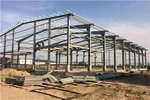
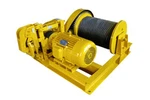


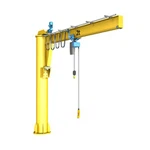


Double Girder Overhead Bridge Crane
Products Description
Advantages of Double Girder Overhead Cranes:
✔ Higher Load Capacity – Typically handles 5 tons to 500+ tons, suitable for heavy industries.
✔ Longer Spans – More stable for wide workshops (up to 35m+).
✔ Greater Hook Height – Extra space between girders allows deeper lifts.
✔ Durability & Rigidity – Better for frequent, heavy-duty use.
✔ Customization – Can integrate auxiliary hoists, grabs, magnets, or specialized attachments.
Selection Considerations:
Load Weight & Dimensions – Double girders are needed for very heavy or wide loads.
Workshop Height – If vertical space is limited, single girder may be better.
Duty Cycle – Frequent heavy lifting favors double girders.
Future Expansion – Double girders allow for higher capacity upgrades.
Comparison with Single Girder Cranes:
| Feature | Double Girder | Single Girder |
|---|---|---|
| Capacity | 5–500+ tons | 1–20 tons |
| Span | Up to 35m+ | Up to 25m |
| Hook Height | Higher (more space under girder) | Lower |
| Cost | Higher initial cost | More economical |
| Maintenance | More complex | Simpler |
| Durability | Heavy-duty | Light to medium-duty |
Lifting Capacity 5 – 50 tons (up to 100+ tons for heavy-duty)
Span 10 – 35 meters (adjustable)
Lifting Height 10 – 30 meters
Work Duty Class A6 (Heavy Duty) or A7 (Severe Duty)
Operating Speed - Hoisting: 5 – 20 m/min
-Trolley Travel: 20 – 45 m/min
- Crane Travel: 30 – 60 m/min
Voltage 380V/50Hz or 480V/60Hz (3-phase)
Protection Grade IP55 (dust/water-resistant)
Safety Devices Overload limiter, emergency stop, limit switches, collision avoidance.

Pictures & Components
A double girder overhead bridge crane consists of several key components that work together to enable heavy-duty lifting and precise load handling. Below is a detailed breakdown of its major parts:
1. Bridge Girders (Main Beams)
Function: Primary load-bearing structure spanning the crane bay.
Features:
Two parallel girders (box-type or I-beam) for high strength and rigidity.
Typically made of welded steel for capacities 5–500+ tons.
Designed to resist bending and torsional forces.

2. End Trucks (End Carriages)
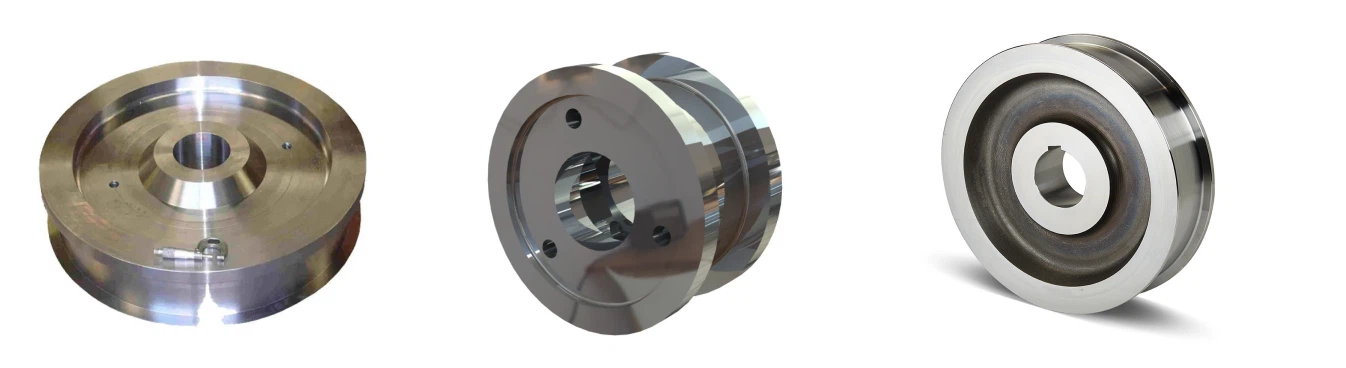
Function: Support the bridge girders and enable longitudinal movement along the runway.
Components:
Wheels: Steel or forged alloy wheels that ride on runway rails.
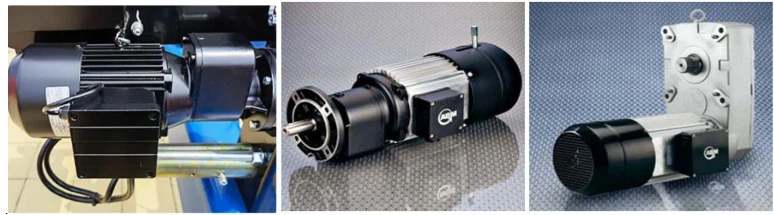
Drive Motors: Electric motors powering movement (variable speed options available).
Buffers/Bumpers: Shock absorbers to prevent damage from collisions.
 |
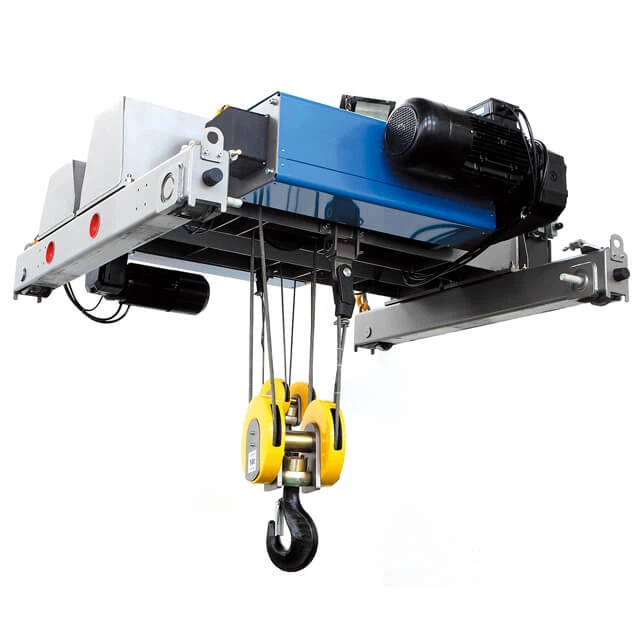 |
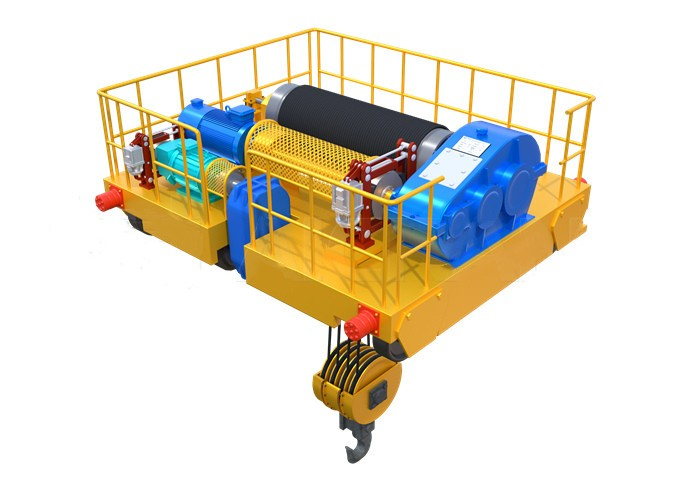
3. Hoist & Trolley Assembly
Function: Lifts, lowers, and moves loads horizontally across the girders.
Types:
Electric Wire Rope Hoist: Common for heavy loads (e.g., 10–500 tons).
Chain Hoist: Used for lighter loads or hazardous environments.
Trolley Components:
Trolley Frame: Supports the hoist and moves on rails along the girders.
Drive Mechanism: Motors and gears for cross-travel motion.
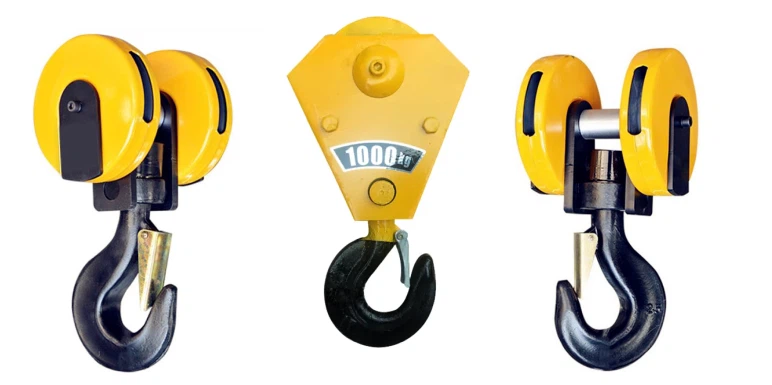
Hook Block: Attaches to the load (may include rotators or specialized hooks).
 |
 |
4. Runway System
Function: Provides the track for crane movement.
Components:
Runway Rails: Steel rails mounted on columns or freestanding supports.
Crane Beams: Support structures for rails (often reinforced for heavy loads).
Rail Clamps: Lock the crane in place during maintenance.
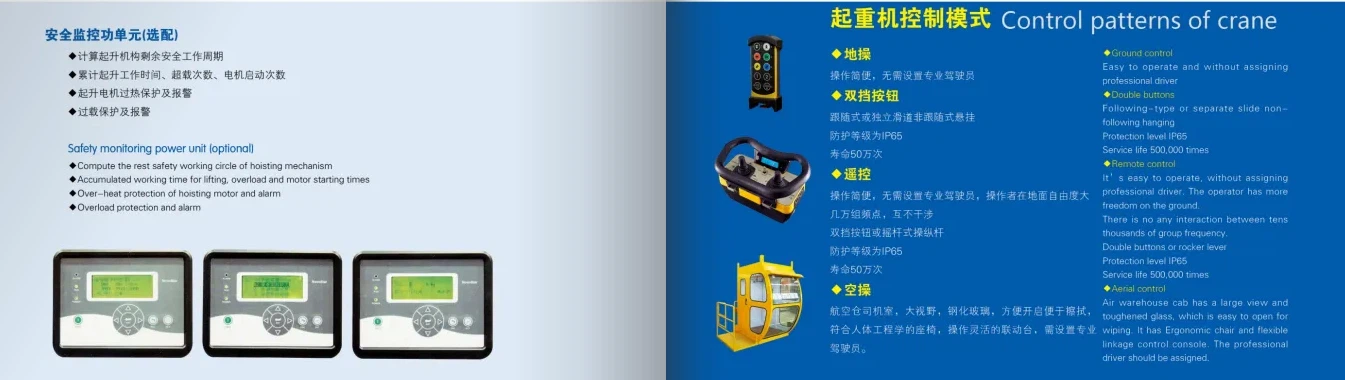
5. Electrical Systems
Function: Powers and controls crane operations.
Key Elements:
Main Power Supply: Festoon system, conductor bars, or cable reels.
Control Panel: Houses contactors, overload relays, and PLCs (if automated).
Operator Controls: Pendant station, radio remote, or cabin controls.
Limit Switches: Prevent over-travel of the hoist, trolley, or bridge.
6. Safety & Auxiliary Components
Safety Features:
Overload Limiters: Prevent lifting beyond rated capacity.
Emergency Stop (E-Stop): Instantly cuts power in emergencies.
Anti-Collision Systems: For multiple cranes in the same bay.
Optional Attachments:
Magnetic Lifters: For steel plates/scrap.
C-Hooks or Grapples: For coils, barrels, or irregular loads.
Cabin (Operator Station): For cranes with frequent or complex operations.

7. Braking Systems
Types:
Mechanical Brakes: Spring-applied, electrically released (failsafe design).
Regenerative Braking: Recovers energy in advanced systems.
Rail Brakes: For holding position on inclined runways.
.
8. Festoon or Conductor Bar System
Function: Delivers power to the trolley and hoist.
Options:
Cable Festoon: Flexible cables on a trolley system.
Enclosed Conductor Bars: Sliding contacts for cleaner power transmission.

9. Lubrication & Maintenance Systems
Automatic Lubricators: For wheels, gears, and bearings.
Inspection Platforms: For safe access to critical components.
Sketch

Main technical

Advantages
Double girder overhead cranes are preferred for heavy-duty industrial applications due to their superior strength, stability, and versatility. Here are their key advantages:
1. Higher Load Capacity
Can handle 5 to 500+ tons, making them ideal for heavy industries like steel, mining, and shipbuilding.
More robust than single-girder cranes, with better weight distribution.
2. Longer Span Capability
Suitable for wider bays (up to 35 meters or more) without intermediate support.
Reduced deflection under heavy loads, ensuring precise load positioning.
3. Greater Hook Height
The space between the two girders allows for a higher lift height, maximizing vertical workspace.
Beneficial in facilities with tall ceilings (e.g., foundries, power plants).
4. Enhanced Durability & Rigidity
Twin girders provide better torsional resistance, reducing sway during lifting.
Ideal for continuous, high-duty cycles (e.g., FEM Class M6-M8).
5. Customization & Flexibility
Can integrate auxiliary hoists, magnets, grabs, or specialized lifting attachments.
Options for explosion-proof, high-temperature, or outdoor use.
6. Smoother & More Precise Operation
Advanced controls (VFD drives, automation) allow variable speed and precise load placement.
Less vibration compared to single-girder cranes.
7. Longer Service Life
Built with heavy-duty materials (welded steel girders, forged wheels) for extended durability.
Easier maintenance access due to walkable platforms (on larger models).
Application:
These cranes are used in industries requiring heavy lifting, high precision, and reliability. Common applications include:
1. Steel & Metal Industry
Handling steel coils, slabs, molds, and molten metal.
Used in rolling mills, foundries, and forging plants.
2. Power Plants & Heavy Machinery
Lifting turbines, generators, transformers, and boilers.
Maintenance of hydroelectric and nuclear power stations.
3. Shipbuilding & Offshore
Moving ship sections, engines, and heavy machinery.
Used in dry docks and assembly yards.
4. Automotive & Aerospace
Handling press molds, vehicle chassis, and aircraft components.
Assembly line applications for heavy machinery transfer.
5. Mining & Cement Industry
Transporting large crushers, kilns, and bulk materials.
Used in mineral processing and bulk handling plants.
6. Warehousing & Logistics
Lifting heavy containers, machinery, and oversized loads.
Used in heavy equipment warehouses and freight terminals.
7. Paper & Pulp Industry
Handling large paper rolls (up to 50+ tons).
Used in paper mills and recycling plants.
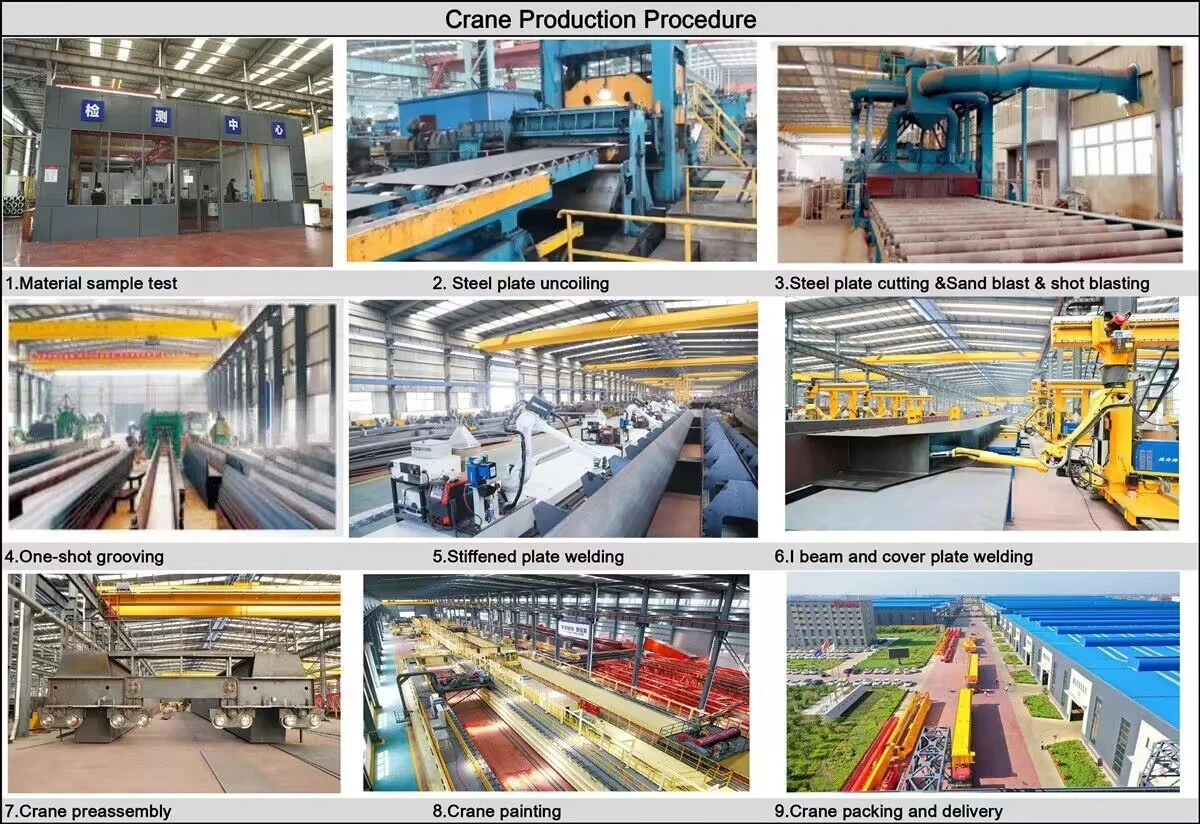
Crane production procedure
The production procedure for a 45-ton Double Girder Overhead Crane involves several key stages, from design to final testing. Below is a detailed step-by-step overview:
1. Design & Engineering
Load & Span Calculation: Determine crane capacity (45 tons), span (distance between rails), lifting height, and duty cycle (FEM/ISO classification).
Structural Design:
Main girders (box-type or truss design)
End carriages (for movement along rails)
Hoist and trolley mechanism
Electrical & Mechanical Design:
Motor power, gearbox, brakes, and control system
Wiring, pendant/radio remote control, or cabin operation
Software & Simulation: Finite Element Analysis (FEA) for stress testing.
2. Material Procurement
Steel Plates & Profiles: High-quality Q235B/Q345B steel for girders.
Electrical Components: Motors (hoist/travel), brakes, limit switches, and control panels.
Mechanical Parts: Wheels, gears, wire ropes, hooks, and bearings.
3. Fabrication of Main Components
A. Double Girder Fabrication
Cutting & Welding: CNC plasma cutting for precision; automatic submerged arc welding (SAW) for girders.
Assembly: Align and weld girders with end carriages.
Shot Blasting & Painting: Anti-rust treatment (primer + topcoat).
B. Hoist & Trolley Assembly
Hoist Mechanism:
45-ton electric wire rope hoist (or chain hoist).
Drum, motor, gearbox, and brake assembly.
Trolley Frame: Fabrication and mounting of wheels, motors, and rails.
C. End Carriages
Frame Construction: Welded steel with wheel assemblies.
Buffers & Bumpers: Installation for collision protection.
4. Electrical System Installation
Wiring & Controls:
Power supply (3-phase AC)
Variable Frequency Drives (VFDs) for smooth operation
Pendant/remote control system
Safety Devices:
Overload limiter
Limit switches (upper/lower travel)
Emergency stop
5. Assembly & Integration
Erection of Girders: Mount double girders onto end carriages.
Trolley & Hoist Installation: Position trolley between girders; secure hoist.
Rail Alignment: Ensure runway rails are level and parallel.
6. Testing & Quality Control
A. Factory Testing (Before Shipment)
No-Load Test: Run crane without load to check movement, brakes, and controls.
Load Test:
Static Test: 1.25 × rated load (56.25 tons) for 10 mins.
Dynamic Test: 1.1 × rated load (49.5 tons) with movements.
Safety Checks: Verify limit switches, emergency stop, and overload protection.
B. On-Site Testing (After Installation)
Re-run load tests under customer supervision.
7. Painting & Corrosion Protection
Final Coating: Weather-resistant paint (e.g., epoxy zinc-rich primer).
Markings: Labels for load capacity, warnings, and manufacturer info.
8. Packaging & Delivery
Disassembly (if needed): For easy transport.
Packaging: Waterproof wrapping for sea/land shipping.
9. Installation & Commissioning (On-Site)
Runway Beam Inspection: Ensure proper alignment and strength.
Crane Assembly: Reassemble girders, hoist, and electrical systems.
Final Testing: Conduct load tests and operator training.
Workshop view:
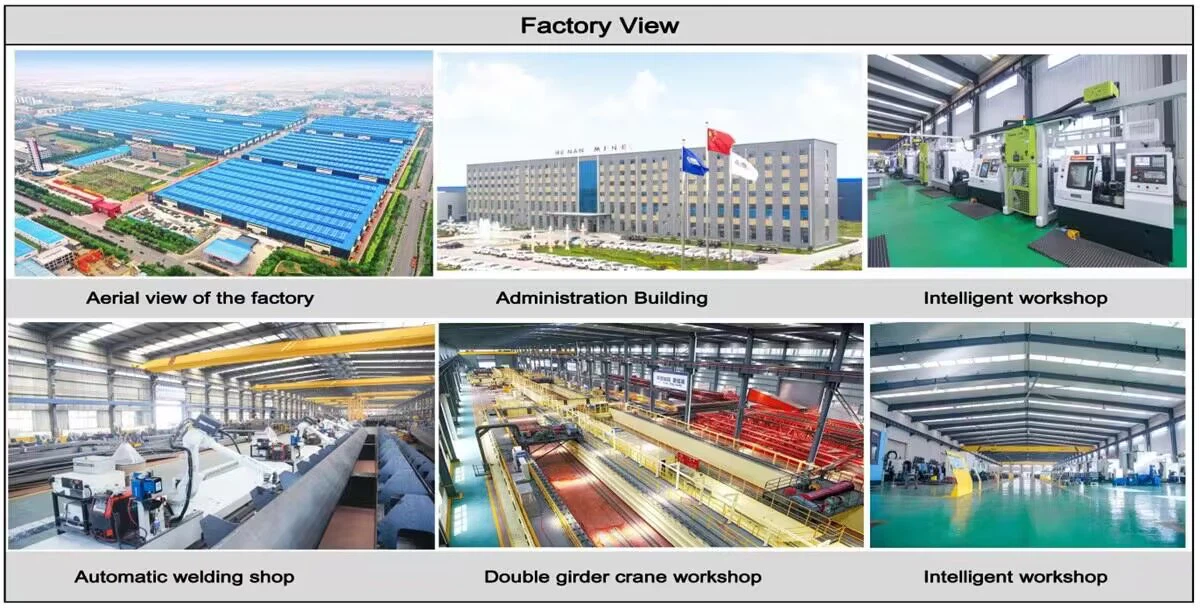
The company has installed an intelligent equipment management platform, and has installed 310 sets (sets) of handling and welding robots. After the completion of the plan, there will be more than 500 sets (sets), and the equipment networking rate will reach 95%. 32 welding lines have been put into use, 50 are planned to be installed, and the automation rate of the entire product line has reached 85%.


Hot Tags: double girder overhead bridge crane, China double girder overhead bridge crane manufacturers, suppliers, factory, Double Girder Overhead Travelling Crane, Double Girder Overhead Crane
Previous
QC Type Overhead CraneYou Might Also Like


Send Inquiry