







Hot Sale Double Girder Bridge Crane
Products Description
Double girder cranes are in high demand because they offer significant advantages over single girder models for heavy-duty and frequent-use applications.
Higher Lifting Capacity: This is the primary reason. They can handle loads from 5 tons to over 500 tons, far exceeding the typical capacity of single girder cranes.
Duty Cycle & Durability: Built for intensive, frequent use (Class A4-A7 duty cycles). They are ideal for 24/7 operations in mills, foundries, and shipping yards.
Greater Hook Height: The hoist trolley runs between the two girders, not under them. This design provides a much higher hook lift, maximizing the use of your building's height.
Versatility and Add-ons: They easily accommodate a wide range of attachments (magnets, grabs, vacuum lifters) and specialized trolleys.
Improved Stability: The two-girder design provides superior stability and reduced sway for heavy and long loads, enhancing safety and precision.
Longer Span: They are the preferred choice for wider building spans, maintaining rigidity and performance where a single girder would deflect.
Core Components:Bearing, Gearbox, Motor, Pump
Place of Origin:Henan, China
Warranty:1 Year
Weight (KG):2000 kg
Video outgoing-inspection:Provided
Machinery Test Report:Provided
Design:Double beam
Effectiveness:high efficiency
Operating speed:High speed operation
Stability:Anti-swing function
Color:Optional
Power Source:110V/220V/230V/380V/440V,customized
Span:7.5-31.5m
Pictures & Components
1.Main beam
The main beam (or girder) is the primary horizontal structural member that spans the work area. Its key functions are:
Support the Load: It directly supports the trolley and hoist, which carry the load.
Resist Bending: It must resist bending or deflection under the full rated load.
Provide Stability: It ensures the entire crane structure remains stable and rigid during movement.
2.Lifting System
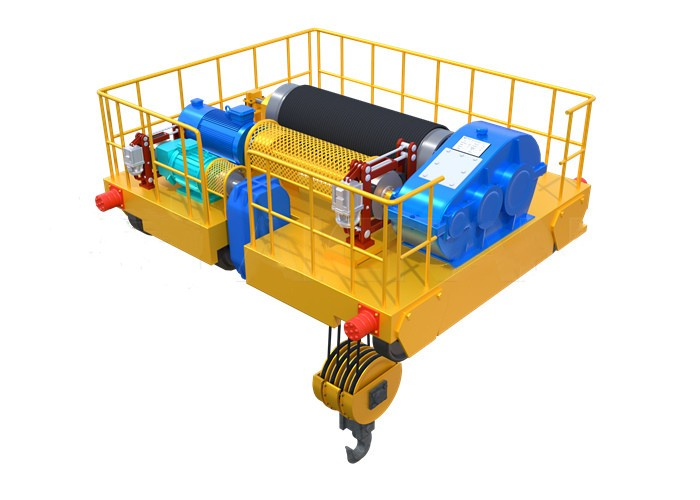
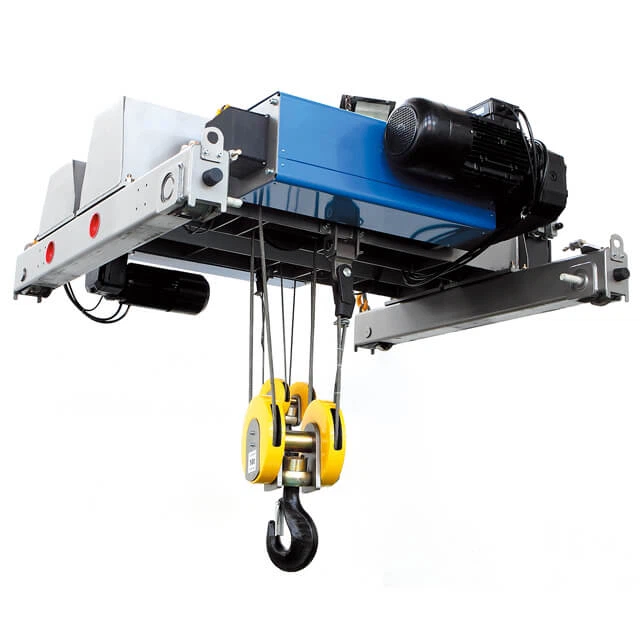
The trolley is the motorized carriage that carries the hoist unit and travels along the top of the double girders. This is a key differentiator from single girder cranes and allows for a much higher hook lift.
Trolley Frame: A robust steel structure that supports the hoist.
Trolley Wheels: Four or more wheels that run on rails mounted on top of the main girders.
Trolley Drive Motor(s): Powers the wheels for lateral movement. It can be a single motor with a drive shaft or separate motors on each side synchronized for straight travel.
 |
 |
3.End carriage
The primary functions of the end carriage are:
Support the Crane Bridge: It connects to the ends of the main girders and supports the entire weight of the crane structure, plus the lifted load.
Facilitate Longitudinal Travel: It houses the wheels, axles, and drives that allow the crane to move along the runway rails.
Transfer Load to the Runway: It distributes the massive concentrated loads from the crane into the runway rails and eventually to the building structure.
Ensure Alignment and Stability: A well-designed and manufactured end carriage keeps the crane square to the runway, preventing crabbing (skewing) and ensuring smooth operation.
 |
 |
4.Crane travelling mechanism
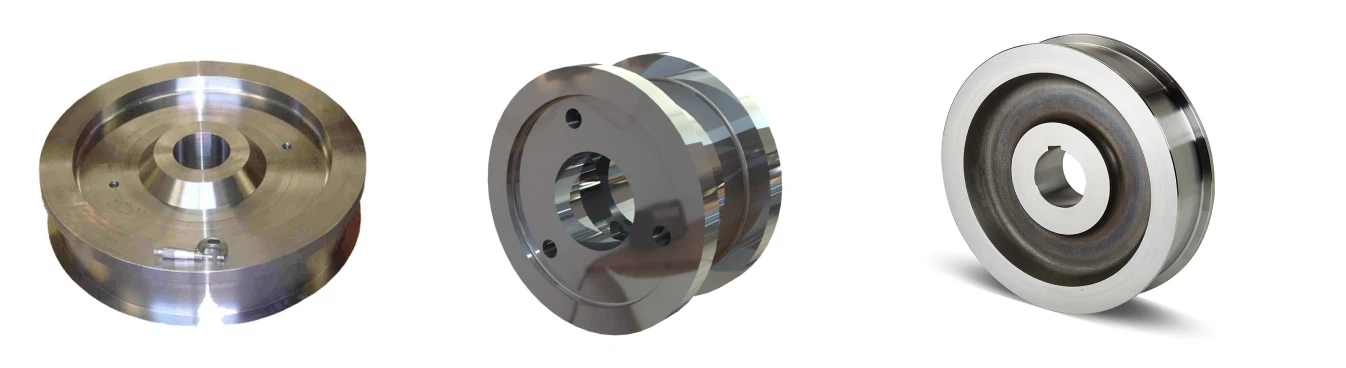
Drive Wheels: These are the powered wheels that propel the crane. In a double girder crane, there are typically multiple driven wheels to share the load and provide adequate traction.
Drive Motors: The electric motors that provide the power for movement.
Configuration: Double girder cranes almost always use a Dual-Drive system. This means there is one drive motor (and associated gearbox) on each end truck. This ensures balanced power application and prevents the crane from skewing.
Gearboxes (Reducers): These reduce the high speed of the electric motor to the low speed, high torque required to turn the heavy-duty wheels.
"Three-in-One" Drive Units: A very common and desirable feature in "hot sale" models. This is a pre-assembled, pre-tested unit that integrates the motor, brake, and gearbox into a single, compact module. It offers excellent performance, simplifies maintenance, and ensures compatibility of components.
Brakes: The travelling mechanism requires its own braking system to stop the massive crane and load safely.
Types: Can be a separate brake disc on the motor shaft or an integral part of the "three-in-one" drive unit.
Function: Prevents creep when the motor is off and provides a controlled, safe stop.
Idler (Non-Driven) Wheels: Not all wheels are necessarily driven. A common configuration is "50% drive," where half the total wheels are driven by motors, and the other half are free-rolling idler wheels that provide additional support.
Wheel Bearings: Heavy-duty, sealed roller bearings (like tapered roller bearings) are essential to handle the immense radial loads and ensure smooth rotation with minimal friction.
5.Trolley travelling mechanism
allows an operator to "inch" a multi-ton load into a precise location for assembly or placement.
Operator Control: A jerky or unresponsive trolley is difficult to control, leading to safety hazards and damaged goods. A high-quality mechanism provides predictable and smooth operation.
Minimized Wheel "Flanging": A well-aligned and synchronized trolley will not constantly rub its wheel flanges against the rail. This reduces wear, noise, and energy consumption.
Structural Protection: Smooth travel prevents dynamic shocks and jarring movements that can transfer stress into the main girders and the entire crane structure.
7.Crane Hook
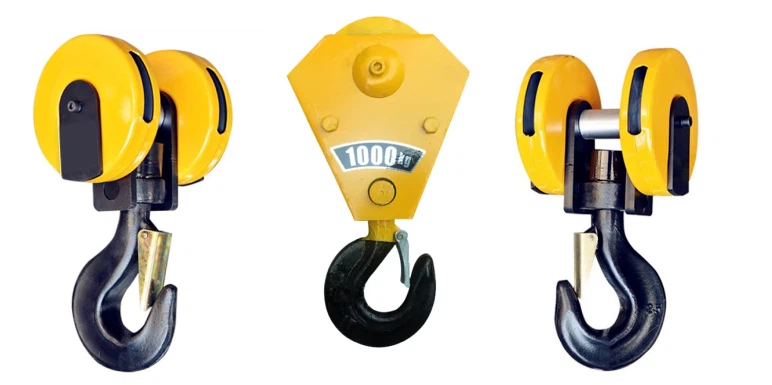
Throat Opening: The distance from the shank to the tip of the hook. It determines the maximum size of lifting slings or hardware that can be used.
Shank: The straight portion at the top. It has a threaded section or a bore for mounting to the hook block.
Saddle (Belly): The curved, load-bearing section. It is designed to evenly distribute the load's stress. The radius is carefully engineered to prevent sharp bends in slings.
Tip (Point): The end of the hook. It is often slightly turned in (a "safety latch" profile) to help retain slings.
8.Motor
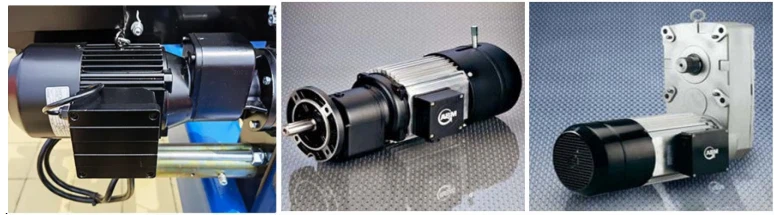
A double girder crane uses multiple motors, each with a specific role:
Hoist Motor: Powers the lifting and lowering of the load. This is the most critical motor in terms of power, duty cycle, and control.
Trolley Travel Motor: Powers the lateral movement of the trolley across the bridge girders.
Bridge Travel Motor(s): Powers the longitudinal movement of the entire crane along the runway rails. Typically, there are two of these (dual-drive), one on each end carriage.

.
9.Sound and light alarm system & limit switch
Sound and Light Alarm System
This is the crane's primary warning system, alerting personnel in the area of crane movement or potential danger.
Purpose:
To provide clear, unambiguous audible and visual warnings before and during crane operation to prevent accidents involving personnel.
Limit Switches
These are automatic safety devices that cut off power to a motor when a moving part reaches a predetermined travel limit. They are the primary defense against over-travel and collisions.

10.Safety Devices
1. Overload Protection
Overload Limit Switch (Load Limiter):
Function: The most critical device for preventing structural failure. It automatically cuts off power to the hoist motor if the lifted load exceeds the crane's rated capacity (typically 105-110%).
How it Works: Uses a strain gauge sensor mounted on the sheave pin or the rope anchorage to measure the actual load. It is highly accurate and prevents the most dangerous overloading scenarios.
2. Movement Limit Protection
Hoist Upper/Lower Limit Switches:
Function: Automatically stops the hoist at its maximum safe upper and lower positions.
Importance: Prevents "two-blocking" (the hook block crashing into the drum), which can snap the wire rope, and prevents the block from crashing onto the floor.
End Travel Limit Switches (for Bridge and Trolley):
Function: Cuts power to the travel motors when the bridge or trolley approaches the end of its runway. Prevents collisions with end stops and potential derailment.
3. Collision Avoidance
Anti-Collision System:
Function: Used in applications where two or more cranes operate on the same runway. It uses sensors (laser, ultrasonic, or radio) to detect the proximity of another crane and automatically applies the brake to maintain a safe distance or prevent a collision.
Buffer (Bumper) & End Stop:
Function: The final physical barrier. High-strength rubber or polyurethane buffers are mounted on the bridge ends. Fixed steel end stops are installed at the very ends of the runway. They absorb the kinetic energy in case of an over-travel incident.
4. Emergency Stopping
Emergency Stop Button (E-Stop):
Function: A highly visible, red mushroom-head button that, when pressed, immediately cuts all power to the crane's motors. They are located at multiple points: on the pendant control station, on the radio remote (if used), and often on the crane itself.
Motor Brakes:
Function: Each motor (hoist, trolley, bridge) has its own fail-safe brake that engages automatically when power is cut, stopping movement.
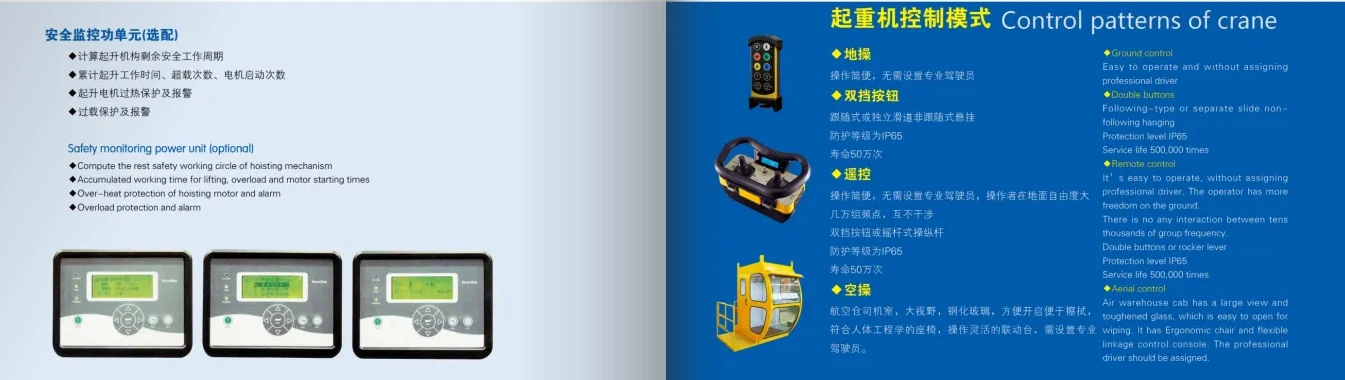
11.Control Mode
1. Pendant Control (Push Button Station)
This is the most common and traditional control method.
How it Works: The operator uses a wired control unit (the pendant) that hangs from the crane. The pendant has clearly marked buttons for all crane functions: Hoist Up/Down, Trolley Left/Right, and Bridge Forward/Backward.
2. Radio Remote Control
This is the modern and increasingly popular choice for "hot sale" cranes, offering unparalleled freedom of movement.
How it Works: The operator carries a portable, battery-powered transmitter (remote control). Commands are sent via a secure radio signal to a receiver unit mounted on the crane.
3.Cab Control (Operator's Cab)
This is the classic solution for very large, heavy-duty cranes in continuous operation.
How it Works: The operator sits in an enclosed or open cab that is physically attached to and moves with the crane. The cab is equipped with levers, joysticks, and a full control panel.
12.Sketch

Main technical

Advantages
1. Superior Lifting Capacity & Heavy-Duty Performance
Higher Capacity: This is the primary advantage. Double girder cranes are designed to handle much heavier loads, typically from 5 tons up to 500 tons or more. Single girder cranes are generally limited to lower capacities (usually up to 20 tons).
Robust Construction: The dual-beam design distributes the load more effectively, allowing them to withstand the stresses of heavy loads and intensive use without deflection or fatigue.
2. Exceptional Hook Height & Vertical Space Optimization
Maximized Lift: The hoist and trolley are mounted on top of and between the two girders, not underneath them. This design provides a significantly higher hook lift.
More Usable Space: By maximizing the vertical travel of the hook, you can fully utilize the height of your building, which is crucial for handling tall loads or operating in facilities with high ceilings.
3. Enhanced Stability & Rigidity
Reduced Sway & Vibration: The two girders, connected by a sturdy end truck at each end, create a highly rigid box structure. This greatly reduces sway and vibration when moving heavy or long loads, leading to:
Safer Operation
More Precise Load Positioning
Less wear and tear on the crane structure and runway.
4. Ideal for Intensive Duty Cycles & Long Spans
Built for Demanding Use: Double girder cranes are rated for FEM M5-M8 / CMAA Class D-F duty cycles, meaning they are engineered for continuous, severe, or 24/7 operation common in steel mills, foundries, and shipping ports.
Longer Spans: They are the clear choice for wider building spans. The double girder design maintains its rigidity over long distances where a single girder would bend or sag unacceptably.
5. Greater Versatility and Customization
Accommodates Larger Hoists: The space between the girders can accommodate larger, more powerful, and specialized hoists.
Easy Integration of Attachments: They can easily be fitted with a wide range of below-the-hook attachments like magnets, grabs, and vacuum lifters.
Additional Features: It's easier to integrate features like a maintenance walkway (catwalk) along the bridge, cabs for operators, and auxiliary hoists.
6. Improved Durability & Longer Service Life
Over-engineered for Reliability: The heavy-duty construction, use of high-grade materials, and robust components (wheels, bearings, drives) are designed to withstand decades of demanding service.
Lower Lifetime Cost: While the initial investment is higher than a single girder crane, the longer service life and reduced maintenance requirements often result in a lower total cost of ownership.
Application:
1. Steel & Metal Production
This is the classic domain of the double girder crane. They are built for the extreme demands of this industry.
Applications: Handling raw steel coils, slabs, billets, and finished products.
Why it's Used: Extreme capacities (often 50+ tons), ability to use C-hooks and magnets, and durability in high-temperature environments.
2. Automotive Manufacturing
Precision and reliability are key in the fast-paced automotive sector.
Applications: Moving car body assemblies, stamping presses, engines, and large sub-assemblies along the production line.
Why it's Used: High hook height for handling tall assemblies, precise control for delicate positioning, and ability to work in intensive, multi-shift operations.
3. Power Generation
Lifting massive, high-value, and critical components.
Applications: Installation and maintenance of turbines, generators, transformers, and boilers in hydro, thermal, and nuclear power plants.
Why it's Used: Ultra-high lifting capacity (hundreds of tons), exceptional stability for priceless loads, and often custom-engineered for specific projects.
4. Heavy Machinery & Fabrication Workshops
The workshop workhorse for building and moving large equipment.
Applications: Machining, assembling, and loading excavators, agricultural equipment, machine tools, and industrial presses.
Why it's Used: Versatility to handle various load shapes and weights, robustness for daily use, and the ability to serve multiple work bays over a long span.
5. Shipping & Logistics Ports
Moving the world's cargo efficiently and reliably.
Applications: Loading and unloading heavy cargo from ships and trains within port-side warehouses and container freight stations.
Why it's Used: High duty cycle capability, compatibility with spreader beams and container lifts, and resilience in demanding, all-weather conditions.
6. Aerospace Industry
Where precision is measured in millimeters and loads are both heavy and delicate.
Applications: Handling aircraft wings, fuselage sections, and engine modules during assembly.
Why it's Used: Superior control (often with VFDs), minimal sway, and the ability to perform slow, precise movements for alignment.
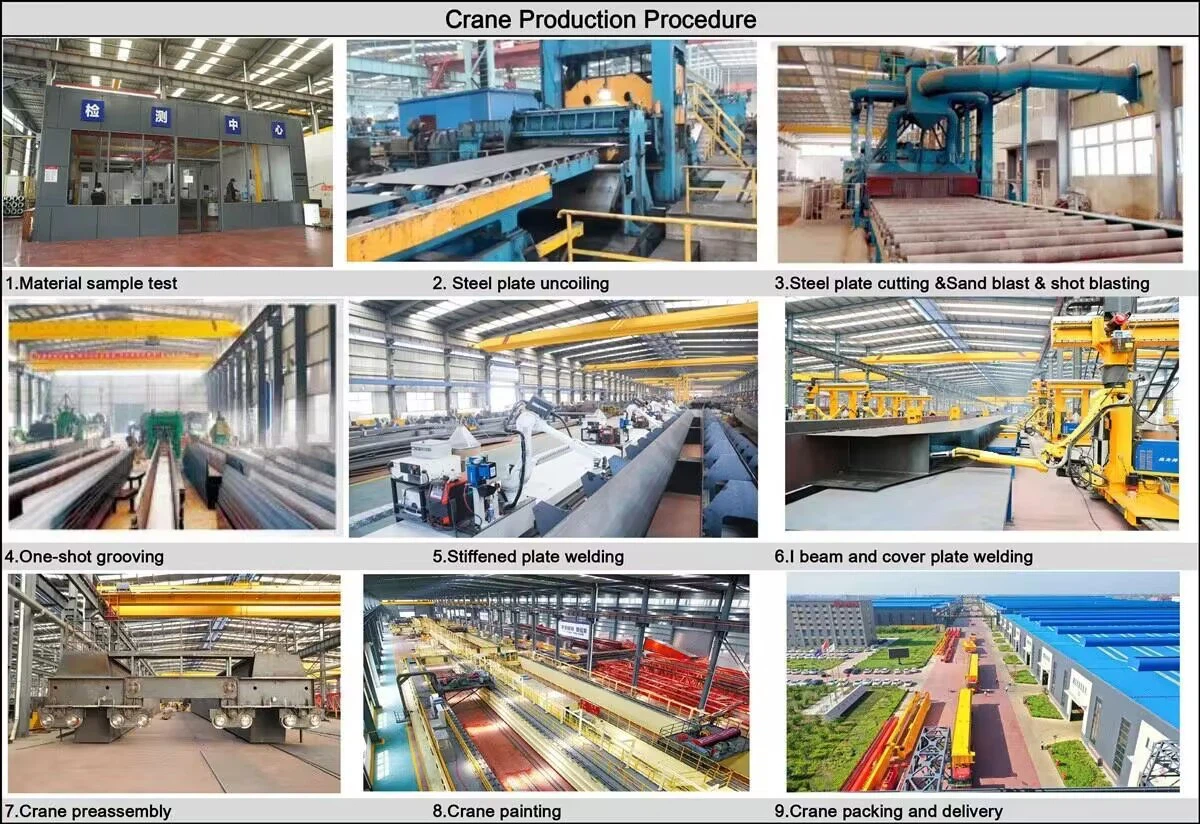
Crane production procedure
Phase 1: Design & Engineering
This is the foundational phase before any metal is cut.
Customer Requirement Analysis: Engineers review the client's specifications: capacity, span, lifting height, duty cycle, control mode, and operating environment.
Structural Design & Calculation: Using specialized software (like AutoCAD, SolidWorks, or FEM-specific tools), the team designs the main girders, end carriages, and trolley. They perform calculations for:
Strength: To ensure the crane can handle the rated load plus the safety factor.
Stiffness: To calculate and design for pre-camber, ensuring deflection is within standards (e.g., Span/800).
Stability: To ensure the crane remains stable under all load conditions.
Component Selection: All motors, gearboxes, brakes, wire ropes, bearings, and electrical components are selected from approved suppliers based on the design requirements.
Creation of Manufacturing Drawings: Detailed workshop drawings, part lists, and electrical schematics are generated to guide the production floor.
Phase 2: Raw Material & Component Procurement
Steel Procurement: Prime quality steel plates (e.g., Q235B, Q345B), profiles, and forgings for wheels and axles are sourced.
Component Procurement: All purchased parts are ordered-hoists, motors, "three-in-one" drive units, electrical panels, cables, buffers, etc.
Phase 3: Main Steel Fabrication
This is the core of the physical production.
Step 3.1: Main Girder Fabrication
Cutting: Steel plates are cut to the required size and shape using CNC plasma or flame cutting machines for precision.
Pre-Assembly & Welding: The web and flanges of the girder are assembled. Critical internal stiffeners (diaphragms) are welded in place at precise intervals.
Submerged Arc Welding (SAW): The long longitudinal seams of the girders are welded using automated SAW. This process produces deep, uniform, and high-strength welds that are crucial for integrity.
Pre-Cambering: The girder is intentionally cambered (bent upward) during fabrication. This is often achieved by strategically sequencing the welds or using a pre-cambering jig. The camber value is constantly verified.
Stress Relieving: For large or high-capacity cranes, the entire girder may be heat-treated in an annealing furnace to relieve internal stresses from welding, preventing future distortion.
Shot Blasting & Priming: The finished girder is shot-blasted to remove rust and mill scale, creating a perfect surface profile for paint adhesion. A primer coat is immediately applied to prevent corrosion.
Step 3.2: End Carriage Fabrication
The end carriage frames are fabricated from steel plates and profiles.
Machining of Bearing Bores: The holes for the wheel axles are precision-bored on a CNC machine to ensure perfect alignment. Misalignment here causes premature wheel wear and crabbing.
Wheel & Axle Assembly: The forged steel wheels are mounted onto their axles with high-quality tapered roller bearings. This assembly is then fitted into the machined end carriage.
Phase 4: Trolley Fabrication & Hoist Integration
The trolley frame is fabricated, and its wheel bases are machined for alignment.
The trolley travel drive unit ("three-in-one" motor, brake, reducer) is installed.
The main hoist unit is mounted onto the trolley frame. This may be a pre-assembled unit purchased from a specialist hoist manufacturer.
Phase 5: Sub-Assembly & Pre-Testing
Before the final assembly, key subsystems are tested.
Drive Unit Testing: The bridge and trolley travel motors are run to check for noise, vibration, and proper brake function.
Hoist Testing: The hoist is tested independently (without load) to verify motor rotation, brake operation, and limit switch functionality.
Electrical Panel Testing: The main control panel is wired and tested to ensure all contactors, relays, and safety devices function correctly.
Phase 6: Final Assembly in the Factory
The crane is assembled in a dedicated bay for final integration and inspection.
Bridge Assembly: The two main girders are connected to the end carriages to form the complete bridge. The squareness and diagonal dimensions are meticulously checked.
Trolley Installation: The trolley is placed onto the rails on top of the main girders.
Electrical System Integration: All wiring is completed. The pendant station or radio remote is connected and tested. Festoon systems or conductor bars are installed.
Safety Device Installation: All limit switches (hoist upper/lower, end travel), buffers, and alarm systems are installed and adjusted.
Phase 7: Factory Acceptance Testing (FAT)
This is a critical quality gate before disassembly for shipping.
No-Load Test: The crane is operated through all functions (hoist, trolley, bridge travel) to ensure smooth movement, proper alignment, and correct control response.
Static Load Test: A test load of 125% of the Rated Capacity is lifted and held just above the ground. The crane is inspected for any deformation, and the brakes are checked for their holding capability.
Dynamic Load Test: A test load of 110% of the Rated Capacity is lifted and moved through all motions to verify performance under real operating conditions.
Safety Function Test: Every safety device is tested:
Hoist upper limit switch is triggered to stop the hoist.
Travel limit switches are activated to stop the bridge/trolley.
Emergency stop buttons are pressed to ensure they cut all power.
The overload limiter is tested (if applicable).
Phase 8: Dismantling, Packaging & Shipping
After passing FAT, the crane is carefully dismantled into transportable pieces (girders, end carriages, trolley, electrical panels).
All components are professionally packaged and protected against damage during transit.
The crane is shipped to the customer's site, ready for installation and commissioning.
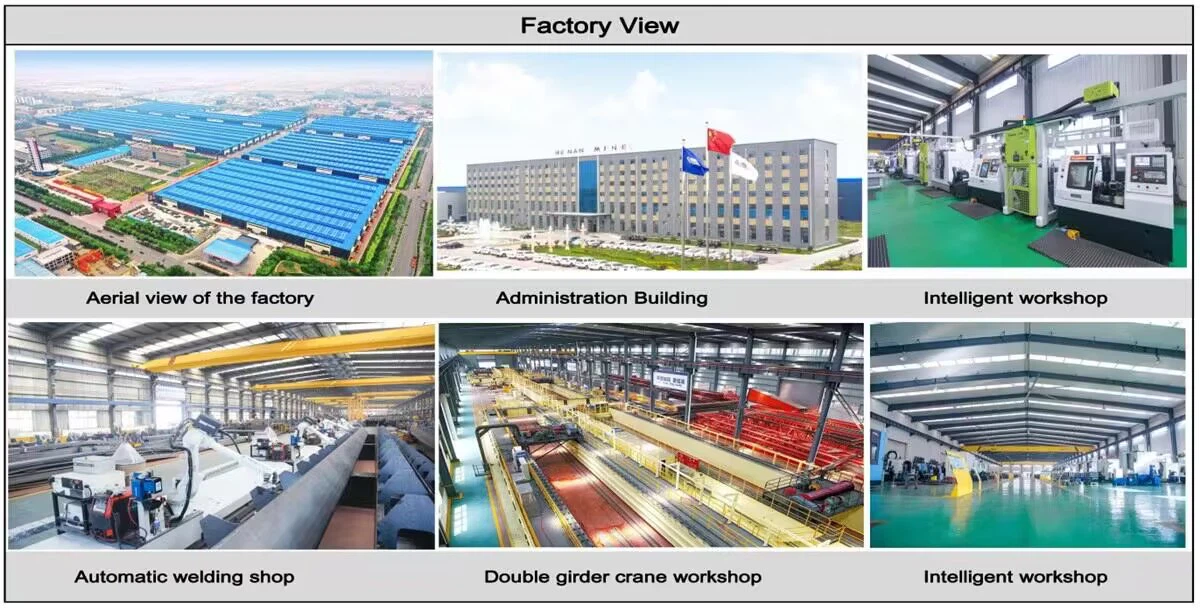
Workshop view:
The company has installed an intelligent equipment management platform, and has installed 310 sets (sets) of handling and welding robots. After the completion of the plan, there will be more than 500 sets (sets), and the equipment networking rate will reach 95%. 32 welding lines have been put into use, 50 are planned to be installed, and the automation rate of the entire product line has reached 85%.


Hot Tags: hot sale double girder bridge crane, China hot sale double girder bridge crane manufacturers, suppliers, factory, Double Girder Overhead Crane, Double Girder Overhead Travelling Crane
You Might Also Like


Send Inquiry