










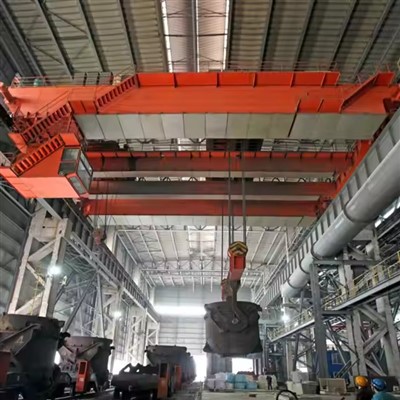
QDY Double Girder Overhead Crane
Products Description
What is a QDY Double Girder Overhead Crane?
A QDY Double Girder Overhead Crane is a specific type of electric overhead traveling (EOT) crane where "QDY" typically stands for "Electric Hook, Double Girder, European Style" in Chinese crane classification standards. It represents a modern, efficient double girder crane design that often incorporates European design principles, focusing on optimized weight, performance, and safety features.
Think of it as a high-performance, versatile double girder crane that blends robust lifting capacity with a more refined and efficient structural design compared to traditional heavy-duty box girder cranes.
Advantages of QDY Double Girder Overhead Cranes
Optimized Performance-to-Weight Ratio: The European-inspired design provides excellent strength and performance while minimizing structural weight, which can reduce costs on supporting structures.
Superior Hook Height: The compact trolley and hoist design maximizes the available lifting height under the hook.
Energy Efficiency: Modern components and optimized design lead to lower operating costs.
Smooth and Precise Operation: Advanced control systems allow for excellent load positioning accuracy.
Enhanced Safety: Comprehensive safety systems protect both personnel and equipment.
Versatility: Suitable for a wide range of industrial applications from manufacturing to warehousing.
Comparison: QDY vs. Traditional Double Girder Cranes
| Feature | QDY Double Girder | Traditional Double Girder |
|---|---|---|
| Design Philosophy | Optimized, European-style | Conventional, often heavier |
| Weight | Lighter for same capacity | Typically heavier |
| Hook Height | Maximum for given building height | Good, but often less optimized |
| Control Systems | Typically more advanced | Can be basic or advanced |
| Ideal For | Modern, efficiency-focused facilities | All industrial applications |
Conclusion: The QDY Double Girder Overhead Crane represents a modern approach to overhead lifting technology. It combines the inherent strength of a double girder design with optimized engineering principles to deliver a crane that offers excellent performance, safety, and efficiency. This makes it an ideal choice for businesses looking for a high-quality, reliable lifting solution that maximizes performance while potentially reducing overall costs.
Core Components:Bearing, Gearbox, Motor, Pump
Place of Origin:Henan, China
Warranty:1 Year
Weight (KG):2000 kg
Video outgoing-inspection:Provided
Machinery Test Report:Provided
Design:Double beam
Effectiveness:high efficiency
Operating speed:High speed operation
Stability:Anti-swing function
Color:Optional
Power Source:110V/220V/230V/380V/440V,customized
Span:7.5-31.5m

Pictures & Components
Here is a detailed breakdown of the components of a QDY Double Girder Overhead Crane.
1. Primary Structural System (The Framework)
Double Main Girders: The primary horizontal beams that form the bridge.
Optimized Design: Typically fabricated box girders or reinforced I-beams designed using European principles for maximum strength-to-weight ratio.
Lightweight Construction: Engineered to be lighter than traditional double girders while maintaining superior strength and rigidity.
End Trucks: The structures at each end of the bridge that house the wheels and drive mechanisms.
Compact Design: European-style end trucks often feature a more streamlined design.
Precision Machining: Accurate machining ensures smooth travel and alignment.
Runway System:
Runway Beams: Heavy I-beams or box sections supported by building columns.
Running Rails: Steel rails mounted on top of the runway beams.
Crane Buffers: Shock-absorbing devices at runway ends.
 |
 |
2. Lifting & Travel System (The Workhorse)
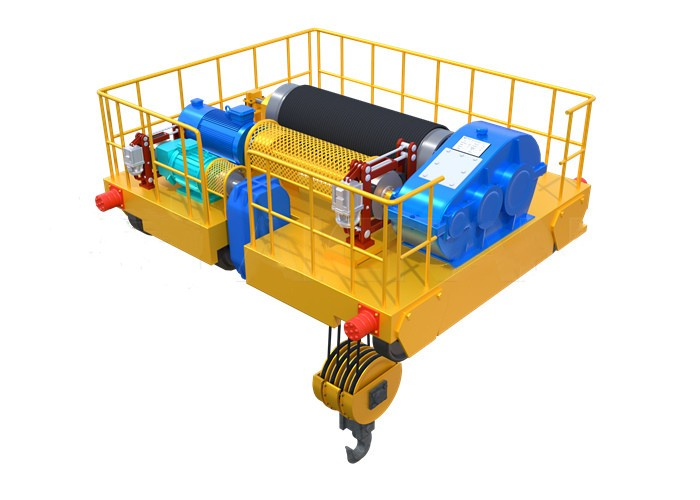
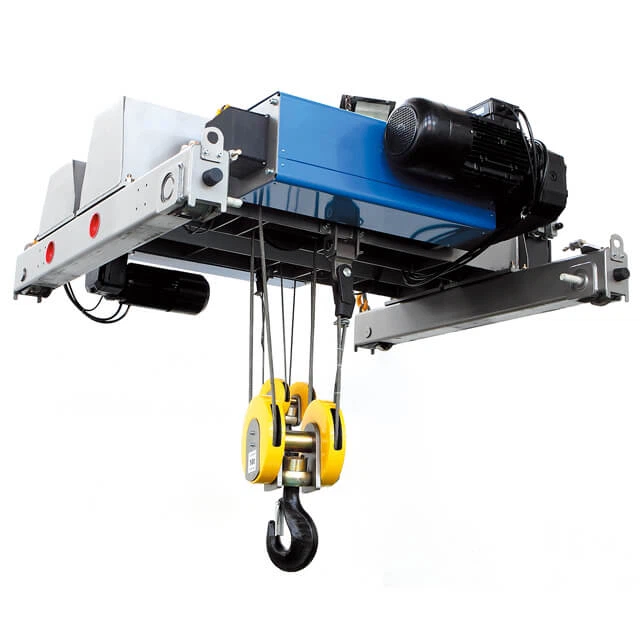
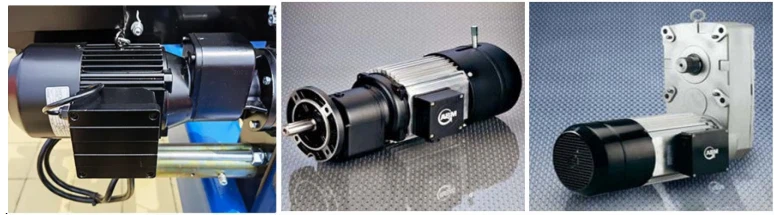
Compact Electric Hoist Unit:
High-Efficiency Motor: Electric motor designed for optimal performance in QDY applications.
Precision Gearbox: Provides smooth power transmission and speed reduction.
Wire Rope Drum: Precision-machined for even rope spooling.
Multiple Brakes: Primary and secondary braking systems.
 |
 |
Low-Profile Trolley:
Compact Frame: Designed to minimize height while maintaining strength.
Trolley Wheels & Drive: Precision wheels and separate drive motor for transverse movement.
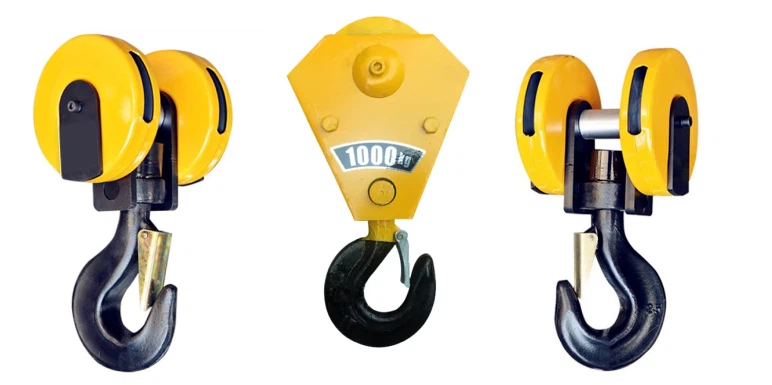
Hook Block: Optimized design with multiple sheaves for mechanical advantage.
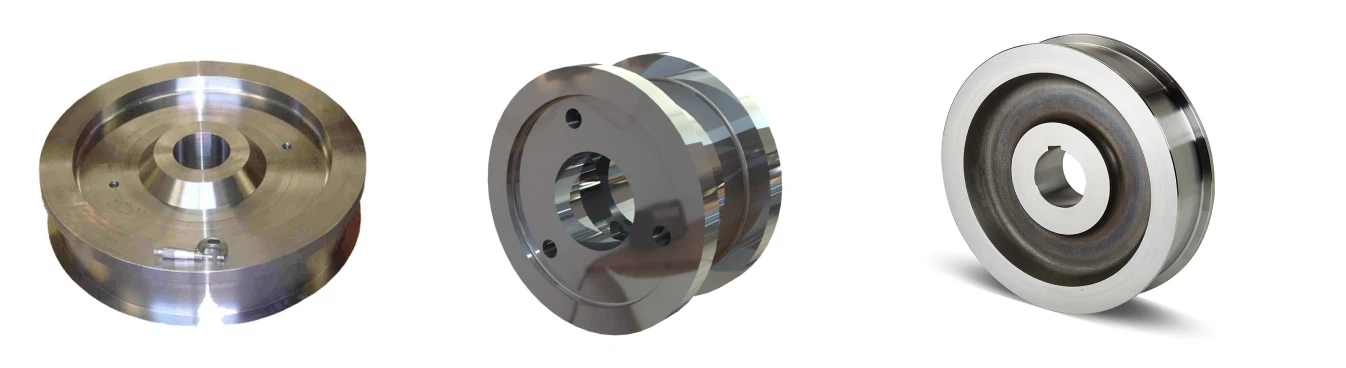
Bridge Travel Drives:
High-Efficiency Motors: Motors mounted on end trucks for crane propulsion.
Precision Wheels: Flanged wheels that run on runway rails.
3. Power, Control & Motion Systems (The Nerves)
Power Supply System:
Conductor Bar System: Enclosed power bars running parallel to runway.
Festoon System: Trolley and track system for flexible power cables.
Control Interface:
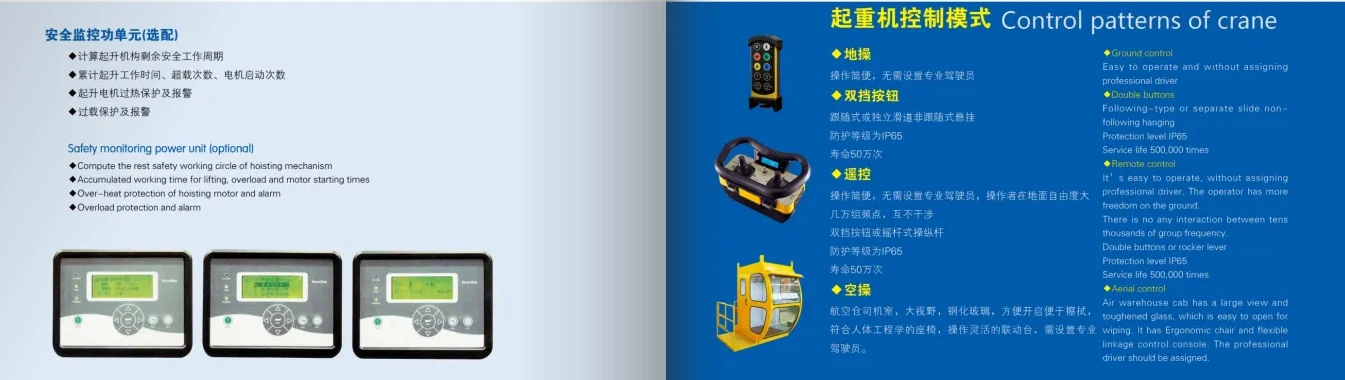
Pendant Station: Ergonomic hanging control box.
Radio Remote Control: Wireless operation with advanced features.
Operator's Cab: Optional climate-controlled cabin.
Control Panel:
Programmable Logic Controller (PLC): Advanced control system.
Variable Frequency Drives (VFDs): Standard feature for all motions.
Protection Devices: Overload relays and circuit breakers.
4. Critical Safety Systems (The Lifeline)
Load Moment Indicator (LMI): Continuously monitors load weight and crane stability.
Limit Switches:
Hoist Upper/Lower Limit: Prevents over-hoisting.
Travel Limits: Stops crane and trolley at limits.
Braking Systems:
Hoist Brake: Automatic load-holding brake.
Travel Brakes: Electrically controlled brakes on all motions.
Anti-Collision System: Optional system for multiple crane applications.
Emergency Stop Systems: Multiple E-stop buttons at strategic locations.
Warning Devices: Horns and lights for crane movement alerts.

5. European Design Features
Optimized Steel Structures: Lighter weight with maintained strength
Compact Dimensions: Better space utilization
Enhanced Corrosion Protection: Superior paint systems
Modular Design: Easier maintenance and component replacement
Energy-Efficient Components: Lower operating costs

Summary: Key Features of QDY Double Girder
| Component | QDY Double Girder Characteristic |
|---|---|
| Girders | Optimized European design for best strength-to-weight ratio |
| Hoist | Compact, high-efficiency design |
| Trolley | Low-profile for maximum hook height |
| Control | Advanced with VFDs as standard |
| Safety | Comprehensive systems including LMI |
Sketch

Main technical

Advantages
Advantages of QDY Double Girder Overhead Crane
This design offers significant benefits over single-girder cranes and other lifting solutions, especially for demanding applications.
1. Superior Lifting Capacity and Heavy-Duty Performance
Higher Capacity: The dual-girder structure distributes the load more effectively, allowing for much higher lifting capacities, typically ranging from 5 tons to over 500 tons.
Rigidity and Stability: The double-girder design provides exceptional rigidity, minimizing deflection (sagging) under heavy loads. This ensures precise and stable lifting, which is critical for delicate or expensive loads.
2. Enhanced Hook Height
The hoist is mounted on top of the girders, not suspended under them. This configuration utilizes the full height of the building, providing a significantly greater hook lift height compared to a single-girder crane of the same building height. This is a major advantage in facilities with height restrictions.
3. Durability and Long Service Life
Built with heavy-duty steel structures and high-quality components, QDY cranes are designed for intensive, cyclic use in harsh industrial environments (e.g., factories, foundries, steel mills). They offer excellent long-term reliability.
4. Improved Safety and Control
Robust Construction: The sturdy design inherently provides a high safety factor.
Advanced Control Systems: They can be equipped with variable frequency drives (VFDs) for smooth acceleration and deceleration, preventing load swing and ensuring precise positioning.
Comprehensive Safety Devices: Standard features often include overload limiters, end limit switches for both bridge and trolley travel, emergency stop buttons, and thermal protection for the motor.
5. Flexibility and Customization
QDY cranes are highly customizable. Options include:
Various control methods (pendant control, radio remote control, or cabin control).
Specialized hoists (e.g., explosion-proof, low-headroom).
Special grabs (for coils, magnets, etc.).
Gantry attachments to create a double girder gantry crane.
6. Ease of Maintenance and Serviceability
The top-mounted hoist and spacious walkways on the girders make it much easier for technicians to access, inspect, and maintain all mechanical and electrical components compared to more cramped designs.
Application:
Applications of QDY Double Girder Overhead Crane
Due to their strength, reliability, and versatility, QDY double girder cranes are indispensable in a wide range of industries.
1. Manufacturing and Assembly Plants
Automotive Industry: For moving engines, chassis, and large body panels along assembly lines.
Heavy Machinery Manufacturing: Lifting and positioning large machine frames, components, and finished products.
General Fabrication Shops: Handling raw materials (steel plates, beams) and moving large welded structures.
2. Steel Warehouses and Metal Service Centers
Loading and unloading steel coils, sheets, bars, and pipes from trucks and stacking them in storage yards or warehouses. Often used with C-hooks or electromagnets.
3. Scrap Yards and Recycling Facilities
Equipped with grapples or magnets to handle and sort heavy, bulky scrap metal.
4. Power Generation and Heavy Engineering
In hydroelectric and thermal power plants for handling turbines, generators, and transformers during installation and maintenance.
5. Paper and Pulp Industry
Moving massive rolls of paper and raw materials with specialized paper roll hooks.
6. Shipping and Port Logistics (as part of indoor gantry systems)
Used in warehouse areas of ports for moving heavy containers and cargo.
7. Railway Workshops
For lifting locomotives and railway cars for maintenance and repair.
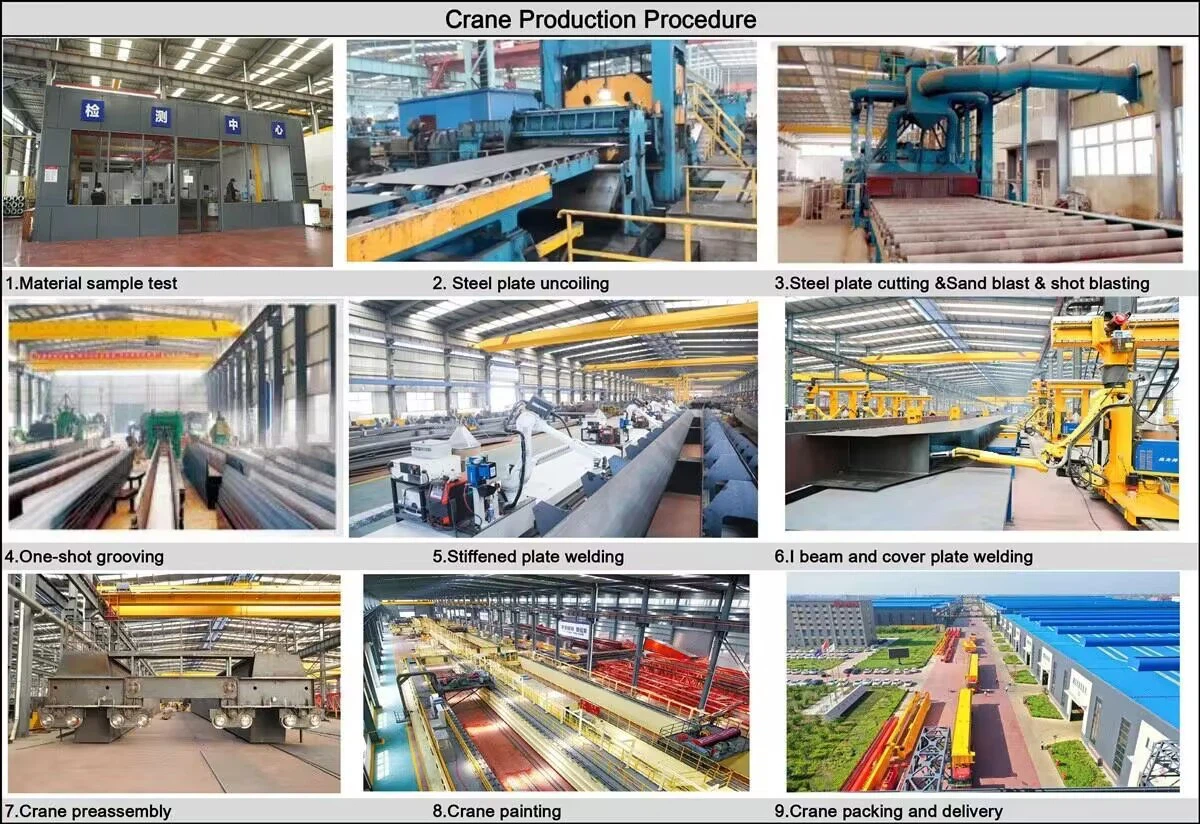
Crane production procedure
The manufacturing process of a QDY Double Girder Overhead Crane is a complex, multi-stage operation that blends heavy steel fabrication, precision machining, and electrical assembly. It follows strict quality control protocols to ensure safety and reliability.
Here is a detailed breakdown of the typical manufacturing process:
Phase 1: Design and Engineering
This is the foundational phase before any physical work begins.
Customer Requirements Analysis: Engineers review the specific requirements: capacity (e.g., 32/5 tons), span, lifting height, duty class (e.g., A5, A6), and any special needs (e.g., explosion-proof, high-temperature environment).
Structural Design: Using CAD (Computer-Aided Design) software, engineers design the main girders, end carriages, and trolley frame. Finite Element Analysis (FEA) is often used to simulate stress, deflection, and dynamic loads to optimize the design for strength and weight.
Mechanical and Electrical Design: This includes selecting and designing the drive systems (motors, gearboxes, wheels), the hoisting mechanism, and the complete electrical control system with panels, variable frequency drives (VFDs), and safety devices.
Bill of Materials (BOM) Creation: A detailed list of all raw materials (steel plates, profiles) and purchased components (hoist, motors, brakes, wire rope, wheels) is generated.
Phase 2: Raw Material and Component Procurement
Steel Plates and Profiles: High-quality steel plates (typically Q235B or Q345B according to Chinese standards, equivalent to S235JR/S355JR) are procured in required dimensions and thicknesses.
Purchased Components: Critical components are sourced from reputable suppliers. These include:
Hoist unit (may be manufactured in-house or purchased)
Electric motors for bridge and trolley travel
Reducer gearboxes
Wheels and axles
Brakes
Electrical components (controllers, contactors, limit switches, VFDs, cabling)
Bearings
Phase 3: Main Steel Fabrication & Machining
This is the core of the manufacturing process.
1. Main Girder Fabrication:
Cutting: Steel plates are cut to the required size and shape using CNC plasma or flame cutting machines for high precision.
Web/Flange Preparation: The vertical web plates and horizontal top/bottom flange plates are prepared. For long spans, the girders are often designed as a tapered "I-beam" profile (wider in the middle) to optimize strength-to-weight ratio.
Assembly and Welding: The girders are assembled on large jigs to ensure straightness and correct camber (a pre-set upward bend to counteract deflection under load). This is a critical step. Submerged Arc Welding (SAW) is commonly used for its deep penetration and high-quality, consistent welds on long seams.
Stress Relieving: After welding, the main girders often undergo stress relieving heat treatment in a large furnace. This process removes internal stresses created during welding, preventing future distortion and ensuring dimensional stability.
Machining: The mating surfaces for the end carriages and trolley rails are machined using a planer or milling machine to ensure a perfectly flat and level surface.
2. End Carriage (End Truck) Fabrication:
The end carriages are fabricated from steel sections and plates.
They house the wheels, drive motors, and gearboxes for the bridge movement.
The wheel bases are drilled and machined to precise tolerances to ensure proper alignment and that all wheels make contact with the runway rails.
Phase 4: Mechanical Assembly
1. Bridge Assembly:
The two main girders are positioned parallel to each other and connected to the end carriages using high-strength bolts or by welding, forming the complete bridge structure.
The trolley rails are precisely aligned and bolted onto the top of the main girders.
2. Trolley Frame Assembly:
The trolley frame is assembled, and its wheels, drives, and the main hoisting unit (including the wire rope drum, motor, gearbox, and hook block) are mounted onto it.
3. Drive System Installation:
The travel drive units (motor, gearbox, coupling) are installed on the end carriages (for bridge motion) and on the trolley frame (for trolley motion).
All mechanical components are aligned to prevent binding and premature wear.
Phase 5: Electrical System Installation
Cable Reeling System: The main power supply system for the crane (e.g., conductor bars or festoon systems) is installed along the bridge girder.
Control Panel Installation: The main control panel, VFDs, and other electrical components are mounted in a protected enclosure, usually on the bridge girder.
Wiring: All motors, brakes, limit switches, and safety devices are wired according to the electrical schematic.
Operator Control Station: The pendant control station (hung from the crane) or a radio remote control system is connected and tested.
Phase 6: Surface Treatment and Painting
Surface Preparation: The entire crane structure is shot-blasted to remove mill scale, rust, and welding slag, creating a clean, rough surface for optimal paint adhesion.
Priming: A rust-inhibitive primer is applied immediately after blasting to prevent oxidation.
Painting: Multiple coats of high-quality industrial enamel paint are applied. Color is often according to customer specification or standard factory practice (e.g., international orange/yellow for visibility). The painting process protects the crane from corrosion in industrial environments.
Phase 7: Factory Acceptance Testing (FAT)
Before disassembly for shipment, the fully assembled crane undergoes rigorous testing.
Visual Inspection: Checking dimensions, weld quality, and assembly.
No-Load Test: Running the crane, trolley, and hoist in all directions to verify smooth operation, correct speed, and functionality of all controls and limit switches.
Static Load Test: The hoist is lifted with a test load 25% greater than the rated capacity (as per FEM/ISO standards). The load is held for 10-15 minutes to check for structural deformation, weld integrity, and brake holding capacity.
Dynamic Load Test: The crane is operated with a test load 10% greater than the rated capacity. All motions are tested to ensure performance under dynamic stress.
Electrical Safety Tests: Insulation resistance, grounding continuity, and proper functioning of all emergency stops and safety circuits are verified.
Phase 8: Dismantling, Packaging, and Shipping
After passing FAT, the crane is carefully dismantled into transportable sections (main girders, end carriages, trolley, electrical panels).
All components are professionally packaged and protected against damage during transit.
They are shipped to the customer's site, where they will be reassembled and installed by technical crews.
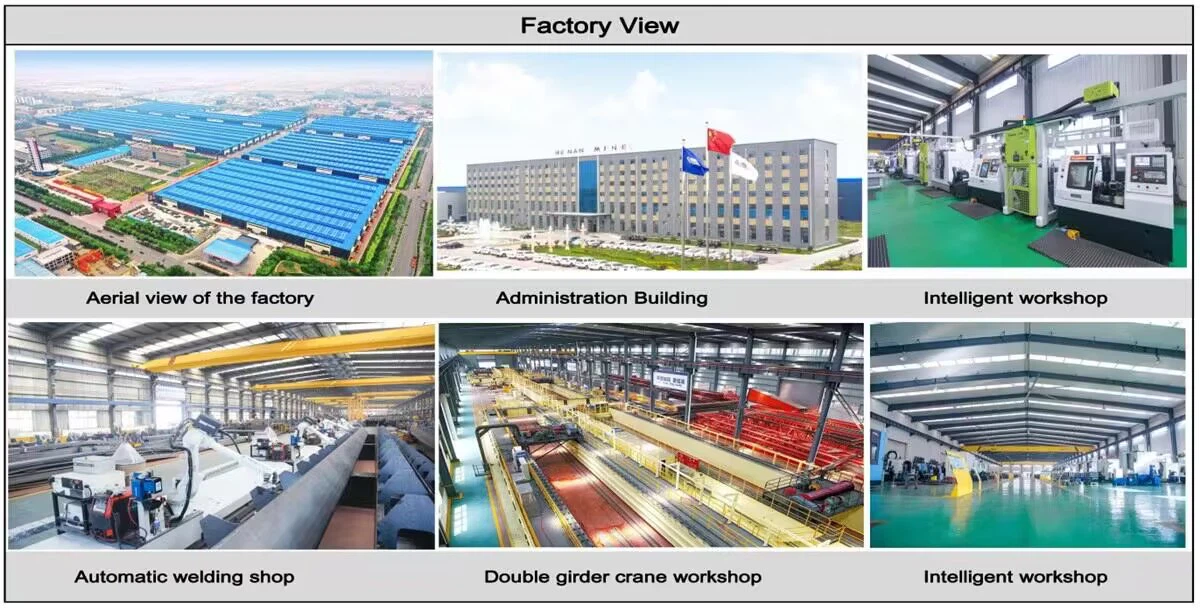
Workshop view:
The company has installed an intelligent equipment management platform, and has installed 310 sets (sets) of handling and welding robots. After the completion of the plan, there will be more than 500 sets (sets), and the equipment networking rate will reach 95%. 32 welding lines have been put into use, 50 are planned to be installed, and the automation rate of the entire product line has reached 85%.


Hot Tags: qdy double girder overhead crane, China qdy double girder overhead crane manufacturers, suppliers, factory, Double Girder Overhead Crane, Double Girder Overhead Travelling Crane
Previous
20T Double Girder Overhead CraneYou Might Also Like


Send Inquiry