











Heavy Duty QD Double Girder Overhead Crane
Products Description
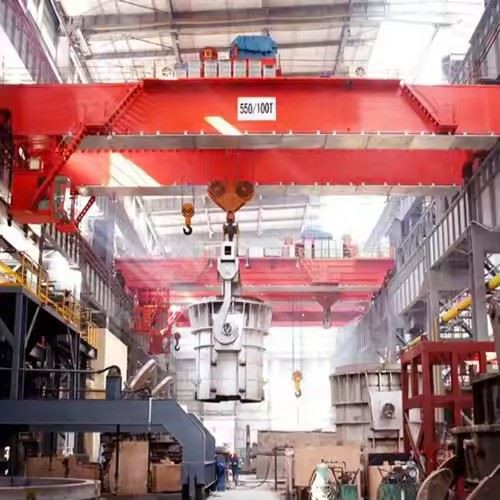
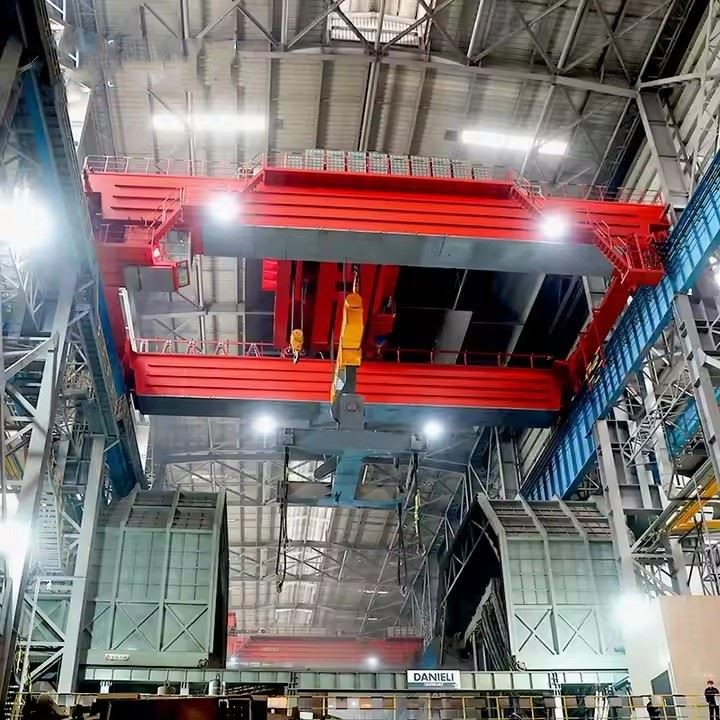
The QD model double girder overhead crane is a heavy-duty bridge crane engineered for efficient material handling in demanding industrial environments. It adopts a double-girder box-type structure with a winch trolley system, ensuring high lifting capacity, structural stability, and long service life.
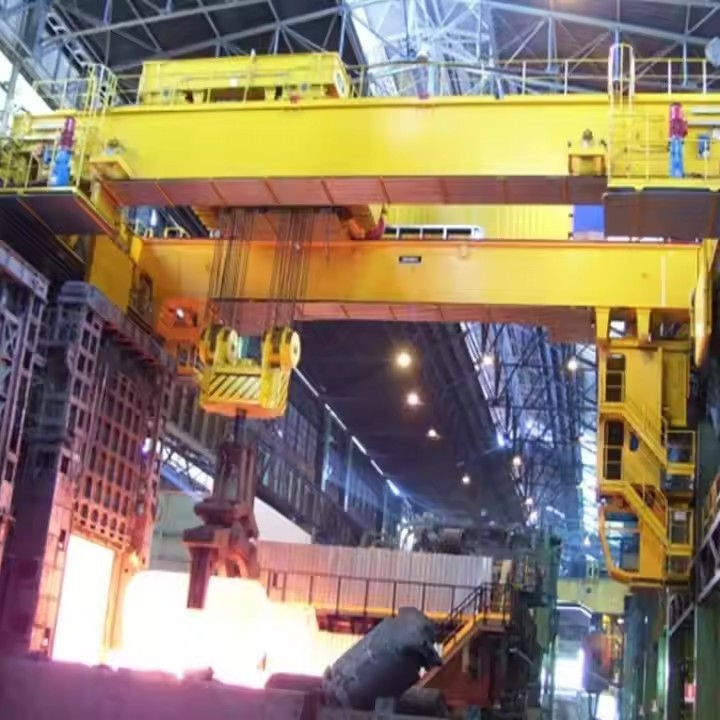
It is widely used for loading, unloading, transporting, and positioning heavy materials in workshops, warehouses, steel plants, and open yard operations.
PRODUCT COMPARISON TABLE
| Attribute | Heavy-Duty QD Double Girder Overhead Crane | QD Heavy Duty Double Girder Crane with Safe Hoist | QD Double Girder Crane with Electric Hoist | Custom QD Double Girder Overhead Crane |
|---|---|---|---|---|
| Capacity | Up to 400–500T | ~100–200T | ~50T | 20–200T |
| Duty Class | A7–A8 | A6–A7 | A5–A6 | Configurable |
| Hoisting Type | Winch trolley | Advanced hoist/winch | Electric hoist | Custom |
| Application | Steel mills | Heavy industry | Workshops | Flexible plants |
| Customization | Medium | Medium | Low | High |
| Safety Features | Full industrial | Enhanced safety | Standard | Optional |
Key Features
Heavy-duty performance for continuous industrial use
Double girder design provides superior strength and stability
High lifting capacity up to hundreds of tons
Smooth and precise operation with advanced trolley system
Flexible control options (cab, remote, pendant)
Customizable configurations (span, height, attachments)
Lifting Capacity 5 – 500+ tons
Span 10.5 – 35.5 m
Lifting Height 6 – 30 m (customizable)
Working Duty A5 – A8 (heavy/continuous duty)
Ambient Temperature -20°C to +40°C
Control Mode Pendant / Remote / Cabin
Pictures & Components
1. Metal Structure (Bridge System)
Main Girder (Double Beam)
Two box-type steel girders forming the main bridge
Made from high-strength steel (Q235/Q345)
Designed to تحمل very heavy loads with minimal deflection
This is the primary load-bearing structure of the crane
End Carriages (End Trucks)
Located at both ends of the girders
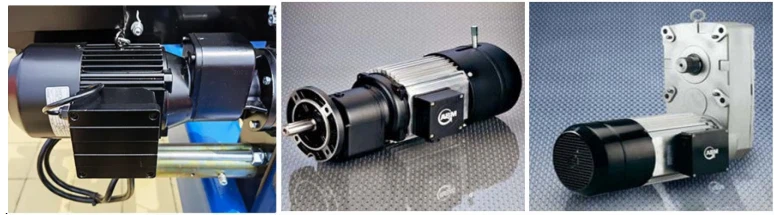
Equipped with wheels, motors, and buffers
Enable crane movement along runway rails
Responsible for longitudinal travel of the crane

2. Hoisting Mechanism (Lifting System)
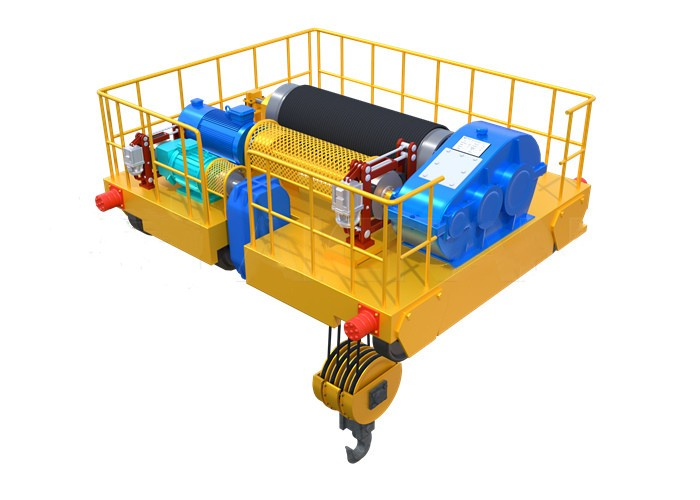
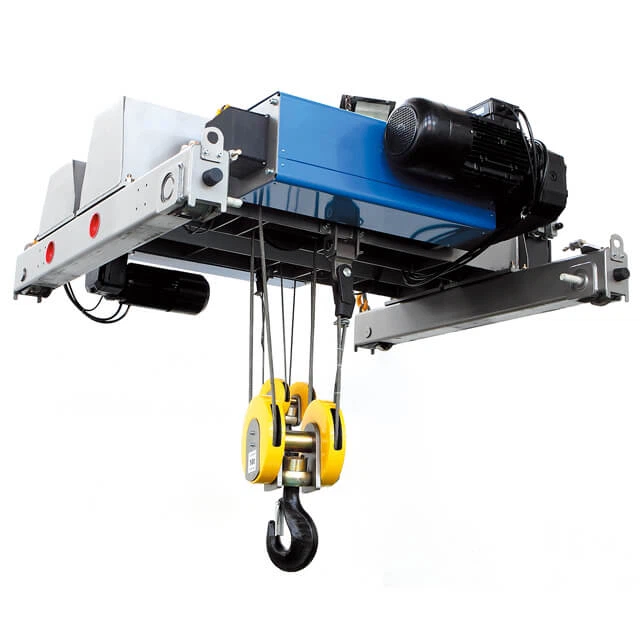
Winch Trolley
Runs on rails mounted on the main girders
Includes:
Electric motor
Gear reducer
Brake system
Drum with wire rope
Provides vertical lifting + horizontal trolley movement
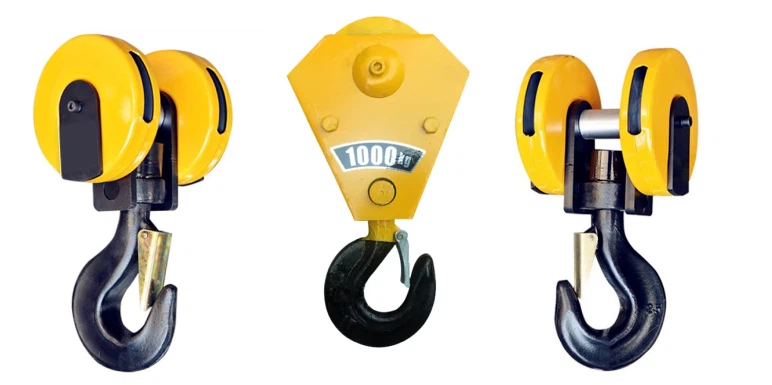
Hook Block Assembly
Forged hook with 360° rotation capability
Includes pulleys (sheaves) and safety latch
Available in single or double hook configuration
Directly handles the load during lifting
 |
 |
3. Traveling Mechanism
Crane Traveling System
Drives the entire crane along rails
Uses separate motor drives + gear systems
Ensures smooth, synchronized motion
Enables full workshop coverage
Trolley Traveling Mechanism
Moves trolley across the girders
Equipped with motorized wheels and guide rollers
Allows precise load positioning
 |
 |
4. Electrical System
Motors (lifting, trolley, traveling)
Control panels and PLC systems
Power supply (busbar or cable festoon)
Limit switches and sensors
Controls all crane operations and automation
5. Control System
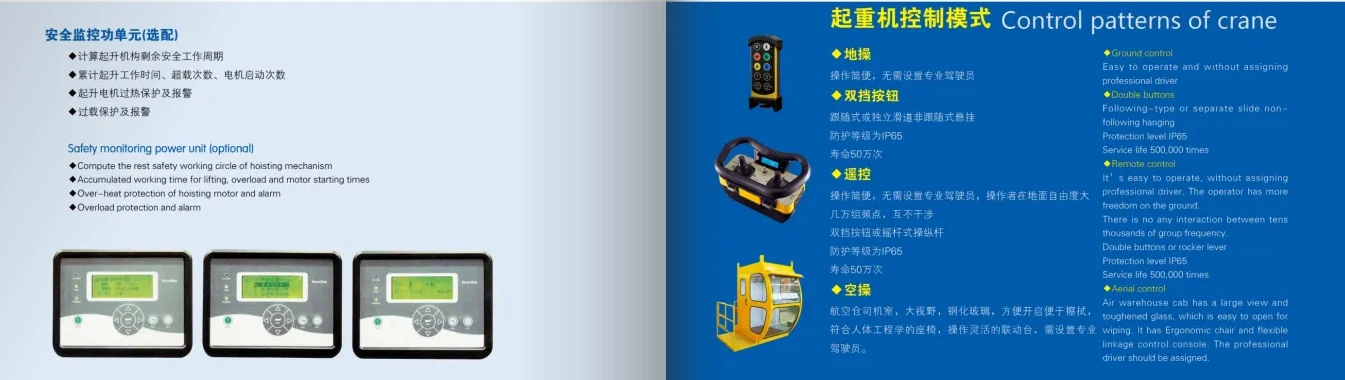
Pendant control (wired)
Wireless remote control
Operator cabin (open/closed type)
Provides flexible and safe operation modes
6. Safety Devices
Overload protection limiter
Limit switches (hoisting & travel)
Emergency stop system
Anti-collision system
Buffers and rail sweepers
Motor overload protection
Ensures safe operation in heavy-duty environments

7. Auxiliary Components
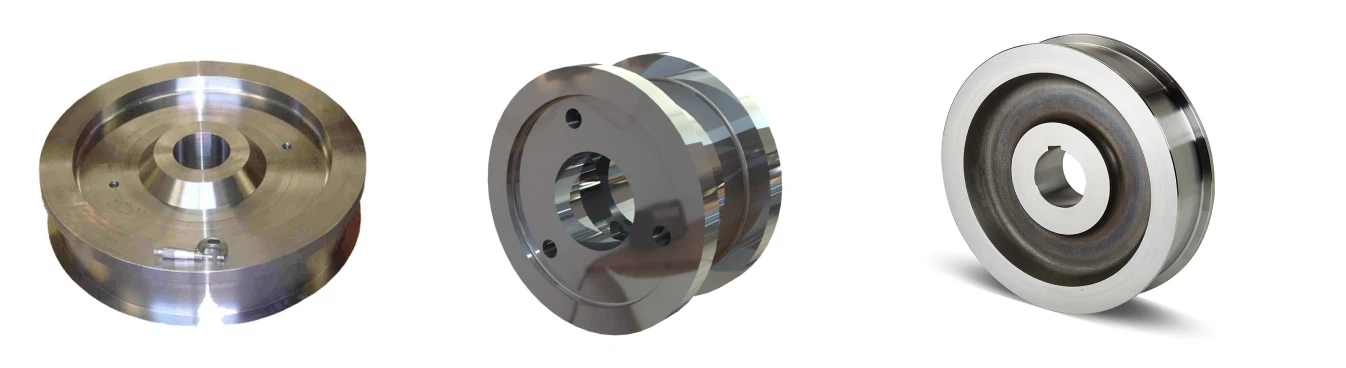
Wheels (heat-treated forged steel)
Rail clamps & buffers
Cable festoon system
Maintenance platforms & ladders
Lighting and warning systems
Improve durability, maintenance, and usability

Bottom Line
The Heavy Duty QD Double Girder Overhead Crane is a modular system made up of robust structural components, precision lifting mechanisms, and advanced electrical controls.
Main girder + end carriage → structural backbone
Winch trolley + hook → lifting core
Motors + controls → operational intelligence
Safety systems → critical for industrial reliability
Sketch

Main technical

Advantages
1. High Lifting Capacity
Capable of handling 5 to 500+ tons
Ideal for extremely heavy materials such as steel coils, slabs, and machinery
- Perfect for industries requiring large-scale material handling
2. Superior Structural Strength
Double girder (box-type) design ensures:
High rigidity
Minimal deflection
Long-term durability
- Provides stable and reliable lifting performance
3. Heavy-Duty & Continuous Operation
Designed for A5–A8 duty classes
Suitable for 24/7 continuous operation
- Excellent for steel mills and high-production environments
4. Smooth and Precise Operation
Equipped with:
Advanced winch trolley system
Variable frequency drives (optional)
- Enables accurate positioning and reduced load swing
5. Wide Working Coverage
Large span and lifting height
Covers entire workshop or production line
- Reduces need for multiple lifting systems
6. High Safety Standards
Includes:
Overload protection
Limit switches
Emergency stop
Anti-collision systems
- Ensures safe operation in hazardous environments
7. Customizable Design
Can be tailored for:
Span, lifting height
Special attachments (grab, magnet, ladle hook)
Automation and smart control
- Fits specific industrial requirements
8. Long Service Life & Low Maintenance
Robust components and heavy-duty design
Reduced wear under continuous operation
- Provides high return on investment (ROI)
Application:
1. Steel Mills & Metallurgy Plants
Handling:
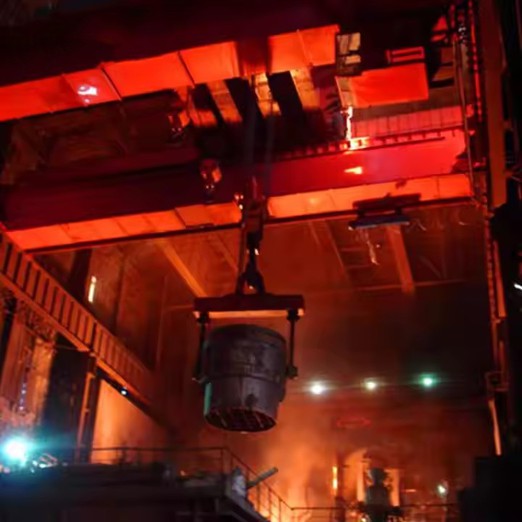
Molten metal (ladle cranes)
Steel billets, slabs, coils
Used in:
Blast furnaces
Continuous casting lines
- Core equipment in steel production
2. Heavy Manufacturing Industry
Moving large machinery and components
Assembly line material handling
- Essential for machinery and equipment production
3. Foundries
Transporting molten metal and castings
Operating in high-temperature environments
- Requires heat-resistant configurations
4. Shipbuilding & Marine Industry
Lifting:
Ship sections
Engines and heavy components
- 👉 Used in shipyards and dockyards
5. Power Plants
Handling turbines, generators, and heavy equipment
Maintenance and installation tasks
- Critical for power generation infrastructure
6. Warehouses & Logistics (Heavy Duty)
Handling oversized and heavy cargo
Indoor bulk material movement
- Improves efficiency in large storage facilities
7. Mining & Construction
Transporting heavy raw materials and equipment
Supporting construction of large structures
- Suitable for rugged industrial environments
Crane production procedure
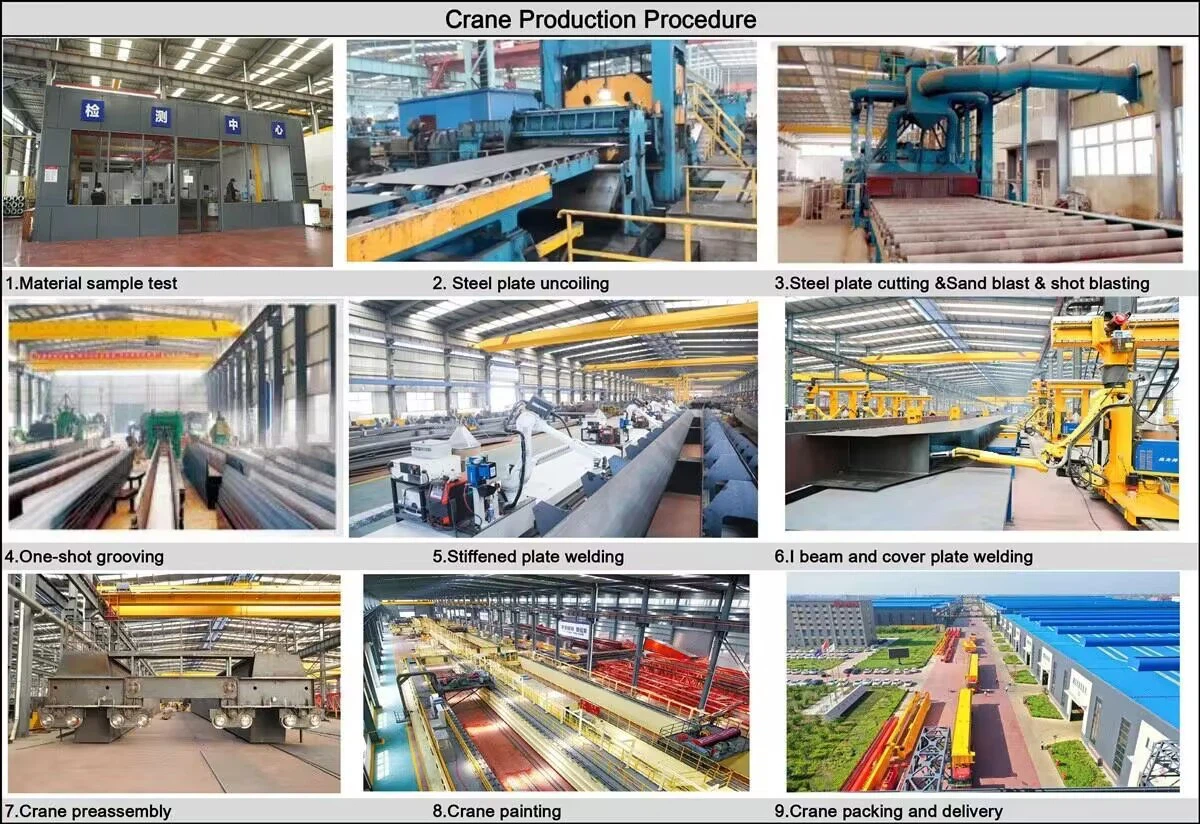
The production process of a QZ Series Double Girder Grab Bucket Overhead Crane involves several key stages, from initial design and material selection to assembly, testing, and final delivery. The manufacturing process is highly detailed and requires precise engineering to ensure the crane is durable, reliable, and capable of handling the heavy loads typical in bulk material handling applications. Below is a step-by-step overview of the production process:
1. Design and Engineering
Conceptual Design: The first step is designing the QZ Series crane based on the specific needs of the client or intended use. This involves discussions with the customer to understand the working environment, load capacity, span, lifting height, and control systems needed.
Detailed Engineering: Once the concept is finalized, engineers develop detailed designs for each component, including:
The bridge frame (double girder structure).
The grab bucket (clamshell or orange peel).
Hoist mechanism and trolley systems.
Electrical control systems.
Safety features like overload protection and limit switches.
Structural Calculations: Engineers perform rigorous calculations to ensure the crane meets the required strength and stability standards, especially considering the heavy loads it will carry.
2. Material Selection
High-Quality Steel: Materials used in the crane are typically high-strength steel, which provides durability and safety under heavy loads.
Steel Plates for Girder Frame: Used to fabricate the main bridge girder and cross beams.
Steel for Trolley and Hoist: The trolley and hoist components require materials with high wear resistance and structural strength.
Grab Bucket Materials: The grab bucket is usually made from high-strength steel or alloy steel for durability, especially when handling abrasive materials.
Motors and Electrical Components: For the hoisting mechanism, trolley, and control systems, the motors and electrical components must be of high quality to ensure efficient and reliable operation.
3. Manufacturing and Fabrication
CNC Cutting and Welding:
Steel plates are cut using CNC cutting machines to the precise dimensions needed for each part (such as the girder beams, frame structure, and support brackets).
Welding is done to join these components into larger structures like the double girder frame and trolley frame. Precision welding techniques are used to ensure the parts are strong and properly aligned.
Machining: Parts like hoist drums, shaft supports, and gears are machined to meet exact specifications, ensuring smooth and reliable movement.
Casting and Forging:
Some critical parts, like gears, bearings, and certain components of the grab bucket, may be cast or forged to achieve the necessary strength and resistance to wear.
Grab Bucket Fabrication:
The grab bucket is often assembled separately, with the clamshell jaws or orange peel claws welded and fitted with the hydraulic or mechanical controls that open and close the grab.
The bucket is then tested to ensure proper functioning before being integrated with the hoist mechanism.
4. Assembly
Girder Assembly: The two girders that make up the double girder design are assembled and aligned. These are the primary load-bearing components, and the alignment must be precise to ensure smooth crane operation.
Trolley and Hoist Assembly:
The trolley is attached to the bridge frame and is fitted with the hoisting mechanism.
The hoist (which includes the drum, ropes, and lifting motor) is installed on the trolley to lift and lower the grab bucket.
The trolley wheels are mounted to ensure smooth horizontal movement along the girder.
Grab Bucket Installation: The grab bucket is mounted on the hoist ropes and integrated with the hoist system. Depending on the crane design, hydraulic or electric motors control the opening and closing of the grab.
End Carriages and Wheels: The end carriages are assembled and fitted with wheels, which allow the entire crane to travel along the runway rails. These carriages are essential for smooth movement.
5. Electrical and Control Systems Installation
Electrical Wiring: The crane's electrical systems (motors, limit switches, lights, etc.) are installed, and all wiring is tested to ensure it meets safety standards.
Control Panel Assembly:
The operator control panel (if a cabin is used) or wireless remote controls are installed.
The PLC (Programmable Logic Controller) is programmed to automate and control the crane's movements, ensuring smooth operation with precise control over lifting, lowering, and horizontal travel.
Safety Systems: The crane's safety features (e.g., overload protection, limit switches, emergency stop buttons, wind monitoring systems) are tested and configured.
6. Painting and Finishing
Surface Treatment: The crane components are typically subjected to surface treatment processes like shot blasting or sandblasting to remove rust and debris.
Painting: After surface treatment, the crane components are painted with high-quality industrial paint that provides protection against corrosion, especially in outdoor or harsh environments.
Coating for Grab Bucket: The grab bucket is also coated to resist corrosion, especially if it's going to be used in wet or highly abrasive environments like ports or steel plants.
7. Testing and Quality Control
Pre-Assembly Testing: Individual components like the hoist mechanism, grab bucket, and electrical systems are tested for functionality before final assembly.
Full System Testing:
The completed crane undergoes a series of rigorous tests, including:
Load tests to ensure the crane can handle the specified weight without any issues.
Safety system checks to verify that all limit switches, emergency stops, and overload protection devices are working properly.
Operational tests for both manual and automatic control systems to ensure smooth operation and correct functionality of all movements (lifting, lowering, horizontal travel, etc.).
Final Inspection: Once testing is complete, the crane is subjected to a final quality control check to ensure everything meets the design and safety standards.
8. Packaging and Delivery
Disassembly (if needed): Some larger cranes may be disassembled for easier transport. Components like the girder, trolley, and grab bucket may be separated into smaller sections.
Packaging: Smaller parts and sensitive components are carefully packaged to avoid damage during transport.
Shipping: The crane is shipped to the customer's site, either as a pre-assembled unit or in parts that will be reassembled onsite. The delivery includes documentation, installation instructions, and warranty details.
9. Installation and Commissioning
Once the crane arrives at the customer's site, installation is carried out by trained technicians, who will:
Assemble any parts that were disassembled during transport.
Install the crane on the runway rails and connect the electrical systems to the power supply.
Commissioning involves running the crane through a series of test operations to ensure everything is working as expected before being handed over for regular use.
Workshop view:
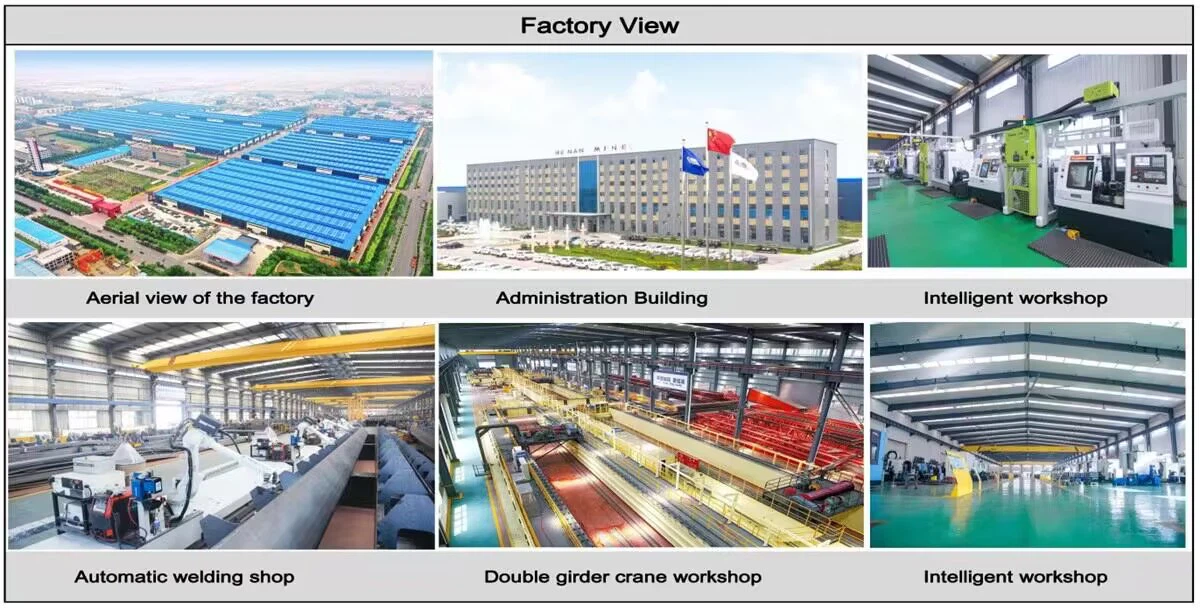
The company has installed an intelligent equipment management platform, and has installed 310 sets (sets) of handling and welding robots. After the completion of the plan, there will be more than 500 sets (sets), and the equipment networking rate will reach 95%. 32 welding lines have been put into use, 50 are planned to be installed, and the automation rate of the entire product line has reached 85%.


Hot Tags: heavy duty qd double girder overhead crane, China heavy duty qd double girder overhead crane manufacturers, suppliers, factory, Double Girder Overhead Crane, Double Girder Overhead Travelling Crane
Previous
No InformationYou Might Also Like


Send Inquiry