







Electric Hoist Double Girder Bridge Crane
Products Description
Key Components
Bridge / Girders:
The crane has two parallel main girders spanning the width of the crane runway.
This double girder design allows the hoist to ride on top of the girders, providing more headroom under the crane and higher lifting capacity.
Electric Hoist:
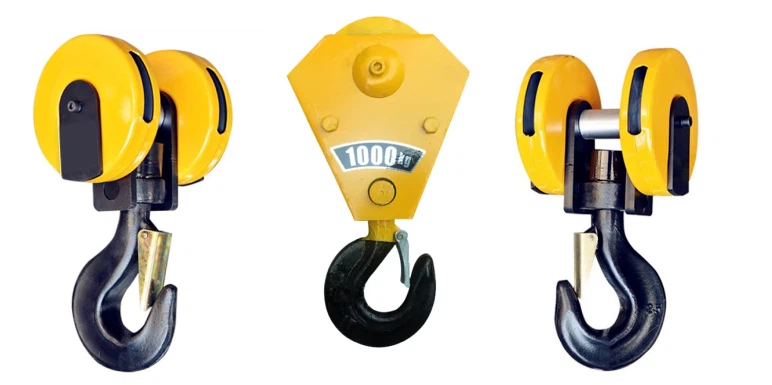
The hoist is the lifting device.
Powered electrically, it raises and lowers the load using a motor-driven drum or chain.
Can include features like variable speed, precision positioning, and overload protection.
End Trucks:
Wheels attached to each end of the bridge.
Allow the crane to move longitudinally along the runway.
Runway / Rails:
The rails on which the end trucks travel, typically fixed above a factory floor or workshop.
Trolley:
Carries the hoist and moves horizontally along the bridge.
Advantages
Higher lifting capacity: Typically used for heavier loads (20–500+ tons).
Greater stability: Double girders reduce sway, which is especially important for precise handling.
More hook height: Since the hoist can ride on top of the girders, you get more lifting height for the same building height.
Durable and robust: Suitable for heavy-duty industrial applications.
Typical Applications
Steel mills and metal fabrication plants.
Shipyards.
Heavy machinery assembly.
Large-scale warehouses and manufacturing facilities.
Technical Considerations
Load capacity: Must match the heaviest load you plan to lift.
Span: The distance between the rails of the runway.
Lifting height: How high the crane can lift a load.
Speed: Travel speed of the bridge, trolley speed, and hoist speed.
Safety features: Overload protection, emergency stop, anti-sway systems.
Core Components:Bearing, Gearbox, Motor, Pump
Place of Origin:Henan, China
Warranty:1 Year
Weight (KG):2000 kg
Video outgoing-inspection:Provided
Machinery Test Report:Provided
Design:Double beam
Effectiveness:high efficiency
Operating speed:High speed operation
Stability:Anti-swing function
Color:Optional
Power Source:110V/220V/230V/380V/440V,customized
Span:7.5-31.5m

Pictures & Components
1. Main Girder (Bridge)
Description: The two parallel beams forming the main structure of the crane.
Function: Supports the hoist and trolley, spans the width of the crane runway.
Key Feature: Double girder design allows the hoist to ride on top of the girders, providing higher lifting capacity and more hook height.

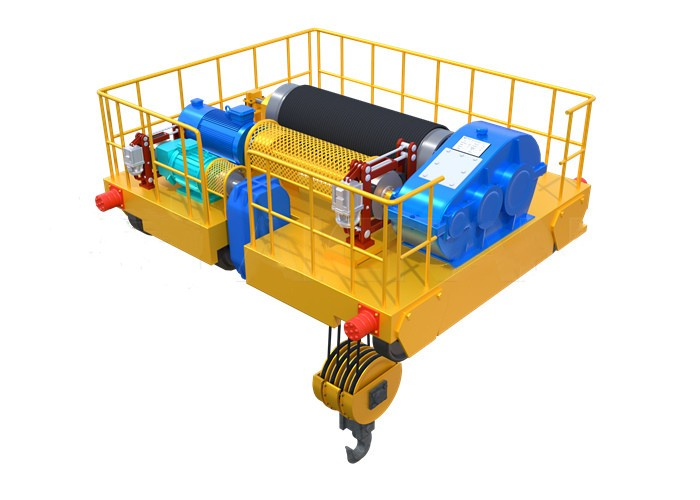
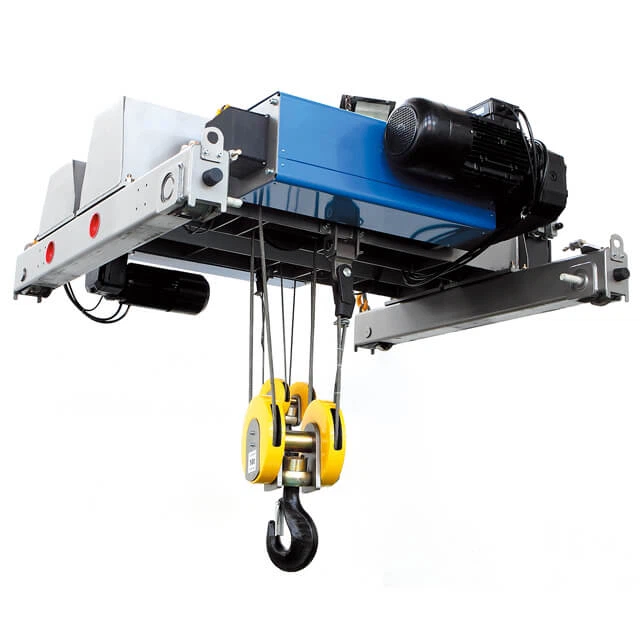
2. Electric Hoist
Description: The lifting mechanism mounted on a trolley.
Function: Raises and lowers the load using an electric motor.
Types: Wire rope hoist or chain hoist.
Features: Overload protection, variable speed control, emergency stop.
 |
 |
3. Trolley
Description: The platform that carries the hoist along the bridge.
Function: Moves the hoist horizontally along the length of the crane.
Types: Single-speed or variable-speed trolleys depending on precision requirements.
 |
 |
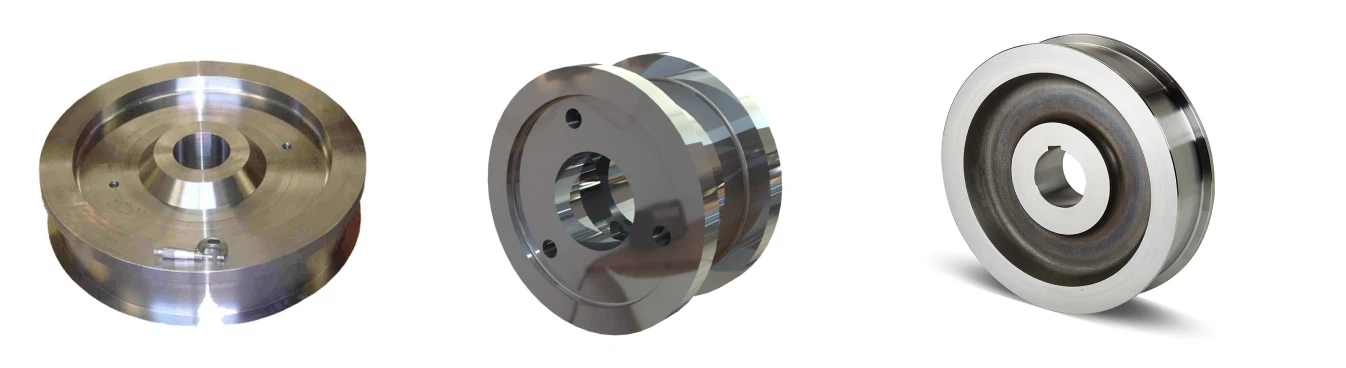
4. End Trucks
Description: Wheeled assemblies at each end of the bridge girders.
Function: Allows the bridge to move along the runway rails.
Features: Equipped with motors for powered travel; wheels often have flanges to stay aligned on the rails.
5. Runway / Rails
Description: Tracks installed on building columns or elevated structures.
Function: Guides the crane's longitudinal movement across the workspace.
Consideration: Must be perfectly aligned and strong enough to handle maximum crane load.
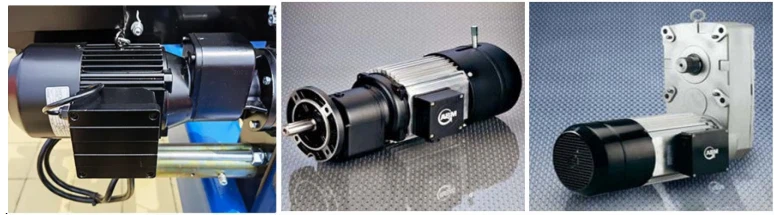
6. Electrical System
Description: Provides power and control to the crane.
Components: Motors, control panels, pendant or remote control.
Function: Operates bridge travel, trolley travel, and hoist lift.
Safety Features: Limit switches, overload protection, emergency stop.

7. Safety Devices
Limit Switches: Stop movement when the crane reaches the end of travel or maximum hook height.
Overload Protection: Prevents lifting loads beyond rated capacity.
Anti-Sway / Buffer Systems: Reduce swinging of heavy loads for precision handling.
8. Optional Accessories
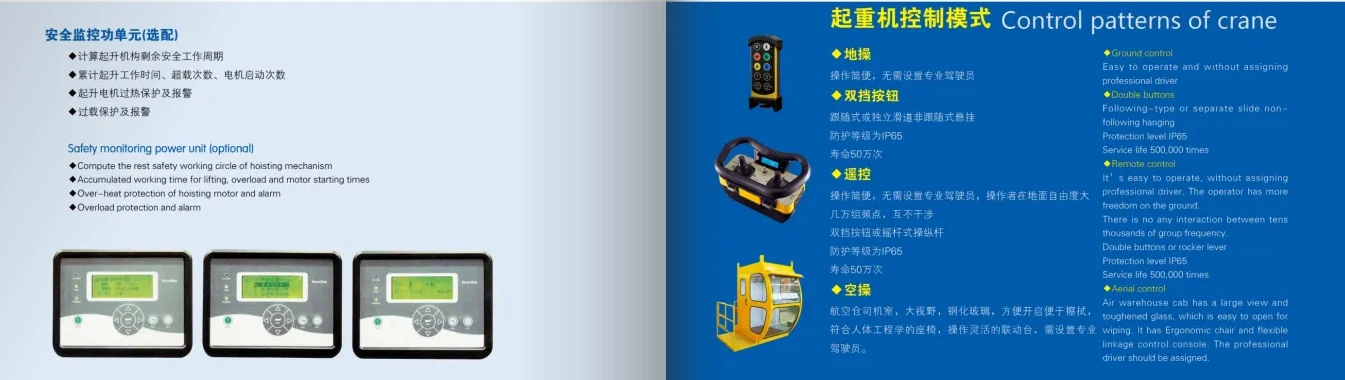
Radio Remote Control: For wireless operation.
Load Sensors: Monitors and displays load weight.
Cranes with Rotation: Some heavy-duty models can rotate the hook for exact positioning.

Sketch

Main technical

Advantages
High Load Capacity
Can lift very heavy loads (from 20 tons to over 500 tons).
Double girder structure distributes weight more evenly than single girder cranes.
Greater Hook Height
Since the hoist can travel on top of the girders, the available lifting height increases without raising the building structure.
Enhanced Stability and Safety
Less sway during lifting because the double girders provide a stiffer bridge.
Suitable for precision lifting of heavy machinery and delicate components.
Durability and Long Service Life
Robust design withstands continuous industrial use.
Requires less maintenance for heavy-duty applications compared to single girder cranes handling similar loads.
Flexible Operation
Can be equipped with variable speed controls, remote operation, and automation features.
Smooth and precise handling of loads, which is crucial for assembly or manufacturing processes.
Suitable for Wide Spans
Can cover long distances along runways, making it ideal for large factory floors or warehouses.
Application:
Heavy Manufacturing
Metal fabrication, steel production, and machinery assembly.
Lifting large steel plates, molds, or engine components.
Shipbuilding
Moving massive hull sections, engines, or other ship components in dry docks.
Warehousing and Logistics
Handling heavy containers or large materials.
Loading and unloading large or bulky cargo.
Power Plants & Energy Sector
Installing turbines, generators, or heavy industrial equipment.
Construction and Infrastructure
Assembly of bridges, large structural frameworks, or precast concrete components.
Automotive Industry
Moving heavy car frames, engines, and other large components during assembly.
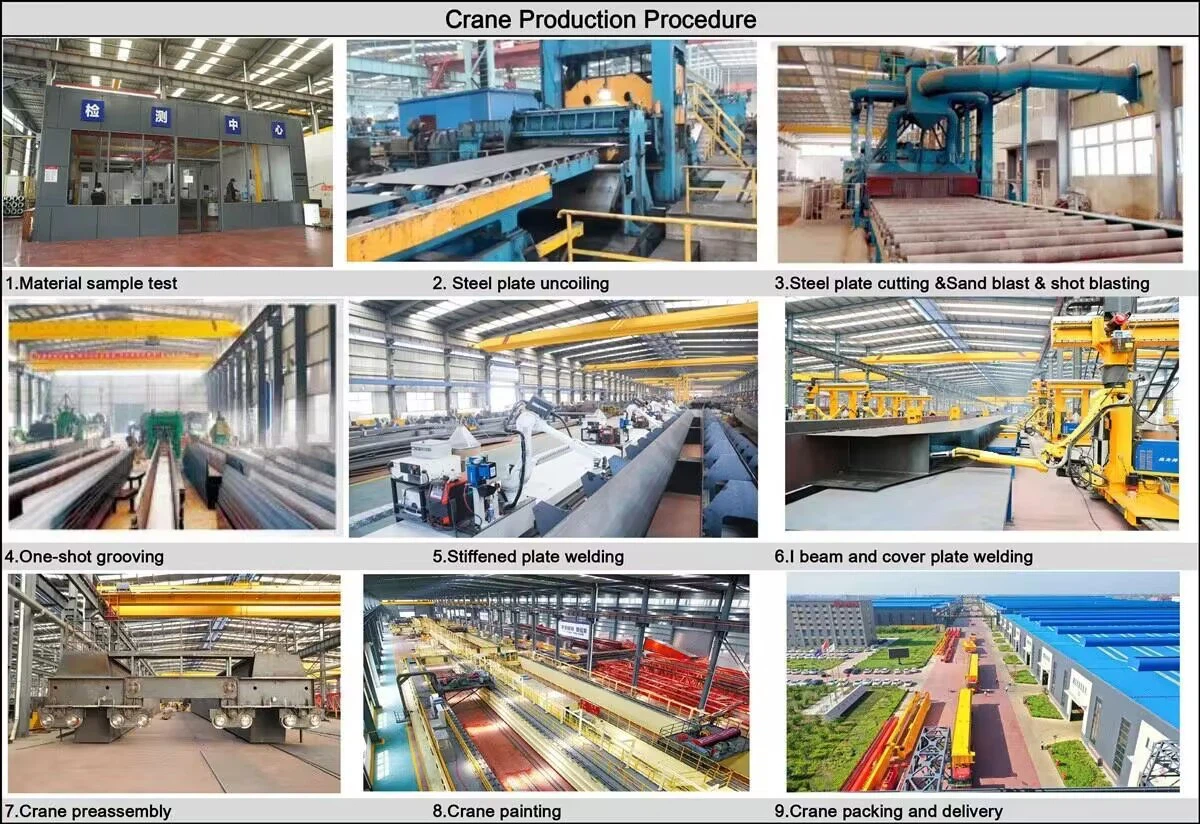
Crane production procedure
The production process of a QZ Series Double Girder Grab Bucket Overhead Crane involves several key stages, from initial design and material selection to assembly, testing, and final delivery. The manufacturing process is highly detailed and requires precise engineering to ensure the crane is durable, reliable, and capable of handling the heavy loads typical in bulk material handling applications. Below is a step-by-step overview of the production process:
1. Design and Engineering
Conceptual Design: The first step is designing the QZ Series crane based on the specific needs of the client or intended use. This involves discussions with the customer to understand the working environment, load capacity, span, lifting height, and control systems needed.
Detailed Engineering: Once the concept is finalized, engineers develop detailed designs for each component, including:
The bridge frame (double girder structure).
The grab bucket (clamshell or orange peel).
Hoist mechanism and trolley systems.
Electrical control systems.
Safety features like overload protection and limit switches.
Structural Calculations: Engineers perform rigorous calculations to ensure the crane meets the required strength and stability standards, especially considering the heavy loads it will carry.
2. Material Selection
High-Quality Steel: Materials used in the crane are typically high-strength steel, which provides durability and safety under heavy loads.
Steel Plates for Girder Frame: Used to fabricate the main bridge girder and cross beams.
Steel for Trolley and Hoist: The trolley and hoist components require materials with high wear resistance and structural strength.
Grab Bucket Materials: The grab bucket is usually made from high-strength steel or alloy steel for durability, especially when handling abrasive materials.
Motors and Electrical Components: For the hoisting mechanism, trolley, and control systems, the motors and electrical components must be of high quality to ensure efficient and reliable operation.
3. Manufacturing and Fabrication
CNC Cutting and Welding:
Steel plates are cut using CNC cutting machines to the precise dimensions needed for each part (such as the girder beams, frame structure, and support brackets).
Welding is done to join these components into larger structures like the double girder frame and trolley frame. Precision welding techniques are used to ensure the parts are strong and properly aligned.
Machining: Parts like hoist drums, shaft supports, and gears are machined to meet exact specifications, ensuring smooth and reliable movement.
Casting and Forging:
Some critical parts, like gears, bearings, and certain components of the grab bucket, may be cast or forged to achieve the necessary strength and resistance to wear.
Grab Bucket Fabrication:
The grab bucket is often assembled separately, with the clamshell jaws or orange peel claws welded and fitted with the hydraulic or mechanical controls that open and close the grab.
The bucket is then tested to ensure proper functioning before being integrated with the hoist mechanism.
4. Assembly
Girder Assembly: The two girders that make up the double girder design are assembled and aligned. These are the primary load-bearing components, and the alignment must be precise to ensure smooth crane operation.
Trolley and Hoist Assembly:
The trolley is attached to the bridge frame and is fitted with the hoisting mechanism.
The hoist (which includes the drum, ropes, and lifting motor) is installed on the trolley to lift and lower the grab bucket.
The trolley wheels are mounted to ensure smooth horizontal movement along the girder.
Grab Bucket Installation: The grab bucket is mounted on the hoist ropes and integrated with the hoist system. Depending on the crane design, hydraulic or electric motors control the opening and closing of the grab.
End Carriages and Wheels: The end carriages are assembled and fitted with wheels, which allow the entire crane to travel along the runway rails. These carriages are essential for smooth movement.
5. Electrical and Control Systems Installation
Electrical Wiring: The crane's electrical systems (motors, limit switches, lights, etc.) are installed, and all wiring is tested to ensure it meets safety standards.
Control Panel Assembly:
The operator control panel (if a cabin is used) or wireless remote controls are installed.
The PLC (Programmable Logic Controller) is programmed to automate and control the crane's movements, ensuring smooth operation with precise control over lifting, lowering, and horizontal travel.
Safety Systems: The crane's safety features (e.g., overload protection, limit switches, emergency stop buttons, wind monitoring systems) are tested and configured.
6. Painting and Finishing
Surface Treatment: The crane components are typically subjected to surface treatment processes like shot blasting or sandblasting to remove rust and debris.
Painting: After surface treatment, the crane components are painted with high-quality industrial paint that provides protection against corrosion, especially in outdoor or harsh environments.
Coating for Grab Bucket: The grab bucket is also coated to resist corrosion, especially if it's going to be used in wet or highly abrasive environments like ports or steel plants.
7. Testing and Quality Control
Pre-Assembly Testing: Individual components like the hoist mechanism, grab bucket, and electrical systems are tested for functionality before final assembly.
Full System Testing:
The completed crane undergoes a series of rigorous tests, including:
Load tests to ensure the crane can handle the specified weight without any issues.
Safety system checks to verify that all limit switches, emergency stops, and overload protection devices are working properly.
Operational tests for both manual and automatic control systems to ensure smooth operation and correct functionality of all movements (lifting, lowering, horizontal travel, etc.).
Final Inspection: Once testing is complete, the crane is subjected to a final quality control check to ensure everything meets the design and safety standards.
8. Packaging and Delivery
Disassembly (if needed): Some larger cranes may be disassembled for easier transport. Components like the girder, trolley, and grab bucket may be separated into smaller sections.
Packaging: Smaller parts and sensitive components are carefully packaged to avoid damage during transport.
Shipping: The crane is shipped to the customer's site, either as a pre-assembled unit or in parts that will be reassembled onsite. The delivery includes documentation, installation instructions, and warranty details.
9. Installation and Commissioning
Once the crane arrives at the customer's site, installation is carried out by trained technicians, who will:
Assemble any parts that were disassembled during transport.
Install the crane on the runway rails and connect the electrical systems to the power supply.
Commissioning involves running the crane through a series of test operations to ensure everything is working as expected before being handed over for regular use.
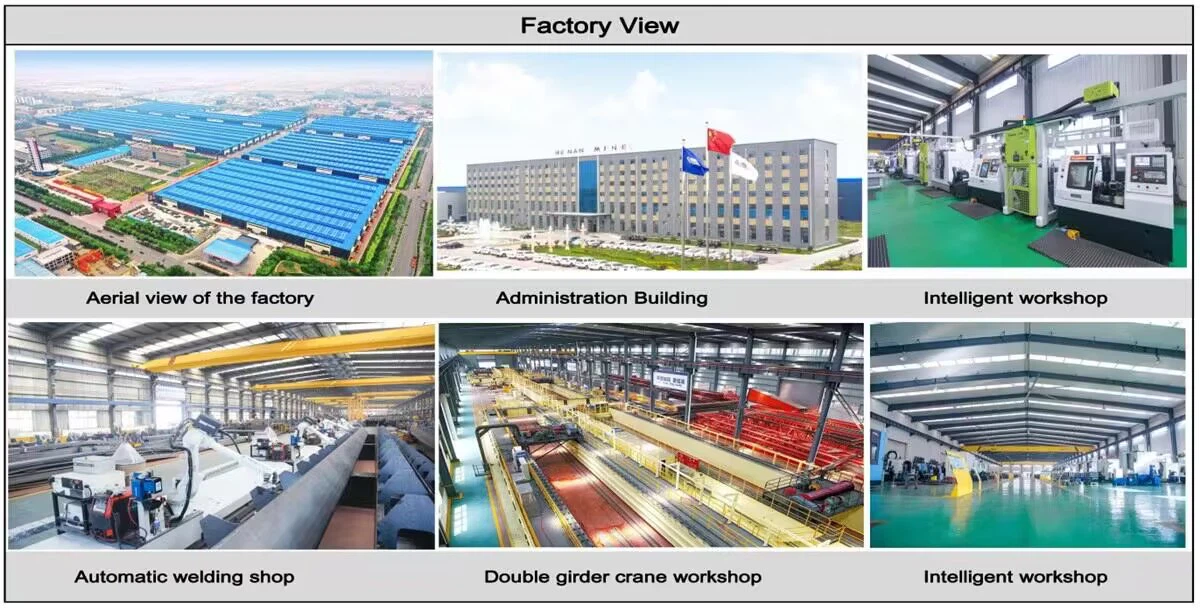
Workshop view:
The company has installed an intelligent equipment management platform, and has installed 310 sets (sets) of handling and welding robots. After the completion of the plan, there will be more than 500 sets (sets), and the equipment networking rate will reach 95%. 32 welding lines have been put into use, 50 are planned to be installed, and the automation rate of the entire product line has reached 85%.


Hot Tags: electric hoist double girder bridge crane, China electric hoist double girder bridge crane manufacturers, suppliers, factory, Double Girder Overhead Crane, Double Girder Overhead Travelling Crane
Previous
No InformationYou Might Also Like


Send Inquiry