







European Style Single Girder Bridge Crane
Products Description
Why Choose a European Style Crane?
If you need to upgrade or build a new facility, the advantages are significant:
Saves Building Costs: Because the crane is lighter and requires less headroom, you can build a smaller (or use an existing) factory building, saving steel and construction costs.
Precision Lifting: The frequency inverter and anti-sway technology allow for smooth acceleration and stops, making it safe for fragile goods or precise assembly lines.
Lower Electricity Bills: The high-efficiency motors consume significantly less power, lowering operational costs immediately.
Features of European Style
Lightweight design: Optimized for high strength-to-weight ratio.
Compact structure: Reduced headroom required, making it ideal for low-ceiling factories.
Smooth operation: Low vibration, precise movement.
Energy-efficient hoists: Often uses frequency inverters.
Modular design: Easier to install, maintain, and upgrade.
Higher safety standards: Overload protection, emergency stop features, anti-sway technology.
Advantages over Traditional Cranes
Less structural load on building due to lighter girder
Lower initial and operating cost
More precise and quiet operation
Easier to retrofit into existing facilities
Lifting Capacity 1 – 30 tons
Span Length 7.5 – 30 meters
Lifting Height 6 – 12 meters (standard)
Lifting Speed 5/0.8 m/min (dual speed)
Trolley Travel Speed 2 – 20 m/min
Crane Travel Speed 3 – 30 m/min
Working Class (FEM) A5

Pictures & Components
1. Main Girder
Function: Supports the hoist and trolley, spanning the distance between the runway rails.
Design: Usually a box-type or I-beam girder made of high-strength steel.
Feature: Lightweight and optimized for maximum strength with minimal deflection.

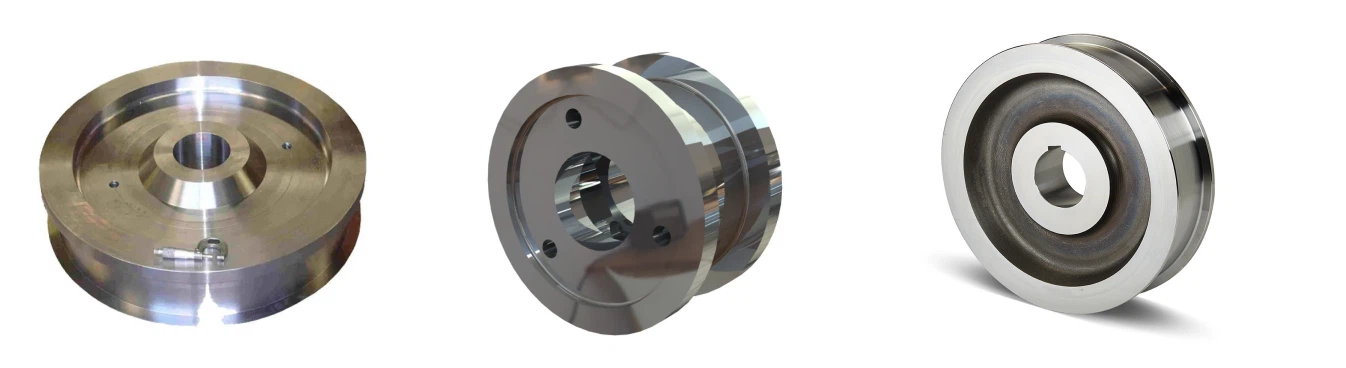
2. End Trucks
Function: Wheels at each end of the main girder that travel along the runway rails.
Components: Wheels, axles, bearings, motors (for motorized travel).
Feature: Designed for smooth and stable travel, reducing stress on rails.
 |
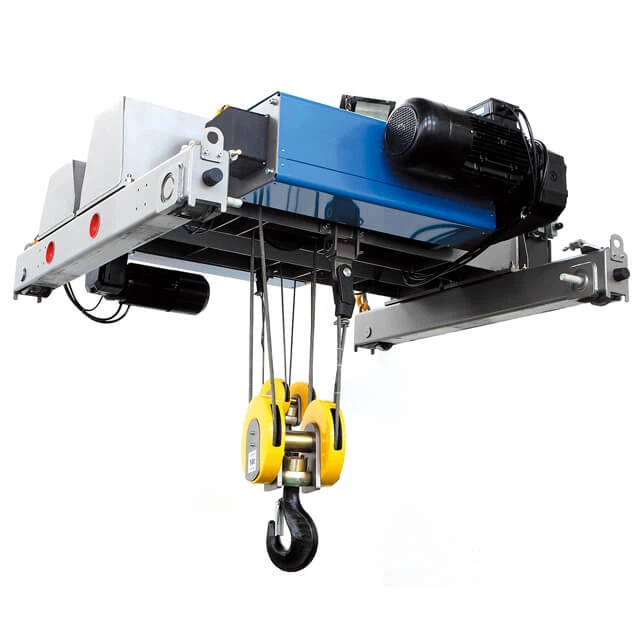 |
3. Runway
Function: Parallel tracks installed on the factory building structure to support the crane's movement along the length of the workspace.
Components: Steel rails, columns or brackets, and electrical conductors.
Feature: Must be perfectly aligned to ensure smooth crane operation.
 |
 |
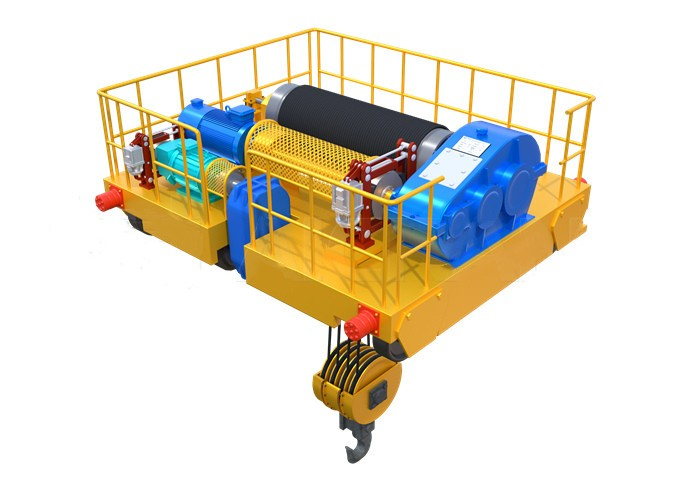
4. Trolley
Function: Moves the hoist along the girder to position the load accurately.
Components: Wheels or rollers that travel on the top or bottom flange of the girder, motor (for motorized trolleys).
Feature: Can be designed for high-speed or heavy-duty lifting depending on application.
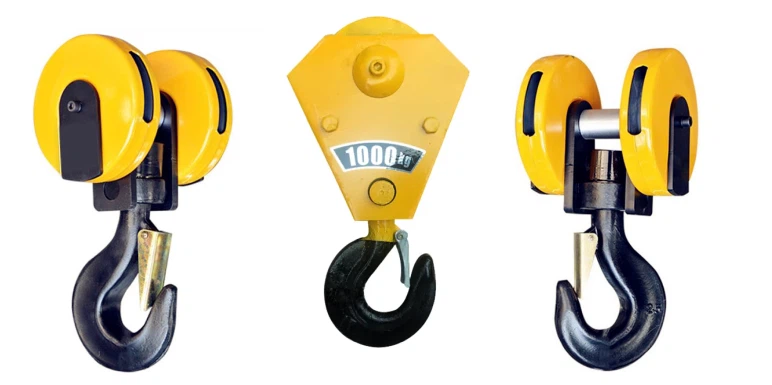
5. Hoist
Function: Lifts and lowers the load.
Types:
Wire rope hoist: High capacity, long lifespan, precise control.
Electric chain hoist: Compact, lightweight, suitable for small-to-medium loads.
Feature: Often European-designed for energy efficiency, quiet operation, and smooth movement.
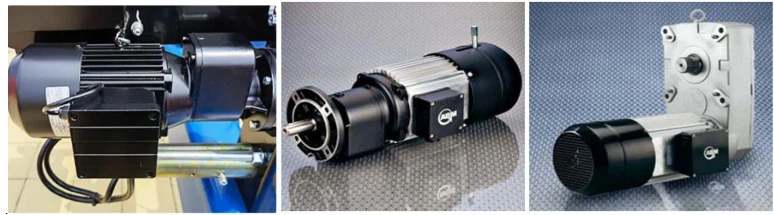
6. Electrical System
Function: Powers the hoist, trolley, and bridge travel.
Components:
Power supply: conductor bars or festoon system
Control: pendant, radio remote, or cabin
Motors and drives: frequency inverters for smooth acceleration
Feature: Includes safety features such as overload protection, emergency stop, and limit switches.

7. Safety Components
Limit switches: Prevent hoist from over-travel
Overload protection: Prevents lifting beyond rated capacity
Emergency stop: Stops all movements immediately
Buffers: At the end of runways to prevent collision

8. Optional Accessories
Anti-sway devices for precise load control
Adjustable end carriages for different runway widths
Cabin for operator (for large cranes)
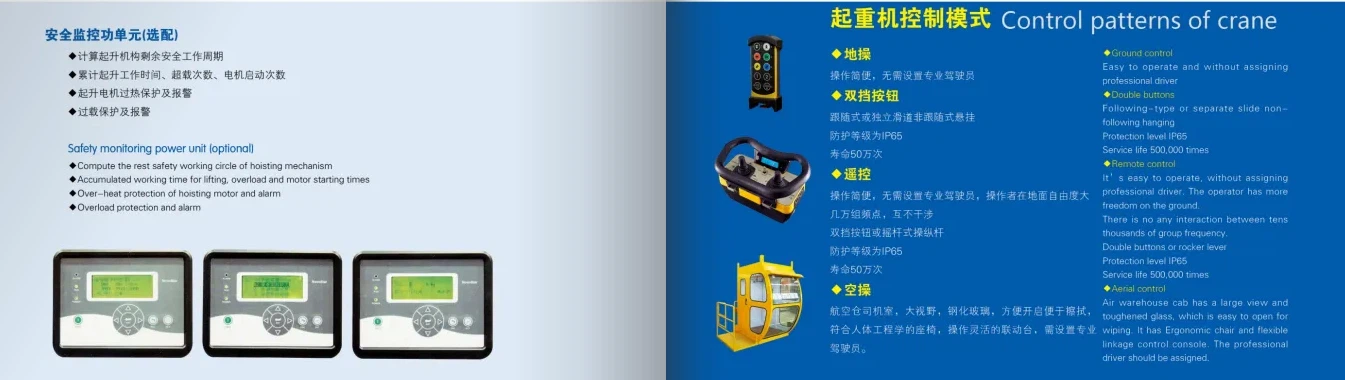
Sketch

Main technical

Advantages
Lightweight Design
Uses a single girder with a box-type or optimized I-beam.
Reduces structural load on the building.
Easier to install and transport.
Compact Structure
Requires less headroom than traditional cranes.
Ideal for low-ceiling factories or workshops.
Energy Efficient
Modern European hoists often use frequency inverters.
Smooth acceleration/deceleration reduces power consumption.
Precise Operation
Low vibration and minimal sway.
Ideal for delicate or high-precision material handling.
Modular and Easy Maintenance
Standardized components make repairs and part replacement easier.
Reduces downtime.
High Safety Standards
Equipped with overload protection, emergency stop, and limit switches.
Conforms to European safety norms (EN standards).
Cost-Effective
Lower initial and operating cost compared to double girder cranes.
Less structural reinforcement needed for the building.
Versatile
Can handle a wide range of loads (commonly up to 20 tons, sometimes more).
Suitable for indoor industrial use.
Application:
Manufacturing & Assembly
Automotive & Aerospace: Ideal for welding lines and assembling precision parts like aircraft components where accurate, smooth load positioning is critical .
General Machinery: Used for feeding raw materials, positioning parts for machining, and moving heavy equipment within the workshop .
Mold Workshops: Handles heavy and expensive molds with the precision required to avoid damage .
Warehousing & Logistics
Raw Material Warehouses: Efficiently loads, unloads, stacks, and moves raw materials like steel coils or paper rolls .
Automated & Cold Chain Logistics: Compact design and ability to integrate with automated systems make it perfect for tight, high-efficiency, or temperature-controlled warehouses .
Specialized & Heavy Industries
Paper Industry: Capable of safely handling large, awkwardly shaped loads such as wood pulp and finished paper rolls .
Steel & Petrochemical: Used for material handling in processing areas. Special versions can be designed with heat-resistant or corrosion-resistant features for harsh environments like steel mills or chemical plants .
Power & Energy: Reliable for maintenance and material handling in power plants and renewable energy facilities .
Crane production procedure
The production process of a QZ Series Double Girder Grab Bucket Overhead Crane involves several key stages, from initial design and material selection to assembly, testing, and final delivery. The manufacturing process is highly detailed and requires precise engineering to ensure the crane is durable, reliable, and capable of handling the heavy loads typical in bulk material handling applications. Below is a step-by-step overview of the production process:
1. Design and Engineering
Conceptual Design: The first step is designing the QZ Series crane based on the specific needs of the client or intended use. This involves discussions with the customer to understand the working environment, load capacity, span, lifting height, and control systems needed.
Detailed Engineering: Once the concept is finalized, engineers develop detailed designs for each component, including:
The bridge frame (double girder structure).
The grab bucket (clamshell or orange peel).
Hoist mechanism and trolley systems.
Electrical control systems.
Safety features like overload protection and limit switches.
Structural Calculations: Engineers perform rigorous calculations to ensure the crane meets the required strength and stability standards, especially considering the heavy loads it will carry.
2. Material Selection
High-Quality Steel: Materials used in the crane are typically high-strength steel, which provides durability and safety under heavy loads.
Steel Plates for Girder Frame: Used to fabricate the main bridge girder and cross beams.
Steel for Trolley and Hoist: The trolley and hoist components require materials with high wear resistance and structural strength.
Grab Bucket Materials: The grab bucket is usually made from high-strength steel or alloy steel for durability, especially when handling abrasive materials.
Motors and Electrical Components: For the hoisting mechanism, trolley, and control systems, the motors and electrical components must be of high quality to ensure efficient and reliable operation.
3. Manufacturing and Fabrication
CNC Cutting and Welding:
Steel plates are cut using CNC cutting machines to the precise dimensions needed for each part (such as the girder beams, frame structure, and support brackets).
Welding is done to join these components into larger structures like the double girder frame and trolley frame. Precision welding techniques are used to ensure the parts are strong and properly aligned.
Machining: Parts like hoist drums, shaft supports, and gears are machined to meet exact specifications, ensuring smooth and reliable movement.
Casting and Forging:
Some critical parts, like gears, bearings, and certain components of the grab bucket, may be cast or forged to achieve the necessary strength and resistance to wear.
Grab Bucket Fabrication:
The grab bucket is often assembled separately, with the clamshell jaws or orange peel claws welded and fitted with the hydraulic or mechanical controls that open and close the grab.
The bucket is then tested to ensure proper functioning before being integrated with the hoist mechanism.
4. Assembly
Girder Assembly: The two girders that make up the double girder design are assembled and aligned. These are the primary load-bearing components, and the alignment must be precise to ensure smooth crane operation.
Trolley and Hoist Assembly:
The trolley is attached to the bridge frame and is fitted with the hoisting mechanism.
The hoist (which includes the drum, ropes, and lifting motor) is installed on the trolley to lift and lower the grab bucket.
The trolley wheels are mounted to ensure smooth horizontal movement along the girder.
Grab Bucket Installation: The grab bucket is mounted on the hoist ropes and integrated with the hoist system. Depending on the crane design, hydraulic or electric motors control the opening and closing of the grab.
End Carriages and Wheels: The end carriages are assembled and fitted with wheels, which allow the entire crane to travel along the runway rails. These carriages are essential for smooth movement.
5. Electrical and Control Systems Installation
Electrical Wiring: The crane's electrical systems (motors, limit switches, lights, etc.) are installed, and all wiring is tested to ensure it meets safety standards.
Control Panel Assembly:
The operator control panel (if a cabin is used) or wireless remote controls are installed.
The PLC (Programmable Logic Controller) is programmed to automate and control the crane's movements, ensuring smooth operation with precise control over lifting, lowering, and horizontal travel.
Safety Systems: The crane's safety features (e.g., overload protection, limit switches, emergency stop buttons, wind monitoring systems) are tested and configured.
6. Painting and Finishing
Surface Treatment: The crane components are typically subjected to surface treatment processes like shot blasting or sandblasting to remove rust and debris.
Painting: After surface treatment, the crane components are painted with high-quality industrial paint that provides protection against corrosion, especially in outdoor or harsh environments.
Coating for Grab Bucket: The grab bucket is also coated to resist corrosion, especially if it's going to be used in wet or highly abrasive environments like ports or steel plants.
7. Testing and Quality Control
Pre-Assembly Testing: Individual components like the hoist mechanism, grab bucket, and electrical systems are tested for functionality before final assembly.
Full System Testing:
The completed crane undergoes a series of rigorous tests, including:
Load tests to ensure the crane can handle the specified weight without any issues.
Safety system checks to verify that all limit switches, emergency stops, and overload protection devices are working properly.
Operational tests for both manual and automatic control systems to ensure smooth operation and correct functionality of all movements (lifting, lowering, horizontal travel, etc.).
Final Inspection: Once testing is complete, the crane is subjected to a final quality control check to ensure everything meets the design and safety standards.
8. Packaging and Delivery
Disassembly (if needed): Some larger cranes may be disassembled for easier transport. Components like the girder, trolley, and grab bucket may be separated into smaller sections.
Packaging: Smaller parts and sensitive components are carefully packaged to avoid damage during transport.
Shipping: The crane is shipped to the customer's site, either as a pre-assembled unit or in parts that will be reassembled onsite. The delivery includes documentation, installation instructions, and warranty details.
9. Installation and Commissioning
Once the crane arrives at the customer's site, installation is carried out by trained technicians, who will:
Assemble any parts that were disassembled during transport.
Install the crane on the runway rails and connect the electrical systems to the power supply.
Commissioning involves running the crane through a series of test operations to ensure everything is working as expected before being handed over for regular use.
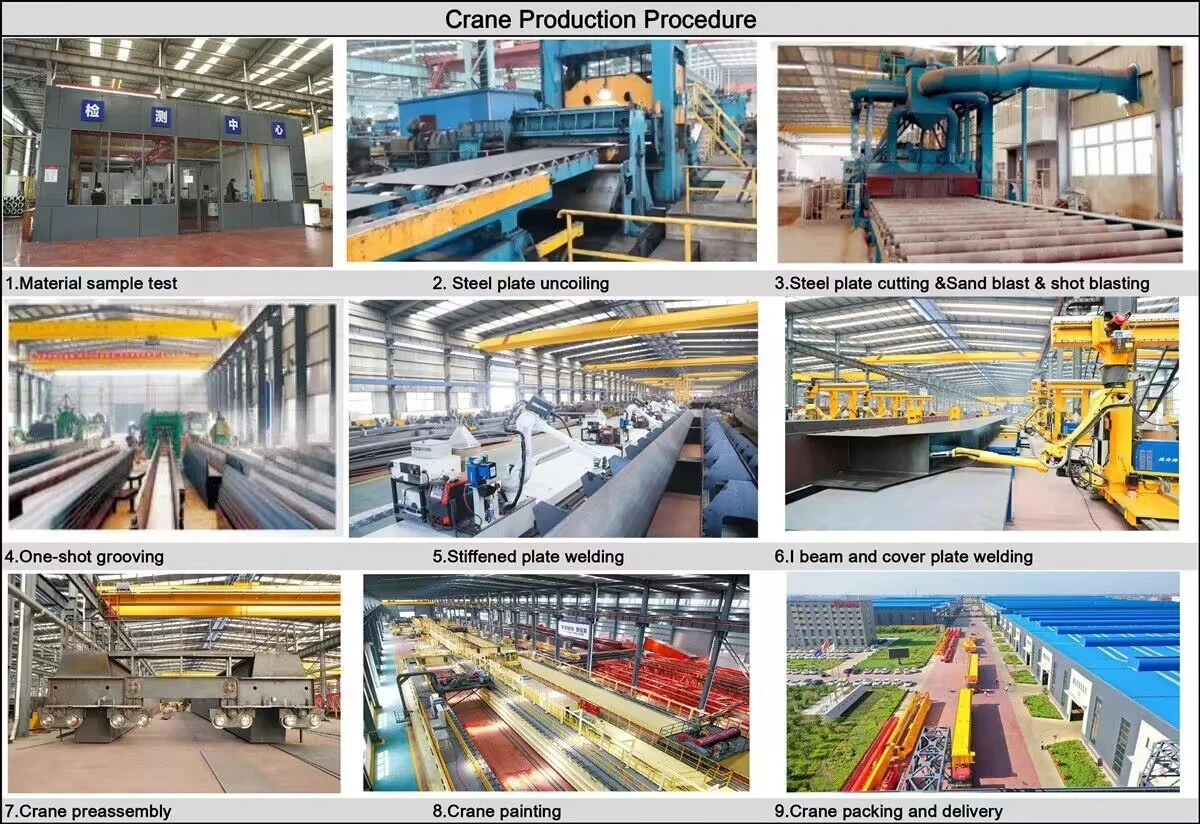
Workshop view:
The company has installed an intelligent equipment management platform, and has installed 310 sets (sets) of handling and welding robots. After the completion of the plan, there will be more than 500 sets (sets), and the equipment networking rate will reach 95%. 32 welding lines have been put into use, 50 are planned to be installed, and the automation rate of the entire product line has reached 85%.


Hot Tags: european style single girder bridge crane, China european style single girder bridge crane manufacturers, suppliers, factory, Double Girder Overhead Travelling Crane, Double Girder Overhead Crane
You Might Also Like



Send Inquiry