










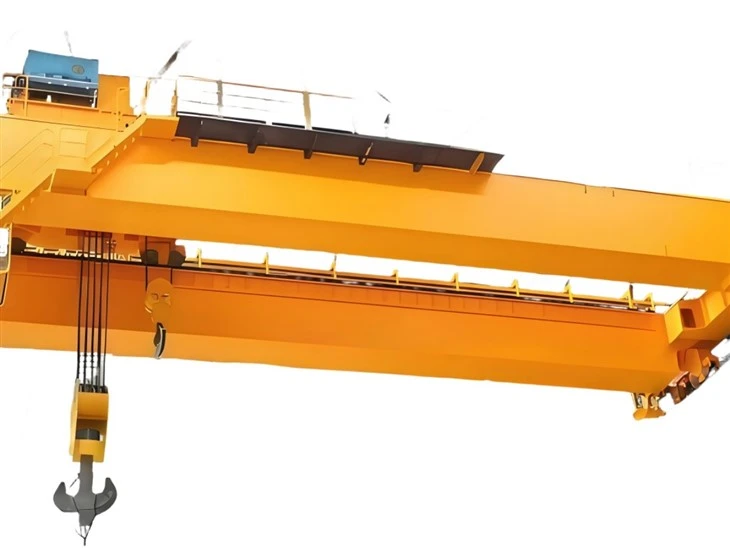
Casting Double Girder Overhead Crane
Products Description
A Casting Double Girder Overhead Crane is a specialized crane designed for handling molten metal and heavy casting operations in steel mills and foundries. When it is flameproof, it means the crane is designed for use in hazardous environments where there is a risk of explosion due to flammable gases, vapors, or dust.
Key Features of a Flameproof Casting Double Girder Overhead Crane
Double Girder Structure – Provides high strength and stability for lifting heavy loads.
Flameproof Electrical Components – Motors, control panels, and wiring are explosion-proof, preventing ignition in hazardous environments.
High Heat Resistance – Components are designed to withstand high temperatures from molten metal.
Heavy-Duty Hoist & Trolley – Equipped with specialized lifting mechanisms suitable for handling ladles of molten metal.
Precise Control System – Variable frequency drives (VFD) or PLC-based control for smooth operation.
Core Components:Bearing, Motor
Place of Origin:Henan, China (Mainland)
Warranty:1.5 years
Weight (KG):25010 kg
Video outgoing-inspection:Provided
Machinery Test Report:Provided
Control Model :Remote Control or Cabin Control insulation Crane
Lifting Mechanism:Insulation Hoist Crane
Work Duty:A5-A6 ISO & FEM 2m~3m Insulation Crane
Crane type:Double Girder Crane
Main Electrical Parts:Schneider Brand
Capacity:10 Ton Insulation E.O.T Crane
Power Source:220V,380V,400V,415V,440V 50/60Hz 3Phase
Crane feature:Insulation Crane

Pictures & Components
1.Main beam
The main beam of a casting double girder overhead crane is a critical structural component designed to support and distribute the load during operations.
1. Structure & Design
Double Girder Configuration: Two parallel girders provide enhanced load-bearing capacity and stability.
Box-type or Welded Design: Typically fabricated from high-strength steel with reinforced welds to withstand extreme loads and high temperatures.
Integrated Rail System: Equipped with rails or tracks for the trolley and hoist to move smoothly.
2. Material & Strength
High-Strength Low Alloy Steel (HSLA): Ensures durability, high load capacity, and resistance to fatigue and deformation.
Heat-Resistant Properties: Essential for steel mills, foundries, and other high-temperature environments.
3. Load Capacity & Span
Designed for heavy-duty lifting applications, typically handling loads from 50 to 500 tons or more.
The span is customized based on the workshop structure, usually ranging from 10m to 50m.
4. Special Features
Reinforced with Additional Stiffeners: To prevent deflection and enhance rigidity.
Custom Lifting Mechanism Support: Works with high-temperature-resistant hooks or specialized lifting devices for molten metal handling.
Integrated Safety Systems: Includes overload protection, emergency stop functions, and temperature monitoring.

2.Lifting System
he lifting system of a casting double girder overhead crane is a critical component designed to handle heavy loads in steel mills, foundries, and other high-temperature industrial environments. Here's an overview of its key elements:
1. Lifting Mechanism
The lifting system consists of:
Main Hoist: The primary lifting mechanism, usually equipped with a high-capacity winch or hoist.
Auxiliary Hoist (if applicable): Used for lighter loads or precise positioning of materials.
2. Lifting Components
Lifting Trolley: Mounted on the double girder, it moves horizontally and carries the hoist.
Wire Rope or Chain: Heavy-duty, heat-resistant material used for lifting.
Hooks or Grabs: Specialized hooks (like Tundish Hooks) or grabs designed to handle molten metal containers.
3. Drive System
Electric Motors: Provide the power needed for hoisting and lowering.
Gearbox & Brake System: Ensures smooth operation, speed control, and emergency braking.
4. Safety Features
Overload Protection: Prevents the crane from lifting beyond its rated capacity.
Limit Switches: Stops lifting when it reaches maximum height.
Thermal Protection: Shields electrical components from extreme heat.
5. Control System
Cabin Control: Operator sits in a heat-shielded cabin with precise controls.
Remote Control (optional): Wireless control for better flexibility and safety.

3.End carriage
The end carriage of a casting double girder overhead crane is a crucial structural component that supports and moves the crane along its designated track. Here's an overview:
1. Definition & Function
The end carriage, also called the end truck, consists of a steel framework that houses the wheels and drive system, allowing the crane to move along the runway beams. It is located at both ends of the double girder bridge.
2. Key Features
Heavy-Duty Design: Specifically built for high-temperature environments in steel mills and foundries.
Precision Machined Wheels: Made of forged steel or ductile iron to withstand high loads and continuous operation.
Drive Mechanism: Equipped with motors, gearboxes, and brakes for smooth acceleration and deceleration.
High Temperature Resistance: Includes heat shields or insulation to protect against extreme temperatures from molten metal.
Anti-Sway System: Helps reduce swinging of the load, ensuring precise positioning.
3. Technical Specifications
Load Capacity: Usually ranges from 5 tons to over 500 tons, depending on the crane's design.
Wheel Configuration: 4, 8, or more wheels, depending on load distribution.
Speed Control: Uses variable frequency drives (VFDs) for smooth and energy-efficient movement.
Material: High-strength steel with reinforced welding.
4. Working Mechanism
The end carriages are powered by motors that drive the travel wheels along the runway beams.
The movement is synchronized with the hoisting mechanism to transport heavy molten metal or castings safely.

4.Crane travelling mechanism
The crane travelling mechanism of a casting double girder overhead crane is a critical component that allows the entire crane structure to move along the runway beams. It consists of several key elements designed to support and drive the crane in a stable and precise manner.
Working Principle:
The crane is powered by an electric supply through conductor rails or festoon cables.
The electric motors drive the wheels through a gearbox, moving the crane along the runway.
The braking system engages when stopping to ensure safety.
Speed control can be single-speed, two-speed, or variable frequency drive (VFD) for precision.
Key Features of the Travelling Mechanism in a Casting Crane:
Heavy-duty design to handle high temperatures and molten metal loads.
Smooth acceleration and deceleration to prevent load swing.
High precision positioning for ladle handling in steel mills.
Heat-resistant components to withstand harsh working environments.
5.Trolley travelling mechanism
The trolley travelling mechanism of a casting double girder overhead crane is a crucial component that enables the movement of the hoist and other lifting mechanisms along the crane's main girders. Below are the key aspects of this mechanism:
1.Working Principle
When power is supplied, the motor drives the gearbox, which transfers torque to the wheels.
The trolley moves along the rails on the double girder overhead crane.
The braking system ensures controlled acceleration and deceleration.
Limit switches prevent overtravel and ensure safety.
2. Features of Casting Crane Trolley Mechanism
Heavy-Duty Construction: Designed for high temperatures and molten metal handling.
Precision Control: Smooth movement for accurate positioning.
Heat-Resistant Components: Protects from extreme conditions in steel plants.
Dual-Drive System (Optional): For high-load capacity and redundancy.
Safety Mechanisms: Includes buffers, overload protection, and emergency stop systems.
6.Crane wheel
The crane wheel of a casting double girder overhead crane is a crucial component that supports and moves the crane along the runway rails. These wheels are typically made from high-strength alloy steel and undergo heat treatment for durability and wear resistance.
1.Key Features of Crane Wheels for Double Girder Overhead Cranes:
Material: Usually made from 42CrMo, 65Mn, or other high-strength alloy steel for superior load-bearing capacity.
2.Manufacturing Process:
Casting: Suitable for heavy-duty applications, providing good impact resistance.
Forging: More durable and resistant to fatigue and wear.
Hardness: The wheel tread and flange are heat-treated to enhance hardness (HRC 40-50) for longer service life.
3.Types:
Drive Wheels: Connected to the motor for motion.
Idle Wheels: Free-moving wheels for support.

7.Crane Hook
A Crane Hook for a Casting Double Girder Overhead Crane is a crucial lifting component designed for heavy-duty applications, especially in steel mills and foundries. These hooks must withstand high temperatures, heavy loads, and harsh working conditions.
1.Key Features of a Casting Double Girder Overhead Crane Hook:
Material: Typically made of high-strength forged steel or cast steel to ensure durability and resistance to wear.
Load Capacity: Designed for heavy loads, often ranging from 5 tons to over 500 tons.
Heat Resistance: Special heat-treated materials for working in high-temperature environments, such as foundries.

8.Motor
The motor of a casting double girder overhead crane is a crucial component designed to handle heavy-duty lifting in steel mills and foundries. Here's what you need to know:
1. Types of Motors Used
Hoist Motor:
High-torque, heavy-duty motor
Commonly uses three-phase asynchronous motors
Often YZR/YZP series wound rotor motors (designed for metallurgy)
Frequency-controlled for smooth lifting
Trolley Travel Motor:
Used for moving the trolley along the bridge
Usually squirrel cage or wound rotor motors
Variable frequency drive (VFD) for precise speed control
Crane Travel Motor:
Drives the entire crane along the runway
Often YZR series slip-ring motors for heavy-duty operation
Equipped with thermal protection and cooling systems


9.Sound and light alarm system & limit switch
A sound and light alarm system and a limit switch are essential safety components in a casting double girder overhead crane. Here's how they function:
1. Sound and Light Alarm System
This system is used to alert workers in the area when the crane is in operation, preventing accidents. It typically includes:
Audible Alarm (Buzzer/Siren) – Emits a loud sound to signal movement or an emergency.
Visual Alarm (Flashing Beacon/Light) – A bright, flashing light to warn of crane motion, especially in noisy environments.
Automatic Activation – The alarm triggers automatically when the crane starts moving, lifting, or lowering loads.
2. Limit Switch
Limit switches are installed to control the motion of the crane and prevent accidents. The main types include:
Travel Limit Switch – Stops the crane from moving beyond its set path to prevent collisions.
Hoisting Limit Switch – Prevents the hook from over-hoisting or over-lowering, avoiding wire rope damage or load drop.
Emergency Limit Switch – Acts as a failsafe to cut power in case of malfunction.
These components enhance safety, reliability, and efficiency in operating a casting double girder overhead crane, which is commonly used in steel mills, foundries, and heavy-duty industrial environments.

10.Safety Devices
1.Safety devices for casting double girder overhead cranes are essential to ensure the safety of the equipment, operators, and the work environment. Here are some common safety devices used in these cranes:
2.Overload Limiter: This device prevents the crane from lifting loads that exceed the rated capacity. If the load exceeds the maximum safe limit, the system will activate a warning or shut down the crane to prevent damage or accidents.
3.Limit Switches: These switches control the movement of the crane and prevent it from exceeding its safe operating range. There are typically limit switches for the trolley's travel and the hoist's vertical movement.
4.Emergency Stop Button: An easily accessible emergency stop button allows operators to halt the crane in case of an emergency. This device ensures that the crane can be stopped quickly if there is an immediate threat to safety.
5.Warning Lights and Alarms: Visual or audible signals are used to warn operators and nearby workers about hazardous conditions, such as overloading or malfunctioning equipment.
6.Safety Railings and Guardrails: These are installed around the crane's walkways, platforms, and other accessible areas to prevent accidental falls.
11.Control Mode
The control mode of a Double Girder Overhead Crane can be classified into several types, with each offering varying levels of automation and user control. Here are the most common control modes:
Pendant Control (Wired Control):
This is the most common and traditional mode.
The crane operator uses a handheld pendant controller that is connected to the crane via a cable.
The pendant typically includes buttons for hoisting, lowering, moving the crane left/right, and controlling the trolley.
Radio Remote Control:
This mode uses wireless control, where the operator uses a handheld device with buttons or joysticks to control the crane's movements.
It offers more mobility compared to pendant control since the operator doesn't need to be near the crane's fixed position.
Cabin Control (Operator's Cabin):
The crane has a cabin attached to the crane, typically on the girder or at the trolley.
The operator can control the crane from within the cabin, using joysticks or other buttons to manage hoisting, traveling, and trolley movements.
This mode is common for larger cranes, providing enhanced visibility and control.
Automatic Control (Automated Operation):
In this mode, the crane operates autonomously without manual control.
Sensors, programmable logic controllers (PLC), and computer systems are used to automate the crane's movement based on preset programs or load sensing.
Typically used in highly automated warehouses or for repetitive tasks.

12.Sketch

Main technical

Advantages
-
Increased Load Capacity: Double girder cranes are designed to handle larger loads compared to single girder cranes. The casting provides more structural strength, making it ideal for heavy-duty applications in industries such as manufacturing, construction, and shipping.
Improved Stability: The double girder design ensures better balance and stability, reducing the risk of crane instability during operation. This makes it safer for lifting heavy and bulky loads.
Higher Lifting Height: Double girder cranes can accommodate taller lifting heights due to the more robust structure, giving more clearance for the hoist to move freely.
Enhanced Durability: The casting process ensures a high level of precision and durability in the crane's components, especially the girders. This translates into a longer operational life and lower maintenance costs over time.
Efficient Operation: With a double girder design, the hoist travels along the full length of the crane, offering greater coverage and reducing the need for multiple cranes in large areas, which can optimize operational efficiency.
Application
-
Steel Mills & Foundries:
In steel mills and foundries, these cranes are used for moving heavy steel billets, molten metal, or large castings.
They can lift and transport molten metal ladles, molds, and casting products with great precision.
Heavy Manufacturing Plants:
These cranes are ideal for handling large machinery, components, and equipment used in heavy manufacturing industries.
They can carry heavy loads such as large motors, turbines, or other large mechanical parts in the production process.
Shipbuilding & Dockyards:
Used in shipbuilding for lifting heavy sections of ships, engines, and other ship components.
The high capacity and precision allow for efficient handling of oversized materials.
Construction Sites:
In construction, these cranes are used for moving large concrete elements, steel beams, or structural components.
They can handle heavy lifting tasks during the construction of bridges, high-rise buildings, or industrial structures.
Warehouses & Distribution Centers:
These cranes are applied in warehouses for lifting and transporting heavy goods, especially those that are bulky and require precise movement.
Their robust design allows them to handle large storage materials, such as metal coils, large pallets, or containers.
Crane production procedure
1. Design & Planning
Design Specifications: This includes determining the required lifting capacity, span, height of lift, and operational environment of the crane.
Materials Selection: Materials for the crane, including the steel for the girders, the beams, and the lifting mechanisms, are selected based on strength and durability requirements.
Drafting the Design: The final design of the crane is drafted with specifications for the girders, lifting mechanisms, trolley, electrical systems, and other components.
2. Material Preparation
Steel Cutting & Preparation: Steel plates and beams are prepared by cutting them into the required shapes and sizes.
Casting Material: For the casting of certain components (such as the end trucks or the trolley parts), specialized metal casting processes are used to create strong, durable components.
3. Casting
Mold Creation: For parts requiring casting, molds are created based on the specific dimensions needed for parts like the crane end trucks or wheels.
Melting & Pouring: Steel or other metal alloys are melted in a furnace, then poured into the prepared molds to form the required crane components. This step must be carefully controlled to prevent defects like air bubbles or uneven distribution.
Cooling & Inspection: Once the parts are cast, they are allowed to cool. Post-cooling, they are inspected for quality, and any defects in casting are corrected.
4. Welding & Fabrication
Assembly of Girders: The fabricated girders (the main horizontal beams of the crane) are welded together using precise welding techniques.
Structural Components Assembly: Other structural components like the bridge, trolley, and hoist mechanisms are assembled. This involves welding or bolting parts together.
End Trucks & Trolley Systems: These parts, often made from cast components, are assembled with wheels, motors, and other necessary mechanisms.
5. Machining & Finishing
Machining: The crane components, especially those involving precise movements (such as wheels or rail systems), are machined for smooth operation.
Surface Treatment: Parts undergo surface treatments like painting, galvanizing, or coating to prevent corrosion and increase durability.
Inspections: Continuous quality control checks are done to ensure all parts meet the design specifications and quality standards.
6. Assembly & Integration
Final Assembly: All the components are brought together for the final assembly of the crane. This includes mounting the girders, attaching the lifting mechanisms, and setting up the control systems.
Electrical Integration: Electrical systems, including motors, controls, and sensors, are integrated and tested.

Workshop view:
The company has installed an intelligent equipment management platform, and has installed 310 sets (sets) of handling and welding robots. After the completion of the plan, there will be more than 500 sets (sets), and the equipment networking rate will reach 95%. 32 welding lines have been put into use, 50 are planned to be installed, and the automation rate of the entire product line has reached 85%.


Hot Tags: casting double girder overhead crane, China casting double girder overhead crane manufacturers, suppliers, factory, Double Girder Bridge Crane with Electric Hoist, Bridge Crane
Previous
Gorbel Workstation Bridge CraneYou Might Also Like


Send Inquiry