










Freestanding Workstation Bridge Crane
Products Description
The Freestanding Workstation Overhead Crane is an ergonomic and cost-effective material handling solution designed to improve efficiency, safety and productivity in industrial environments. The system is ideal for applications that require repeated lifting, positioning and transport of loads. Its modular design ensures flexibility, scalability and easy installation without permanent structural modifications.
The Freestanding Workstation Overhead Crane is designed to be mounted without attachment to an existing building structure. It is supported by self-supporting columns, ensuring independence and stability. It is also available in a variety of spans, heights and capacities to suit specific workspace layouts. Adjustable bridge length and crane width are available.
It utilizes high-strength steel or aluminum components to create a durable yet lightweight system. Reduces operator fatigue with smooth and easy movement. Load capacities typically range from 150 kg to 2,000 kg (330 lbs to 4,400 lbs). Suitable for small to medium load handling tasks.
Weight (KG):1000
Core Components:Engine, Gearbox, Motor
Place of Origin:Henan, China
Warranty :1 Year
Video outgoing-inspection:Provided
Machinery Test Report:Provided
Crane feature:Easy Operated Girder Bridge Crane
Power Source:3P 220--440 V/50hz60HZ
Control method:Ground Control+Remote Control
Work Duty:A3-A5
Crane type:Flexible Beam Crane
Color:Customized Color Acceptable
Usage:Lifting Materials
Specification:Flexible Rotation Arm

Pictures & Components
1.Main beam
The main beam of a freestanding workstation overhead crane is a key component that spans across the crane track beam, supporting the hoisting mechanism and enabling horizontal movement of the load.
The main beam is typically made of high-strength steel or lightweight aluminum. Single beams are commonly used in workstation overhead cranes, providing a lightweight yet strong solution. The length of the main beam depends on the width of the workspace and the required coverage area. The strength of the beam is designed to withstand specific weight limits, ranging from a few hundred kilograms to several tons, depending on the specifications of the crane. Profiles:
Box beam: Provides excellent torsional strength and rigidity.
I-beam: A cost-effective and widely used option, especially for lighter loads.
Enclosed track: Reduces rolling resistance, allows for smoother movement, and minimizes wear.

Lifting System
Freestanding Workstation Overhead Crane Hoisting Systems are an ergonomic and versatile material handling solution commonly used in a variety of industrial settings such as manufacturing, assembly lines, and warehouses.
Freestanding Structure: Independent of the building's existing support structure. Consists of vertical columns and horizontal beams fixed to the floor. Ideal for facilities without solid ceilings or where portability is required.
Hoist: This is the main lifting device attached to the bridge beam. It can be:
Manual (Chain Hoist): Manually operated to lift lighter loads.
Electric: Motorized for faster and more consistent lifting of heavy objects.
Trolley: Mounted to the bridge beam and moves longitudinally along the bridge to enable forward and backward motion.
Runway Track: Provides smooth horizontal motion for the overhead crane.Track is mounted on a freestanding frame.

3.End carriage
The end frame is a key component of a freestanding workstation bridge crane. It is a structural element that supports the crane bridge and allows it to move along the crane rails.
The end frame is attached to the bridge, ensuring stability and even weight distribution. It is equipped with wheels or rollers to facilitate smooth movement along the rail beams. It is usually designed with anti-friction bearings for durability and efficiency.
The end frame is made of high-strength steel to withstand the load and ensure longevity. It is designed to accommodate various capacities, depending on the crane application.

4.Crane travelling mechanism
1) Operation principle
The traveling gear is usually located on the girders of a bridge crane. These girders are supported by tracks or rails along which the crane travels. The system is driven by electric motors, which drive wheels or trolleys that move along the tracks. The motor is connected to the wheels through a drive system, which can include a gearbox for torque transmission. The traveling wheels are mounted on the crane structure and are designed to move along fixed tracks or rails. The wheels ensure that the crane moves smoothly while maintaining stability. These wheels are usually made of materials that reduce wear, such as steel. The track system of a crane is usually mounted on a fixed foundation, such as a floor or ceiling mounted structure. The track can be a continuous track or a series of track sections, on which the wheels of the crane travel. The movement of the crane is controlled by a user interface, usually through a pendant controller or a wireless remote control. This interface sends signals to the motors to start, stop and adjust the speed and direction of the crane's travel. A braking system is installed to stop the movement of the crane when necessary. This is particularly important for safety, ensuring that the crane stops quickly and effectively. The brakes can be electromagnetic, mechanical or hydraulic, depending on the design.
2) Functional characteristics
Smooth and controlled movement: The crane travel mechanism allows the overhead crane to move horizontally along the track in a smooth and controlled manner. This ensures precise positioning of the crane over the workspace, making it ideal for workstations and assembly tasks.
High load capacity: The travel mechanism is designed to carry the load of the crane bridge and the materials it moves. It is designed to support the weight of the crane structure and any attached loads without compromising performance.
Independent operation: In many designs, the travel mechanism operates independently of other crane components, such as the lifting mechanism. This allows the crane to move over the workstation without interrupting the lifting process, increasing overall efficiency.
Electric and manual options: The mechanism can be driven by an electric motor, allowing for rapid, automatic movement along the track. It may also have a manual override option for maintenance or emergency situations.
Precise positioning: By using either an electronic or mechanical drive system, the crane travel mechanism provides precise positioning, which is critical for tasks such as material handling or assembly, ensuring the crane moves to the exact location.
Reduced wear: The crane's travel mechanism is equipped with anti-wear features such as wear-resistant wheels, tracks and bearings. This extends the life of the crane and minimizes maintenance requirements.
5.Trolley travelling mechanism
1) Electric hoist: The trolley operating mechanism is usually equipped with an electric hoist for lifting and lowering materials. The electric hoist moves along the track of the trolley and is responsible for the actual lifting operation.
2) Trolley frame: The main structure of the trolley supports the electric hoist and other components. The frame design must have sufficient strength and rigidity to withstand the load during operation.
3) Wheel set: The bottom of the trolley is equipped with wheels, which are usually made of wear-resistant materials and can roll smoothly on the track of the main beam. The design is generally double-wheeled or multi-wheeled to ensure the stability of the trolley during operation.
4) Drive device: The drive motor transmits power to the wheels through the reducer to control the movement of the trolley. The selection of the motor depends on the load-bearing capacity and running speed requirements of the trolley.
5) Guide device: In order to ensure the stable operation of the trolley on the main beam, guide wheels or guide rails are usually provided to prevent the trolley from deviating or derailing during operation.
2) Functional characteristics
Movement along the bridge: The trolley travel mechanism is responsible for moving the trolley along the length of the bridge. This movement enables the crane to cover the entire workspace and handle loads over a large area.
It uses an electric drive, usually an electric motor, to control the movement of the trolley via tracks mounted on the bridge girders.
Load handling and positioning: The trolley travel mechanism allows for precise positioning of the load. It ensures that the load can be moved to the exact location to lift, lower or place items at specific points in the workstation.
It supports smooth, controlled movement to prevent damage to the load or the work area.
Speed control: The mechanism usually includes a speed control feature to adjust the speed at which the trolley moves. This is essential for precision during load handling and safety during operation.
Variable speed control can be implemented to accommodate different lifting or positioning tasks.
Sufficient load capacity: The trolley travel mechanism must be designed to handle the maximum load capacity of the crane without compromising safety or performance. It contains heavy-duty components such as gears, motors, and wheels that are designed to withstand the stress and weight involved.
Smooth and quiet operation: The mechanism is designed for smooth and quiet operation, which reduces wear on components and minimizes noise pollution in the workplace. This includes using lubrication systems and precision parts to reduce friction and noise during the movement of the trolley.
Braking and safety mechanisms: The travel mechanism must include a braking system that can stop the trolley in a controlled and safe manner. This ensures that the load is safely positioned and the trolley does not continue to move unintentionally. Some systems include fail-safe brakes to prevent the trolley from moving if a power outage or other problem occurs.
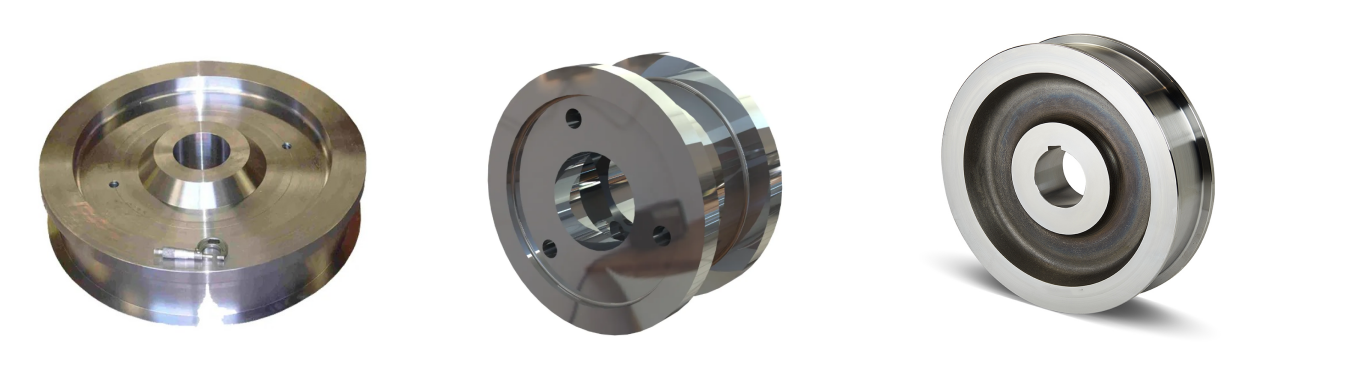
6.Crane wheel
The crane wheels of a freestanding workstation overhead crane are a critical component that enables the crane to move along a runway or track. These wheels are usually mounted on each end of the crane bridge, allowing it to move back and forth along the track system.
The wheels are usually made of hardened steel or other durable materials to withstand the heavy loads and constant wear and tear that comes with moving the crane. Depending on the environment, the material may vary to resist corrosion or extreme temperatures.
Crane wheels are designed with grooves or flanges to fit securely on the track or rail, ensuring the crane moves smoothly and steadily. This helps prevent the crane from derailing or becoming unstable.
The wheels must support the full weight of the crane as well as the load it carries. The size and number of wheels are determined by the crane's weight capacity. The wheels are also mounted on axles with bearings to reduce friction, allowing for smoother movement and less wear. Bearings are selected based on load, speed, and operating conditions.
For a freestanding workstation overhead crane, the wheels are mounted on the crane's bridge or trolley. They are attached to the crane structure and are critical to the crane's ability to move along its track system.
7.Crane Hook
The crane hook of the freestanding workstation bridge crane is an important part for easy lifting and moving of loads.
Function: The crane hook is designed to be securely attached to a sling, chain or other rigging accessories to safely handle the load. It is often used for material handling operations within a designated workspace.
Design Features
The material is high-strength alloy steel, which is durable and safe. The shape is a wide-mouth opening or latch to prevent the load from slipping off. With the ability to swivel, the swivel hook can be used to align the load flexibly.

Motor
A freestanding workstation overhead crane is a versatile piece of lifting equipment that is often used in industry and manufacturing. Its motor is a key component that drives the crane's motion, ensuring smooth and efficient operation.
AC motors: Often used in large systems that require high torque.
DC motors: Ideal for applications that require variable speed control.
Servo motors: Offer high precision and are often used in systems with automation features.
Hydraulic motors: Used in specialized environments that require hydraulic pressure, but are less common in freestanding cranes.
Key Features of Crane Motors
Load Capacity: Motors are designed to handle specific weights (e.g., 500 kg, 1 ton, 2 tons). Choose one based on your operational needs.
Speed Control: Variable Frequency Drives (VFDs) are often paired with motors to regulate lifting and travel speeds.
Durability: Motors in cranes are built to withstand heavy duty cycles and harsh industrial environments.
Energy Efficiency: Modern motors are energy efficient, reducing operating costs.

.
Sound and light alarm system & limit switch
1) Sound and light alarm system
The sound and light alarm system for a freestanding workstation overhead crane is a safety device designed to alert the operator and nearby personnel to potential hazards or specific operating activities.
Audible Alarm: A loud, clear sound is emitted to signal crane movement or emergency situations. Volume is adjustable to suit different environments (typically 85-120 dB) Common sounds: Buzzers, sirens, or voice notifications.
Light Alarm: A high-intensity LED light that flashes frequently to provide a visual alert. Commonly used colors:
Red: Emergency or stop signal.
Yellow/Amber: Warning.
Green: Safe operation or ready status.
Visible from a distance even in low light conditions.
2) Limit switch
Limit switches on freestanding workstation overhead cranes are safety devices used to prevent the crane from moving beyond its designated operating range, protecting the equipment and surrounding environment. These switches are typically installed at key points in the crane's travel path (on the bridge end or trolley track) to detect the crane's position.
Function
End of Travel Protection: Limit switches stop the crane when it reaches the end of its travel, preventing overtravel from damaging the crane or other equipment.
Overload Protection: Some limit switches can be integrated with an overload sensing system to stop the crane's movement when an overload is detected.
Electrical Control: Limit switches activate or deactivate a circuit to prevent the crane's motor from continuing to operate after a preset position is reached.
Mechanical Actuation: These switches are typically mechanical and are triggered by physical contact with the crane's moving parts, such as the trolley or bridge.
There are two main types of limit switches:
Rotary Limit Switches: Limit switches activate when a rotating part, such as a drum or gear, turns a mechanism that triggers the switch.
Linear Limit Switches: Linear motion activates limit switches, typically used in applications where the crane moves along a straight path.

10.Safety Devices
Freestanding workstation overhead cranes are commonly used for material handling in manufacturing and industrial environments. Safety features on these cranes are critical to ensure operator safety and the longevity of the equipment.
Limit switches: Prevent the crane from moving beyond its intended range. They ensure that the crane does not collide with obstacles or exceed the designed movement limits.
Overload protection: Detects if the crane is carrying a load that exceeds its rated capacity. The system will prevent movement or automatically stop the crane to avoid damage or accidents.
Emergency stop button: Allows the operator to immediately stop all crane functions in an emergency.
Anti-collision systems: Prevent the crane from colliding with other cranes, walls, or obstacles in the work area. These systems use sensors to detect the presence of objects.
Braking systems: Ensure that the crane can stop safely and hold the load in place when not in use or when the power is off.
Rotation limiters (for rotating cranes): For cranes that allow rotational movement (such as jib cranes), rotation limiters prevent excessive rotation to avoid damage to the crane or surrounding equipment.
Pendant controller with safety features: The operator uses a pendant to control the movement of the crane. Modern pendants often have built-in safety features such as emergency stop buttons, dead man switches or safety interlocks.
Safety interlocks: Ensure that the crane can only be operated under certain safety conditions. For example, the crane can only move with the hoist properly engaged or the load balanced.
Warning lights and sirens: Provide visual and audible signals when the crane is operating or malfunctioning, alerting the operator and people in the area to potential hazards.
Guardrails and barricades: Physical barriers around the crane and its operating area help prevent people from entering dangerous areas.
11.Control Mode
The control mode of a freestanding workstation overhead crane refers to how the movement and operation of the crane is managed. Controls can be configured in a variety of ways depending on the design, intended use, and degree of automation.
Boom control: This is the most basic form, where the operator controls the crane using a handheld boom. The boom typically has buttons or joysticks that control the movement of the bridge (horizontal movement), trolley (lateral movement), and hoist (vertical movement).
Radio remote control: Similar to boom control, but uses radio signals, which allows the operator greater mobility when operating the crane.
Joystick control: The joystick panel enables the operator to precisely control the movement of the crane in multiple directions, allowing for smooth, responsive operation.
Automatic control: Preset positions: The crane can be programmed to follow a predefined path or automatically stop at a specific location, such as a predefined loading or unloading area.
Semi-automatic control: In this mode, the operator can manually control certain aspects of the crane (such as speed or direction), but other functions (such as lifting or positioning) are automatic or semi-automatic based on sensor input.
Touchscreen or push-button controls: Modern systems may use a touchscreen interface where the operator can select options for controlling the crane or monitor various parameters such as load weight, crane speed, or system diagnostics.

12.Sketch

Main technical

Advantages
Improved Productivity: It allows for easy and efficient movement of heavy loads across a workspace, reducing the need for manual lifting. This can lead to increased productivity and faster turnaround times for tasks.
Flexible Design: Freestanding workstation bridge cranes are customizable and can be adjusted to fit specific workspace requirements. They can be designed for various load capacities and lifting heights to suit different operations.
Space Efficiency: These cranes don't require structural modifications or support from existing building structures. They are installed independently and can be moved to different areas within the facility if necessary.
Enhanced Safety: With the use of a bridge crane, the risk of employee injuries from lifting and moving heavy loads manually is minimized. The system is designed to safely handle the weight and movement of materials.
Easy Installation and Maintenance: Being freestanding, these cranes are easier to install and maintain compared to other types of cranes that may require more complex setup or modifications to the facility's structure.
Cost-Effectiveness: Freestanding workstation bridge cranes are often more affordable than installing overhead systems or making structural adjustments to the building. They can be a cost-effective solution, especially for smaller operations or in existing facilities with limited space.
Versatility: These cranes are versatile and can be used for a wide range of tasks, from assembly lines to moving heavy parts, tools, and equipment. They work well in manufacturing, automotive, and other industrial environments.
Modular and Scalable: As your business grows, you can add additional modules or extend the crane system to accommodate more lifting capacity or cover larger areas.
Reduced Floor Space Requirement: Unlike other cranes that require large areas or structural modifications, freestanding workstation bridge cranes take up minimal space and can be integrated into existing workflows without significant disruption.
Application:
1. Manufacturing and Assembly Lines
In industrial settings such as factories or assembly plants, a freestanding workstation bridge crane can be used to move heavy parts along production lines, enabling workers to assemble or position parts with ease.
It supports ergonomic workflows, reducing the need for manual lifting and improving worker safety and productivity.
2. Maintenance and Repair Shops
These cranes are often found in maintenance and repair facilities, where they are used to lift heavy machinery components, tools, or parts for servicing.
The flexibility of the freestanding design allows operators to move the crane along a fixed track, offering versatility in positioning loads over different workstations.
3. Warehousing and Distribution
Freestanding bridge cranes can be used in warehouses to move materials or products between storage areas and shipping stations.
They can handle bulky goods, reducing the need for forklifts in tight spaces and streamlining material flow within the facility.
4. Shipping and Receiving Areas
These cranes are useful for loading and unloading heavy items from trucks or containers in shipping areas.
They provide a convenient and efficient means for positioning heavy packages or components for packing, sorting, or shipping.
5. Lab and Research Facilities
In research labs or high-tech environments, freestanding bridge cranes help move sensitive equipment or large, heavy apparatus between stations, ensuring precision handling and reducing the risk of damage.
6. Construction and Heavy Equipment Handling
In construction sites or heavy machinery handling, freestanding bridge cranes can be used to lift and move parts of scaffolding, concrete forms, or other large materials.
They are particularly valuable in environments where overhead clearance is limited or specialized lifting is required.
7. Automotive Industry
Automotive manufacturing and repair facilities use freestanding workstation cranes for tasks like engine assembly, tire changes, or heavy component placement.
These cranes provide flexible support, allowing workers to easily manipulate car parts at different workstations.
8. Aerospace Industry
In aerospace manufacturing, freestanding workstation cranes are utilized to lift and position delicate components such as airplane wings, fuselage sections, and other large parts, where precision and safety are crucial.
Crane production procedure
1. Design & Engineering
Understand the specific requirements of the customer, such as load capacity, span, lifting height, and other customization needs.Create detailed CAD drawings for the crane, including structural design, electrical systems, and mechanical components. This ensures the crane meets safety standards and operational requirements.Perform load calculations, stress analysis, and check compliance with regulations (e.g., OSHA, ANSI standards). Approval from a certified engineer is often required before proceeding.
2. Material Selection
Select high-quality steel for the crane's structural frame, ensuring it can support the intended load. Common materials include structural steel, mild steel, or alloy steels.Choose materials for components like hooks, hoists, rails, and motors. These are typically high-strength materials like forged steel, aluminum alloys, or galvanized steel.
3. Fabrication of Crane Components
Fabricate the main components of the crane, such as the bridge (horizontal structure), end trucks (wheeled units that move along the runway), and the workstation frame. These parts are cut, welded, and assembled according to the design specifications. Fabricate the crossbeams and end carriages. These are essential for the crane's ability to support heavy loads.Assemble the supporting framework for the crane, which may include supporting beams or columns for the freestanding setup.Manufacture or install the hoisting mechanism (e.g., electric hoists, manual chain hoists) and trolley. These components allow the crane to lift and transport loads along the span of the bridge.
4. Assembly
Begin assembling the various parts like the bridge structure, trolley, hoist, and end carriages.The frame is connected using bolts and welding to form a solid, durable structure. Precision is crucial to ensure smooth operation. Install the necessary electrical wiring, motors, switches, and control panels. This may include safety features such as overload sensors, limit switches, and emergency stop buttons. If the crane is freestanding, install the runway (rails) and ensure they are level and properly aligned for smooth crane movement.
5. Testing and Quality Control
Perform static and dynamic load tests to ensure the crane can handle the specified weight without failure. This may include running the crane through its full range of motion while testing its lifting capacity.Inspect all components for quality assurance. Check the welds, bolts, and electrical systems for proper installation and operation.Ensure that all safety features (limit switches, emergency stops, etc.) are functioning properly. Confirm compliance with relevant safety regulations and standards.
6. Finishing and Coating
Clean the crane components and apply surface treatment (e.g., painting, galvanizing) to prevent corrosion and extend the crane's lifespan. The type of finish depends on the working environment (e.g., outdoor or corrosive environments).Assemble the final crane components, including installing the electrical systems, hoists, and control systems. Perform a thorough inspection to ensure everything is functioning properly.
7. Packaging and Shipping
Depending on the crane's size, it may be disassembled into smaller parts for shipping. Components are carefully packed to avoid damage during transportation.Transport the crane parts to the customer site, ensuring that all necessary components are included.
8. Installation and Commissioning
Once the crane components arrive at the site, the crane is assembled and installed by a team of technicians. This includes setting up the crane on the runway, connecting the electrical systems, and making any final adjustments.Perform final operational testing to ensure the crane is working correctly and meets the customer's requirements. Train the customer's personnel on the crane's operation and safety features.
9. Maintenance & After-Sales Support
Provide ongoing maintenance services and offer replacement parts as needed. Regular inspections and servicing are necessary to ensure the crane operates efficiently and safely over its lifespan.

Workshop view:
The company has installed an intelligent equipment management platform, and has installed 310 sets (sets) of handling and welding robots. After the completion of the plan, there will be more than 500 sets (sets), and the equipment networking rate will reach 95%. 32 welding lines have been put into use, 50 are planned to be installed, and the automation rate of the entire product line has reached 85%.


Hot Tags: freestanding workstation bridge crane, China freestanding workstation bridge crane manufacturers, suppliers, factory, Double Girder Bridge Crane with Electric Hoist, Bridge Crane
Previous
Bridge Crane For CoilYou Might Also Like




Send Inquiry