







Box Girder Crane
Products Description
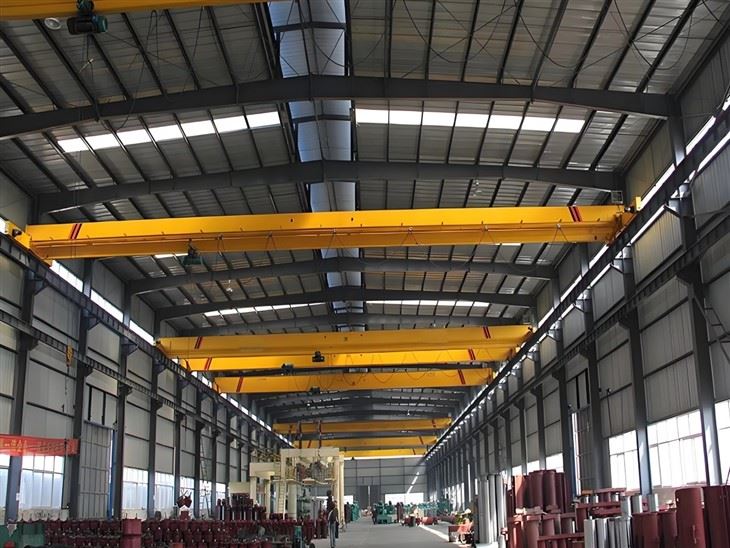
- A box girder crane is a type of overhead crane that features a box girder structure that provides a high level of stability and strength. These cranes are designed for heavy lifting and material handling in industries such as construction, manufacturing, and shipping.
- The main load-bearing component of the crane is the box girder, which provides enhanced durability and resistance to bending, making it ideal for heavy lifting. The box girder is usually made of steel or other high-strength materials to ensure long-lasting performance.
- Capable of lifting large and heavy loads, box girder cranes are suitable for industries that require handling of large pieces of material, such as steel mills, construction sites, and warehouses. These cranes can be customized for a variety of lifting operations based on load capacity and span requirements, ranging from single beam to The crane features smooth and stable operation that minimizes load swing and ensures precise handling of materials. It is equipped with an advanced control system that enables the operator to lift and position the load with high precision.
- Compared to traditional cranes, the design of the box girder crane reduces the overall weight and is more compact, allowing it to operate in smaller spaces while still maintaining high strength.
Core Components :Engine, Bearing, Gearbox, motor
Place of Origin :Henan, China
Warranty :1 Year
Weight (KG) :5000 kg
Video outgoing-inspection :Provided
Machinery Test Report :Provided
Key words :mobile bridge crane
Color :Customers' Demand
Lifing height : 6m~30m
Lifting speed : single / double
Crane traveling speed :20m/min for bridge crane 3 ton
Working Class :A3
power source :380V 50Hz three-phase or as your requrement
Control model :Pendant pushbutton control or remote control
crane type :15 ton single beam bridge crane
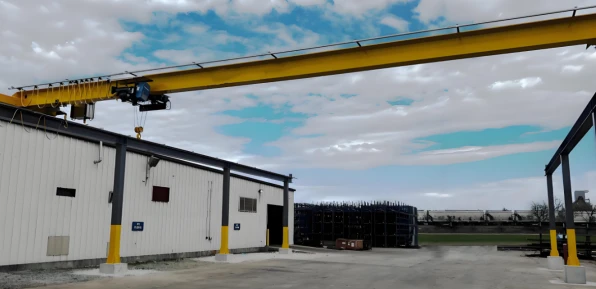
Pictures & Components
1.Main beam
1)The girder of a box girder crane is the main horizontal load-bearing component of the crane structure. It is typically designed to support the crane's lifting equipment, such as the hoist, trolley, and other components. Box girder cranes are often used in heavy-duty applications where strength, durability, and the ability to carry heavy loads are critical.
2)The girder is typically a box-shaped structure made of welded steel plates to form a closed cross-section. This design provides an excellent strength-to-weight ratio and helps resist torsion, bending, and other stresses that the crane encounters during operation.
3)The girder distributes the weight and forces generated by the operation of the crane to the crane's supporting tower or pillars. The load is transferred from the trolley and hoist mechanism to the girder and then down to the support.
4)The girder is typically made of high-strength steel, but the specific material may vary depending on the requirements of the crane, such as load capacity, environmental conditions, and service life expectations.

2.Lifting System
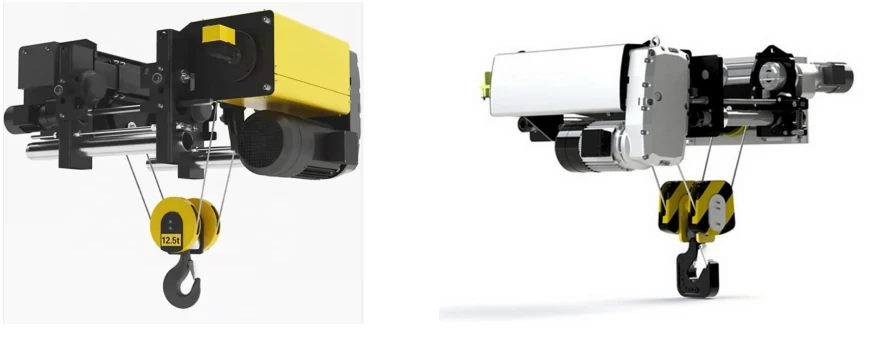
The hoisting system of a box girder crane is the key component responsible for lifting, lowering and moving the load. Here is an overview of the key components and functions of the hoisting system of a box girder crane:
Key components of the hoisting system:
1. Hoisting mechanism:
It consists of a hoist, which is a device used to lift and lower the load. It usually includes:
Motor: Provides the power required to lift the load.
Gearbox: Reduces the motor speed and increases the torque.
Drum or sprocket: The cable or chain is wrapped around this drum to lift and lower the load.
Wire rope or chain: Used to lift and move the load vertically. The wire rope or chain is passed around the drum and connected to the load.
2. Trolley:
The hoist is usually mounted on a trolley, which is a wheeled mechanism that runs along the main beam of the crane. The trolley moves the hoist horizontally to the length of the crane to position the load.
It usually has an electric drive system that enables it to move along the crossbeam of the crane.
3. Box beam:
The box beam itself is a horizontal frame that provides the main support for the crane structure. It consists of a hollow cross section designed to provide strength and stability while minimizing weight.
Crane tracks are attached to the top of the box girder, and the lifting system (including the crane and hoist) runs along these tracks.
4. End Cars:
At each end of the crane, there are end cars that support the box girder and allow it to travel along the crane runway or track system. These cars usually include wheels and bearings to facilitate movement along the tracks.
5. Control System:
The entire lifting system is controlled by an electrical control system that allows precise movement. The operator can control the lifting speed, crane movement, and even the lifting capacity. Many systems include a remote control or operator cabin to manage the lifting operation.
3.End carriage
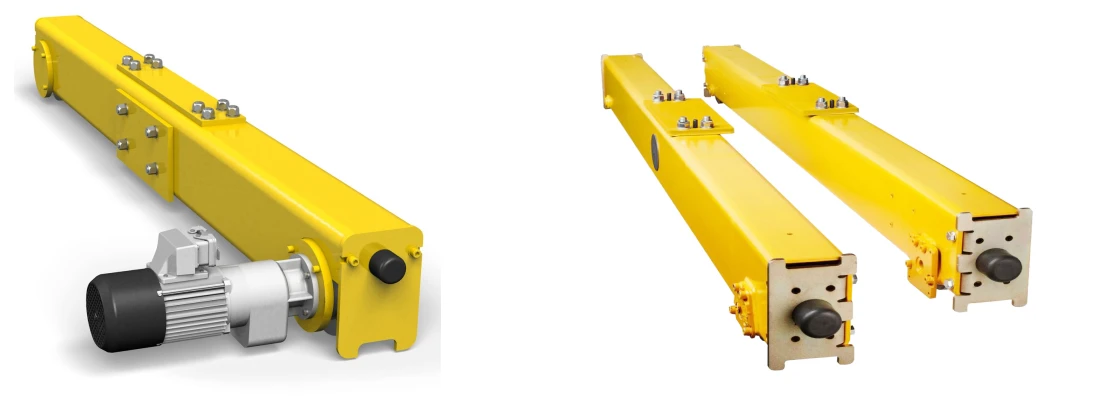
The end carriage of a box girder crane refers to the part of the crane that supports the girder structure at both ends and facilitates its movement along the tracks or runway. The box girder itself is the primary load-bearing element of the crane, and the end carriage provides the necessary support for the girder to move horizontally along the structure.
Key components of the end carriage in a box girder crane include:
1.Frame Structure: Typically made of steel, it houses the wheels and connects the crane girder to the rails.
2.Wheels: Mounted on the frame, the wheels run along the rails or track system, allowing the crane to travel horizontally.
3.Drive Mechanism: This could be an electric motor, usually connected to the wheels via gears or a chain system, to drive the movement of the crane along the track.
4.Axles: The wheels are mounted on axles, which allow for smooth rotation and moveent of the crane.
5.Bearings: These help in reducing friction between the moving parts and ensure smooth operation.
6.Braking System: To ensure the crane can stop safely, a braking system is installed on the end carriage.
4.Crane travelling mechanism
The crane traveling mechanism of a box girder crane refers to the system that allows the crane to move along a defined path, typically along a pair of rails installed on the crane's supporting structure. This mechanism is essential for the movement of the crane along the length of the gantry or overhead rails, enabling it to transport loads across the workspace.
Here's a basic breakdown of how the traveling mechanism works in a box girder crane:
- Traveling Wheels: These are mounted on the sides of the crane's box girder (or on the girder's supporting frame). The wheels run along rails (typically steel tracks) that are installed on the ground or on the ceiling of the building. They allow the crane to move horizontally across the tracks.
- Drive Mechanism: The crane is typically powered by an electric motor connected to a gearbox and a reduction unit. The motor drives the wheels, either via a chain, belt, or direct connection. The drive system can either be located on one side of the crane or on both sides for more balanced movement.
- Braking System: To ensure the crane stops safely, the traveling mechanism includes brakes. These could be either mechanical or electric brakes, depending on the design. The brakes are usually activated to stop the crane at specific locations or to prevent unwanted movement when stationary.
- Rail System: The traveling rails are set in place to guide the crane in its motion. In many cases, the rails are elevated (for overhead cranes) or laid on the ground (for gantry cranes). Proper alignment and maintenance of the rails are critical for smooth operation.
- Control System: Modern cranes are equipped with an automated or semi-automated control system that enables precise movement. Operators can control the crane's traveling speed and direction via control panels, either remotely or from within the crane cabin.
- End Stops and Limit Switches: At the ends of the travel rails, end stops are installed to prevent the crane from moving off the track. Limit switches are often used to cut power to the crane motor when it reaches the end of its travel path, preventing damage or overrun.
The overall goal of the traveling mechanism is to provide smooth, precise, and reliable movement of the crane, which is essential for its ability to transport heavy loads efficiently and safely across a work area.
5.Trolley travelling mechanism
The trolley travelling mechanism of a box girder crane is an important part of the crane's operation, enabling the movement of the crane's hoisting system horizontally along the length of the girder. Here's an outline of how it works:
Working Principle:
- Horizontal Movement: The trolley is driven by the motorized wheel system, which propels it along the girder's length. The speed and direction of movement are controlled via the crane's control system.
- Load Handling: The hoist mechanism is mounted on the trolley. As the trolley moves horizontally, it adjusts the position of the load along the length of the girder, allowing for precise load placement.
- Control: The operator controls the trolley via a control panel or joystick, allowing fine adjustments for movement speed and positioning.
Advantages:
- High Precision: The trolley system allows for very fine control of load positioning along the girder.
- Efficient Movement: With a motorized system, the trolley can move loads quickly and smoothly.
- Load Distribution: The box girder design typically provides excellent load distribution, ensuring the crane can carry heavy loads without deformation.
6.Crane wheel
The crane wheel of a box girder crane plays a critical role in the movement of the crane along its track. The wheel is part of the crane's traveling mechanism and is usually mounted on the end trucks (the wheeled structures that support the girder). Here's an overview of how the crane wheel functions in this context:
Purpose: The crane wheel allows the crane to move along the rail track, either for horizontal movement (lifting and positioning materials) or for transportation across a facility.
Design: The crane wheel is typically made of steel and designed to withstand high loads, impact, and wear. It's mounted on a shaft and connected to the wheel axle, allowing for smooth rotation along the track.
Materials and Durability: Given the heavy-duty operations of box girder cranes, the wheels are designed to endure heavy loads and repetitive stress. They often have a special tread design to ensure smooth and stable operation.
Box Girder Crane Structure: The box girder itself is the horizontal structure that holds the crane's lifting mechanism and spans across the area where the crane operates. The crane wheels are attached to the girder's supporting structure (end trucks), enabling it to traverse the rails of the crane runway.
Load Distribution: The wheels must distribute the load evenly to avoid excess wear on any particular part of the crane system. The proper alignment of the crane wheels with the rails is important for efficient operation and safety.

7.Crane Hook
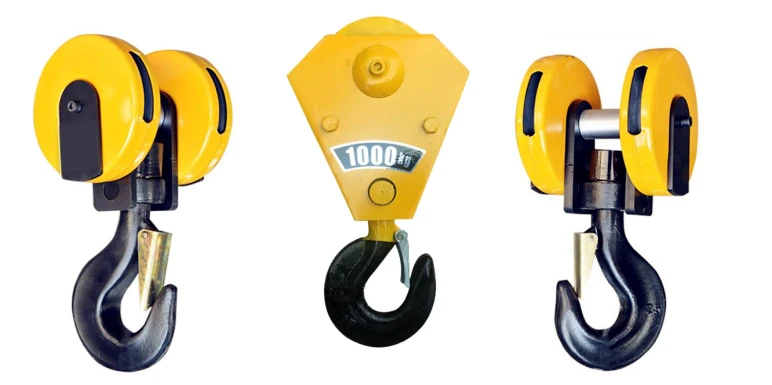
The crane hook of a box girder crane plays a crucial role in lifting and moving heavy loads. A box girder crane is typically used in industrial settings where high lifting capacities and stability are required. The hook itself is attached to the hoisting mechanism and is responsible for securing the load that needs to be lifted.
Here are a few key aspects of the crane hook for a box girder crane:
Material and Construction: The crane hook is typically made from high-strength steel or alloy materials to withstand heavy loads and prevent failure during lifting operations.
Shape and Design: Crane hooks are often designed with a tapered or curved shape at the top to make sure they can securely hold slings, chains, or cables that are used to lift the load.
Safety Features: Many crane hooks include safety latches or mechanisms to prevent the load from accidentally detaching during a lift.
Size and Weight Capacity: The size and weight capacity of the hook depend on the intended application of the crane. For box girder cranes, which are designed for heavy-duty work, the hook needs to be capable of handling very large and heavy loads.
Rotation: In some cases, the crane hook may also be designed to rotate, which helps in precise positioning of the load.
8.Motor
The motor of a box girder crane is an essential component, typically responsible for driving the lifting mechanism, trolley, or hoist. These motors can vary depending on the type of crane, load requirements, and operational conditions. Here's a breakdown of the key aspects:
Motor Type:
AC Motors: Most box girder cranes use alternating current (AC) motors for reliable, high-power performance. These motors are efficient and often used in applications where the crane operates on a regular or continuous basis.
DC Motors: Some cranes, particularly those with more precise speed control needs, may use direct current (DC) motors.
Synchronous Motors: In larger, high-load cranes, synchronous motors are sometimes used for better control over speed and load handling.
Power Rating: The motor's power rating will depend on the crane's lifting capacity. For example, light-duty cranes might use motors in the range of 5–20 kW, while heavy-duty cranes could require motors rated at 100 kW or more.

.
9.Sound and light alarm system & limit switch
A sound and light alarm system and limit switch are both essential safety components in a box girder crane, designed to improve safety and ensure proper operation. Here's a breakdown of their roles:
1)Sound and Light Alarm System
The sound and light alarm system is used to signal operators and nearby personnel about the crane's operational status or potential hazards. This system typically includes:
- Sound Alarms (Audible Signals):
Buzzers or Sirens: Emit loud sounds to warn about specific conditions (e.g., crane overload, malfunction, or emergency stop).
Beepers: Often used for movement warnings, especially in tight spaces or around personnel to indicate that the crane is in motion.
- Light Alarms (Visual Signals):
Flashing Lights: Brightly flashing lights to signal various statuses such as crane moving, overload, or any emergency condition. Often used when audible signals might not be enough in noisy environments.
LED Indicators: These may also indicate specific conditions, like operational readiness or fault detection.
These alarms typically go off in a synchronized manner when a particular fault occurs, improving operator awareness and safety for nearby workers.
2) Limit switch
Limit Switch
A limit switch is a mechanical or electronic device used to define the movement boundaries of a crane. These switches are typically mounted at strategic points to prevent the crane from moving beyond safe limits, protecting the crane, the load, and the surrounding environment.
Travel Limit Switch:
Prevents the crane from moving past its designated travel range, either horizontally (along the girder) or vertically (in lifting operations).
If the crane reaches the limit (e.g., the maximum travel position), the limit switch will stop the motor, preventing further movement beyond the safe range.
Hoist Limit Switch:
Controls the lifting height of the crane to avoid the hook reaching dangerously high positions or hitting the crane's structural limits.
Overload Limit Switch:
A safety feature that prevents the crane from lifting more than its rated load capacity. It's typically integrated with a load sensor or strain gauge.

10.Safety Devices
Box girder cranes, like other types of cranes, are equipped with various safety devices to ensure the protection of both the equipment and personnel during operation. Here are some common safety devices used in box girder cranes:
- Overload Protection: Prevents the crane from lifting loads that exceed its maximum capacity. This is usually done through a load moment indicator (LMI) or a load limiter, which monitors the weight and activates a warning or cuts off the lifting power if the load exceeds safe limits.
- Limit Switches: These are used to limit the travel of the crane, both horizontally and vertically, ensuring that the crane does not exceed its designated operating range. Limit switches are often installed at the end of the crane's travel path to stop movement and prevent mechanical damage.
- Emergency Stop Button: An emergency stop button is typically installed on the crane to immediately stop all movements in case of an emergency or unsafe condition.
- Anti-Sway System: This system helps control the swaying of the load, which can occur due to wind or rapid movement. It stabilizes the load to reduce risk to operators and equipment.
- Hoist Motor Protection: The hoist motor is often equipped with thermal protection to prevent overheating. If the motor temperature exceeds safe limits, the system will automatically shut down to avoid damage.
11.Control Mode
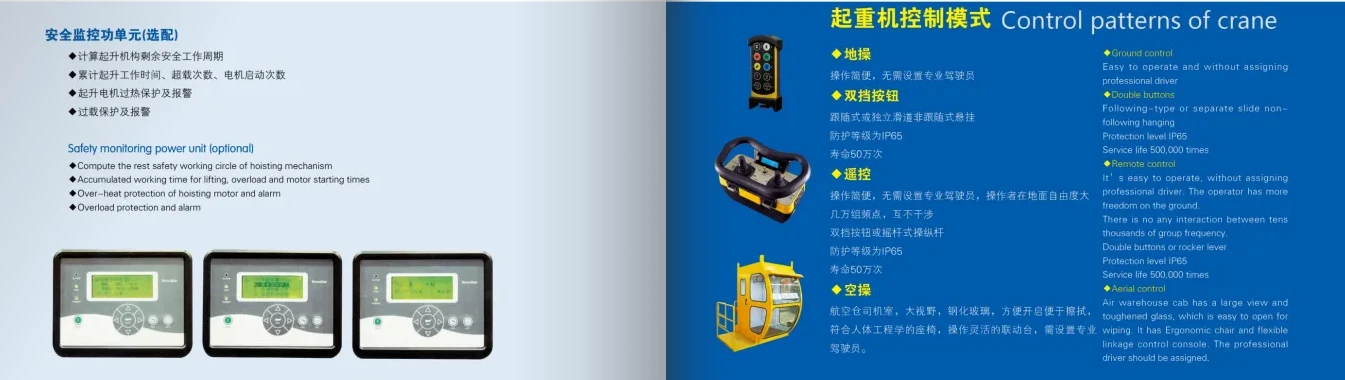
Push-Button or Pendant Control: The crane is operated by an operator using a handheld pendant or control station, where buttons or switches control the crane's movements (e.g., hoisting, trolley movement, and bridge motion). This is a standard mode in many overhead cranes.
Joy Stick Control: This is a more ergonomic option where the operator uses a joystick to control all aspects of the crane's motion. It allows for finer control than push-buttons and is often used in more demanding applications.
Operator Cabin: In this mode, the operator sits in a cabin attached to the crane, often located on the bridge. The crane's movements (travel, hoist, and trolley) are controlled using levers or push-button switches. This mode is typically used for larger cranes, which require a greater range of motion or lifting capacity.
Wireless Control: In this mode, the operator uses a wireless radio controller to manage the crane from a distance. This provides more flexibility and is particularly useful when operating cranes in large areas or in hazardous environments. This control system can handle all movements (e.g., hoist, trolley, and bridge).
Programmable Logic Control (PLC): Some Shaw box cranes are equipped with PLC systems that enable automated or semi-automatic operation. The crane can follow preset movements, cycles, or patterns programmed into the system, and the operator can intervene if necessary.
Crane with Sensors: In more advanced systems, sensors and cameras may be used to automate certain tasks, such as positioning or load handling, which reduces the operator's involvement and increases safety.
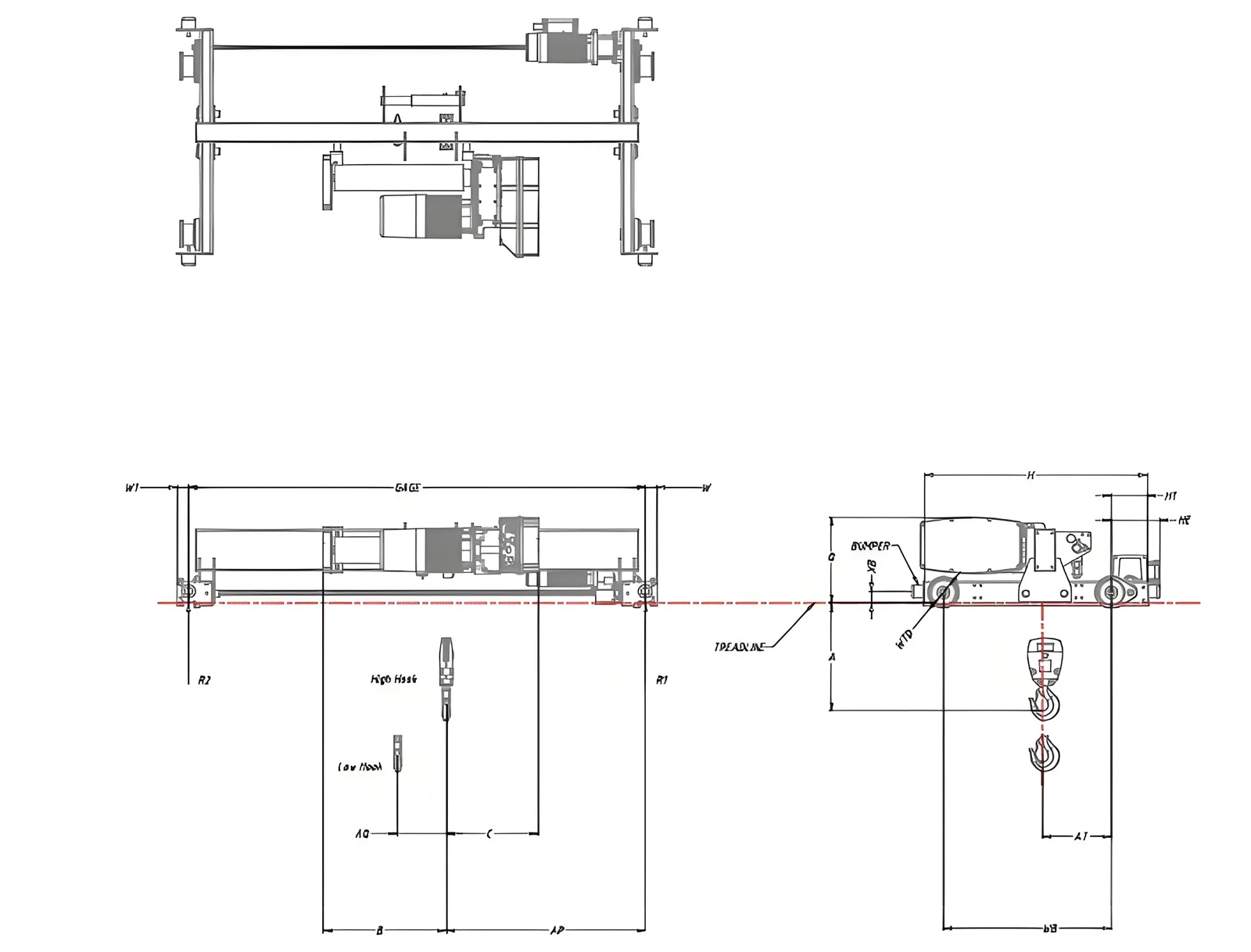
12.Sketch
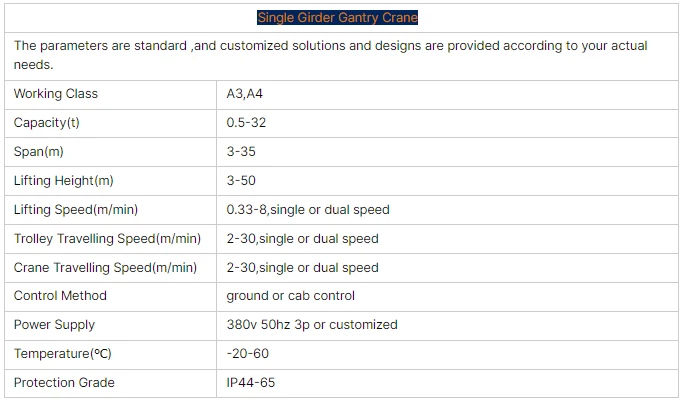
Main technical
Advantages
- Stability and Strength: The box girder structure is designed to provide high stability and strength, which allows it to handle heavy loads safely. Its robust construction ensures long-term reliability even under extreme conditions.
- Compact Design: Box girders have a compact design, making them suitable for environments with limited space. This helps maximize floor space in warehouses or factories.
- Durability: The box girder crane has a durable structure that can withstand harsh environments, such as high temperatures, corrosive conditions, or heavy-duty operations. This increases the crane's lifespan and reduces maintenance needs.
- Enhanced Load Capacity: The box girder design allows for a better distribution of weight, making it ideal for lifting heavy or oversized loads. It's often preferred in applications requiring high load capacities.
- Reduced Vibration: The design of the box girder helps reduce vibrations when lifting or moving loads, leading to smoother operations and less wear and tear on the equipment.
- Versatility: Box girder cranes are adaptable to a wide range of lifting needs. They can be used in various industries, including construction, shipping, automotive, and manufacturing.
Application:
- Construction Sites: Box girder cranes are used on construction sites, especially for lifting heavy beams, steel girders, and other large components. Their stability and strength make them suitable for handling the complex needs of construction projects.
- Port and Dock Operations: In ports, box girder cranes are used for loading and unloading ships, as they can handle heavy containers with ease. These cranes are often part of large container handling systems.
- Manufacturing Plants: In factories and warehouses, box girder cranes are used for moving heavy machinery, equipment, and materials along production lines or during assembly.
- Heavy Industry: Industries such as steel manufacturing, shipbuilding, and heavy equipment manufacturing require cranes with high lifting capacities. Box girder cranes are capable of lifting and transporting extremely heavy items.
- Bridge Construction: Box girder cranes are often used in bridge construction, where their ability to handle large structural components (such as bridge beams and decks) is essential.
Crane production procedure
1. Design and Planning
Structural Design: Engineering teams create detailed designs based on the specific requirements (e.g., load capacity, span, lift height, etc.). This includes designing the box girder, which serves as the crane's primary load-bearing component.
Material Selection: High-strength steel is often used for the girder and other structural components due to its durability and strength.
2. Material Procurement
Steel Sheets/Sections: Raw materials like steel plates, profiles, and beams are purchased from suppliers.
Other Materials: Additional components, including cables, motors, pulleys, and electrical equipment, are sourced.
3. Cutting and Fabrication
Cutting Steel Plates: The steel plates are cut into the required sizes using CNC machines or cutting torches.
Welding the Girder: The cut plates are welded together to form the box girder structure. Welding processes include fillet welding and butt welding, depending on the design.
Subassembly: The box girder may be fabricated in sections, and subassemblies such as the trolley, hoist mechanism, and crane supports are prepared.
4. Heat Treatment and Surface Preparation
Heat Treatment: To relieve stresses and improve the material properties, the welded parts may undergo heat treatment (such as annealing).
Surface Treatment: The components are cleaned and treated to prevent corrosion. Common methods include sandblasting, grinding, and coating with primer and paint.
5. Assembly of the Main Structure
Girders and Supports Assembly: The individual parts of the box girder are aligned and welded or bolted together to form the main structure.
Installation of Wheels and Tracks: For overhead cranes, wheels are installed, and track rails are set up.
6. Installation of Mechanical Components
Hoist Mechanism: The hoist, including the motor, gearbox, winch, and drum, is installed.
Trolley System: The trolley (which moves along the crane's bridge) is installed and tested.
Electrical System: Wiring, electrical panels, and control systems are set up.
7. Testing and Inspection
Static Testing: The crane is tested with loads to check structural integrity and safety.
Dynamic Testing: Operational tests are conducted to ensure the crane moves smoothly and that the lifting mechanism works effectively.
Quality Control: A thorough inspection of all parts and systems is done to ensure compliance with safety standards and specifications.

Workshop view:
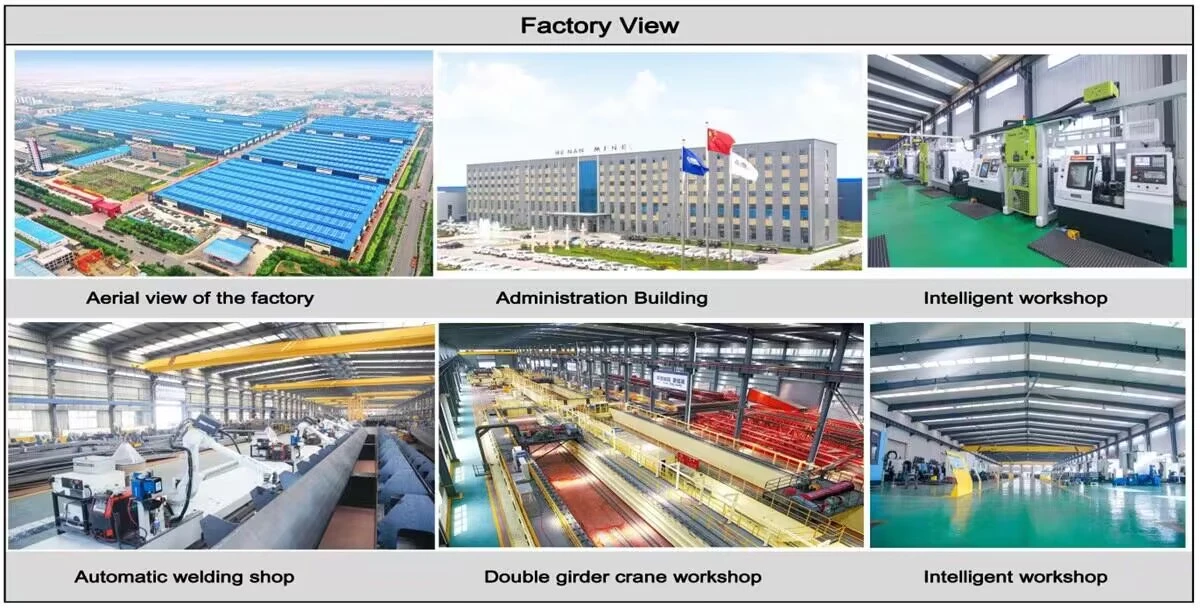
The company has installed an intelligent equipment management platform, and has installed 310 sets (sets) of handling and welding robots. After the completion of the plan, there will be more than 500 sets (sets), and the equipment networking rate will reach 95%. 32 welding lines have been put into use, 50 are planned to be installed, and the automation rate of the entire product line has reached 85%.



Hot Tags: box girder crane, China box girder crane manufacturers, suppliers, factory, Bridge Crane, Double Girder Bridge Crane with Electric Hoist
You Might Also Like


Send Inquiry